

B3060 on 2007-2011 Buick Lucerne: Security Light, No-Start Causes and Fixes
Code B3060 on a Buick Lucerne means the car's security system doesn't recognize the key, causing a no-start and a flashing security light. The most common fixes are trying a spare key, performing a 30-minute key relearn procedure, or replacing a faulty ignition lock cylinder. This is often a DIY-fixable issue.
- B3060 means your car's anti-theft system has locked you out because it doesn't recognize your key.
- Before spending any money, try starting the car with all other keys and RFID cards removed from your keychain.
- Your next step should be to try a spare key. If that works, the original key is bad.
- If no keys work, attempt the 10-minute key relearn procedure three times in a row. This often resolves synchronization issues for free.
- If all else fails, the problem is likely the ignition lock cylinder/reader, which is a moderately priced part but requires some labor to replace.
What's Unique About the 2007-2011 Buick LUCERNE

The Buick Lucerne uses the GM Pass-Key III+ (PK3+) immobilizer system. This system is a combination of the earlier Passlock and Passkey III systems, using a radio-frequency transponder in the key rather than a resistor pellet. The system is known to be highly sensitive to both key failure and Radio Frequency Interference (RFI). GM issued multiple technical service bulletins (PIC5650 series) specifically advising technicians to check for other RFID devices on the owner's keychain—like building access cards, other vehicle fobs, or even some cell phone chargers—as a primary diagnostic step, because they can block the key's 125 kHz signal and trigger this code.
Diagnostic Flowchart
Tap your situation to follow the diagnostic path that matches what you're seeing on this vehicle.
Symptoms You May Notice
- Engine will not crank or start.
- Engine starts briefly and then immediately shuts off.
- The 'SECURITY' light on the instrument cluster is illuminated or flashing.
- A 'Service Theft Deterrent System' message may appear on the driver information center.
- Replacing the starter motor. A starter failure will cause a no-crank, but it will not trigger the security light or set code B3060.
- Replacing the fuel pump. A failed fuel pump will cause a 'crank, no start' condition, but it is not related to the security system. On a Lucerne, a failed fuel pump is often caused by a melted relay in the rear seat fuse box, which is a separate common issue.
Most Likely Causes

- Faulty or Damaged Ignition Key 🔴 High Probability The transponder chip embedded in the plastic head of the key can be damaged from being dropped, exposed to moisture, or from normal electronic failure, causing it to stop transmitting its code.
How to confirm: Try starting the vehicle with a known-good spare key. If the spare key works consistently, the original key is the problem.
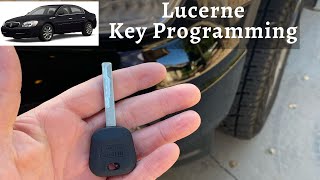
Typical fix: Replace the faulty key. A new key must be cut and then programmed to the vehicle using either the 30-minute onboard relearn procedure 🎬 Watch: How to program a new transponder key yourself. or a locksmith/dealership scan tool.
Est. part cost: $50-$150 - Radio Frequency Interference (RFI) 🟡 Medium Probability As noted in GM TSBs PIC5650B, C, K, and M, the Pass-Key III+ system is sensitive to interference from other RFID devices operating near its 125 kHz frequency.
How to confirm: Remove all other keys, key fobs, access cards, and even aftermarket phone chargers from the keychain and vehicle cabin. Attempt to start the vehicle with only the single Buick key present.
Typical fix: Keep other RFID-emitting devices on a separate keychain or away from the ignition switch when starting the car. This is a common cause of intermittent, non-reproducible no-start events.
Est. part cost: $0 - Lost Key Synchronization 🟡 Medium Probability A weak car battery, a voltage spike, or a momentary electrical glitch can cause the Theft Deterrent Module to lose synchronization with a valid key.
How to confirm: Attempt the '30-Minute Key Relearn Procedure'. If this procedure successfully starts the car, the key had lost its sync.
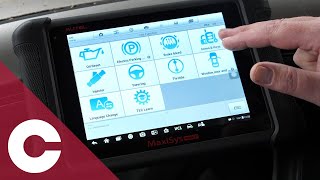
Typical fix: Perform the 30-Minute Key Relearn Procedure. 1. Turn the key to the 'ON' position (do not start) and wait for the security light to turn off, which takes about 10 minutes. 2. Turn the key off for 5-10 seconds. 3. Repeat this cycle two more times for a total of three 10-minute cycles. After the third cycle, turn the key off and then try to start the engine. The key should be relearned. 🎬 See a demonstration of the 30-minute security relearn procedure.
Est. part cost: $0 - Faulty Ignition Lock Cylinder / Reader ⚪ Low Probability The exciter coil (antenna) that surrounds the ignition lock cylinder can fail, or the thin wires connecting it to the TDM can break from the repeated stress of turning the key, preventing the key from being read.
How to confirm: If multiple known-good keys fail to start the vehicle and the relearn procedure does not work, the issue is likely with the reader in the steering column. This is confirmed in forums where owners replace this part to solve the problem.
Typical fix: The ignition lock cylinder housing, which contains the reader, needs to be replaced. This is a mechanical repair that requires disassembling the steering column covers. 🎬 Watch this walkthrough on replacing the ignition lock cylinder.
Est. part cost: $40-$80
Rare But Worth Checking
- Failing Body Control Module (BCM) or Theft Deterrent Module (TDM): While possible, the control module is the least likely component to fail. The TDM is the primary module for the immobilizer, but it communicates through the BCM. This should only be considered after all other causes (key, interference, wiring, and ignition cylinder) have been definitively ruled out.
Diagnosis Steps
- Scan for codes to confirm B3060 is present, along with any related codes like B3055 or B3935.
- Inspect the keychain. Remove all other keys, fobs, and RFID cards as per TSB PIC5650. Try to start the car with only the Lucerne key.
- If the car still won't start, try a spare key if available. If the spare key works, the primary key is faulty.
- If no spare key is available or it also fails, perform the full 30-minute key relearn procedure. Ensure the battery is fully charged or connected to a charger during this process.
- Check the vehicle's main battery. Low voltage (below 12V) during the relearn process can cause it to fail.
- If all keys fail and the relearn procedure does not work, the next step is to inspect the ignition lock cylinder and its wiring. This may require removing the steering column shrouds.
- As a last resort, diagnose the Theft Deterrent Module (TDM) or Body Control Module (BCM) for internal failure, which typically requires a professional scan tool.
Parts You'll Likely Need

- Transponder Ignition Key
(OEM #GM B111-PT)— The chip in the original key is the most common point of failure, either through damage or electronic failure.
Trusted brands: ACDelco, Strattec
OEM price range: $70-$120
Aftermarket price range: $25-$60 - Ignition Lock Housing
(OEM #GM 25832354)— If the key isn't the issue, the reader coil inside the ignition lock housing is the next most likely part to fail, often due to broken wires from years of use.
Trusted brands: ACDelco (D1493F), Dorman (924-719)
OEM price range: $160-$280
Aftermarket price range: $40-$70
Related Codes That Often Appear With This One
- B3055 — This code indicates 'No Transponder Modulation or No Transponder'. It often appears with B3060 because if the key's signal isn't detected at all (B3055), the system logs it as an unprogrammed key (B3060). This is confirmed in GM TSB PIC5650M.
- B3935 — This code means 'Transponder Incorrect Status'. It is part of the same family of security codes and can be set during the same fault event when the key's signal is present but deemed invalid. This is also mentioned in TSB PIC5650M.
Technical Service Bulletins (TSBs) & Recalls

- PIC5650M: Mentions B3060 in the context of a no crank/no start with the security light on, and points to potential RFI issues from devices on the keychain.
- PIE0232: An engineering information bulletin seeking data on low-mileage vehicles with B3060, B3055, and B3935, indicating a known issue with the immobilizer system that GM was actively investigating.
- PIC5650B / C / K: Earlier and later versions of the same TSB, which expand the list of potential RFI sources to include aftermarket LED lighting and various USB/12V chargers.
Platform-Specific Known Issues
- This vehicle platform is known to be susceptible to Radio Frequency Interference (RFI) that can disrupt the immobilizer system, as documented in multiple versions of GM Technical Service Bulletin PIC5650.
- The 30-minute relearn procedure is a very common and often successful fix for this code after a battery replacement or other electrical system interruption.
Scan Tool Commands That Help
- GM Tech2 / GDS2: TDM/BCM Data Display -> Valid Key Parameter — After a relearn attempt, this function is used to verify if the Theft Deterrent Module (TDM) or Body Control Module (BCM) is recognizing each specific key as valid. The parameter should read 'Yes' for all learned keys.
- GM Tech2 / GDS2: BCM Special Functions -> Setup SDM Primary Key in BCM — This command is required after replacing the Body Control Module (BCM) to synchronize it with the existing Sensing and Diagnostic Module (SDM) for the airbag system. Failure to do this may result in an airbag warning light.
- HP Tuners: OS -> VATS Patch 1 / Patch 2 -> Disable — This is an advanced, aftermarket solution to permanently disable the Vehicle Anti-Theft System (VATS) by modifying the vehicle's operating system. It is used as a last resort when standard repairs fail or are too costly, but it permanently removes the factory immobilizer protection.
Wiring & Ground Locations
- Theft Deterrent Module (TDM) — Located within the steering column, near the ignition switch assembly.. The TDM is the module that reads the transponder key. It receives the key's signal from the exciter coil and determines if it is valid. All wiring related to the key reader and communication with the BCM/ECM originates here.
- Body Control Module (BCM) — Located to the right of the glove box, accessible after removing the glove box or lower passenger-side dash trim.. The BCM is the central hub for body electronics. It communicates with the TDM and sends the final 'start disable' or 'start enable' command to the Engine Control Module (ECM) over the GMLAN data bus.
- G300 — Ground point located under the driver's seat.. A poor ground at this location can cause intermittent electrical issues for various modules, potentially including the theft deterrent system components.
- G304 — Ground point located under the right front passenger's seat.. This ground serves components on the passenger side of the vehicle, including the BCM. A loose or corroded connection here can cause a variety of BCM-related faults, including communication errors that could trigger security codes.
- Rear Fuse Block — Located below the left side of the rear seat cushion.. This fuse block powers many interior modules. A fault here, such as a loose fuse or corroded terminal, could interrupt power to the BCM or TDM, causing a loss of key memory or communication.
Real Owner Repair Stories
- YouTube video by 'Big pink tow truck' (GM Vehicle (specific model not a Lucerne, but same system)) — Service deterrent system message, no start condition.
❌ Tried (didn't work) Initial start attempts failed.
✅ What actually fixed it The 30-minute relearn procedure (3 cycles of key-on for 10 minutes) successfully resolved the no-start condition and cleared the security message. The video emphasizes the importance of using a battery charger during the procedure to prevent battery drain from causing the relearn to fail.
OEM Part Supersession History
12458191, 12533953, 15822350, 19168637→25832354 (ACDelco D1493F)— Part consolidation and potential design updates over the production life.
Heads up: While the part number 25832354 is listed for the Lucerne's platform family, fitment guides primarily associate it with earlier models like the Impala/Monte Carlo (up to 2005). The Dorman 924-719 is a more commonly cited aftermarket replacement for the Lucerne's specific ignition lock housing. Always verify the part number with the vehicle's VIN before ordering.
Helpful Videos


Used OEM Parts in Stock


New Aftermarket Parts Available


The information in this article is provided for general reference and educational purposes only. Vehicle specifications, procedures, and part compatibility can vary by production date, trim level, and region. Always consult your vehicle's factory service manual and verify part numbers before purchasing or performing repairs. Safety-critical components such as airbags, seat belts, and braking systems should be installed by a qualified professional.
- Buick LUCERNE:
- 🎬 Helpful Videos
- 🛍️ Shop This Part
- What's Unique About the 2007-2011 Buick LUCERNE
- Diagnostic Flowchart
- Symptoms You May Notice
- Most Likely Causes
- Rare But Worth Checking
- Diagnosis Steps
- Parts You'll Likely Need
- Related Codes That Often Appear With This One
- Technical Service Bulletins (TSBs) & Recalls
- Platform-Specific Known Issues
- Scan Tool Commands That Help
- Wiring & Ground Locations
- Real Owner Repair Stories
- OEM Part Supersession History
- 🎟️ Get 5% Off