

B3060 on 2008-2015 Buick Enclave: Unrecognized Key & No-Start Fixes
Code B3060 on a Buick Enclave means the anti-theft system doesn't recognize the key, causing a no-start or start-and-stall condition. The most common fix is replacing the ignition lock cylinder, which contains the key's transponder reader. Expect to pay around $270-$316 for a professional repair.
- B3060 on your Enclave means there's a problem with the anti-theft system recognizing your key.
- The most common symptoms are a car that won't start or starts and immediately dies, accompanied by a security warning light.
- Before spending money, try your spare key and remove all other fobs and cards from your keychain to rule out simple issues like a bad key or RF interference.
- The most probable cause is a failed ignition lock cylinder, which contains the sensor that reads the key.
- This is not a typical DIY repair, as programming is required after the part is replaced.
What's Unique About the 2008-2015 Buick ENCLAVE
The first-generation Buick Enclave and its GM Lambda platform siblings (like the Chevy Traverse, GMC Acadia, and Saturn Outlook) are noted for intermittent issues with the Pass-Key anti-theft system. A Technical Service Bulletin (TSB PIC5650) was issued that covers this exact problem, highlighting that a no-start or stall condition with code B3060 is a known issue across a wide range of GM vehicles from this era. The problem is often not the key itself, but the components responsible for reading it, or external interference.
Diagnostic Flowchart
Tap your situation to follow the diagnostic path that matches what you're seeing on this vehicle.
Symptoms You May Notice
- Engine will not crank or start
- Engine starts and immediately stalls
- Security light (often a padlock symbol) is illuminated or flashing on the dashboard.
- Intermittent starting problems, where it may work sometimes and not others.
- Message on Driver Information Center (DIC) like "Service Theft Deterrent System".
- Replacing the starter
- Replacing the battery
- Replacing the alternator
- Replacing the fuel pump
Most Likely Causes
- Faulty Ignition Lock Cylinder / Transponder Reader 🔴 High Probability The exciter coil that reads the key's transponder chip is integrated into the ignition lock cylinder assembly. This component is a frequent point of failure due to wear and tear, leading to an inability to read a perfectly good key.
How to confirm: After confirming the key is not the issue (by trying a spare), a mechanic will use a scan tool to monitor data from the theft deterrent module. If no key data is being received despite the key being present, the reader is suspect. Owners on forums report that jiggling the key in the ignition sometimes allows it to start, pointing to a worn cylinder.
Typical fix: Replace the ignition lock cylinder and perform a key relearn procedure.
Est. part cost: $75-$175 - Worn or Damaged Ignition Key 🟡 Medium Probability The transponder chip (identified by "PK3" stamped on the metal blade) is embedded in the plastic head of the key. It can be damaged from drops or wear and tear over time, causing it to stop communicating with the vehicle.
How to confirm: The easiest way to confirm is to try starting the vehicle with a spare, known-good key. If the spare key works consistently, the original key is faulty. This is the first step recommended in diagnostic procedures.
Typical fix: Replace the faulty key. A new key must be cut to match the original and then programmed to the vehicle using a specific relearn procedure.
Est. part cost: $30-$100 - Radio Frequency (RF) Interference ⚪ Low Probability As noted in multiple versions of GM TSB PIC5650, other RFID devices on the keychain can interfere with the 125 kHz signal from the ignition key's transponder. This includes things like office key cards, gas station speed passes, other vehicle keys with transponders, and even some aftermarket electronics like phone chargers or LED lights plugged into the car.
How to confirm: Remove all other keys and electronic fobs from the keychain, leaving only the single Buick key. Attempt to start the vehicle. If it starts, RF interference was the cause. The TSB advises technicians to check for this before replacing any parts.
Typical fix: Keep other RFID-enabled cards and fobs separate from the ignition key when starting the vehicle. Unplug any non-essential aftermarket chargers or devices.
Est. part cost: $0
Rare But Worth Checking
- Faulty Body Control Module (BCM): While rare, the BCM is the brain of the anti-theft system. If the ignition lock cylinder and keys are confirmed to be good, the BCM itself may have an internal fault preventing it from recognizing valid keys. A replacement BCM often needs to be programmed to the vehicle's VIN.
- Wiring Harness Damage: The wiring between the ignition lock cylinder and the BCM can become damaged, or the connector can become loose, causing an intermittent loss of communication. A visual inspection of the harness under the steering column is a valid diagnostic step.
- Failed Crank Relay: In some cases on Lambda platform vehicles, an intermittent no-start is caused by a failing crank relay in the under-hood fuse box, not the security system. A common diagnostic tip is to swap the crank relay with an identical one (like the rear defroster relay) to see if the problem is resolved. This typically would not set a B3060 code but can present with similar symptoms.
Diagnosis Steps
- Check for the security light on the dashboard. If it's on or flashing, it confirms an anti-theft issue.
- Try starting the vehicle with a known-good spare key. If it starts, the primary key is the problem.
- Remove all other keys, fobs, and RFID cards from the keychain to eliminate potential radio frequency interference. Also unplug any aftermarket phone chargers or accessories.
- Inspect the ignition key for any visible damage to the plastic head or metal blade.
- Check the vehicle's battery to ensure it is fully charged, as low voltage can sometimes cause issues with various electronic modules.
- Scan the Body Control Module (BCM) for other related trouble codes, such as B3055 or B3935.
- Inspect the wiring and connector at the base of the ignition lock cylinder for a secure connection and any signs of damage.
- If a scan tool is available, monitor the Theft Deterrent Module parameters to see if a valid key is being detected.
- If other causes are ruled out, the ignition lock cylinder (containing the transponder reader) is the most likely failed component and should be replaced.
Parts You'll Likely Need
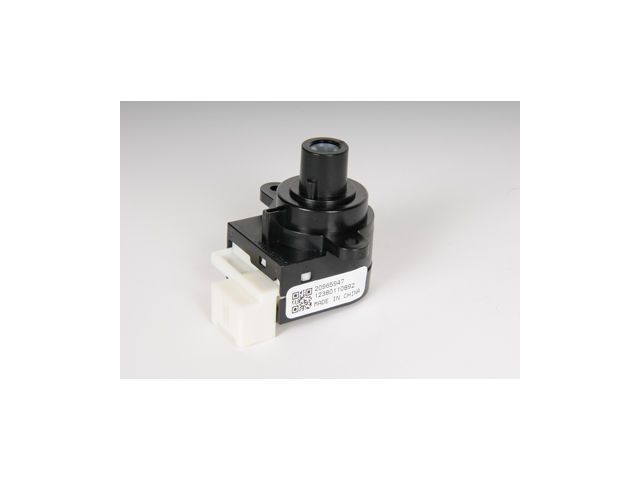
- Ignition Lock Cylinder
(OEM #20965947)— This assembly contains the transponder exciter coil that reads the chip in the key. It is the most common failure point for code B3060 when the key itself is not the problem.
Trusted brands: ACDelco (GM Genuine Parts), Dorman, Standard Motor Products (Locksmart)
OEM price range: $150-$200
Aftermarket price range: $75-$120
Related Codes That Often Appear With This One
- B3055 — This code means 'No Transponder Modulation or No Transponder,' indicating the system is not receiving any signal from the key. It often appears with B3060 and points directly to a key or reader issue.
- B3935 — This code for 'Transponder Authentication Failed' can also be set alongside B3060, indicating a failure in the security handshake between the key and the vehicle.
Technical Service Bulletins (TSBs) & Recalls
- PIC5650M: Addresses intermittent no crank, no start, or start stall concerns with the security light on, and lists B3060 as a potential DTC. It strongly advises checking for Radio Frequency Interference (RFI) from aftermarket devices before beginning repairs.
- EI-13-NA-101 (Engineering Information): A request from GM Engineering to gather information on low-mileage 2013 vehicles with codes B3055, B3060, or B3935 to determine the root cause, indicating this was an active area of investigation.
Platform-Specific Known Issues
- A GM Technical Service Bulletin (PIC5650M) directly addresses an intermittent no-crank, no-start, or start-and-stall condition with the security light on, specifically citing DTC B3060. The bulletin suggests checking for interference from other RFID devices on the keychain before replacing parts.
- Owners on forums for the Enclave and its platform mates frequently discuss this issue. A common owner experience involves the car starting fine for weeks, then suddenly failing to start, only to work again after waiting a few minutes or jiggling the key, which points towards the failing ignition lock cylinder.
Mechanic-Grade Diagnostic Values
- Scan Tool TDM 'Valid Key' Parameter — expected: Yes. Failure: Parameter reads 'No' when a key is in the ignition and turned to ON.
- Pass-Key III+ System Frequency — expected: 125 kHz. Failure: Interference from other devices operating in the 120-135 kHz range can disrupt communication.
Hidden / Shadow Codes Worth Checking
- B3060 00: The '00' is a symptom byte indicating 'Unprogrammed Transponder Identification Code Received' with no further subtype information. This is the standard presentation for this DTC. (see via A professional scan tool like the GM GDS2 or Tech2 will display the code with its symptom byte.)
Scan Tool Commands That Help
- GDS2 / Tech2: Vehicle Key Relearn — This function is used after replacing a key, the ignition lock cylinder, or the BCM to program the new component to the vehicle's theft deterrent system.
- GDS2 / Tech2: Add or Replace Key Fobs — Used to program the remote keyless entry portion of the key. This is separate from the immobilizer chip programming but is often done at the same time.
- GDS2 / Tech2: Setup SDM Primary Key in BCM — This procedure may be required after BCM replacement to synchronize the new module with the vehicle's existing airbag/safety systems.
Wiring & Ground Locations
- Body Control Module (BCM) — Under the driver's side of the dashboard, to the left of the steering column.. The BCM is the central computer for the Pass-Key III+ anti-theft system. It receives the key data from the Theft Deterrent Module (TDM) and makes the decision to enable or disable the engine start.
- Theft Deterrent Module (TDM) — Located in the steering column, at the ignition switch.. The TDM contains the exciter coil that energizes the key's transponder and reads its signal. It is the primary reader for the key. A failure here is a direct cause of B3060.
- G301 — Behind the left kick panel.. This is a major ground point for several modules, including the BCM. A poor connection at G301 can cause intermittent BCM-related issues, including theft system problems.
Real Owner Repair Stories
- Reddit user comment (2008 Buick Enclave CXL) — Total screw up from day 1, multiple major component failures.
❌ Tried (didn't work) Engine replacement, Transmission replacement
✅ What actually fixed it The user reported that among many other issues, the ignition key housing ('where you put key in') needed replacement, which is a common description for the ignition lock cylinder that fails and causes B3060.
OEM Part Supersession History
92184907→20965947— Standard part number update and consolidation by GM.
Model Year Variations Within This Range
- 2008-2017: The 30-minute 'All Keys Lost' relearn procedure is consistent across the entire generation. It involves three cycles of turning the key to 'ON' for 10 minutes and 30 seconds each.
Helpful Videos
Used OEM Parts in Stock

New Aftermarket Parts Available


The information in this article is provided for general reference and educational purposes only. Vehicle specifications, procedures, and part compatibility can vary by production date, trim level, and region. Always consult your vehicle's factory service manual and verify part numbers before purchasing or performing repairs. Safety-critical components such as airbags, seat belts, and braking systems should be installed by a qualified professional.
- Buick ENCLAVE:
- 🎬 Helpful Videos
- 🛍️ Shop This Part
- What's Unique About the 2008-2015 Buick ENCLAVE
- Diagnostic Flowchart
- Symptoms You May Notice
- Most Likely Causes
- Rare But Worth Checking
- Diagnosis Steps
- Parts You'll Likely Need
- Related Codes That Often Appear With This One
- Technical Service Bulletins (TSBs) & Recalls
- Platform-Specific Known Issues
- Mechanic-Grade Diagnostic Values
- Hidden / Shadow Codes Worth Checking
- Scan Tool Commands That Help
- Wiring & Ground Locations
- Real Owner Repair Stories
- OEM Part Supersession History
- Model Year Variations Within This Range
- 🎟️ Get 5% Off