

B3055 on 2007-2010 Pontiac G6: Causes and Fixes for No-Start & Security Light
Code B3055 on a Pontiac G6 means the car's anti-theft system can't read the ignition key, causing a no-start or start-and-stall condition with the security light on. The most common fix is to try a spare key or perform a 30-minute key relearn procedure. If that fails, the ignition lock cylinder housing, which contains the key reader (exciter coil), likely needs replacement.
- B3055 means your G6's security system has been activated and is preventing the engine from starting.
- Before buying any parts, try the simple fixes: use a spare key and remove all other electronic fobs or cards from your keychain to rule out interference.
- Attempt the 30-minute key relearn procedure. This can often resolve the issue for free if it was caused by a temporary glitch.
- If simple fixes don't work, the most likely failed part is the ignition lock cylinder housing, which contains the sensor that reads your key.
- Do not replace the starter or fuel pump; this code confirms the problem is with the anti-theft system.
What's Unique About the 2007-2010 Pontiac G6
The 2007-2010 Pontiac G6, along with its platform mates like the Saturn Aura and Chevrolet Malibu, uses a Pass-Key III+ immobilizer system that is known for these intermittent communication failures. The issue is so common that GM has issued technical service bulletins (TSBs) that point towards radio frequency interference and issues with the ignition components rather than a faulty computer. The problem often appears intermittently, making it frustrating to diagnose, with many owners reporting the car starting fine for days or weeks between failures. A key difference exists within this year range: 2007-2009 models use a separate Theft Deterrent Module (TDM), while 2010 models integrate this function into the Body Control Module (BCM).
Diagnostic Flowchart
Tap your situation to follow the diagnostic path that matches what you're seeing on this vehicle.
Symptoms You May Notice
- Engine will not crank (no-crank, no-start)
- Engine starts and immediately stalls
- Security indicator light is solid or flashing on the dashboard.
- "Service Theft System" message may appear on the driver information center.
- Horn may sound and a "Theft Attempted" message may appear on the DIC.
- Replacing the starter motor. A B3055 code specifically points to the anti-theft system as the reason for the no-start, not a faulty starter. A technician on Reddit noted a customer was certain the starter had failed when the B3055 code was the actual cause.
- Replacing the battery. While low battery voltage can cause various electronic issues, and a healthy battery (12.6V+) is required for diagnosis, it is not the root cause of a B3055 code.
- Replacing the fuel pump. The engine stalling is a direct result of the security system disabling fuel, not a failure of the pump itself.
Most Likely Causes
- Faulty Ignition Lock Cylinder / Housing 🔴 High Probability The exciter coil that reads the key's transponder chip is integrated into the ignition lock cylinder housing. This component is a frequent failure point on this platform, with the internal coil failing due to age and heat cycles, leading to an inability to read the key.
How to confirm: After ruling out the key and RFI, this is the next logical step. If multiple known-good keys fail to start the car and the relearn procedure has no effect, the housing is the prime suspect. A professional can test the signal circuit, but for a DIYer, it's often a process of elimination.
Typical fix: Replace the ignition lock cylinder housing (ACDelco P/N: 25832354 or Dorman 924-719 are common replacements) and perform the 30-minute key relearn procedure.
Est. part cost: $60-$130 - Worn or Damaged Ignition Key 🟡 Medium Probability The transponder chip inside the plastic head of the key can be damaged from being dropped, getting wet, or simply failing over time. A Reddit thread with a technician detailed a case where a customer's physically broken key was the direct cause of a B3055 code.
How to confirm: Try starting the vehicle with a known-good spare key. If the spare key works reliably and the original does not, the original key is faulty.
Typical fix: Replace the faulty key. A new key must be cut and then programmed to the vehicle using the 30-minute relearn procedure or by adding the key with a scan tool.
Est. part cost: $50-$150 - Radio Frequency Interference (RFI) 🟡 Medium Probability As noted in GM TSB PIC5650M, the Passkey system is sensitive to interference from other electronic devices on the keychain or in the car. This includes other car keys, building access cards, toll passes, aftermarket LED lights, and even some phone chargers or USB power banks.
How to confirm: Remove all other keys, fobs, and cards from your keychain. Also, unplug any aftermarket chargers from the vehicle's power outlets. Try starting the car with only the G6 key present. If it starts, RFI was the issue.
Typical fix: Keep other RFID-enabled devices and keys separate from the ignition key when starting and driving the vehicle. Advise the customer of this sensitivity as per GM's recommendation.
Est. part cost: $0 - Wiring Harness Issue ⚪ Low Probability The wiring between the ignition lock cylinder and the Theft Deterrent Module (TDM) or Body Control Module (BCM) can become damaged, loose, or corroded, causing an intermittent connection. Chafing can occur on the steering column where the harness may rub.
How to confirm: Visually inspect the wiring harness and connector at the base of the steering column for any signs of damage, chafing, or loose pins.
Typical fix: Repair the damaged section of the wiring harness and secure the connector.
Est. part cost: $5-$50 - Improperly Seated Flip Key ⚪ Low Probability Though the G6 often used a solid key, some models or replacement keys are a flip style. TSB PIT5030E notes that if the flip key is not fully extended and locked straight, the angle of the key head can prevent the transponder from being read correctly, setting a B3055 in history.
How to confirm: If you have a flip key and experience an intermittent no-start, remove the key, ensure it is fully extended and locked, and re-insert it straight into the ignition.
Typical fix: Ensure the key is fully extended before use. No parts replacement is necessary.
Est. part cost: $0
Rare But Worth Checking
- Failing Body Control Module (BCM): While less common than the key or ignition cylinder, the BCM itself can fail. This is often a last resort after all other causes have been ruled out. On some GM vehicles, water intrusion into the passenger footwell can damage the BCM, which is located behind a kick panel on the passenger side.
Diagnosis Steps
- Scan for Codes: Use a scan tool capable of reading Body ('B') codes to confirm B3055 is active. Note that basic readers may not see these codes.
- Isolate the Key: Remove all other keys, fobs, and RFID cards from your keychain as per TSB PIC5650M. Attempt to start the car with only the G6 key.
- Try the Spare Key: If you have a spare key, try starting the car with it. If it works, your primary key is likely faulty.
- Check Battery Voltage: Ensure the vehicle's battery is fully charged (above 12.4V, ideally 12.6V) before proceeding, as the relearn procedure requires consistent power.
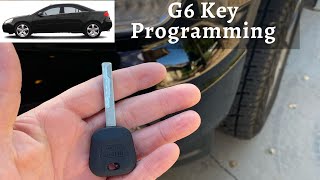
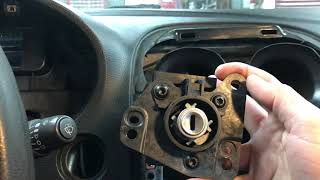
- Perform the 30-Minute Relearn Procedure: Turn the key to the 'ON' position (do not start). The security light will be on. Wait about 10-11 minutes for the light to turn off. Turn the key 'OFF' for 5 seconds. Repeat this two more times for a total of three cycles. After the third cycle, turn the key off, 🎬 Watch: How to program your transponder key at home then try to start the engine.
- Inspect Ignition Cylinder Wiring: Visually inspect the wiring and connector at the ignition lock cylinder on the steering column for any visible damage or loose connections.
- Replace Ignition Lock Cylinder Housing: If the above steps fail, the most probable cause is a faulty ignition lock cylinder/housing. Replace the component.
- Final Relearn: After replacing the ignition lock cylinder housing, you must perform the 30-minute relearn procedure again to sync the new component with the vehicle's security system.
Parts You'll Likely Need
- Ignition Lock Cylinder Housing
(OEM #25832354)— This housing contains the exciter coil that reads the key's transponder chip and is the most common hardware failure for this code on the G6 and its platform mates.
Trusted brands: ACDelco, Dorman (924-719), Standard Motor Products
OEM price range: $100-$150
Aftermarket price range: $60-$100 - Transponder Ignition Key
(OEM #22734264 (GM 'Circle Plus' Key))— The chip in the key can fail, preventing it from sending a valid signal to the car's security system. This is the first thing to rule out with a spare key.
Trusted brands: ACDelco, JMA
OEM price range: $70-$120
Aftermarket price range: $40-$80
Related Codes That Often Appear With This One
- B3060 — This code often relates to a failure in the transponder key reading circuit, directly related to B3055.
- B3935 — This code indicates a transponder key authentication failure, which is part of the same security handshake process that triggers B3055.
Technical Service Bulletins (TSBs) & Recalls
- PIC5650M: Notes that an intermittent no-crank, no-start, or stall with DTC B3055 can be caused by Radio Frequency Interference from aftermarket electronics.
- PIT5030E: Addresses intermittent no-crank conditions on models with flip-style keys, noting that if the key is not fully extended, it can cause a B3055.
Platform-Specific Known Issues
- This platform is highly susceptible to Radio Frequency Interference (RFI) from other devices on the keychain, which can intermittently trigger code B3055 and a no-start condition, as documented in TSB PIC5650M.
- Owners frequently report the intermittent nature of this problem, where the car may fail to start once, then work perfectly for weeks, making diagnosis difficult. This often points to either RFI or a failing ignition housing coil.
Mechanic-Grade Diagnostic Values
- Pass-Key III+ Exciter Coil Resistance — expected: Not specified for this system. Unlike older VATS systems, Pass-Key III+ is an RFID transponder system.. Failure: Diagnosis is made by process of elimination and checking for a signal with a scan tool, not by a simple resistance measurement of the coil. If all keys fail the relearn and wiring is good, the coil (in the ignition housing) is presumed faulty.
- Scan Tool 'TDM Transponder Key' Status — expected: Present. Failure: The parameter reads 'Not Present' or is blank when a known-good key is in the ignition, indicating a failure in the reading circuit (coil, wiring, or module).
Hidden / Shadow Codes Worth Checking
- B3055 00: No Transponder Modulation or No Transponder. This is the generic and most common failure type, indicating the control module received no signal at all from the key's transponder chip. (see via A professional-grade scan tool that can read GM-specific symptom bytes, such as a GM Tech2 with GDS2 software.)
- B3055 5A: No Transponder Modulation or No Transponder - Plausibility Failure. This indicates the control module received a signal, but it was illogical, corrupt, or nonsensical. This can point more specifically towards Radio Frequency Interference (RFI) or an intermittently failing key chip rather than a complete circuit failure. (see via A professional-grade scan tool that can read GM-specific symptom bytes, such as a GM Tech2 with GDS2 software.)
Scan Tool Commands That Help
- GM Tech2 / GDS2: Immobilizer Data Display — During diagnosis, a technician monitors parameters like 'TDM Transponder Key' status (should be 'Present') to see if the module is successfully reading the key in real-time. This confirms if the failure is in the reading process.
- GM Tech2 / GDS2: Immobilizer Learn / Add/Replace Keys — This function is required after replacing the BCM, TDM, or ignition keys. It guides the technician through the security relearn procedures, which may include a 10-minute wait period to authorize the new components.
Wiring & Ground Locations
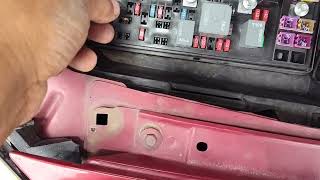
- Body Control Module (BCM) — Located with the fusebox on the passenger side of the center console.. For 2010 models, the BCM integrates the theft deterrent functions. For all years, it communicates with the theft system. A bad connection or faulty ground at the BCM can cause this code.
- G201 / G203 — Main interior ground points located under the center console, on a front support bracket, near the BCM.. The BCM, TDM, and other related interior modules rely on these grounds. A loose or corroded connection at G201 or G203 can cause intermittent and difficult-to-diagnose electrical issues, including immobilizer faults.
- G105 / G106 — Main engine/transmission grounds. G105 is on the engine/transmission stud below the upper coolant hose. G106 is on the front or left side of the engine at a transmission stud.. While not directly for the immobilizer, a poor engine ground can introduce electrical noise and voltage drops throughout the vehicle, potentially affecting sensitive modules like the BCM/TDM and causing a variety of codes.
Real Owner Repair Stories
- Reddit user /u/N_dixon in r/Justrolledintotheshop (GM Vehicle with Pass-Key system (similar to G6)) — No-start, 'Theft Attempted' message on DIC, horn sounding when key inserted.
❌ Tried (didn't work) Customer was convinced the starter had failed and wanted it replaced.
✅ What actually fixed it The technician found DTC B3055. The actual causes were a physically broken key that the system couldn't read and a dead main battery (10.5V). After installing a new, correct battery and programming a new key, the vehicle started and ran perfectly.
OEM Part Supersession History
12458191, 12533953, 15822350, 19168637→25832354— Part consolidation and potential design updates over the life of the platform.
Model Year Variations Within This Range
- 2007-2009: These years use a separate Theft Deterrent Module (TDM) to read the key and communicate with the ECM. Diagnosis would focus on the TDM and its connections.
- 2010: For this model year, the theft deterrent function was integrated directly into the Body Control Module (BCM). Diagnosis would focus on the BCM and its connections, rather than a separate TDM.
Helpful Videos
Used OEM Parts in Stock

New Aftermarket Parts Available


The information in this article is provided for general reference and educational purposes only. Vehicle specifications, procedures, and part compatibility can vary by production date, trim level, and region. Always consult your vehicle's factory service manual and verify part numbers before purchasing or performing repairs. Safety-critical components such as airbags, seat belts, and braking systems should be installed by a qualified professional.
- Pontiac G6:
- 🎬 Helpful Videos
- 🛍️ Shop This Part
- What's Unique About the 2007-2010 Pontiac G6
- Diagnostic Flowchart
- Symptoms You May Notice
- Most Likely Causes
- Rare But Worth Checking
- Diagnosis Steps
- Parts You'll Likely Need
- Related Codes That Often Appear With This One
- Technical Service Bulletins (TSBs) & Recalls
- Platform-Specific Known Issues
- Mechanic-Grade Diagnostic Values
- Hidden / Shadow Codes Worth Checking
- Scan Tool Commands That Help
- Wiring & Ground Locations
- Real Owner Repair Stories
- OEM Part Supersession History
- Model Year Variations Within This Range
- 🎟️ Get 5% Off