

B3055 on 2017-2020 GMC Sierra Denali: No Start, Security Light Causes & Fixes
Code B3055 on a 2017-2020 GMC Sierra Denali means the truck's anti-theft system cannot detect or read the key, causing a no-start or start-and-stall condition. The most common fixes are trying a spare key, removing aftermarket phone chargers causing radio interference, or ensuring the flip-key (on 2017-2018 models) is fully extended. If a new key or module is needed, professional programming is required.
- B3055 means your truck's security system has disabled the engine because it cannot read the key.
- Before any repairs, remove all phone chargers and other keys/fobs from the keychain to rule out radio interference, which is a very common cause.
- Try your spare key. This is the fastest way to determine if your primary key has failed.
- On 2017-2018 models, make sure your flip-key is locked in the fully straight position before inserting it.
- Do not replace the starter or battery if the security light is on; the problem is with the anti-theft system. Any fix involving a new key or module will require professional programming.
What's Unique About the 2017-2020 Gmc SIERRA DENALI
The 2017-2020 Sierra Denali spans two generations, the K2XX (2017-2018) and T1XX (2019-2020), which have different key systems and common failure points for this code. The earlier K2XX models often use a flip-style ignition key, and a well-documented issue is the key not being fully extended, causing a read error as noted in TSB PIT5030E. The newer T1XX models more commonly feature push-button start, where B3055 is more frequently triggered by radio frequency interference from aftermarket electronics or a weak key fob battery. GM has acknowledged the system's sensitivity to interference from items like USB chargers, LED lights, and even toll passes across multiple model years in the comprehensive technical service bulletin PIC5650M.
Diagnostic Flowchart
Tap your situation to follow the diagnostic path that matches what you're seeing on this vehicle.
Generation note: The 2017-2020 range covers the end of the third generation (K2XX; 2017-2018) and the beginning of the fourth generation (T1XX; 2019-2020). The K2XX models often use a flip-key where incorrect positioning can cause this code. The T1XX models more commonly use push-button start, where the code is more often related to key fob battery or RF interference. The transmitter pocket for emergency starts in T1XX trucks is often the front cupholder closest to the driver.
Symptoms You May Notice
- Engine will not crank (no-crank)
- Engine starts and immediately stalls
- Security indicator light is illuminated or flashing on the instrument cluster.
- "No Remote/Fob Detected" message on the driver information center (for push-to-start models).
- "Service Theft Deterrent System" message on the DIC.
- Replacing the starter motor. A no-crank condition is often blamed on the starter, but if the security light is on, the BCM is intentionally preventing the starter from engaging.
- Replacing the vehicle's 12V battery. While a very low battery can cause erratic module behavior, a healthy battery will not solve a B3055 code if the key is not being recognized.
Most Likely Causes
- Radio Frequency Interference (RFI) 🔴 High Probability The Passkey III+ system operates at a 125 kHz frequency that is easily jammed by low-quality aftermarket electronics. This is a widely documented issue in GM TSB PIC5650M, which lists phone chargers, aftermarket LED lights, dash cams, and even gate access cards on the keychain as potential culprits.
How to confirm: Unplug all aftermarket devices (phone chargers, dash cams, LED lighting, etc.) from the power outlets. Remove all other keys, fobs, and RFID-enabled cards from the keychain. Attempt to start the vehicle with only the single GMC key.
Typical fix: Identify and remove the source of interference by process of elimination. Keep the vehicle key on a separate ring from other fobs or access cards.
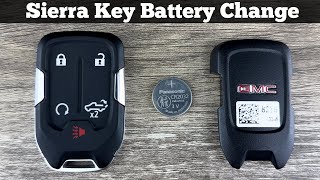
Est. part cost: $0 - Faulty or Damaged Ignition Key / Weak Fob Battery 🔴 High Probability The transponder chip inside the key can be damaged from being dropped, or the battery in push-to-start fobs (typically CR2032) will naturally deplete over time. 🎬 Watch: How to replace your GMC Sierra key fob battery.
How to confirm: Attempt to start the vehicle with a known-good spare key. If the spare key works, the original key is the problem. For push-to-start models, try placing the fob in the designated transmitter pocket (often the front cupholder) which can often read a fob with a very weak battery.
Typical fix: Replace the battery in the key fob (CR2032). If the key's internal transponder has failed, the key must be replaced and programmed to the vehicle by a dealer or qualified locksmith.
Est. part cost: $5-$15 for a battery, $150-$400 for a new programmed key. - Incorrect Flip-Key Position (2017-2018 K2XX Models) 🟡 Medium Probability As documented in TSB PIT5030E, if the flip-key is not fully extended and locked in the straight position, the transponder chip may not align correctly with the antenna in the ignition cylinder, causing an intermittent read failure.
How to confirm: Remove the key from the ignition. Ensure it is fully clicked into the straight, open position. Re-insert the key and attempt to start the vehicle.
Typical fix: User education on proper key operation. No parts required.
Est. part cost: $0 - Faulty Ignition Lock Cylinder / Antenna ⚪ Low Probability The exciter coil/antenna that energizes and reads the key's transponder is part of the ignition lock cylinder housing. The fine wires in this coil can break over time from key insertions and rotation, leading to a permanent B3055.
How to confirm: If all keys fail and there is no RFI, a technician would use a scan tool to monitor the 'TDM Transponder Key' data parameter. If it reads 'Not Present' while wiggling a known-good key, the antenna/cylinder assembly is likely faulty.
Typical fix: Replacement of the ignition lock cylinder housing (e.g., Dorman 924-796 is a common aftermarket part for K2XX) and subsequent programming/relearning of the keys.
Est. part cost: $100-$250
Rare But Worth Checking
- Poor BCM or Chassis Ground Connection: A corroded or loose ground strap can cause intermittent voltage drops to the Body Control Module, leading to a wide range of electrical issues, including security system faults. TSB PIT5689A and 23-NA-201 identify issues with engine/body ground straps (G132, G133, G134) on 2019+ models that can cause no-crank conditions. For K2XX models (2017-18), ground G218 is a known trouble spot for the BCM. 🎬 See how to find and fix the G218 ground connection.
- Faulty Body Control Module (BCM): While rare, the BCM itself can fail. This is usually suspected only after all other possibilities (keys, wiring, antenna, interference, grounds) have been ruled out. This would typically be accompanied by other seemingly unrelated electrical problems.
Diagnosis Steps
- Verify the complaint: Confirm the no-crank/start-stall condition and that the security light is on.
- Check for TSBs: Review TSBs PIC5650M and PIT5030E for context on RFI and flip-key issues.
- Eliminate Interference: Unplug ALL aftermarket electronics (phone chargers, dash cams, etc.) and remove all other RFID devices (other fobs, access cards) from the keychain. Retest with only the single truck key.
- Test with Spare Key: Attempt to start the vehicle with a known-good spare key. If it works, the primary key is faulty. This is the most crucial and simple diagnostic step.
- Check Key Position (2017-2018): For flip-key models, ensure the key is fully extended and locked straight before inserting it into the ignition.
- Use Fob Pocket (Push-to-Start): For 2019-2020 models, place the key fob in the designated transmitter pocket (usually the front cupholder) and attempt to start. This bypasses a weak fob battery.
- Scan for Codes: Use a professional scan tool to read codes from the Body Control Module (BCM). Note if B3055 is current or history, and look for related codes like B3060 or B3935.
- Inspect Wiring and Grounds: Visually inspect the wiring at the ignition lock cylinder. For 2017-18 models, inspect ground G218 behind the driver's side A-pillar. For 2019+ models, inspect engine-to-body ground straps (G110, G114) for corrosion or looseness.
- Advanced Diagnostics: If the issue persists, a technician will use a scan tool to monitor the 'Transponder Key' live data parameter. If it reads 'Not Present' with good keys and no RFI, the ignition lock cylinder/antenna circuit is the primary suspect. 🎬 Watch a technician diagnose a B3055 no-crank condition.
Parts You'll Likely Need
- Ignition Key / Key Fob
(OEM #e.g., 13514135, 13513842 (check by VIN, these are examples for similar GM systems))— The transponder chip in the key is the most common hardware failure point for this code. A new key is required if the internal chip is damaged.
Trusted brands: ACDelco, GM Genuine Parts, Strattec
OEM price range: $150-$300
Aftermarket price range: $70-$150 - Key Fob Battery
(OEM #CR2032)— For push-to-start models, a weak or dead battery is a frequent cause of the 'No Fob Detected' message and B3055 code.
Trusted brands: Duracell, Energizer, Panasonic
OEM price range: $5-$15
Aftermarket price range: $2-$10 - Ignition Lock Cylinder Housing
(OEM #e.g., Dorman 924-796)
Related Codes That Often Appear With This One
- B3060 — This code for "Unlearned Key/Transponder" often appears with B3055 as it relates to the same immobilizer system communication failure, and both are mentioned together in TSBs.
- B3935 — Indicates a transponder circuit failure and is frequently logged alongside B3055 as part of the same immobilizer fault event, as noted in TSB PIC5650M.
Technical Service Bulletins (TSBs) & Recalls
- PIC5650M: Intermittent no crank/start/stall due to Radio Frequency Interference (RFI).
- PIT5030E: Intermittent no-crank due to flip-key not being fully extended.
- N252515590: Customer satisfaction program for corroded body-to-chassis ground strap on 2019+ models.
- PIT5689A / 23-NA-201: Bulletins regarding no-crank conditions on 2019+ models caused by loose or broken engine/body ground straps (G132, G133, G134).
Platform-Specific Known Issues
- A manufacturer Technical Service Bulletin (TSB #PIC5650M) directly addresses an intermittent no crank, no start, or start-stall concern with the security light on, specifically citing DTC B3055. It warns that this can be caused by Radio Frequency Interference (RFI) from aftermarket devices.
- For 2017-2018 models with a flip-key, TSB PIT5030E notes that if the key is not fully extended and locked straight, it can cause an intermittent no-crank and set a B3055 in history.
Mechanic-Grade Diagnostic Values
- System Voltage During Diagnostics/Programming — expected: Above 12.0 Volts. Failure: Voltage below 12.0V can cause erratic BCM behavior and failed programming procedures. A battery charger should be connected.
- Scan Tool Live Data: 'TDM Transponder Key' or 'BCM Key Part Number' — expected: Should read 'Present' or display a key part number when a valid key is in the ignition.. Failure: Reading 'Not Present' or no part number displayed indicates the BCM is not receiving a signal from the key's transponder.
Hidden / Shadow Codes Worth Checking
- B3055 00: The '00' is a standard GM symptom byte for 'No Sub Type Information'. It means the base DTC (B3055) provides the complete description of the failure, and no more granular detail is available from the module. (see via Dealer-level scan tools like GM GDS2 or some high-end aftermarket scanners.)
Scan Tool Commands That Help
- GM GDS2 / Techline Connect: Immobilizer Learn / Add Key — Used to program new or additional keys to the vehicle's immobilizer system after replacing a key or the BCM. This is a required step for a new key to be recognized.
- GM GDS2 / Techline Connect: BCM Programming/Setup — Required after replacing the Body Control Module (BCM). This function downloads the correct software and vehicle options into the new module from GM's servers.
- GM GDS2 / Techline Connect: Setup SDM Primary Key in BCM — After a BCM replacement, this function is used to synchronize the new BCM with the Sensing and Diagnostic Module (airbag system) to prevent a B1001 configuration error code.
Wiring & Ground Locations
- G218 — On 2017-2018 (K2XX) models, located on the driver's side, behind the dash panel, near the A-pillar and speaker.. This is a primary ground point for the Body Control Module (BCM). A poor connection, sometimes caused by dash insulation getting trapped under the ground nut, can cause intermittent BCM power loss and trigger security faults like B3055.
- G110 / G114 — On 2019-2020 (T1XX) models, these are key chassis ground connections. G110 is often located on the frame rail in the engine compartment area.. GM issued engineering information (PIE0548) to investigate loose connections at these grounds causing various electrical issues, including potential no-start conditions that could be related to BCM operation.
- BCM Location (K2XX) — On 2017-2018 models, the BCM is located behind the driver-side lower dashboard panel, to the left of the steering column and often near the interior fuse block.. This is the module that reads the key data and controls the immobilizer. Knowing its location is critical for checking its connections and ground (G218).
Real Owner Repair Stories
- Mechanic anecdote from online forums (2017 Chevrolet Spark (similar GM immobilizer system)) — Intermittent no-start with B3055, would sometimes resolve itself after sitting.
❌ Tried (didn't work) Replacing key fob battery, Dealer inspection of keys
✅ What actually fixed it An improperly installed aftermarket remote starter was found to be back-feeding a small amount of voltage into the immobilizer circuit, confusing the BCM. Removing the aftermarket remote start system permanently resolved the code. - Documented case on a similar Opel platform (GM vehicle with Passkey III+ system) — B3055 code and no-start condition after the main vehicle battery had died.
❌ Tried (didn't work) Initial assumption was a faulty key or BCM.
✅ What actually fixed it The key had lost its programming due to the complete power loss. The fix was to use a professional scan tool to re-program the existing, perfectly good key back to the vehicle's immobilizer module. No parts were replaced.
"I Checked Everything" — The Actual Cause
- A common scenario for this code is when all keys fail, there is no radio interference, and the ignition antenna seems okay, but the B3055 code persists. The actual cause was found to be a poor BCM ground at G218 (on K2XX models), which caused intermittent power to the module responsible for reading the key. Cleaning and tightening the ground resolved the issue.
When the Usual Fixes Don't Work
- In a reported case for a similar GM system, an intermittent B3055 and no-start condition was not resolved by replacing keys or checking for RFI. The owner discovered that disconnecting the main vehicle battery for several hours would temporarily resolve the issue. This pointed towards a module-level problem, likely a poor ground (like G218) or an internal BCM fault that would reset with a hard power cycle. The ultimate fix was tracing and repairing a poor BCM ground connection.
Model Year Variations Within This Range
- 2017-2018 (K2XX Platform): Primarily uses a flip-style ignition key. Subject to TSB PIT5030E where the key not being fully extended causes B3055. The BCM is located on the driver's side dash and its primary ground is G218, a known trouble spot.
- 2019-2020 (T1XX Platform): Primarily uses a push-button start system. The emergency start procedure involves placing the fob in the transmitter pocket (front cupholder). This platform has known issues with loose chassis grounds at G110 and G114 per TSB PIE0548.
Helpful Videos

We Have This Part in Stock


The information in this article is provided for general reference and educational purposes only. Vehicle specifications, procedures, and part compatibility can vary by production date, trim level, and region. Always consult your vehicle's factory service manual and verify part numbers before purchasing or performing repairs. Safety-critical components such as airbags, seat belts, and braking systems should be installed by a qualified professional.
- Gmc SIERRA DENALI:
- 🎬 Helpful Videos
- 🛍️ Shop This Part
- What's Unique About the 2017-2020 Gmc SIERRA DENALI
- Diagnostic Flowchart
- Symptoms You May Notice
- Most Likely Causes
- Rare But Worth Checking
- Diagnosis Steps
- Parts You'll Likely Need
- Related Codes That Often Appear With This One
- Technical Service Bulletins (TSBs) & Recalls
- Platform-Specific Known Issues
- Mechanic-Grade Diagnostic Values
- Hidden / Shadow Codes Worth Checking
- Scan Tool Commands That Help
- Wiring & Ground Locations
- Real Owner Repair Stories
- "I Checked Everything" — The Actual Cause
- When the Usual Fixes Don't Work
- Model Year Variations Within This Range
- 🎟️ Get 5% Off