

B3055 on 2007-2011 GMC Sierra Denali: No Start, Security Light Causes & Fixes
This code means your truck's security system can't read your key, causing a no-start. The most common fixes are trying a spare key, removing RFID-blocking cards from your keychain, or replacing a faulty ignition key. A new key costs $70-$150 and requires programming. Sometimes, a simple 30-minute 'relearn' procedure can resolve the issue without any parts.
- B3055 means your truck's anti-theft system has disabled the engine because it cannot read the key.
- Before calling a mechanic, try your spare key. This is the fastest and cheapest diagnostic step.
- Remove all other cards and fobs from your keychain to eliminate radio frequency interference as a cause.
- If you need a new key or module, be aware that programming by a dealer or a locksmith with the correct tools is required.
What's Unique About the 2007-2011 Gmc SIERRA DENALI
The GMT900 platform, which includes the 2007-2011 Sierra, uses the Passkey III+ (PK3+) immobilizer system. This system is known for being sensitive to radio frequency (RF) interference. GM has issued several service bulletins acknowledging that intermittent no-start conditions with a B3055 code can be caused by something as simple as a workplace ID badge or a gas station payment fob kept next to the ignition key. The communication between the key, TDM, and Body Control Module (BCM) is critical; a failure at any point in this chain will trigger the security lockout.
Diagnostic Flowchart
Tap your situation to follow the diagnostic path that matches what you're seeing on this vehicle.
Symptoms You May Notice
- Engine will not crank or start.
- Engine starts and then immediately stalls (within 2-3 seconds).
- Security light is illuminated or flashing on the instrument cluster.
- "Service Theft Deterrent System" message may appear on the driver information center.
- A single, audible 'click' from the engine bay when turning the key to 'START', but the starter does not engage.
- Replacing the starter motor. A no-crank condition caused by the security system is often mistaken for a bad starter, but the security light is the key indicator.
- Replacing the battery. While low battery voltage can cause many electrical issues, it's not the root cause of a B3055 code if the security light is on and the engine refuses to crank. However, a fully charged battery is required for the relearn procedure to work.
Most Likely Causes
- Faulty or Damaged Ignition Key 🔴 High Probability The transponder chip in the key head is small and can be damaged from drops, water exposure, or simple wear over time. The vehicle is delivered with two keys to aid in diagnosing this exact issue.
How to confirm: Try starting the vehicle with a known-good spare key. If the spare key works consistently, the original key is faulty.
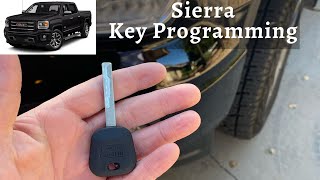
Typical fix: Replace the faulty key. A new key must be cut and then programmed to the vehicle's Theft Deterrent Module. This can be done via a scan tool or the 30-minute relearn procedure. 🎬 Watch: Step-by-step guide to programming your new transponder key.
Est. part cost: $70-$150 - Radio Frequency (RF) Interference 🟡 Medium Probability As noted in GM TSBs PIC5650M and PIE0232, the Passkey III+ system is susceptible to interference from other RFID-enabled cards or fobs (e.g., building access cards, speed pass fobs) on the same keychain.
How to confirm: Remove all other keys, fobs, and cards from the ignition key ring. Try to start the vehicle with the ignition key by itself. If it starts, RF interference was the cause.
Typical fix: Keep other RFID-enabled devices separate from the ignition key when starting the vehicle.
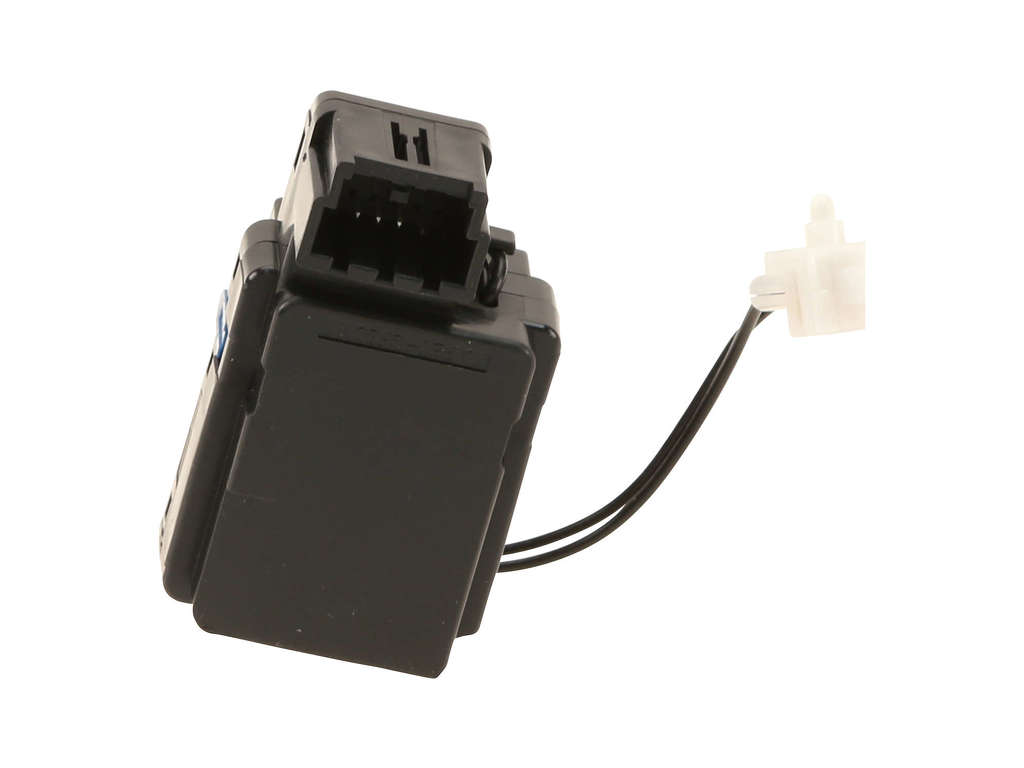
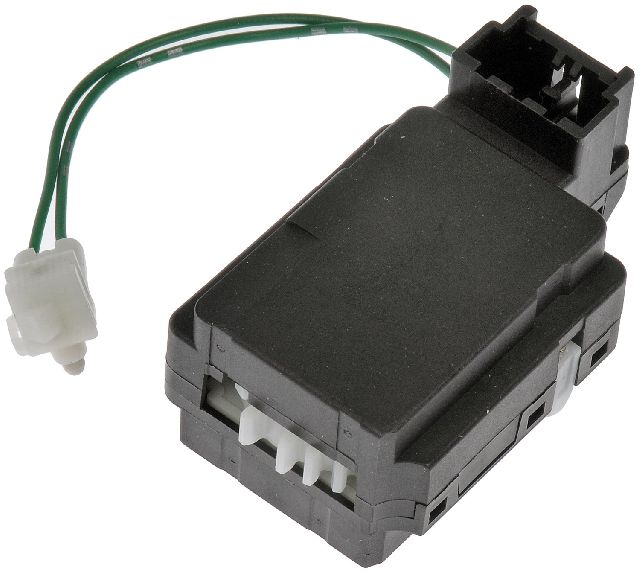
Est. part cost: $0 - Worn or Faulty Ignition Lock Cylinder / Exciter Coil ⚪ Low Probability The exciter coil is a fine wire antenna that energizes the key's transponder. Over many years and ignition cycles, this component or its wiring can fail. It is integrated into the ignition lock cylinder housing.
How to confirm: If multiple known-good keys fail to start the vehicle and the 30-minute relearn procedure also fails, the problem likely lies within the vehicle's hardware. A technician would test the wiring and resistance of the exciter coil at the TDM connector before condemning the part.
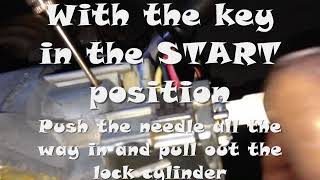
Typical fix: Replace the ignition lock cylinder assembly. 🎬 Watch: How to remove and install a new ignition lock cylinder. This part will require a key relearn procedure to be performed after installation.
Est. part cost: $120-$250
Rare But Worth Checking
- Faulty Theft Deterrent Module (TDM) or Body Control Module (BCM): While less common, the module that reads the key (TDM) or the central body computer (BCM) can fail internally. Symptoms often overlap with other electrical issues like erratic lights, door locks, or parasitic battery drain. This is usually diagnosed after all other possibilities (keys, wiring, exciter coil) have been ruled out.
- Incorrect Flip-Key Position: On models with a flip-style key, if the key is not fully extended and locked straight, it can be misaligned with the exciter coil, triggering a B3055 code. Ensure the key is fully locked open before inserting it into the ignition.
- Wiring Harness Issues: Chafed or broken wires in the steering column harness between the ignition lock cylinder and the TDM can cause an intermittent or total loss of signal. This can be caused by repeated use of the tilt/telescope steering wheel function over many years. A visual inspection of the harness is required.
Diagnosis Steps
- Verify the complaint and check if the security light is on or flashing.
- Scan for DTCs in the Theft Deterrent Module (TDM) and Body Control Module (BCM). Note all codes present.
- Remove all other fobs, cards, and keys from the key ring. Attempt to start the vehicle with the key alone.
- Attempt to start the vehicle with a second, known-good spare key. If it starts, the primary key is faulty.
- If using a flip key, ensure it is fully extended and locked in the open position before inserting it into the ignition.
- Attempt the 30-Minute Key Relearn Procedure (DIY Method): 1. Ensure the battery is fully charged. Connect a battery charger if possible. 2. Turn the ignition key to the 'ON' position (do not start the engine). The security light should be on. 3. Wait for approximately 10-11 minutes, or until the security light turns off. 4. Turn the key to 'OFF' for 5-10 seconds. 5. Repeat steps 2-4 two more times for a total of three cycles (30+ minutes total). 6. After the third cycle, turn the key off, then try to start the engine. If it starts, the system has relearned the key. 🎬 See this video for a visual walkthrough of the relearn procedure.
- If no keys work and the relearn fails, inspect the wiring and connectors at the ignition lock cylinder and the TDM/BCM for damage or corrosion.
- Using a capable scan tool, monitor the immobilizer data parameters to see if the TDM is recognizing a key is present. If the parameter reads 'Not Present' for all keys, the issue is likely the exciter coil or wiring.
Parts You'll Likely Need
- Transponder Ignition Key
(OEM #25832354 (Key Blank, Circle+))— The transponder chip inside the key is the most common failure point for this code.
Trusted brands: ACDelco, Strattec
OEM price range: $70-$120
Aftermarket price range: $40-$80 - Ignition Lock Cylinder with Passkey Housing
(OEM #ACDelco D1462G (replaces GM 15795321))— If multiple keys fail to work, the exciter coil that reads the key, which is part of the lock cylinder assembly, may be faulty.
Trusted brands: ACDelco, Dorman (p/n 924-716)
OEM price range: $150-$250
Aftermarket price range: $80-$150
Related Codes That Often Appear With This One
- B3060 — This code often appears with B3055 and relates to a failure in the transponder key system, indicating a problem with the key data itself.
- B3935 — This code indicates a transponder circuit failure and is frequently logged alongside B3055 and B3060 as part of the same immobilizer fault event.
- U0140 — If the Body Control Module (BCM) is failing, you may see this code, indicating 'Lost Communication With Body Control Module', along with B3055 and other electrical symptoms.
Technical Service Bulletins (TSBs) & Recalls
- PIC5650M: Addresses intermittent no crank/no start/stall with security light on and DTCs B3055, B3060, B3935.
- PIE0232: Engineering information request for low-mileage vehicles with no-start and B3055, B3060, or B3935, investigating root cause, specifically mentioning RF interference.
- PIC5650B: Diagnostic tip pointing to RF interference from devices on the key ring as a potential cause.
- PIT5030E: Diagnostic tip for intermittent no-crank caused by flip-keys not being fully extended.
Platform-Specific Known Issues
- This vehicle range is covered by TSB PIC5650M, which notes intermittent no-crank, no-start, or start/stall conditions with the security light on, specifically citing DTC B3055.
- TSB PIE0232 was an engineering request for low-mileage trucks with B3055, asking technicians to verify no RF devices were near the key before proceeding with other diagnostics.
- TSB PIT5030E points out that flip keys not being fully extended can cause a B3055 code on some GM models.
Mechanic-Grade Diagnostic Values
- Scan Tool Immobilizer Data Parameter — expected: The 'TDM Transponder Key' parameter should read 'Present', or the 'BCM Key Part Number' should display a valid number when a known-good key is in the ignition.. Failure: Parameter reads 'Not Present' or 'No Key Detected'. If this occurs with all available keys, the issue is likely with the vehicle's exciter coil, wiring, or TDM/BCM.
- High-Speed GMLAN Bus Resistance — expected: Approximately 60 ohms. Failure: A reading of approximately 120 ohms indicates an open in the bus (e.g., a broken wire or disconnected module). A reading near 0 ohms indicates a short between the two LAN wires. This test is performed with the battery disconnected by measuring resistance between Pin 6 and Pin 14 of the DLC.
Hidden / Shadow Codes Worth Checking
- B3055 00: The '00' is a symptom byte provided by dealer-level scanners like the Tech2 or GDS2. It specifies 'No Transponder Modulation or No Transponder' as the direct cause, distinguishing it from other potential failure modes within the same DTC family. (see via GM Tech2 or GDS2 Scan Tool)
Scan Tool Commands That Help
- GDS2 / Tech2: Immobilizer Data / TDM Data Display — This is the primary diagnostic step to determine if the vehicle's computer is electronically 'seeing' the key's transponder chip at all. It quickly differentiates between a key problem and a vehicle-side problem.
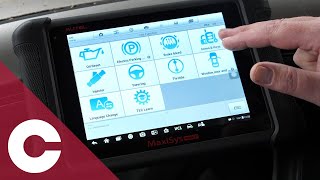
- GDS2 / Tech2 / Professional Aftermarket Scanner: Add/Replace Keys (Immobilizer Learn) — This function is required after replacing a key or the BCM/TDM. It initiates the security relearn procedure, which can be a 10-minute automated process with the scan tool, often more reliable than the 30-minute manual method.
Wiring & Ground Locations
- BCM (Body Control Module) — Located on the driver's side, under the dashboard to the left of the steering column, often near the parking brake pedal assembly.. The BCM contains the Theft Deterrent Module (TDM) logic for the Passkey III+ system. All communication from the key's exciter coil is processed here.
- BCM Fuse — In the interior fuse panel located at the far left of the instrument panel, accessible when the driver's door is open. It is often labeled as fuse #15.. A blown fuse will cause a complete loss of BCM/TDM function, resulting in a no-start and likely setting this code.
- BCM Grounds — Key ground points for the chassis are located on the firewall, and on the A and B pillars. Specific BCM ground paths run through various connectors and splice packs.. A poor ground connection to the BCM can cause intermittent and difficult-to-diagnose electrical issues, including immobilizer faults. Per GM bulletin, the negative battery cable must be disconnected before servicing BCM grounds to prevent module damage.
Real Owner Repair Stories
- YouTube channel 'Hands On Auto Training' (2015 Chevrolet Malibu (different vehicle, but identical code and Passkey system logic)) — No crank, no start condition. Security light was on. Scan tool revealed DTC B3055.
❌ Tried (didn't work) Clearing the codes (B3055 returned immediately).
✅ What actually fixed it The transponder in the original key had failed. A new key was cut and programmed to the vehicle using a professional scan tool (Auto Propad) to perform the 10-minute security learn procedure. The vehicle started immediately after. - YouTube channel 'Automotriz en Video' (2013 Chevrolet Silverado (same platform)) — No start, security light on, multiple immobilizer codes including B3055 and B3060.
❌ Tried (didn't work) Initial attempts to start the vehicle failed.
✅ What actually fixed it The technician used a professional scan tool to access the immobilizer functions and perform a key relearn procedure. After the automated relearn process completed, the codes were cleared and the truck started normally, indicating a software/key memory corruption issue that was resolved by the relearn.
When the Usual Fixes Don't Work
- While the 30-minute DIY key relearn procedure is a valid and often successful fix, professional repair stories frequently show technicians using a scan tool (GDS2, Autel, etc.) to initiate a faster, 10-minute automated relearn. This method provides more diagnostic feedback and can be more reliable. Additionally, a 'faulty key' can mean the invisible transponder chip has failed internally, even if the key fob's remote lock/unlock buttons still function perfectly.
OEM Part Supersession History
15216929, 19149940, 88964357→15795321— Standard part consolidation and revision by the manufacturer.
Heads up: The current part, 15795321 (also sold as ACDelco D1462G), is the correct service replacement for the earlier numbers and should be fully compatible.
Model Year Variations Within This Range
- 2010-2011: Models in these years may be equipped with a flip-style key. These keys can set a B3055 if not fully extended and locked straight when inserted into the ignition, as documented in TSB PIT5030E.
Helpful Videos
We Have This Part in Stock


The information in this article is provided for general reference and educational purposes only. Vehicle specifications, procedures, and part compatibility can vary by production date, trim level, and region. Always consult your vehicle's factory service manual and verify part numbers before purchasing or performing repairs. Safety-critical components such as airbags, seat belts, and braking systems should be installed by a qualified professional.
- Gmc SIERRA DENALI:
- 🎬 Helpful Videos
- 🛍️ Shop This Part
- What's Unique About the 2007-2011 Gmc SIERRA DENALI
- Diagnostic Flowchart
- Symptoms You May Notice
- Most Likely Causes
- Rare But Worth Checking
- Diagnosis Steps
- Parts You'll Likely Need
- Related Codes That Often Appear With This One
- Technical Service Bulletins (TSBs) & Recalls
- Platform-Specific Known Issues
- Mechanic-Grade Diagnostic Values
- Hidden / Shadow Codes Worth Checking
- Scan Tool Commands That Help
- Wiring & Ground Locations
- Real Owner Repair Stories
- When the Usual Fixes Don't Work
- OEM Part Supersession History
- Model Year Variations Within This Range
- 🎟️ Get 5% Off