

B3055 on 2022-2026 GMC Savana: Key Transponder Fault & No-Start Causes
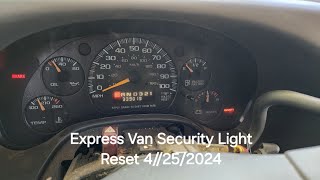
Code B3055 on a GMC Savana means the vehicle's anti-theft system can't read your key, causing a no-start and a security light. The most common fix is replacing a faulty key, which requires professional programming. Always try your spare key first, and ensure flip keys are fully extended.
- B3055 means your van's security system doesn't recognize your key, preventing it from starting.
- Before calling for a tow, try your spare key. This is the simplest and most effective first step.
- If you have a flip-style key, make sure it's fully locked in the straight position before inserting it into the ignition.
- A weak or dead vehicle battery can cause this code; always ensure your battery is in good health.
- Repair almost always requires a new key or component to be professionally programmed to the vehicle.
What's Unique About the 2022-2026 Gmc SAVANA
The GMC Savana and its twin, the Chevrolet Express, use a long-established GM anti-theft system (Passkey III+). This system uses a Philips 46 (Circle+) transponder chip in the key. While generally reliable, this system is sensitive to key health, battery voltage, and even radio frequency interference. The issue is common enough that GM has issued multiple Technical Service Bulletins (TSBs) across its truck and van lineup, including guidance that addresses intermittent no-start conditions related to this code. One specific TSB, PIT5030E, notes that even having a flip-style key not fully extended can cause a B3055 code.
Diagnostic Flowchart
Tap your situation to follow the diagnostic path that matches what you're seeing on this vehicle.
Symptoms You May Notice
- Engine will not crank or start.
- Engine starts briefly then immediately stalls.
- Security light on the dashboard is illuminated solid or flashing.
- A "No Key Detected" or "Theft Attempted" message may appear on the driver information center (if equipped).
- Remote start function is disabled.
- Replacing the starter motor when the no-crank is caused by the security system.
- Replacing the battery without first checking for security-related trouble codes.
Most Likely Causes
- Faulty Ignition Key 🔴 High Probability The transponder chip (Philips 46 Circle+) embedded in the key head can be damaged from being dropped, getting wet, or simply failing internally over time. The key's plastic housing can also break, leading to damage.
How to confirm: The easiest test is to try a known-good spare key. If the vehicle starts with the spare, the original key is faulty. A professional can also use a scan tool to see if a key is being detected. A technician in a video demonstrated how an intermittent key failure caused a B3055, which was resolved by cloning the chip to a new one.
Typical fix: The faulty key must be replaced. A new key must be cut and then electronically programmed to the vehicle using specialized equipment.
Est. part cost: $70-$150 - Faulty Ignition Lock Cylinder / Transponder Reader 🟡 Medium Probability The exciter coil, a ring around the ignition lock cylinder that powers and reads the key's transponder, can fail or develop a poor connection. The lock cylinder itself can also wear out mechanically.
How to confirm: A technician can use a scan tool to monitor data from the Theft Deterrent Module. If no key is detected with multiple known-good keys, the reader is suspect. The wiring harness to the reader should also be inspected for damage.
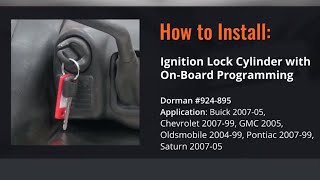
Typical fix: Replacement of the ignition lock cylinder housing, which typically contains the transponder reader coil. This often comes as a kit with new keys. 🎬 See this step-by-step walkthrough for replacing the ignition lock cylinder.
Est. part cost: $100-$250 - Radio Frequency Interference (RFI) ⚪ Low Probability Other electronic devices on the keychain (like other car keys, fobs, or building access cards) can emit radio signals that interfere with the low-power signal from the key's transponder.
How to confirm: Remove all other keys, fobs, and RFID-enabled items from the keychain. Try starting the vehicle with only the single GMC key.
Typical fix: Keep other electronic devices and RFID cards away from the ignition key when starting the vehicle.
Est. part cost: $0 - Low Vehicle Battery Voltage ⚪ Low Probability Control modules, especially the BCM, can behave erratically when system voltage is low, potentially causing communication errors within the security system and setting false codes. A fully charged battery is required to perform relearn procedures.
How to confirm: Test the vehicle's battery with a multimeter or battery tester. A resting voltage should be above 12.4V.
Typical fix: Charge or replace the vehicle's 12V battery.
Est. part cost: $150-$300
Rare But Worth Checking
- Faulty Body Control Module (BCM): While rare, the BCM is the central computer for this system. A failing BCM can cause a host of erratic electrical issues, including security system problems. If all other components (key, reader, wiring) test good, the BCM itself may be the issue. This is an expensive last resort that requires programming upon replacement.
- Damaged Wiring Harness: The wires connecting the transponder reader to the BCM can become chafed, broken, or develop a poor connection, especially in the tilt steering column area, leading to an intermittent or total loss of signal.
- Improper Key Use (Flip Keys): As noted in GM TSB PIT5030E, if the vehicle is equipped with a flip-style key, not having the key fully extended and locked straight can cause the transponder to be misread by the exciter coil, setting a B3055.
Diagnosis Steps
- Scan the Body Control Module (BCM) for B3055 and any other related codes. Note if the code is current or history.
- Check the security light on the dash. Note if it is on solid or flashing.
- Try to start the vehicle with a known-good spare key. If it starts, the primary key is the problem.
- Remove all other keys, fobs, and RFID cards from the key ring and try again to rule out interference.
- If using a flip key, ensure it is fully extended and locked straight before inserting it into the ignition.
- Check the vehicle's battery voltage to ensure it is above 12.4V. A low battery can cause modules to set false codes.
- Inspect the wiring and connector at the ignition lock cylinder for any visible damage or looseness.
- If the problem persists, professional diagnosis with a scan tool is required to monitor the key transponder data and test the functionality of the transponder reader and BCM.
- If all keys fail to start the vehicle, the issue is more likely the transponder reader (exciter coil) or the BCM itself.
Parts You'll Likely Need
- Transponder Ignition Key
(OEM #23300334)— This is the most common point of failure. The internal Philips 46 (Circle+) transponder chip fails, preventing the security system from authorizing a start.
Trusted brands: ACDelco (GM Genuine), Strattec
OEM price range: $70-$120
Aftermarket price range: $20-$80 - Ignition Lock Cylinder with Transponder Reader
(OEM #D1499C (Ignition Switch component, often related))— If the key is not the issue, the reader coil that energizes and reads the key's chip is the next most likely component to fail. It is often part of the ignition lock cylinder assembly.
Trusted brands: ACDelco, Dorman, Locksmart
OEM price range: $150-$250
Aftermarket price range: $80-$150
Related Codes That Often Appear With This One
- B3060 — This code often relates to an unprogrammed transponder or a failure in the transponder reading circuit, directly related to B3055.
- B3935 — This code can indicate a transponder circuit malfunction, which is part of the same system that sets B3055.
- B2955 — Indicates a security sensor data circuit malfunction, which can be set alongside B3055 when the BCM has issues communicating with the key transponder components.
Technical Service Bulletins (TSBs) & Recalls
- PIC5650M: Addresses intermittent no crank, no start, or start stall concern with the security light coming on, and lists DTC B3055 as a related code.
- PIT5030E: Diagnostic tip for intermittent no-crank caused by a flip key not being fully extended, which can set B3055.
Platform-Specific Known Issues
- A GM Technical Service Bulletin (TSB #PIC5650M) acknowledges an intermittent no crank, no start, or start/stall concern with the security light on, specifically listing B3055 as a potential diagnostic code.
- TSB #PIT5030E specifically calls out that using a flip-style key that is not fully extended and locked can cause an intermittent no-crank and set a B3055 code in history.
Mechanic-Grade Diagnostic Values
- Theft Deterrent Module Ground Circuit Resistance — expected: Less than 10 ohms. Failure: A reading greater than 10 ohms indicates an open or high resistance in the ground circuit, which can cause the module to malfunction.
- Theft Deterrent Module Power Supply — expected: B+ (Battery Voltage). Failure: Voltage significantly lower than battery voltage indicates an open or high resistance in the power feed circuit to the module.
Scan Tool Commands That Help
- GDS2 (GM Global Diagnostic System 2): BCM Data Display: 'Transponder Key' parameter — This live data parameter should display 'Present' when a valid, programmed key is in the ignition. If it shows 'Not Present' with a known-good key, it points towards a faulty transponder reader (exciter coil) or its wiring. If it shows 'Not Present' with only one of several keys, that specific key is faulty.
- GDS2 (GM Global Diagnostic System 2): Immobilizer Learn / Key Programming — This function is required after replacing a key, the BCM, or the TDM. The GDS2 tool can initiate and complete the key learning process in under 10 minutes, which is much faster than the manual 30-minute procedure.
- GDS2 (GM Global Diagnostic System 2): Clear All DTCs — After a repair, such as replacing a key or fixing a wiring issue, use this function to clear the B3055 code. A history DTC for B3055 will clear on its own after 100 malfunction-free ignition cycles, but clearing it with a scan tool is necessary for immediate verification of the fix.
Wiring & Ground Locations
- G103, G104, G105, G106 — G103 is located at the rear of the left-hand engine cylinder head. G104, G105, and G106 are primary underhood ground connections, often on the engine block or nearby chassis points.. Improper or corroded grounds, particularly for the engine and BCM, can cause low system voltage or electrical noise, leading to erratic module behavior and false security codes like B3055. A GM TSB regarding relocated batteries highlights the importance of grounding the battery directly to the engine, and ensuring these specific grounds are clean and secure.
- BCM (Body Control Module) Connectors — Located in the dashboard, often behind the driver's side dash or under the steering column.. The BCM is the hub for the Passkey III+ system. The wiring from the ignition switch's transponder reader coil connects directly to the BCM. Any damage, looseness, or corrosion at these connector pins can interrupt the signal from the key and trigger a B3055.
Real Owner Repair Stories
- YouTube channel 'ADD AUTOMOBILE SERVICES' (2013 Chevrolet Equinox (uses a similar Passkey system)) — Intermittent no-start with security light staying on. Scan tool showed code B3055 'No transponder modulation'.
❌ Tried (didn't work) The original key would sometimes work and sometimes not, indicating an intermittent failure.
✅ What actually fixed it The technician used a key cloning tool (VVDI Key Tool) to read the data from the intermittently failing original key and write it to a new transponder chip. He then placed the new, cloned chip inside the original key's housing. This resolved the intermittent no-start, as the new chip provided a consistent signal.
Model Year Variations Within This Range
- 2014+: The official GM diagnostic software for all vehicles 2014 and newer is the Global Diagnostic System 2 (GDS2). Older models may have used the Tech2/Tech2Win software. For the 2022-2026 Savana, GDS2 is the correct dealer-level tool.
Helpful Videos
We Have This Part in Stock


The information in this article is provided for general reference and educational purposes only. Vehicle specifications, procedures, and part compatibility can vary by production date, trim level, and region. Always consult your vehicle's factory service manual and verify part numbers before purchasing or performing repairs. Safety-critical components such as airbags, seat belts, and braking systems should be installed by a qualified professional.
- Gmc SAVANA:
- 🎬 Helpful Videos
- 🛍️ Shop This Part
- What's Unique About the 2022-2026 Gmc SAVANA
- Diagnostic Flowchart
- Symptoms You May Notice
- Most Likely Causes
- Rare But Worth Checking
- Diagnosis Steps
- Parts You'll Likely Need
- Related Codes That Often Appear With This One
- Technical Service Bulletins (TSBs) & Recalls
- Platform-Specific Known Issues
- Mechanic-Grade Diagnostic Values
- Scan Tool Commands That Help
- Wiring & Ground Locations
- Real Owner Repair Stories
- Model Year Variations Within This Range
- 🎟️ Get 5% Off