

B3055 on 2012-2016 Gmc SAVANA: Key Not Recognized, No-Start Causes & Fixes
On a 2012-2016 GMC Savana, code B3055 typically indicates a problem with the vehicle's anti-theft system (Passkey III). This usually happens because the security transponder in the key is damaged, the ignition lock cylinder that reads it has failed, or radio frequency interference is blocking the signal. This results in a no-start or start-and-stall condition. The most common fixes are trying a spare key, removing interference sources, or replacing the ignition lock cylinder.
- B3055 means your van's security system doesn't recognize your key, preventing it from starting.
- Before attempting any repairs, try your spare key. If it works, the original key is the problem.
- Remove all other electronic fobs and cards from your keychain to rule out radio frequency interference, a common and free-to-fix issue.
- If a new key doesn't solve the problem, the ignition lock cylinder is the next most likely part to have failed.
- Due to the need for key programming, this repair often requires a visit to a professional locksmith or dealer.
What's Unique About the 2012-2016 Gmc SAVANA
The GMC Savana, a long-running work van platform, uses GM's standard Passkey III immobilizer system. These systems are generally reliable but are a known point of failure as vehicles age. The issue is rarely with the main computer (BCM/TDM) but rather with the physical components that see daily use: the key itself and the ignition lock cylinder where the key is inserted. The constant use in a commercial vehicle like the Savana can accelerate wear on these parts. Its identical twin, the Chevrolet Express, experiences the exact same failure modes.
Diagnostic Flowchart
Tap your situation to follow the diagnostic path that matches what you're seeing on this vehicle.
Symptoms You May Notice
- Vehicle will not crank when the key is turned
- Engine starts but stalls immediately after
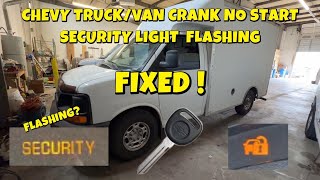
- Security light (often a car with a lock symbol) is illuminated or flashing on the dashboard. 🎬 Watch: Troubleshooting a van that won't start with a flashing security light.
- "Service Theft Deterrent System" message may appear on the Driver Information Center (DIC).
- Starter Motor
- Fuel Pump
Most Likely Causes
- Damaged or Defective Ignition Key 🔴 High Probability Keys get dropped, wet, or the internal transponder chip can fail over time. This is a common issue across all vehicles with a transponder key system. A technician on Reddit shared a story of a B3055 code caused by a key that was physically broken and falling apart.
How to confirm: The simplest test is to try starting the vehicle with a spare key. If the spare key works and the primary key doesn't, the primary key is the issue. A locksmith or dealer can also test the transponder signal.
Typical fix: Replace the faulty key. A new key must be cut and programmed to the vehicle using a 30-minute relearn procedure or a scan tool.
Est. part cost: $70-$150 - Radio Frequency Interference (RFI) 🟡 Medium Probability Other electronic devices on the keychain or in the vehicle can interfere with the low-power 125 kHz signal from the key's transponder. GM TSB PIC5650M specifically warns that aftermarket devices like LED lights, USB phone chargers, and even building access cards on the keychain can cause this issue.
How to confirm: Remove all other keys, fobs, and RFID cards (like building access cards or gas station speed passes) from the key ring. Unplug any aftermarket chargers or accessories. Try starting the vehicle with the key isolated from any other devices.
Typical fix: Separate the ignition key from other electronic devices. This is a no-cost diagnostic and fix.
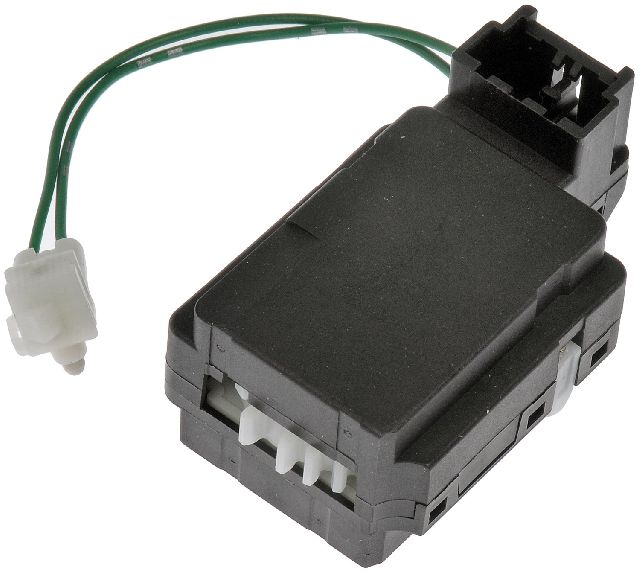
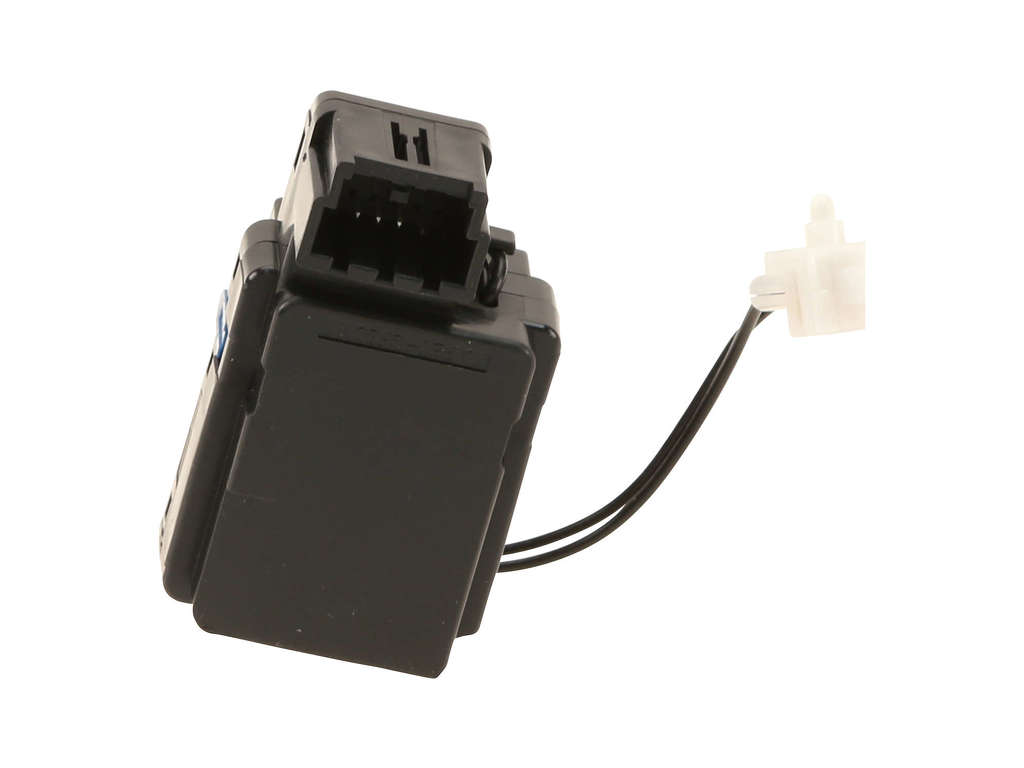
Est. part cost: $0 - Faulty Ignition Lock Cylinder/Reader 🟡 Medium Probability The ignition lock cylinder houses the exciter coil that powers the key's transponder and reads its signal. This component sees wear and tear with every start and can fail, leading to an inability to energize or read the key chip.
How to confirm: This requires diagnostic testing, checking for signal and power at the connector for the Theft Deterrent Module. If both keys fail to work and there is no RFI, the lock cylinder is a likely suspect.
Typical fix: Replace the ignition lock cylinder and perform a key relearn procedure.
Est. part cost: $100-$250 - Low Battery Voltage ⚪ Low Probability Like many electronic modules, the Theft Deterrent Module is sensitive to low voltage, which can cause communication errors and false codes. A technician confirmed a case where a B3055 was present alongside a battery testing at only 10.5V; replacing the battery and programming a new key resolved the issue.
How to confirm: Test the vehicle's battery with a multimeter. A healthy, resting battery should be at or above 12.4 volts. A battery load test is a more definitive confirmation.
Typical fix: Charge or replace the vehicle battery.
Est. part cost: $150-$300
Rare But Worth Checking
- Faulty Body Control Module (BCM) or Theft Deterrent Module (TDM): This is the least likely cause. The BCM/TDM should only be considered after all other possibilities (key, wiring, lock cylinder) have been definitively ruled out through proper diagnostics.
- Wiring Harness Damage: Damage to the wiring between the ignition lock cylinder and the BCM/TDM can cause a loss of signal. This is uncommon but possible, especially in older work vehicles where the dash may have been disassembled for other repairs.
- Flip-Style Key Not Fully Extended: TSB PIT5030E notes that if a flip-style key is not fully locked in the open position, the angle can be enough to prevent the transponder from being read correctly, setting a B3055 code. The fix is to simply ensure the key is fully extended before inserting it.
Diagnosis Steps
- Verify the complaint. Confirm the no-crank or start-and-stall condition and check for an illuminated security light or DIC message.
- Scan for codes. Use a scan tool capable of reading GM body codes to confirm B3055 is present.
- Check the key. Try a known-good spare key. If it works, the original key is faulty.
- Eliminate Radio Frequency Interference (RFI). Per TSB PIC5650M, remove all other fobs, cards, aftermarket LED lights, and electronics from the keychain and vehicle interior and try again.
- Check the vehicle's main battery. Ensure it has a full charge (12.4V+) and perform a load test if possible. A weak battery can cause various electronic issues.
- Inspect the ignition lock cylinder wiring. Check for any visible damage or loose connections at the lock cylinder.
- If the problem persists, the vehicle likely needs professional diagnosis to test the signal from the ignition lock cylinder's reader coil and determine if the fault lies in the cylinder, wiring, or the BCM/TDM itself.
- If the ignition lock cylinder or key is replaced, perform the 30-Minute Key Relearn Procedure. 🎬 Watch: How to program a new key using the relearn procedure.
Parts You'll Likely Need
- Transponder Key
(OEM #13504100 (GM), B119-PT (Aftermarket))— The chip inside the key is a common point of failure, either from damage or age.
Trusted brands: ACDelco, Strattec
OEM price range: $100-$200
Aftermarket price range: $50-$100 - Ignition Lock Cylinder
(OEM #20869121 (ACDelco), 709271 (Strattec))— This part contains the reader that communicates with the key. It is a mechanical and electronic wear item.
Trusted brands: ACDelco, Dorman, Strattec
OEM price range: $150-$300
Aftermarket price range: $80-$180
Related Codes That Often Appear With This One
- B3060 — This code also relates to the key transponder system (Unprogrammed Transponder) and often appears with B3055, as noted in GM Technical Service Bulletin PIC5650M. [⭐ MANUFACTURER TSB — highest authority]
- B3935 — Another code related to the transponder system that indicates a problem with the security data being transmitted, often cited alongside B3055 in TSBs. [⭐ MANUFACTURER TSB — highest authority]
- C0750, C0755, C0760, C0765, C0775 — These are tire pressure monitor sensor codes that were mentioned in TSB PIC5650M alongside B3055, likely indicating a broader intermittent radio frequency interference issue affecting multiple RF-based systems. [⭐ MANUFACTURER TSB — highest authority]
Technical Service Bulletins (TSBs) & Recalls
- PIC5650M: Addresses an intermittent no crank, no start, or start stall concern with the security light on, potentially involving code B3055. It heavily emphasizes checking for Radio Frequency Interference (RFI) from aftermarket electronics like USB chargers and LED lights. [⭐ MANUFACTURER TSB — highest authority]
- PIC5650B/K: Discusses diagnostic tips for security light issues and the possibility of Radio Frequency Interference (RFI) from other devices on the keychain causing the problem.
- PIT5030E: Notes that flip-style keys not being fully extended can cause a B3055 code.
Platform-Specific Known Issues
- 30-Minute Key Relearn Procedure: After replacing the ignition lock cylinder or getting a new key, a relearn procedure is required. This can be done without a scan tool. 1. Turn the new key to the ON position (do not start). The security light will illuminate. 2. Wait for approximately 10 minutes until the security light turns off. 3. Turn the key OFF for 5 seconds. 4. Repeat steps 1-3 two more times for a total of 3 cycles (30 minutes). 5. After the third cycle, turn the key off. The vehicle has now learned the new key, and it should start. All previously learned keys will be erased.
- GM issued a Technical Service Bulletin (TSB), #PIC5650M, for an intermittent no crank, no start, or start/stall concern with the security light on, which lists B3055 as a potential code. [⭐ MANUFACTURER TSB — highest authority]
Mechanic-Grade Diagnostic Values
- Theft Deterrent Module (TDM) Ground Circuit Resistance — expected: Less than 10 ohms between the ground circuit terminal B and chassis ground.. Failure: A reading greater than 10 ohms indicates an open or high resistance in the ground circuit.
- Theft Deterrent Module (TDM) Power Supply Voltage — expected: B+ (Battery Voltage) between the B+ circuit terminal A and chassis ground with the ignition ON.. Failure: A reading significantly lower than battery voltage indicates a short or open in the power supply circuit.
- Theft Deterrent Module (TDM) Signal Circuit Voltage — expected: Less than 1 V between the signal circuit terminal E and ground with the ignition ON and TDM connected.. Failure: A voltage greater than 1 V suggests a short to voltage in the signal circuit.
- Theft Deterrent Module (TDM) Signal Circuit Resistance to Ground — expected: Infinite resistance between the signal circuit terminal E and ground with the ignition OFF.. Failure: Any reading less than infinite indicates a short to ground in the circuit.
- Theft Deterrent Module (TDM) Signal Circuit End-to-End Resistance — expected: Less than 2 ohms.. Failure: A reading greater than 2 ohms indicates an open or high resistance in the signal circuit itself.
Hidden / Shadow Codes Worth Checking
- B3055 00: The '00' is a symptom byte indicating 'No Sub Type Information'. This means the base DTC text string ('No Transponder Modulation or No Transponder') provides the complete description of the failure, without more specific details from the module. (see via A professional GM-compatible scan tool like a Tech2 or GDS2.)
Scan Tool Commands That Help
- GDS2/Tech2: View 'TDM Transponder Key' parameter — This data PID should be viewed while turning the ignition ON with each available key. The parameter should read 'Present' for all valid keys. If it reads 'Not Present' for only one key, that key is faulty. If it reads 'Not Present' for all known-good keys, the TDM or ignition lock cylinder is the likely suspect.
Wiring & Ground Locations
- G303 — Behind the left kick panel.. This is a major ground point for multiple interior components, including potentially the Body Control Module (BCM) which manages the theft deterrent system. A poor ground here can cause a wide range of electrical issues, including communication errors with the TDM.
- G304 — Behind the right kick panel.. Similar to G303, this is another primary interior ground point. On some models, it serves as the ground for power outlets and the DC/AC Power Inverter Module, and poor connections can introduce electrical noise or voltage drops affecting sensitive modules.
- G218 — Under the driver's side dash, often near the A-pillar.. A GM TSB (PIT5405C) for other models identifies a poor BCM ground at G218 as a cause for various electrical issues, including no-start conditions and numerous communication DTCs. While not specific to the Savana B3055, a bad BCM ground is a plausible root cause for TDM/BCM malfunction.
- X50A — Underhood Fuse Block.. This is the main underhood fuse block. The Theft Deterrent system receives its primary power (B+) from a fuse in this block. Verifying clean, tight connections here is a crucial step.
Real Owner Repair Stories
- iATN (International Automotive Technicians Network) (2008 Chevrolet Express 1500 5.3L (mechanically identical to Savana)) — Intermittent no-start condition with 'Service Theft Deterrent System' message on the instrument cluster. Scan tool showed B3055.
❌ Tried (didn't work) Performing the 30-minute key relearn procedure.
✅ What actually fixed it The technician suspected either the key or the Theft Deterrent Module (TDM). The scan tool data showed 'Invalid Key: No' and 'Transponder Key: Not Present' intermittently. The final resolution was to replace the ignition lock cylinder, which contains the transponder reader coil, and then perform the key relearn procedure.
OEM Part Supersession History
20869121→N/A— This is the current, uncoded ignition lock cylinder part number from ACDelco/GM.
Heads up: This part is listed for many GM vehicles but NOT explicitly for the 2012-2016 Savana/Express in several cross-references. It fits earlier models like the Cobalt and HHR. The correct part for the Savana is often listed as 20869121, but verification with a VIN at a dealership is critical before ordering, as it is an uncoded cylinder that requires assembly and keying.
Helpful Videos
Used OEM Parts in Stock

New Aftermarket Parts Available


The information in this article is provided for general reference and educational purposes only. Vehicle specifications, procedures, and part compatibility can vary by production date, trim level, and region. Always consult your vehicle's factory service manual and verify part numbers before purchasing or performing repairs. Safety-critical components such as airbags, seat belts, and braking systems should be installed by a qualified professional.
- Gmc SAVANA:
- 🎬 Helpful Videos
- 🛍️ Shop This Part
- What's Unique About the 2012-2016 Gmc SAVANA
- Diagnostic Flowchart
- Symptoms You May Notice
- Most Likely Causes
- Rare But Worth Checking
- Diagnosis Steps
- Parts You'll Likely Need
- Related Codes That Often Appear With This One
- Technical Service Bulletins (TSBs) & Recalls
- Platform-Specific Known Issues
- Mechanic-Grade Diagnostic Values
- Hidden / Shadow Codes Worth Checking
- Scan Tool Commands That Help
- Wiring & Ground Locations
- Real Owner Repair Stories
- OEM Part Supersession History
- 🎟️ Get 5% Off