

B3055 on 2007-2012 GMC Canyon: No Start, Security Light Causes and Fixes for Passlock Failure
On a 2007-2012 GMC Canyon, code B3055 almost always points to a failure in the GM Passlock II anti-theft system. The most common fix is replacing the ignition lock cylinder housing, which contains the Passlock sensor. This is a moderately difficult DIY job, and a 30-minute security relearn procedure is required afterward. This issue is also common on the Chevrolet Colorado and Hummer H3.
- B3055 on a 2007-2012 Canyon indicates a problem with the Passlock II anti-theft system, not the starter, battery, or a chipped key.
- The most common cause is a faulty Passlock sensor located inside the ignition lock cylinder housing (ACDelco D1462G).
- Before replacing parts, try the 30-minute security relearn procedure; if it provides a temporary fix, it strongly points to a failing sensor.
- This is a well-documented problem shared with the Chevrolet Colorado and Hummer H3.
- Permanent bypasses (resistor mod, wire cutting, or PCM tuning) are common among owners but will disable the vehicle's factory anti-theft system.
What's Unique About the 2007-2012 Gmc CANYON

The first-generation GMC Canyon and its platform-mates, the Chevrolet Colorado and Hummer H3, are well-known for issues with the GM Passlock II anti-theft system. This platform is particularly prone to failure of the Passlock sensor, which is integrated into the ignition lock cylinder housing. The resulting B3055 code and no-start condition is one of the most frequently reported electronic issues by owners of these trucks, with thousands of complaints noted in online forums.
Diagnostic Flowchart
Tap your situation to follow the diagnostic path that matches what you're seeing on this vehicle.
Symptoms You May Notice

- Intermittent no-crank, no-start condition.
- Engine starts and then immediately stalls.
- Security light is illuminated or flashing on the instrument cluster.
- Vehicle will not crank at all when the key is turned.
- Having to wait approximately 10 minutes before the vehicle will successfully start.
- Replacing the starter motor. A bad starter will typically not cause the security light to illuminate.
- Replacing the battery. While a low battery can cause various electrical issues, it won't specifically trigger a B3055 code. However, a fully charged battery is required for the relearn procedure.
- Replacing the ignition key. The key for the Passlock II system is purely mechanical and contains no chip or transponder. A worn key could potentially cause issues with the lock cylinder mechanism, but it cannot cause an electronic fault like B3055.
Most Likely Causes

- Faulty Passlock Sensor / Ignition Lock Cylinder Housing 🔴 High Probability The Passlock sensor, housed within the ignition lock cylinder housing, is a very common failure point on this platform, leading to intermittent signal loss due to wear. Heavy keychains are thought to accelerate this wear.
How to confirm: If a security relearn procedure temporarily resolves the issue but the problem returns, the sensor is likely failing. A temporary workaround that sometimes proves the sensor is failing is to turn the key to the 'ON' position for 3-4 seconds before attempting to crank, giving the sluggish sensor time to communicate with the BCM.
Typical fix: Replace the ignition lock cylinder housing assembly, which includes the new Passlock sensor. An anti-theft security relearn procedure must be performed immediately after replacement. The ACDelco GM Genuine Part is D1462G.
Est. part cost: $70-$170 - Wiring Harness Issue ⚪ Low Probability Wires in the steering column can chafe or break from the tilting and turning of the steering wheel over many years, causing an intermittent connection between the Passlock sensor and the BCM. The three small wires (typically yellow, orange/black, and black) coming from the lock cylinder are the most suspect.
How to confirm: Visually inspect the wiring harness coming from the ignition lock cylinder for any signs of damage, chafing, or loose connections at the connector. Wiggle the harness while attempting to start; if the vehicle starts, a wiring fault is likely. Test for continuity on the yellow signal wire between the BCM and the sensor.
Typical fix: Repair the damaged section of the wiring harness and secure it with anti-abrasion tape or loom to prevent future damage.
Est. part cost: $5-$25 - Passlock Bypass / Resistor Mod (Unofficial Fix) 🟡 Medium Probability Due to the high failure rate of the Passlock sensor, a common community fix is to bypass the system entirely. This involves cutting the yellow signal wire and soldering in a resistor that mimics the value the BCM expects to see. This permanently solves the sensor failure issue but makes the vehicle easier to steal.
How to confirm: This is a repair method, not a fault. It's confirmed by finding a resistor spliced into the ignition cylinder wiring. The resistance value often needs to be between 500 and 14,000 Ohms, with 2.2k Ohms being a common starting point.
Typical fix: This is a permanent bypass. Another method discussed in forums involves getting the engine running and then cutting the white wire with a blue stripe at the BCM to permanently disable the Passlock check. A third option is to have the Passlock system disabled via a custom PCM tune.
Est. part cost: $1-$10 for a resistor
Rare But Worth Checking
- Faulty Body Control Module (BCM): While rare, the BCM is the module that interprets the key data. If the sensor and wiring are all confirmed to be good, the BCM itself may have an internal fault. This is typically the last item to be diagnosed and requires professional programming.
- Radio Frequency Interference (RFI): Other RFID devices on the keychain, such as building access cards, toll passes, or other vehicle fobs, can interfere with the Passlock system's signal. Before performing repairs, try starting the vehicle with the ignition key completely isolated from any other fobs or cards. Aftermarket LED lighting and cell phone chargers have also been identified as sources of RFI by GM.
Diagnosis Steps
- Check for other trouble codes in the BCM, especially B3060, B3935, or B3031.
- Remove all other RFID tags, key fobs, and aftermarket chargers from the keychain and vehicle to rule out RFI. Try starting again.
- Attempt the 30-minute security relearn procedure. Turn the key to 'ON' (do not crank), wait for the security light to stop flashing and turn solid (approx. 10 minutes), then turn the key 'OFF' for 10-20 seconds. Repeat this cycle two more times for a total of three 10-minute cycles. On the fourth attempt, the vehicle should start. If this temporarily fixes the issue, the Passlock sensor is the most likely cause.
- If the relearn fails, inspect the wiring harness at the base of the ignition cylinder for any visible damage, chafing, or loose connections. Pay close attention to the three small wires coming from the cylinder housing.
- If wiring is intact, the most probable cause is a failed ignition lock cylinder/Passlock sensor assembly. Replace the assembly (Part ACDelco D1462G).
- After replacement, perform the 30-minute security relearn procedure again to program the new component to the vehicle.
- If the problem persists after all these steps, the Body Control Module (BCM) may be faulty and require professional diagnosis and programming.
Parts You'll Likely Need
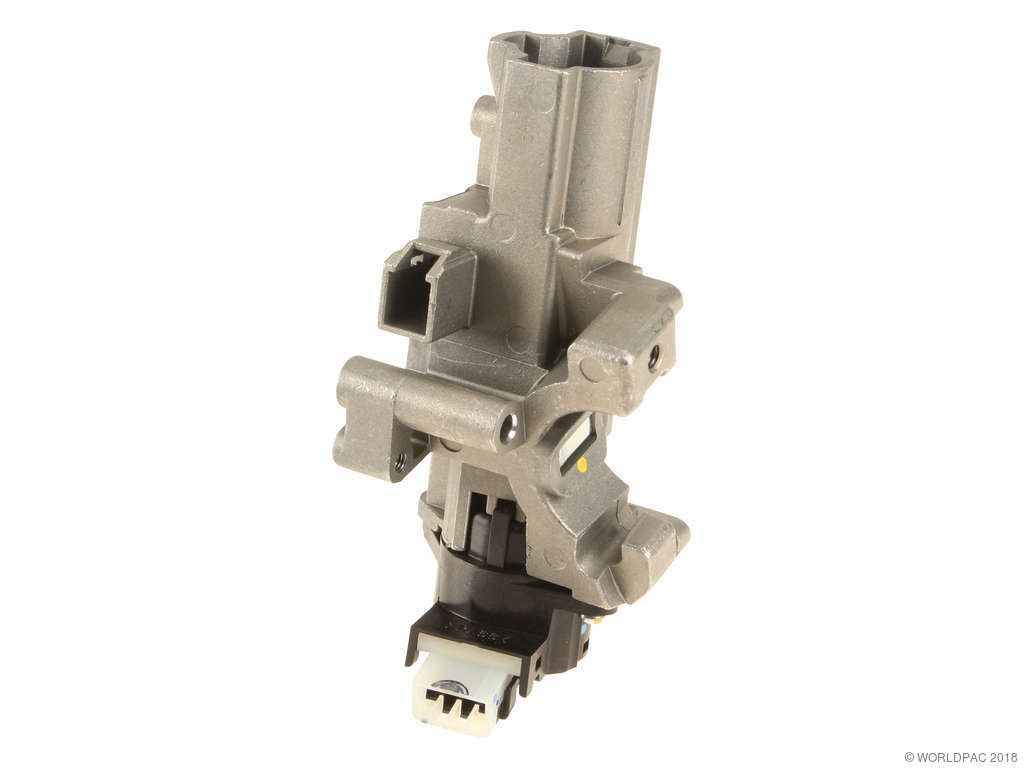
- Ignition Lock Cylinder Housing with Passlock Sensor
(OEM #ACDelco D1462G)— This is the most common failure point for the Passlock system on the 2007-2012 Canyon, causing the B3055 code and no-start symptoms.
Trusted brands: ACDelco (GM Genuine Part), Standard Motor Products, Dorman
OEM price range: $100-$170
Aftermarket price range: $70-$120
Related Codes That Often Appear With This One
- B3060 — This code often relates to an unprogrammed transponder or a fault in the transponder reading circuit, directly related to the B3055 issue. TSB PIC5650M lists them together.
- B3935 — Another common GM security code that can appear alongside B3055, indicating a transponder key system circuit fault, also mentioned in TSB PIC5650M.
- B3031 — This code indicates the BCM is stuck in a learn mode because it cannot see a valid Passlock sensor code, often due to the same sensor or wiring fault that causes B3055.
Technical Service Bulletins (TSBs) & Recalls
- PIC5650M: Notes intermittent no crank, no start, or start stall concern with the security light coming on, associated with DTC B3055. It suggests investigating Radio Frequency Interference from aftermarket devices before replacing parts.
- PIT5030E: While for other GM models, it confirms that improper key insertion (not fully extended flip key) can cause a no-crank and log a B3055 in history.
Platform-Specific Known Issues
- A Technical Service Bulletin (TSB), #PIC5650M, was issued for intermittent no-crank or start/stall conditions with the security light on, specifically mentioning DTC B3055 as a related code and pointing to Radio Frequency Interference (RFI) as a possible cause.
- Owners on forums like 355nation.net (for Colorado/Canyon enthusiasts) frequently discuss this issue, with many resorting to either replacing the ACDelco D1462G housing or performing a resistor bypass mod to permanently fix the problem.
Mechanic-Grade Diagnostic Values
- Passlock Sensor Signal Wire Voltage (Yellow Wire) - Key ON, Engine OFF — expected: ~5.0 Volts DC. Failure: Voltage significantly lower than 5.0V or 0V indicates a short to ground or open in the circuit.
- Passlock Sensor Signal Wire Voltage (Yellow Wire) - Key held in CRANK position — expected: A specific voltage between ~0.5V and ~4.5V (e.g., 1.76V in one documented case). This value is unique to the vehicle's learned sensor.. Failure: Voltage stays at 5.0V, drops to 0V, or is an unstable, fluctuating value. This indicates the sensor is not providing the correct resistance value to the BCM.
- Passlock Sensor Internal Resistance — expected: Varies widely, typically 500 Ohms to 14,000 Ohms (1.28 kOhms in one documented case). This is measured by probing between the sensor-side of the cut yellow wire and the black ground wire with the key in the CRANK position.. Failure: An open circuit (infinite resistance) or a short (zero resistance).
Scan Tool Commands That Help
- GM Tech2 / GDS2 or equivalent professional scan tool: Security System Relearn / VTD Relearn — After replacing the ignition lock cylinder housing or BCM. This initiates the security relearn process, which takes about 10 minutes, as a faster alternative to the 30-minute manual procedure.
- GM Tech2 / GDS2 or equivalent professional scan tool: BCM Live Data Stream — To observe the 'Passlock Sensor Voltage' or a similar PID. This allows a technician to see the voltage value the BCM is receiving from the sensor in real-time while turning the key, confirming if the signal is correct without back-probing wires.
Wiring & Ground Locations

- Passlock Sensor Wires — In the steering column, connected to the ignition lock cylinder housing.. These three wires are the direct communication line. Typically: Yellow is the signal wire to the BCM, Orange/Black or Black is ground, and a third wire (often Pink or Red/White) is 12V power.
- BCM Connector (Passlock Signal Pin) — The BCM is located behind the right kick panel. On similar GM platforms, the yellow signal wire is located in a large connector (often designated C1 or X1).. This is the termination point for the Passlock signal wire. A poor connection or corrosion at this specific pin can cause B3055. It's the best place to test the signal if the sensor-side wiring is intact.
- Ground Splice Packs SP105 / SP106 — Under the hood. SP105 is on the driver's side near the battery/fuse box. SP106 is on the passenger side, typically behind the engine airbox.. These splice packs are a known weak point on the Colorado/Canyon platform, grounding numerous components. SP105 specifically grounds the Run/Crank relay and parts of the anti-theft system. Corrosion here can cause intermittent power and signal issues, mimicking a sensor failure.
- Ground G103 — On the cowl, in the engine compartment, often above the brake booster.. This is a primary ground point for the Body Control Module (BCM). A poor connection at G103 can cause the BCM to malfunction in unpredictable ways, including misinterpreting the Passlock signal.
Real Owner Repair Stories
- YouTube Channel 'South Main Auto LLC' (Older GM Truck (similar Passlock II system)) — Engine starts and then immediately stalls, with the security light flashing.
❌ Tried (didn't work) The owner did not want to replace the ignition housing due to the vehicle's condition.
✅ What actually fixed it The technician performed a permanent bypass. He first measured the signal wire voltage with the key on (~5V) and then in the 'crank' position (1.76V). He then used a variable resistor to find the resistance value that produced 1.76V (which was 1.28 kOhms). He then cut the yellow signal wire, soldered the 1.28 kOhm resistor between the BCM-side of the yellow wire and the ground wire, permanently sending the 'correct' signal to the BCM and bypassing the faulty sensor.
OEM Part Supersession History
15795321→ACDelco D1462G— GM part number was superseded by the ACDelco service part number.ACDelco D1462G→Standard Motor Products US971 (Aftermarket Cross-Reference)— Aftermarket equivalent part number.
Helpful Videos
Used OEM Parts in Stock

New Aftermarket Parts Available


The information in this article is provided for general reference and educational purposes only. Vehicle specifications, procedures, and part compatibility can vary by production date, trim level, and region. Always consult your vehicle's factory service manual and verify part numbers before purchasing or performing repairs. Safety-critical components such as airbags, seat belts, and braking systems should be installed by a qualified professional.
- Gmc CANYON:
- 🎬 Helpful Videos
- 🛍️ Shop This Part
- What's Unique About the 2007-2012 Gmc CANYON
- Diagnostic Flowchart
- Symptoms You May Notice
- Most Likely Causes
- Rare But Worth Checking
- Diagnosis Steps
- Parts You'll Likely Need
- Related Codes That Often Appear With This One
- Technical Service Bulletins (TSBs) & Recalls
- Platform-Specific Known Issues
- Mechanic-Grade Diagnostic Values
- Scan Tool Commands That Help
- Wiring & Ground Locations
- Real Owner Repair Stories
- OEM Part Supersession History
- 🎟️ Get 5% Off