

B3055 on 2017-2024 Chevrolet Traverse: No-Start Causes and Fixes
This code means your Traverse's anti-theft system can't read your key, causing a no-start and security light. The most common fix is replacing a faulty key, which can cost $150-$400. Trying your spare key is the first and easiest diagnostic step. In some cases, radio frequency interference from other devices is the culprit.
- B3055 means your car's anti-theft system has disabled the engine because it can't recognize your key.
- The very first step is to try your spare key. If the car starts, you've found the problem: your primary key is bad.
- Remove all other keys and RFID fobs from your keychain to eliminate the possibility of signal interference.
- This is not a typical DIY repair because new keys and modules require special equipment for programming.
- Do not immediately assume the starter or battery is bad; the security light is the key indicator of this specific problem.
What's Unique About the 2017-2024 Chevrolet TRAVERSE
The 2017-2024 Chevrolet Traverse spans two vehicle generations, but this immobilizer issue affects both. GM has issued several Technical Service Bulletins (TSBs) for similar models regarding intermittent no-start conditions and B3055, indicating a persistent issue with the Pass-Key III or similar immobilizer systems. The problem is often not a major component failure but a sensitive communication breakdown between the key and the vehicle. This can be caused by something as simple as how a flip-key is inserted, or interference from other devices on the keychain like building access cards, other car keys, or even aftermarket USB chargers and LED lights.
Diagnostic Flowchart
Tap your situation to follow the diagnostic path that matches what you're seeing on this vehicle.
Generation note: The specified vehicle range covers two generations of the Chevrolet Traverse: the first generation (ending in 2017 on the Lambda platform) and the second generation (2018-2024 on the C1XX platform). The provided TSB #PIC5650M and other similar bulletins from GM indicate that this immobilizer-related issue is common to both generations, involving similar diagnostic principles and components like the BCM and transponder keys. The key fobs and some interior electronics were significantly redesigned for the 2018 model year, but the fundamental Pass-Key immobilizer logic remains a common point of failure.
Symptoms You May Notice
- Vehicle will not crank or start
- Engine starts and immediately stalls
- Flashing or solid security indicator light on the dashboard
- "Service Theft Deterrent System" message on the driver information center.
- "Theft Attempted" message on the driver information center.
- Replacing the starter motor without checking for security codes.
- Replacing the vehicle's main battery when the no-start is caused by the security system, not a lack of power (though a low battery can be a cause).
- Replacing the BCM prematurely before thoroughly testing the key, antenna, and wiring.
Most Likely Causes
- Defective Ignition Key 🔴 High Probability The internal transponder chip in the key can fail over time due to being dropped, internal battery failure, or normal wear and tear. Aftermarket keys are particularly prone to premature failure.
How to confirm: The easiest way to confirm is to try starting the vehicle with a spare key. If the spare key works consistently, the original key is faulty. A diagnostic tool can also show 'Invalid Key: NO' or 'No Key Detected' in the live data for the theft deterrent module.
Typical fix: Replace the faulty key and have the new key programmed to the vehicle. This often requires a professional locksmith or dealer.
Est. part cost: $70-$250 - External Radio Frequency Interference (RFI) 🟡 Medium Probability The low-frequency (125 kHz) signal between the key and the vehicle can be disrupted by other RFID devices. TSB PIC5650M specifically calls out aftermarket LED dome lights, USB phone chargers, and other car keys or access fobs on the same ring as potential sources of interference.
How to confirm: Remove all other keys, electronic fobs, and plugged-in chargers from the vehicle. Try starting the vehicle with the Traverse key alone. If it starts consistently, RFI was the issue. An RFI meter can also be used by technicians to detect stray signals.
Typical fix: Keep other RFID-emitting devices separate from the vehicle key when starting the car. Unplug aftermarket chargers.
Est. part cost: $0 - Faulty Ignition Lock Cylinder / Transponder Antenna ⚪ Low Probability The exciter coil (antenna) that energizes and reads the key's transponder is located around the ignition lock cylinder. This component or its wiring can fail, preventing it from communicating with any key, even known-good ones.
How to confirm: If multiple known-good keys fail to start the vehicle and RFI has been ruled out, the issue is likely with the car's hardware. A technician can test the resistance and signal of the antenna circuit at the BCM connector.
Typical fix: Replace the ignition lock cylinder assembly, which includes the transponder reader antenna. This may require reprogramming of the keys.
Est. part cost: $100-$300
Rare But Worth Checking
- Faulty Body Control Module (BCM): The BCM is the brain of the anti-theft system. While rare, an internal failure can cause it to stop recognizing valid keys. This is usually a last resort after all other components (key, antenna, wiring) have been tested and confirmed to be working.
- Improperly Inserted Key: On some GM models with a flip-out key, if the key is not fully extended and locked into position, it can be misaligned with the transponder antenna, causing a no-read situation and setting a B3055. TSB PIT5030E specifically addresses this user-induced error.
- Low Vehicle Battery Voltage: A weak or failing main vehicle battery can cause a multitude of electronic issues, including causing the BCM and theft deterrent system to malfunction. If the battery voltage drops too low during the key-read sequence, it can fail and set a B3055.
Diagnosis Steps
- Check the dashboard for a flashing or solid security light when the no-start occurs.
- Try starting the vehicle with a known-good spare key. If it starts, the first key is bad.
- Remove all other keys, fobs, and RFID cards from the keychain. Unplug any aftermarket chargers (USB, 12V) and try the original key again.
- For flip-keys, ensure the key blade is fully extended and locked straight before inserting it into the ignition.
- Scan the Body Control Module (BCM) with a capable OBD-II scanner to confirm B3055 is the active or historic code. 🎬 Watch a technician diagnose an intermittent no-start on a Traverse. Check live data for 'Key State' or 'Transponder Status'.
- If a new key is needed or the system is malfunctioning, attempt the '10-minute relearn procedure'. Turn the key to 'ON' (not start) for 10 minutes until the security light goes out. Turn the key off for 5 seconds. Repeat this two more times for a total of 3 cycles (30 minutes). After the third cycle, try to start the vehicle. 🎬 See a demonstration of the 30-minute key relearn process.
- Inspect the wiring and connector at the ignition lock cylinder for any visible damage or looseness.
- If other keys don't work and no interference is found, a professional should test the transponder antenna circuit and BCM connections.
- As a final step, diagnosis of the Body Control Module (BCM) itself would be required.
Parts You'll Likely Need
- Transponder Ignition Key / Smart Key Fob
(OEM #13519177, 13529639, 13519188 (Varies by trim, check FCC ID HYQ4EA for 2018+ models))— This is the most common point of failure. The internal chip fails or the battery dies, making the key unreadable to the vehicle's security system.
Trusted brands: ACDelco, Strattec
OEM price range: $150-$300.
Aftermarket price range: $70-$150. - Ignition Lock Cylinder with Transponder Reader — If multiple keys fail to work, the fault may lie in the vehicle's reader coil (antenna) that surrounds the ignition cylinder.
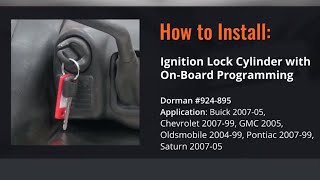
Trusted brands: ACDelco, Dorman (e.g., 924-796 for some models) 🎬 Watch this step-by-step ignition lock cylinder replacement walkthrough.
OEM price range: $150-$300.
Aftermarket price range: $80-$180.
Related Codes That Often Appear With This One
- B3060 — This code relates to an 'Unprogrammed Transponder Key,' often set alongside B3055 as part of the same anti-theft diagnostic event when a key is detected but not learned by the system.
- B3935 — This code indicates a 'Transponder Authentication Error,' meaning the key was read but its security code was incorrect or not learned by the system. It frequently appears with B3055 during a no-start event.
Technical Service Bulletins (TSBs) & Recalls
- PIC5650M: Addresses intermittent no-crank/no-start with security
Platform-Specific Known Issues
- TSB PIC5650M - Widespread RFI Issues: A Technical Service Bulletin (TSB #PIC5650M) was issued for various GM vehicles, including the Traverse, for an intermittent no crank, no start, or start/stall concern with the security light on, specifically mentioning DTC B3055. It strongly points to Radio Frequency Interference (RFI) from aftermarket devices like phone chargers and LED lights as a primary cause that should be investigated before replacing parts.
- TSB PIT5030E - Flip-Key Position: Another TSB (PIT5030E) notes that on models with flip-out keys, not having the key fully extended can cause a misalignment with the transponder antenna, leading to a B3055 code. This is a user-error issue but is common enough to warrant a bulletin.
- Owner Experience: Bad Aftermarket Key: A user on Reddit's /r/Justrolledintotheshop detailed a service where a customer's vehicle was towed in for a no-start with B3055. The cause was a physically destroyed key. After replacing the vehicle's main battery (which was also bad) and programming a new OEM key, the vehicle started normally, confirming the faulty key was the root cause of the theft system activation.
Hidden / Shadow Codes Worth Checking
- B3055 00: No Transponder Modulation or No Transponder. The '00' symptom byte indicates a general or no sub-type failure, meaning the BCM could not detect the key's transponder signal at all. (see via A professional scan tool like GM's GDS2 or a high-end aftermarket scanner (e.g., Topdon, Autel) that can read manufacturer-specific codes and symptom bytes from the Body Control Module (BCM).)
Scan Tool Commands That Help
- GDS2 / Professional Scan Tool: Immobilizer Data / Theft Deterrent Data Stream — Use this function to view live data from the BCM/TDM. Look for parameters like 'Key Status' or 'Transponder State'. A status of 'No Key Detected' or 'Invalid Key: YES' when a key is in the ignition points directly to a key or antenna problem.
- GDS2 / Autel / AutoProPAD: Immobilizer Learn / Add Key — This function is required after replacing a key or the BCM. It guides the technician through the security relearn process, which pairs the new component to the vehicle. For a lost key, this is essential. For a simple bad key, it's used to program the new key.
Wiring & Ground Locations
- Engine Harness Chafe Points — On some GM platforms, the engine wiring harness can chafe on the corner of the cylinder head, drive belt idler pulley bracket, or the oil dipstick bracket.. While not directly the immobilizer circuit, a short-to-ground in a critical harness that shares power or ground with the BCM or ECM can cause a wide array of electrical issues, including no-start conditions and setting various communication or module codes that can be confused with or accompany B3055.
- BCM Connectors — The Body Control Module (BCM) is typically located under the dashboard, often near the driver's side kick panel or integrated into the fuse panel.. The wiring from the ignition lock cylinder's transponder antenna runs to the BCM. A loose connection, pushed-out pin, or corrosion at the BCM connector can interrupt the signal from the key, causing a B3055 code. This should be checked after confirming the key is good.
Real Owner Repair Stories
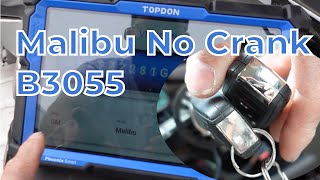
- YouTube channel 'Hands On Auto Training' (2015 Chevrolet Malibu (similar GM immobilizer system)) — No-crank, no-start with security light on. Scan tool showed active code B3055.
❌ Tried (didn't work) Customer had already replaced the theft deterrent module with a used one, which did not solve the problem.
✅ What actually fixed it The technician used a scan tool to view live immobilizer data, which showed 'no key detected'. This confirmed the issue was with the key itself, not the car's modules. A new key was programmed to the vehicle using a professional key programmer (AutoProPAD), which resolved the no-start condition. The original key's transponder had failed. - YouTube channel 'Project Malibug' (2013 Chevrolet Malibu (similar GM immobilizer system)) — Intermittent no-start, no-crank. Sometimes would start after sitting. Security light would come on. Code B3055-00 was found.
❌ Tried (didn't work) Checking the starter motor., Replacing the key fob battery., Disconnecting the main vehicle battery to reset modules.
✅ What actually fixed it The issue was traced to Radio Frequency Interference (RFI). The scan tool suggested checking for RF devices near the ignition cylinder. After clearing codes and ensuring no other fobs or devices were on the keychain, the car started reliably. The final diagnosis was that other keys/devices on the ring were interfering with the key transponder signal.
Model Year Variations Within This Range
- 2017: The 2017 model is the last year of the first generation. It uses a more traditional interior and key/fob design. While susceptible to B3055, the diagnostic path is slightly simpler as it lacks the complex start/stop module found in later models.
- 2018-2024: The second-generation Traverse was fully redesigned. It features a different key fob (e.g., FCC ID HYQ4EA), a more advanced infotainment system, and often includes an Auto Start/Stop system. This adds a potential failure point: the start/stop voltage stabilizer module, which, if it fails, can cause widespread electrical issues including a no-start and codes like B3055.
Helpful Videos
We Have This Part in Stock



The information in this article is provided for general reference and educational purposes only. Vehicle specifications, procedures, and part compatibility can vary by production date, trim level, and region. Always consult your vehicle's factory service manual and verify part numbers before purchasing or performing repairs. Safety-critical components such as airbags, seat belts, and braking systems should be installed by a qualified professional.
- Chevrolet TRAVERSE:
- 🎬 Helpful Videos
- 🛍️ Shop This Part
- What's Unique About the 2017-2024 Chevrolet TRAVERSE
- Diagnostic Flowchart
- Symptoms You May Notice
- Most Likely Causes
- Rare But Worth Checking
- Diagnosis Steps
- Parts You'll Likely Need
- Related Codes That Often Appear With This One
- Technical Service Bulletins (TSBs) & Recalls
- Platform-Specific Known Issues
- Hidden / Shadow Codes Worth Checking
- Scan Tool Commands That Help
- Wiring & Ground Locations
- Real Owner Repair Stories
- Model Year Variations Within This Range
- 🎟️ Get 5% Off