

B3055 on 2009-2016 Chevrolet Traverse: Causes for No-Start and Security Light
Code B3055 on a Chevy Traverse means the anti-theft system has disabled the vehicle, causing a no-start or start-and-stall condition. The most common causes are a worn-out key transponder or a faulty ignition lock cylinder and its wiring. Expect to pay $100-$300 for parts, plus potential programming fees.
- B3055 on your Traverse is an anti-theft code, not a starter or fuel pump failure. Check the security light first.
- The easiest first step is to try your spare key. If it works, your primary key has failed.
- A common cause is the ignition lock cylinder or its wiring, especially on vehicles with high mileage.
- A 30-minute 'key relearn' procedure can sometimes resolve the issue after a battery change, but it will not fix a hardware failure.
- Due to the need for security programming, repair often requires a professional locksmith or a dealership.
What's Unique About the 2009-2016 Chevrolet TRAVERSE
The first-generation Chevrolet Traverse and its GM Lambda platform siblings (GMC Acadia, Buick Enclave, and Saturn Outlook) are particularly susceptible to this issue. The problem is often linked to the ignition lock cylinder and the associated wiring within the steering column. Over time, the wires can fatigue and break from the repeated motion of using a tilt/telescoping steering wheel, leading to intermittent signal loss from the key. The provided TSB #PIC5650M specifically highlights this intermittent no-start condition tied to the security system and lists the Traverse, Acadia, Enclave, and Outlook among the affected vehicles.
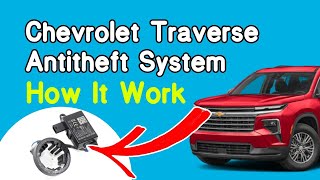
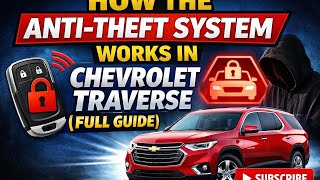
🎬 Watch: A real-world diagnosis of this intermittent no-start issue.Diagnostic Flowchart
Tap your situation to follow the diagnostic path that matches what you're seeing on this vehicle.
Symptoms You May Notice
- Engine will not crank or start.
- Engine starts and immediately stalls.
- Security warning light is illuminated or flashing on the instrument cluster.
- "Service Theft Deterrent System" message may appear on the Driver Information Center (DIC).
- "Theft Attempted" message may appear on the DIC.
- Replacing the starter motor without checking for security codes. A no-crank condition is a primary symptom of this theft code.
- Replacing the fuel pump when the engine starts and stalls, as the fuel cut-off is a symptom of the anti-theft system, not a faulty pump.
- Replacing the battery without addressing the underlying security system fault that may have been triggered by the low voltage.
Most Likely Causes
- Worn or Damaged Ignition Key 🔴 High Probability The transponder chip in the key head can fail internally, or the key blade can break away from the fob, causing communication issues. Using a damaged or non-programmed aftermarket key is a frequent trigger, as confirmed by owner experiences.
How to confirm: The simplest test is to try starting the vehicle with a spare, known-good key. If the spare key works consistently, the original key is faulty. A diagnostic tool can also confirm this by showing "Valid key: NO" or "Transponder Key: Not Present" in the live data for the bad key and "Valid key: YES" or "Transponder Key: Present" for the good one.
Typical fix: Replace the faulty key and have the new key professionally programmed to the vehicle. In some cases, a technician may be able to clone the chip from a failing key to a new super chip using a tool like a VVDI Key Tool to solve intermittent issues.
Est. part cost: $75-$200 - Faulty Ignition Lock Cylinder / Switch 🔴 High Probability The ignition lock cylinder houses the antenna (exciter coil) that reads the key's transponder chip. This component or its wiring can fail, preventing the signal from reaching the BCM. This is a well-documented failure point on the Lambda platform.
How to confirm: A technician can use a scan tool to monitor the transponder data. If no key data is received with a known-good key, the lock cylinder or its wiring is the likely culprit. A specialized tool can also be used to detect if the exciter coil is putting out a signal.
Typical fix: Replace the ignition lock cylinder and perform the security relearn procedure. The ACDelco part number for the cylinder is often cited as D1405D or 15871577. Note: D1405D appears to be for older GM models and may not be correct for the Traverse; always verify by VIN.
Est. part cost: $100-$250 - Damaged Wiring in Steering Column 🟡 Medium Probability As noted in TSB #PIC5650M, wiring related to the anti-theft system can become damaged or chafed within the steering column, leading to intermittent open or short circuits. The movement from tilt/telescoping steering columns exacerbates this wear and tear over time.
How to confirm: This requires visual inspection of the wiring harness leading from the ignition switch down the steering column. A multimeter can be used to test for continuity and shorts to ground or voltage on the signal circuit between the BCM and the theft deterrent module (part of the ignition lock cylinder).
Typical fix: Repair the damaged section of the wiring harness. This can range from a simple splice to replacing a connector or the entire steering column harness, such as GM part number 19210255 or 22987797 (verify by VIN).
Est. part cost: $10-$180 - Improper Key Usage (Flip Keys) ⚪ Low Probability A GM service bulletin (PIT5030E) notes that if the flip-style key is not fully extended and locked into position, the angle can prevent the transponder from communicating correctly, setting a B3055 code in history.
How to confirm: If a no-start occurs, remove the key, ensure it is fully flipped open and locked, and re-insert it. If the vehicle starts, this was the cause.
Typical fix: User education. Ensure the key is always fully extended before inserting it into the ignition.
Est. part cost: $0 - Radio Frequency Interference (RFI) ⚪ Low Probability TSB PIC5650C and its successors warn that aftermarket electronic devices or even other RFID cards on the same keychain can interfere with the 125 kHz signal used by the Pass-Key system. This includes other car keys, building access cards, toll passes, and even some USB chargers or aftermarket LED lights.
How to confirm: Remove all other keys, fobs, and RFID cards from the keychain. Unplug any aftermarket chargers or accessories. If the vehicle starts consistently with an isolated key, RFI was the cause.
Typical fix: Keep the vehicle key on a separate ring from other RFID-enabled items.
Est. part cost: $0
Rare But Worth Checking
- Failing Body Control Module (BCM): While less common, the BCM is the brain of the anti-theft system. If all other components (key, cylinder, wiring) test good, the BCM itself may be faulty. This is typically the last part to be replaced due to cost and the need for programming to the vehicle.
- Low Battery Voltage: A weak or failing vehicle battery can cause a multitude of erratic electronic issues, including setting security codes. Always ensure the battery has a full charge (above 12.4V) and passes a load test before diagnosing other components.
Diagnosis Steps
- Attempt to start the vehicle with a known-good spare key. If it starts, the primary key is the issue.
- Check the vehicle's battery. Ensure it is fully charged and the terminals are clean and tight. A low battery can cause various electronic faults.
- Observe the security light on the dashboard. Note if it is solid, flashing, or off when trying to start the engine.
- If a flip-key is used, ensure it is fully extended and locked straight before inserting it into the ignition, as per TSB PIT5030E.
- Remove any other keys, fobs, or RFID cards from the keychain to eliminate Radio Frequency Interference (RFI) as a possible cause.
- Scan the Body Control Module (BCM) for DTCs. B3055 confirms a security system fault.
- If possible, attempt the 30-minute key relearn procedure: Turn the key to the 'ON' position for 10 minutes until the security light turns off. Turn the key off for 5-10 seconds. Repeat this process a total of three times. If the light never turns off, there is a hard fault in the system that this procedure cannot fix.
- Inspect the wiring harness connected to the ignition lock cylinder for any signs of chafing, breaks, or loose connections, especially where the steering column tilts.
- If the above steps fail, professional diagnosis with a scan tool capable of reading BCM data streams is required to test the ignition cylinder's exciter coil and the BCM itself.
Parts You'll Likely Need
- Ignition Key with Transponder
(OEM #GM 13504202 (Example, verify by VIN))— The transponder chip inside the key is a very common failure point, leading directly to code B3055. This is often the first and easiest part to replace.
Trusted brands: ACDelco, GM Genuine
OEM price range: $100-$200
Aftermarket price range: $50-$120 - Ignition Lock Cylinder and Switch
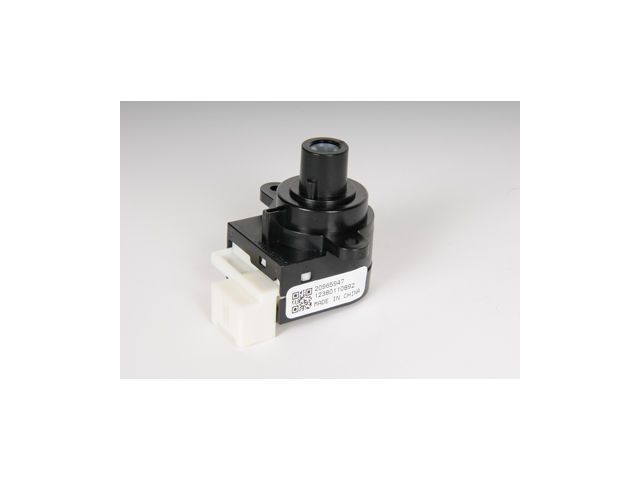
(OEM #ACDelco D1405D / GM 15871577 (Cylinder); ACDelco 20965947 (Switch))— This part contains the reader (exciter coil) for the key's transponder. Failure of the internal coil or wiring prevents the key signal from being read.
Trusted brands: ACDelco, Standard Motor Products, Dorman
OEM price range: $150-$250
Aftermarket price range: $80-$160
Related Codes That Often Appear With This One
- B3060 — This code often relates to an unprogrammed transponder key, frequently appearing alongside B3055 when a new or incorrect key is used. TSB PIC5650M also lists it as a related code.
- B3935 — This code points to a transponder authentication error, indicating the BCM received a signal but could not validate it, which is a related fault in the same system, also noted in TSB PIC5650M.
- P0615 — On some GM vehicles, a B3055 in the BCM can cause the ECM to set a P0615 (Starter Relay Circuit) code, which can be misleading. The root cause is often the immobilizer issue preventing the BCM from telling the ECM to crank the engine.
Technical Service Bulletins (TSBs) & Recalls
- PIC5650M: Addresses intermittent no crank, no start, or start stall concerns with the security light on, which can be associated with DTC B3055. It specifically lists the Traverse and its platform mates.
- PIT5030E: Notes that flip-keys not fully extended can cause a no-crank condition and set DTC B3055 in history.
- PIC5650C / PIC5650K: Later versions of the TSB that expand on the cause, adding Radio Frequency Interference (RFI) from aftermarket devices (LED lights, USB chargers) and other RFID cards as a major diagnostic consideration.
Platform-Specific Known Issues
- An intermittent no-crank or start-stall condition with the security light on is a known issue, as documented in GM Technical Service Bulletin #PIC5650M.
- The wiring for the ignition switch is prone to damage from the movement of the tilt and telescoping steering column, causing intermittent faults.
- Radio Frequency Interference from other devices on a keychain is a known potential cause of this code, as outlined in TSB PIC5650C.
Hidden / Shadow Codes Worth Checking
- B3055 00: The '00' is a standard GM symptom byte meaning 'No Sub Type Information'. It indicates the base DTC description is sufficient and doesn't point to a more specific component failure. (see via Most professional-grade scan tools capable of reading GM body codes will display the code with its symptom byte.)
Scan Tool Commands That Help
- GDS2 / Tech2 / Professional Aftermarket (e.g., Autel, Topdon, Auto Propad): Immobilizer Learn / Key Programming — This function is required after replacing the Body Control Module (BCM) or ignition keys to program the new components to the vehicle's anti-theft system.
- GDS2 / Tech2 / Professional Aftermarket: BCM Data Display: 'Transponder Key' or 'Key Part Number' — Used during diagnosis to verify if the BCM is successfully receiving a signal from the key's transponder chip. The parameter should read 'Present' or display a valid part number when a known-good key is in the ignition.
Wiring & Ground Locations
- BCM — Under the driver's side of the dashboard, to the left of the steering column.. The BCM is the control module for the Pass-Key III system. All signals from the ignition key/cylinder are processed here.
- G103 — Located on the cowl in the left rear of the engine compartment, typically above the brake booster.. This is a primary ground point for the Body Control Module (BCM), Instrument Panel Cluster (IPC), and the Ignition Key Alarm Switch. A poor connection at G103 can cause intermittent power loss or noise on the BCM circuits, leading to a B3055 code.
- Ignition Switch Signal Wire — Runs from the ignition lock cylinder connector, down the steering column, to a connector at the BCM (e.g., Connector X1 or X4, depending on year/diagram).. This is the data wire that carries the transponder key signal from the reader coil to the BCM. It is the primary wire that gets chafed or broken inside the steering column, causing an open or short that triggers B3055.
Real Owner Repair Stories
- YouTube channel 'ADD AUTOMOBILE SERVICES' (2013 Chevrolet Equinox (similar GM system)) — Intermittent no-start, security light sometimes stays on, code B3055 stored.
❌ Tried (didn't work) Simply using the key would sometimes work and sometimes not.
✅ What actually fixed it The technician used a VVDI Key Tool to read the intermittently failing transponder chip and clone its data onto a new 'super chip'. The new chip was then placed inside the original key fob, providing a reliable signal and resolving the no-start condition. - YouTube channel 'Hands On Auto Training' (2015 Chevrolet Malibu (similar GM system)) — No crank, no start, code B3055 stored.
❌ Tried (didn't work) Clearing codes (code immediately returned).
✅ What actually fixed it The technician determined the original key was faulty. A new key was cut and programmed to the vehicle using an Auto Propad scan tool, which resolved the code and allowed the vehicle to start.
OEM Part Supersession History
Varies by year/option→Varies— Steering Column Wiring Harness variations
Heads up: Part number 19210255 is often listed, but some sources state it's for vehicles 'Without Tilt Wheel'. Part 22987797 is also listed for 2012-2017 Traverse models. Due to multiple harness designs based on options (tilt/telescope), it is critical to verify the correct part number by VIN.
Model Year Variations Within This Range
- 2009-2012 vs 2013-2016: The Chevrolet Traverse received a significant facelift for the 2013 model year, which included a completely redesigned dashboard and center console. This may result in differences in the physical part numbers for the ignition lock cylinder, BCM, and associated wiring harnesses between the pre-facelift (2009-2012) and post-facelift (2013-2016) models. While the Pass-Key III system functions the same, component location and connectors may vary.
Helpful Videos


Used OEM Parts in Stock


New Aftermarket Parts Available


The information in this article is provided for general reference and educational purposes only. Vehicle specifications, procedures, and part compatibility can vary by production date, trim level, and region. Always consult your vehicle's factory service manual and verify part numbers before purchasing or performing repairs. Safety-critical components such as airbags, seat belts, and braking systems should be installed by a qualified professional.
- Chevrolet TRAVERSE:
- 🎬 Helpful Videos
- 🛍️ Shop This Part
- What's Unique About the 2009-2016 Chevrolet TRAVERSE
- Diagnostic Flowchart
- Symptoms You May Notice
- Most Likely Causes
- Rare But Worth Checking
- Diagnosis Steps
- Parts You'll Likely Need
- Related Codes That Often Appear With This One
- Technical Service Bulletins (TSBs) & Recalls
- Platform-Specific Known Issues
- Hidden / Shadow Codes Worth Checking
- Scan Tool Commands That Help
- Wiring & Ground Locations
- Real Owner Repair Stories
- OEM Part Supersession History
- Model Year Variations Within This Range
- 🎟️ Get 5% Off