

B3055 on 2012-2019 Chevrolet Sonic: No Start Causes and Fixes
This code means the car's security system can't read the chip in your ignition key, causing a no-start. The most common cause is the switchblade key not being fully extended or interference from other electronic devices on your keychain. A new key and programming may be needed.
- Code B3055 means your Sonic's anti-theft system isn't recognizing your key, which prevents the car from starting.
- Before seeking repairs, always try your spare key and make sure your switchblade key is fully locked in the straight position.
- Remove other electronic fobs or access cards from your keychain to eliminate possible radio frequency interference.
- If a new key is needed, it must be professionally programmed to your vehicle by a dealer or automotive locksmith.
- Do not immediately suspect expensive components like the starter or BCM; the issue is almost always related to the key or interference.
What's Unique About the 2012-2019 Chevrolet SONIC
For the Chevy Sonic and similar GM vehicles of this era, the flip-style or 'switchblade' key is a common source of this problem. Several Technical Service Bulletins (TSBs) point out that if the key is not fully extended and locked into the straight position, the transponder chip inside may be too far from the antenna ring in the ignition cylinder to be read properly. This leads to an intermittent no-start condition that can be confusing to diagnose if the operator isn't aware of this specific design quirk. TSB PIT5030E confirms this exact issue 🎬 Watch: A quick fix for Sonic anti-theft start issues. on the Sonic, Trax, and Encore.
Diagnostic Flowchart
Tap your situation to follow the diagnostic path that matches what you're seeing on this vehicle.
Symptoms You May Notice
- Intermittent no-crank, no-start condition.
- Engine starts and immediately stalls.
- The security indicator light on the dashboard is illuminated or flashing.
- A 'Theft Attempted' message may appear on the Driver Information Center (DIC).
- Starter Motor
- Ignition Switch
Most Likely Causes
- Improper Key Position 🔴 High Probability The switchblade-style key fob design is sensitive to positioning. If the key is not fully extended and locked, the transponder chip may not align correctly with the reader in the ignition cylinder.
How to confirm: Remove the key, ensure it is fully flipped open and locked straight, then re-insert it and try to start the vehicle again. If the car starts, this was the likely cause. According to GM TSB PIT5030E, this condition often sets DTC B3055 in history, so the code may not be active when checked.
Typical fix: Educate the driver on the proper way to use the key. No parts replacement is necessary.
Est. part cost: $0 - Radio Frequency (RF) Interference 🟡 Medium Probability The immobilizer system operates at 125 kHz and can be disrupted by other electronic devices. GM TSB PIC5650 specifically warns that aftermarket devices can 'jam' the signal.
How to confirm: Remove all other keys, fobs, and electronic devices from the keychain. TSB PIC5650 lists common culprits including other vehicle keys, toll passes, building access cards, gas station speed passes, aftermarket LED lights, and even certain USB phone chargers. Try starting the car with only the single Sonic key. If it starts, one of the other items was causing interference.
Typical fix: Keep other RFID-emitting devices on a separate keychain from the car key and unplug aftermarket chargers or accessories.
Est. part cost: $0 - Damaged or Faulty Ignition Key 🟡 Medium Probability The transponder chip inside the key head can be damaged from being dropped or from wear and tear. The flip mechanism can also wear out, causing poor alignment.
How to confirm: Try starting the vehicle with a spare key. If the spare key works consistently, the primary key is faulty. A diagnostic tool can also fail to read the transponder value from the suspect key. A technician on Reddit described a case where a physically broken key caused a B3055 and a 'Theft Attempted' message, which was resolved with a new key and programming.
Typical fix: The faulty key must be replaced. A new key will need to be cut and electronically programmed to the vehicle by a dealership or an automotive locksmith with the proper tools.
Est. part cost: $75-$200 - Low Vehicle Battery Voltage ⚪ Low Probability
How to confirm: Test the vehicle's main 12V battery. Voltage below 11.5V can cause various electronic modules, including the BCM, to behave erratically and fail to authenticate the key. A technician's report confirmed a B3055 was present alongside a battery that tested at only 10.5V.
Typical fix: Charge or replace the vehicle battery.
Est. part cost: $150-$250
Rare But Worth Checking
- Faulty Theft Deterrent Module (Exciter Ring/Antenna): This component, located around the ignition lock cylinder, energizes and reads the key's transponder. While not a common failure, it can break or have its wiring damaged, preventing it from reading any key. The GM part number for the module is 84209962, which is often included with the steering column assembly.
- Faulty Body Control Module (BCM): The BCM is the brain of the anti-theft system. In rare cases, the BCM itself can fail. This is typically the last item to suspect after all other possibilities (key, antenna, wiring) have been ruled out.
- BCM Software/Programming Issue: In some cases, the intermittent no-start condition may not be a hardware failure but a software glitch. One owner on a Sonic forum reported that a BCM programming update performed by a Chevrolet dealer resolved their intermittent starting problem.
Diagnosis Steps
- Verify the code is current using a capable OBD-II scanner. Note if it is an active or history code.
- Try starting the vehicle with a known-good spare key. If it starts, the original key is the problem.
- Remove all other electronic fobs and RFID cards (toll passes, access cards) from the keychain and unplug any aftermarket chargers, then try again to rule out RF interference.
- Ensure the switchblade key is fully extended and locked in the straight position before inserting it into theignition.
- Inspect the key for any visible damage to the head.
- Check the vehicle's battery voltage to ensure it is above 12 volts and perform a load test if possible.
- If the problem persists, inspect the wiring and connector at the ignition lock cylinder for any damage or loose connections.
- For advanced users: Disconnect the theft deterrent module connector. Test for less than 10 ohms of resistance between the ground circuit terminal and a good chassis ground.
- For advanced users: With the key ON, test for B+ (battery voltage) at the B+ circuit terminal in the module's connector.
- If all else fails, professional diagnosis is needed to test the theft deterrent module (antenna), check for BCM software updates, and potentially replace the Body Control Module (BCM).
Parts You'll Likely Need
- Transponder Ignition Key
(OEM #13579216 (for 2014-2018 models, verify by VIN))— The transponder chip in the original key is the most likely component to fail or be misread, causing this code.
Trusted brands: ACDelco
OEM price range: $100-$200
Aftermarket price range: $50-$120
Related Codes That Often Appear With This One
- B3060 — This code also relates to the transponder key system, often indicating an issue with the transponder antenna circuit.
- B3935 — Another code related to the transponder key system, indicating a problem with the transponder key's authentication.
- B2955 — This code points to a malfunction in the security sensor data circuit, which is part of the same anti-theft system.
Technical Service Bulletins (TSBs) & Recalls
- PIC5650M: Addresses intermittent no crank, no start, or start stall with security light on, citing DTCs B3055, B3060, and B3935. It focuses on diagnosing Radio Frequency Interference (RFI) from aftermarket devices like phone chargers, LED lights, and toll passes.
- PIT5030E: Diagnostic tip for intermittent no-crank on various GM models including the 2012-2014 Sonic, caused by the ignition key not being fully extended, which can set DTC B3055 (often in history).
Platform-Specific Known Issues
- A known issue, documented in GM TSB PIC5650M, describes intermittent no-crank or start-stall conditions with the security light on, specifically listing B3055 as a potential DTC caused by Radio Frequency Interference.
- GM TSB PIT5030E specifically calls out the 2012-2014 Sonic, noting that an intermittent no-crank with DTC B3055 can be caused by the switchblade key not being fully extended when inserted into the ignition.
Mechanic-Grade Diagnostic Values
- Immobilizer Data PID on Scan Tool — expected: Should show a valid key status and correct environment identification.. Failure: A status of 'No Key Detected' when a key is in the ignition points directly to a key transponder or antenna reading issue.
Hidden / Shadow Codes Worth Checking
- B3055 00: The '00' is a symptom byte often seen with GM codes. While its specific meaning for B3055 isn't detailed in the findings, it indicates a general or primary fault condition for 'No Transponder Modulation'. (see via A professional scan tool like GM GDS2, Topdon, or Autel that can read manufacturer-specific codes and their symptom bytes.)
Scan Tool Commands That Help
- GM SPS (Service Programming System), Auto Pro Pad, Autel IM608: IMMO Immobilizer Learn / Security Learn — This function is required after replacing a key, the BCM, or the ECM. It performs a 10-12 minute security relearn procedure that allows the modules to recognize the new or existing key transponders.
Wiring & Ground Locations
- K9 Body Control Module (BCM) — Located behind the passenger compartment fuse panel under the dashboard on the driver's side, near where the driver's left foot would be.. The BCM is the central module for the immobilizer system. It receives the key data from the antenna and makes the decision to allow the engine to start. A bad connection or faulty BCM will cause this code.
- Immobilizer Antenna — A coil/ring that surrounds the ignition lock cylinder inside the steering column covers.. This antenna powers the key transponder and reads its signal. Its wiring connects to the BCM via a LIN serial data circuit. Damage to this antenna or its wiring will prevent any key from being read.
- G301 — A chassis ground point located under the center console on 2012 models.. A poor ground connection for the BCM or related interior modules can cause erratic electronic behavior, including immobilizer faults. Verifying major grounds are clean and tight is a key diagnostic step.
Real Owner Repair Stories
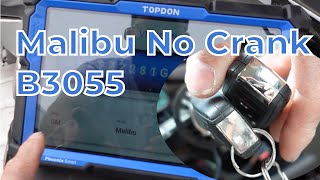
- YouTube - '2015 Malibu No Crank B3055 Diag with Topdon Phoenix Smart' (2015 Chevrolet Malibu (similar GM platform)) — No crank, no start, security light on, DTC B3055 active.
❌ Tried (didn't work) Clearing codes (B3055 returned immediately).
✅ What actually fixed it The technician confirmed the original key was bad by observing a 'No Key Detected' status on a scan tool. A new key was programmed to the vehicle using the 'Security Learn' function on an Auto Pro Pad tool, which took 10 minutes. The car started immediately after the new key was learned. - YouTube - '2013 Equinox: B3055 No transponder modulation (key cloning with mini key tool)' (2013 Chevrolet Equinox (similar GM platform)) — Intermittent no start with security light on and code B3055. The original key would sometimes fail to be recognized.
❌ Tried (didn't work) Simply trying to start the car again sometimes worked, but the problem was intermittent and unreliable.
✅ What actually fixed it The technician used a VVDI Key Tool to read the chip from the intermittently failing original key and clone its data onto a new VVDI 'super chip'. This new chip was then placed inside the original key fob alongside the old chip. This provided a consistent signal, permanently fixing the intermittent no-start.
OEM Part Supersession History
13506936→13587704— Standard part revision by the manufacturer.
Heads up: A used BCM (of either part number) cannot be programmed to a new vehicle using standard dealer tools. The EEPROM chip must be swapped from the original board or the replacement BCM's EEPROM must be virginized by a specialist for the VIN and mileage to be learned.
Model Year Variations Within This Range
- 2017-2019 (with push-button start): These models do not have a traditional ignition cylinder for a key blade. The key fob is placed in a specific pocket (often in the cupholder or center console) for emergency starting or programming. The key learning procedure may require two fobs to be programmed to properly exit the security learning mode.
Helpful Videos

Used OEM Parts in Stock


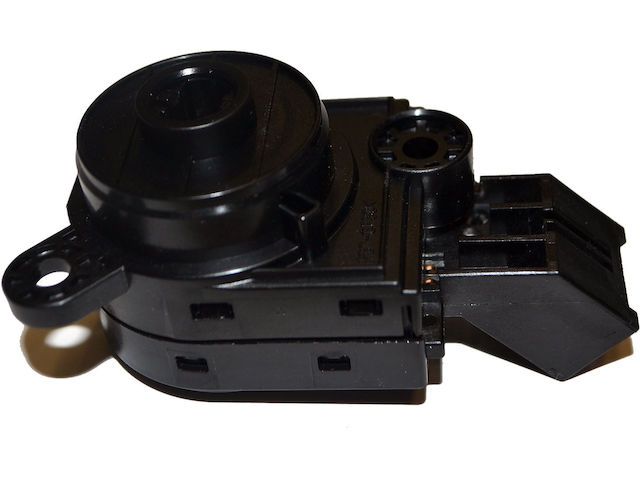
New Aftermarket Parts Available


The information in this article is provided for general reference and educational purposes only. Vehicle specifications, procedures, and part compatibility can vary by production date, trim level, and region. Always consult your vehicle's factory service manual and verify part numbers before purchasing or performing repairs. Safety-critical components such as airbags, seat belts, and braking systems should be installed by a qualified professional.
- Chevrolet SONIC:
- 🎬 Helpful Videos
- 🛍️ Shop This Part
- What's Unique About the 2012-2019 Chevrolet SONIC
- Diagnostic Flowchart
- Symptoms You May Notice
- Most Likely Causes
- Rare But Worth Checking
- Diagnosis Steps
- Parts You'll Likely Need
- Related Codes That Often Appear With This One
- Technical Service Bulletins (TSBs) & Recalls
- Platform-Specific Known Issues
- Mechanic-Grade Diagnostic Values
- Hidden / Shadow Codes Worth Checking
- Scan Tool Commands That Help
- Wiring & Ground Locations
- Real Owner Repair Stories
- OEM Part Supersession History
- Model Year Variations Within This Range
- 🎟️ Get 5% Off