

B3055 on 2007-2010 Chevrolet Silverado 2500: No-Start Causes and Fixes
Code B3055 on a 2007-2010 Silverado 2500 means the anti-theft system can't read your key, causing a no-start and security light. The most common fixes are trying a spare key, performing a 30-minute key relearn procedure, or replacing a faulty ignition key or ignition lock cylinder.
- B3055 means your truck's anti-theft system has disabled the engine because it cannot read the ignition key.
- Before spending any money, try your spare key and remove all other fobs/cards from your keychain to rule out a bad key or signal interference.
- The 30-minute 'key relearn' procedure is a free and effective step that can often resolve the problem, especially after a battery change.
- If simple fixes fail, the most common parts to fail are the ignition key itself or the ignition lock cylinder assembly in the steering column.
- Do not mistake this security issue for a bad starter or battery; the security light is the key indicator.
What's Unique About the 2007-2010 Chevrolet SILVERADO 2500
For the GMT900 generation Silverado, this code is a very common issue often tied to the Passkey III+ anti-theft system. Unlike some other platforms, the problem is frequently not the key itself, but rather the components within the steering column, such as the ignition lock housing which contains the reader coil. General wear and tear from years of use can lead to broken internal wires or intermittent connections, making this a more frequent issue on older, higher-mileage trucks. GM has issued multiple service bulletins related to this issue, highlighting its sensitivity to Radio Frequency Interference (RFI).
Diagnostic Flowchart
Tap your situation to follow the diagnostic path that matches what you're seeing on this vehicle.
Symptoms You May Notice
- Engine will not crank or turn over
- Engine starts briefly and then immediately stalls
- Security indicator light is illuminated or flashing on the dashboard.
- Message on the Driver Information Center (DIC) related to vehicle theft deterrent, such as 'Service Theft Deterrent System'.
- Replacing the starter motor. If the security light is on, the no-start is an electronic issue from the anti-theft system, not a mechanical failure of the starter.
- Replacing the vehicle battery without addressing the code. While a low battery can cause this code, if the battery is healthy and the code persists, the issue lies within the security system itself. A real-world example involved an owner replacing two expensive batteries on a Duramax before realizing the fix was a simple security relearn.
Most Likely Causes
- Radio Frequency Interference (RFI) 🔴 High Probability The 125 kHz Passkey system is low power and highly susceptible to interference from other electronics. GM TSB PIC5650M specifically calls this out as a primary diagnostic step before replacing parts.
How to confirm: Remove all other keys, key fobs, and RFID-enabled cards (office access cards, gas station speed passes) from the keychain. Unplug any aftermarket devices like phone chargers, dash cams, USB power banks, and especially aftermarket LED lighting. If the truck starts with an isolated key and no devices powered on, RFI was the issue.
Typical fix: Keep other electronic devices and fobs away from the ignition key when starting the vehicle. Identify and remove the specific device causing the interference.
Est. part cost: $0 - Defective or Damaged Ignition Key 🔴 High Probability The transponder chip inside the key head can fail from being dropped, getting wet, or simply due to age. On models with a flip-key, if the key is not fully extended and locked straight, it can fail to be read, as noted in TSB PIT5030E.
How to confirm: Try starting the truck with a known-good spare key. If the spare key works and the original does not, the original key is faulty. A scan tool will show the 'Transponder Key' parameter as 'Not Present' with the bad key and 'Present' with the good key.
Typical fix: Replace the faulty key. A new key must be cut and then programmed to the vehicle using the 30-minute relearn procedure.
Est. part cost: $50-$150 - Faulty Ignition Lock Cylinder / Housing 🟡 Medium Probability The exciter coil (antenna) that reads the key's transponder is integrated into the ignition lock housing. Fine wires inside this assembly can break from repeated use, vibrations, and heat cycles over time, leading to an inability to read any key.
How to confirm: If multiple known-good keys fail to start the vehicle, and wiggling the key in the ignition sometimes allows it to start, the lock housing is the likely culprit. A scan tool will show the 'Transponder Key' parameter as 'Not Present' for all keys.
Typical fix: Replace the ignition lock housing (not just the mechanical cylinder). After installation, a 30-minute security relearn procedure is required to sync the system with the existing keys.
Est. part cost: $80-$150 - Loss of Key Programming ⚪ Low Probability A weak vehicle battery, voltage spikes from improper jump-starting, or a recently replaced battery can cause the Body Control Module (BCM) to lose its memory of the learned keys. One owner of a Duramax model replaced both batteries only to find the issue was resolved with the relearn procedure.
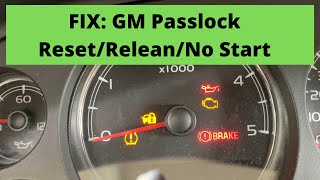
How to confirm: If the issue appeared immediately after a battery-related event, this is a strong possibility. Attempting the 30-minute key relearn procedure is both a diagnostic step and the fix. 🎬 Watch: Professional tech explains the GM Passkey relearn process.
Typical fix: Perform the 30-minute key relearn procedure: Turn the key to 'ON' (do not start) and wait about 10-11 minutes for the security light to turn off. Turn the key 'OFF' for 10 seconds. Repeat this for a total of three cycles. After the third cycle, the key should be relearned. 🎬 Watch: Step-by-step guide to the 30-minute security relearn procedure.
Est. part cost: $0
Rare But Worth Checking
- Failing Body Control Module (BCM): While uncommon, the BCM itself (which contains the TDM logic) can fail. This should only be considered after all other possibilities (key, RFI, lock housing, wiring) have been exhaustively ruled out, as it is an expensive part that requires professional programming.
- Damaged Wiring or Connectors: The wiring between the ignition lock housing and the BCM can become damaged, chafed in the steering column, or corroded at a connector, causing an intermittent connection. This is worth inspecting if the problem is erratic and other parts check out.
Diagnosis Steps
- Check the dashboard for an illuminated or flashing security light. This confirms an anti-theft system issue.
- Isolate the key. Remove all other keys, fobs, access cards, and especially aftermarket USB chargers or LED lights to rule out Radio Frequency Interference (RFI) as per TSB PIC5650M.
- If you have a flip-style key, ensure it is fully extended and locked in the straight position before inserting it, as per TSB PIT5030E.
- Try starting the truck with a known-good spare key. If it starts, the primary key is the problem.
- Attempt the 30-minute key relearn procedure. This can resolve issues caused by a loss of programming, especially after a battery change.
- If the relearn fails, scan the Body Control Module (BCM) with a capable OBD-II scanner. View the live data for the 'Transponder Key' parameter. It should read 'Present'. If it reads 'Not Present' or 'Invalid', it confirms a communication failure.
- Gently wiggle the key in the ignition while trying to start. If this works intermittently, it points to worn wires in the ignition lock housing.
- Visually inspect the wiring and connector at the base of the steering column going to the ignition lock housing and BCM for damage or looseness.
- If all keys fail the scan tool test and the relearn procedure does not work, the ignition lock housing is the most likely failed component.
Parts You'll Likely Need
- Transponder Ignition Key (PK3+)
(OEM #25925281)— The internal transponder chip is a common failure point. If a spare key works, the original key is bad.
Trusted brands: ACDelco, Strattec
OEM price range: $70-$120
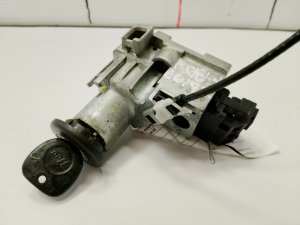
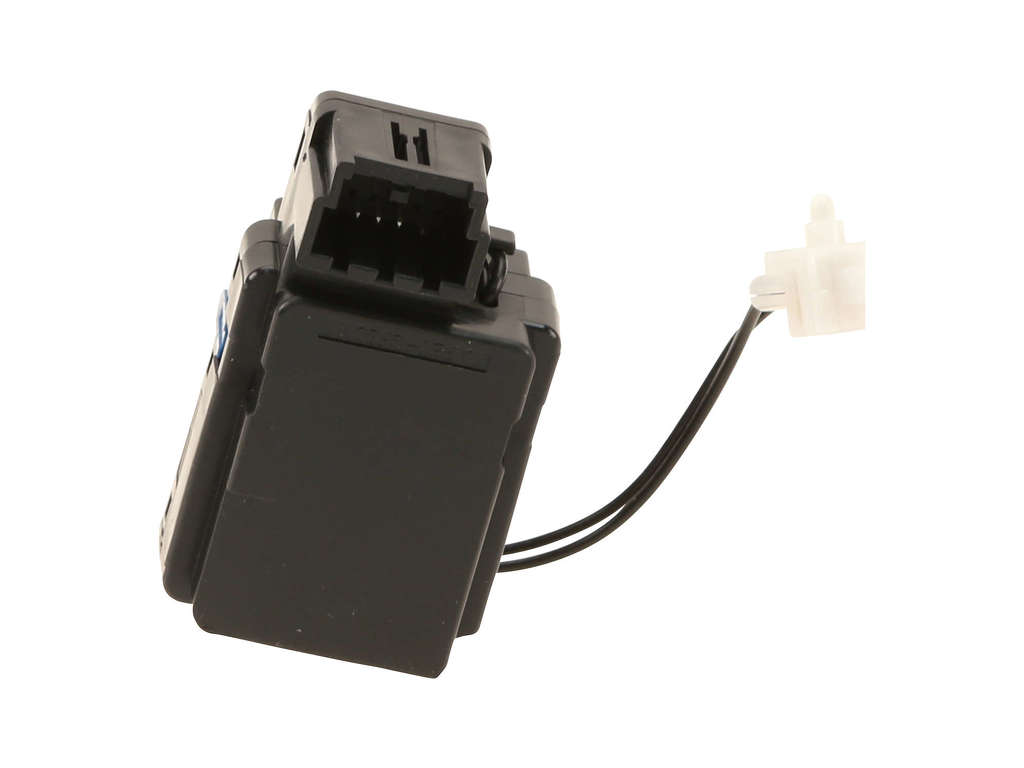
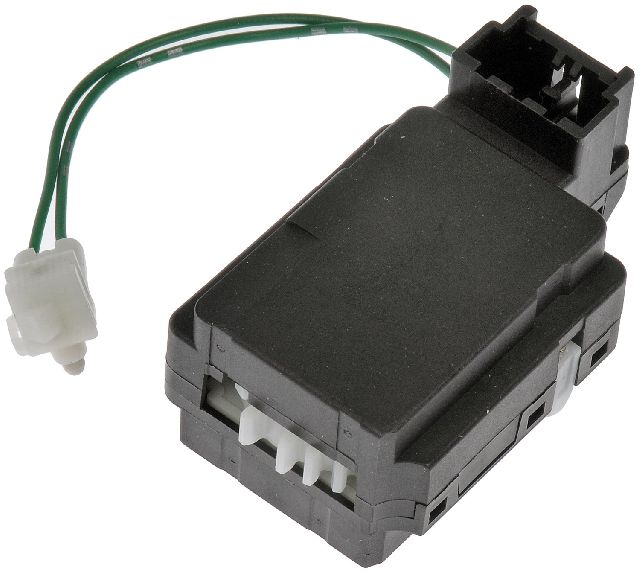
Aftermarket price range: $30-$60 - Ignition Lock Housing with Passkey Sensor
(OEM #26088811)— This assembly contains the exciter coil that reads the key. The internal wiring is a very common failure point on this platform, causing the system to not detect any key. This is a correction from Pass 1, which listed an incorrect part number.
Trusted brands: ACDelco / GM Genuine Parts, Dorman (e.g., 924-796)
OEM price range: $90-$160
Aftermarket price range: $70-$120
Related Codes That Often Appear With This One
- B3060 — This code for 'Unlearned Key Detected' often appears with B3055 when the system sees a key signal but doesn't recognize it as valid, such as with a new, unprogrammed key.
- B3935 — This code for 'Transponder Authentication Error' can be set alongside B3055 during a communication failure between the key and the module, pointing to a weak or invalid signal.
Technical Service Bulletins (TSBs) & Recalls
- PIC5650M: Diagnostic tip for intermittent no-crank/no-start with security light on and DTC B3055. Urges technicians to first check for and remove sources of Radio Frequency Interference (RFI) like aftermarket chargers, LED lights, and even toll passes
Platform-Specific Known Issues
- TSB #PIC5650M is highly relevant, confirming B3055 is a known issue and strongly pointing towards Radio Frequency Interference (RFI) from aftermarket devices like USB chargers and LED lights as a common cause that should be checked first.
- TSB #PIT5030E notes that on trucks with flip-style keys, failing to fully extend and lock the key can cause a B3055 to be set intermittently.
Mechanic-Grade Diagnostic Values
- BCM Battery Positive Voltage — expected: 12.0V or higher with key on, engine off.. Failure: Low or no voltage indicates a power supply issue to the BCM, which can cause various faults including B3055.
- BCM Ground Connection — expected: Near 0V potential between the ground pin and chassis ground.. Failure: Voltage reading above 0.1V indicates a poor ground, which can cause intermittent module operation.
Scan Tool Commands That Help
- Tech2 / GDS2: Immobilizer Data List / Transponder Key State — This is a primary diagnostic step. While turning the key, a technician should watch this parameter. If it remains 'Not Present' or 'Invalid' with a known-good key, it confirms a failure in the reading circuit (exciter coil, wiring, or BCM).
- Tech2 / GDS2: Special Functions > New BCM Setup — This function is required after replacing the Body Control Module (BCM). It configures the new module with the vehicle's specific RPO codes before the key relearn procedure can be performed.
- Tech2 / GDS2: Service Programming > VTD Re-Learn / Theft Module Re-Learn — This scan tool-driven function is used to make the vehicle learn new keys or relearn existing keys after replacing the BCM or ignition lock housing. It is a more robust procedure than the manual 30-minute method.
Wiring & Ground Locations
- Body Control Module (BCM) — Lower left side of the dashboard, typically above the driver's side kick panel and near the parking brake pedal assembly.. The BCM contains the Theft Deterrent Module (TDM) logic. All signals from the ignition key's transponder are processed here. Power and ground issues at the BCM can directly cause a B3055 code.
- BCM Ground — A common ground point for interior modules is located under the driver's side floorboard or behind the kick panel, where a harness grounds to the body or frame.. A poor BCM ground can cause intermittent communication failures and a wide range of electrical issues, including the inability to read the Passkey signal, leading to a B3055.
- Ignition Lock Housing Connector — Inside the steering column shrouds, connected to the ignition lock housing assembly.. This connector carries the signal from the transponder exciter coil (reader) to the BCM. A loose pin, corrosion, or chafed wire at this specific connector will cause an immediate B3055 fault.
Real Owner Repair Stories
- Go-Parts.com repair summary for Chevrolet Express (2007-2011 Chevrolet Express (platform relative)) — No-start condition with code B3055.
❌ Tried (didn't work) Not specified, but implied that simple fixes were insufficient.
✅ What actually fixed it The owner replaced only the black electrical switch component on the end of the ignition lock cylinder housing (ACDelco D1403G), not the entire mechanical housing. This resolved the starting problem, pinpointing the failure to the electronic reader portion of the assembly.
When the Usual Fixes Don't Work
- While the 30-minute key relearn procedure is widely suggested and can work for programming-related glitches (e.g., after a battery replacement), many owner experiences documented in forums indicate that if the B3055 code is caused by a failing ignition lock housing, the relearn procedure is often only a temporary fix. The problem may disappear for a few days or weeks, but it will return as the internal wiring of the housing continues to degrade. In these cases, the only permanent solution is the replacement of the ignition lock housing assembly.
Helpful Videos

Used OEM Parts in Stock



New Aftermarket Parts Available


The information in this article is provided for general reference and educational purposes only. Vehicle specifications, procedures, and part compatibility can vary by production date, trim level, and region. Always consult your vehicle's factory service manual and verify part numbers before purchasing or performing repairs. Safety-critical components such as airbags, seat belts, and braking systems should be installed by a qualified professional.
- Chevrolet SILVERADO 2500:
- 🎬 Helpful Videos
- 🛍️ Shop This Part
- What's Unique About the 2007-2010 Chevrolet SILVERADO 2500
- Diagnostic Flowchart
- Symptoms You May Notice
- Most Likely Causes
- Rare But Worth Checking
- Diagnosis Steps
- Parts You'll Likely Need
- Related Codes That Often Appear With This One
- Technical Service Bulletins (TSBs) & Recalls
- Platform-Specific Known Issues
- Mechanic-Grade Diagnostic Values
- Scan Tool Commands That Help
- Wiring & Ground Locations
- Real Owner Repair Stories
- When the Usual Fixes Don't Work
- 🎟️ Get 5% Off