

B3055 on 2007-2014 Chevrolet Impala: No Start, Security Light Causes and Fixes
Code B3055 on a 2007-2014 Impala means the car's security system can't read the key. This causes a no-start and a flashing security light. The most common fix is a faulty ignition key or a failing ignition lock cylinder, often resolved with a security relearn procedure.
- B3055 means your Impala's anti-theft system isn't recognizing your key, which prevents the car from starting.
- Before buying parts, try starting with a spare key and attempt the 30-minute security relearn procedure.
- The most common parts to fail are the ignition key itself or the ignition lock housing that reads the key.
- Ensure the battery is fully charged, as low voltage is a known cause of this security system fault.
- If you have a flip-style key, make sure it's fully locked in the open position before trying to start the car.
What's Unique About the 2007-2014 Chevrolet IMPALA
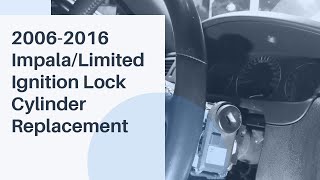
The 2007-2014 Impala uses GM's Passkey III (PK3) or Passkey III+ (PK3+) transponder-based immobilizer system. Unlike the older Passlock systems that used a magnet in the lock cylinder, this system relies on a radio-frequency chip in the key itself. This generation of Impala and its W-body platform mates are known for issues where the key's internal chip fails, the wiring to the exciter coil breaks, or the ignition lock housing (which contains the reader coil) fails, leading to this specific code. The problem is common enough that a specific 30-minute security relearn procedure 🎬 Watch: Step-by-step guide to the 30-minute anti-theft reset is a well-documented first step for many owners after replacing a key or the battery.
Diagnostic Flowchart
Tap your situation to follow the diagnostic path that matches what you're seeing on this vehicle.
Generation note: This range covers the end of the 9th generation (2006-2013) and the 2014 "Impala Limited" (a fleet carryover of the 9th gen), as well as the redesigned 10th generation (starting in 2014). The Passkey III system and this B3055 code are relevant to both, but part numbers for keys and ignition components may differ. The provided TSB #PIC5650M covers up to 2014 models, indicating the issue persists across the generation change. The 10th generation (2014+) models with push-button start have a different diagnostic path, often involving an alternate starting spot in the center console if the key fob battery is dead.
Symptoms You May Notice
- Engine will not crank or start.
- Security light on the dashboard is illuminated or flashing.
- Engine starts briefly and then immediately stalls.
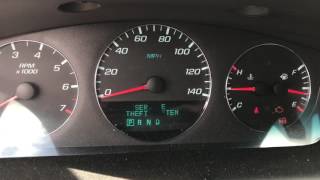
- "Service Theft Deterrent System" message may appear on the Driver Information Center (DIC).
- "Theft Attempted" message may appear on the DIC.
- Replacing the starter motor. A starter will not engage if the theft system has disabled the vehicle. A user on Reddit reported a customer who was certain the starter had failed, but the issue was resolved with a new key and battery.
- Replacing the fuel pump. The theft system may cut fuel, but the root cause is not the pump itself.
Most Likely Causes
- Defective or Damaged Ignition Key 🔴 High Probability The transponder chip in the key head can be damaged from being dropped, water exposure, or from wear and tear. Aftermarket keys may have weaker signals or fail prematurely. A physically broken key blade can also prevent proper insertion and reading.
How to confirm: Try starting the vehicle with a known-good spare key. If the spare key works reliably, the original key is faulty. A technician with a capable scan tool can view the 'TDM Transponder Key' parameter; it should read 'Present' for a good key. A bad key will show 'Not Present' or cause the B3055 code to set immediately.
Typical fix: Replace the faulty key. A new key must be cut to match the original and then programmed to the vehicle using the 30-minute security relearn procedure.
Est. part cost: $50-$150 - Faulty Ignition Lock Cylinder / Housing 🟡 Medium Probability The exciter coil that reads the key's transponder is part of the ignition lock housing. The fine wires in this coil or its connector can break from the stress of key insertion/removal and temperature changes over many years.
How to confirm: If multiple known-good keys fail to start the car, the problem is likely in the vehicle's hardware. A technician can test the wiring and resistance of the exciter coil circuit between the lock cylinder and the TDM/BCM. Often, this is diagnosed by exclusion after trying new keys.
Typical fix: Replace the ignition lock cylinder housing. This part often comes with a new lock cylinder and keys. After replacement, the security system must be relearned.
Est. part cost: $100-$250 - Low Battery Voltage ⚪ Low Probability Low system voltage during cranking can cause communication errors between the security modules, incorrectly triggering the anti-theft system and setting a B3055.
How to confirm: Test the vehicle's battery. A battery resting below 12.4 volts or that fails a load test should be charged or replaced. A Reddit thread about a no-start with B3055 confirmed a bad battery was a contributing factor. A low battery can cause multiple modules to lose communication and set various codes.
Typical fix: Charge or replace the weak battery. Clear codes after replacement. It may be necessary to perform the security relearn procedure after the battery is replaced.
Est. part cost: $150-$250
Rare But Worth Checking
- Faulty Body Control Module (BCM) or Theft Deterrent Module (TDM): This is the least likely cause. The BCM/TDM should only be suspected after the key, wiring, and ignition lock cylinder have been ruled out. Diagnosis requires a professional scan tool to check for internal module faults.
- Radio Frequency (RF) Interference: Other keys with transponders, key fobs, or even some phone chargers on the same keychain can interfere with the signal. GM TSB #PIC5650M explicitly calls out checking for aftermarket devices that could cause RFI. Try starting the car with only the single Impala key present, with no other fobs or devices nearby.
- Incorrectly Seated Flip Key: On models with a flip-style key, if the key is not fully extended and locked into position, the transponder may be too far from the reader coil, causing a no-start and setting a B3055. TSB #PIT5030E details this exact issue and advises ensuring the key is locked straight before insertion.
Diagnosis Steps
- Check for a flashing or solid security light on the dash. This confirms an anti-theft issue.
- Try starting the vehicle with a known-good spare key. If it starts, the primary key is the problem.
- If you have a flip key, ensure it is fully extended and locked straight before inserting it into the ignition, as per TSB PIT5030E.
- Remove any other keys, fobs, or electronic devices from the keychain to eliminate RF interference.
- Check the vehicle's battery voltage. Ensure it is fully charged (above 12.4V) and the terminals are clean and tight.
- Attempt the 30-minute security relearn procedure. Turn the key to 'ON' (do not start) and wait approximately 10-11 minutes until the security light turns off. Turn the key 'OFF' for 10-30 seconds. Repeat this process a total of three times. On the fourth attempt, the car should start.
- If the relearn fails, inspect the wiring and connector at the ignition lock cylinder for damage or loose connections.
- If all else fails, professional diagnosis is needed to test the circuits between the ignition cylinder and the BCM/TDM and to check the module itself. This involves checking for proper voltage, ground, and resistance on the signal circuit.
Parts You'll Likely Need
- Transponder Ignition Key
(OEM #ACDelco 25832145 (PK3+ Key Blank))— The internal transponder chip is the most common point of failure, either through damage or electronic failure.
Trusted brands: ACDelco, Strattec
OEM price range: $70-$120
Aftermarket price range: $40-$80 - Ignition Lock Housing with Immobilizer Coil
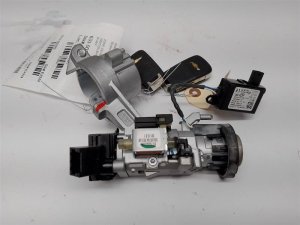
(OEM #ACDelco 25832354)— This part contains the reader coil (exciter coil) that communicates with the key. The coil or its wiring can fail, preventing the key from being read. Aftermarket versions are widely available.
Trusted brands: ACDelco, Dorman (p/n 924-719)
OEM price range: $150-$250
Aftermarket price range: $80-$190
Related Codes That Often Appear With This One
- B3060 — Often relates to a secondary issue with the key transponder signal, such as an unprogrammed key being detected.
- B3935 — Another code indicating a transponder incorrect status, often set alongside B3055, particularly when RF interference is a factor.
Technical Service Bulletins (TSBs) & Recalls
- PIC5650M: Mentions intermittent no crank, no start, or start stall concerns with the security light on, potentially setting DTC B3055, B3060, and B3935. It strongly suggests investigating Radio Frequency Interference (RFI) from aftermarket devices before replacing parts.
- PIT5030E: Notes that on vehicles with flip keys, not having the key fully extended can cause an intermittent no-crank and set a B3055.
- PIE0232: An engineering information bulletin asking technicians to gather data on low-mileage 2013 vehicles with B3055, indicating GM was actively investigating the root cause.
Platform-Specific Known Issues
- A GM Technical Service Bulletin (TSB #PIC5650M) acknowledges an intermittent no-crank or start-stall condition associated with code B3055 on these vehicles, and points towards potential RF interference as a cause.
- Owners on forums frequently report success with the 30-minute relearn procedure, but often the problem returns, indicating an underlying hardware failure of the key or ignition lock housing.
- The wiring leading to the ignition lock housing is cited as a weak point, with wires becoming brittle and breaking over time, causing an open circuit.
Mechanic-Grade Diagnostic Values
- BCM Ground Circuit Voltage Drop — expected: No more than 10-20 millivolts (0.01-0.02V). Failure: A reading higher than 20mV indicates high resistance in the ground circuit, which can cause module communication issues.
- BCM Ground Pin Resistance to Chassis Ground — expected: Near 0 ohms. Failure: A reading of several ohms (e.g., 19-22 ohms was seen in one case) indicates a poor ground connection that needs to be located and cleaned.
Scan Tool Commands That Help
- GM Tech2 / GDS2 or equivalent professional scanner: View Immobilizer Data Stream — This is a critical first step for diagnosis. Viewing parameters like 'TDM Transponder Key' (should read 'Present') and 'Environment Identification' (should read 'Key Detected') can instantly determine if the module is seeing the key at all.
- GM Tech2 / GDS2 or equivalent professional scanner: Add/Replace Keys — This function is required after replacing a key or the Theft Deterrent Module (TDM) / Body Control Module (BCM). It programs the new components to communicate with each other. This is separate from the 30-minute manual relearn and is often required for module replacement.
Wiring & Ground Locations
- Body Control Module (BCM) — Under the driver's side dash, to the left of the steering column, often above the OBD-II port.. The BCM houses the Theft Deterrent Module (TDM) logic on these models. All signals from the ignition key's transponder reader are processed here. Power and ground issues at the BCM are a potential cause of B3055.
- G202 — On the right side of the steering column, below connector X201.. This is a primary instrument panel ground point that provides a ground path for the Theft Deterrent Module (TDM) and Instrument Panel Cluster (IPC). A loose or corroded G202 can cause security system malfunctions.
- BCM Connector C1 (Pink) — One of the main connectors at the BCM under the driver's dash.. Contains critical power and ground pins for the BCM. Pin A3 (ORN) is Battery Positive Voltage, Pin A12 (PPL) is Ignition 0 Voltage, and Pins A6, A7, B7 (BLK) are grounds. Testing these points is essential for ruling out a BCM power supply issue.
- Theft Deterrent Module (TDM) — Integrated into the ignition key cylinder housing itself. It is not a separate module located elsewhere.. This is the component that contains the exciter coil and receives the transponder signal. The entire unit is replaced as the 'Ignition Lock Housing'.
Real Owner Repair Stories
- ImpalaForums user (2011 Chevrolet Impala 3.5L) — Security light on, no crank, no start. No communication with the theft deterrent module via scan tool.
❌ Tried (didn't work) Replacing the ignition lock cylinder/housing (which includes the TDM) did not solve the problem initially.
✅ What actually fixed it The user had lost communication with the TDM. The fix required checking all powers and grounds to the module to restore communication before any programming could be done. The underlying issue was a wiring or connection problem preventing the new module from being seen by the rest of the car. - YouTube video by 'el panin' (Chevrolet Impala (year not specified, but within range)) — No crank, security light stays on. Codes B3055 and B3935 present.
❌ Tried (didn't work) Attempting to start the car multiple times., Scanning and clearing codes without addressing the root cause.
✅ What actually fixed it The technician suspected a de-programmed key. After confirming the transponder was sending a signal but the car was not accepting it, the final fix was to perform a key relearn/programming procedure which allowed the car to start and run.
OEM Part Supersession History
12458191, 12533953, 15822350→ACDelco 25832354— Part consolidation and design updates over time for the ignition lock cylinder kit.
Heads up: The aftermarket Dorman 924-719 is a common alternative that directly replaces these OEM numbers and comes with instructions for the relearn procedure.
Model Year Variations Within This Range
- 2007-2013 and 2014 Impala Limited: These models use the traditional Passkey III/+ system with a physical, bladed key that is inserted into the ignition lock cylinder on the steering column.
- 2014+ (10th Generation): Higher trims of the redesigned 2014+ Impala feature a push-button start and a different anti-theft system. While a B3055-type fault can still occur, the diagnosis involves checking the key fob battery and using the backup start location (often in the center console) if the fob isn't detected. The physical ignition lock cylinder is not present.
Helpful Videos

We Have This Part in Stock



The information in this article is provided for general reference and educational purposes only. Vehicle specifications, procedures, and part compatibility can vary by production date, trim level, and region. Always consult your vehicle's factory service manual and verify part numbers before purchasing or performing repairs. Safety-critical components such as airbags, seat belts, and braking systems should be installed by a qualified professional.
- Chevrolet IMPALA:
- 🎬 Helpful Videos
- 🛍️ Shop This Part
- What's Unique About the 2007-2014 Chevrolet IMPALA
- Diagnostic Flowchart
- Symptoms You May Notice
- Most Likely Causes
- Rare But Worth Checking
- Diagnosis Steps
- Parts You'll Likely Need
- Related Codes That Often Appear With This One
- Technical Service Bulletins (TSBs) & Recalls
- Platform-Specific Known Issues
- Mechanic-Grade Diagnostic Values
- Scan Tool Commands That Help
- Wiring & Ground Locations
- Real Owner Repair Stories
- OEM Part Supersession History
- Model Year Variations Within This Range
- 🎟️ Get 5% Off