

B3055 on 2012-2016 Chevrolet Express: No-Start, Security Light Causes & Fixes
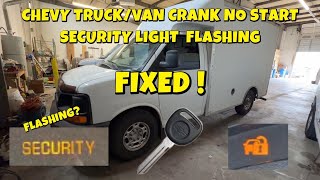
On a 2012-2016 Chevy Express, code B3055 typically means the van's security system cannot read the transponder chip in your ignition key. This results in a no-start or start-and-stall condition with the security light on. The most common fixes are trying a spare key, performing a 30-minute security relearn, or replacing the ignition lock cylinder that contains the reader coil.
- B3055 means your van's security system isn't recognizing the ignition key, which prevents the engine from starting.
- The first and easiest diagnostic step is to try your spare key. If it works, your original key has failed.
- Remove any other electronic fobs from your keychain to eliminate possible radio interference.
- If no keys work, the problem is likely the reader coil inside the ignition lock cylinder.
- Most repairs will require a security relearn procedure, which can sometimes be done without a scan tool (30-minute method) but is more reliably performed by a shop with the right equipment.
What's Unique About the 2012-2016 Chevrolet EXPRESS
The Chevrolet Express from this era uses a common and generally reliable GM immobilizer system. However, these vans are often used in commercial fleets, leading to high cycles of key insertions and removals. This heavy use can accelerate wear on the key's internal transponder chip and the reader coil (exciter coil) located within the ignition lock cylinder assembly. The constant use, combined with vibrations and temperature changes in a work vehicle, makes the physical key and the reader coil the most frequent points of failure for this specific fault.
Diagnostic Flowchart
Tap your situation to follow the diagnostic path that matches what you're seeing on this vehicle.
Symptoms You May Notice
- Engine will not crank (no-crank)
- Engine starts and immediately stalls
- Security light on the dashboard is solid or flashing
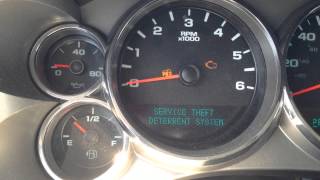
- "Service Theft Deterrent System" message on the driver information center
- "Theft Attempted" message on the driver information center.
- Replacing the battery when voltage is sufficient.
- Replacing the starter motor when the no-crank is caused by the security system.
- Replacing the fuel pump when the start-and-stall is caused by the security system disabling fuel.
Most Likely Causes
- Defective Ignition Key Transponder 🔴 High Probability The transponder chip inside the plastic head of the key can fail from being dropped, age, or electronic failure. This is a common issue across many GM vehicles using this system.
How to confirm: The easiest way to confirm is to try starting the vehicle with a known-good spare key. If the spare key works and the original does not, the original key is faulty. A scan tool may show the 'TDM Transponder Key' parameter as 'Not Present' with the bad key and 'Present' with the good key.
Typical fix: A new key must be purchased, cut to match the original, and then programmed to the vehicle. This can be done with a scan tool or by performing the 30-minute relearn procedure.
Est. part cost: $50-$150 - Faulty Ignition Lock Cylinder / Reader Coil 🔴 High Probability The reader coil (also called an exciter coil or antenna) is part of the ignition lock cylinder assembly. Constant use, temperature cycles, and vibration can cause this coil or its fine wiring to fail, preventing it from energizing the key's transponder.
How to confirm: If a known-good spare key also fails to start the vehicle, the problem is likely with the reader in the ignition cylinder. A technician can use a scan tool to check for a signal from the key; if no signal is present with any key, the reader is the prime suspect.
Typical fix: The ignition lock cylinder assembly, which contains the reader coil, needs to be replaced. This is a mechanical and electrical replacement that will require a security relearn procedure to be performed afterward.
Est. part cost: $100-$250 - Radio Frequency Interference (RFI) 🟡 Medium Probability Other electronic devices on the keychain, such as other car keys with transponders, gate access fobs, or gas station payment fobs, can operate on a frequency that interferes with the 125 kHz signal from the key's transponder.
How to confirm: Remove all other keys and electronic devices from the keychain so only the single Chevrolet key is present. Attempt to start the vehicle. If it starts, RFI was the cause.
Typical fix: Keep other electronic fobs and keys on a separate keychain from the vehicle's ignition key.
Est. part cost: $0
Rare But Worth Checking
- Damaged Wiring or Connectors: The wiring between the ignition lock cylinder and the Body Control Module (BCM) can become damaged, or the connector can become loose or corroded, causing an intermittent connection. This is worth checking before replacing expensive modules. A diagnostic procedure involves checking for B+ voltage and proper ground at the TDM connector. On upfitted vans with relocated batteries, improper grounding is a known cause of various electrical issues.
- Faulty Body Control Module (BCM): While rare, the BCM itself can fail. This should only be considered after all other possibilities (key, reader coil, wiring) have been definitively ruled out, as it is an expensive repair requiring programming.
- Low Battery Voltage: A weak or failing vehicle battery can cause a variety of unpredictable electronic issues, including triggering security system faults like B3055. If the battery voltage is low, the BCM/TDM may not function correctly. One owner on Reddit reported a B3055 code alongside a battery reading only 10.5V.
Diagnosis Steps
- Scan for all DTCs in the Body Control Module (BCM) or Theft Deterrent Module (TDM). Note B3055 and any other related codes like B3060 or B3935.
- Remove all other keys, fobs, and electronic devices from the keychain. Try starting the vehicle with just the single ignition key to rule out Radio Frequency Interference.
- If the vehicle still won't start, try a known-good spare key. If the spare key works, the original key is faulty and needs to be replaced and programmed.
- If the spare key also fails, the issue is likely with the vehicle. Inspect the wiring and connector at the base of the ignition lock cylinder for any visible damage or looseness.
- If keys and wiring appear fine, the next most likely cause is the ignition lock cylinder's reader coil. Replacement is the most common fix.
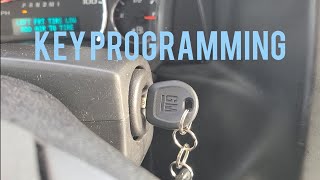
- If a new key or lock cylinder is installed, perform the 30-Minute Relearn Procedure: 1. Insert the new key and turn the ignition to the 'ON' position (do not start). 2. Observe the security light. It will turn on and stay on. Wait for approximately 10-11 minutes until the light turns off. 3. Within 45 seconds, turn the key to 'OFF' and then back to 'ON'. 4. Wait another 10-11 minutes for the security light to turn off again. 5. Repeat the process a third time (total of 3 cycles, ~30-35 minutes). 6. After the third cycle, turn the key to 'OFF', then 'ON'. The key is now programmed, and the vehicle should start.
- As a last resort, perform advanced diagnostics on the Body Control Module (BCM) to check for internal faults.
Parts You'll Likely Need
- Ignition Key with Transponder (Passkey III+)
(OEM #GM B111-PT)— The chip inside the key is a common failure point, especially if a spare key works. The key blank is often a Strattec 5903896 or GM B111-PT.
Trusted brands: ACDelco, Strattec
OEM price range: $70-$120
Aftermarket price range: $40-$80 - Ignition Lock Cylinder with Passlock Sensor/Reader Coil
(OEM #ACDelco D1462G (GM 15795321))— This part contains the reader coil that energizes and reads the key. It is the second most common failure point if multiple keys fail to work. This part is technically the housing that contains the reader coil.
Trusted brands: ACDelco, Dorman, Standard Motor Products
OEM price range: $150-$250
Aftermarket price range: $80-$150
Related Codes That Often Appear With This One
- B3060 — This code means "Unprogrammed Key Transponder" and often appears with B3055, indicating the system sees a key but cannot validate its programming. TSB PIE0232 specifically calls out this combination.
- B3935 — This is another related security system code, "Transponder Authentication Failed," that can be set along with B3055 during a communication fault between the key and module.
Technical Service Bulletins (TSBs) & Recalls
- PIC5650M: Notes an intermittent no crank, no start, or start stall concern with the security light coming on, associated with DTC B3055.
- PIE0232: An engineering information bulletin seeking data on low-mileage trucks with no-start conditions and DTC B3055, B3060, or B3935, showing GM was investigating the root cause.
- PIT5030E: Describes how an improperly extended flip-key can cause a no-crank and
Platform-Specific Known Issues
- Real-World Repair Story: A user on Reddit posted about a vehicle towed in for a no-start with code B3055. The customer's key was physically broken and the vehicle battery was low. After replacing the battery and programming a new key, the vehicle started and ran perfectly, confirming the faulty key was the root cause.
- TSB PIC5650M: A Technical Service Bulletin, #PIC5650M, was issued for intermittent no-crank or start-stall concerns with the security light on, which lists B3055 as a potential code. This indicates the manufacturer is aware of the condition across various models.
- TSB PIT5030E: Another bulletin, PIT5030E, notes that on some GM vehicles with flip-keys, if the key is not fully extended and locked straight, it can cause a no-crank and set a B3055. While the Express typically uses a solid key, this highlights the sensitivity of the system to key position and potential for signal interruption.
Mechanic-Grade Diagnostic Values
- TDM Transponder Key Parameter (Scan Tool) — expected: Present. Failure: Parameter reads 'Not Present' when a key is in the ignition and turned to ON.
- Immobilizer Data Stream (Scan Tool) — expected: Key Detected. Failure: The 'Environment Identification' parameter shows 'No Key Detected' when a key is in the ignition.
Hidden / Shadow Codes Worth Checking
- B3055-00: The '00' indicates a Failure Type of 'No Sub Type Information'. This means the base DTC text string 'No Transponder Modulation or No Transponder' provides the complete description of the failure, and no more specific sub-codes are typically generated for this fault. (see via Standard on professional scan tools like GM GDS2 when reading the DTC from the Theft Deterrent Module (TDM) or Body Control Module (BCM).)
Scan Tool Commands That Help
- GDS2 (Global Diagnostic System 2): Module Diagnostics -> BCM -> Data Display -> Immobilizer Data — Use this function to monitor live data pids like 'TDM Transponder Key' and 'Environment Identification (Key Detected)' to see in real-time if the module is recognizing a key's presence, which is the first step in diagnosing B3055.
- GDS2 (Global Diagnostic System 2): Module Diagnostics -> Remote Control Door Lock Receiver -> Configure/Reset Functions -> Add/Replace Key Fobs — This function is used after replacing a key or the BCM/TDM to program new keys to the vehicle's immobilizer system. It is a necessary step to make the new components work.
- GDS2 (Global Diagnostic System 2): Theft Deterrent Module -> Programming -> Program Keys — This is the specific path for programming immobilizer keys, which is required when a key is replaced. It initiates a 10-12 minute security access procedure controlled by the software.
Wiring & Ground Locations
- BCM Connector X1 — The Body Control Module (BCM) is located behind the knee bolster on the right (passenger) side of the dashboard. X1 is one of the seven connectors on the module.. This connector contains critical circuits for the theft deterrent system. Pin 2 (PINK) is Run/Crank Ignition voltage, Pin 14 (PINK) is another power source, and Pin 4 (WHITE) is a data line. A bypass module installation guide shows these specific pins, which are essential for power and communication.
- BCM Connector X4, Pin 9 — On the BCM, located behind the passenger side knee bolster.. Pin 9 on connector X4 is a BLACK with WHITE stripe wire that serves as a ground for the BCM. A poor connection here can cause a host of BCM-related issues, including security system faults.
- G103, G104, G105, G106 — These are primary engine and chassis ground locations. G103 is at the rear of the left-hand engine head. The others are typically on the engine block or frame near the original battery location. One user notes a ground on the driver's side back of the cylinder head.. A GM Technical Service Bulletin (PI0690B) explicitly states that improper grounding, especially on upfitted vans with relocated batteries, can cause numerous electrical faults. The bulletin stresses that the battery MUST be grounded directly to the engine, not the frame, and highlights these specific ground points as critical connections to verify.
Real Owner Repair Stories
- YouTube channel 'ADD AUTOMOBILE SERVICES' (2013 Chevrolet Equinox (similar GM immobilizer system)) — Intermittent no-start with security light on. Scan tool shows code B3055 'no transponder modulation'. The original key would sometimes fail to be read.
❌ Tried (didn't work) Simply trying to restart the car repeatedly.
✅ What actually fixed it The technician used a VVDI Key Tool to clone the intermittently failing original transponder chip onto a new 'super chip'. He then placed this new, cloned chip inside the original key fob housing alongside the original chip. This created a redundant signal, ensuring that even if the original chip failed to respond, the new cloned chip would, resolving the intermittent no-start condition.
Model Year Variations Within This Range
- 2012-2016: The factory diagnostic software transitions during this period. Generally, pre-2013 models are diagnosed with 'Tech2Win' software, while 2014 and newer models use 'GDS2'. However, there is overlap, and GDS2 can often successfully diagnose modules on models as old as 2010, but some specific functions may require the older software. This affects the tools and software path a technician must use.
Helpful Videos

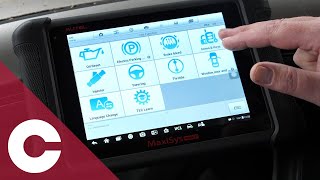
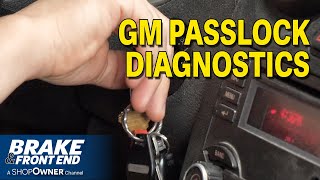
Used OEM Parts in Stock

New Aftermarket Parts Available

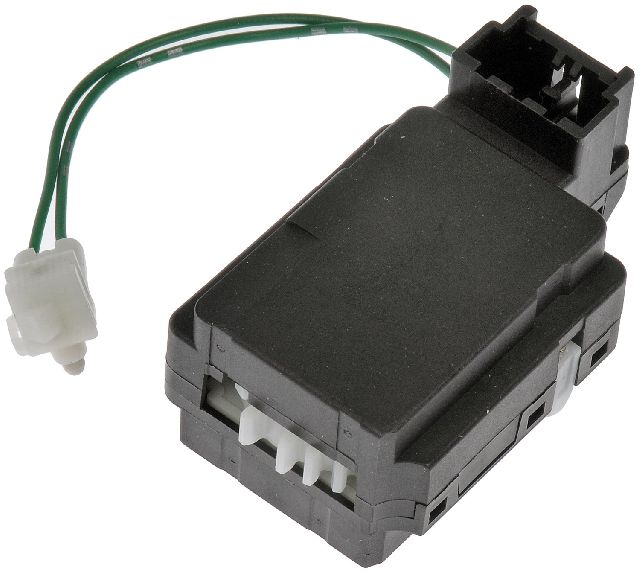
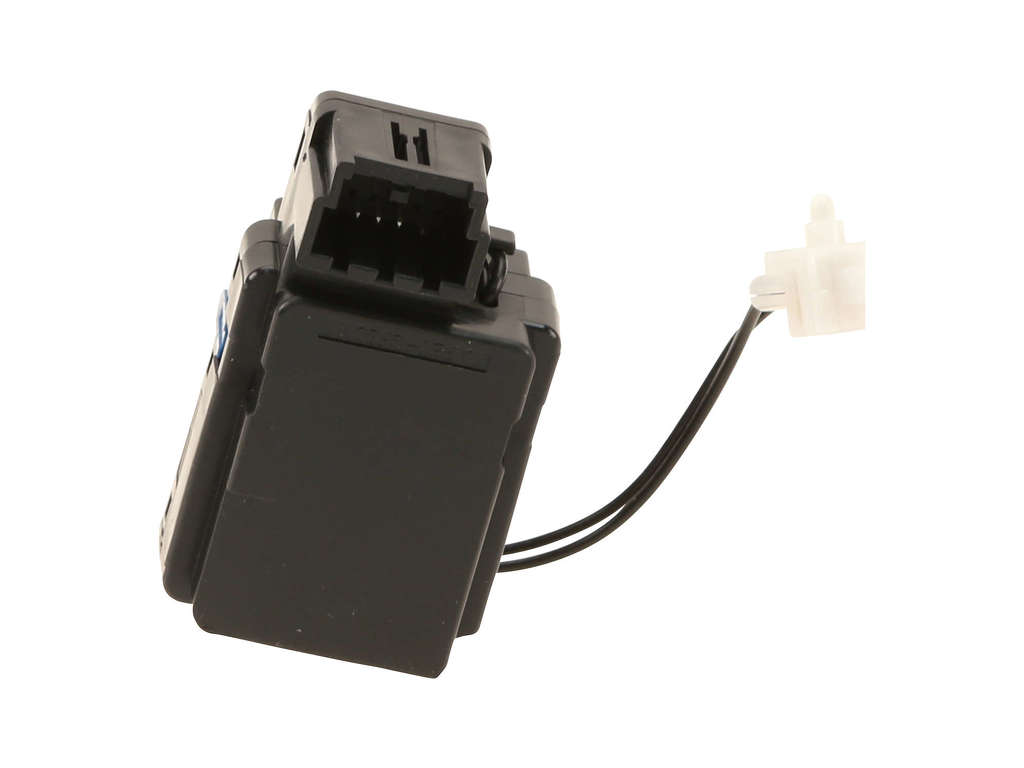

The information in this article is provided for general reference and educational purposes only. Vehicle specifications, procedures, and part compatibility can vary by production date, trim level, and region. Always consult your vehicle's factory service manual and verify part numbers before purchasing or performing repairs. Safety-critical components such as airbags, seat belts, and braking systems should be installed by a qualified professional.
- Chevrolet EXPRESS:
- 🎬 Helpful Videos
- 🛍️ Shop This Part
- What's Unique About the 2012-2016 Chevrolet EXPRESS
- Diagnostic Flowchart
- Symptoms You May Notice
- Most Likely Causes
- Rare But Worth Checking
- Diagnosis Steps
- Parts You'll Likely Need
- Related Codes That Often Appear With This One
- Technical Service Bulletins (TSBs) & Recalls
- Platform-Specific Known Issues
- Mechanic-Grade Diagnostic Values
- Hidden / Shadow Codes Worth Checking
- Scan Tool Commands That Help
- Wiring & Ground Locations
- Real Owner Repair Stories
- Model Year Variations Within This Range
- 🎟️ Get 5% Off