

B3055 on 2007-2011 Chevrolet Express: No Start Causes and Fixes
Code B3055 on a 2007-2011 Chevy Express means the van's anti-theft system can't read the ignition key. This results in a no-crank or no-start condition with the security light on. The most common fix is replacing a faulty key or the ignition lock cylinder housing which contains the reader coil.
- B3055 means your van's anti-theft system doesn't recognize your key, so it won't let the engine start.
- Before spending money, try your spare key and remove all other fobs from your keychain to rule out simple issues.
- The most common failures are the transponder chip in the key itself or the reader coil (exciter) located in the ignition lock cylinder housing.
- A 30-minute 'relearn' procedure (cycling the key on for 10 minutes, 3 times) is often required after replacing parts and can sometimes resolve the issue on its own.
What's Unique About the 2007-2011 Chevrolet EXPRESS
The GM Passkey III (PK3) anti-theft system used in this generation of Express vans is generally reliable but sensitive. The primary issue is not a design flaw but rather the typical failure of electronic components over time, such as the key's internal transponder chip or the wiring in the steering column. The system is designed to be secure, so when it fails, it defaults to preventing the vehicle from starting, which can be mistaken for a bad starter or battery. Unlike earlier Passlock systems which used a resistor pellet in the key (VATS) or a magnet in the lock cylinder, the PK3 system relies on a transponder chip in the key itself, making the key and the reader coil the most critical components.
Diagnostic Flowchart
Tap your situation to follow the diagnostic path that matches what you're seeing on this vehicle.
Symptoms You May Notice
- Engine will not crank or start.
- Engine starts briefly and then stalls immediately.
- Security light is illuminated solid or flashing on the dashboard.
- "Service Theft Deterrent System" message may appear on the driver information center.
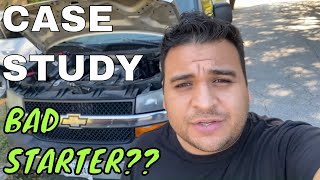
- Starter Motor: A no-crank symptom is often mistaken for a failed starter. However, with code B3055, the theft system is intentionally preventing the starter relay from engaging. 🎬 Watch: Step-by-step diagnosis for a no-crank, no-start condition.
- Dead Battery: While a low battery can cause various electronic issues, a fully charged battery (or even using a jump start) will not resolve a B3055 code if the key or reader is faulty.
Most Likely Causes
- Defective or Damaged Ignition Key 🔴 High Probability The Philips ID 46 transponder chip inside the key head can be damaged from being dropped, exposed to moisture, or from normal wear and tear, interrupting its ability to send a signal.
How to confirm: Try starting the vehicle with a spare, known-good key. If the vehicle starts and runs properly with the second key, the first key is faulty.
Typical fix: Replace the faulty key. A new key must be cut and then programmed to the vehicle using a specific 30-minute relearn procedure or a diagnostic scan tool.
Est. part cost: $50-$150 - Faulty Ignition Lock Cylinder Housing / Exciter Coil 🟡 Medium Probability The exciter coil (transponder antenna) that energizes the key's chip is integrated into the ignition lock cylinder housing. This component or its fine wiring can fail due to age or heat cycles, preventing it from communicating with any key.
How to confirm: If multiple known-good keys fail to start the vehicle, the problem is likely in the steering column components. A technician can use a scan tool to monitor the TDM data for 'Transponder Key State' to see if any key is being detected. If no key is detected, the housing/coil is the prime suspect.
Typical fix: Replace the ignition lock cylinder housing. This part contains the new exciter coil. After installation, a security relearn procedure is required to sync the system.
Est. part cost: $70-$200 - Radio Frequency (RF) Interference ⚪ Low Probability The Passkey system operates at 125 kHz. Other electronic devices on the keychain, like building access fobs, other vehicle keys with transponders, or even some aftermarket phone chargers can operate on a similar frequency and interfere with the signal between the key and the exciter coil.
How to confirm: Remove all other keys and electronic devices from the keychain. Try starting the vehicle with only the single Chevrolet key. If it starts, interference was the issue.
Typical fix: Keep other RFID or electronic devices separate from the vehicle key when starting the engine.
Est. part cost: $0 - Wiring Harness Issue ⚪ Low Probability The wiring between the ignition lock cylinder housing and the BCM can become damaged, loose, or corroded. Common chafe points on GM trucks and vans are where the harness passes near sharp metal edges of brackets or rubs against the steering column components, especially with tilt-wheel use.
How to confirm: Visually inspect the wiring harness and connectors at the base of the steering column and at the BCM for any visible damage, pushed-out pins, or corrosion. Tugging gently on the harness while trying to start the vehicle may intermittently make or break the connection, pointing to a wiring fault.
Typical fix: Repair the damaged wire(s) and protect the harness from future damage using anti-abrasion tape or re-routing it away from the chafe point.
Est. part cost: $10-$100
Rare But Worth Checking
- Failed Body Control Module (BCM) or Theft Deterrent Module (TDM): This is the least likely cause. The BCM/TDM is the brain of the system and is generally robust. It should only be considered for replacement after all other possibilities (key, lock cylinder housing, wiring) have been definitively ruled out through proper diagnostics.
Diagnosis Steps
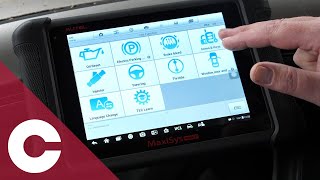
- Scan the Theft Deterrent Module (TDM) and Body Control Module (BCM) for codes. Confirm B3055 is present and active. Note any other related codes like B3060 or B3935.
- Isolate the ignition key. Remove all other keys, fobs, and electronic devices from the keychain to eliminate Radio Frequency (RF) interference.
- Attempt to start the vehicle with a second, known-good spare key. If it starts, the primary key is defective and needs replacement.
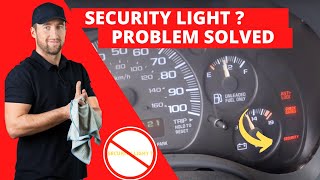
- If the second key also fails (or no spare is available), perform the 30-minute security relearn procedure: Turn the key to the 'ON' position (do not crank). The security light will illuminate. Wait for approximately 10 minutes, or until the security light turns off. Turn the key 'OFF' for 5-10 seconds. Repeat this cycle two more times for a total of three 10-minute cycles. After the third cycle, turn the key off, then try to start the engine. 🎬 See a demonstration of the 30-minute security relearn procedure.
- If the relearn fails, inspect the wiring and connector for the ignition lock cylinder housing at the base of the steering column. Look for chafed wires, loose pins, or corrosion.
- Using a capable scan tool, monitor the TDM/BCM data stream. Look for parameters like 'Transponder Key State' or 'Key in Ignition'. If it shows 'Not Present' or 'Invalid' for all keys, the ignition lock cylinder housing/exciter coil is the most likely failure point.
- If all other components test good, the final step is to diagnose the Body Control Module (BCM) itself, which may require replacement and programming by a professional.
Parts You'll Likely Need
- Ignition Key with Transponder
(OEM #GM 23372322 (Supersedes earlier numbers))— This is the most common failure point. The internal Philips ID 46 chip is delicate and can fail, preventing the vehicle from recognizing it. The key blank is often referred to by its part number B111-PT.
Trusted brands: ACDelco, Dorman, Keyline
OEM price range: $70-$120
Aftermarket price range: $20-$60 - Ignition Lock Cylinder Housing
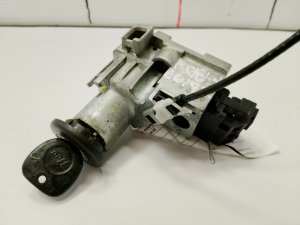
(OEM #ACDelco D1403G (or GM 15822350))— This component contains the exciter coil that reads the key. If the coil or its internal wiring fails, no key will be recognized. This is different from the lock cylinder that the key turns.
Trusted brands: ACDelco, Dorman, Standard Motor Products (SMP)
OEM price range: $150-$250
Aftermarket price range: $70-$150
Related Codes That Often Appear With This One
- B3060 — This code means 'Unprogrammed Transponder' was detected. It often appears with B3055 when the system receives a signal but doesn't recognize the key's code, such as with a new, unprogrammed key.
- B3935 — This code relates to 'Transponder Authentication Error' and can be set alongside B3055 when there are communication issues between the key and the module, often pointing to interference or a weak signal.
Technical Service Bulletins (TSBs) & Recalls
- PIC5650M: Mentions B3055 in conjunction with intermittent no-crank, no-start, or start-stall concerns with the security light on. Suggests investigating RF interference from devices on the keychain.
- PIT5030E: Although for slightly newer models with flip keys, it establishes a precedent for B3055 being set by improper key positioning, which can be intermittent and hard to diagnose.
Platform-Specific Known Issues
- As noted in TSB #PIC5650M, this code is part of a known pattern on these vehicles related to intermittent no-crank or start-stall conditions accompanied by the security light. The bulletin advises checking for RF interference before replacing parts.
- Another TSB, #PIT5030E, notes that on some GM vehicles with flip-style keys, if the key is not fully extended and locked straight, it can cause an intermittent no-crank and set a history code for B3055.
- Wiring harness chafing is a known issue on GM trucks and vans. The harness can rub against the ECM/TCM bracket, the upper control arm, or the shock tower, eventually causing a short or open circuit that can trigger this code.
Mechanic-Grade Diagnostic Values
- Resistance of TDM/BCM ground circuit to chassis ground — expected: Less than 10 ohms. Failure: A value greater than 10 ohms indicates an open or high resistance in the ground circuit.
- Voltage at TDM/BCM B+ circuit — expected: B+ (Battery Positive Voltage). Failure: Less than B+ indicates a problem with the power supply to the module.
- Voltage on TDM/BCM signal circuit with module disconnected — expected: Less than 1 V. Failure: A value of 1V or greater indicates a short to voltage on the signal circuit.
- Resistance of TDM/BCM signal circuit end-to-end — expected: Less than 2 ohms. Failure: A value greater than 2 ohms suggests an open or high resistance in the signal wire itself.
Scan Tool Commands That Help
- Tech2 / GDS2: Immobilizer Data List — To observe the 'Transponder Key State' parameter. When a key is turned in the ignition, this should change from 'Not Present' to 'Present'. If it remains 'Not Present' for all known-good keys, it points strongly to a failed exciter coil in the ignition lock cylinder housing.
- Tech2 / GDS2: Clear DTCs — After a repair or a diagnostic step (like removing RF interference sources), clearing the code is necessary. A history B3055 can be cleared after 100 malfunction-free ignition cycles, but a current DTC requires a scan tool or fixing the fault condition.
Wiring & Ground Locations
- BCM (Body Control Module) — Located behind the lower right side of the dashboard on the 2009 Express G2500.. The BCM integrates the Theft Deterrent Module (TDM) functionality. All signals from the key's transponder are processed here. A bad ground or connection at the BCM can cause B3055.
- G100 / G101 — G100 is the ground for the left headlamp assembly; G101 is for the right headlamp assembly. A video on GMT800 trucks (a similar platform) shows important chassis grounds on the frame rail near the radiator.. While not directly for the TDM, poor chassis grounds can introduce electrical noise and voltage issues that affect sensitive modules like the BCM, potentially contributing to intermittent communication problems.
- G303 — Serves as a ground for the headlamp switch, which communicates with the BCM.. Illustrates a ground point for an input to the BCM. The main BCM ground itself is the most critical, but the integrity of all related grounds is important for stable module operation.
- Ignition Lock Cylinder Housing Connector — At the base of the steering column, connecting the exciter coil to the main vehicle harness that runs to the BCM.. This is a primary point of failure. The connector pins can become loose or corroded, and the wires are susceptible to damage from the tilt-steering mechanism, causing an open or short in the exciter coil circuit.
Real Owner Repair Stories
- Hummer Forums thread (2008 Hummer H3 Alpha (uses similar GM Passlock/Passkey components)) — Passlock issue, no start.
❌ Tried (didn't work) Initial diagnosis pointed towards the common Passlock issue.
✅ What actually fixed it The owner replaced the ignition lock cylinder housing (ACDelco D1403G). They noted they only swapped the black switch component at the end of the housing, not the entire assembly. This resolved the starting problem.
OEM Part Supersession History
GM 15822350→ACDelco D1403G— Standard part number update and branding change from GM to ACDelco Professional.
Heads up: GM 15822350 and ACDelco D1403G are listed for vehicles with automatic transmissions. A different part, D1462G, is specified for manual transmissions on related platforms (like the Hummer H3), indicating a potential incompatibility if the wrong part is ordered.
Model Year Variations Within This Range
- 2007-2011: While the core Passkey III system is consistent, the ignition lock cylinder housing part number may differ based on whether the vehicle has an automatic or manual transmission, as seen on other GM platforms from the era. For the Express, which is primarily automatic, ACDelco D1403G is the common replacement.
Helpful Videos
Used OEM Parts in Stock

New Aftermarket Parts Available


The information in this article is provided for general reference and educational purposes only. Vehicle specifications, procedures, and part compatibility can vary by production date, trim level, and region. Always consult your vehicle's factory service manual and verify part numbers before purchasing or performing repairs. Safety-critical components such as airbags, seat belts, and braking systems should be installed by a qualified professional.
- Chevrolet EXPRESS:
- 🎬 Helpful Videos
- 🛍️ Shop This Part
- What's Unique About the 2007-2011 Chevrolet EXPRESS
- Diagnostic Flowchart
- Symptoms You May Notice
- Most Likely Causes
- Rare But Worth Checking
- Diagnosis Steps
- Parts You'll Likely Need
- Related Codes That Often Appear With This One
- Technical Service Bulletins (TSBs) & Recalls
- Platform-Specific Known Issues
- Mechanic-Grade Diagnostic Values
- Scan Tool Commands That Help
- Wiring & Ground Locations
- Real Owner Repair Stories
- OEM Part Supersession History
- Model Year Variations Within This Range
- 🎟️ Get 5% Off