

B3055 on 2007-2014 Chevrolet Equinox: Causes for No-Start & Security Light
B3055 on a 2007-2014 Equinox indicates a security system problem, usually a no-start with the security light on. The most common cause is a faulty ignition lock cylinder, followed by a bad key. A DIY replacement of the lock cylinder and a 30-minute key relearn procedure often fixes it.
- B3055 means your car's anti-theft system has been triggered, which is why it won't start.
- Before buying parts, try a spare key and perform the 30-minute relearn procedure.
- For 2010-2014 models, make sure your flip-key is fully extended before inserting it in the ignition.
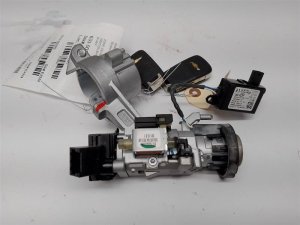
- The most common part to fail and require replacement is the ignition lock cylinder/housing.
- Remove phone chargers, extra key fobs, and toll passes from the car to rule out radio interference.
What's Unique About the 2007-2014 Chevrolet EQUINOX

The 2007-2014 Equinox, spanning two vehicle generations, uses a GM Passkey III+ anti-theft system where the key's transponder signal is read by an exciter coil antenna surrounding the ignition lock cylinder. This design makes the entire lock cylinder assembly a frequent failure point due to wear or internal wiring breaks. Additionally, for the second-generation models (2010-2014) with flip-style keys, simply not having the key fully extended and locked can cause this code and a no-start condition, as documented by GM in service bulletin PIT5030E.
Diagnostic Flowchart
Tap your situation to follow the diagnostic path that matches what you're seeing on this vehicle.
Generation note: This range covers the end of the first generation (2007-2009) and the start of the second generation (2010-2014). While the body style and some features changed, both generations use a similar GM Passkey III+ immobilizer system. The causes and fixes for B3055 are largely the same, though second-gen models are specifically mentioned in TSBs regarding flip-key position issues. Part numbers for the ignition lock cylinder differ between generations.
Symptoms You May Notice

- Engine will not crank or turn over
- Engine starts but immediately shuts off (start and stall)
- Security indicator light (often a car with a lock) is on solid or flashing on the dashboard
- "Service Theft Deterrent System" message may appear on the driver information center
- "Theft Attempted" message may appear on the DIC
- Replacing the starter motor, as the symptom is a 'no crank'. A Reddit user reported a customer who was certain the starter was bad when the issue was actually the key and a weak battery setting a B3055.
- Replacing the battery without confirming it's weak. However, it's important to note that low system voltage can cause various electrical issues, including security system faults. A stable 12V supply is required for reliable operation and key programming.
- Replacing the Engine Control Module (ECM) instead of the Body Control Module (BCM) or its related security components.
Most Likely Causes

- Faulty Ignition Lock Cylinder / Housing 🔴 High Probability The sensor (exciter coil) that reads the key's transponder chip is part of the ignition lock cylinder housing. Over time, the internal tumblers wear out, or the thin wires for the sensor can break from the rotational stress of turning the key, causing an intermittent or complete loss of communication. One owner on YouTube documented a complete failure where the key would no longer turn at all due to worn tumblers.
How to confirm: After ruling out the key and performing a key relearn procedure that fails to solve the issue, the lock cylinder becomes the primary suspect. There is no simple electrical test for a DIYer; it's often a process of elimination. A professional can test the signal circuit for continuity back to the BCM/TDM.
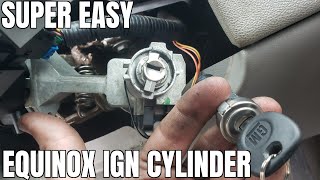
Typical fix: Replace the ignition lock cylinder and perform the 30-minute key relearn procedure. In a documented case on a 2005 Equinox, a user sourced a replacement lock cylinder with keys from a junkyard (LKQ) for about $20 and successfully performed the relearn.
Est. part cost: $60-$130 - Damaged or Incorrect Key 🟡 Medium Probability The transponder chip in the key head can be damaged from being dropped, exposed to moisture, or simply fail internally. Using a non-transponder key (a cheap copy) will also trigger this code. One technician on Reddit shared an experience where a customer's key was physically broken and causing a B3055 with a "Theft Attempted" message.
How to confirm: Try starting the vehicle with a known-good spare key. If the spare key works consistently, the original key is the problem. A locksmith or technician can also use a tool to check if the key is emitting a signal.
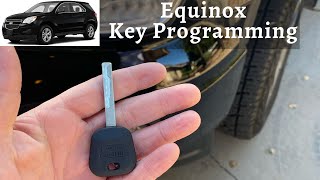
Typical fix: Replace the faulty key. A new key must be cut and programmed to the vehicle. A technician on YouTube demonstrated cloning a failing key's data onto a new super chip to resolve an intermittent B3055 on a 2013 Equinox.
Est. part cost: $25-$100 - Incorrect Key Position (2010-2014 Flip Keys) 🟡 Medium Probability As noted in GM TSB #PIT5030E, if the flip-style key is not fully extended and locked into the straight position, the head of the key can be angled down, preventing proper communication with the transponder antenna. This causes an intermittent no-crank and can set a B3055 in history.
How to confirm: If the car fails to start, remove the key, ensure it is fully clicked open and straight, then re-insert it. If the car starts, this was the cause.
Typical fix: User education. Ensure the key is fully extended before use. Clear the history code.
Est. part cost: $0 - Radio Frequency Interference (RFI) ⚪ Low Probability As outlined in GM TSB #PIC5650M, aftermarket electronics like phone chargers, LED lights, toll passes, or even other car keys with transponders on the same keychain can interfere with the low-power signal from the key's chip. The TSB specifically lists items like USB power banks, certain window tints, and even decorative "Bedazzle Trim Rings" around the ignition cylinder as potential sources of RFI.
How to confirm: Remove all other keys and electronic devices from the keychain and from the vehicle's cabin. If the problem disappears, one of the removed items was causing interference.
Typical fix: Isolate the key from sources of RFI. Do not keep other transponder keys or electronic fobs on the same ring.
Est. part cost: $0
Rare But Worth Checking
- Faulty Body Control Module (BCM) / Theft Deterrent Module (TDM): The BCM (2nd gen) or TDM (1st gen) is the computer that manages the security system. While it can fail, it is much less common than key or lock cylinder issues. In a documented case on a 2011 GMC Terrain, a B3055 code ultimately required a new key and a new PCM because the original was locked and would not accept the new key programming. This should be considered a last resort after all other causes have been ruled out.
- Wiring Harness Damage: A break or short in the wiring between the ignition lock cylinder and the BCM/TDM can cause a loss of signal. This is uncommon but possible, especially if other electrical work has been performed in the dash area. Diagnostic procedures involve checking for voltage and resistance at the module connector.
Diagnosis Steps
- Verify the complaint and check for a security light on the instrument cluster.
- If you have a 2010-2014 model with a flip key, remove it, ensure it's fully extended and locked straight, and try again.
- Try starting the vehicle with a known-good spare key. If it works, the original key is faulty.
- Remove any other keys, fobs, and aftermarket electronic devices (chargers, LED lights, toll passes) from the vehicle to eliminate Radio Frequency Interference (RFI).
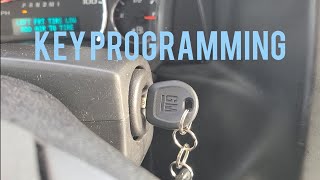
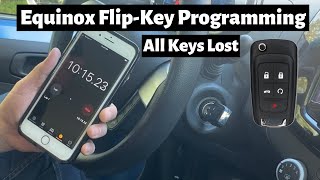
- Attempt the GM 30-minute key relearn procedure. Turn the key to 'ON' (do not start). Wait for the security light to turn off (approx. 10-11 minutes). Turn the key 'OFF' for 10-30 seconds. Repeat this two more times for a total of 3 cycles / ~30 minutes. After the third cycle, turn the key off and then try to start the engine. 🎬 See a demonstration of the 30-minute key relearn process. If this works, the issue may have been a temporary glitch.
- If the relearn procedure does not work and the key is not the issue, the most likely cause is the ignition lock cylinder/housing.
- Inspect the wiring and connector at the ignition lock cylinder for any visible damage.
- If all other steps fail, the issue may be with the Body Control Module (BCM) or Theft Deterrent Module (TDM) itself, which typically requires professional diagnosis and programming.
Parts You'll Likely Need
- Ignition Lock Cylinder / Housing
(OEM #20869121 (for 2007-2009 Equinox) or D1464G (for 2010-2014 Equinox))— This is the most common failure point for this code, as it contains the sensor that reads the key's security chip.
Trusted brands: ACDelco, GM Genuine Parts, Standard Motor Products
OEM price range: $60-$130
Aftermarket price range: $30-$90 - Transponder Ignition Key — If a spare key works and the original does not, the chip in the original key has failed.
Trusted brands: ACDelco
OEM price range: $40-$80
Aftermarket price range: $25-$50
Related Codes That Often Appear With This One
- B3060 — This code, meaning 'Unspecified Key', often appears with B3055 as it relates to the BCM/TDM's inability to properly identify the key transponder. TSB PIC5650M lists it as a related code.
- B3935 — Another transponder-related code that can be set during the same fault event, also mentioned in TSB PIC5650M.
- P0615 — On a 2011 GMC Terrain, a B3055 code was the root cause for a misleading P0615 (Starter Relay Circuit) code, demonstrating how a security issue can prevent the starter from being commanded.
Technical Service Bulletins (TSBs) & Recalls
- PIC5650M: Intermittent no crank, no start, or start stall concern with security light and DTC B3055, often related to RFI.
- PIT5030E: Diagnostic Tip for an intermittent no-crank on 2010-2014 models if the flip-key is not fully extended, which can set B3055.
Platform-Specific Known Issues
- GM Technical Service Bulletin #PIC5650M (and its revisions) directly addresses intermittent no-start conditions with B3055, B3060, and B3935, pointing towards RFI as a potential cause.
- GM Technical Service Bulletin #PIT5030E specifically calls out the flip-style key on 2010-2014 models not being fully extended as a cause for an intermittent no-crank that can set a B3055.
Mechanic-Grade Diagnostic Values
- Scan Tool Live Data: TDM Transponder Key Parameter (2007-2009) — expected: Present. Failure: Parameter reads 'Not Present' when a key is in the ignition and turned to ON.
- Scan Tool Live Data: BCM Key Part Number (2010-2014) — expected: A key part number is displayed.. Failure: The parameter does not display a key part number.
- Key Transponder Resistance (Ohm) — expected: Not Applicable. Failure: This test is not valid for the Passkey III+ system used in the Equinox, which uses an RFID transponder, not a resistor pellet like older Passkey/VATS systems.
Hidden / Shadow Codes Worth Checking
- B3055 00: The '00' is a symptom byte indicating 'No Sub Type Information'. This means the base DTC (B3055) provides the complete description of the failure, and no further detail is available from the sub-code. (see via Dealer-level scan tools like a Tech2 or GDS2, or some advanced aftermarket scan tools.)
Scan Tool Commands That Help
- GDS2 / Techline Connect: BCM Programming/Setup — This is required after replacing the Body Control Module (BCM) on 2010-2014 models. It programs the vehicle's VIN and security information into the new module.
- GDS2 / Techline Connect: Setup SDM Primary Key in BCM — This function may be required after BCM replacement to synchronize the new BCM with the airbag system (Sensing and Diagnostic Module).
- Tech2 / GDS2 / Advanced Aftermarket Scan Tool: Immobilizer Learn / Add Key — Used to program new or additional keys to the vehicle's immobilizer system after replacing a key or as a diagnostic step.
Wiring & Ground Locations
- BCM (Body Control Module) — For 2010-2014 models, the BCM is located under the driver's side of the dash, in the center console area.. On 2nd generation models, the BCM manages the entire immobilizer system. All relevant wiring terminates here.
- TDM (Theft Deterrent Module) — For 2007-2009 models, the TDM is located on the steering column, often near the ignition lock cylinder housing.. On 1st generation models, this is the dedicated computer for the immobilizer system.
- BCM Connector C3 (2010-2014) — At the Body Control Module. This is a Light Green plug.. Contains the immobilizer data circuits. Pin 15 (Pink wire) and Pin 22 (White/Black wire) are the data bus and 5V reference lines for the Passkey system. Another source indicates Pin 5 (Brown) and Pin 6 (Pink) are also relevant.
- BCM Connector X2 (2011) — At the Body Control Module.. Contains the main power and ground for the BCM. Pin 1 is a Red/White wire for Battery Positive Voltage, and Pin 2 is a Black/White wire for Ground. A poor connection here can cause various BCM issues.
- G203 / G205 — For a 2010 Equinox, G203 is at the lower center dash and G205 is in the left kick panel.. These are primary ground points for instrument panel components. A loose or corroded ground here can cause intermittent electrical issues for the BCM and related systems.
Real Owner Repair Stories
- YouTube channel 'ADD AUTOMOBILE SERVICES' (2013 Chevrolet Equinox) — Intermittent no-start with the security light staying on. Code B3055 was present.
❌ Tried (didn't work) The original key would sometimes work and sometimes fail to start the car.
✅ What actually fixed it The technician used a VVDI key tool to read the data from the intermittently failing transponder chip. He then cloned this data onto a new 'super chip' and placed the new chip inside the original key fob alongside the old one. This provided a reliable, redundant signal that the BCM could read every time, resolving the intermittent no-start.
OEM Part Supersession History
20869121→N/A— This is the ignition lock cylinder for the first generation (2007-2009).
Heads up: This part is not compatible with 2010-2014 models.D1464G (ACDelco) / 20766607 (GM)→N/A— This is the ignition lock cylinder for the second generation (2010-2014).
Heads up: This part is not compatible with 2007-2009 models.
Model Year Variations Within This Range
- 2007-2009: These first-generation models use a separate Theft Deterrent Module (TDM) to read the key and communicate with the ECM. The TDM is typically located on the steering column.
- 2010-2014: These second-generation models integrate the immobilizer function into the Body Control Module (BCM), located in the center console/dash area. These models may also experience the flip-key issue described in TSB PIT5030E.
Helpful Videos



Used OEM Parts in Stock


New Aftermarket Parts Available


The information in this article is provided for general reference and educational purposes only. Vehicle specifications, procedures, and part compatibility can vary by production date, trim level, and region. Always consult your vehicle's factory service manual and verify part numbers before purchasing or performing repairs. Safety-critical components such as airbags, seat belts, and braking systems should be installed by a qualified professional.
- Chevrolet EQUINOX:
- 🎬 Helpful Videos
- 🛍️ Shop This Part
- What's Unique About the 2007-2014 Chevrolet EQUINOX
- Diagnostic Flowchart
- Symptoms You May Notice
- Most Likely Causes
- Rare But Worth Checking
- Diagnosis Steps
- Parts You'll Likely Need
- Related Codes That Often Appear With This One
- Technical Service Bulletins (TSBs) & Recalls
- Platform-Specific Known Issues
- Mechanic-Grade Diagnostic Values
- Hidden / Shadow Codes Worth Checking
- Scan Tool Commands That Help
- Wiring & Ground Locations
- Real Owner Repair Stories
- OEM Part Supersession History
- Model Year Variations Within This Range
- 🎟️ Get 5% Off