

B3055 on 2008-2012 Chevrolet Captiva: No-Start Causes and Fixes
Code B3055 on a Chevrolet Captiva means the anti-theft system can't read your key, causing a no-start or stall. The most likely causes are a bad key, a faulty ignition lock cylinder, or simply trying a spare key. A new key and programming can cost between $150 and $400.
- B3055 means your Captiva's anti-theft system has disabled the engine because it cannot read the key.
- Before spending money, always try your spare key, remove all items from your keychain, and unplug any aftermarket chargers to rule out simple fixes.
- The most common failed parts are the key itself or the ignition lock cylinder that reads it.
- Any repair involving a new key or security module will require professional programming or a specific key relearn procedure.
What's Unique About the 2008-2012 Chevrolet CAPTIVA
The Chevrolet Captiva is built on the GM Theta platform, which it shares with vehicles like the Saturn Vue, Chevrolet Equinox, and Pontiac Torrent. This immobilizer issue is common across the entire platform. A notable issue, documented in GM Technical Service Bulletin #PIC5650M, links code B3055 directly to intermittent no-crank, no-start, or stalling conditions with the security light on. This indicates a known pattern of immobilizer-related faults on this platform and its siblings. On earlier models (approx. 2008-2009), the security functions may be handled by a separate Theft Deterrent Module (TDM), while on later models (approx. 2010-2012 Captiva Sport), these functions are integrated into the Body Control Module (BCM).
Diagnostic Flowchart
Tap your situation to follow the diagnostic path that matches what you're seeing on this vehicle.
Symptoms You May Notice
- Engine will not crank or start
- Engine starts and immediately stalls
- Security indicator light is illuminated or flashing on the dashboard
- Intermittent no-start condition
- "Service Theft Deterrent System" message on the driver information center.
- "Theft Attempted" message on the driver information center.
- Replacing the starter motor. If the security light is on, the no-start is almost certainly caused by the anti-theft system, not a failed starter. A Reddit user reported a technician dealing with a customer who was certain the starter was the issue when code B3055 was active.
- Replacing the battery without confirming it's the cause. While a low battery can cause various electrical problems and prevent key programming, it is not the direct cause of a B3055 code. However, a stable voltage above 12.4V is required for reliable diagnosis and programming.
Most Likely Causes
- Defective or Damaged Ignition Key 🔴 High Probability The transponder chip embedded in the plastic head of the key can be damaged from drops, water exposure, or simply fail with age. Using a cheap, non-transponder copy of the key will also set this code.
How to confirm: Try starting the vehicle with a known-good spare key. If the spare key works, the original key is faulty. A locksmith can also use a key tool to check if the transponder is emitting a signal.
Typical fix: Replace the faulty key and have the new key cut and programmed to the vehicle by a dealer or automotive locksmith. In some cases, a technician can clone the data from the failing chip onto a new one and place it in the existing key shell.
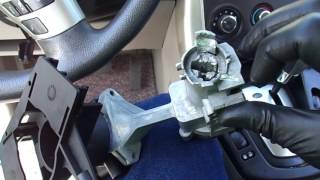
Est. part cost: $70-$200 - Faulty Ignition Lock Cylinder / Transponder Antenna 🟡 Medium Probability The exciter coil (antenna) that energizes and reads the key's transponder is typically integrated into the ignition lock cylinder housing. 🎬 See this walkthrough for replacing the ignition lock cylinder assembly. This component or its wiring can fail, creating an open circuit. Wear and tear from key insertion can lead to intermittent connections, sometimes temporarily fixed by jiggling the key.
How to confirm: If multiple known-good keys fail to start the vehicle, and a key relearn procedure does not work, the problem is likely with the reader/lock cylinder. A professional can use an inductive coil tester to see if the BCM is energizing the antenna coil when the key is inserted. A professional scan tool can monitor the key's signal status in the BCM data stream.
Typical fix: Replace the ignition lock cylinder and/or the immobilizer transceiver module. This part will require a security relearn procedure, which can often be done via a 30-minute process without special tools.
Est. part cost: $75-$350 - Radio Frequency Interference (RFI) ⚪ Low Probability The 125 kHz signal used by the immobilizer is low power and can be easily disrupted by other electronic devices. TSB PIC5650M specifically calls out aftermarket devices like phone chargers, LED lights, and even other keys on the same ring as potential sources of RFI.
How to confirm: Remove all other keys, fobs, and RFID-enabled cards (like office access cards) from the keychain. Unplug any aftermarket chargers or devices from the vehicle's power outlets. Try starting the vehicle with the ignition key isolated from all other devices.
Typical fix: Keep the ignition key on its own ring or separated from other electronic devices. Remove any low-quality aftermarket electronics from the vehicle.
Est. part cost: $0 - Improper Flip-Key Position ⚪ Low Probability
How to confirm: As noted in TSB PIT5030E, if the key is not fully extended and locked straight when inserted into the ignition, it may not be read correctly. The transponder chip can be too far from the antenna coil. Remove the key, ensure it is fully extended, and re-insert it.
Typical fix: Ensure the key is fully locked in the straight position before inserting it into the ignition.
Est. part cost: $0
Rare But Worth Checking
- Failing Body Control Module (BCM): While less common, the BCM itself can fail internally. This usually presents with multiple other seemingly unrelated electrical issues in addition to the B3055 code. A Reddit user with a 2012 Captiva experienced this, requiring a new, VIN-programmed BCM. Forum users also report widespread, difficult-to-diagnose electrical issues that were traced back to the BCM.
- Poor Wiring Connection: A loose pin, corrosion, or break in the wiring harness between the ignition lock cylinder and the BCM can cause an intermittent B3055. This requires careful inspection of the steering column wiring and connectors at the BCM, particularly the Light Green 27-pin plug.
Diagnosis Steps
- Check the dashboard for an illuminated or flashing security light when trying to start the vehicle. This confirms an anti-theft system issue.
- Try your spare key. If the vehicle starts, the original key is the problem.
- Remove all other keys, fobs, and RFID cards from the keychain to rule out Radio Frequency Interference (RFI). Unplug any aftermarket phone chargers or accessories.
- If you have a flip-key, ensure it is fully extended and locked straight before inserting it into the ignition.
- Check the vehicle's main battery. Ensure it is fully charged and the terminals are clean and tight. A voltage below 12.4V can cause issues with diagnosis and programming.
- Attempt the 30-Minute Relearn Procedure: 🎬 Watch: A step-by-step guide to the 30-minute key relearn process. Turn the key to the 'ON' position (don't start) for 10 minutes, or until the security light goes out. Turn the key 'OFF' for 10 seconds. Repeat this process a total of three times. On the fourth attempt, try to start the engine.
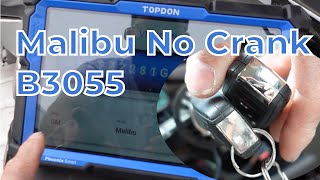
- If the above steps fail, the vehicle requires professional diagnosis with a scan tool 🎬 Watch: Professional B3055 diagnosis using a high-end diagnostic scan tool. that can read BCM codes and data to test the immobilizer antenna and BCM function.
Parts You'll Likely Need
- Ignition Key with Transponder — The transponder chip inside the key is the most common failure point that directly causes code B3055.
Trusted brands: ACDelco, GM Genuine
OEM price range: $100-$200
Aftermarket price range: $50-$120 - Ignition Lock Cylinder with Immobilizer Antenna
(OEM #96627323, 96627322 (Check VIN for exact fitment))— This part contains the antenna (exciter coil) that reads the key. If this coil or its wiring fails, no key will be recognized. This is a very common failure on the GM Theta platform.
Trusted brands: ACDelco, Standard Motor Products
OEM price range: $150-$300
Aftermarket price range: $75-$175
Related Codes That Often Appear With This One
- B3060 — This code for 'Unprogrammed Transponder Key' often appears with B3055 when the system detects a key but cannot validate it because it hasn't been learned by the system.
- B3935 — This code for 'Transponder Authentication Error' can be set when the key is read but its security code is incorrect, which is part of the same failure sequence as B3055.
- B2955 — Seen on similar GM platforms, this code points to a fault in the 'Security Sensor Data Circuit', indicating a problem with the wiring between the key reader and the control module.
- U0168 — This code indicates 'Lost Communication With Vehicle Security Control Module'. A user on Reddit reported this code after replacing the BCM on their 2012 Captiva in an attempt to fix the immobilizer issue.
Technical Service Bulletins (TSBs) & Recalls
- PIC5650M: Addresses intermittent no-crank, no-start, or start-stall concerns with the security light on, specifically mentioning DTC B3055. It strongly points to Radio Frequency Interference (RFI) from aftermarket devices like phone chargers and LED lights as a primary cause to investigate.
- PIT5030E: Notes that on vehicles with flip-keys, an improperly extended key can cause an intermittent no-crank and set code B3055 because the transponder is not close enough to the reader coil.
Platform-Specific Known Issues
- A known issue documented in TSB #PIC5650M describes an intermittent no-crank or start-stall condition associated with code B3055 and other security-related codes on this platform.
- Owners of Captivas and their platform-mates (Saturn Vue, Chevy Equinox) frequently report this B3055 code leading to a no-start condition that is resolved by replacing the ignition lock cylinder assembly.
- A Reddit user with a 2012 Captiva experienced a BCM failure causing this code, which required a new, VIN-programmed BCM to resolve.
Mechanic-Grade Diagnostic Values
- Immobilizer Exciter Coil Function — expected: An LED on an inductive coil tester held near the ignition switch should flash when the key is inserted or turned.. Failure: If the LED on the tester does not flash, it indicates the BCM is not sending a signal to energize the coil, pointing to a problem with the BCM or its wiring.
Hidden / Shadow Codes Worth Checking
- B3055 00: The '00' is a standard symptom byte meaning 'No Sub Type Information'. It indicates that the primary code B3055 contains the full description of the fault and no further detail is available from the sub-code. (see via Dealer-level scan tools like the GM Tech2 or GDS2, as well as some advanced aftermarket tools, will display the code with this symptom byte.)
Scan Tool Commands That Help
- GM GDS2 / Techline Connect: Immobilizer Learn / Add Key — This function is used to program new or additional keys into the vehicle's security memory. It's required after replacing a key or as a diagnostic step to rule out programming issues.
- GM GDS2 / Techline Connect: BCM Programming/Setup — This is required after replacing the Body Control Module. It configures the new module with the vehicle's specific VIN, RPO codes, and security information.
- GM GDS2 / Techline Connect: Setup SDM Primary Key in BCM — After replacing the BCM, this function must be run to synchronize the new BCM with the existing Sensing and Diagnostic Module (SDM), also known as the airbag module. Failure to do so will result in an airbag warning light.
Wiring & Ground Locations
- BCM (Body Control Module) — Located in the center console, below the radio.. On later models (approx. 2010+), the BCM integrates the Theft Deterrent Module (TDM) and is the central computer for the immobilizer system. All related wiring terminates here.
- G201 — On the Captiva Sport platform, this ground point is located in the right front kick panel area.. This is a primary instrument panel ground point for the Body Control Module. A loose or corroded connection at G201 can cause intermittent power loss to the BCM, leading to a B3055 code and other electrical faults.
- BCM Light Green 27-Pin Plug — One of the main connectors on the Body Control Module.. This connector contains critical inputs from the ignition switch. Specifically, Pin 14 (Pink wire) is the Ignition 1 signal. Inspecting this connector and its pins for corrosion or damage is a key step when diagnosing a B3055 that isn't solved by a new key.
Real Owner Repair Stories
- YouTube channel 'ADD AUTOMOBILE SERVICES' (2013 Chevrolet Equinox (GM Theta platform-mate)) — Intermittent no-start with security light illuminated and DTC B3055 stored.
❌ Tried (didn't work) The original key would fail intermittently, making diagnosis difficult.
✅ What actually fixed it A technician used a VVDI Key Tool to read the data from the intermittently failing original key and cloned it onto a new 'super chip'. This new chip was then installed into the original key housing, permanently resolving the intermittent signal loss. - Chevrolet Forum user 'BobbyW' (2000 Chevrolet Venture (Uses similar Passkey III system)) — No-start, security light on. Jumping the starter would only allow the engine to run for a second before shutting off.
❌ Tried (didn't work) Attempting the 30-minute relearn procedure did not work. Replacing only the transponder antenna in the steering column also failed to fix the issue.
✅ What actually fixed it The problem was resolved only after replacing both the faulty key and the transponder antenna, followed by successfully performing the 30-minute relearn procedure to teach the BCM the new key's value.
Model Year Variations Within This Range
- 2008-2009: Early models, based directly on the Saturn VUE, are more likely to use a separate, dedicated Theft Deterrent Module (TDM) located on the steering column to manage the Passkey III+ system.
- 2010-2012: Later models, particularly the 'Captiva Sport', integrate the immobilizer logic directly into the main Body Control Module (BCM), eliminating the separate TDM. Diagnosis for these models focuses on the BCM and its connections.
Helpful Videos


Used OEM Parts in Stock





New Aftermarket Parts Available


The information in this article is provided for general reference and educational purposes only. Vehicle specifications, procedures, and part compatibility can vary by production date, trim level, and region. Always consult your vehicle's factory service manual and verify part numbers before purchasing or performing repairs. Safety-critical components such as airbags, seat belts, and braking systems should be installed by a qualified professional.
- Chevrolet CAPTIVA:
- 🎬 Helpful Videos
- 🛍️ Shop This Part
- What's Unique About the 2008-2012 Chevrolet CAPTIVA
- Diagnostic Flowchart
- Symptoms You May Notice
- Most Likely Causes
- Rare But Worth Checking
- Diagnosis Steps
- Parts You'll Likely Need
- Related Codes That Often Appear With This One
- Technical Service Bulletins (TSBs) & Recalls
- Platform-Specific Known Issues
- Mechanic-Grade Diagnostic Values
- Hidden / Shadow Codes Worth Checking
- Scan Tool Commands That Help
- Wiring & Ground Locations
- Real Owner Repair Stories
- Model Year Variations Within This Range
- 🎟️ Get 5% Off