

B3055 on 2011-2015 Chevrolet Caprice: Key Transponder Problem, No-Start Causes and Fixes
On a 2011-2015 Caprice, code B3055 almost always means the car's anti-theft system can't read the key, causing a no-start and security light. The most likely fix is trying a spare key or replacing a faulty key; if that fails, the ignition lock cylinder's reader coil is the next suspect. Radio Frequency Interference (RFI) from other keys or chargers is also a common cause on this platform.
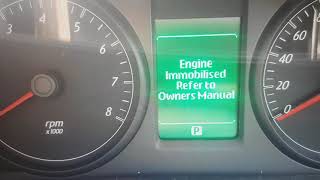
- B3055 means your Caprice's anti-theft system has disabled the engine because it cannot read the ignition key.
- Before any repairs, always try your spare key first. This is the simplest and cheapest diagnostic step.
- Remove phone chargers and other keys from the area to rule out radio frequency interference (RFI) as a cause.
- Do not immediately replace the starter or battery if the security light is on; the issue is almost certainly with the immobilizer system.
- If a new key or security module is needed, it will require professional programming with specialized tools.
What's Unique About the 2011-2015 Chevrolet CAPRICE
The 2011-2015 Chevrolet Caprice, sold primarily as a Police Patrol Vehicle (PPV), is based on the Australian-made Holden Caprice (Zeta platform), sharing its core electronics with the Chevrolet SS and Pontiac G8. Immobilizer issues are common across this platform, often related to the specific flip-key design or sensitivity to Radio Frequency Interference (RFI). A key TSB (PIC5650M) directly links B3055 to no-start conditions on the Caprice, confirming a known pattern of faults within the Passkey anti-theft system and emphasizing RFI as a primary diagnostic step.
Diagnostic Flowchart
Tap your situation to follow the diagnostic path that matches what you're seeing on this vehicle.
Symptoms You May Notice
- Intermittent no crank, no start condition.
- Engine starts but stalls immediately.
- Security indicator light is on or flashing on the dashboard.
- Vehicle does not respond when the key is turned to the 'crank' position; often just a single click is heard or nothing at all.
- A 'Theft Attempted' or similar message may appear on the Driver Information Center (DIC).
- Replacing the starter motor. A no-crank symptom with a security light is almost always the anti-theft system disabling the starter relay, not a faulty starter itself. A user on newcaprice.com detailed replacing a starter for a no-start, which is a difficult job on this car, only to have the issue persist intermittently. 🎬 Watch: Troubleshooting a Caprice no-start before replacing the starter.
- Replacing the battery. While a low battery can cause many electrical problems and must be healthy for proper diagnosis, it is not the root cause of a B3055 code if the battery itself is healthy. A stable voltage of at least 12.4V is required for reliable immobilizer function and programming.
Most Likely Causes
- Defective or Damaged Ignition Key 🔴 High Probability The transponder chip (Philips ID46 type) embedded in the key head can be damaged from drops or wear over time, interrupting its ability to communicate. For the flip-key style used on this platform, if the key is not fully extended and locked straight, it can cause a misalignment with the reader coil and trigger a B3055.
How to confirm: Try starting the vehicle with a known-good spare key. If the spare key works, the original key is faulty. Also, ensure the flip-key is fully locked in the straight position before inserting it.
Typical fix: Replace the faulty key. A new key must be cut and programmed to the vehicle by a dealer or automotive locksmith using a tool like the GM GDS2. A Reddit user confirmed a new, properly programmed key resolved their B3055 no-start issue after a battery replacement.
Est. part cost: $50-$150 - Radio Frequency Interference (RFI) 🔴 High Probability The Passkey system operates on a low-frequency signal (125 kHz) that can be easily disrupted by other keys, fobs, and aftermarket electronics like phone chargers or LED lighting. TSB PIC5650M specifically calls out RFI as a major cause for B3055 on this platform.
How to confirm: Remove all other keys, fobs, and aftermarket electronics (especially phone chargers) from the keychain and vehicle. Try starting the car with only the single Caprice key near the ignition.
Typical fix: Isolate the source of interference and remove it. Do not keep multiple transponder keys on the same ring.
Est. part cost: $0 - Faulty Ignition Lock Cylinder / Exciter Coil 🟡 Medium Probability The exciter coil (or antenna/transceiver) is part of the ignition lock cylinder housing. It energizes and reads the key's transponder. This coil can fail or develop intermittent connections, preventing it from reading any key.
How to confirm: If multiple known-good keys fail to start the vehicle and RFI has been ruled out, the exciter coil is the next likely suspect. A technician can test the circuit for continuity and signal. On similar GM platforms, the resistance of the reader coil should be between 18 and 24 Ohms.
Typical fix: Replace the ignition lock cylinder housing which contains the exciter coil. A security relearn procedure is required after replacement. This part is sometimes referred to as the Ignition Lock Cylinder Case.
Est. part cost: $100-$300 - Wiring Harness or Connector Issue ⚪ Low Probability The wiring between the exciter coil and the Body Control Module (BCM) can become loose, corroded, or damaged, especially in the steering column area. On decommissioned police vehicles, prior equipment installation or removal can sometimes lead to wiring damage. A loose connector at the BCM itself has been reported by owners as a cause for similar anti-theft issues.
How to confirm: Visually inspect the connector at the ignition lock cylinder and the main connectors at the BCM. A technician can perform a pin-out test to check for continuity and proper voltage.
Typical fix: Repair the damaged wiring or clean/tighten the connector.
Est. part cost: $5-$50
Rare But Worth Checking
- Faulty Body Control Module (BCM): This is a last-resort diagnosis. The BCM is the computer that manages the security system. While it can fail, it's much less common than key or reader coil issues. All other causes should be ruled out before condemning the BCM. A replacement BCM requires dealer-level programming.
- Main Power Cable / Fusible Link: On the underlying Holden VE Commodore platform, a damaged main power cable running from the battery to the alternator and fuse box, which contains a 175-amp fusible link, 🎬 See how a damaged power cable causes immobilizer issues. has been shown to cause immobilizer and no-start issues. This can be caused by vermin or corrosion.
Diagnosis Steps
- Check for other Diagnostic Trouble Codes (DTCs) in all modules, especially B3060 and B3935.
- Attempt to start the vehicle with a known-good spare key. If it starts, the primary key is faulty.
- Remove all other keys, fobs, and electronic devices (phone chargers, dash cams, etc.) from the keychain and from the vehicle's cabin to eliminate Radio Frequency Interference (RFI). This is a critical step highlighted in TSB PIC5650M.
- If you have a flip-key, ensure it is fully extended and locked in the straight position before inserting it into the ignition, as per TSB PIT5030E.
- Inspect the ignition key for any visible damage or cracks.
- Attempt the GM 30-minute key relearn procedure. Turn the key to 'ON' and wait ~10 minutes for the security light to go out. Turn key 'OFF' for 10 seconds. Repeat two more times. After the third cycle, try to start the engine. 🎬 Watch: A step-by-step guide to the 30-minute key relearn.
- Using a capable scan tool (like GM GDS2), check the status of the anti-theft system and observe immobilizer data parameters like 'Transponder Key'.
- Inspect the wiring and connector at the base of the ignition lock cylinder for any signs of damage or loose pins.
- If all keys fail and wiring is intact, test the resistance of the exciter coil. On similar GM platforms, it should be between 18-24 Ohms. If it's out of spec, the ignition lock cylinder/exciter coil assembly is the most likely failed component.
- As a final step, if all other components test correctly, diagnose the Body Control Module (BCM).
Parts You'll Likely Need
- Ignition Key with Transponder
(OEM #13523903 (Key portion of flip key for platform mate Chevy SS))— This is the most common failure point. The internal transponder chip (Philips ID46) can fail, or the flip mechanism can wear out, preventing communication with the vehicle.
Trusted brands: ACDelco, Strattec
OEM price range: $70-$120
Aftermarket price range: $40-$80 - Ignition Lock Cylinder Housing
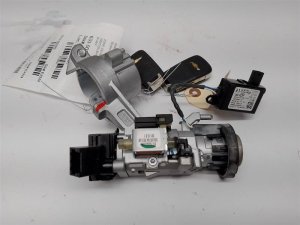
(OEM #19356477 (For platform mate Chevy SS))— This housing contains the exciter coil (antenna) that reads the key. The coil can burn out or develop an open circuit, preventing it from reading any key.
Trusted brands: ACDelco, Dorman, Locksmart
OEM price range: $150-$250
Aftermarket price range: $80-$180
Related Codes That Often Appear With This One
- B3060 — This code for 'Unprogrammed Key Transponder' often appears with B3055, indicating the system sees a key but cannot validate its programming. It is also listed in TSB PIC5650M.
- B3935 — Means 'Transponder Authentication Failed' and can be set along with B3055 during a communication fault between the key and module, often due to RFI. It is also listed in TSB PIC5650M.
- P0513 — This Powertrain Control Module (PCM) code for 'Incorrect Immobilizer Key' can be set when the BCM tells the PCM there is a security problem.
- B3055 5A — A more specific version of the code indicating a 'Plausibility Failure'. This means the BCM received a signal, but it was corrupt or illogical, strongly pointing towards RFI or an intermittent key chip failure. This requires a professional scan tool to read.
Technical Service Bulletins (TSBs) & Recalls
- PIC5650M: Addresses intermittent no crank, no start, or start stall concern with the security light coming on and lists B3055, B3060, and B3935 as related codes. It strongly suggests checking for Radio Frequency Interference before replacing parts.
- PIT5030E: A diagnostic tip for multiple GM vehicles with flip keys, noting that an intermittent no-crank with DTC B3055 can be caused by the key not being fully extended and locked straight when inserted into the ignition.
Platform-Specific Known Issues
- GM Technical Service Bulletin #PIC5650M directly addresses an intermittent no crank, no start, or start/stall concern with the security light on for the 2011-2015 Caprice, specifically listing B3055 as a potential code and highlighting RFI as a key diagnostic area.
- A related TSB, PIT5030E, notes that for GM vehicles with flip keys (like those on the Zeta platform), failing to fully extend and lock the key can cause a B3055.
- Owners on the newcaprice.com forums have discussed no-start conditions, sometimes misdiagnosing them as starter failures when immobilizer issues are the true cause.
Mechanic-Grade Diagnostic Values
- Ignition Lock Cylinder Transponder Reader Coil Resistance — expected: 18 to 24 Ohms. Failure: A reading outside this range indicates a faulty coil.
- Resistance of BCM ground circuit to chassis ground — expected: Less than 10 ohms. Failure: A value greater than 10 ohms indicates an open or high resistance in the ground circuit.
- Scan Tool Live Data: BCM Key Part Number — expected: A key part number is displayed when a valid key is in the ignition and turned to ON.. Failure: The parameter does not display a key part number, indicating the BCM is not reading the key's transponder.
Hidden / Shadow Codes Worth Checking
- B3055 00: The symptom byte '00' is a generic identifier for 'No Transponder Modulation or No Transponder' with no additional subtype information. It confirms the BCM received no signal from the key. (see via A professional scan tool like the GM GDS2 (Global Diagnostic System 2) will display the DTC with its two-digit symptom byte.)
Scan Tool Commands That Help
- GM GDS2: Immobilizer Learn / Vehicle Key Relearn — This function is required after replacing a key, the BCM, or the ignition lock cylinder to program the new components to the vehicle's security system.
- GM GDS2: Data Display > Immobilizer Data — Use this to monitor live data parameters like 'TDM Valid Key' or 'BCM Key Part Number' to see if the system is recognizing the key in real-time. This helps differentiate between a bad key, a bad reader coil, or a module issue.
- OBDSync: BCM Flashing and Learn Functions — This aftermarket tool can perform a BCM replacement procedure, including a Flash write for the correct OS/Calibrations, a VIN security link learn, an SDM primary key learn, and a brake pedal position learn, which is necessary when installing a new BCM.
Wiring & Ground Locations
- Body Control Module (BCM) — In the driver's side footwell, located up in the dash above and in front of the accelerator pedal. It is a black box with multiple large, different-colored connectors.. The BCM is the central computer for the Passkey III+ anti-theft system. It receives the signal from the key via the exciter coil and determines whether to allow the engine to start. All related wiring terminates here.
- G202 — In the right kick panel area.. This is a major ground point for the BCM and other interior electronics. A loose or corroded G202 can cause intermittent BCM power issues, leading to various faults including B3055.
- Ignition Switch Connector — At the back of the ignition lock cylinder housing, located inside the steering column covers.. This connector carries the signal from the exciter coil (antenna) to the BCM. Damage, corrosion, or loose pins in this specific connector will directly cause a B3055 code by interrupting the key's signal path.
- BCM Connector X2, Pin 1 (Yellow Wire) — On the Holden VE Commodore, the platform mate, this pin on the BCM receives the data signal from the remote/key receiver.. While this specific pinout is for the remote receiver, it demonstrates the direct, dedicated wiring path for security signals into the BCM. A fault on this specific circuit (Circuit 218 in the Holden manual) would cause a communication failure.
OEM Part Supersession History
13520349→13523903— Standard part revision or supplier change.
Heads up: The new part number (13523903) is the correct service replacement for the original. Both require programming to the vehicle.
Helpful Videos

We Have This Part in Stock


The information in this article is provided for general reference and educational purposes only. Vehicle specifications, procedures, and part compatibility can vary by production date, trim level, and region. Always consult your vehicle's factory service manual and verify part numbers before purchasing or performing repairs. Safety-critical components such as airbags, seat belts, and braking systems should be installed by a qualified professional.
- Chevrolet CAPRICE:
- 🎬 Helpful Videos
- 🛍️ Shop This Part
- What's Unique About the 2011-2015 Chevrolet CAPRICE
- Diagnostic Flowchart
- Symptoms You May Notice
- Most Likely Causes
- Rare But Worth Checking
- Diagnosis Steps
- Parts You'll Likely Need
- Related Codes That Often Appear With This One
- Technical Service Bulletins (TSBs) & Recalls
- Platform-Specific Known Issues
- Mechanic-Grade Diagnostic Values
- Hidden / Shadow Codes Worth Checking
- Scan Tool Commands That Help
- Wiring & Ground Locations
- OEM Part Supersession History
- 🎟️ Get 5% Off