

B3055 on 2023-2025 Cadillac Escalade ESV: Causes for 'Key Not Detected' and Fixes
This code means your Escalade's security system can't detect your key fob, causing a no-start. The most common fix is replacing the key fob battery (CR2450) or removing aftermarket electronics that cause radio interference. Try placing the fob in the cupholder slot to start the vehicle.
- B3055 means your Escalade can't detect its key fob, which prevents it from starting.
- Before any expensive repairs, replace the key fob battery (CR2450) and remove all aftermarket phone chargers and electronics to rule out the two most common causes.
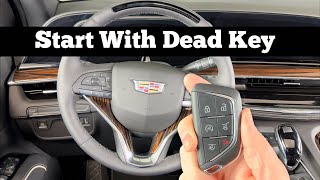
- If the key fob battery is dead, you can still start the vehicle by placing the fob in the designated slot in the center console cupholder.
- If you need a new key fob, it must be professionally programmed to your vehicle by a dealer or automotive locksmith.
- This issue is also common on the Chevrolet Tahoe/Suburban and GMC Yukon, which share the same platform.
What's Unique About the 2023-2025 Cadillac ESCALADE ESV
The fifth-generation Escalade, built on the GM T1 platform, uses a sophisticated keyless entry and start system that is sensitive to radio frequency (RF) interference. This issue is common across its platform mates, including the Chevrolet Tahoe and GMC Yukon. GM has issued Technical Service Bulletin #PIC5650M, which specifically highlights that intermittent no-start conditions with code B3055 🎬 Watch: See how code B3055 affects GM transponder systems can be caused by RFI from a wide range of aftermarket devices like phone chargers, dash cams, or even certain LED lights. This platform's reliance on wireless communication makes it prone to these environmental issues, which can mimic a component failure.
Diagnostic Flowchart
Tap your situation to follow the diagnostic path that matches what you're seeing on this vehicle.
Symptoms You May Notice
- Engine will not crank or start (intermittent or constant)
- Engine starts and immediately stalls
- Security indicator light is on or flashing
- 'No Remote Detected' or 'Place Key In Transmitter Pocket' message on the Driver Information Center (DIC)
- Keyless entry functions (e.g., door handle touch) may not work
- Replacing the starter motor. A starter failure will not cause a security light to illuminate.
- Replacing the main 12V vehicle battery. While a low battery can cause many electrical issues and should be tested, B3055 specifically points to a key recognition problem. The battery should be tested, not just replaced.
- Replacing the Body Control Module (BCM) without proper diagnosis. This is an expensive part and is less likely to be the cause than a key fob or interference issue.
Most Likely Causes
- Weak or Dead Key Fob Battery 🔴 High Probability Key fobs have a limited battery life, and their constant communication with the vehicle can deplete the battery faster than expected.
How to confirm: A 'Key Fob Battery Low' message may appear on the dash. Alternatively, try starting the vehicle with the spare key fob. If the spare works, the battery in the primary fob is the likely culprit.
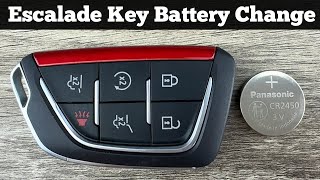
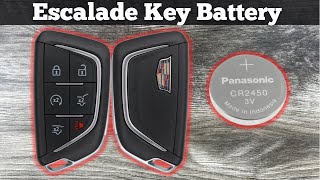
Typical fix: Replace the CR2450 battery inside the key fob. If the battery is dead, you can still start the vehicle by placing the fob in the designated pocket in the front cupholder area.
Est. part cost: $5-$15 - Radio Frequency Interference (RFI) 🔴 High Probability As documented in TSB #PIC5650M, the Escalade's keyless system is highly sensitive to interference from aftermarket electronics.
How to confirm: Unplug all aftermarket devices (phone chargers, dash cams, radar detectors, etc.) from the 12V/USB ports. Remove other keys, fobs, and RFID cards (like toll passes or building access cards) from the keychain. If the vehicle starts, one of the removed items was causing interference.
Typical fix: Identify and remove the source of the RFI. Specific culprits mentioned in GM bulletins include aftermarket LED lights, USB power banks, and certain phone chargers. Use high-quality, well-shielded electronic accessories to prevent future occurrences.
Est. part cost: $0 - Faulty Key Fob 🟡 Medium Probability Key fobs can be damaged from being dropped or exposed to moisture, leading to internal failure of the transponder chip or its circuitry.
How to confirm: Try starting the vehicle with all available spare keys. If another key works consistently, the original key fob is faulty.
Typical fix: Replace the faulty key fob. A new fob must be purchased and then programmed to the vehicle by a dealership or a qualified automotive locksmith.
Est. part cost: $150-$400 - Faulty Keyless Entry Control Module or Antenna ⚪ Low Probability While less common, the module that receives the key's signal (known as the RCDLR or K77 module) or one of its antennas can fail or have a poor connection.
How to confirm: This requires a professional diagnosis using a GM-specific scan tool to monitor the status of the keyless entry system and test the module's communication.
Typical fix: Replace the faulty module or antenna and program the new component to the vehicle. The module often requires programming by a dealer.
Est. part cost: $200-$600
Rare But Worth Checking
- Low Main 12V Vehicle Battery:
Diagnosis Steps
- Check for a 'Key Fob Battery Low' message on the Driver Information Center.
- Try starting the vehicle with your spare key fob.
- Replace the battery (CR2450) in the primary key fob, even if there is no low battery warning.
- Remove all other keys, fobs, and RFID-enabled cards from the keychain to eliminate interference.
- Unplug all aftermarket accessories from the 12V and USB ports (e.g., phone chargers, dash cams, aftermarket LED lighting).
- If the vehicle still won't start, try placing the key fob in the backup slot located in the front cupholder area and attempt to start the engine.
- Test the main 12V vehicle battery to ensure it has a full charge (above 12.4V).
- If the issue persists, use a professional-grade scan tool to confirm B3055 is the primary code and check for other related DTCs.
- A technician will then use the scan tool to monitor data from the Body Control Module and Keyless Entry Control Module (RCDLR) to determine if the key, module, or an antenna is the source of the fault.
Parts You'll Likely Need
- Key Fob Battery
(OEM #CR2450)— This is the most frequent and simplest solution. The key fob requires a CR2450 battery.
Trusted brands: Duracell, Energizer, Panasonic
OEM price range: $5-$15
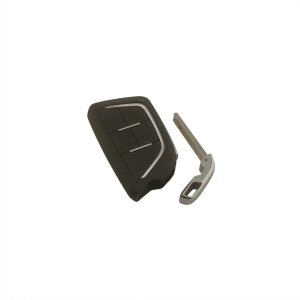
Aftermarket price range: $5-$10 - Keyless Entry Remote Fob — If the internal transponder of the key fob has failed, the entire fob must be replaced and programmed.
Trusted brands: ACDelco
OEM price range: $150-$400
Aftermarket price range: $80-$200 - Keyless Entry Control Module
(OEM #13523241)— Also known as the RCDLR, this module receives the signal from the key fob. If it fails, it can no longer detect the key. This part requires professional programming to the vehicle's VIN. This part number is known to supersede previous versions like 13599810 and 13508008.
Trusted brands: ACDelco (GM Genuine)
OEM price range: $200-$350
Aftermarket price range: Not Recommended
Related Codes That Often Appear With This One
- B3060 — Also related to the immobilizer system ('Unlearned Key'), often set with B3055 during a no-start event as per TSB #PIC5650M.
- B3935 — Pertains to transponder authentication, indicating a failure in the security handshake, as noted in TSB #PIC5650M.
- C0750, C0755, C0760, C0765, C0775 — These are Tire Pressure Monitor (TPM) sensor codes that can sometimes be set alongside security system codes due to shared receivers (the RCDLR often handles both functions) or general RF interference, as listed in TSB #PIC5650M.
Technical Service Bulletins (TSBs) & Recalls
- PIC5650M: Addresses intermittent no crank, no start, or start stall concern with the security light coming on and lists DTC B3055 as a possible cause. Recommends checking for RFI from aftermarket devices.
Platform-Specific Known Issues
- TSB #PIC5650M: This General Motors bulletin directly addresses customer concerns of an intermittent no crank, no start, or start/stall with the security light on. It lists B3055 as a potential code and advises technicians to investigate for Radio Frequency Interference from aftermarket devices before replacing any modules. Specific sources of interference cited include aftermarket LED lights, USB power banks, various 12V chargers, and even toll passes.
Hidden / Shadow Codes Worth Checking
- B3055 00: Indicates 'No Sub Type Information'. This means the base DTC (B3055) provides the complete description of the failure, and no further detail is available from the symptom byte. This tells a technician not to waste time looking for a more specific sub-code definition. (see via Visible on dealer-level scan tools like GM GDS2 or some advanced aftermarket scanners.)
Scan Tool Commands That Help
- GM GDS2 / Techline Connect: Add or Replace Key Fobs — Used when programming a new or replacement key fob to the vehicle's immobilizer system. This function is found under 'Remote Control Door Lock Receiver' > 'Configuration/Reset Functions'.
- GM GDS2 / Techline Connect: Immobilizer Learn — This is a required procedure after replacing the BCM or RCDLR, or when all keys are lost. It involves a timed security process (often 10 or 30 minutes) that allows the modules to learn new key data.
- GM GDS2 / Techline Connect: RCDLR Setup - Copy and Paste TPM Information — When replacing the RCDLR, this function should be used *before* removing the old module. It copies the existing Tire Pressure Monitor sensor data from the old RCDLR to the scan tool, which can then be 'pasted' to the new module after installation, avoiding the need to perform a separate TPM relearn procedure.
Wiring & Ground Locations
- RCDLR Module — On similar GM SUV platforms (Tahoe/Yukon), the Remote Control Door Lock Receiver is often located in the rear of the vehicle, behind the trim panel in the driver's side D-pillar.. A loose connection, damaged coaxial cable, or water intrusion at the module itself can interrupt communication and cause a B3055. Knowing its location is critical for visual inspection and electrical testing.
- RCDLR Ground (e.g., G302 on older platforms) — On prior GM truck platforms, a key ground point for the RCDLR (G302) was located on the front door sill under the passenger seat. Technicians should consult the specific service manual for the 2023+ Escalade to find the exact ground point (e.g., G304, G402), but common locations are A-pillars, C/D-pillars, or under seats.. A poor or corroded ground connection is a frequent cause of intermittent and difficult-to-diagnose electronic issues, including the RCDLR failing to properly receive the key fob signal.
Real Owner Repair Stories
- YouTube channel 'ADD AUTOMOBILE SERVICES' (2013 Chevrolet Equinox (similar GM immobilizer system)) — Intermittent no-start with the security light staying on. Code B3055 was present.
❌ Tried (didn't work) The original key would fail intermittently, causing the no-start.
✅ What actually fixed it The technician used a VVDI Key Tool to read the data from the intermittently failing original key and clone it onto a new transponder 'super chip'. This new chip was then placed inside the original key fob, resolving the intermittent signal loss and fixing the no-start condition. - YouTube channel 'Project Malibug' (2013 Chevrolet Malibu (similar GM immobilizer system)) — Intermittent no-crank, no-start. Security light would come on. Code B3055-00 was found.
❌ Tried (didn't work) Checking the starter motor., Replacing the key fob battery., Disconnecting the main vehicle battery to reset modules.
✅ What actually fixed it The issue was traced to Radio Frequency Interference (RFI). The scan tool data showed that the interference was preventing the key from being read. The problem was resolved after identifying and removing the source of the RFI.
"I Checked Everything" — The Actual Cause
- The electronic equivalent of a 'smoke test clean' scenario for code B3055 is when a technician replaces the key fob battery, tries a spare key, and even replaces the RCDLR module, but the intermittent no-start condition persists. The actual cause, as documented in TSB #PIC5650M, is often Radio Frequency Interference (RFI) from an aftermarket device like a phone charger or dash cam. These devices can 'jam' the 125 kHz signal between the key and the vehicle, but since the interference is often intermittent (only happening when the device is active), it can be extremely difficult to diagnose without specifically hunting for it.
OEM Part Supersession History
13508008, 13508017, 13510101, 13599810→13523241— Standard part evolution for improved reliability, performance, or manufacturing efficiency.
Heads up: No known incompatibilities, but the new module (13523241) absolutely requires programming and setup using GM's Service Programming System (SPS) via Techline Connect after installation. It will not function as a plug-and-play replacement.
Model Year Variations Within This Range
- 2023-2025: The primary variations within this short model year range are software-based. GM may release updated calibrations for the Body Control Module (BCM) and Keyless Entry Control Module (RCDLR) to improve performance or address issues like RFI sensitivity. A 2023 model may experience a B3055 issue that is resolved by a software update that comes standard on a 2025 model. Always check for the latest software before replacing hardware.
Helpful Videos
Used OEM Parts in Stock
New Aftermarket Parts Available

The information in this article is provided for general reference and educational purposes only. Vehicle specifications, procedures, and part compatibility can vary by production date, trim level, and region. Always consult your vehicle's factory service manual and verify part numbers before purchasing or performing repairs. Safety-critical components such as airbags, seat belts, and braking systems should be installed by a qualified professional.
- Cadillac ESCALADE ESV:
- 🎬 Helpful Videos
- 🛍️ Shop This Part
- What's Unique About the 2023-2025 Cadillac ESCALADE ESV
- Diagnostic Flowchart
- Symptoms You May Notice
- Most Likely Causes
- Rare But Worth Checking
- Diagnosis Steps
- Parts You'll Likely Need
- Related Codes That Often Appear With This One
- Technical Service Bulletins (TSBs) & Recalls
- Platform-Specific Known Issues
- Hidden / Shadow Codes Worth Checking
- Scan Tool Commands That Help
- Wiring & Ground Locations
- Real Owner Repair Stories
- "I Checked Everything" — The Actual Cause
- OEM Part Supersession History
- Model Year Variations Within This Range
- 🎟️ Get 5% Off