

B3055 on 2015-2022 Cadillac Escalade ESV: Key and Security System Faults
Code B3055 on a 2015-2022 Cadillac Escalade ESV indicates a problem with the vehicle's anti-theft system, specifically that it cannot detect or read the transponder in the key fob. This results in a no-start or intermittent start-and-stall condition. The most common causes are a faulty key fob, a weak key fob battery, or radio frequency interference from aftermarket electronics.
- B3055 means your Escalade's security system doesn't recognize your key, preventing it from starting.
- Before spending any money, replace the battery in your key fob and remove all phone chargers and other aftermarket electronics from the vehicle to rule out the most common causes.
- Use the designated key fob pocket in the center console to start the vehicle if the fob battery is weak.
- Do not immediately assume a major component like the starter or BCM has failed; this code is frequently caused by simple, inexpensive issues.
- If a new key is needed, it must be professionally programmed to the vehicle by a dealer or a qualified automotive locksmith.
What's Unique About the 2015-2022 Cadillac ESCALADE ESV
For this generation of Escalade, which uses a keyless start system, the B3055 code is often triggered by issues that are not a component failure but rather environmental or usage-related. GM has issued multiple technical service bulletins, like PIC5650M, that highlight how intermittent no-start conditions with this code can be caused by radio frequency interference (RFI) from aftermarket electronics like phone chargers, dash cams, USB power banks, or even other key fobs on the same keychain. Before suspecting a major module failure, it's crucial to rule out these external factors, which are a common source of frustration for owners. The TSB specifically notes that on vehicles with keyless start, the car will still start if the fob is placed in the designated transmitter pocket, which is a key diagnostic step.
Diagnostic Flowchart
Tap your situation to follow the diagnostic path that matches what you're seeing on this vehicle.
Generation note: The 2015-2022 range covers the end of the fourth generation (K2XX platform, 2015-2020) and the start of the fifth generation (T1XX platform, 2021-2022). Both generations use a keyless access system with a push-button start. The underlying principles of the immobilizer system are similar, and the causes (faulty key, RFI, module issues) apply to both generations. TSB PIC5650M applies broadly to GM vehicles from this era, including the Escalade.
Symptoms You May Notice
- Engine will not crank (no-crank)
- Engine starts and immediately stalls
- "No Fob Detected" or "No Remote Detected" message on the driver information center (DIC)
- Security/theft deterrent system light is illuminated or flashing
- Intermittent starting problems
- "Theft Attempted" message on the DIC
- Keyless entry functions (door unlock/lock) may be inoperative
- Replacing the starter motor. A no-crank condition caused by the security system will not be resolved by replacing the starter, as the BCM is actively preventing the starter from engaging.
- Replacing the main vehicle battery without proper testing. While a low battery can cause this issue, it's important to test the battery's health before replacing it, as the root cause is often simpler, like RFI or a bad key fob.
Most Likely Causes
- Radio Frequency Interference (RFI) 🔴 High Probability The keyless system operates on RF (315 MHz or 433 MHz) that can be easily 'jammed' by other electronic devices. GM TSBs PIC5650B, C, G, and M all point to this as a primary cause for intermittent no-start issues.
How to confirm: Remove all aftermarket electronics (phone chargers, dash cams, toll passes, USB power banks, aftermarket LED lights) and other keys from the vehicle. Try starting the vehicle again. If it starts, reintroduce items one by one to find the culprit. TSB PIC5650B specifically calls this out as a primary diagnostic step. An RF signal meter can also be used to detect jamming frequencies.
Typical fix: Remove the interfering device from the vehicle or move it further away from the key fob and ignition area.
Est. part cost: $0 - Weak or Dead Key Fob Battery 🔴 High Probability Key fobs are battery-powered and the battery wears out over time, weakening the signal sent to the vehicle.
How to confirm: Try using the vehicle's backup starting method: place the key fob in the designated transmitter pocket (located inside the center console storage area) and attempt to start the engine. If it starts, the fob battery is almost certainly the issue. Alternatively, try a spare key fob.
Typical fix: Replace the battery in the key fob (typically a CR2032 for 2015-2020 models and a CR2450 for 2021-2022 models). 🎬 Watch: How to replace your Escalade key fob battery
Est. part cost: $5-$15 - Faulty Key Fob 🟡 Medium Probability Key fobs can be damaged by being dropped, getting wet, or through internal electronic failure of the transponder chip.
How to confirm: Test with a known-good spare key fob. If the spare key works consistently and the primary key does not (even with a new battery), the primary key's internal transponder has likely failed. A diagnostic scan may show the system failing to recognize a specific key. A real-world repair story detailed a physically broken key causing a B3055 code.
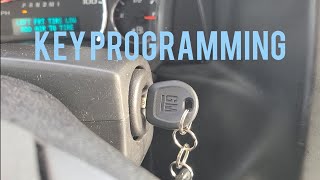
Typical fix: Replace the faulty key fob and have the new one programmed to the vehicle by a dealership or qualified locksmith. DIY programming is possible but requires a specific, 30-minute procedure. 🎬 Watch: How to perform the 30-minute key relearn process
Est. part cost: $150-$400 - Faulty Body Control Module (BCM) or Keyless Entry Control Module ⚪ Low Probability While less common, the module responsible for reading the key's signal can fail electronically.
How to confirm: This requires professional diagnosis with a high-level scan tool to check for communication with the module and run internal self-tests. If all keys fail to be detected and RFI is ruled out, the module itself is suspect. The service manual procedure involves checking for B+ voltage and ground at the module connector before condemning the module.
Typical fix: Replace the faulty module and program the new one to the vehicle's VIN and existing keys.
Est. part cost: $400-$800
Rare But Worth Checking
- Low Vehicle Battery Voltage: A weak main vehicle battery can cause various electronic modules, including the theft deterrent system, to malfunction and set codes. A Reddit thread about a B3055 issue noted that the vehicle battery was also bad, measuring only 10.5V. After replacing the battery and the faulty key, the vehicle started correctly.
- Damaged Antenna or Wiring: The antenna that receives the signal from the key fob, or the wiring leading to it, can become damaged, leading to a weak or no-signal condition. This is rare without physical damage to the vehicle. Diagnosis involves checking for resistance and shorts in the signal circuit wiring between the module and antenna.
- Improper Key Usage: For vehicles with a flip-key design, TSB PIT5030E notes that if the key is not fully extended and locked into position when inserted into the ignition, it can cause an intermittent no-crank and set a B3055. This is less applicable to the push-button start Escalade but highlights the sensitivity of the system.
Diagnosis Steps
- Check for a "No Fob Detected" or "Theft Attempted" message on the dash.
- Replace the battery in the key fob (CR2032 for 2015-2020, CR2450 for 2021-2022).
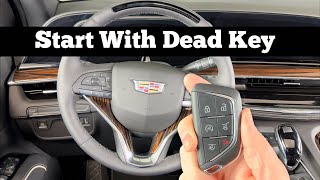
- Try starting the vehicle using the dedicated key fob pocket as described in the owner's manual. For this Escalade generation, it is located inside the center console storage area. 🎬 See how to start your 2021+ Escalade with a dead fob If the vehicle starts, the issue is almost certainly a weak fob battery or RFI.
- Test with a spare key fob if available. If the spare works, the original fob is faulty.
- Remove all non-essential electronic devices from the vehicle, especially aftermarket phone chargers, dash cams, and USB power banks, to eliminate Radio Frequency Interference (RFI).
- Inspect the main vehicle battery. Ensure it is fully charged and has clean, tight terminals. A voltage below 12.4V can cause unpredictable electronic issues. A real-world diagnosis found a B3055 was accompanied by a battery at only 10.5V.
- If the problem persists, use a professional scan tool to read live data from the BCM/TDM. Check the 'Transponder Key' parameter; it should read 'Present' when the key is in the vehicle. If it reads 'Not Present', there is a communication failure.
- Follow the specific diagnostic test procedure for DTC B3055 as outlined in the factory service manual, which may involve checking wiring and resistance at the module connectors.
Parts You'll Likely Need
- Key Fob Battery
(OEM #CR2032 (2015-2020), CR2450 (2021-2022))— This is the most common and cheapest fix. The battery in the key fob is a consumable item that wears out over time.
Trusted brands: Energizer, Duracell, Panasonic
OEM price range: $5-$15
Aftermarket price range: $2-$10 - Keyless Entry Transmitter (Key Fob)
(OEM #13580812, 13598511, 13594028 (2015-2020); 13538866, 13541571 (2021-2022))— If the key fob's internal transponder fails, the entire unit must be replaced and programmed.
Trusted brands: ACDelco, GM Genuine
OEM price range: $150-$400
Aftermarket price range: $50-$150
Related Codes That Often Appear With This One
- B3060 — This code relates to an unprogrammed transponder key, often set alongside B3055 when a key communication failure occurs.
- B3935 — Relates to transponder system communication circuits. It can appear with B3055 if there's a wiring or module issue.
- C0750, C0755, C0760, C0765, C0775 — These are Tire Pressure Monitor (TPM) sensor codes. The TPM system also uses RF signals, and TSB PIC5650M notes that significant RFI can disrupt both the keyless entry and TPM systems simultaneously.
Technical Service Bulletins (TSBs) & Recalls
- PIC5650M
- PIC5650G
- PIC5650C
- PIC5650B
- PIT5030E
- PIE0232
Platform-Specific Known Issues
- Key Fob Transmitter Pocket Location: For the 2015-2022 Escalade, the transmitter pocket used for emergency starting with a dead fob battery is located inside the main center console storage compartment. The storage tray may need to be lifted out to access it.
- DIY Key Programming: If all keys are lost, a new key can be programmed without a scan tool, but it is a lengthy process. It involves turning the physical key in the driver's door lock 5 times, followed by three 10-minute wait cycles, pressing the start button between each. The total procedure takes about 30-40 minutes to complete.
Mechanic-Grade Diagnostic Values
- Scan Tool 'Transponder Key' Parameter — expected: 'Present' or a key part number displayed.. Failure: Parameter reads 'Not Present' or is blank when a key is in the vehicle, indicating a communication failure.
- Main Vehicle Battery Voltage (Key-Off) — expected: 12.6V or higher.. Failure: A voltage of 12.4V indicates a partially discharged battery, while readings as low as 10.5V have been seen in vehicles with this DTC, causing widespread electronic issues.
Scan Tool Commands That Help
- GM GDS2: Module Diagnostics > Remote Control Door Lock Receiver > Configure and Reset Functions > Add or Replace Key Fobs — This function is used to access the key learning procedure after replacing a key fob or module.
- GM GDS2: Vehicle DTC Information > Clear All DTCs — Used after a repair is completed to clear the B3055 and any related codes from module memory. A history code may clear on its own after 100 malfunction-free ignition cycles.
- GM GDS2: Module Diagnostics > BCM > Data Display > 'Transponder Key' parameter — To be used during initial diagnosis to see if the BCM is detecting the key's transponder signal in real-time.
Wiring & Ground Locations
- K9 Body Control Module (BCM) — Inside the passenger cabin, behind the lower dashboard panel on the driver's side, often above the interior fuse block or near the steering column.. This module is the brain of the immobilizer system. It receives the signal from the key fob and decides whether to allow the vehicle to start. All related wiring terminates here.
- G103 — On the cowl in the left rear of the engine compartment, typically located above the brake booster.. This is a primary ground point for the Body Control Module (BCM) and the Remote Door Lock Receiver. A poor connection here can cause intermittent power loss or erratic behavior from the BCM, leading to false B3055 codes.
- G218 — Inside the cabin, behind the driver's side kick panel or lower A-pillar trim.. This is a notorious ground point on GM trucks and SUVs that can become faulty due to sound-deadening material interfering with the connection. While not a direct immobilizer ground, it grounds many interior components, and a fault can introduce electrical noise or voltage drops that affect BCM operation.
- Key Fob Transmitter Pocket — Inside the center console storage area for the 2015-2020 models. The location may vary slightly for 2021-2022 models; check the owner's manual.. This is not a wiring location, but the designated backup spot to place the key fob if its battery is dead. It contains a low-frequency antenna that can energize the fob's transponder chip directly, bypassing the need for a strong battery signal.
Real Owner Repair Stories
- Reddit user N_dixon in r/Justrolledintotheshop (GM vehicle with identical symptoms and DTC B3055.) — Towed in for a no-start. Horn would go off when trying to start, and the DIC displayed a "Theft Attempted" message.
❌ Tried (didn't work) Customer insisted the starter motor was the problem.
✅ What actually fixed it The primary cause was a physically destroyed key fob where the blade had broken off and the internal circuit board was damaged. Compounding the issue, the main vehicle battery was faulty and measured only 10.5V. The final fix was replacing the main vehicle battery and programming a new, undamaged key fob to the vehicle.
OEM Part Supersession History
13580812, 13510242, 13594028→13598511— Standard part consolidation and revision by the manufacturer.
Heads up: All these part numbers (FCC ID: HYQ2AB) are generally cross-compatible for the 2015-2020 Cadillac Escalade, provided they operate on the correct frequency (315 MHz for North America).N/A→13547768— New BCM part for the T1XX/VIP platform.
Heads up: This BCM is for 2021+ models and is not compatible with the 2015-2020 generation. Replacement requires online programming.
Model Year Variations Within This Range
- 2021-2022: These models use GM's new Vehicle Intelligence Platform (VIP) architecture. The Body Control Module (BCM) is a different, more integrated part (e.g., 13547768) that is not backward compatible. Replacing the BCM on these models requires mandatory online programming with GM's ACDelco Technical Delivery System (TDS).
- 2015-2020 vs 2021-2022: The key fob design and battery type changed. 2015-2020 models use a fob with a CR2032 battery, while 2021-2022 models use a different fob design with a CR2450 battery. The part numbers are completely different between generations.
Helpful Videos
We Have This Part in Stock

The information in this article is provided for general reference and educational purposes only. Vehicle specifications, procedures, and part compatibility can vary by production date, trim level, and region. Always consult your vehicle's factory service manual and verify part numbers before purchasing or performing repairs. Safety-critical components such as airbags, seat belts, and braking systems should be installed by a qualified professional.
- Cadillac ESCALADE ESV:
- 🎬 Helpful Videos
- 🛍️ Shop This Part
- What's Unique About the 2015-2022 Cadillac ESCALADE ESV
- Diagnostic Flowchart
- Symptoms You May Notice
- Most Likely Causes
- Rare But Worth Checking
- Diagnosis Steps
- Parts You'll Likely Need
- Related Codes That Often Appear With This One
- Technical Service Bulletins (TSBs) & Recalls
- Platform-Specific Known Issues
- Mechanic-Grade Diagnostic Values
- Scan Tool Commands That Help
- Wiring & Ground Locations
- Real Owner Repair Stories
- OEM Part Supersession History
- Model Year Variations Within This Range
- 🎟️ Get 5% Off