

B3055 on 2015-2022 Cadillac Escalade: Causes and Fixes for 'No Key Detected'
This code means your Escalade's security system can't detect the key fob, preventing it from starting. The most common fix is replacing the key fob battery (CR2032 for 4th gen, CR2450 for 5th gen). If that doesn't work, the key fob itself may be faulty, there could be radio frequency interference as noted in GM TSB PIC5650M, or a faulty Remote Control Door Lock Receiver (RCDLR) module.
- Always start with the simplest fix: replace the CR2032 battery in your key fob.
- If you have aftermarket electronics (phone chargers, dash cams), unplug them all to test for Radio Frequency Interference, a known issue on these vehicles.
- Know the emergency start procedure for your Escalade's generation: use the center console pocket (2015-2020) or the cupholder (2021-2022).
- Do not immediately assume the starter or main battery is bad. B3055 is a security code that disables starting.
- If simple fixes don't work, professional service is needed to program a new key or diagnose a faulty control module.
What's Unique About the 2015-2022 Cadillac ESCALADE
The 2015-2022 Escalade spans two generations (4th gen: 2015-2020; 5th gen: 2021-2022) but both use a sophisticated keyless start system managed by the Remote Control Door Lock Receiver (RCDLR). A key issue highlighted by General Motors in Technical Service Bulletin (TSB) PIC5650M is the system's sensitivity to radio frequency interference (RFI). Aftermarket electronics, such as phone chargers, dash cams, or even non-factory LED lights, can emit frequencies that 'jam' the 315 MHz or 433 MHz signal between the key fob and the vehicle. This same RCDLR module also processes signals from the Tire Pressure Monitoring System (TPMS), which is why TPMS codes (C0750, C0755, etc.) often appear alongside B3055 when RFI 🎬 Watch: A short explanation of the B3055 fault code. or a module fault is present.
Diagnostic Flowchart
Tap your situation to follow the diagnostic path that matches what you're seeing on this vehicle.
Generation note: This issue affects both the 4th generation (2015-2020) and 5th generation (2021-2022) Escalade. The primary causes are similar, but the method for emergency starting differs. On 4th-gen models, place the fob in a specific pocket inside the center console. On 5th-gen models, place the fob in the front cupholder. This works because a low-frequency antenna in that location can power the fob's passive transponder chip even with a dead fob battery.
Symptoms You May Notice
- Vehicle will not crank or start
- Engine starts and immediately stalls
- Security light is illuminated or flashing on the dashboard
- Message on the Driver Information Center (DIC) such as 'No Remote Detected', 'No Key Found', or 'Service Theft System'
- Keyless entry functions (lock/unlock) may not work or have very short range
- Replacing the starter motor when the engine won't crank. The immobilizer system prevents the starter from engaging electronically.
- Replacing the main 12V vehicle battery without testing it first, assuming it's the sole cause of the no-start.
- Replacing key fobs without first checking for Radio Frequency Interference from aftermarket accessories.
Most Likely Causes
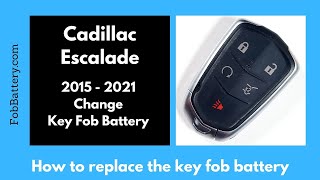
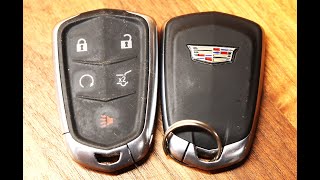
- Dead or Weak Key Fob Battery 🔴 High Probability Key fobs constantly emit a low-power signal, and batteries naturally deplete over 1-3 years. This is the most frequent cause for a 'No Key Detected' issue. The 2015-2020 models typically use a CR2032 battery, while 2021+ models use a CR2450.
How to confirm: Try the spare key fob. If the vehicle starts, the battery in the primary fob is the likely culprit. You can also try starting the vehicle using the backup slot (center console for 2015-2020, cupholder for 2021-2022) which works even with a dead battery.
Typical fix: Replace the battery inside the key fob (CR2032 or CR2450).
Est. part cost: $5-$15 - Defective Key Fob 🟡 Medium Probability Key fobs can be damaged by being dropped, exposed to water, or from internal electronic failure. The transponder chip or its solder joints can fail. A Reddit user in r/Justrolledintotheshop described a case where a physically broken key with a damaged circuit board was the cause of a B3055 code.
How to confirm: If a new battery doesn't solve the issue and the spare key works perfectly, the original fob is likely defective. A technician can use a scan tool to see if the vehicle is receiving any signal from the suspect fob.
Typical fix: Replace and program a new key fob using a GM-specific scan tool.
Est. part cost: $150-$450 - Radio Frequency Interference (RFI) 🟡 Medium Probability As highlighted in TSB PIC5650M, the vehicle's keyless system is sensitive to RFI from aftermarket devices like cheap phone chargers, dash cams, power inverters, or even non-OEM LED lighting which can jam the 315MHz/433MHz signal.
How to confirm: Unplug all aftermarket 12V and USB devices. Turn off any aftermarket lights. If the vehicle starts, one of the devices was causing interference. Re-introduce them one by one to find the culprit. Technicians may use an RFI detector (sniffer) to pinpoint the source of interference.
Typical fix: Remove or replace the interfering device with a higher-quality, better-shielded alternative.
Est. part cost: $0-$100 - Faulty Keyless Entry Control Module (RCDLR) ⚪ Low Probability While less common, the module that receives the key's signal (RCDLR - Remote Control Door Lock Receiver) can fail. It is often located in the headliner area toward the rear of the vehicle. TSB 16-NA-061 also points to issues with the antenna or coax cable leading to this module.
How to confirm: This requires advanced diagnostics with a professional scan tool (GDS2) to check for communication with the module and test antenna circuits. A technician would verify the module is receiving power and has proper ground before condemning it.
Typical fix: Replace the faulty RCDLR module and program it to the vehicle. This requires a subscription to GM's programming service.
Est. part cost: $200-$500
Rare But Worth Checking
- Low Vehicle Battery: A weak main vehicle battery can cause a variety of unpredictable electronic issues, including problems with the immobilizer system. A Reddit thread on r/Justrolledintotheshop described a scenario where a B3055 code was present alongside a vehicle battery testing at only 10.5V. Replacing the battery was a necessary step before the key issue could be resolved.
- Body Control Module (BCM) Fault: In rare cases, the BCM, which is the central computer for these functions, can fail. This would typically be accompanied by other seemingly unrelated electrical problems. Reprogramming the BCM is sometimes required after other component replacements.
- Antenna Circuit Fault: GM TSB 16-NA-061 details how a disconnected or faulty coax cable or antenna amplifier between the RCDLR and the rear glass antenna can cause this code, along with TPMS issues. The symptoms vary depending on where the disconnect occurs in the circuit.
Diagnosis Steps
- Check the DIC for messages like 'No Remote Detected'.
- Replace the battery in your primary key fob (CR2032 for 2015-2020, CR2450 for 2021-2022).
- If a new battery doesn't work, try starting the vehicle with your spare key fob.
- If neither fob works, attempt to start the vehicle using the backup procedure: place the fob in the transmitter pocket in the center console (2015-2020) or the front cupholder (2021-2022) and press the start button.
- Unplug all aftermarket devices from the 12V and USB ports to eliminate potential Radio Frequency Interference (RFI). This includes phone chargers, dash cams, and any other non-factory electronics.
- Check the vehicle's main 12V battery to ensure it is fully charged and healthy, as low voltage can cause various electronic faults.
- If the vehicle still won't start, it requires professional diagnosis. A technician will use a GM GDS2 scan tool to check the BCM and RCDLR for current and history codes, check live data for key presence and antenna status, and test for RFI using specialized tools as recommended by GM TSB PIC5650M.
Parts You'll Likely Need
- Key Fob Battery
(OEM #CR2032 (2015-2020) / CR2450 (2021-2022))— This is the most common and simplest fix. The battery type is usually CR2032 for the 4th gen and CR2450 for the 5th gen.
Trusted brands: Energizer, Duracell, Panasonic
OEM price range: $5-$15
Aftermarket price range: $2-$10 - Keyless Entry Remote Fob
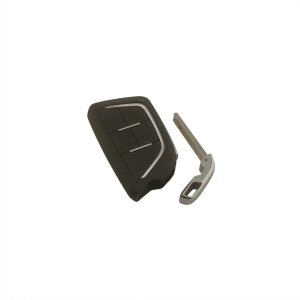
(OEM #e.g., 13580812, 13598511 (2015-2020); 13538866, 13546300 (2021-2022))— If the fob's internal electronics fail, it must be replaced. It requires programming to the vehicle by a dealer or locksmith. Part numbers vary by year and button configuration.
Trusted brands: ACDelco, GM Genuine Parts
OEM price range: $150-$400
Aftermarket price range: $70-$200 - Keyless Entry Control Module (RCDLR)
(OEM #e.g., 13583333)— In cases of module failure, this component which receives and processes signals from the fobs and TPM sensors needs to be replaced and programmed.
Trusted brands: ACDelco
Related Codes That Often Appear With This One
- B3060 — This code, 'Unprogrammed Transponder', is also related to the key transponder system and is often listed alongside B3055 in GM service bulletins like PIC5650M.
- B3935 — Another transponder-related code indicating an issue with the authentication process, often seen with B3055.
- C0750, C0755, C0760, C0765, C0775 — These are Tire Pressure Monitor (TPM) sensor codes. The same receiver module (RCDLR) handles both key fob and TPM signals, so a fault in the module, its antenna circuit, or widespread RFI can trigger codes for both systems simultaneously, as noted in TSBs PIC5650M and 16-NA-061.
Technical Service Bulletins (TSBs) & Recalls
- PIC5650M: Diagnostic Tip for intermittent no crank/no start, security light on, and 'No Fob Detected' messages, often related to RFI. This TSB lists B3055 as a primary code for this condition and is the most referenced document for this issue.
- 16-NA-061: Addresses 'No Fob Detected' messages and TPMS issues by pointing to a potential disconnect in the RCDLR antenna system, including the coax cable and amplifier.
- PIT5446: A preliminary bulletin for 2015 models that also links 'No Fob Detected' messages and TPMS codes to a disconnected RCDLR antenna system.
Platform-Specific Known Issues
- GM Technical Service Bulletin PIC5650M explicitly details how intermittent no-start conditions with code B3055 can be caused by Radio Frequency Interference (RFI) from aftermarket accessories. This is a well-documented issue across many GM trucks and SUVs from this era.
- GM TSB 16-NA-061 addresses related symptoms (including 'No Fob Detected') caused by poor or disconnected antenna connections for the RCDLR, which is located in the rear of the vehicle. This highlights a potential wiring or physical connection issue rather than just a component failure.
Mechanic-Grade Diagnostic Values
- RCDLR Power Supply Voltage — expected: Battery Positive Voltage (B+). Failure: Voltage significantly below battery voltage or 0V indicates an open or short in the power supply circuit.
- RCDLR Ground Circuit Resistance — expected: Less than 10 ohms. Failure: Resistance greater than 10 ohms indicates a poor ground connection (high resistance) or an open circuit.
Hidden / Shadow Codes Worth Checking
- Mode 6 Data: While not a specific code, GM service information suggests reviewing Mode 6 data for intermittent issues that don't set a persistent DTC. This data provides raw test results from the vehicle's onboard diagnostic monitors and can sometimes reveal a system operating at the edge of its acceptable parameters before a code is set. (see via A professional scan tool with Mode 6 viewing capabilities, such as the GM GDS2.)
Scan Tool Commands That Help
- GDS2: Add or Replace Key Fobs — This function is used to program new or additional key fobs to the vehicle. The path is typically: Module Diagnostics -> Remote Control Door Lock Receiver -> Configure/Reset Functions -> Add or Replace Key Fobs.
- GDS2 / Tech 2: Copy and Paste TPM Information — When replacing and reprogramming the RCDLR module, this function should be used to copy the existing tire pressure sensor IDs from the old module and paste them into the new one. This avoids the need to perform a full TPMS relearn procedure.
- EL-52545 (or equivalent RF tool): Read Transmitter VIN — As part of advanced diagnostics, this tool can be used to verify that the VIN learned to the key fob matches the vehicle's VIN, helping to rule out a mismatched or incorrectly programmed fob.
Wiring & Ground Locations
- RCDLR Power/Ground Pins — At the harness connector for the Remote Control Door Lock Receiver (RCDLR), which is often in the rear headliner area.. Verifying power and ground is the first step in diagnosing a potentially faulty module. The power wire is typically Red/White (RD/WH) coming from the 'DSM' fuse, and the ground wire is typically Black/White (BK/WH).
- G302 — On the front door sill area, under the passenger seat (based on similar GM platforms).. This is a potential primary ground point for the RCDLR. A corroded or loose connection at G302 can cause intermittent power loss to the module, leading to code B3055 and other related faults.
- RCDLR Antenna Circuit — This circuit runs from the RCDLR module to an antenna amplifier and then to the antenna integrated into the right rear quarter glass.. As per TSB 16-NA-061, a disconnect at the module, the amplifier, or the glass can cause B3055 and TPMS codes. Checking these three connection points is critical before replacing the RCDLR module itself.
Real Owner Repair Stories
- YouTube channel 'Hands On Auto Training' (2015 Chevrolet Malibu (similar GM system)) — No crank, no start with DTC B3055. Scan tool immobilizer data showed 'No Key Detected'.
❌ Tried (didn't work) Initial diagnosis pointed towards a system fault, but further investigation isolated the key itself.
✅ What actually fixed it The internal transponder chip of the key had failed, even though the remote buttons may have still worked. The technician confirmed the fix by programming a new key to the vehicle, which then started normally. The physical key blade was swapped into the new fob housing.
OEM Part Supersession History
e.g., 13580811→e.g., 13598504, 13598539, etc.— Minor revisions or consolidation of parts inventory.
Heads up: For the 2015-2020 Escalade, multiple part numbers for the 5-button 315MHz smart key are listed as compatible. Always verify the FCC ID and part number against the original fob or a dealer catalog when possible.
Model Year Variations Within This Range
- 2015-2018: TSB 16-NA-061 specifically calls out the 2015-2018 Escalade for potential issues with the RCDLR antenna circuit becoming disconnected, leading to B3055 and TPMS codes. This highlights a known vulnerability in the 4th generation models.
Helpful Videos

We Have This Part in Stock

The information in this article is provided for general reference and educational purposes only. Vehicle specifications, procedures, and part compatibility can vary by production date, trim level, and region. Always consult your vehicle's factory service manual and verify part numbers before purchasing or performing repairs. Safety-critical components such as airbags, seat belts, and braking systems should be installed by a qualified professional.
- Cadillac ESCALADE:
- 🎬 Helpful Videos
- 🛍️ Shop This Part
- What's Unique About the 2015-2022 Cadillac ESCALADE
- Diagnostic Flowchart
- Symptoms You May Notice
- Most Likely Causes
- Rare But Worth Checking
- Diagnosis Steps
- Parts You'll Likely Need
- Related Codes That Often Appear With This One
- Technical Service Bulletins (TSBs) & Recalls
- Platform-Specific Known Issues
- Mechanic-Grade Diagnostic Values
- Hidden / Shadow Codes Worth Checking
- Scan Tool Commands That Help
- Wiring & Ground Locations
- Real Owner Repair Stories
- OEM Part Supersession History
- Model Year Variations Within This Range
- 🎟️ Get 5% Off