

B3055 on 2007-2014 Cadillac Escalade: Key, Immobilizer, and No-Start Fixes
Code B3055 on a 2007-2014 Escalade means the vehicle's security system can't read the transponder chip in the ignition key. This results in a no-start or intermittent stalling. The most common fix is replacing a faulty key, but radio frequency interference or a bad ignition lock cylinder are also possible causes.
- B3055 means your Escalade's security system doesn't recognize your key, which will prevent it from starting.
- Before spending any money, try your spare key. If the spare works, you just need a new primary key.
- Remove all other keys, fobs, and access cards from your keychain to eliminate radio frequency interference as a possible cause.
- Due to the need for key and module programming, this repair is best left to a professional locksmith or dealership.
What's Unique About the 2007-2014 Cadillac ESCALADE
The 2007-2014 Escalade, part of the GMT900 platform, is well-documented by GM for having intermittent security-related starting issues. A key characteristic of this problem is its intermittent nature, often making it difficult for technicians to replicate. GM has issued multiple Technical Service Bulletins (TSBs) that group B3055 with other codes, pointing to a pattern of no-crank or start-and-stall conditions tied to the PassKey III+ immobilizer system and potential radio frequency interference from aftermarket electronics or even other keys on the same keychain.
Diagnostic Flowchart
Tap your situation to follow the diagnostic path that matches what you're seeing on this vehicle.
Symptoms You May Notice
- Intermittent no-crank or no-start condition.
- Engine starts and then immediately stalls.
- Security light is illuminated or flashing on the dashboard.
- "SERVICE THEFT SYSTEM" message may appear on the instrument cluster.
- "Theft Attempted" message on the Driver Information Center (DIC).
- Replacing the starter motor. A no-crank condition can be mistaken for a bad starter, but if the security light is on, the issue is almost always with the anti-theft system.
- Replacing the battery. While a low battery can cause various electrical issues, it won't typically set the B3055 code directly. The system requires at least 9 volts to operate, but a healthy battery won't fix a transponder communication failure.
Most Likely Causes
- Defective Ignition Key 🔴 High Probability The transponder chip embedded in the key can fail or be damaged from being dropped or from physical wear and tear of the key itself. This is a common failure point for immobilizer systems of this era.
How to confirm: The easiest way to confirm is to try starting the vehicle with a spare key. If the spare key works consistently, the original key is faulty. A scan tool can also show if the key's transponder value is being read.
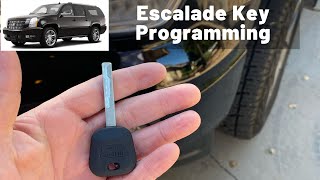
Typical fix: Replace the faulty key. A new key must be cut and then programmed to the vehicle by a dealership or an automotive locksmith with the proper equipment. In some cases, a 30-minute relearn procedure can be done by the owner if all keys were lost. 🎬 Watch: How to program a new transponder key yourself
Est. part cost: $75-$200 - Radio Frequency Interference (RFI) 🟡 Medium Probability As noted in GM TSBs PIC5650B, C, K, and M, the Passkey system's 125 kHz frequency is sensitive to RFI from other devices. Common sources include other vehicle keys, building access cards, toll passes, aftermarket LED lights, and even certain phone chargers plugged into the vehicle.
How to confirm: Remove all other keys, fobs, and electronic devices from the keychain and from the immediate vicinity of the ignition cylinder. Try starting the vehicle with just the single Escalade key. If the vehicle starts reliably, RFI was the cause. This is often hard to duplicate as the customer may remove the interfering item before bringing the vehicle in for service.
Typical fix: Keep the vehicle key on its own ring or ensure no other transponder-based devices are near the ignition when starting the vehicle. Remove any low-quality aftermarket chargers or LED bulbs.
Est. part cost: $0 - Faulty Ignition Lock Cylinder / Exciter Module ⚪ Low Probability The exciter module, which is the antenna ring around the ignition lock, can fail. This prevents it from energizing the key's transponder chip, so no signal is sent. The wiring to this module can also become damaged or loose inside the steering column.
How to confirm: This is diagnosed after confirming both the primary and spare keys fail to start the vehicle and RFI has been ruled out. A technician would test the wiring and resistance of the exciter module circuit.
Typical fix: Replacement of the ignition lock cylinder assembly, which includes the exciter module. The new component may require a key relearn procedure. The ACDelco part is often sold as a kit to be re-pinned to match the original key.
Est. part cost: $150-$300
Rare But Worth Checking
- Faulty Theft Deterrent Module (TDM) or Body Control Module (BCM): This is the least likely cause. If all keys and the ignition cylinder/exciter circuit check out, the module itself may be the problem. Replacement is expensive and requires programming by a dealer or a well-equipped independent shop.
- Incorrect Key Insertion (Flip Keys): On models with a flip-style key, if the key is not fully extended and locked straight, it may not align properly with the exciter ring, causing an intermittent no-crank and setting a B3055. Ensure the key is fully extended before insertion. This is mentioned in GM TSB PIT5030E.
- Low Battery Voltage: While a low battery won't directly cause B3055, the Passkey III+ system requires at least 9 volts to operate correctly. A weak or failing battery can cause a variety of intermittent electrical issues, including problems with the security system. One technician noted a B3055 was accompanied by a battery reading only 10.5V, and a new battery was required before a new key could be programmed.
Diagnosis Steps
- Verify the complaint and check for the security light on the dash.
- Scan for DTCs. Note if B3055 is present along with other codes like B3060 or B3935.
- Try starting the vehicle with a known-good spare key. If it starts, the primary key is defective.
- Remove all other keys, fobs, and RFID-enabled cards from the keychain and from near the ignition. Retest with the original key.
- For flip-keys, ensure the key is fully extended and locked straight before inserting it into the ignition.
- Check battery voltage. Ensure the battery is healthy and providing more than 9-10 volts during the starting sequence.
- If the problem persists with all keys, inspect the wiring and connector at the ignition lock cylinder for damage or looseness.
- If wiring is intact, a professional technician should test the exciter module circuit and the Theft Deterrent Module (TDM) or Body Control Module (BCM) for proper function using resistance and voltage checks outlined in the service manual.
- If all other components are verified to be working, the TDM/BCM is the likely point of failure and will require replacement and programming.
Parts You'll Likely Need
- Transponder Ignition Key
(OEM #GM B111-PT (Strattec 5903089))— The internal transponder chip is the most common point of failure, leading to the B3055 code.
Trusted brands: ACDelco, Strattec
OEM price range: $100-$200 (plus programming)
Aftermarket price range: $50-$100 (plus programming) - Ignition Lock Cylinder with Exciter Module
(OEM #ACDelco D1493F (GM 25832354))— If both keys fail and there is no RFI, the antenna (exciter) that reads the key is the next most likely part to have failed. This part often includes the Passlock sensor.
Trusted brands: ACDelco, Standard Motor Products, Dorman
OEM price range: $200-$350
Aftermarket price range: $150-$250
Related Codes That Often Appear With This One
- B3060 — This code often relates to a failure in the transponder key security data circuit, pointing to a similar area of the anti-theft system. It is frequently cited alongside B3055 in GM service bulletins.
- B3935 — This code is also related to the transponder key system and is frequently cited along with B3055 in GM service bulletins for no-start conditions.
- P0315 — In a forum post, a user with a B3055 on a platform-mate Tahoe also had a P0315 (Crankshaft Position System Variation Not Learned), indicating multiple simultaneous issues, possibly stemming from a collision or major engine work.
Technical Service Bulletins (TSBs) & Recalls
- PIC5650M: Addresses intermittent no crank/no start/stall with security light on and DTC B3055.
- PIC5650B/C/K: Details how Radio Frequency Interference (RFI) from aftermarket devices (phone chargers, LED lights, other fobs) can cause intermittent security system issues, including B3055. Lists common interfering devices.
- PIT5030E: Notes that flip-keys not fully extended can cause a no-crank and set a B3055.
Platform-Specific Known Issues
- A GM Technical Service Bulletin (PIC5650M) directly addresses an intermittent no-crank, no-start, or start-and-stall condition with the security light on, specifically citing DTC B3055.
- Another TSB (PIC5650 series) warns that radio frequency interference from devices like other key fobs, access cards, or even aftermarket chargers can cause this exact issue, which is often hard to duplicate in a shop environment.
- Another TSB (PIT5030E) notes that flip-keys not fully extended can cause a no-crank and set a B3055.
Hidden / Shadow Codes Worth Checking
- B3055 00: The '00' is a symptom byte indicating 'No Transponder Modulation or No Transponder'. This is the standard definition and doesn't typically point to a more specific failure, but confirms the BCM was unable to measure the key's transponder value. (see via A professional scan tool like a GM Tech 2 or GDS2 will display the code with its symptom byte.)
Scan Tool Commands That Help
- GM Tech 2 / GDS2: Immobilizer Data / TDM Transponder Key Parameter — Use this to view live data and see if the BCM/TDM recognizes a key as 'Present' or 'Not Present' when the key is turned to the ON position. This is a primary step to determine if the key chip is dead or if the reader is at fault.
- GM Tech 2 / GDS2: BCM/TDM Module Setup - Program Key Fobs / Replace Keys — This function is required after replacing a key, the ignition lock cylinder, or the BCM/TDM. It initiates the 10-minute or 30-minute relearn procedure to add new keys to the vehicle's security memory.
- GM Tech 2 / GDS2: Security System Reset (Passlock, immobilizer) — Used to reset and re-initialize the security system after component replacement or in cases of a system lockout.
Wiring & Ground Locations
- BCM (Body Control Module) — On GMT900 platform vehicles like the Escalade, the BCM is located behind the driver-side lower dashboard panel, directly above the interior fuse block.. The BCM is the central module for the Passkey III+ immobilizer system. It receives the signal from the key and decides whether to allow the engine to start. A poor connection or a faulty BCM can directly cause a B3055 code.
- G201 — Located in the upper left corner of the instrument panel, near the driver's side A-pillar. It is behind the plastic dash panels.. This is a primary instrument panel ground. The immobilizer system components, including the BCM and the exciter coil, rely on solid ground connections. A loose or corroded G201 can cause intermittent communication issues, leading to a B3055 code.
- G218 — Located under the dash, to the left of the steering column, often near the driver's side audio speaker. On some models, sound-deadening foam can interfere with this ground connection.. This is another critical dash-area ground. A poor connection at G218 is a known cause of various strange electrical issues on GM trucks and SUVs, and could contribute to intermittent security system faults like B3055.
- BCM Ground Path Warning — N/A. A GM service bulletin warns that the BCM can be internally damaged if a BCM ground is removed while the battery is still connected. Always disconnect the negative battery terminal *before* removing any BCM-related grounds or connectors to avoid damaging the module.
Real Owner Repair Stories
- YouTube user 'ADD AUTOMOBILE SERVICES' (2013 Chevrolet Equinox (platform-mate with similar system)) — Intermittent no-start with security light on. Code B3055 was present, indicating 'no transponder modulation'. The original key would sometimes work and sometimes not.
❌ Tried (didn't work) Starting the vehicle with the original, intermittently failing key.
✅ What actually fixed it The technician used a VVDI key tool to read the data from the original, failing key chip and 'clone' it onto a new super chip. The new chip was then placed inside the original key fob alongside the old one. This provided a reliable signal, and the vehicle started consistently. This suggests the original chip was failing intermittently, and cloning it was a successful workaround without needing a full key replacement and programming procedure.
OEM Part Supersession History
12458191, 12533953, 15822350, 19168637→25832354 (ACDelco D1493F)— Part number consolidation and updates over time.
Heads up: CRITICAL: While 25832354 is a valid GM part number for an ignition lock cylinder, it fits older W-body cars like the 1997-2005 Impala/Malibu/Grand Am, NOT the 2007-2014 Escalade. The part number provided in Pass 2 is incorrect for this vehicle. The correct part for the Escalade must be verified using the vehicle's VIN.
Helpful Videos
Used OEM Parts in Stock



New Aftermarket Parts Available


The information in this article is provided for general reference and educational purposes only. Vehicle specifications, procedures, and part compatibility can vary by production date, trim level, and region. Always consult your vehicle's factory service manual and verify part numbers before purchasing or performing repairs. Safety-critical components such as airbags, seat belts, and braking systems should be installed by a qualified professional.
- Cadillac ESCALADE:
- 🎬 Helpful Videos
- 🛍️ Shop This Part
- What's Unique About the 2007-2014 Cadillac ESCALADE
- Diagnostic Flowchart
- Symptoms You May Notice
- Most Likely Causes
- Rare But Worth Checking
- Diagnosis Steps
- Parts You'll Likely Need
- Related Codes That Often Appear With This One
- Technical Service Bulletins (TSBs) & Recalls
- Platform-Specific Known Issues
- Hidden / Shadow Codes Worth Checking
- Scan Tool Commands That Help
- Wiring & Ground Locations
- Real Owner Repair Stories
- OEM Part Supersession History
- 🎟️ Get 5% Off