

B3055 on 2007-2011 Cadillac DTS: Causes and Fixes for No-Start Security Issues
Code B3055 on a Cadillac DTS means the car's security system can't read the transponder chip in your key. This causes a no-start or no-crank condition with the security light on. The most common fixes are trying a spare key, checking for keychain interference, or replacing the ignition lock cylinder which contains the key reader.
- B3055 means your DTS cannot read your key, which disables the engine as a security measure.
- Before spending any money, try your spare key and remove all other fobs and cards from your keychain to rule out simple fixes.
- The most likely failed part is the reader coil inside the ignition lock cylinder housing, which is a common wear item.
- A no-start condition accompanied by a security light is almost never a bad starter motor.
- Due to the need for potential security programming, professional service is recommended if the simple fixes don't work.
What's Unique About the 2007-2011 Cadillac DTS
The Cadillac DTS uses GM's Pass-Key III+ (PK3+) immobilizer system. While the technology is shared across many GM vehicles of the era, the DTS can be particularly sensitive to issues with the ignition lock cylinder's internal reader and wiring. Owners often experience intermittent no-start conditions where tapping the dashboard near the key may temporarily resolve the issue, pointing to a failing connection or reader coil. A GM Technical Service Bulletin also notes that radio frequency (RF) interference from other devices on the keychain can intermittently cause this code across many GM models, including the DTS.
Diagnostic Flowchart
Tap your situation to follow the diagnostic path that matches what you're seeing on this vehicle.
Symptoms You May Notice
- Engine will not crank or start.
- Security indicator light is illuminated or flashing on the instrument panel.
- "Service Theft System" message may appear on the Driver Information Center (DIC).
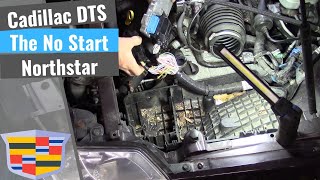
- An audible click from a relay may be heard 🎬 Watch: Troubleshooting a DTS no-start with the security light on. when trying to start, but the starter does not engage.
- Problem is often intermittent; may work after waiting a period of time or wiggling the key.
- Replacing the starter motor. A bad starter will typically not cause a security light to illuminate. On the DTS, the starter is located under the intake manifold, making this a very expensive and unnecessary repair if misdiagnosed.
- Replacing the battery without checking its voltage first. While low voltage can cause various electrical issues, B3055 specifically points to a key recognition problem.
- Replacing the Body Control Module (BCM) or Engine Control Module (ECM) without proper diagnosis. As seen in owner forums, people often replace expensive modules when the fault is a simple key or wiring issue.
Most Likely Causes
- Faulty Ignition Key Transponder 🔴 High Probability Keys can be damaged by being dropped, exposed to moisture, or simply fail with age, causing the internal transponder chip to stop communicating.
How to confirm: Try starting the vehicle with a known-good spare key. If the spare key works consistently, the original key is faulty. A scan tool can also show if the key's status is 'Not Present' when it is in the ignition.
Typical fix: Replace the faulty key. A new key must be cut and then programmed to the vehicle using a scan tool 🎬 Watch: How to program a new PK3 transponder key. or a specific onboard procedure.
Est. part cost: $50-$150 - Radio Frequency (RF) Interference 🟡 Medium Probability As noted in TSB PIC5650M, devices like other car key fobs, building access cards, or gas station speed passes on the same keychain can interfere with the 125 kHz signal from the key's transponder. The TDM cannot distinguish the key's signal from the noise.
How to confirm: Remove all other keys, fobs, and cards from the Cadillac key ring. Try starting the car with the key by itself. If it starts, interference was the issue.
Typical fix: Keep other RF-emitting devices separate from the vehicle key.
Est. part cost: $0 - Faulty Ignition Lock Cylinder / Reader Coil 🟡 Medium Probability The exciter coil (reader) that energizes the key's transponder is part of the ignition lock cylinder housing. The fine wires in this coil or its connector can break from years of use and temperature cycles, leading to an intermittent or complete failure to read the key.
How to confirm: A technician can test the resistance and wiring of the exciter coil circuit. Sometimes, wiggling the key or tapping the dash near the ignition can temporarily make a connection, confirming a physical fault in that area.
Typical fix: Replace the ignition lock cylinder housing. The part itself is not expensive, but labor is involved to access it in the steering column.
Est. part cost: $20-$70 - Wiring Harness Short or Open ⚪ Low Probability Wires between the ignition lock cylinder, Theft Deterrent Module (TDM), and Body Control Module (BCM) can become damaged, corroded, or shorted, especially in the steering column or at module connectors. Rodent damage in the engine bay can also affect related circuits.
How to confirm: Requires a multimeter and wiring diagram to perform continuity and voltage checks on the signal, power, and ground circuits for the theft deterrent system.
Typical fix: Repair the damaged section of the wiring harness.
Est. part cost: $5-$50
Rare But Worth Checking
- Faulty Theft Deterrent Module (TDM): This is the last part to suspect. Diagnostic procedures often state to replace the TDM only after confirming all keys, wiring, and the reader coil are good.
- Security System Glitch / Data Corruption: Sometimes, after a battery replacement or a low voltage event, the security system can lose its programming. Performing a "10-Minute Relearn Proce 🎬 See this walkthrough of the GM security relearn process.dure" can sometimes resolve the issue without replacing any parts.
Diagnosis Steps
- Check for a security light on the dashboard. If it's on or flashing, this confirms a theft system issue.
- Try starting the car with a known-good spare key. If it starts, the primary key is the problem.
- Remove all other fobs, cards, and electronic devices from the key ring and try starting with the Cadillac key alone to rule out RF interference.
- Attempt the 10-Minute Key Relearn procedure. Turn the key to the 'ON' position (do not start), and wait for the security light to turn off, which may take about 10 minutes. Turn the key off for 5 seconds, then try to start the vehicle. Repeat up to three times if necessary.
- If the problem is intermittent, try wiggling the key in the ignition or gently tapping the dash area around it. If this allows the car to start, it strongly suggests a failing ignition lock cylinder reader or a loose connection.
- Using a scan tool, access the Theft Deterrent Module (TDM) and check the live data for the 'TDM Transponder Key' parameter. It should read 'Present' with a good key in the ignition. If it reads 'Not Present', the key is not being detected.
- Inspect the wiring and connectors at the base of the steering column and at the TDM for any visible damage or corrosion.
- If all keys fail and wiring appears intact, a technician will need to test the circuits between the ignition cylinder and the TDM using a multimeter and wiring diagram.
- As a final step, if all other components test correctly, the Theft Deterrent Module (TDM) itself may be faulty.
Parts You'll Likely Need
- Ignition Lock Cylinder Housing
(OEM #ACDelco D1414B (example))— This housing contains the transponder reader coil (exciter coil) that fails and is a very common cause for B3055. It's often replaced instead of the entire ignition switch.
Trusted brands: ACDelco, Dorman, Standard Motor Products
OEM price range: $40-$80
Aftermarket price range: $20-$50 - Transponder Ignition Key
(OEM #692933)— The PCF7936 ID46 chip inside the key can fail, preventing the car from recognizing it. Trying a spare key is the easiest way to diagnose this.
Trusted brands: ACDelco (OEM), Keyless Entry Remote Fob, CarKeysExpress
OEM price range: $70-$150
Aftermarket price range: $40-$80
Related Codes That Often Appear With This One
- B3060 — This code for 'Unprogrammed Transponder' often appears with B3055, especially if a new, unprogrammed key is used or if the system is malfunctioning.
- B3935 — Another general transponder circuit fault code that can be triggered by the same interference or hardware issues as B3055.
- B2955 — Indicates a 'Security System Sensor Data Circuit Malfunction', pointing directly to a problem with the wiring or the reader coil connected to the Theft Deterrent Module.
Technical Service Bulletins (TSBs) & Recalls
- PIC5650M / PIC5650B: Addresses intermittent no crank/no start with security light on and DTCs B3055, B3060, or B3935, often caused by Radio Frequency (RFID) interference. Lists a wide range of affected GM vehicles.
- PIE0232: An engineering request for information on low-mileage trucks with B3055, showing GM's active investigation into the root causes of this fault.
- PIT5030E: Notes that on other GM vehicles with flip keys, not having the key fully extended can cause a no-crank and set a B3055 in
Platform-Specific Known Issues
- RF Interference Sensitivity: Per TSB #PIC5650M, the 2007-2011 DTS is susceptible to intermittent no-start conditions with code B3055 due to RF interference from other devices on a keychain.
- Costly Misdiagnosis of Starter: A common misdiagnosis for the no-crank symptom is a failed starter motor. On the DTS with the Northstar V8, the starter is located under the intake manifold, making its replacement a labor-intensive and expensive job that will not fix the B3055 code.
Mechanic-Grade Diagnostic Values
- Theft Deterrent Module (TDM) Live Data on Scan Tool — expected: The 'TDM Transponder Key' parameter should read 'Present' when a valid key is in the ignition and turned to ON.. Failure: Parameter reads 'Not Present'. If this occurs with only one key, the key is faulty. If it occurs with all known-good keys, the issue may be the reader coil, wiring, or the TDM itself.
Hidden / Shadow Codes Worth Checking
- B3055 00: In some service literature, the code is displayed with a 2-digit symptom byte. For B3055, '00' indicates 'No Additional Symptom Information'. While other symptom bytes may exist, they are not commonly documented in public-facing repair information. (see via A professional scan tool like the GM Tech 2 or equivalent may display the symptom byte along with the main DTC.)
Scan Tool Commands That Help
- GM Tech 2 / GDS2: Immobilizer/TDM Data Display — This is the primary diagnostic step after checking physical keys. Use this to see in real-time if the Theft Deterrent Module is recognizing the key's transponder. It quickly differentiates a bad key from a bad reader/module.
- GM Tech 2 / GDS2: Service Programming System (SPS) -> TDM Key Relearn — Use this after replacing a key, the ignition lock cylinder, or the TDM. The scan tool-initiated relearn is faster (approx. 10 minutes) than the manual 30-minute procedure and provides confirmation of success.
Wiring & Ground Locations
- G104 — Located on the right front of the engine compartment, on the frame rail.. This is a major ground point for the front of the vehicle. While not directly for the TDM, a poor connection here can introduce electrical noise or unstable voltage to multiple systems, potentially affecting module communication and causing intermittent issues.
- G316 — Under the right front door sill trim plate.. This is an interior ground point. The Theft Deterrent Module and other interior modules rely on clean grounds. Corrosion or looseness at this location, especially in wet climates, can cause erratic behavior of the anti-theft system.
- Engine to Frame Ground Strap — Main ground strap running from the engine block to the front frame rail.. A weak or corroded main ground strap can cause a no-crank condition that can be misdiagnosed as a theft system issue. While it won't typically set B3055 on its own, it can create system-wide low voltage problems that trigger various codes.
Real Owner Repair Stories
- South Main Auto LLC YouTube Channel (Cadillac DTS, similar generation to 2007-2011) — No-start, no-crank condition. Vehicle was towed in after having its starter and battery replaced at another shop with no success.
❌ Tried (didn't work) Replacing the starter motor, Replacing the battery
✅ What actually fixed it The mechanic discovered rodent damage (chewed wires) in the main wiring harness near the ECM. Specifically, the yellow wire controlling the starter relay was severed. Repairing the damaged wire restored the starter circuit and fixed the no-crank problem. This was a wiring failure, not a failure of a specific theft-system component.
OEM Part Supersession History
12458191, 12533953, 15822350, 19168637→25832354— Part consolidation and updates by GM.
Heads up: Part 25832354 is listed for vehicles like the Impala and Monte Carlo from the mid-2000s. While it may be functionally similar, always verify the exact part number for the DTS with a dealer based on the VIN before ordering, as steering column components can have subtle differences.
Model Year Variations Within This Range
- 2007-2011: No significant variations to the Pass-Key III+ (PK3+) immobilizer system have been noted within this model year range for the Cadillac DTS. The diagnostic and repair procedures are consistent across these years.
Helpful Videos
Used OEM Parts in Stock

New Aftermarket Parts Available


The information in this article is provided for general reference and educational purposes only. Vehicle specifications, procedures, and part compatibility can vary by production date, trim level, and region. Always consult your vehicle's factory service manual and verify part numbers before purchasing or performing repairs. Safety-critical components such as airbags, seat belts, and braking systems should be installed by a qualified professional.
- Cadillac DTS:
- 🎬 Helpful Videos
- 🛍️ Shop This Part
- What's Unique About the 2007-2011 Cadillac DTS
- Diagnostic Flowchart
- Symptoms You May Notice
- Most Likely Causes
- Rare But Worth Checking
- Diagnosis Steps
- Parts You'll Likely Need
- Related Codes That Often Appear With This One
- Technical Service Bulletins (TSBs) & Recalls
- Platform-Specific Known Issues
- Mechanic-Grade Diagnostic Values
- Hidden / Shadow Codes Worth Checking
- Scan Tool Commands That Help
- Wiring & Ground Locations
- Real Owner Repair Stories
- OEM Part Supersession History
- Model Year Variations Within This Range
- 🎟️ Get 5% Off