

B3055 on 2016-2023 Buick Envision: Security Light and No-Start Causes
Code B3055 on a Buick Envision means the car's security system can't recognize the key. This usually causes a no-start and a security light. The most common fixes are removing other RFID cards from your keychain, trying your spare key, or replacing a faulty key fob. A new key fob can cost between $150-$400 programmed at a dealer or locksmith.
- B3055 means your Envision's anti-theft system has a problem and is preventing the car from starting.
- Before calling a mechanic, try the simple fixes: remove other fobs from your keychain, make sure your flip-key is straight, and try your spare key.
- For push-button start models, try placing the fob in the backup slot in the console to rule out a dead fob battery.
- If a new key or module is needed, it must be professionally programmed to your vehicle.
What's Unique About the 2016-2023 Buick ENVISION
On many GM vehicles from this era, including the Envision, the immobilizer system is sensitive to external interference and even the physical position of the key. Technical Service Bulletins suggest that something as simple as another RFID card on the keychain, an aftermarket phone charger, or a flip-key not being fully extended can trigger this code, leading to a misdiagnosis of expensive module failures. The problem is often intermittent, making it frustrating for owners and difficult for technicians to replicate.
Diagnostic Flowchart
Tap your situation to follow the diagnostic path that matches what you're seeing on this vehicle.
Generation note: This range covers the first (2016-2020, D2XX platform) and second (2021-2023, E2XX platform) generations of the Buick Envision. While they are different platforms, the principles of the GM Pass-Key III+ / PEPS (Passive Entry, Passive Start) immobilizer system are very similar. The causes, especially RF interference and faulty keys, and diagnostic steps are broadly applicable to both generations.
Symptoms You May Notice
- Engine will not crank (no-crank)
- Engine starts and immediately stalls
- Security indicator light is illuminated or flashing on the dashboard
- Message on the Driver Information Center (DIC) like "Starting Disabled Due To Theft", "No Remote Detected", or "SERVICE THEFT SYSTEM".
- Replacing the starter motor. A no-crank condition might seem like a bad starter, but if the security light is on, the BCM is likely disabling the starter relay intentionally.
- Replacing the 12V vehicle battery. While a low battery can cause many issues, it won't typically set a B3055 code by itself unless the voltage drop corrupts module communication during the startup sequence.
Most Likely Causes
- Interference from other RFID Devices or Aftermarket Electronics 🔴 High Probability A GM Technical Service Bulletin (TSB PIC5650 series) specifically warns that RFID devices (building access cards, other car keys), aftermarket LED lights, and even some USB chargers can generate Radio Frequency Interference (RFI) that jams the 125 kHz signal between the key and the car.
How to confirm: Remove all other fobs, cards, and aftermarket chargers from the vehicle. Isolate the vehicle key and attempt to start the vehicle again. If the car starts, one of the removed items was the cause.
Typical fix: Keep RFID devices separate from the vehicle key. Remove low-quality aftermarket electronics.
Est. part cost: $0 - Damaged or Faulty Key/Fob Transponder 🟡 Medium Probability The internal transponder chip in the key can fail from being dropped, water damage, or age. This is a common failure point for modern car keys.
How to confirm: The easiest way to confirm is to try starting the vehicle with a spare key. If the spare key works reliably, the primary key is faulty.
Typical fix: The faulty key must be replaced and the new key programmed to the vehicle by a dealer or automotive locksmith.
Est. part cost: $70-$250 - Incorrect Key Position (Flip-Key Models) 🟡 Medium Probability For models with a physical flip-key, TSB PIT5030E notes that if the key is not fully extended and locked straight, its angle in the ignition can prevent a successful read by the exciter antenna, triggering B3055.
How to confirm: Remove the key, ensure it is fully clicked into the straight, open position, and re-insert it into the ignition. Try starting again.
Typical fix: Ensure the key is fully extended before use.
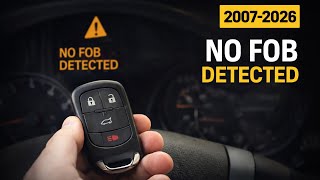
Est. part cost: $0 - Dead Key Fob Battery (Push-Button Start Models) ⚪ Low Probability On vehicles with passive entry/start, a weak fob battery can prevent it from communicating with the in-car antennas. There is a backup procedure for this scenario, which involves placing the fob in a specific transmitter pocket to allow the car to start.
How to confirm: Try placing the key fob in the designated transmitter pocket (often in the center console cupholder or storage bin) as described in the owner's manual and attempt to start the vehicle. If it starts, the fob battery is weak.
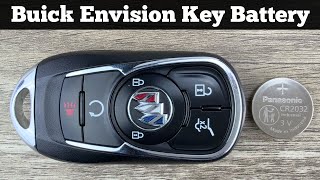
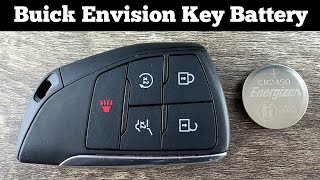
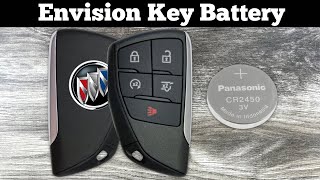
Typical fix: Replace the CR2032 battery inside 🎬 Watch: Easy DIY guide for replacing your key fob battery. the key fob.
Est. part cost: $2-$10
Rare But Worth Checking
- Faulty Theft Deterrent Exciter Module/Antenna: This is the component around the ignition cylinder (or an antenna in PEPS cars) that reads the key. If it fails, it cannot read any key, new or old. Diagnosis involves checking its resistance and wiring back to the BCM. Part numbers for the Envision include 13580788 and 13580789.
- Faulty Body Control Module (BCM): The BCM is the brain of the security system. While failure is less common, it can be the root cause if all other components (key, antenna, wiring) test good. BCM replacement is expensive, often costing between $600 and $800 including programming, and requires programming by a professional.
- Wiring Harness Issue: An open or short in the wiring between the exciter module/antenna and the BCM can prevent the key signal from reaching the module, triggering B3055. This can be caused by chafing, corrosion, or rodent damage.
Diagnosis Steps
- Check the dashboard for an active security light. This confirms a theft-deterrent issue.
- Remove all other keys, fobs, RFID cards, and aftermarket chargers from the keychain and vehicle interior. Attempt to start the vehicle with the isolated key.
- If you have a flip-key, ensure it is fully extended and locked straight before inserting it into the ignition.
- Try starting the vehicle with your spare key. If the spare key works, the first key is faulty.
- For push-button start models, try placing the fob in the designated transmitter pocket as shown in the owner's manual to rule out a weak fob battery.
- If none of the above steps work, the vehicle requires professional diagnosis with a scan tool that can read BCM data and view immobilizer system parameters.
- A technician will check for communication with the BCM and theft deterrent module, test the wiring, and inspect the exciter coil/antenna for correct resistance.
- If a new key or module is needed, it must be programmed to the vehicle using specialized equipment from a dealer or qualified locksmith.
Parts You'll Likely Need
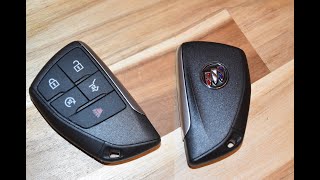
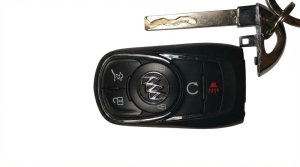
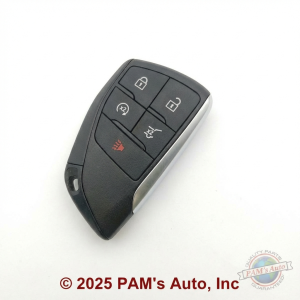
- Key Fob / Transponder Key
(OEM #Gen 1 (2016-2020): 13508406, 13584500, 13532385 (FCC ID: HYQ4AA). Gen 2 (2021+): 13537966, 13547569 (FCC ID: YG0G21TB2).)— The transponder chip inside the key is the most common point of failure for this code.
Trusted brands: ACDelco, Strattec
OEM price range: $100-$250
Aftermarket price range: $50-$120 - Theft Deterrent Exciter Module / Antenna
(OEM #13580788, 13580789 (Ignition Lock Antennas))— This module reads the key. If it fails, no key can be recognized. It's the next most likely part to fail after the key itself.
Trusted brands: ACDelco
OEM price range: $35-$60
Aftermarket price range: $25-$50 - Key Fob Battery
(OEM #CR2032)— For push-button start models, a weak battery is a simple and common reason for the fob not being detected.
Trusted brands: Duracell, Energizer
OEM price range: $5-$10
Aftermarket price range: $2-$5
Related Codes That Often Appear With This One
- B3060 — This code often relates to an unprogrammed transponder, which can be set along with B3055 during a key-reading failure or interference event.
- B3935 — This code points to a transponder incorrect status, indicating the BCM received data but it wasn't the correct/expected value. It is frequently listed alongside B3055 in GM service bulletins.
Technical Service Bulletins (TSBs) & Recalls
- PIC5650M: Mentions an intermittent no crank, no start, or start stall concern with the security light coming on, potentially with DTC B3055.
- PIC5650B: Predecessor to PIC5650M, also discusses intermittent no-start with security light and DTC B3055, advising to check for RF interference.
- PIT5030E: Describes how a flip-key not fully extended can cause a no-crank and set code B3055.
Platform-Specific Known Issues
- A known issue, documented in TSB #PIC5650M, involves an intermittent no-crank or start-stall condition with the security light on, where B3055 is a primary diagnostic code. The bulletin strongly advises checking for aftermarket electronic devices causing RF interference before replacing any parts.
- TSB #PIC5650-series highlights that a wide array of devices, from other vehicle keys and building access cards to aftermarket LED lights and phone chargers, can interfere with the immobilizer system and cause intermittent B3055 codes.
- TSB #PIT5030E describes how a flip-key that is not fully extended can cause a no-crank and set code B3055. This applies to many GM vehicles from the era, not just the Envision.
Mechanic-Grade Diagnostic Values
- Theft Deterrent Module/Antenna Ground Circuit Resistance — expected: Less than 10 ohms. Failure: A reading greater than 10 ohms indicates an open or high resistance in the ground circuit.
- Theft Deterrent Module/Antenna B+ Circuit Voltage — expected: Battery Positive Voltage (B+). Failure: Voltage significantly lower than battery voltage indicates a problem in the power supply circuit to the module.
- Theft Deterrent Signal Circuit Voltage (at BCM, module disconnected) — expected: Less than 1 V. Failure: Voltage greater than 1V indicates a short to voltage in the signal wire between the antenna and the BCM.
- Theft Deterrent Signal Circuit Resistance to Ground — expected: Infinite resistance (OL). Failure: Any reading less than infinite indicates a short to ground on the signal circuit.
Scan Tool Commands That Help
- GDS2 (GM Global Diagnostic System): Immobilizer Learn / Key Programming — This function is required after replacing a key, the BCM, or the theft deterrent module. It guides the technician through the 10-minute or 30-minute key relearn procedure to synchronize new components with the vehicle.
- GDS2 (GM Global Diagnostic System): BCM Setup and Configuration — When a new BCM is installed, it must be programmed with the vehicle's VIN and configured for its specific options (RPO codes) using the GM Service Programming System (SPS). GDS2 is then used to perform setup functions.
- GDS2 (GM Global Diagnostic System): Module Diagnostics > BCM > Data Display — To monitor live data from the immobilizer system, such as 'Transponder Key Status' or 'Key Part Number'. This helps verify if the BCM is recognizing the key's presence, even if it can't validate it.
- GDS2 (GM Global Diagnostic System): Add/Replace Key Fobs — Used to program the remote functions (lock/unlock) of a key fob. This is separate from the immobilizer transponder programming but is often done at the same time.
Wiring & Ground Locations
- Body Control Module (BCM) — For the 2016-2019 Envision, the BCM is located in the center console, accessible by removing the lower panel on the passenger side footwell.. The BCM is the central computer for the theft deterrent system. It receives the key's signal from the exciter antenna and decides whether to allow the engine to start. All related wiring terminates at the BCM.
- G103 (Ground) — On some GM platforms, G103 is located on the cowl in the engine compartment, above the brake booster. It serves as a ground point for the BCM, Instrument Panel Cluster (IPC), and Data Link Connector (DLC).. A poor ground at this location can cause intermittent communication issues for the BCM and other modules, potentially leading to a B3055 code and other electrical gremlins.
- OBD-II Data Link Connector (DLC) — Located under the driver's side dashboard, to the left of the steering wheel, often behind a small cover or change drawer.. This is the port where a scan tool connects to communicate with the BCM and other modules to read codes, view data, and perform programming functions.
Real Owner Repair Stories
- YouTube channel 'Project Sullivan Auto' (2013 Chevy Malibu (similar GM platform)) — Intermittent no-crank, no-start condition. Security system suspected. Code B3055 was retrieved.
❌ Tried (didn't work) Checking the battery (was fully charged at 12.8V)., Checking the starter motor and its connections., Locking and unlocking the car with the fob.
✅ What actually fixed it The video documents the diagnostic process. The initial suspicion, based on the scan tool, was RF interference with the immobilizer system or a faulty key. The final resolution was not explicitly stated in the clip, but the diagnostic path focused heavily on the BCM and key system as the primary suspects for the B3055 code.
OEM Part Supersession History
13580788→N/A (Still active part number)— This part number for the Ignition Lock Key Transmitter Antenna is still the current, genuine GM part number and fits a wide range of GM vehicles from 2014 to 2025.
Model Year Variations Within This Range
- 2016-2020 vs 2021-2023: The first generation (D2XX platform) and second generation (E2XX platform) use different key fobs with different part numbers and FCC IDs, as noted in the 'parts_most_commonly_needed' section. While the underlying Pass-Key/PEPS system functions similarly, the specific components (keys, and potentially BCM software) are not interchangeable between generations.
Helpful Videos

Used OEM Parts in Stock
New Aftermarket Parts Available


The information in this article is provided for general reference and educational purposes only. Vehicle specifications, procedures, and part compatibility can vary by production date, trim level, and region. Always consult your vehicle's factory service manual and verify part numbers before purchasing or performing repairs. Safety-critical components such as airbags, seat belts, and braking systems should be installed by a qualified professional.
- Buick ENVISION:
- 🎬 Helpful Videos
- 🛍️ Shop This Part
- What's Unique About the 2016-2023 Buick ENVISION
- Diagnostic Flowchart
- Symptoms You May Notice
- Most Likely Causes
- Rare But Worth Checking
- Diagnosis Steps
- Parts You'll Likely Need
- Related Codes That Often Appear With This One
- Technical Service Bulletins (TSBs) & Recalls
- Platform-Specific Known Issues
- Mechanic-Grade Diagnostic Values
- Scan Tool Commands That Help
- Wiring & Ground Locations
- Real Owner Repair Stories
- OEM Part Supersession History
- Model Year Variations Within This Range
- 🎟️ Get 5% Off