

B3055 on 2021-2022 Buick Encore: No Start, Security Light, and Key Not Detected Fixes
This code means your Encore's anti-theft system can't read the key, causing a no-start and security light. The most common cause is a faulty key or radio frequency interference. Try your spare key first and remove other fobs or electronics from your keychain before seeking service.
- B3055 means your Encore's security system has disabled the engine because it cannot detect a valid key.
- Before any repairs, unplug all aftermarket chargers/devices and try your spare key; these simple steps solve the majority of cases.
- Do not replace the starter or battery without confirming they are faulty; the no-start symptom is commanded by the anti-theft system.
- If a new key or security module is needed, it must be professionally programmed to your vehicle using special equipment.
What's Unique About the 2021-2022 Buick ENCORE
For the 2021-2022 Buick Encore and other GM vehicles of this era, code B3055 is frequently linked to intermittent no-start conditions as noted in manufacturer TSBs. [⭐ MANUFACTURER TSB — highest authority] A key distinction is the high sensitivity to Radio Frequency Interference (RFI) from aftermarket devices like USB chargers, LED lights, or even building access cards, which can jam the key's 125 kHz signal. This means the problem isn't always a faulty part, but rather external interference that needs to be identified and removed. TSB PIC5650M specifically calls out this sensitivity as a primary diagnostic path before replacing any components. [38, ⭐ MANUFACTURER TSB — highest authority]
Diagnostic Flowchart
Tap your situation to follow the diagnostic path that matches what you're seeing on this vehicle.
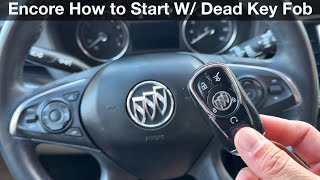
Generation note: The 2021-2022 model years include both the first-generation Encore (ending in 2022, on the Gamma II platform) and the second-generation Encore GX (starting in 2020, on the VSS-F platform). While both use similar immobilizer systems and can set this code, the first generation may have a physical 'flip-key' whereas the Encore GX is primarily push-to-start. The diagnostic steps vary slightly between key types, particularly regarding the backup slot for push-to-start fobs 🎬 Watch: How to find the hidden key slot on your Encore. and the key position issue noted in TSB PIT5030E for flip-keys.
Symptoms You May Notice
- Intermittent no crank, no start condition. [⭐ MANUFACTURER TSB — highest authority]
- Engine starts and immediately stalls. [⭐ MANUFACTURER TSB — highest authority]
- Security light is illuminated or flashing on the dashboard. [⭐ MANUFACTURER TSB — highest authority]
- "Service Theft Deterrent System" message on the driver information center.
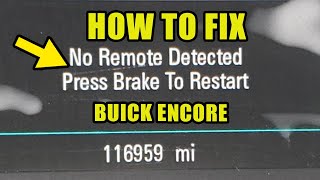
- "No Fob Detected" message on the driver information center (for push-to-start models).
- Replacing the starter motor. The no-crank symptom is a result of the security system disabling the starter; the starter itself is usually fine.
- Replacing the main vehicle battery without testing. While a very low battery can cause various electrical faults, B3055 points specifically to a key recognition failure, not just low voltage. Always test the battery properly before replacement.
Most Likely Causes
- Radio Frequency Interference (RFI) 🔴 High Probability A GM Technical Service Bulletin (PIC5650 series) specifically warns that aftermarket devices like phone chargers, dash cams, or even other RFID cards on the keychain can jam the 125 kHz signal between the key and the car. [38, ⭐ MANUFACTURER TSB — highest authority] The TSB lists specific examples including aftermarket LED lights, USB power banks, and toll passes.
How to confirm: Unplug all aftermarket accessories from the power outlets. Remove all other keys, fobs, and building access cards from the keychain. If the vehicle starts, RFI was the cause. A technician may use a tool like the J-43241 Keyless Entry Tester to sniff for interfering RF signals.
Typical fix: Remove the interfering device or use a higher quality, properly shielded accessory. Advise the customer to keep other transponder keys and RFID cards separate from the vehicle key.
Est. part cost: $0 - Defective or Damaged Ignition Key/Fob 🟡 Medium Probability The internal transponder chip in the key can fail from being dropped, age, or water damage. For key fobs, a dead battery can also prevent it from transmitting its code.
How to confirm: Try starting the vehicle with the spare key. If the spare key works reliably, the primary key is faulty. For push-button start models, try placing the fob in the backup slot (usually in the center console or cupholder) to rule out a dead fob battery. If the car starts with the fob in the slot, the fob battery is the issue.
Typical fix: Replace the faulty key and have the new key programmed to the vehicle by a dealer or automotive locksmith. If it's just the fob battery, replace the CR2032 battery. 🎬 See how to open and start your Buick with a dead fob.
Est. part cost: $5-$500 - Improper Flip Key Position (if equipped) ⚪ Low Probability TSB PIT5030E notes that for models with a physical flip-key, if the key is not fully extended and locked straight, its angle in the ignition can prevent a successful read by the antenna, triggering B3055. This is a common issue on the first-generation Encore and its platform mate, the Chevy Trax.
How to confirm: Remove the key, ensure it is fully extended and locked straight, then re-insert it and try to start the vehicle.
Typical fix: Ensure the key is fully extended before use. The TSB advises dealers to share this information with the customer.
Est. part cost: $0 - Faulty Immobilizer Antenna/Transponder Reader ⚪ Low Probability The exciter coil (antenna) that reads the key chip can fail. It's a wire coil located around the ignition lock cylinder or in the center console for push-to-start models. While less common than key or RFI issues, it is a known failure point in the GM immobilizer system.
How to confirm: This requires a scan tool that can monitor BCM data. If multiple known-good keys fail to be read and there is no RFI, the antenna is the likely suspect. The circuit can be tested for continuity and resistance with a multimeter; a reading outside the typical 5-20 ohm range indicates a fault.
Typical fix: Replace the immobilizer antenna/reader coil. This part is often separate from the more expensive ignition switch or BCM and may not require programming, though a key relearn procedure might be necessary.
Est. part cost: $50-$150
Rare But Worth Checking
- Body Control Module (BCM) Failure: The BCM is the computer that manages the security system. While it can fail, it's expensive and should only be considered after all other causes (key, antenna, wiring) have been ruled out. Symptoms of a broader BCM failure can include erratic behavior of lights, windows, and other electronics.
- Wiring or Connector Issue: A loose pin, corrosion, or damaged wire between the immobilizer antenna and the BCM can interrupt the signal and cause this code. This can also include poor ground connections for the BCM.
- Low Vehicle Battery Voltage: A weak or failing vehicle battery can cause a variety of unpredictable electronic faults, including triggering security system codes like B3055. The BCM may not function correctly with low system voltage. Always verify the main battery is healthy (>12.4V) before diagnosing complex modules.
Diagnosis Steps
- Question the driver about any aftermarket electronics (phone chargers, dash cams, LED lights, etc.) in the vehicle.
- Remove all aftermarket electronics from the vehicle's power outlets.
- Remove all other keys, fobs, and RFID cards (toll passes, building access cards) from the keychain holding the vehicle key.
- Try to start the vehicle with the simplified keychain. If it starts, one of the removed items was causing interference.
- If the vehicle still doesn't start, try the spare key. If the spare key works, the original key is faulty.
- For push-to-start models, try placing the non-working key fob in the designated transmitter pocket (check owner's manual for location, often in the center console) and attempt to start. If it starts, the key fob battery is likely dead.
- For flip-key models, ensure the key is fully extended and locked straight before inserting it into the ignition, as per TSB PIT5030E.
- If multiple keys fail and RFI has been ruled out, check the main vehicle battery voltage to ensure it is sufficient (>12.4V).
- If available, use a professional scan tool to check for other codes in the BCM and other modules. Observe live data for key recognition.
- Inspect the wiring and connector at the immobilizer antenna (around the ignition cylinder or in the console) and at the Body Control Module (BCM) for any visible damage or corrosion.
- If the problem persists, professional diagnosis is needed to test the immobilizer antenna circuit and BCM function. This may include a 10 or 30-minute key relearn procedure.
Parts You'll Likely Need
- Ignition Key / Key Fob
(OEM #ACDelco HYQ4EA (example, verify by VIN))— The transponder chip inside the key is the most common hardware failure point for this code. Dealer replacement can be very expensive.
Trusted brands: ACDelco, Strattec
OEM price range: $250-$500 (programmed)
Aftermarket price range: $70-$180 (plus programming) - Key Fob Battery
(OEM #CR2032)— On push-to-start models, a weak or dead fob battery can prevent the system from detecting the key, triggering a B3055. This is the cheapest and easiest first step.
Trusted brands: Energizer, Duracell, Panasonic
OEM price range: $5-$10
Aftermarket price range: $2-$8 - Immobilizer Antenna
(OEM #13580788 (example for first-gen Encore, verify by VIN))— The antenna coil that reads the key can fail, preventing the BCM from receiving the key's signal.
Trusted brands: ACDelco, GM Genuine Parts
OEM price range: $70-$150
Aftermarket price range: $40-$90
Related Codes That Often Appear With This One
- B3060 — Often appears with B3055. It means a signal was detected but wasn't a recognized/programmed key, which can happen during a general system fault. [⭐ MANUFACTURER TSB — highest authority]
- B3935 — Indicates 'Transponder Authentication Failed'. A signal was received but was incorrect. It is often set along with B3055 during a security system fault. [⭐ MANUFACTURER TSB — highest authority]
- C0750, C0755, C0760, C0765, C0775 — These are tire pressure monitor sensor codes that are sometimes seen with B3055, as noted in TSB PIC5650M, likely due to shared receivers or general RFI issues affecting multiple low-frequency systems. [38, ⭐ MANUFACTURER TSB — highest authority]
- U0140 — Indicates 'Lost Communication with Body Control Module'. This code may appear if the BCM itself is failing or has a significant internal fault, preventing it from communicating with other modules on the CAN bus.
Technical Service Bulletins (TSBs) & Recalls
- PIC5650M: Diagnostic Tip - Security Light On Intermittently / No Crank/No Start Or Start Stall / Keyless Access Vehicle. This is the primary TSB covering RFI as a major cause.
- PIT5030E: Diagnostic Tip - Intermittent No Crank When Ignition Key Is Turned To The Crank Position. This TSB specifically addresses the issue with flip-keys not being fully extended.
Platform-Specific Known Issues
- Flip-Key Position Sensitivity (First-Gen Encore): For the first-generation Encore (up to 2022) with a flip-style key, not having the key fully locked in the straight position can cause a misalignment with the immobilizer antenna in the ignition cylinder, triggering a B3055 code. This is a well-documented issue in GM TSB PIT5030E.
- Radio Frequency Interference (RFI) Sensitivity: The Encore, like many modern GM vehicles, is highly susceptible to RFI from low-quality aftermarket electronics plugged into the 12V outlets. GM has updated TSB PIC5650 multiple times (latest version K) to include an expanding list of interfering devices, such as USB chargers, LED lights, and even toll passes.
Mechanic-Grade Diagnostic Values
- Immobilizer Antenna Coil Resistance — expected: 5-20 Ohms. Failure: A reading of infinite resistance (open circuit) or near-zero Ohms (short circuit).
- Immobilizer Antenna Signal Circuit Voltage (at BCM) — expected: Less than 1 V with key ON. Failure: A reading of 1V or greater indicates a short to voltage in the circuit.
- BCM Low Reference Circuit Integrity — expected: Less than 2 Ohms end-to-end. Failure: A reading of 2 Ohms or greater indicates an open or high resistance in the circuit.
- BCM Serial Data Circuit Voltage (to Immobilizer Module) — expected: 10-13 V. Failure: Voltage significantly lower than 10V may indicate a wiring or module issue.
Hidden / Shadow Codes Worth Checking
- B3055 00: The '00' is a symptom byte indicating 'No Sub Type Information'. This means the BCM has detected the general 'No Transponder' fault but has no more specific data to offer, pointing away from more complex internal faults. (see via Dealer-level scan tools like a GM Tech2 or GDS2, or some advanced aftermarket scan tools.)
Scan Tool Commands That Help
- GM GDS2 / SPS: Immobilizer Learn / Programming Theft Deterrent System Components — This function is required after replacing a key, the immobilizer antenna, or the Body Control Module (BCM). It performs the security relearn procedure, which typically takes 10-12 minutes, to authorize the new components.
- GM GDS2: Add/Replace Keys — Used when a new key needs to be programmed to the vehicle. This process will erase all previously known keys, so all existing keys for the vehicle must be present for reprogramming.
- GM GDS2: Immobilizer Data Display — During diagnosis, a technician will monitor parameters like 'Immobilizer Key Status' or 'Environment Identification' to see if the BCM is successfully detecting the key in real-time when it is inserted or placed in the backup slot.
Wiring & Ground Locations
- K9 Body Control Module (BCM) — Located in the center console area, accessible from the front passenger side footwell. The lower trim panel must be removed to gain access.. The BCM is the brain of the immobilizer system. All signals from the key and immobilizer antenna are processed here. Checking the connectors at the BCM for corrosion or pushed-out pins is a critical diagnostic step.
- G103 — A primary ground point located at the left rear of the engine compartment on the cowl, often found above the brake booster.. This ground serves multiple critical modules, including the BCM, Instrument Panel Cluster (IPC), and Data Link Connector (DLC). A loose or corroded G103 can cause intermittent communication issues and unpredictable electrical faults, including a B3055 code.
- Immobilizer Antenna Connector — Connected to the antenna ring that encircles the ignition lock cylinder (for keyed ignition) or located in the center console (for push-to-start). Access requires removing the steering column shrouds or center console trim.. This is the primary connection point to test the antenna coil's resistance directly and check for proper voltage and ground signals being supplied by the BCM before condemning either the antenna or the BCM.
Real Owner Repair Stories
- Hands On Auto Training (YouTube) (2021 Buick Encore) — No crank, no start. Could not get the vehicle to enter the 'key on, engine off' state. Only the park brake light would illuminate on the dash.
❌ Tried (didn't work) Initial code scan showed a high voltage fault for the brake pedal position sensor. The battery was also found to be weak (11.6V).
✅ What actually fixed it The mechanic found significant green corrosion inside the brake pedal position switch connector. Cleaning the corrosion from the connector and pins restored proper circuit function, allowing the vehicle to key-on and start normally. The theory was that the corrosion was causing a short that interfered with a 5-volt reference signal, preventing the BCM and other modules from powering up correctly.
OEM Part Supersession History
13520524→N/A— This is a known OEM part number for the Immo Coil Anti-Theft Control Module (Antenna) that fits many GM vehicles, including the Encore platform.
Heads up: Always verify the part number with a dealer using the vehicle's VIN before ordering.13589324→N/A— This is a common BCM part number for the first-generation Encore. It is often cross-referenced with part numbers 13584695, 13586273, and 13580697.
Heads up: BCM replacement requires programming. Some services can clone your original BCM data to a replacement unit, avoiding a trip to the dealer.
Model Year Variations Within This Range
- 2022: The 2022 Buick Encore received an updated 1.4L engine with increased power (155 hp vs. 138 hp in 2021). The trim structure was also simplified to a single 'Preferred' level. However, there are no documented changes to the Pass-Key III+ immobilizer system, BCM, or related wiring between the 2021 and 2022 model years.
Helpful Videos

Used OEM Parts in Stock



New Aftermarket Parts Available


The information in this article is provided for general reference and educational purposes only. Vehicle specifications, procedures, and part compatibility can vary by production date, trim level, and region. Always consult your vehicle's factory service manual and verify part numbers before purchasing or performing repairs. Safety-critical components such as airbags, seat belts, and braking systems should be installed by a qualified professional.
- Buick ENCORE:
- 🎬 Helpful Videos
- 🛍️ Shop This Part
- What's Unique About the 2021-2022 Buick ENCORE
- Diagnostic Flowchart
- Symptoms You May Notice
- Most Likely Causes
- Rare But Worth Checking
- Diagnosis Steps
- Parts You'll Likely Need
- Related Codes That Often Appear With This One
- Technical Service Bulletins (TSBs) & Recalls
- Platform-Specific Known Issues
- Mechanic-Grade Diagnostic Values
- Hidden / Shadow Codes Worth Checking
- Scan Tool Commands That Help
- Wiring & Ground Locations
- Real Owner Repair Stories
- OEM Part Supersession History
- Model Year Variations Within This Range
- 🎟️ Get 5% Off