

B3055 on 2008-2015 Buick Enclave: Key Not Recognized, No Start Causes and Fixes
Code B3055 on a 2008-2015 Buick Enclave means the vehicle's security system can't recognize the ignition key, causing a no-start or start-and-stall condition. The most common fixes are trying a spare key, performing a key relearn procedure, or replacing a faulty ignition key or the ignition lock cylinder housing that contains the transponder reader.
- B3055 means your Enclave's security system doesn't recognize the key, preventing the car from starting.
- Before spending any money, try your spare key and remove all other fobs or cards from your keychain to rule out simple fixes.
- If you have a flip-style key, make sure it is fully locked in the open position before you insert it into the ignition.
- A DIY "30-minute key relearn" procedure may resolve the issue without needing a trip to the shop.
- If simple fixes don't work, the most likely part to have failed is the transponder chip in the key itself.
What's Unique About the 2008-2015 Buick ENCLAVE
The first-generation Buick Enclave uses GM's Pass-Key III+ (PK3+) immobilizer system. This system is generally reliable but can be sensitive to interference or key-related issues. A notable quirk for this platform and other GM vehicles of the era is how the key is handled; if a flip-style key is not fully extended and locked, it can cause an intermittent no-start and set a B3055 code, 🎬 Watch: A short explanation of the B3055 fault code. as detailed in TSB PIT5030E. Additionally, external RFID devices on the same keychain, such as building access cards or gas station payment fobs, can interfere with the key's signal, a possibility highlighted in GM Technical Service Bulletin PIC5650M. This platform also saw a major recall for ignition switches that could be inadvertently turned off while driving, though this is a separate mechanical issue from the B3055 electronic code, it highlights the focus on the ignition system for this model generation.
Diagnostic Flowchart
Tap your situation to follow the diagnostic path that matches what you're seeing on this vehicle.
Symptoms You May Notice
- Engine will not crank (no-crank)
- Engine starts and immediately stalls
- Security light (often a car icon with a lock) is illuminated or flashing on the dashboard
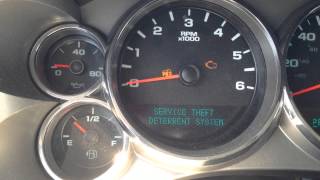
- Message on Driver Information Center (DIC) like "Service Theft Deterrent System"
- Key is difficult to turn or gets stuck (can be related to the mechanical part of the ignition cylinder, but often occurs alongside electronic issues)
- Replacing the battery without checking for security codes first. While low voltage can cause issues, a B3055 points specifically to the security system.
- Replacing the starter motor. A no-crank condition caused by the security system is often mistaken for a failed starter.
Most Likely Causes
- Damaged or Faulty Ignition Key Transponder 🔴 High Probability The transponder chip in the key head can be damaged from being dropped, exposure to moisture, or simple electronic failure over time. The flip-key mechanism can also wear, leading to poor connection.
How to confirm: Try starting the vehicle with a spare key. If the spare key works consistently, the original key is faulty. This is the most effective first diagnostic step.
Typical fix: Replace the faulty key. A new key must be cut and then programmed to the vehicle using a scan tool or the 30-minute relearn procedure.
Est. part cost: $50-$150 - Improper Key Usage (Flip Key Not Extended) 🟡 Medium Probability A GM-specific issue where if the flip-out key is not fully locked in the straight, open position, the transponder may not align correctly with the reader coil in the ignition. TSB PIT5030E was issued to address this exact scenario.
How to confirm: If you have a flip key, ensure it is fully extended and locked before inserting it into the ignition. If this resolves the no-start condition, it was the cause.
Typical fix: No parts needed. Ensure the key is fully extended before each use. Clear the code from history.
Est. part cost: $0 - External Radio Frequency (RFID) Interference ⚪ Low Probability As noted in TSB PIC5650M, other RFID devices on the keychain (like office key cards, other car keys, or payment fobs) can interfere with the 125kHz signal between the key and the vehicle's transponder reader.
How to confirm: Remove all other keys and electronic fobs from the keychain. Try starting the vehicle with only the ignition key present. If it starts, interference was the issue.
Typical fix: Keep other RFID-enabled cards and devices separate from the vehicle's ignition key.
Est. part cost: $0 - Faulty Ignition Lock Cylinder / Transponder Reader Module ⚪ Low Probability The exciter coil/reader module that surrounds the ignition cylinder can fail, preventing it from energizing or reading the key's transponder chip. This component is integrated into the ignition lock cylinder housing.
How to confirm: This is suspected when both the primary and spare keys fail to start the vehicle and there is no RFID interference. Diagnosis requires a scan tool to check for signals from the reader module. A technician may also test the circuit for continuity and resistance.
Typical fix: Replacement of the ignition lock cylinder housing. The OEM part number is GM 25832354, which was later superseded by 23485556. This part requires programming to the vehicle after installation.
Est. part cost: $100-$300
Rare But Worth Checking
- Body Control Module (BCM) Fault: While less common, the BCM itself can fail. This is usually suspected after all other components (key, reader coil, wiring) have been ruled out. A BCM failure often presents with other seemingly unrelated electrical issues, such as erratic lights, door locks, or instrument cluster behavior.
- Wiring Harness Damage: A damaged or corroded wire between the ignition lock cylinder and the BCM can cause a loss of communication and trigger B3055. This is more likely in older vehicles or those with a history of rodent damage or prior dash repairs. Technicians would test for continuity, shorts to ground, or shorts to voltage on the signal circuit.
Diagnosis Steps
- Verify the complaint. Confirm the no-crank/start-stall symptom and check for an illuminated security light.
- Try the spare key. This is the fastest way to rule out a single faulty key.
- Inspect key usage. If it's a flip key, ensure it is fully extended and locked straight.
- Remove interference. Take the ignition key off the keychain and try starting the vehicle with no other keys or RFID fobs nearby.
- Scan for codes. Use a scan tool capable of reading BCM codes to confirm B3055 is the primary code.
- Attempt a Key Relearn Procedure. This 30-minute procedure can sometimes resolve communication glitches. Turn the key to 'ON' (do not start) and wait for the security light to turn off, which takes about 10 minutes. Turn the key to 'OFF' for 5 seconds. Repeat this cycle two more times for a total of three 10-minute cycles. After the third cycle, turn the key off and then try to start the engine.
- Inspect wiring. Check the wiring and connector at the ignition lock cylinder for any visible damage or looseness.
- Test Components. If the above steps fail, a professional technician will need to test the transponder reader coil and diagnose the BCM with specialized equipment.
Parts You'll Likely Need
- Ignition Key with Transponder Chip
(OEM #GM 20952477 or 22936101 (Verify by VIN))— The chip inside the key is the most common point of failure for this code. Keys get dropped, wet, or simply fail electronically.
Trusted brands: ACDelco, Strattec
OEM price range: $70-$120
Aftermarket price range: $25-$60 - Ignition Lock Cylinder Housing with Transponder Reader
(OEM #GM 25832354 (superseded by 23485556))— If both keys fail to work and there is no interference, the module that reads the key is the next most likely culprit. This housing contains the exciter coil.
Trusted brands: ACDelco (D1493G), Dorman
OEM price range: $150-$250
Aftermarket price range: $80-$150
Related Codes That Often Appear With This One
- B3060 — This code often relates to a secondary issue with the transponder key system, and is listed alongside B3055 in TSB PIC5650M as a possible related code.
- B3935 — Related to Transponder Key System Circuit Failure, it can appear with B3055 when there's a communication breakdown between the key, reader, and BCM.
Technical Service Bulletins (TSBs) & Recalls
- PIC5650M: Addresses intermittent no crank/no start/start stall with security light on, listing B3055 as a potential DTC and suggesting investigation for RFID interference from items like other car keys, toll passes, or even aftermarket LED lights.
- PIT5030E: A diagnostic tip explaining that an intermittent no-crank can be caused by the flip key not being fully extended and locked in the open position, which can log a B3055 code in history.
Platform-Specific Known Issues
- TSB PIC5650M notes that an intermittent no-crank, no-start, or start-stall condition with the security light on can be caused by this code. It specifically mentions that interference from RFID devices on the keychain can be a cause.
- TSB PIT5030E describes a condition on many GM vehicles, including the Enclave platform, where a flip key that is not fully extended can cause a no-crank condition and set DTC B3055 in history.
- Owner Experience: Ignition Cylinder Replacement: A common repair story found on owner forums involves replacing the ignition lock cylinder housing (GM Part No. 25832354). One owner on 'enclaveforum.net' described how after trying both keys and the relearn procedure with no success, the dealer diagnosed and replaced this part, which contains the transponder antenna. The repair, including programming, resolved the B3055 code and no-start issue permanently.
Mechanic-Grade Diagnostic Values
- Scan Tool TDM Transponder Key Parameter — expected: Present. Failure: Parameter reads 'Not Present' or 'No Key Detected'.
- Battery Voltage During Cranking Attempt — expected: Above 10.5V. Failure: Voltage drops significantly below 10.5V, potentially causing control modules like the BCM to malfunction and incorrectly set security codes.
Hidden / Shadow Codes Worth Checking
- B3055 00: The '00' is a standard symptom byte indicating 'No Sub Type Information'. It means the base code B3055 contains all the available failure information and no further detail is provided by the symptom byte. (see via GM-specific scan tools like Tech2 or GDS2.)
Scan Tool Commands That Help
- GDS2 / Tech2: Immobilizer Learn / Programming Theft Deterrent System Components — This function is required after replacing a key, the ignition lock cylinder/reader, or the Body Control Module (BCM) to teach the vehicle the new component's unique transponder value.
- GDS2: Module Diagnostics -> Remote Control Door Lock Receiver -> Configure/Reset Functions -> Add/Replace Key Fobs — This is the specific path within the GM diagnostic software to access the key programming menu to add a new key to the system.
- Professional Scan Tool (e.g., Topdon, Autel): BCM Live Data -> Security Data — To view live data parameters like 'Transponder Key Status' or 'Environment Identification'. Seeing 'No Key Detected' while a valid key is in the ignition points directly to a failure in the key, reader coil, or wiring.
Wiring & Ground Locations
- BCM (Body Control Module) — Under the driver's side of the dashboard, to the left of the steering column.. The BCM is the module that receives the key data from the transponder reader and makes the decision to enable or disable the engine start. All related wiring terminates here.
- G103 — On the left rear of the engine compartment on the cowl, located above the brake booster.. This is a primary ground point for the Body Control Module (BCM), Instrument Panel Cluster (IPC), and the Ignition Key Alarm Switch. A poor or corroded connection at G103 can cause intermittent power loss to the BCM, leading to false B3055 codes and other electrical issues.
- Ignition Switch Connector — At the back of the ignition lock cylinder housing within the steering column.. This connector contains the wiring from the transponder reader coil to the BCM. Checking for pushed-out pins, corrosion, or damage at this connector is a critical step when diagnosing a B3055 code.
Real Owner Repair Stories
- YouTube channel 'Hands On Auto Training' (2015 Chevrolet Malibu (similar GM platform)) — No crank, no start, security light on, DTC B3055 'No transponder modulation' was current.
❌ Tried (didn't work) Clearing codes (code immediately returned), Cycling the key
✅ What actually fixed it The original key was determined to be faulty. The technician swapped the physical key blade into a new key fob with a new transponder chip and then used a scan tool (Auto Propad) to perform the 'Immobilizer Learn' procedure, which took 10 minutes. This successfully programmed the new key and resolved the no-start condition. - YouTube channel 'ADD AUTOMOBILE SERVICES' (2013 Chevrolet Equinox (similar GM platform)) — Intermittent no-start with security light staying on. DTC B3055 present.
❌ Tried (didn't work) Cycling the key would sometimes work, but the problem was intermittent and unreliable.
✅ What actually fixed it The technician diagnosed an intermittent failure of the original key's transponder chip. Using a key tool (VVDI), he cloned the data from the original key's chip onto a new 'super chip' and placed this new chip inside the original key fob alongside the old one. This provided a redundant, strong signal that the car could reliably read, fixing the intermittent no-start issue.
OEM Part Supersession History
GM 25832354 (also replaces 12458191, 12533953, 15822350)→GM 23485556— Typically for design improvement, material change, or supplier change. The new part is considered a more reliable direct replacement.
Heads up: No known incompatibilities; 23485556 is the correct service replacement for the entire 2008-2015 model range. The ACDelco equivalent part number is D1493F.
Model Year Variations Within This Range
- 2008-2012 vs 2013-2015: The Buick Enclave received a facelift in 2013, which included updates to the interior electronics and potentially the BCM software. However, the fundamental Pass-Key III+ immobilizer system and the causes for code B3055 (key, reader, wiring, BCM) remain the same across the entire 2008-2015 generation. Diagnostic procedures are functionally identical.
Helpful Videos


Used OEM Parts in Stock


New Aftermarket Parts Available


The information in this article is provided for general reference and educational purposes only. Vehicle specifications, procedures, and part compatibility can vary by production date, trim level, and region. Always consult your vehicle's factory service manual and verify part numbers before purchasing or performing repairs. Safety-critical components such as airbags, seat belts, and braking systems should be installed by a qualified professional.
- Buick ENCLAVE:
- 🎬 Helpful Videos
- 🛍️ Shop This Part
- What's Unique About the 2008-2015 Buick ENCLAVE
- Diagnostic Flowchart
- Symptoms You May Notice
- Most Likely Causes
- Rare But Worth Checking
- Diagnosis Steps
- Parts You'll Likely Need
- Related Codes That Often Appear With This One
- Technical Service Bulletins (TSBs) & Recalls
- Platform-Specific Known Issues
- Mechanic-Grade Diagnostic Values
- Hidden / Shadow Codes Worth Checking
- Scan Tool Commands That Help
- Wiring & Ground Locations
- Real Owner Repair Stories
- OEM Part Supersession History
- Model Year Variations Within This Range
- 🎟️ Get 5% Off