

OBD-II Code B3033: Security System Tamper Detected
The Ultimate 2026 Guide to Diagnosing and Fixing GM's Passlock Fault
- Code B3033 is a GM-specific fault where the Passlock anti-theft system disables the engine's fuel or starter due to an unrecognized ignition signal.
- A flashing 'Security' light paired with a start-and-stall or no-crank condition triggers a mandatory, un-bypassable 10-minute engine lockout.
- Over 80% of B3033 codes stem from a failed Passlock sensor inside the ignition lock cylinder housing, costing $250-$500 to replace.
- Replacing any security component requires a strict 30-minute relearn procedure consisting of three 10-minute key-on cycles to sync the new part.
- Passlock systems do not use chipped keys; buying a new key will never fix a B3033 code.
What Does B3033 Mean?
B3033 means your GM vehicle's Body Control Module (BCM) detects an unrecognized signal from the ignition switch. It assumes an active theft attempt and triggers the Passlock system, completely disabling the engine.
Technical definition: The SAE definition is "Security System Indicates Tamper." The BCM sets this code when it receives an analog voltage signal from the Passlock™ sensor that falls into a predefined 'tamper' range (outside the valid 'run' voltage) during an engine start attempt.
Can I Drive With B3033?
No — Do Not Drive. The vehicle will not start or stalls immediately after starting when this code is active. The security system disables the engine's fuel system or starter for a mandatory 10-minute lockout period.
Common Causes
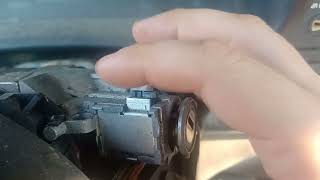
- Faulty Passlock Sensor in Ignition Lock Cylinder Housing (Very Common) — The sensor, containing a magnet and Hall Effect sensor that reads ignition cylinder rotation, wears out. It sends an unstable voltage signal to the BCM, triggering the tamper code.
- Worn or Faulty Ignition Switch (Common) — The main electrical ignition switch develops worn or corroded internal contacts. This delivers an inconsistent voltage supply to the BCM and Passlock sensor, mimicking a tamper attempt (addressed in GM TSB 06-02-35-017).
- Damaged Wiring or Poor Connections (Common) — The three thin wires running from the Passlock sensor to the BCM chafe on the steering column. Corrosion in connectors or loose pins interrupt the signal, causing the BCM to misinterpret it as a fault.
- Aftermarket Remote Start or Alarm System Issues (Less Common) — Improperly installed aftermarket remote start or alarm systems frequently cause this code. Bypass modules fail, or T-tap connections to the Passlock wiring corrode and loosen over time.
- Low Battery Voltage During Cranking (Less Common) — A weak battery experiencing a significant voltage drop while cranking corrupts the signal sent to the BCM. This triggers the code in systems with borderline faulty sensors.
- Failing Body Control Module (BCM) (Rare) — A failing BCM is a rare cause. Definitively rule out the sensor, switch, and wiring before condemning the BCM, as replacement requires expensive dealer-level programming.
- Worn Ignition Lock Cylinder or Key (Rare) — Excessive mechanical wear in the lock cylinder or on the key causes sloppy rotation. This prevents the internal magnet from aligning correctly with the Passlock sensor, creating an intermittent fault.
- Radio Frequency (RF) Interference (Rare) — Strong radio frequency signals from transponder keys, workplace ID cards, or payment fobs on the same keychain interfere with the anti-theft module, causing erratic behavior.
Symptoms
- Engine will not start or cranks but stalls immediately — Depending on the Passlock generation, the BCM commands the PCM to cut fuel immediately after starting (crank-stall) or disables the starter relay entirely (no-crank).
- Flashing 'Security' light on the dashboard — The 'Security' or 'Theft' indicator light flashes to alert the driver. A steady light indicates a different fault, but a flashing light during a no-start is the classic B3033 symptom.
- Forced 10-minute wait time — The system enters a mandatory 10-minute lockout mode after a failed start. The vehicle will not start during this period, even if the underlying problem is resolved. Disconnecting the battery does not reset this timer. 🎬 Watch: How to reset the anti-theft system on a Chevy Cobalt
- Problem is intermittent — The issue happens sporadically. Extreme temperature changes (hot or cold) alter the resistance in failing electrical components and wiring, triggering the fault.
- Key can be removed from ignition when not in Park — On models like the Chevrolet Cobalt, this symptom points to a faulty shifter mechanism or ignition switch, part of the same cluster of ignition-area electrical problems that trigger B3033.
Diagnostic Flowchart
Tap your situation to follow the diagnostic path that matches what you're seeing on this code.
Common Fixes & Costs
- Replace Ignition Lock Cylinder Housing with Passlock Sensor
— Parts: $50 - $170, Labor: $200 - $350 (parts and labor, includes relearn), ~1.5 hr book time
(Intermediate)
Chevrolet Cobalt (2005-2010): OEM ACDelco/GM Genuine: 20869121, D1411G (Alt: Dorman: 924-718, 924-720; Standard Motor Products: US643L)
Chevrolet Silverado (1999-2007): OEM ACDelco/GM Genuine: D1428D (Alt: Dorman: 924-713) - Replace Ignition Switch
— Parts: $30 - $100, Labor: $150 - $300 (parts and labor, may require relearn), ~1.5 hr book time
(Intermediate)
Saturn Ion (2003-2007): OEM ACDelco/GM Genuine: 23215459 (replaces 10392423, 12450250) (Alt: Standard Motor Products: US-778; Dorman: 901-5601; TRQ: SWA41721)
Chevrolet Cobalt (2005-2010): OEM ACDelco/GM Genuine: D1462G (Alt: Standard Motor Products: US778) - Perform 30-Minute Security Relearn Procedure — Parts: $0, Labor: $120 - $180 (typical 1-hour shop diagnostic/labor fee), ~1 hr book time (DIY)
- Bypass Passlock System with Resistors — Parts: $1 - $10, Labor: $150 - $250 (if done by a specialty shop), ~1.5 hr book time (Advanced)
- Replace and Program Body Control Module (BCM)
— Parts: $200 - $600, Labor: $350 - $600 (parts and labor, includes programming and relearn procedures), ~2 hr book time
(Professional)
Chevrolet Silverado (2003-2007): OEM GM Genuine: 15136224, 15747545, 15940214 (Alt: ACDelco (Reman): 15136224; Cardone: 73-72101)
DIY vs Professional
- Perform 30-Minute Security Relearn Procedure — Beginner:
Tools: None. A battery charger is highly recommended to prevent battery drain. - Replace Ignition Lock Cylinder Housing / Ignition Switch — Beginner:
Tools: Socket set, screwdrivers, trim removal tools, steering wheel puller (sometimes required). - Bypass Passlock System with Resistors — Beginner:
Tools: Multimeter, soldering iron and solder (or quality crimp connectors), wire strippers/cutters, electrical tape, resistors. - Replace and Program Body Control Module (BCM) — Beginner:
Tools: Standard mechanic's tools plus a GM-specific programming subscription (SPS) and a compatible J2534 pass-thru device.
Used vs. New Parts: Buying Guide
When a used part is worth it: For the primary fix, the Ignition Lock Cylinder Housing, buying used is generally not recommended. These are known high-failure electronic/mechanical parts. A used part may have significant wear and could fail soon after installation. A used BCM is a viable option if it comes from a reputable seller with a warranty, but it will still require professional programming.
Donor-vehicle mileage cap: roughly under 40000 miles for the part to have meaningful remaining life.
Donor quality checklist:
- For a BCM, match the part number exactly.
- Avoid Passlock sensors from high-mileage vehicles or those scrapped with electrical issues.
- New aftermarket parts from brands like Dorman or Standard Motor Products often include design improvements over the original OEM part.
Decision logic:
- If The part is the Passlock sensor or ignition switch → Buy new (OEM or quality aftermarket). The cost savings of a used part are minimal and not worth the risk of repeat failure.
- If The part is the BCM and budget is a major concern → A used, tested BCM from a low-mileage vehicle is an option, but factor in the cost of programming.
- If Vehicle is critical for daily use → Always buy new parts with a warranty to minimize the chance of being stranded again.
Warranty tradeoff: Used parts: Typically offer a 30-90 day warranty at best. Aftermarket new: Usually come with a 1-year to limited lifetime warranty. OEM new: 1-2 year warranty is common.
Worst-case if a used part fails: $300-$500 if a used sensor/switch fails after installation, requiring repeat labor costs plus the price of another part.
What Happens If You Wait — Timeline
- 0 - 1 month: A single, isolated no-start event occurs. The car starts after the 10-minute lockout. The problem may not reappear for weeks, often dismissed as a glitch. (MPG impact: 0%% · Added cost: $0)
- 1 - 3 months: The failure becomes more frequent, happening once every week or two. It seems tied to temperature changes. The driver becomes aware of the 10-minute wait. The vehicle is now unreliable. (MPG impact: 0%% · Added cost: $100 - $300 (High risk of needing a tow when it fails at an inconvenient time).)
- 3 - 6 months: The no-start condition occurs multiple times per week, or even daily. The 10-minute lockout becomes a routine frustration. The driver attempts unsuccessful workarounds like the relearn procedure. (MPG impact: 0%% · Added cost: $150 - $400 (Cost of an initial diagnostic at a shop, plus continued risk of being stranded).)
- 6+ months: The vehicle is essentially undrivable. The Passlock system faults on nearly every start attempt, rendering the car useless without repair. The cost of not fixing is now the total, unavoidable repair cost itself. (MPG impact: 0%% · Added cost: $400 - $800+ (The inevitable cost of diagnosis and replacement of the faulty component, such as the ignition lock cylinder or switch).)
Cost of Not Fixing It
- Immediate: Vehicle is unreliable and may fail to start at any time, leaving the driver stranded. The 10-minute lockout makes the situation worse. (Added cost: $100-$300 (for a tow truck).)
- 1-3 months: Repeated start-and-stall cycles can cause minor stress on the starter and battery. The primary cost remains inconvenience and the high likelihood of being stranded. (Added cost: Potential for increased stress on starting system components.)
- 3+ months: There is no direct mechanical damage caused by ignoring B3033. The cost is entirely related to the vehicle being undrivable and the eventual, necessary repair of the security system. (Added cost: The repair cost is unavoidable if you want a functioning vehicle.)
Diagnosis Steps
- Confirm the Code and Observe Symptoms
Use an OBD-II scanner capable of reading Body (B) codes to confirm B3033. Note stored codes like B2960 or P1626. Attempt to start the car and confirm the 'Security' light flashes.
Tools: OBD-II Scanner (with BCM/Body code capability) (Beginner) - Check Battery and Charging System
Ensure the battery has at least 12.4 volts at rest. Perform a load test or watch the voltage during cranking; it should not drop below 10 volts. A significant drop corrupts the signal from the Passlock sensor.
Tools: Multimeter or Battery Tester (Beginner) - Isolate the Key
Remove all other keys, fobs, and access cards from your keychain. Try starting the vehicle with only the single GM key. This eliminates Radio Frequency (RF) interference confusing the theft deterrent module.
Tools: None (Beginner) - Attempt the Security Relearn Procedure
Turn the key to 'ON' (do not crank) and wait for the security light to stop flashing (approx. 10 minutes). Turn the key 'OFF' for 10 seconds. Repeat this cycle two more times for a total of 30 minutes. After the third cycle, turn the key off and try to start the engine.
Tools: None, Battery Charger (recommended) (Beginner) - Inspect Wiring and Connectors
Visually inspect the wiring harness from the ignition lock cylinder down the steering column. Look for chafed wires, damage from past repairs, or loose connectors. Check the 3-wire Passlock sensor connector and aftermarket remote start connections.
Tools: Flashlight, Trim Removal Tools (Intermediate) - Advanced: Measure Passlock Resistance for Bypass/Diagnosis
Access the Passlock sensor wires (yellow and orange/black). Cut the yellow signal wire. With the key in RUN, measure resistance between the sensor-side of the cut yellow wire and the orange/black wire. A stable reading (1.8kΩ to 12.3kΩ) is correct. Erratic or infinite (OL) readings mean the sensor is bad.
Tools: Multimeter, Wire Cutters/Strippers, Vehicle-Specific Wiring Diagram (Advanced) - Advanced: Test Passlock Sensor Voltage with a Multimeter
Access the 3-wire Passlock sensor harness. With the key ON, check the power wire for at least 10V from the BCM. Check the ground wire for continuity. The signal wire (yellow) must show a 5V reference. During CRANK, this voltage drops to a steady value between 0.86V and 4.28V. Missing or erratic signals confirm a bad sensor.
Tools: Multimeter, Vehicle-Specific Wiring Diagram, Back-Probe Pins (Advanced) - Advanced: Test the Ignition Switch
Test the main ignition switch outputs with a multimeter. Ensure it sends consistent power to the correct circuits (ignition, accessory, crank) in each key position. Voltage drops or intermittent signals indicate a failing switch.
Tools: Multimeter, Vehicle-Specific Wiring Diagram (Advanced) - Professional: Monitor Fuel Pump Command with Scan Tool
Use a professional scan tool to monitor live data from the PCM. Observe the 'Fuel Pump Relay Command'. During a failed start, the command goes from 'On' during cranking to 'Off' 1-2 seconds after the engine fires, confirming the BCM disable command.
Tools: Professional Bi-Directional Scan Tool (Professional) - Professional: Analyze Passlock Sensor with an Oscilloscope
Connect an oscilloscope to the Passlock signal wire (yellow) and ground. With the key ON, look for a clean 5V line. In 'RUN', voltage drops to a stable DC voltage. A faulty sensor shows a noisy, fluctuating, or absent signal.
Tools: Oscilloscope, Wiring Diagram, Back-Probe Pins (Professional)
When This Code Triggers (Freeze-Frame Conditions)
- Vehicle Speed: 0 mph (During engine start attempt)
- Engine RPM: 0 - 250 RPM (During engine crank or no-crank)
- Ignition Status: ON / CRANK (Key turned to start the vehicle.)
- Battery Voltage: 10.5 - 12.5V (Voltage present during the start attempt)
- Passlock Sensor Voltage: Invalid/Out of Range (BCM reads a voltage outside the learned acceptable range, triggering the tamper state.)
Related Codes
- B2960 — Means 'Security System Sensor Data Incorrect But Valid.' This code often appears with B3033. B2960 indicates the BCM received a complete voltage signal, but it didn't match the value it had learned. This points more specifically to a failing Passlock sensor or worn cylinder, whereas B3033 is a more general 'tamper' signal.
- P1626 — A Powertrain Control Module (PCM) code for 'Theft Deterrent Fuel Enable Signal Lost.' The PCM sets this when it doesn't receive the correct password from the BCM. It is a direct consequence of the BCM setting a code like B3033. Resolving the BCM fault will clear the P1626.
- B2958 — Means 'Security System Sensor Data Circuit High.' This indicates a specific electrical problem—too much voltage—in the Passlock sensor circuit. While B3033 is a general tamper code, B2958 points directly to a short to power or a faulty sensor sending voltage above the acceptable range.
- B1001 — Means 'Option Configuration Error.' This code commonly appears in the SDM (Airbag Module) after a BCM has been replaced but not correctly set up. The new BCM must have the 'SDM Primary Key' relearned using a professional scan tool to clear this code and the airbag warning light.
Climate & Environmental Factors
- Extreme Cold/Heat: Temperature swings cause the metallic components and delicate wiring within the Passlock sensor and ignition switch to expand or contract. This alters the precise resistance values the BCM expects to see, leading to intermittent failures that appear more frequently in very cold or very hot weather.
- High Humidity: Moisture in the air accelerates corrosion on the thin wires and connector pins for the Passlock sensor. This corrosion increases electrical resistance, which corrupts the voltage signal sent to the BCM and triggers a tamper code.
How to Talk to a Mechanic About This Code
Say this: "My car has a no-start or start-and-stall problem with a flashing security light, and my scanner shows a B3033 code. I need a diagnostic focusing on the Passlock sensor in the ignition lock cylinder housing, the ignition switch, and the wiring before considering a BCM replacement."
This signals you've done your research and are aware of the common, less-expensive failure points. It directs the technician's diagnostic path toward the most likely causes and discourages them from immediately suggesting the most expensive repair (BCM replacement).
Avoid saying:
- My car won't start, can you fix it?
- My security light is on, I think it's the computer.
- Just do whatever it takes to get it running.
Questions to ask before authorizing the repair:
- Did you test the Passlock sensor's voltage or resistance, and what were the readings?
- Have you inspected the wiring harness at the steering column for any chafing or damage?
- If you are recommending a BCM replacement, can you show me why the sensor, switch, and wiring have been ruled out as the cause?
- Does the repair estimate include performing the 30-minute security relearn procedure?
- What is the warranty on the parts and labor for this repair?
Where to Take It: Dealer vs Independent vs Chain
- Dealer:
Best for: Vehicles still under warranty, Complex BCM replacement and programming is confirmed as necessary
Downsides: Higher labor rates (1.5-2x vs. independent)., May be quicker to replace the entire BCM module rather than diagnose a cheaper sensor or wiring fault. (Typical cost: +50% vs. baseline) - Independent Shop:
Best fit. An experienced independent mechanic is very familiar with this common GM issue and is more likely to diagnose and replace the specific failed component (sensor, switch) for a lower overall cost.
Best for: Out-of-warranty vehicles where cost is a concern., Diagnosing common, well-documented electrical issues like Passlock failures.
Downsides: Shop quality and diagnostic skill can vary; look for shops with good reviews specializing in electrical diagnostics. (Typical cost: +0% vs. baseline) - Chain Shop:
Avoid for this code. The diagnostic complexity, while not extreme, is beyond the scope of what is reliably offered at most chain shops. There is a high risk of being sold unnecessary parts.
Best for: Simple, unrelated maintenance like oil changes or tires.
Downsides: Technician skill for electrical diagnostics is highly variable., May lack the specific diagnostic tools or experience to differentiate between a sensor, switch, or BCM failure, leading to incorrect diagnoses. (Typical cost: -10% vs. baseline)
When to Walk Away From the Repair
If the estimated repair cost for the B3033 fault exceeds 50% of your car's private-party value (e.g., from Kelley Blue Book), it's time to seriously consider selling or trading in the vehicle.
- Car worth $4000, fix is $800: Fix it. The repair cost is well below the 50% threshold and restores a critical function to the vehicle.
- Car worth $2500, fix is $1200: Walk away. The repair cost is nearly 50% of the car's value. Unless the car is in otherwise perfect condition, this is a poor investment.
What Scan Tool You Need for This Code
Minimum: A scanner that can read and clear Body Control Module (BCM) codes. A basic engine-only code reader will NOT see the B3033 code.
A standard $20-50 OBD-II reader typically only accesses the Powertrain Control Module (PCM) for engine and emissions codes. B3033 is a 'B' code stored in the BCM, so you need a tool with enhanced diagnostics for GM vehicles to see it.
Budget: BlueDriver Pro (~$90) — Confirms the presence of B3033 and other body codes (like B2960), reads freeze-frame data, and clears the codes after repair. It connects to your smartphone via Bluetooth and is very user-friendly.
Mid-range: Foxwell NT510 Elite for GM (~$180) — Provides full system diagnostics for GM vehicles, including reading BCM codes. It also offers some bidirectional controls (active tests) to help test components like relays and switches, which can aid in diagnosis before replacing parts.
Professional: Autel MaxiCOM MK808 / MK906BT (~$500-1200) — Offers full bidirectional control, OEM-level diagnostics, and special functions. Crucially, if the BCM is faulty and needs replacement, a tool at this level is required to perform the necessary programming and setup procedures for the new module.
Rent vs buy: Most auto parts stores (like AutoZone) offer free scanning services, but their tools may or may not read BCM codes. For a one-time fix, buying a budget pick like the BlueDriver is a good investment. If you plan to do more advanced DIY repairs, a mid-range tool is worthwhile.
How to Clear the Code After You Fix It
- Use an OBD-II scan tool to clear all BCM and PCM codes.
- Perform the 30-Minute Security Relearn Procedure to sync the new component.
- Start the vehicle to confirm the repair and ensure the security light turns off.
- Perform a GM drive cycle to set emissions readiness monitors.
Drive cycle (~20 minutes): Cold start (coolant temp below 122°F). Idle for 2-3 minutes with electrical load (A/C, rear defrost). Accelerate to 55 mph and hold steady speed for 3-5 minutes. Coast down to 20 mph without using the brake. Accelerate to 55-60 mph and hold steady speed for 5 minutes. Coast down to a stop. This may need to be repeated over several days.
Readiness monitors affected: Catalyst (CAT), Evaporative System (EVAP), Oxygen Sensor (O2S)
Before emissions retest: drive at least 50 miles to fully set monitors.
Watch out for:
- Simply clearing the code with a scanner will not fix the issue; the code will return on the next start attempt if the underlying fault is not repaired.
- Forgetting to perform the 30-minute relearn procedure after replacing a part is a very common mistake.
- Disconnecting the battery will not clear the B3033 code from history or reset the 10-minute lockout timer.
- Permanent DTCs (on 2010+ vehicles) cannot be cleared with a scanner and require multiple successful drive cycles for the ECU to clear them automatically.
Will This Fail Emissions / State Inspection?
Yes — this code typically fails an OBD-II emissions inspection.
- California: An illuminated 'Security' light itself is not an emissions failure, but the B3033 code often sets a related powertrain code (like P1626) which illuminates the Check Engine Light, causing an automatic failure. Furthermore, clearing codes resets readiness monitors, and the vehicle will fail if not enough monitors are 'Ready'.
- New York: NYVIP3 inspection checks for OBDII trouble codes. A related Check Engine Light from a P-code will cause a failure. After repairs, the vehicle will fail if the required number of readiness monitors are not 'Ready'. For 2001+ vehicles, only one monitor is allowed to be 'Not Ready'.
- Texas: In the 17 counties requiring emissions testing, an illuminated Check Engine Light is an automatic failure. While B-codes are not directly checked, the related P-code is. After repair, readiness monitors must be set to pass the OBD-II portion of the test.
Most Commonly Affected Vehicles
- Chevrolet Cobalt (2005-2010) — Extremely common issue. These models were also part of recalls for faulty power steering motors and ignition switches where the key could be removed while not in park, indicating a cluster of ignition-related electrical weaknesses.
- Saturn Ion (2003-2007) — Shares the same Delta platform and anti-theft components as the Cobalt, making it equally prone to this fault. TSB 06-02-35-017 was issued for this model regarding the ignition switch.
- Chevrolet Silverado / GMC Sierra (1999-2007) — The Passlock II system used in these trucks is a frequent source of B3033 codes. The failure mode is typically a crank, start, and immediate stall as the PCM cuts fuel.
- Pontiac G6 (2005-2010) — Built on the GM Epsilon platform, it uses a similar Passlock system that is known to fail. Can also be susceptible to RF interference from other fobs on the keychain per TSB #PIC5650L.
- Chevrolet Impala (2000-2005) — These W-body models are well-documented for Passlock sensor failures leading to chronic no-start conditions and B3033.
- Pontiac Grand Am (1999-2005) — Frequently experiences Passlock sensor and ignition switch failures that trigger this code. A popular candidate for the resistor bypass fix.
- Oldsmobile Alero (1999-2004) — Shares its N-body platform and security system with the Pontiac Grand Am. Was subject to a major ignition switch recall (NHTSA #14V400000) whose symptoms mimic Passlock failure.
- Hummer H3 (2006-2010) — The immobilizer system in the H3 can set a B3033 code, often related to the Passlock sensor within the ignition switch assembly or associated wiring.
Manufacturer-Specific Notes
- General Motors (All affected brands): The 10-Minute Lockout: This is a core feature. When the system faults, it enters a mandatory 10-minute cooldown to deter theft. This cannot be bypassed by disconnecting the battery; you must wait the full time before the system will allow another start attempt.
- General Motors (All affected brands): Passlock vs. Passkey: B3033 applies to Passlock systems, which DO NOT use a chip in the key. The security sensor is in the ignition lock housing. This is different from Passkey (VATS) or Passkey III systems, which use a resistor pellet or transponder chip in the key itself. A new key will never fix a B3033 code.
- General Motors (Trucks vs. Cars): Failure Mode Variation: The exact symptom can vary. On many trucks with Passlock II (like the Silverado/Sierra), the engine will start, run for 1-2 seconds, and then stall as the PCM cuts fuel. On many cars, the system may prevent the starter from engaging at all (no-crank).
- General Motors (All affected brands): BCM Replacement Complexity: Replacing the BCM is not plug-and-play. It requires programming with GM's Service Programming System (SPS) to load the correct software for the vehicle's options. Afterwards, both the 30-minute security relearn and an SDM (airbag) key relearn are often necessary to avoid other warning lights.
- General Motors (Cobalt, Ion, Alero, etc.): Related Ignition Switch Recalls: While there is no specific recall for B3033, many affected vehicles were part of major recalls for the ignition switch itself (e.g., NHTSA Campaign #14V400000). Symptoms of this recall, such as the engine shutting off while driving or the key being removable in the wrong position, can sometimes be confused with or contribute to Passlock system failures.
Real Owner Stories
2007 Saturn ION at 110K miles with intermittent no-start
Owner experienced intermittent no-start with a flashing security light. Sometimes the car started fine; other times it required waiting through the 10-minute lockout. The problem became more frequent over a few weeks.
What they tried:
- Tried the 30-minute relearn procedure multiple times, which did not solve the problem.
- Replaced the ignition switch based on a TSB, but the fault returned.
- A mechanic diagnosed a bad Body Control Module (BCM) and quoted $800 for replacement.
Outcome: Owner researched forums and found the Passlock sensor in the ignition lock cylinder housing was the most common cause. They purchased a Dorman replacement part (924-718) for ~$60 and replaced it themselves. After performing the 30-minute relearn, the problem was solved permanently.
Lesson: Don't assume a BCM failure. The Passlock sensor within the lock cylinder housing is a much more common and cheaper failure point. Always suspect the sensor and wiring before condemning the expensive BCM.
2004 Chevy Silverado 1500 with start-and-stall issue
The truck started perfectly, ran for 1-2 seconds, and immediately died. The security light flashed. This left the owner stranded multiple times.
What they tried:
- Replaced the fuel filter and tested fuel pressure, thinking it was a fuel delivery problem.
- Had a shop scan the vehicle, revealing codes B3033 and P1626.
- The shop suggested replacing the Passlock sensor, but the owner wanted a more permanent, cost-effective solution.
Outcome: The owner opted for the resistor bypass fix. Following an online guide, they accessed the Passlock wires at the base of the steering column, measured the resistance of the sensor (4.7kΩ), and soldered a matching resistor into the circuit. The total cost was under $5, and the truck starts reliably.
Lesson: The start-and-stall symptom on GM trucks is classic Passlock fuel cutoff. If you have good electrical skills, the resistor bypass is a permanent and very inexpensive fix that eliminates the failure-prone factory sensor.
2008 Chevy Cobalt with a no-crank after remote start installation
Shortly after having an aftermarket remote starter installed, the vehicle intermittently refused to crank, setting a B3033 code. The issue was most common on cold mornings.
What they tried:
- Returned to the remote start installer, who re-checked connections and performed a security relearn, but the problem persisted.
- The owner tried using the spare key and removing all other fobs from the keychain, with no success.
Outcome: An automotive electrical specialist diagnosed the problem. The bypass module used for the remote start was failing. More importantly, the installer used poor-quality T-tap connectors, which corroded and created an intermittent connection on the Passlock signal wire. The specialist replaced the bypass module and soldered all connections. The problem was resolved.
Lesson: If a B3033 code appears after installing an aftermarket alarm or remote start, the new hardware is the prime suspect. Insist on soldered connections, as T-taps are a known failure point for low-voltage circuits.
How to Prevent This Code From Triggering
- Avoid heavy keychains (Daily habit) — Excessive weight hanging from the ignition puts constant mechanical stress on the lock cylinder and the delicate Passlock sensor inside, accelerating wear and tear.
- Use a dedicated ignition key (Daily habit) — Keeping other transponder keys, access cards, or payment fobs on a separate ring prevents Radio Frequency (RF) interference that confuses the theft deterrent module.
- Periodically clean and lubricate the lock cylinder (Every 1-2 years) — Using a dry, electronics-safe lubricant (like graphite or PTFE) prevents mechanical binding and ensures smooth rotation. Do not use wet lubricants like WD-40 which attract dirt.
- Maintain a healthy battery and clean terminals (Every 6 months (checkup), 4-5 years (replace)) — A strong battery prevents voltage drops during cranking, which corrupt the sensitive signals from the Passlock sensor and cause the BCM to incorrectly trigger a fault.
- Insist on soldered connections for aftermarket electronics (During installation of remote start/alarm) — Ensure the technician solders all connections to the Passlock wiring. T-taps and crimp connectors are prone to corrosion and loosening, a primary cause of B3033 failures in modified vehicles.
Frequently Asked Questions
Why does my car make me wait 10 minutes to try starting it again?
This is a built-in anti-theft feature of the GM Passlock system. When it detects tampering, it disables the engine and starts a 10-minute timer to deter a thief. This lockout period is mandatory and cannot be bypassed.
Will replacing the battery fix a B3033 code?
It is very unlikely. While a severely weak battery causes electrical issues triggering this code, B3033 almost always points to a specific failure in the Passlock security system. Always ensure your battery is healthy before diagnosing other issues.
What is the difference between GM's Passlock and Passkey systems?
Passlock systems house the security mechanism (a magnet and sensor) inside the ignition lock cylinder; the key has no chip. Passkey systems place the security mechanism in the key itself, communicating with an antenna ring. B3033 is strictly a Passlock system code.
I replaced the ignition switch and the problem is still there. What now?
The Passlock sensor inside the ignition lock housing is a more frequent failure point than the electrical ignition switch itself. Another common mistake is failing to perform the full 30-minute security relearn procedure after replacing a component. The BCM must learn the new part's signal to function.
My mechanic says the BCM is bad. Could it be something else?
Yes, and it is much more likely to be something else. BCM failure is a rare cause for a B3033 code. Insist that the Passlock sensor, ignition switch, and all related wiring be thoroughly tested before authorizing an expensive BCM replacement.
Can I permanently bypass the Passlock system?
Yes, this is a popular long-term fix for advanced DIYers. It involves measuring the resistance value of the Passlock signal wire and soldering a matching resistor into the circuit. This permanently sends the correct signal to the BCM, tricking it into thinking the system is always working.
What is the '30-Minute Relearn Procedure' and why is it necessary?
The 30-Minute Relearn forces the BCM to 'learn' the signal from a new Passlock sensor or ignition switch. It involves three consecutive 10-minute cycles of turning the key to 'ON' until the security light goes out. This procedure is mandatory after replacing any security system component.
Will a new key fix code B3033?
No, absolutely not. The GM Passlock system's security component is in the ignition lock housing, not the key. The key is purely mechanical and has no electronic chip to solve this specific code.
Key Takeaways
- Code B3033 is a GM-specific fault where the Passlock anti-theft system disables the engine's fuel or starter due to an unrecognized ignition signal.
- A flashing 'Security' light paired with a start-and-stall or no-crank condition triggers a mandatory, un-bypassable 10-minute engine lockout.
- Over 80% of B3033 codes stem from a failed Passlock sensor inside the ignition lock cylinder housing, costing $250-$500 to replace.
- Replacing any security component requires a strict 30-minute relearn procedure consisting of three 10-minute key-on cycles to sync the new part.
- Passlock systems do not use chipped keys; buying a new key will never fix a B3033 code.
Helpful Videos


The information in this article is provided for general reference and educational purposes only. Vehicle specifications, procedures, and part compatibility can vary by production date, trim level, and region. Always consult your vehicle's factory service manual and verify part numbers before purchasing or performing repairs. Safety-critical components such as airbags, seat belts, and braking systems should be installed by a qualified professional.
- 🎬 Helpful Videos
- What Does B3033 Mean?
- Can I Drive With B3033?
- Common Causes
- Symptoms
- Diagnostic Flowchart
- Common Fixes & Costs
- DIY vs Professional
- Used vs. New Parts: Buying Guide
- What Happens If You Wait — Timeline
- Cost of Not Fixing It
- Diagnosis Steps
- When This Code Triggers (Freeze-Frame Conditions)
- Related Codes
- Climate & Environmental Factors
- How to Talk to a Mechanic About This Code
- Where to Take It: Dealer vs Independent vs Chain
- When to Walk Away From the Repair
- What Scan Tool You Need for This Code
- How to Clear the Code After You Fix It
- Will This Fail Emissions / State Inspection?
- Most Commonly Affected Vehicles
- Manufacturer-Specific Notes
- Real Owner Stories
- 2007 Saturn ION at 110K miles with intermittent no-start
- 2004 Chevy Silverado 1500 with start-and-stall issue
- 2008 Chevy Cobalt with a no-crank after remote start installation
- How to Prevent This Code From Triggering
- Frequently Asked Questions
- Why does my car make me wait 10 minutes to try starting it again?
- Will replacing the battery fix a B3033 code?
- What is the difference between GM's Passlock and Passkey systems?
- I replaced the ignition switch and the problem is still there. What now?
- My mechanic says the BCM is bad. Could it be something else?
- Can I permanently bypass the Passlock system?
- What is the '30-Minute Relearn Procedure' and why is it necessary?
- Will a new key fix code B3033?
- Key Takeaways
- 🎟️ Get 5% Off