

OBD-II Code B3006: Hood Ajar Circuit Malfunction
What B3006 means, why it triggers, and how to fix it
- Code B3006 appears almost exclusively on General Motors vehicles, pointing directly to a failed hood latch sensor or broken wiring.
- A disabled remote start system is the primary symptom, as the BCM locks out this feature when it cannot verify the hood is closed.
- Replacing the entire hood latch assembly ($105–$270 total cost) is the most common fix because the internal sensor cannot be purchased separately.
- Perform a wiring 'wiggle test' at the latch connector and check the main body ground strap before buying parts, as broken wires account for over 30% of these failures.
What Does B3006 Mean?

B3006 means the Body Control Module (BCM) receives an illogical signal from the hood latch sensor. The computer cannot determine if the hood is closed. This triggers a warning message and disables remote start and the anti-theft system as a safety precaution.
Technical definition: The SAE/ISO definition for B3006 is "Hood Ajar Circuit Malfunction." The Body Control Module (BCM) detects an open circuit, short to ground, or short to battery in the hood ajar switch electrical circuit.
Can I Drive With B3006?
Yes. Driving with code B3006 is safe and does not affect engine performance. However, it disables remote start and the vehicle security alarm. A short in the circuit occasionally causes a parasitic battery drain, leading to a dead battery if parked for days. Fix the issue to restore security and convenience features.
Common Causes

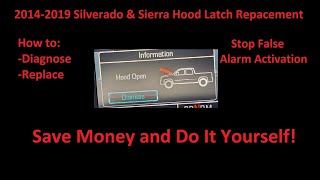
- Defective Hood Latch Sensor/Switch (Very Common) — The sensor integrated into the hood latch assembly breaks internally, gets stuck, or wears out due to engine heat 🎬 Watch: How to diagnose and replace the hood latch assembly., moisture, and dirt.
- Broken Wiring or Stretched Harness (Very Common) — Wires leading to the sensor fray or break. On 2010-2017 GM models (Equinox/Terrain), the factory harness lacks slack, causing wires to snap directly at the connector from engine vibration.
- Corroded or Loose Electrical Connector (Common) — Moisture and road grime cause corrosion on the connector pins, leading to high resistance. Engine vibrations also work the connector loose.
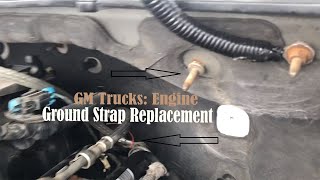
- Poor Body Ground Connection (Common) — GM Technical Service Bulletin PIT5576C identifies a loose body ground strap 🎬 See this guide on replacing ground straps for GM trucks. on trucks and SUVs as a primary cause. This creates voltage fluctuations and an intermittent 'Hood Ajar' message.
- Misaligned Hood Latch (Rare) — Physical misalignment from a minor collision prevents the hood from fully depressing the switch, sending a constant 'open' signal to the BCM.
- Rodent Damage to Wiring (Rare) — Rodents chew on soy-based automotive wiring insulation, causing an open or short circuit in the hood latch sensor wiring.
- Incorrect BCM Calibration (Very Rare) — GM TSB PI0818 notes this code appears after the BCM is reprogrammed with incorrect software. The fix is reverting to the factory calibration.
- Faulty Body Control Module (BCM) (Very Rare) — The BCM itself fails and cannot interpret the signal. Rule out the sensor, wiring, connector, and grounds entirely before considering this.
Symptoms

- Remote Start Disabled — The remote start system refuses to work. The BCM locks out this feature if it thinks the hood is open. 🎬 Watch: Fixing remote start issues caused by code B3006.
- 'Hood Open' Warning on Dashboard — A persistent 'Hood Ajar' or 'Hood Open' message displays on the driver information center, even when the hood is firmly latched.
- Car Alarm Malfunctions — The anti-theft alarm triggers randomly because the system incorrectly detects the hood opening while armed.
- Central Locking System Issues — The central locking system behaves erratically because its logic is tied to the hood status.
Diagnostic Flowchart

Tap your situation to follow the diagnostic path that matches what you're seeing on this code.
Common Fixes & Costs
- Replace Hood Latch Assembly with Integrated Sensor — Parts: $30-$120, Labor: $75-$150, ~1 hr book time (DIY)
- Repair Damaged Wiring / Replace Connector Pigtail — Parts: $15-$40, Labor: $100-$200, ~1.2 hr book time (Intermediate)
- Clean or Secure Main Body Ground Strap — Parts: $0-$20, Labor: $50-$100, ~0.3 hr book time (DIY)
- Adjust Hood and Latch Alignment — Parts: $0, Labor: $50-$100, ~0.5 hr book time (DIY)
- Replace Body Control Module (BCM) — Parts: $400-$800, Labor: $150-$300, ~2 hr book time (Professional)
Used vs. New Parts: Buying Guide
When a used part is worth it: A used hood latch assembly only makes sense for older vehicles where budget is the absolute primary concern. Because this part has a high failure rate, a used part carries significant risk.
Donor-vehicle mileage cap: roughly under 60000 miles for the part to have meaningful remaining life.
Donor quality checklist:
- Visually inspect for heavy corrosion or physical damage.
- Test the switch with a multimeter before purchase.
- Prioritize donors from dry, southern climates to avoid salt corrosion.
- Match the part number exactly, noting variants for remote start.
Decision logic:
- If Vehicle is under 10 years old or has less than 120K miles → Buy a new OEM or high-quality aftermarket part. The low cost justifies the reliability and warranty.
- If The failure is a broken wire at the connector → Repair the wiring with a new pigtail connector; do not replace the latch assembly.
- If Budget is extremely tight and the vehicle is over 150K miles → Buy a used part, but consider it a temporary fix.
Warranty tradeoff: Used parts have a 30-90 day warranty. Aftermarket new parts offer 1-year to limited lifetime warranties. OEM parts carry a 1-2 year warranty.
Worst-case if a used part fails: $100-$200 if a used part fails shortly after installation, requiring repeat labor and a new part.
What Happens If You Wait — Timeline
- 0-4 weeks: Remote start is disabled. The 'Hood Ajar' message appears intermittently. The security system fails to arm correctly. (MPG impact: 0%% · Added cost: $0)
- 1-3 months: If the fault is a short-to-ground, a minor parasitic battery drain begins. (MPG impact: 0%% · Added cost: $0-$10)
- 3-6 months: The parasitic draw weakens the battery, leading to slower engine cranking and a potential no-start situation. (MPG impact: 0%% · Added cost: $150-$250 (Cost for a new battery).)
- 6+ months: The original failure point is exposed to the elements, causing corrosion to travel up the copper wire, making a simple pigtail repair impossible. (MPG impact: 0%% · Added cost: $250-$400 (Cost of battery, towing, and complex diagnostic time).)
Cost of Not Fixing It
- Immediate: Loss of remote start and vehicle security alarm system. A persistent 'Hood Ajar' message displays on the dashboard. (Added cost: $0)
- 1-3 months: An intermittent short creates a parasitic battery drain, weakening the battery over time and causing a no-start situation. (Added cost: $150-$250 (Cost of a new battery).)
- 6+ months: The failed sensor or wiring degrades further due to engine bay heat and moisture, making the eventual repair more difficult and increasing the risk of being stranded. (Added cost: $250-$400 (Cost of battery, towing, and advanced diagnostic charges).)
Diagnosis Steps
- Visual Inspection & Wiggle Test
Open the hood and inspect the sensor's wiring harness for breaks or chafing. Connect a scan tool displaying BCM live data. Gently wiggle the wiring harness directly at the back of the hood latch connector. If the 'Open/Closed' status flickers on the scanner, you have confirmed an internal wire break at the connector.
Tools: Flashlight, OBD-II Scanner (with BCM live data) (Beginner) - Check for Proper Latch Operation
With the hood open, use a screwdriver to manually click the latch mechanism to its fully closed position. If the 'Hood Open' message on the dashboard disappears, the switch is functional, and the problem is physical hood misalignment.
Tools: Screwdriver (Beginner) - Inspect the Main Body Ground (GM Trucks/SUVs)
Per GM TSB PIT5576C, a flickering 'Hood Ajar' message is caused by a poor main body ground. Locate the braided ground strap running from the cylinder head to the firewall. Remove the bolt, clean the contact surfaces with a wire brush, and re-secure it tightly.
Tools: Socket set, wire brush (Intermediate) - Scan Tool Data Verification
Monitor the 'Hood Ajar Switch' parameter in the BCM live data stream. The status must toggle clearly between 'Open' and 'Closed' as you manually operate the latch. If it remains stuck, the fault is in the sensor or circuit.
Tools: OBD-II Scanner (with BCM live data) (Intermediate) - Test the Connector for Reference Voltage
Disconnect the hood latch sensor connector. Turn the ignition ON. Probe the signal wire terminal on the harness side with a multimeter set to DC volts. You must see battery voltage (>11.5V). Missing voltage indicates an open or short to ground in the wiring.
Tools: Multimeter (Intermediate) - Test the Sensor's Internal Resistance
With the connector unplugged, set a multimeter to Ohms (Ω). Test resistance across the sensor's pins while manually operating the latch. A functional switch changes between infinite resistance ('OL') and very low resistance (< 10 ohms). If it stays at 'OL', replace the latch assembly.
Tools: Multimeter (Advanced) - Ground Circuit Voltage Drop Test
Reconnect the sensor. Set the multimeter to a low DC voltage scale. Back-probe the ground pin on the harness connector with the red lead, and touch the black lead to the negative battery terminal. With the ignition on, a reading higher than 0.1V indicates excessive resistance in the ground circuit.
Tools: Multimeter, Back-probe pins (Advanced)
When This Code Triggers (Freeze-Frame Conditions)
- Fault Type: Open Circuit / Short to Ground (The BCM sets this code upon detecting an electrical fault. The BCM continuously monitors the hood switch circuit for expected voltage.)
- Signal Circuit Voltage: 0V (expecting >11V) or >11V (expecting <1V) (The code triggers instantly when the BCM reads a voltage illogical for the switch's commanded state, such as 0V when it expects battery voltage.)
- Fault Sub-type: B3006 01, B3006 04, B3006 5A (Sub-codes specify the exact electrical condition: '01' for a short to battery, '04' for an open circuit, or '5A' for a plausibility failure (erratic signal).)
- Ignition Status: ON (Run) (The BCM must be powered on to monitor the circuit and set the fault code. The engine does not need to be running.)
Related Codes
- B3006 01 — Indicates a 'Short to Battery'. A multimeter on the signal wire shows constant battery voltage, indicating a short to a power source.
- B3006 04 — Indicates an 'Open Circuit'. Caused by a broken wire, unplugged connector, or internally failed sensor. The signal wire shows no voltage.
- B3006 5A — Indicates a 'Plausibility Failure'. The BCM receives illogical signals, often linked to the grounding issue in GM trucks (TSB PIT5576C).
- U1501 — A LIN Bus communication code that appears with B3006 on GM vehicles. Fix the B3006 first, as the wiring issue disrupts the communication bus.
Climate & Environmental Factors
- Cold Weather / Ice: Moisture inside the latch mechanism freezes, causing the switch to stick and creating intermittent failures in winter.
- Humidity and Moisture: High humidity and car washes introduce moisture into the unsealed sensor or connector, causing corrosion and short circuits.
- Road Salt (Winter Climates): Corrosive salt spray accelerates the deterioration of the latch mechanism, internal sensor components, and electrical wiring.
How to Talk to a Mechanic About This Code
Say this: "Hi, I have a B3006 code on my vehicle and the remote start stopped working. I'd like to book a diagnostic appointment. Based on my research, the issue is likely the hood latch sensor, the wiring pigtail, or a ground. Please test those specific components before recommending a BCM replacement."
This signals that you are an informed consumer. It directs the shop to the most probable, cheapest fixes first and preemptively guards against a costly BCM misdiagnosis.
Avoid saying:
- My remote start isn't working.
- My car is acting weird, can you look at it?
- Just fix whatever's wrong.
- The alarm keeps going off for no reason.
Questions to ask before authorizing the repair:
- What were the results of the electrical tests on the sensor and wiring? Was there correct voltage and ground?
- Did you perform a 'wiggle test' on the harness at the connector to check for an internal break?
- If you are recommending a new latch, can you confirm the old sensor failed a resistance test?
- Did you check the main body ground strap for tightness and corrosion per the GM TSB?
- Can you show me the broken part or the bad reading on the multimeter?
Where to Take It: Dealer vs Independent vs Chain
- Dealer:
Recommended only if the vehicle is under warranty. For an out-of-warranty B3006, a dealer is unnecessarily expensive for a well-understood problem.
Best for: Vehicles still under the bumper-to-bumper warranty., Very new models where TSBs aren't widely available yet., Cases where a previous independent shop failed to diagnose the issue.
Downsides: Highest labor rates, typically 1.5-2x an independent shop., More likely to replace a whole assembly rather than attempt a wiring repair. (Typical cost: +50% vs. baseline) - Independent Shop:
Best fit. A reputable independent mechanic possesses the necessary diagnostic tools and offers cost-effective solutions like a wiring pigtail repair.
Best for: Out-of-warranty vehicles where cost is a factor., Common codes like B3006 with well-known fixes.
Downsides: Quality varies widely; vetting the shop through reviews and ASE certifications is crucial. (Typical cost: +0% vs. baseline) - Chain Shop:
Avoid for diagnosis. There is a high risk of misdiagnosis (e.g., blaming the battery) or unnecessary parts replacement.
Best for: Simple, routine maintenance like oil changes, tires, and battery replacement.
Downsides: Technician skill is highly variable and rarely specialized in electrical diagnostics., High pressure to meet sales targets leads to misdiagnosis., Lacks the specific scan tools to read BCM live data. (Typical cost: -10% vs. baseline)
When to Walk Away From the Repair
If the estimated repair cost exceeds 40-50% of the car's private-party value, evaluate carefully. However, for a low-cost repair like B3006, this rule rarely applies.
- Car worth $4000, fix is $250: Fix it. The repair cost is only ~6% of the car's value and restores important security features.
- Car worth $12000, fix is $250: Fix it. This is a minor and inexpensive repair relative to the vehicle's value.
- Car worth $1500, fix is $250: Borderline. The repair is ~17% of the car's value. If the car has other significant issues, ignore this fix. If reliable, the repair is worthwhile.
What Scan Tool You Need for This Code

Minimum: An OBD-II scanner that reads manufacturer-specific Body Control Module (BCM) codes and displays live data.
A cheap code reader only scans powertrain ('P') codes and cannot see the 'B3006' body code. Live data is essential for performing the 'wiggle test'.
Budget: BlueDriver Pro Scan Tool or Ancel BD310 (~$100) — Connects to a smartphone app, reads BCM codes, and displays live data. Sufficient to read B3006 and view the live 'Hood Ajar Switch' status.
Mid-range: Innova 5610 or Topdon ArtiDiag Pro (~$350) — Powerful handheld units offering full system diagnostics, BCM live data, and bidirectional controls. Provides comprehensive data for wider vehicle issues.
Professional: Autel MaxiCOM/MaxiSys series or Launch X431 series (~$500-1200) — Offers dealer-level diagnostics, BCM communication, and live data graphing. Overkill for B3006, but standard for professional shops.
Rent vs buy: Free scanner services at auto parts stores use basic readers that cannot access BCM codes. Buying a capable budget scanner costs less than a one-hour diagnostic fee at a shop.
How to Clear the Code After You Fix It
- Use an OBD-II scan tool to clear the code from the Body Control Module (BCM).
- Disconnect the battery for 30 minutes if a scan tool is unavailable, though this resets other vehicle settings.
- A history code clears itself after 40 ignition cycles without the fault recurring.
Drive cycle (~20 minutes): A specific drive cycle is not required to clear B3006. If the battery was disconnected, perform a standard GM drive cycle to run emissions readiness monitors: Cold start, idle 3 minutes with A/C on, accelerate to 55 mph and hold for 5 minutes, then coast to 20 mph without braking.
Readiness monitors affected: None directly by B3006., All monitors reset to 'Not Ready' if the battery is disconnected, causing an automatic emissions test failure.
Watch out for:
- Clearing the code without fixing the underlying electrical fault causes the code to return immediately.
- Disconnecting the battery to clear the code guarantees an emissions test failure until a full drive cycle completes.
Will This Fail Emissions / State Inspection?
No — by itself this code doesn't fail OBD inspection (but it can keep readiness monitors from setting, which causes a separate fail).
- California: B3006 does not cause a Smog Check failure. However, if the battery died due to a parasitic draw and was replaced, incomplete OBD-II readiness monitors result in an automatic failure.
- New York: NYS inspection ignores body codes like B3006. The vehicle passes as long as the Check Engine Light is off and readiness monitors are set.
- Texas: The OBD-II scan looks for P-codes and readiness monitor status. A B-code does not cause a failure.
Most Commonly Affected Vehicles
- Chevrolet Equinox (2010-2017) — The factory wiring harness is too short, causing wires to break at the connector. Different part numbers exist for models with and without remote start.
- Chevrolet Silverado 1500/2500HD/3500HD (2014-2019) — Prone to integrated latch sensor failure and the intermittent grounding issue described in GM TSB PIT5576C.
- GMC Sierra 1500/2500HD/3500HD (2014-2019) — Shares components with the Silverado, making it equally susceptible to sensor failure and grounding issues.
- GMC Terrain (2010-2017) — Platform sibling to the Equinox, suffering from the same stretched wiring harness design flaw.
- Buick Enclave (2008-2017) — Frequent reports of remote start failure linked directly to a faulty hood latch sensor.
- Cadillac Escalade (2015-2020) — The B3006 5A (Plausibility Failure) variant is common, often related to the ground strap issue in GM TSB PIT5576C.
- Ford F-150 (2021-2024) — Ford uses code B1175 for this identical issue. TSB 52468 suggests adjusting hood alignment before replacing the latch assembly.
- Toyota Tacoma (2016-2023) — Frequent 'Hood Ajar' warnings caused by a faulty switch integrated into the hood latch assembly.
Manufacturer-Specific Notes
- General Motors (Chevrolet, GMC, Buick, Cadillac): This code is extremely common on GM vehicles and almost exclusively points to the hood latch sensor circuit.
- SAAB: On models like the 9-4x (sharing a GM platform), B3006 is used for 'Hood Ajar Circuit' faults.
- Chevrolet / GMC: TSB PIT5576C was issued for 2014-2020 trucks because a poor body ground strap causes an intermittent B3006 5A code.
- Chevrolet: TSB PI0818 warns that a B3006 code immediately after BCM reprogramming on the 2012 Orlando is due to incorrect software, not failed parts.
- Ford: Ford logs this fault as code B1175. TSB 52468 recommends checking hood alignment before replacing parts.
- General Motors (All Brands): Despite high failure rates, there are no active safety recalls. Repairs are customer responsibility outside the bumper-to-bumper warranty.
Real Owner Stories
2013 Chevrolet Equinox at 110K miles
Remote start stopped working. Pressing the fob flashed the lights, but the engine wouldn't crank. No 'Hood Ajar' message appeared.
What they tried:
- Suspected a weak key fob battery, but other functions worked.
- A scan tool revealed code B3006 04 (open circuit).
- Wiggled the wire harness at the latch; the wires came apart in their hand.
Outcome: Repaired the broken wires using solder and heat-shrink tubing, adding slack. Remote start worked immediately.
Lesson: On an Equinox/Terrain, always perform the 'wiggle test' at the connector first. The factory harness is too tight and breaks internally.
2016 GMC Sierra 1500 with intermittent issues
The 'Hood Ajar' message flickered randomly, often when using power windows. Remote start worked intermittently.
What they tried:
- Replaced the entire hood latch assembly, but the problem persisted.
- A mechanic found no wiring issues.
- Found GM TSB PIT5576C online and located the braided ground strap.
Outcome: The ground strap bolt was slightly loose. Removed, cleaned, and re-tightened the bolt. The flickering message and remote start failure were completely resolved.
Lesson: If the 'Hood Ajar' message ties to the use of electrical accessories on a GM truck, investigate the main body ground strap before replacing parts.
2012 Chevy Equinox with Remote Start Failure
Remote start failed. A scan showed code B3006 with a 'short to battery' descriptor.
What they tried:
- A mechanic diagnosed a broken wire inside the harness near the hood latch connector.
Outcome: The mechanic wired in a new pigtail connector. The repair restored remote start functionality.
Lesson: Repairing the wiring with a new pigtail is a permanent fix that avoids replacing the entire latch assembly.
2023 Chevrolet Bolt EUV with 'Unable to Shift' message
The vehicle turned on but displayed 'Unable to Shift' and could not be turned off. B3006 was stored.
What they tried:
- Unable to resolve by turning the car on and off.
- Disconnected the 12V battery to reset the systems.
Outcome: Reconnecting the 12V battery made the vehicle drivable. The dealer confirmed B3006 but offered no explanation for the shifting symptom.
Lesson: On highly integrated EVs, a simple body code causes severe secondary symptoms. A 12V battery reset clears these complex electronic glitches.
How to Prevent This Code From Triggering
- Lubricate the hood latch mechanism. (Every oil change or twice a year.) — Keeps mechanical parts moving freely, preventing rust and binding that stresses the integrated plastic sensor switch. Use white lithium grease.
- Clean and apply dielectric grease to the sensor's electrical connector. (Once every 1-2 years.) — Seals the connection, preventing water intrusion and corrosion on the electrical pins that cause high resistance.
- Visually inspect the wiring harness near the latch. (During any under-hood service.) — Detects chafing, stretching, or rodent damage before the wire breaks completely.
- Wrap vulnerable sections of the wiring harness in high-temperature automotive cloth tape. (Once, as a proactive upgrade.) — Provides protection against abrasion and engine bay heat, which makes wire insulation brittle over time.
Frequently Asked Questions
Can I just bypass the hood latch sensor to fix my remote start?
While some people bypass the sensor by cutting wires and jumping the connector, it is strongly discouraged. This permanently tells the BCM the hood is closed, creating a significant safety hazard if remote start activates during under-hood maintenance. The proper fix is repairing the circuit or replacing the faulty component.
Why did my remote start stop working?
The remote start system performs safety checks before starting the engine. If the computer receives a 'hood open' signal (triggering B3006), it disables remote start to prevent the engine from starting unexpectedly. This protects anyone working in the engine bay.
My mechanic wants to replace the BCM. Could it be something simpler?
A faulty BCM is the least likely cause for a B3006 code. Before approving an expensive BCM replacement, ensure the mechanic thoroughly tests the hood latch sensor, wiring, connector, and main body ground strap. Replacing the sensor assembly or repairing a wire fixes over 95% of cases.
Can a B3006 code drain my battery?
Yes, if the fault is a short to ground, it creates a parasitic draw that slowly drains the battery. If you have a B3006 code and experience a dead battery after the car sits for a day or two, the issues are likely related.
My 'Hood Open' light flickers when I use my power windows. Is this related?
Yes, this is a classic symptom described in GM Technical Service Bulletin PIT5576C for trucks and SUVs. It points directly to a poor body ground connection. This causes electrical interference that makes the BCM think the hood status is changing.
The mechanic wants to replace the whole latch, but can't I just replace the sensor?
On the vast majority of modern vehicles, the sensor is manufactured as an integral part of the hood latch assembly. It is not sold as a separate, replaceable component. You must replace the entire latch mechanism to install a new sensor.
I'm buying a new hood latch for my Chevy Equinox. Is there anything I should know?
Yes, be very careful when ordering parts for the 2010-2017 generation. There are different part numbers for vehicles with factory remote start and those without. Ensure you purchase the exact part matching your vehicle's options.
Key Takeaways
- Code B3006 appears almost exclusively on General Motors vehicles, pointing directly to a failed hood latch sensor or broken wiring.
- A disabled remote start system is the primary symptom, as the BCM locks out this feature when it cannot verify the hood is closed.
- Replacing the entire hood latch assembly ($105–$270 total cost) is the most common fix because the internal sensor cannot be purchased separately.
- Perform a wiring 'wiggle test' at the latch connector and check the main body ground strap before buying parts, as broken wires account for over 30% of these failures.
Helpful Videos
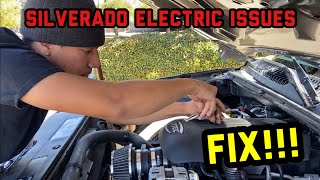

The information in this article is provided for general reference and educational purposes only. Vehicle specifications, procedures, and part compatibility can vary by production date, trim level, and region. Always consult your vehicle's factory service manual and verify part numbers before purchasing or performing repairs. Safety-critical components such as airbags, seat belts, and braking systems should be installed by a qualified professional.
- 🎬 Helpful Videos
- What Does B3006 Mean?
- Can I Drive With B3006?
- Common Causes
- Symptoms
- Diagnostic Flowchart
- Common Fixes & Costs
- Used vs. New Parts: Buying Guide
- What Happens If You Wait — Timeline
- Cost of Not Fixing It
- Diagnosis Steps
- When This Code Triggers (Freeze-Frame Conditions)
- Related Codes
- Climate & Environmental Factors
- How to Talk to a Mechanic About This Code
- Where to Take It: Dealer vs Independent vs Chain
- When to Walk Away From the Repair
- What Scan Tool You Need for This Code
- How to Clear the Code After You Fix It
- Will This Fail Emissions / State Inspection?
- Most Commonly Affected Vehicles
- Manufacturer-Specific Notes
- Real Owner Stories
- 2013 Chevrolet Equinox at 110K miles
- 2016 GMC Sierra 1500 with intermittent issues
- 2012 Chevy Equinox with Remote Start Failure
- 2023 Chevrolet Bolt EUV with 'Unable to Shift' message
- How to Prevent This Code From Triggering
- Frequently Asked Questions
- Can I just bypass the hood latch sensor to fix my remote start?
- Why did my remote start stop working?
- My mechanic wants to replace the BCM. Could it be something simpler?
- Can a B3006 code drain my battery?
- My 'Hood Open' light flickers when I use my power windows. Is this related?
- The mechanic wants to replace the whole latch, but can't I just replace the sensor?
- I'm buying a new hood latch for my Chevy Equinox. Is there anything I should know?
- Key Takeaways
- 🎟️ Get 5% Off