

B3000 on 2014-2021 Mazda CX-5: Understanding This Uncommon Manufacturer Code
The code B3000 on a Mazda CX-5 is not a standard, well-documented fault. It is a manufacturer-reserved code indicating an internal error or communication failure in a control module. Professional diagnosis with an advanced scan tool is required to identify the specific module (like the Body Control Module or SRS unit) that is setting the code. This code is exceptionally rare on the CX-5, and most search results are incorrectly related to the old Mazda B3000 pickup truck.
- B3000 is not a standard code for a Mazda CX-5; it indicates a generic internal fault in an unspecified electronic module and is exceptionally rare.
- Do not confuse this code with information related to the old Mazda B3000 pickup truck, a mistake reinforced by some Mazda TSBs.
- Diagnosis is not possible with a basic code reader. A professional scan tool is needed to find out which module is responsible (likely the BCM, FBCM, RBCM, or SRS module).
- The most common fix is to replace the faulty module, which is expensive and absolutely requires programming by a dealer or qualified shop to work.
What's Unique About the 2014-2021 Mazda CX-5
A significant point of confusion is the existence of the Mazda B3000, a pickup truck that was a rebadged Ford Ranger. Many search results for 'Mazda B3000 code' refer to this truck model, not the trouble code B3000 in a modern vehicle like the CX-5. Mazda's own Technical Service Bulletins, such as MT-002-21 and MT-002-21a, explicitly reference the 'B3000 truck' when discussing topics like fuel compatibility, which further cements this common mix-up. For the CX-5 platform, this code appears to be exceptionally rare, with no common pattern of failure or repair documented in enthusiast forums or technical service bulletins.
Diagnostic Flowchart
Tap your situation to follow the diagnostic path that matches what you're seeing on this vehicle.
Generation note: The 2014-2021 range covers the end of the first generation (KE, 2013-2016) and the beginning of the second generation (KF, 2017-present). However, due to the generic nature of this code and lack of specific reports, no generation-specific differences for a B3000 fault are documented. Failures of the underlying modules (BCM, SRS) are reported across both generations.
Symptoms You May Notice
- A warning light on the dashboard, such as the airbag light, ABS light, or a general 'service required' or 'In-Vehicle Network Malfunction' message. The specific light depends on which module is setting the code.
- Erratic or non-functional electrical components like power windows, door locks, interior/exterior lights, or windshield wipers.
- Keyless entry remote failing to lock or unlock the doors.
- Parasitic battery drain, causing the battery to go dead overnight or after a few days of not being driven.
- The vehicle may fail to start or crank, potentially with a flashing security indicator light.
- Searching for fixes related to the Mazda B3000 pickup truck.
- Replacing parts related to a system (e.g., an airbag sensor) without first confirming the SRS control module itself is the source of the B3000 code.
- Replacing the battery to fix a parasitic drain without first diagnosing the BCM as the root cause of the drain.
Most Likely Causes
- Internal Control Module Failure (BCM, SRS, etc.) 🔴 High Probability This is the general definition of a B3000-range code. While the code itself is not common on the CX-5, failures of the Body Control Module (BCM), Front BCM (FBCM), and Rear BCM (RBCM) are reported by owners, leading to widespread electrical issues. Water ingress is a known cause for module failure.
How to confirm: Use a high-level scan tool to communicate with individual modules. The module that stores the B3000 code and fails communication tests (often showing 'U' codes like U0140) or self-checks is the likely culprit.
Typical fix: Replacement and reprogramming of the faulty control module (e.g., Body Control Module, SRS Module). Reprogramming by a Mazda dealer or specialist is mandatory.
Est. part cost: $300-$1200 - Module Power or Ground Circuit Issue 🟡 Medium Probability Voltage supply issues or poor ground connections can cause modules to reset unexpectedly and log internal fault codes. Corrosion on connectors, especially on modules exposed to the elements like the Rear BCM, can interrupt power or communication.
How to confirm: Identify the module that set the code. Using a wiring diagram, check for stable battery voltage and a clean, tight ground connection at the module's electrical connector with a multimeter.
Typical fix: Repairing the wiring harness, cleaning ground points, or cleaning/replacing a corroded connector.
Est. part cost: $5-$50 - CAN Bus Communication Failure ⚪ Low Probability If a module cannot communicate with other essential modules on the vehicle's network, it may set a fault code. This can be caused by a wiring short or an open circuit in the CAN harness.
How to confirm: Perform a network test with an advanced scan tool. Check for communication errors ('U' codes) with other modules. An oscilloscope can be used to check the CAN bus signal at the affected module.
Typical fix: Repairing the CAN bus wiring harness, which may be shorted or broken.
Est. part cost: $10-$100
Rare But Worth Checking
- Immobilizer System Fault:
Diagnosis Steps
- Connect an advanced, bi-directional scan tool capable of communicating with all vehicle modules (BCM, PCM, SRS, etc.).
- Perform a full vehicle network scan to see which specific module has stored the B3000 fault code.
- Once the module is identified (e.g., Body Control Module), attempt to retrieve any other codes, especially 'U' series communication codes, from that specific module.
- Check the power and ground connections going to the identified module using a multimeter and wiring diagram.
- Inspect the module's connectors for corrosion, moisture, or damage. Water ingress is a known failure point for some modules.
- If power, ground, and connectors are good, perform a parasitic draw test on the battery if battery drain is a symptom. Isolate circuits by pulling fuses to pinpoint the source, which may lead back to the faulty module.
- If no external issues are found, the fault is likely internal to the control module, requiring replacement and mandatory programming by a dealer or qualified specialist.
Parts You'll Likely Need
- Front Body Control Module (FBCM)
(OEM #KD45-67-5X0D, KD45-67-5X0C, KD45-67-5X0A)— The BCM/FBCM is the most likely culprit for a generic internal module fault code, as it controls numerous electrical systems. Failures are reported by owners, causing a wide range of symptoms.
Trusted brands: Mazda (OEM)
OEM price range: $400-$1200
Aftermarket price range: $250-$800 - SRS Airbag Control Module
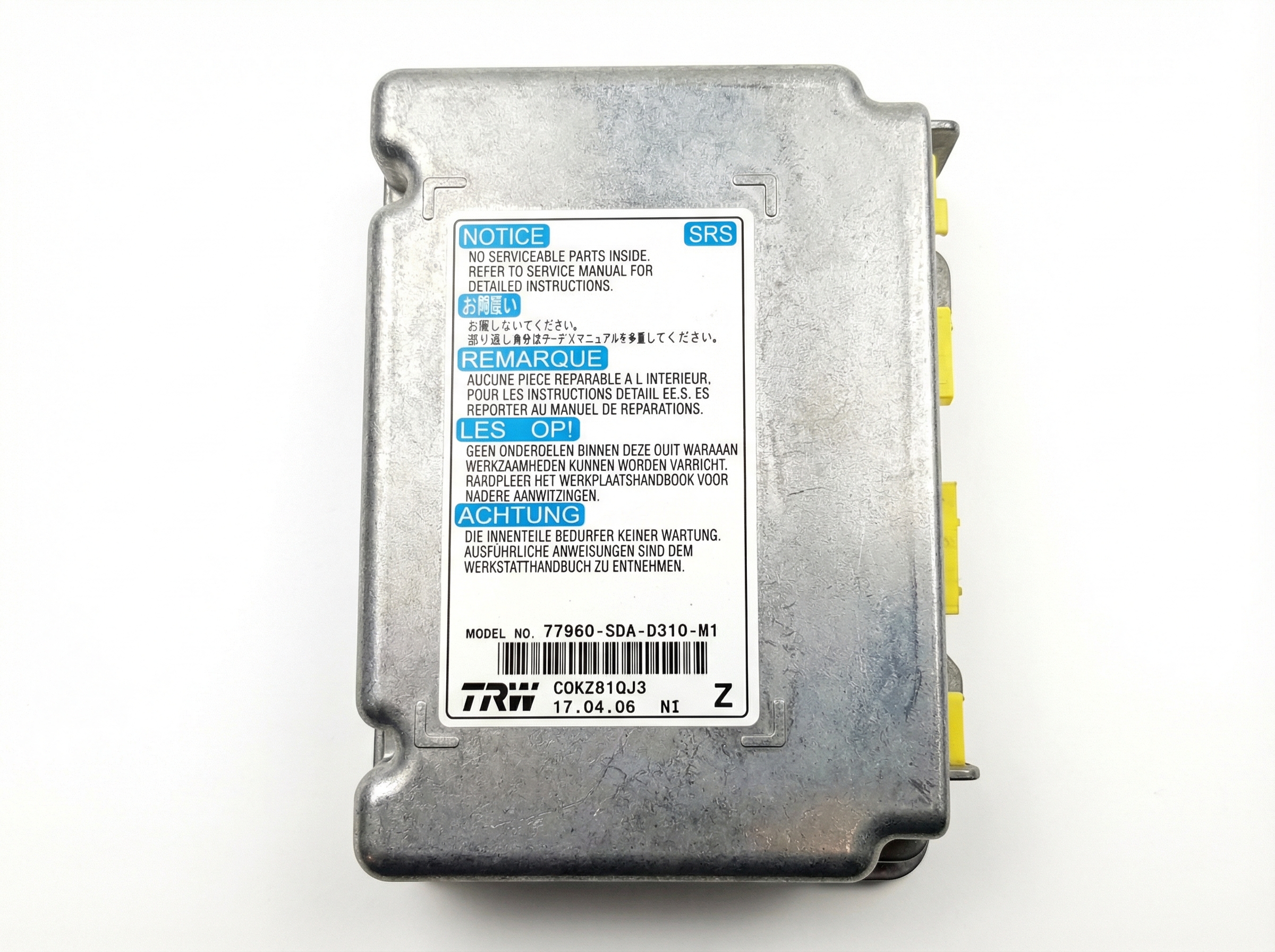
(OEM #KA0G-57-K30)— If the airbag warning light is on and a B3000 code is stored in the SRS system, the module itself may have an internal fault.
Trusted brands: Mazda (OEM)
OEM price range: $300-$700
Aftermarket price range: N/A (Reset services available for ~$50)
Related Codes That Often Appear With This One
- U0140 - Lost Communication With Body Control Module
Technical Service Bulletins (TSBs) & Recalls
- MT-002-21 / MT-002-21a: This Mazda technical tip discusses gasoline and ethanol compatibility. It is frequently confused in search results but is relevant here because it explicitly mentions the '1999-2001 B3000 truck', helping to prove the common mix-up between the trouble code and the vehicle model.
Platform-Specific Known Issues
- Rear BCM Failure Due to Water Ingress: A documented case on a 2013 CX-5 showed that water leaking from a faulty rear camera seal 🎬 See how to prevent water damage from leaky rear lights traveled down the wiring loom and caused the Rear Body Control Module (RBCM) to shut down systems progressively, including the camera, rear wiper, parking sensors, and tailgate. The fix was replacing the camera and loom section. This highlights how an external fault can lead to a module failure.
- RBCM Damage from Cargo Light Replacement: An owner reported that shorting the cargo area light while replacing the bulb damaged the Rear Body Control Module (RBCM) because the circuit is not protected by a separate fuse. Mazda apparently issued a service memo on this issue, stating the only repair is to replace the RBCM, which requires dealer programming.
Mechanic-Grade Diagnostic Values
- Voltage at Start Stop Unit, Pin 2D (Pink Wire) — expected: Battery voltage when ignition is ON.. Failure: No voltage when ignition is ON suggests an internal BCM output failure, assuming the input fuse (HAZARD 25A) is good.
- FBCM/RBCM Terminal Voltages — expected: Varies by pin; must be compared against the Terminal Voltage Table in the official Mazda service manual.. Failure: Any deviation from the specified voltage requires inspection of the related component or wiring harness.
Hidden / Shadow Codes Worth Checking
- U3000:54: A specific fault code indicating an internal logic failure within the Blind Spot Monitoring (BSM) control module, which causes the BSM OFF light to flash. (see via This code is stored in memory and can be read with the Mazda Modular Diagnostic System (M-MDS) or a compatible advanced OBD2 scanner.)
Scan Tool Commands That Help
- Mazda M-MDS: Configuration — This function is mandatory after replacing the BCM or RBCM. It writes the vehicle's specific configuration (As-Built data) to the new module to ensure all systems operate correctly.
- Mazda M-MDS: Immobilizer system-related part programming — Required after BCM replacement to program the vehicle's keys to the new module. The car will not start without this step.
- Advanced Bi-Directional Scanner: All Warning Lamps ON — Used to test the instrument cluster. This command illuminates every warning light on the dash, which helps verify the integrity of the bulbs and cluster circuits, and can identify a light that was intentionally removed to hide a fault.
- Advanced Bi-Directional Scanner: Gauge Sweep Test (Speedometer/Tachometer) — Used to test the functionality of the physical gauges in the instrument cluster. The scanner commands the needle to sweep through its range, confirming the stepper motor is working correctly.
Wiring & Ground Locations
- Front Body Control Module (FBCM/BCM) — Located in the driver's side footwell, behind the plastic scuff plate and side kick panel. It is often integrated with the interior fuse box.. This is the primary suspect for a B3000 code. Knowing its location is essential for checking connectors for corrosion and verifying power/ground signals.
- Rear Body Control Module (RBCM) — Located in the trunk area, behind the left-hand side trim panel.. This module can fail due to water ingress from the rear of the vehicle or from shorts in nearby circuits (like the cargo light), causing various electrical faults.
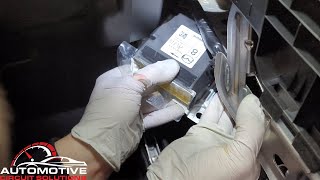
- SRS (Airbag) Control Module — Located under the center console, between the two front seats, typically bolted to the floor.. If the B3000 code is accompanied by an airbag light, this module is the likely source. Access requires removing the center console.
- Main Ground Points — Primary ground cables are bolted directly to the vehicle chassis in the engine compartment and to the engine block itself. Specific body ground points are detailed in service manual wiring diagrams.. A loose or corroded main ground can cause intermittent and widespread electronic issues, mimicking a module failure.
Real Owner Repair Stories
- ScannerDanner Forum (2018 Mazda CX-5) — No crank, no start. Some accessories were also not working.
❌ Tried (didn't work) Push button start was tested and confirmed good., Continuity of the wire from the Start Stop Unit to the BCM was checked and found to be intact.
✅ What actually fixed it Diagnosis confirmed the BCM was faulty. The technician measured the pink wire at pin 2D of the Start Stop unit, which should receive power from the BCM when the ignition is on, but it was dead. Power from the HAZARD 25A fuse was confirmed going *into* the BCM, proving the BCM itself was failing to send power out. The implied fix was BCM replacement. - YouTube (Abdullah Auto Electrician) (Mazda CX-5 (year not specified)) — No crank, no start. Scan tool showed loss of communication with the TCM and Instrument Cluster.
❌ Tried (didn't work) Initial scan showed multiple communication codes (U-codes), pointing away from a single component.
✅ What actually fixed it A wiring fault was found related to the BCM. A specific wire carrying the ignition 'ON' signal from the switch to the BCM was compromised. This single wire's signal is distributed by the BCM to the instrument cluster, TCM, and ECM. Repairing this input wire to the BCM restored communication and allowed the vehicle to start.
OEM Part Supersession History
KD45-67-5X0A, KD45-67-5X0B, KD45-67-5X0C→KD45-67-5X0D— Standard part revision and update by the manufacturer.
Heads up: While the new part number replaces the old ones, programming the module to the specific vehicle's VIN using Mazda's M-MDS software is mandatory for it to function. It is not a plug-and-play part.
Model Year Variations Within This Range
- 2017-2021 (KF Generation): The electrical wiring diagrams for the second generation (KF) are distinct from the first generation (KE). While the function of the BCM and other modules is similar, pinouts, connector locations, and wire colors may have changed, requiring the correct year-specific service information for accurate diagnosis.
Helpful Videos

We Have This Part in Stock





The information in this article is provided for general reference and educational purposes only. Vehicle specifications, procedures, and part compatibility can vary by production date, trim level, and region. Always consult your vehicle's factory service manual and verify part numbers before purchasing or performing repairs. Safety-critical components such as airbags, seat belts, and braking systems should be installed by a qualified professional.
- Mazda CX-5:
- 🎬 Helpful Videos
- 🛍️ Shop This Part
- What's Unique About the 2014-2021 Mazda CX-5
- Diagnostic Flowchart
- Symptoms You May Notice
- Most Likely Causes
- Rare But Worth Checking
- Diagnosis Steps
- Parts You'll Likely Need
- Related Codes That Often Appear With This One
- Technical Service Bulletins (TSBs) & Recalls
- Platform-Specific Known Issues
- Mechanic-Grade Diagnostic Values
- Hidden / Shadow Codes Worth Checking
- Scan Tool Commands That Help
- Wiring & Ground Locations
- Real Owner Repair Stories
- OEM Part Supersession History
- Model Year Variations Within This Range
- 🎟️ Get 5% Off