

OBD-II Code B2992: Vehicle Security, A/C, or Park Brake System Fault
What B2992 means, why it triggers, and how to fix it on your vehicle
- Code B2992 is manufacturer-specific: it causes a no-start on GM vehicles, disables A/C on Hondas, triggers a parking brake fault on Fords, and flags a dead SOS battery on Hyundais.
- On GM vehicles (2005-2010), B2992 indicates a Passlock security failure that immobilizes the engine until a 30-minute relearn procedure is performed or the ignition cylinder is replaced.
- For Honda Civics (2006-2012), this code disables the air conditioning due to a failed $80 thermal protector, which shops often misdiagnose as a $1,500 full compressor failure.
- Hyundai models (2018+) log B2992-15 when the e-Call backup battery dies; while the part costs under $100, dealer labor often exceeds $800 due to mandatory dashboard removal.
What Does B2992 Mean?

B2992 is a manufacturer-specific body code. On General Motors vehicles, it indicates a Passlock anti-theft system failure that disables the engine. On Hondas, it flags an open circuit in the A/C compressor's thermal protector, disabling cold air. On Fords, it signals an electronic parking brake (EPB) overload. On Hyundais, it means the emergency e-Call backup battery is dead.
Technical definition: B2992 indicates an open circuit or fault in a specific body control circuit. On GM vehicles, it is a fault within the Passlock security system's sensor circuit. On Honda vehicles, it is 'Open in Thermal Protector Circuit' for the A/C compressor. On Ford vehicles, it is 'Electric Park Brake Overload'. On Hyundai vehicles (often B2992-15), it indicates a failed e-Call emergency system backup battery.
Can I Drive With B2992?
Yes, But With Caution. This depends entirely on the vehicle. GM Passlock faults prevent the engine from starting, leaving you stranded. Honda A/C faults are perfectly safe to drive, but you lose air conditioning. Ford EPB faults are unsafe to drive because the parking brake can engage unexpectedly or fail to hold the car.
Common Causes

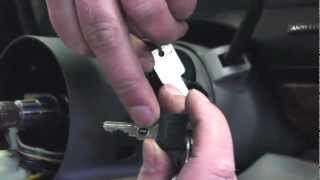
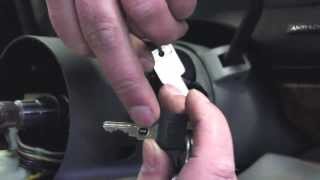
- Defective Ignition Lock Cylinder / Passlock Sensor (GM) (Very Common) — On GM vehicles, the Passlock sensor is integrated with the ignition lock cylinder. 🎬 Watch: How to replace the GM ignition lock cylinder assembly. Internal wear on the cylinder's contacts causes incorrect security readings, triggering an immediate engine fuel cut-off.
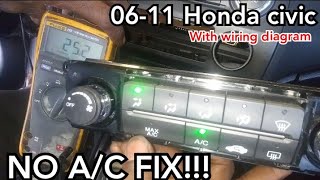
- Faulty A/C Compressor Thermal Protector (Honda) (Very Common) — The thermal protector is a small switch on the A/C compressor that fails permanently open after years of engine heat cycles. This prevents the A/C clutch from engaging.
- Failed e-Call Backup Battery (Hyundai) (Common) — Hyundai models trigger code B2992-15 when the small backup battery for the emergency SOS call system dies. This battery has a strict 3-year lifespan.
- Broken or Corroded Wiring Harness (Common) — A broken wire or corroded connector creates the open circuit. This frequently happens inside the Honda engine harness near the ignition coils, or in the GM steering column harness.
- Electronic Parking Brake (EPB) Overload (Ford) (Less Common) — Ford vehicles trigger this code when the electronic parking brake system draws too much current, usually due to a seized rear caliper motor or corroded wiring at the rear wheels.
- Failed A/C Compressor Clutch Coil (Honda) (Less Common) — The electromagnet that engages the A/C compressor clutch burns out. This prevents the compressor from turning on even if the thermal protector functions perfectly.
Symptoms

- Engine cranks but will not start (GM) — The engine cranks normally or fires for one second before shutting off. The Passlock system actively disables the fuel injectors.
- Flashing 'Security' light on dashboard (GM) — A blinking security light confirms the Passlock anti-theft system is triggered and the vehicle is in a mandatory 10-minute lockout period.
- A/C blows warm air (Honda) — The blower fan works, but the air from the vents is ambient temperature because the A/C compressor clutch refuses to engage.
- Red SOS or e-Call light illuminated (Hyundai) — A constant or flashing red light near the overhead SOS button indicates the emergency call system backup battery is dead.
- Electronic Parking Brake warning light (Ford) — A yellow or red parking brake malfunction message appears on the instrument cluster, and the brake refuses to apply or release.
Diagnostic Flowchart

Tap your situation to follow the diagnostic path that matches what you're seeing on this code.
Common Fixes & Costs
- Replace Ignition Lock Cylinder with Passlock Sensor (GM) — Parts: $60-$150, Labor: $100-$250, ~1.5 hr book time (Intermediate)
- Replace A/C Compressor Thermal Protector (Honda) — Parts: $40-$90, Labor: $100-$200, ~1.5 hr book time (Intermediate)
- Replace e-Call Backup Battery (Hyundai) — Parts: $70-$100, Labor: $500-$1000, ~5.0 hr book time (Professional)
- Repair or Replace Electronic Parking Brake Actuator (Ford) — Parts: $200-$400, Labor: $150-$300, ~1.8 hr book time (Professional)
- Replace A/C Compressor Assembly (Honda) — Parts: $600-$1000, Labor: $300-$500, ~3.5 hr book time (Professional)
Used vs. New Parts: Buying Guide
When a used part is worth it: Only for major mechanical assemblies like a Honda A/C compressor if budget is tight. Never buy a used GM ignition cylinder or Hyundai e-Call battery, as these fail due to age and wear.
Donor-vehicle mileage cap: roughly under 60000 miles for the part to have meaningful remaining life.
Donor quality checklist:
- For A/C compressors, ensure the system was sealed and the pulley spins freely.
- Match part numbers exactly.
Decision logic:
- If The part is electronic with a known wear-out failure (e.g., GM Passlock Sensor) → Buy new. A used part has unknown remaining life and will fail soon.
- If The part is a safety-critical battery (e.g., Hyundai e-Call) → Buy new OEM only. Do not consider used or aftermarket.
Warranty tradeoff: Used parts typically offer a 30-day warranty. New OEM parts carry a 12-month warranty, which is critical for labor-intensive jobs.
Worst-case if a used part fails: $1000 if a used A/C compressor fails, requiring repeat labor and a new part.
What Happens If You Wait — Timeline
- 0-3 months: Intermittent no-start occurs once every few weeks. A 10-minute wait for the security system to reset allows the car to start. (MPG impact: 0%% · Added cost: $0)
- 3-6 months: Frequent no-start. The failure occurs weekly. The 10-minute relearn procedure becomes a regular necessity. (MPG impact: 0%% · Added cost: $0)
- 6+ months: Hard failure. The Passlock sensor fails completely. The vehicle will not start under any circumstances. (MPG impact: 0%% · Added cost: $150 (Towing))
- 12+ months after bypass: If the thermal protector is bypassed and the system runs low on refrigerant, the compressor overheats and seizes. (MPG impact: 0%% · Added cost: $1500 (Compressor replacement and system flush))
Cost of Not Fixing It
- Immediate: GM: Vehicle will not start, leaving you stranded. Ford: Parking brake may fail to hold or engage while driving, creating a major safety hazard. (Added cost: $150 (Towing))
- 0-6 months: Honda: No air conditioning. If the thermal protector is bypassed as a cheap fix, the A/C compressor could overheat and seize. (Added cost: $1500 (A/C Compressor Replacement))
- 6+ months: Ford: Continued use with a faulty EPB causes excessive wear on rear brake pads and rotors due to dragging. (Added cost: $400 (Rear Brake Job))
Diagnosis Steps
- Identify Your Vehicle's System
Determine your manufacturer's specific definition for B2992. GM = Passlock Security. Honda = A/C Thermal Protector. Ford = Electronic Parking Brake. Hyundai = e-Call Battery.
Tools: OBD-II Scan Tool capable of reading BCM codes (Beginner) - GM: Attempt the 10-Minute Relearn Procedure
Turn the key to 'ON' (engine off). Wait exactly 10 minutes until the flashing security light turns solid or goes out. Turn the key 'OFF' for 20 seconds, then start the engine. If it starts, the ignition lock cylinder/sensor is failing and requires replacement.
Tools: Car Key, Stopwatch (Beginner) - Honda: Test the Thermal Protector (Jumper Test)
Disconnect the two-wire thermal protector connector on the A/C compressor. Insert a small jumper wire into the harness-side connector to bridge the two pins. Turn on the A/C. If the compressor clutch engages, the thermal protector is dead.
Tools: Jumper Wire (Intermediate) - Ford: Check EPB Actuators and Wiring
Inspect the wiring harnesses connecting to the rear electronic brake calipers. Look for green corrosion or broken wires. Use a bidirectional scan tool to command the EPB motors to extend and retract to isolate a dead motor.
Tools: Flashlight, Bidirectional Scan Tool (Intermediate) - GM: Measure Passlock Sensor Voltage Drop
Probe the yellow signal wire at the ignition lock cylinder. With the key ON, it should read 4.7-5.0V. Turn the key to CRANK; the voltage must drop to a specific value (e.g., 1.5V). If it stays at 5V or drops to 0V, the sensor is dead.
Tools: Multimeter, Back-probe Pins (Advanced) - Honda: Test Wiring Continuity to CCU
If the jumper test fails, check for a broken wire. Disconnect the harness at the Climate Control Unit (CCU) in the dash and at the compressor. Use a multimeter to test continuity on both wires end-to-end. Breaks commonly occur near the engine ignition coils.
Tools: Multimeter, Trim Removal Tools, Wiring Diagram (Advanced)
When This Code Triggers (Freeze-Frame Conditions)
- Vehicle System: Varies (GM, Honda, Ford, Hyundai) (Code B2992 is a body code, so freeze frame data is stored in the Body Control Module (BCM), not the engine computer.)
- GM Passlock: 0 RPM (Logged during a failed engine start attempt when the key is turned to the 'CRANK' position and the BCM cuts fuel.)
- Honda A/C: A/C Request ON (Logged when the climate control unit requests the A/C compressor to engage, but detects an open circuit from the thermal protector.)
Related Codes
- B2960 — Appears with B2992 on GM vehicles. B2992 means an open circuit (dead sensor), while B2960 means the BCM received a security signal, but the data was incorrect. Both require ignition cylinder replacement.
- B3031 — A GM code indicating the security system is in 'learn mode'. It appears after replacing the ignition cylinder and remains until the 30-minute relearn procedure is successfully completed.
- B2993 — Appears on Hondas alongside B2992. While B2992 means an open circuit, B2993 indicates a short or intermittent signal in the thermal protector circuit, pointing toward a wiring harness rub-through.
Climate & Environmental Factors
- High Ambient Heat: Accelerates the failure of the Honda A/C thermal protector. The switch is designed to trip during overheating, but constant heat cycles cause it to fail permanently open.
- Cold Weather: Exacerbates GM Passlock sensor issues. Thermal contraction affects the worn mechanical contacts inside the ignition cylinder, leading to intermittent no-start conditions on winter mornings.
- Road Salt and Moisture: Causes severe corrosion in Ford EPB wiring harnesses located at the rear wheels, creating the high resistance that triggers the overload code.
How to Talk to a Mechanic About This Code
Say this: "I have a B2992 code. For my GM, it's a no-start, please check the Passlock sensor. For my Honda, the A/C is out, please test the thermal protector for continuity before quoting a new compressor. For my Ford, please inspect the EPB actuator wiring. For my Hyundai, I need a quote for the e-Call backup battery replacement."
This proves you know the exact system the code refers to for your specific make, preventing shops from starting with broad diagnostics or immediately quoting a $1,500 A/C compressor for a Honda.
Avoid saying:
- 'My car won't start, fix whatever is wrong'
- 'My A/C is blowing warm, I probably need a new compressor'
Questions to ask before authorizing the repair:
- For GM: Did the 10-minute relearn procedure work temporarily?
- For Honda: Did you test the thermal protector's continuity? Will you replace just the protector, or do you insist on replacing the entire compressor?
- For Hyundai: Can you confirm the total labor hours required for the e-Call battery replacement?
Where to Take It: Dealer vs Independent vs Chain
- Dealer:
Best for: Hyundai e-Call battery replacement (due to extreme interior disassembly), Complex electronic diagnostics on newer Fords
Downsides: Highest labor rates, Will refuse to replace just the Honda thermal protector, insisting on a full compressor (Typical cost: +50% vs. baseline) - Independent Shop:
Best fit for GM and Honda failures. Independent shops are more willing to perform targeted, cost-effective component repairs rather than full assembly swaps.
Best for: GM Passlock ignition cylinder replacement, Honda A/C thermal protector replacement
Downsides: May lack the specific bidirectional scan tools for Ford EPB module programming (Typical cost: +0% vs. baseline) - Chain Shop:
Not Recommended. The diagnostic specificity required for B2992 across different makes is beyond the scope of most chain shops.
Downsides: High pressure to upsell, Likely to misdiagnose a manufacturer-specific B-code (Typical cost: -10% vs. baseline)
When to Walk Away From the Repair
If the estimated repair cost exceeds 40-50% of the car's Kelley Blue Book (KBB) private-party value, consider selling the car as-is.
- Car worth $3000, fix is $250: Fix it. A GM ignition cylinder repair is cheap and restores core function.
- Car worth $5000, fix is $2500: Walk away from that specific quote. A $2,500 A/C compressor quote on a Honda is 50% of the car's value. Find a shop willing to do the $200 thermal protector fix.
What Scan Tool You Need for This Code
Minimum: A scanner that can read manufacturer-specific Body Control Module (BCM) codes.
A basic $20 engine code reader will NOT see B2992. It only reads Powertrain (P) codes. You will plug it in, see 'No Codes Found,' and be unable to diagnose the problem.
Budget: BlueDriver Pro (~$100) — Reads and clears enhanced B-codes for GM, Ford, Honda, and Hyundai, and provides repair reports.
Mid-range: Foxwell NT510 Elite (~$150) — Provides full BCM diagnostics and adds bidirectional controls, which is critical for commanding Ford EPB motors on and off during testing.
Professional: Autel MaxiCOM MK808S (~$500) — Offers OEM-level bidirectional control and module programming required for complex Ford EPB module replacements.
Rent vs buy: Auto parts stores rent scanners, but you MUST verify their specific model reads BCM codes. Buying a budget pick like the BlueDriver is highly recommended for this code.
How to Clear the Code After You Fix It
- Use an OBD-II scan tool capable of reading BCM codes to clear the fault.
- For GM Passlock repairs, perform the mandatory 30-minute key relearn procedure (three 10-minute cycles).
- For Honda A/C repairs, turn the A/C to maximum cold to verify clutch engagement.
Drive cycle (~30 minutes): A standard drive cycle is not required to clear this Body code, but if the battery was disconnected during repair, drive 30 minutes at mixed speeds to reset emissions monitors.
Readiness monitors affected: B2992 does not directly affect emissions readiness monitors., Battery disconnection during repair will reset all monitors to 'Incomplete'.
Before emissions retest: drive at least 50 miles to fully set monitors.
Watch out for:
- Disconnecting the battery will not clear this code from the BCM's memory.
- Failing to complete the full 30-minute GM relearn procedure will result in a continued no-start condition.
Will This Fail Emissions / State Inspection?
No — by itself this code doesn't fail OBD inspection (but it can keep readiness monitors from setting, which causes a separate fail).
- General: As a Body (B) code, B2992 does not cause an emissions inspection failure. However, states with safety inspections will fail a Ford vehicle for an illuminated parking brake warning light.
Most Commonly Affected Vehicles
- Chevrolet Cobalt (2005-2010) — Notorious for Passlock anti-theft system failures related to the ignition lock cylinder.
- Honda Civic (Including Hybrid) (2006-2012) — Widely reported failures of the A/C compressor thermal protector (OEM part 38908-RNA-A01 or 38908-PRA-006).
- Pontiac G6 (2005-2010) — Shares the problematic GM Passlock ignition components with the Chevy Cobalt and Malibu.
- Ford Focus / C-MAX (2012-2018) — B2992 indicates an 'Electric Park Brake Overload' due to seized rear calipers or wiring faults.
- Hyundai Tucson / Kona (2018-2024) — Code B2992-15 points to a dead backup battery for the e-Call telematics system, requiring dashboard removal.
Manufacturer-Specific Notes
- General Motors: A highly common DIY fix involves cutting the Passlock sensor wires and soldering in a 2.2K ohm resistor. This permanently tricks the BCM into allowing the engine to start, but completely disables the factory anti-theft system.
- Honda: Many shops refuse to replace just the $80 thermal protector, insisting on a $1,500 full compressor replacement to avoid warranty liability. Bypassing the sensor with a wire is a common DIY fix, but risks compressor seizure if the system overheats.
- Hyundai: The e-Call backup battery is a scheduled maintenance item meant to be replaced every 3 years. However, engineers placed it deep behind the dashboard, turning a $70 battery swap into a $800+ labor charge.
Real Owner Stories
2007 Chevy Silverado with intermittent no-start
The truck occasionally failed to start, but worked after waiting 10 minutes. The problem became a weekly occurrence.
What they tried:
- Performed the 10-minute key relearn procedure to get home.
- Replaced the ignition lock cylinder with a cheap aftermarket part, which failed a month later.
Outcome: The owner replaced the cylinder again with a genuine GM OEM part and completed the 30-minute relearn. The truck started reliably afterward.
Lesson: An intermittent GM no-start that gets progressively worse points directly to a failing ignition lock cylinder. Avoid cheap aftermarket electronic sensors.
2012 Honda Civic Hybrid with no A/C
A/C stopped working. A shop diagnosed a bad thermal protector but quoted $3,000 to replace the entire compressor assembly.
What they tried:
- Declined the repair and researched DIY options.
- Located the two black wires for the thermal protector on the compressor and spliced them together to bypass the sensor.
Outcome: The A/C worked perfectly immediately. The owner accepted the small risk of compressor overheating to avoid a $3,000 bill.
Lesson: Shops often quote full compressor replacements for a B2992 code. A simple wire bypass is a highly effective, virtually free fix, though it carries a slight risk.
Hyundai Tucson with red SOS light on dash
A red 'SOS' light appeared on the overhead console. A scan tool revealed code B2992:15 for the e-Call backup battery.
What they tried:
- Bought the $70 OEM battery online.
- Attempted to install it, but realized the entire dashboard and center console had to be removed to access the telematics unit.
Outcome: The owner abandoned the DIY attempt and paid a dealer $850 in labor to install the $70 battery.
Lesson: Hyundai B2992-15 is a simple battery failure that requires highly complex interior disassembly. Budget for massive labor costs.
How to Prevent This Code From Triggering
- Avoid heavy keychains (GM) (Daily habit) — Excess weight on the ignition key accelerates wear on the internal mechanical contacts of the Passlock sensor, causing premature failure.
- Keep A/C system properly charged (Honda) (As needed) — Low refrigerant causes the compressor to overheat. Repeated overheating cycles cause the thermal protector to fail permanently open.
- Clean EPB actuator connectors (Ford) (Every 2-3 years) — Applying dielectric grease to the rear brake caliper electrical connectors prevents the corrosion that triggers EPB overload faults.
Frequently Asked Questions
Why does my car not start if B2992 is an A/C code?
It is not an A/C code on your car. On GM vehicles, B2992 is a security code. The anti-theft system prevents the engine from running because a faulty sensor makes it think the car is being stolen.
Can I bypass the GM Passlock sensor?
Yes, many owners solder a resistor matching their key's resistance value into the sensor wiring. This permanently fixes the no-start issue but completely disables the factory anti-theft system.
Is it safe to drive my Honda with code B2992?
Yes. The code only disables your air conditioning compressor. The engine, brakes, and safety systems function normally.
Why did a shop quote $3,000 to fix B2992 on my Honda?
They quoted a full A/C compressor replacement, which is standard practice for shops avoiding liability on hybrid models. The thermal protector itself costs under $100, but many shops refuse to replace just the sensor.
What is the B2992-15 code on my Hyundai?
It indicates the backup battery for your emergency SOS (e-Call) system is dead. The car drives normally, but the SOS feature will fail during a crash. Replacement requires expensive dashboard removal.
Key Takeaways
- Code B2992 is manufacturer-specific: it causes a no-start on GM vehicles, disables A/C on Hondas, triggers a parking brake fault on Fords, and flags a dead SOS battery on Hyundais.
- On GM vehicles (2005-2010), B2992 indicates a Passlock security failure that immobilizes the engine until a 30-minute relearn procedure is performed or the ignition cylinder is replaced.
- For Honda Civics (2006-2012), this code disables the air conditioning due to a failed $80 thermal protector, which shops often misdiagnose as a $1,500 full compressor failure.
- Hyundai models (2018+) log B2992-15 when the e-Call backup battery dies; while the part costs under $100, dealer labor often exceeds $800 due to mandatory dashboard removal.
Helpful Videos

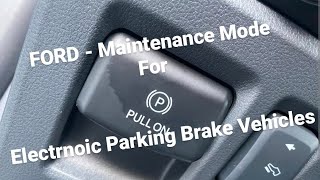

The information in this article is provided for general reference and educational purposes only. Vehicle specifications, procedures, and part compatibility can vary by production date, trim level, and region. Always consult your vehicle's factory service manual and verify part numbers before purchasing or performing repairs. Safety-critical components such as airbags, seat belts, and braking systems should be installed by a qualified professional.
- 🎬 Helpful Videos
- What Does B2992 Mean?
- Can I Drive With B2992?
- Common Causes
- Symptoms
- Diagnostic Flowchart
- Common Fixes & Costs
- Used vs. New Parts: Buying Guide
- What Happens If You Wait — Timeline
- Cost of Not Fixing It
- Diagnosis Steps
- When This Code Triggers (Freeze-Frame Conditions)
- Related Codes
- Climate & Environmental Factors
- How to Talk to a Mechanic About This Code
- Where to Take It: Dealer vs Independent vs Chain
- When to Walk Away From the Repair
- What Scan Tool You Need for This Code
- How to Clear the Code After You Fix It
- Will This Fail Emissions / State Inspection?
- Most Commonly Affected Vehicles
- Manufacturer-Specific Notes
- Real Owner Stories
- 2007 Chevy Silverado with intermittent no-start
- 2012 Honda Civic Hybrid with no A/C
- Hyundai Tucson with red SOS light on dash
- How to Prevent This Code From Triggering
- Frequently Asked Questions
- Why does my car not start if B2992 is an A/C code?
- Can I bypass the GM Passlock sensor?
- Is it safe to drive my Honda with code B2992?
- Why did a shop quote $3,000 to fix B2992 on my Honda?
- What is the B2992-15 code on my Hyundai?
- Key Takeaways
- 🎟️ Get 5% Off