

OBD-II Code B2965: Key in Ignition Switch Circuit Fault
What B2965 means, why it triggers, and how to fix it
- On General Motors vehicles, code B2965 indicates a failed Passlock sensor in the ignition lock cylinder, causing a start-and-stall condition and requiring a $220 to $550 replacement.
- For 2011-2017 Honda Odysseys and 2004-2008 Ford F-150s, B2965 is not an ignition issue; it flags a rear climate control communication failure or an audio system speaker fault, respectively.
- Before replacing any parts on a GM vehicle, attempt the 30-minute security relearn procedure (three 10-minute key cycles) to temporarily bypass the anti-theft lockout.
- Never replace a $450+ Body Control Module (BCM) without first using a multimeter to verify the 5V reference signal at the ignition switch, as wiring failures are far more common.
What Does B2965 Mean?

B2965 means the car's main computer, typically the Body Control Module (BCM), cannot detect if the key is physically inside the ignition. The computer requires this information to operate the anti-theft system and control features like the key-in-ignition warning chime.
Technical definition: The official SAE/OBD-II definition is "Key in Ignition Circuit Open". This indicates the Body Control Module (BCM) or Instrument Panel Cluster (IPC) lost the signal from the ignition lock cylinder's key presence switch. The BCM expects a low signal (ground) when the key is inserted and a high signal (5V or 12V) when removed. Code B2965 sets when the circuit remains high despite the key being inserted.
Can I Drive With B2965?
Yes, But With Caution. If the engine starts and runs, it is generally safe to drive. However, the primary risk is being stranded, as this fault causes a sudden no-start or start-and-stall condition without warning. On GM vehicles, repeated start-stall cycles prevent the vehicle from being driven but do not damage the engine. On affected Ford or Honda models, the risk is a loss of audio or climate control functions.
Common Causes

- Faulty Ignition Lock Cylinder or Switch (Very Common) — On General Motors models, the small electronic switch or Hall Effect sensor inside the ignition lock cylinder assembly fails. This is the definitive cause of a B2965 code in 80% of GM cases. 🎬 See how to replace a faulty GM ignition lock cylinder.
- Aftermarket Alarm or Remote Starter Interference (Common) — Improperly installed aftermarket accessories that tap into the ignition wiring interfere with the key detection circuit. Poorly crimped 'T-taps' loosen over time, creating an open circuit.
- Damaged Wiring or Loose Connectors (Common) — The wires leading from the ignition switch to the control module break, chafe, or short out within the steering column where they flex during tilt/telescope adjustments. Electrical plugs also loosen or corrode, interrupting the signal.
- Worn Ignition Lock Mechanics or Thickened Lubricant (Common) — Physical wear on the key blade, mechanical lock cylinder components, or thickened lubricant in cold weather prevents the key from fully engaging the electronic switch, causing an intermittent open circuit.
- Blown Fuse (Less Common) — A fuse protecting the key-in-ignition circuit, BCM, or IPC blows, cutting off power and preventing the signal from reaching the computer.
- Faulty Body Control Module (BCM) (Rare) — The control module itself, or its internal 5V reference power supply, fails. This is much less common than a bad switch or wiring and is only considered after ruling out all physical circuit faults.
Symptoms

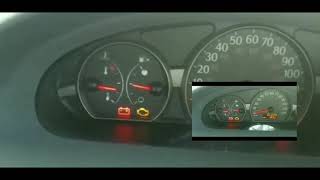
- Engine starts and immediately dies — This is the classic symptom on vehicles with a GM Passlock 🎬 Watch: Diagnosing a Chevy Malibu that starts then immediately dies. anti-theft system, which cuts fuel to the engine if it fails to verify the key.
- No-crank, no-start condition — The vehicle refuses to crank because the security system locks out the starter relay.
- Security light remains on or flashes — The 'Security' or key-symbol light on the dashboard illuminates or flashes, indicating an active anti-theft system fault.
- Key-in-ignition chime fails to sound — The warning chime that sounds when you open the door with the key in the ignition remains silent.
- Remote start and other electrical accessories fail — Features depending on the key's position, like remote start or power windows, cease to function.
- Radio or rear climate controls are inoperative — On specific makes like Ford, Honda, and Acura, this code signifies a fault in the audio or climate control systems, completely unrelated to the ignition.
Diagnostic Flowchart
Tap your situation to follow the diagnostic path that matches what you're seeing on this code.
Common Fixes & Costs
- Replace Ignition Lock Cylinder Assembly — Parts: $70-$250, Labor: $150-$300, ~1.5 hr book time (Professional)
- Repair Damaged Wiring or Connectors — Parts: $10-$30, Labor: $150-$350, ~2.5 hr book time (Intermediate)
- Replace Blown Fuse — Parts: $1-$10, Labor: $0-$30, ~0.1 hr book time (DIY)
- Replace/Repair Audio Control Module or Amplifier (Ford) — Parts: $150-$600, Labor: $100-$250, ~1.5 hr book time (Intermediate)
- Repair Rear Climate Control Unit Wiring/Ground (Honda) — Parts: $5-$20, Labor: $120-$240, ~2 hr book time (Intermediate)
- Replace Body Control Module (BCM) — Parts: $450-$700, Labor: $150-$250, ~1.5 hr book time (Professional)
Used vs. New Parts: Buying Guide
When a used part is worth it: For the most common fix, the ignition lock cylinder, buying new is strongly recommended as it is a high-wear part. For a less common BCM failure, a used module from a low-mileage vehicle scrapped for non-electrical reasons is a cost-effective option, but it MUST be reprogrammed.
Donor-vehicle mileage cap: roughly under 60000 miles for the part to have meaningful remaining life.
Donor quality checklist:
- Verify the used BCM part number matches the original exactly.
- Ensure you have access to a professional who can reprogram a used BCM to your vehicle's VIN, as many shops only program new modules.
- Avoid used ignition lock cylinders, as their remaining lifespan is unknown and the labor for replacement is significant.
Decision logic:
- If The failed part is the ignition lock cylinder → Buy a new OEM or high-quality aftermarket part. The savings on a used part are not worth the risk of premature failure and repeated labor costs.
- If The failed part is the BCM and the vehicle is high-mileage → A used BCM is a viable option only if your chosen repair shop guarantees they possess the specific bidirectional scan tool required to overwrite the donor VIN.
- If The part requires programming (like a BCM) → Factor in the cost of professional programming ($100-$250) when comparing used vs. new prices.
Warranty tradeoff: Used parts from a salvage yard typically have a 30-90 day warranty. New aftermarket parts often carry a 1-year to limited lifetime warranty. New OEM parts have a 1-year warranty.
Worst-case if a used part fails: $300-$500 if a used part fails after the warranty period, requiring a second repair (parts + labor).
What Happens If You Wait — Timeline
- 0-1 month: Intermittent failure. On GM cars, you experience a random no-start or start-stall once every few weeks, often in cold weather. The security light flashes. A key cycle or waiting a few minutes resolves it temporarily. For Ford/Honda, audio or climate control cuts out and returns. (MPG impact: 0%% · Added cost: $0)
- 1-3 months: Increased frequency. The no-start/stall condition on a GM vehicle happens weekly. The 10-minute relearn procedure is required to start the car. The risk of being stranded increases significantly. For Ford/Honda, the loss of function becomes more persistent. (MPG impact: 0%% · Added cost: $100-$300 in potential towing fees.)
- 3-6 months: Near-constant failure. The GM vehicle is unreliable, failing to start more often than not. The security relearn procedure stops working as the component fails completely. The car is undrivable. For Ford/Honda, the audio or climate control is permanently inoperative. (MPG impact: 0%% · Added cost: $250+ in cumulative towing and diagnostic fees when you finally have it repaired.)
- 6+ months: Complete hard failure. The ignition switch circuit is permanently open. The vehicle will not start under any circumstances. No amount of waiting or relearn procedures works. The only additional cost is the mounting frustration and the final, inevitable repair bill. (MPG impact: 0%% · Added cost: The final repair cost does not increase, but the vehicle is useless until the repair is performed.)
Cost of Not Fixing It
- Immediate: On GM vehicles, the primary risk is being stranded. The car starts and stalls, or fails to crank entirely, without warning. On Ford/Honda vehicles, the consequence is immediate loss of audio or rear climate control functions. (Added cost: $100-$300 for a potential tow.)
- 1-6 months: Continued intermittent starting issues become more frequent, increasing the likelihood of being stranded at an inconvenient time. No direct damage occurs to mechanical components like the engine or transmission. (Added cost: Increasingly high probability of towing costs and diagnostic fees when it finally fails completely.)
- 6+ months: Ignoring the fault leads to a completely unreliable vehicle (for GM) or a persistent loss of a major vehicle feature (Ford/Honda). The final repair cost remains the same, but towing fees accumulate. (Added cost: The final repair cost remains the same, but the accumulated cost of inconvenience and potential multiple tows is significant.)
Diagnosis Steps

- Verify the Functional Symptoms
Check if the key-in-ignition chime works when you open the driver's door with the key inserted. Note if the security light flashes. Confirming these symptoms validates the code's meaning for your specific vehicle (e.g., security vs. audio fault).
Tools: None (Beginner) - Scan for All Trouble Codes
Use a professional OBD-II scanner capable of reading Body (B) and Network (U) codes. Check for anti-theft codes (like B2960), BCM configuration codes (B1001), or communication codes (U-codes), which provide critical diagnostic context.
Tools: OBD-II Scanner (Professional) (Beginner) - Inspect Fuses
Locate the interior and under-hood fuse boxes. Check all fuses related to the Body Control Module (BCM), Instrument Panel Cluster (IPC), Ignition Switch, and on Ford/Honda, the Radio/Audio and HVAC systems.
Tools: Fuse puller or needle-nose pliers (Beginner) - Isolate Aftermarket Components
If aftermarket remote start or alarm systems are installed, they are the primary suspect. Professionally disconnect or bypass the system entirely and re-test. Improper T-taps and splices into ignition wires are a definitive cause of this fault.
Tools: Wire cutters/strippers, Electrical tape (Intermediate) - Perform a Visual Inspection and Wiggle Test
Visually inspect the wiring harness coming from the ignition lock cylinder down the steering column. Look for chafing or breaks. While monitoring the key-in-ignition status on a scan tool, gently wiggle the key and move the wiring harness. If the signal flickers, it confirms an intermittent connection.
Tools: Flashlight, OBD-II Scanner with live data (Intermediate) - Analyze Scan Tool Live Data (GM)
Using a capable scan tool, monitor the 'Passlock(TM) Data Voltage' PID. With the key out, it reads approximately 5.0V. When turning the key to CRANK, this value drops into the valid range (0.86V to 4.28V) and remains there in RUN. Also observe the 'Security Lamp State' PID to see what the BCM commands.
Tools: OBD-II Scanner with live data for BCM (Advanced) - Test the Key-In-Ignition Switch for Continuity
Disconnect the ignition switch connector. Using a multimeter set to continuity (beep mode), probe the terminals for the key-in-switch. The switch shows continuity (a beep) when the key is inserted and an open circuit (no beep) when removed. This confirms the mechanical switch function.
Tools: Multimeter, Vehicle-specific wiring diagram (Intermediate) - Measure Key-In-Switch Signal Voltage (GM)
For GM Passlock systems, back-probe the signal wire at the BCM. With the key out, you see a 5V reference signal from the BCM. When the key is inserted (and turned to RUN/CRANK), this voltage drops to a specific range (typically 0.86V to 4.28V). If the voltage stays at 5V or drops to 0V, the switch or wiring is faulty.
Tools: Multimeter, Back-probe kit, Wiring diagram (Advanced) - Measure Passlock Sensor Resistance (GM)
Disconnect the harness from the ignition lock cylinder. With the key in the RUN position, measure the resistance between the yellow signal wire and the black ground wire. The reading falls between 400 and 13,700 Ohms. An open circuit (infinite resistance) or a reading outside the expected range indicates a failed sensor.
Tools: Multimeter, Wiring diagram (Advanced) - Perform a Voltage Drop Test
If you suspect a wiring issue, perform a voltage drop test on the power and ground wires for the circuit. With the circuit active, place one multimeter lead at the power source and the other at the component's power wire. A reading above 0.5V indicates excessive resistance in the wire.
Tools: Multimeter (Advanced) - Diagnose Honda Rear Climate Control Circuit
For a Honda Odyssey with B2965, disconnect the rear A/C control unit. With the ignition ON, check for battery voltage between terminal 1 and a good body ground. With the ignition OFF, check for continuity to ground at terminal 3. Lack of voltage points to a fuse/power wire; lack of continuity points to a bad ground (G652 or G701).
Tools: Multimeter, Wiring diagram (Advanced)
When This Code Triggers (Freeze-Frame Conditions)
- Ignition Status: ON or CRANK (The fault is detected at the exact moment the key turns from OFF to ON or CRANK.)
- Key-In-Ignition Signal Voltage: High (5V or 12V) (The BCM/IPC sets the code when it sees a high voltage signal, indicating an open circuit, when it expects a low voltage (ground) signal because the key is present.)
- Time to Trigger: < 1 Second (The fault condition only needs to be present for a fraction of a second for the DTC to be stored.)
- System Voltage: 9-16V (The code sets as long as the BCM/IPC is powered and operating within its normal voltage range.)
Related Codes
- B2960 — Code B2960 ('Key Data Mismatch') frequently accompanies B2965 on GM vehicles. B2965 indicates the circuit is open (no signal), while B2960 means a signal was received, but its data (e.g., resistor value) was incorrect. If both are present, the fault is almost certainly in the ignition lock cylinder's Passlock sensor or its wiring. Diagnostically, B2965 points to a complete lack of signal, whereas B2960 points to a signal that is present but out of the expected range.
- B1001 — This code for 'Option Configuration Error' sets if the BCM is failing or has been replaced without proper programming. If you see B1001 with B2965, it suggests the BCM is the root cause, as it loses its configuration and misinterprets data from multiple sensors, including the ignition switch. A B2965 alone is more likely the switch; B2965 with B1001 points towards the BCM itself.
- U-codes (e.g., U0140) — Network communication codes ('U' codes) indicate a loss of communication between modules. If a U-code for the BCM (like U0140, Lost Communication With Body Control Module) is present with B2965, it points to a broader problem. The BCM is losing power or ground, or there is a fault on the vehicle's data bus wiring. This proves the B2965 is a symptom of a larger network failure, not just an isolated circuit fault.
- P0513 — This code means 'Invalid Immobilizer Key' and is typically found on newer vehicles with a transponder key system (like GM's Passkey III). While B2965 relates to the physical detection of the key in the lock, P0513 means the electronic chip in the key head was not read or recognized. Seeing B2965 on a Passlock system is a sensor issue; seeing P0513 on a transponder system is a key/chip issue.
Climate & Environmental Factors
- Cold Temperatures: Freezing temperatures thicken the lubricant inside the ignition lock cylinder, preventing the mechanical switch from making proper contact. Worn metal components also contract in the cold, creating an electrical open. Additionally, old wires become brittle and break when flexed, such as when tilting the steering wheel.
- High Humidity: In humid climates or areas with significant water ingress (leaky windshields, etc.), corrosion on electrical connectors for the ignition switch, BCM, or on Ford/Honda, the audio/climate modules, is highly likely. This corrosion creates resistance and causes an open circuit, triggering the code.
How to Talk to a Mechanic About This Code
Say this: "For a GM vehicle: "I have a [Your Vehicle Model] with a B2965 code and a start-and-stall symptom. I suspect a fault in the Passlock sensor circuit. Can you please test the ignition switch signal and wiring before recommending a BCM?" For a Ford/Honda: "My [Your Vehicle Model] has a B2965 code and the [audio/rear A/C] isn't working. I understand this is a known issue for this model. Can you diagnose the [audio/climate control] system for this specific body code?""
This signals that you understand the code has manufacturer-specific meanings and directs the technician to the exact circuit. It prevents them from wasting time on irrelevant diagnostics and discourages them from immediately suggesting an expensive BCM replacement on a GM without proper multimeter testing.
Avoid saying:
- 'Just fix whatever's wrong'
- 'My security light is on, can you look at it?' (too vague — invites upsell)
- 'Whatever you recommend'
Questions to ask before authorizing the repair:
- For GM: Did you test the Passlock sensor's voltage or resistance, and what were the exact readings?
- For GM: If you are replacing the ignition cylinder or BCM, does the estimate include the mandatory 30-minute security relearn procedure?
- For Ford/Honda: Have you confirmed power and ground at the affected module (Audio Control Module or Rear Climate Unit)?
- What is the warranty on the recommended parts and labor?
Where to Take It: Dealer vs Independent vs Chain
- Dealer:
Recommended for the less common Ford/Honda variants or if a BCM replacement is confirmed. For the common GM fault, a qualified independent shop is far more cost-effective.
Best for: Vehicles under warranty, Honda/Acura or Ford models, where the code has a manufacturer-specific meaning (climate/audio fault) that independent shops miss., Complex repairs requiring BCM replacement and VIN programming.
Downsides: Labor rates are typically 50% to 100% higher than independent shops., Technicians default to replacing entire assemblies when a simple wiring repair suffices. (Typical cost: +50% vs. baseline) - Independent Shop:
Best fit for the common GM Passlock failure. Choose a shop that specializes in electrical diagnostics to ensure they test the circuit correctly before replacing parts.
Best for: Out-of-warranty GM vehicles with the common start-and-stall issue., Owners looking for a better value and a direct relationship with the technician.
Downsides: Diagnostic quality varies; verify the shop has specific experience with GM Passlock systems or advanced electrical diagnostics., Often lack the specific diagnostic tools (like Honda HDS) for manufacturer-specific interpretations of the code. (Typical cost: +0% vs. baseline) - Chain Shop:
AVOID for this code. The diagnosis requires specialized electrical knowledge that is not the focus of chain shops. There is a high risk of misdiagnosis and unnecessary parts replacement.
Best for: Simple, unrelated maintenance like oil changes or tires.
Downsides: Technicians lack the specific expertise for electrical or security system diagnosis., Business model encourages upselling, which is highly risky for a nuanced code like B2965. (Typical cost: -10% vs. baseline)
When to Walk Away From the Repair
If the estimated repair cost exceeds 40-50% of the car's private-party value (from Kelley Blue Book), seriously consider selling or trading in the vehicle.
- Car worth $3000, fix is $450: Fix it. The repair cost for a common ignition cylinder replacement is well below the 50% threshold.
- Car worth $3500, fix is $1200: Borderline. If the diagnosis points to an expensive BCM replacement, the cost approaches the threshold. Get a second opinion before proceeding.
- Car worth $2000, fix is $1500: Walk away. It makes no financial sense to spend 75% of the car's value on this single repair.
What Scan Tool You Need for This Code
Minimum: A scanner that reads and clears Body Control Module (BCM) codes (B-codes) and displays live data from the BCM.
A basic $20 engine code reader cannot read B-codes like B2965. Proper diagnosis requires viewing live data from the BCM, such as 'Passlock Data Voltage' on GM vehicles, which requires a more capable scanner.
Budget: Autel MaxiAP AP200 or BlueDriver Pro (~$60-120) — These Bluetooth dongles connect to your smartphone, read BCM codes, and display live data streams essential for diagnosing the ignition switch signal on GM vehicles.
Mid-range: Foxwell NT510 Elite or Innova 5610 (~$150-350) — These handheld scanners offer full-system diagnostics, including BCM, ABS, and SRS. They provide robust live data graphing and bidirectional controls to test components, a significant step up for advanced DIY diagnosis.
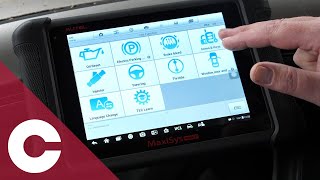
Professional: Autel MaxiCOM MK808S (~$450-600) — Provides comprehensive, dealer-level diagnostics for all vehicle modules. It reads/clears all codes, graphs extensive live data, and performs service functions like BCM programming and security relearns required after component replacement.
Rent vs buy: AutoZone offers a Loan-A-Tool program where you effectively borrow a scanner for free by paying a deposit. However, verify the rental model reads BCM codes, as their basic readers do not. Buying a budget pick like the Autel AP200 is the smartest investment for this specific code.
How to Clear the Code After You Fix It
- Use an OBD-II scan tool to clear the 'B' codes from the BCM.
- For GM vehicles, perform the security relearn procedure (10 or 30 minutes).
- Disconnecting the battery clears the code temporarily but fails to perform the necessary security relearn.
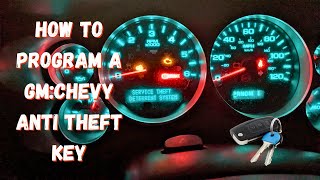
Drive cycle (~30 minutes): GM Passlock relearn: Turn the key to ON (engine off). Wait 10 minutes until the security light turns off. Turn the key OFF for 20 seconds. Repeat this exact cycle two more times (30 minutes total). The vehicle will start on the next attempt if the sensor is functional.
Readiness monitors affected: None
Watch out for:
- Simply clearing the code with a scanner fails to fix a GM vehicle; the security relearn procedure is mandatory after replacing the ignition cylinder or BCM.
- The code returns immediately if the underlying electrical fault (bad switch, broken wire) is not repaired.
- Body codes like B2965 do not affect emissions readiness monitors, so no special drive cycle is needed for smog test purposes.
Will This Fail Emissions / State Inspection?
No — by itself this code doesn't fail OBD inspection (but it can keep readiness monitors from setting, which causes a separate fail).
- California: This code will NOT fail the OBD-II portion of the smog check because it does not illuminate the Check Engine Light. However, an illuminated security light causes a failure during the visual/functional inspection at the discretion of the technician.
- New York: The NYS safety inspection checks for the proper operation of malfunction indicators. An illuminated security light is a direct reason for failure.
- Texas: In counties requiring inspection, the test includes checking for any illuminated warning lights. An active security light results in a safety inspection failure.
Most Commonly Affected Vehicles
- Chevrolet Malibu (1997-2005) — These models frequently use the GM Passlock II system, where the ignition cylinder's Hall Effect sensor is a very common failure point causing this code and a start/stall condition. These years were also included in GM recall 14350 for unintended key rotation.
- Chevrolet Cavalier (2000-2005) — Highly susceptible to an open in the key-in-ignition signal circuit, which is monitored by the BCM to control the warning chimes and security system.
- Pontiac Grand Am (1999-2005) — Often experiences a no-start or start-and-stall condition from a B2965 code due to a failed Passlock sensor in the ignition housing. The issue is widely documented for this model range and is covered under GM recall 14350.
- Pontiac Sunfire (2000-2005) — The Body Control Module (BCM) in these cars is known to set this code when the key-in-ignition switch fails, leading to security system activation.
- Saturn Ion (2003-2007) — Prone to intermittent no-crank/no-start conditions, especially in cold weather. TSB 06-02-35-017 addresses this issue, often setting B2960 alongside B2965, and advises replacing the ignition switch.
- Hummer H3 (2006-2010) — Shares the GM security system architecture, making it susceptible to this key-in-ignition circuit fault, which is monitored by the Instrument Panel Cluster (IPC) on this model.
- Saab 9-7x (2005-2009) — As this model is built on a GM platform (GMT360), it shares the same BCM and Passlock security system vulnerabilities that lead to a B2965 code.
- Ford F-150 (2004-2008) — On these Ford models, B2965 indicates an 'Audio System Speaker Circuit Fault'. It is diagnosed through the radio's self-test mode (holding presets 3 & 6). For 2022-2023 models, check TSB 23-2116 for water leaking onto the Audio Control Module (ACM).
- Honda Odyssey (2011-2017) — For this specific vehicle, B2965 indicates a "Rear Communication Failure" with the rear climate control unit, not a key-related issue. Diagnosis involves checking wiring and grounds between the main and rear climate units using the Honda Diagnostic System (HDS).
Manufacturer-Specific Notes
- General Motors (Chevrolet, Pontiac, Saturn, etc.): Code B2965 exclusively flags failures within the Passlock I or Passlock II anti-theft systems on GM platforms. A start-and-stall symptom is the biggest clue. A temporary fix is often achieved by performing a '10-minute' or '30-minute relearn procedure' to reset the security system. Many affected vehicles, including the 1997-2005 Malibu and 1999-2005 Grand Am, were part of NHTSA recall 14V400000 (GM #14350) for unintended ignition key rotation from heavy keychains, which causes a stall.
- Honda / Acura: On these brands, B2965 has a completely different meaning. It signifies a 'Climate Control Unit Lost Communication with Rear Climate Control Panel.' This fault affects the operation of the rear air conditioning and has nothing to do with the ignition key. Troubleshooting involves checking wiring, connectors, and grounds (like G506) between the main and rear climate units. On newer Odysseys (2018-2019), TSB A19022A addresses rear climate buttons being physically jammed by broken internal plastic tabs, a separate but related component issue.
- Ford: On many Ford vehicles, B2965 is not related to the ignition system but instead indicates an 'Audio System Speaker Circuit Fault'. This is typically retrieved using the audio unit's built-in self-diagnostic mode (often by holding preset buttons 3 and 6) and points to an open or shorted speaker, wiring, or a fault within the Audio Control Module (ACM) or amplifier.
- Aftermarket Installations: If the vehicle has an aftermarket remote starter, alarm system, or even a stereo, it is the first suspect. These systems are often spliced into the ignition harness. Poor quality splices (e.g., 'T-taps') corrode or loosen over time, creating an open circuit that triggers B2965. In some cases, the aftermarket module itself fails and interferes with the normal voltage on the key detection circuit.
Real Owner Stories
2001 Pontiac Grand Am - The Classic Start-and-Stall
Owner's daughter was in a drive-thru when the car started running rough and died. It cranked but refused to start. Codes pulled were for a misfire and B2965.
Outcome: The issue was compounded by a starter that failed during the diagnostic process. After replacing the starter, further diagnosis addressed the original no-start, which was likely related to the misfire codes (fuel or timing issues) present alongside the B2965.
Lesson: Never assume B2965 is the only problem. Other codes, like misfires, must be addressed. A start-and-stall puts extra strain on a weak starter, causing it to fail and complicating the diagnosis.
2006 Ford F-150 Lariat - The Misleading Audio Fault
The front speakers suddenly stopped working. The rear speakers worked fine. No recent modifications were made to the truck.
Outcome: The cause was identified as either an internal failure of the 6-disc head unit (Audio Control Module) or a wiring issue to the front speakers. The next step was accessing the speakers to test them individually before sending the head unit for repair.
Lesson: Always verify what a 'B' code means for your specific make and model. On many Fords, B2965 has nothing to do with the ignition and is purely an audio system fault.
2015 Honda Odyssey - The Confusing Rear A/C Problem
The rear air conditioning stopped blowing air, and front A/C modes malfunctioned. The issue appeared suddenly.
Outcome: The standard diagnostic procedure involves using a Honda Diagnostic System (HDS) to check for loose connections, damaged wiring, or a bad ground between the front and rear climate control units. The fix is repairing the wiring or replacing the faulty control unit.
Lesson: On Honda Odysseys (2011-2017), B2965 is a 'Rear Communication Failure' completely unrelated to the ignition key. Do not waste money on ignition parts; the problem is in the climate control system.
2002 Chevy Malibu - The Intermittent No-Start That Returned
Vehicle had an intermittent no-start condition with code B2965. A technician replaced the ignition switch and tumbler assembly.
Outcome: The same evening, the customer experienced the exact same no-start problem and the B2965 code returned. Performing the relearn procedure again temporarily fixed it, but the intermittent nature proved a wiring issue wasn't resolved by the part replacement.
Lesson: If a new ignition switch fails to permanently fix the problem, the root cause is an intermittent open or short in the wiring harness between the switch and the BCM. A 'wiggle test' on the harness is a mandatory diagnostic step.
How to Prevent This Code From Triggering
- Lighten Your Keychain (Daily habit) — Excessive weight hanging from the key puts constant strain on the internal components of the ignition lock cylinder and the electrical switch behind it. This accelerates wear and tear, leading to premature failure. This was a direct factor in a major GM recall.
- Use Dry Graphite Lubricant Sparingly (Once every few years or if key feels sticky) — A small puff of powdered graphite lubricant keeps the mechanical tumblers in the lock cylinder moving smoothly, preventing sticking that leads to forcing the key and damaging the internal switch. Do not use wet lubricants like WD-40, which gum up the works.
- Avoid Forcing the Key (Daily habit) — If the key is difficult to turn, it indicates wear in the lock cylinder or key. Forcing it breaks the delicate electronic components inside the ignition switch. Address a sticky lock immediately instead of using force.
- Ensure Professional Installation of Aftermarket Electronics (During installation) — Improperly spliced wires for remote starters or alarms are a major cause of ignition circuit faults. Ensure installers use soldered connections or high-quality connectors instead of simple 'T-taps' which loosen or corrode.
Frequently Asked Questions
What is the GM 10-minute relearn procedure and will it fix my car?
Turn the key to the 'ON' position (engine off) and wait exactly 10 minutes for the 'Security' light to turn off. Turn the key off for 20 seconds, then attempt to start the car. This provides a temporary bypass if the system is out of sync, but it does not repair a broken wire or faulty switch.
Can a bad key cause code B2965?
No. For systems that set this code (like GM Passlock), the fault lies in the sensor inside the ignition lock cylinder that detects the key's physical presence, not a chip inside the key itself. Replacing the key blade will not resolve the circuit error.
Why does my car start for a second and then shut off?
The anti-theft system allows the engine to crank and start, but when it fails to receive the correct key-in-ignition signal, it assumes a theft attempt. It immediately commands the Powertrain Control Module (PCM) to cut power to the fuel injectors.
What is a common misdiagnosis for B2965?
A frequent and expensive mistake is replacing the Body Control Module (BCM) when the actual failure is the much cheaper ignition switch or its wiring. Because the BCM reports the code, technicians incorrectly blame the computer. Always test the switch continuity and wiring harness first.
My car only has this problem when it's cold outside. What is it?
Cold weather thickens the old lubricant inside the ignition lock cylinder, preventing the small internal switch from making electrical contact. Worn metal components also contract in freezing temperatures, creating a physical gap that interrupts the circuit.
Can I just bypass the Passlock system to fix this?
While aftermarket resistor kits exist to bypass the system, the installation requires measuring the exact resistance value of your specific ignition cylinder and permanently splicing a resistor into the BCM wiring. Incorrect installation causes permanent BCM damage. Replacing the failed ignition cylinder is the safer, more reliable repair.
Will a new battery fix a B2965 code?
No. Code B2965 indicates a specific open circuit fault in the ignition switch wiring. While a severely depleted battery causes unpredictable electrical glitches, it cannot fix a physically broken wire or a failed Hall Effect sensor.
What does B2965 mean on a Ford F-150?
On a Ford F-150, B2965 means 'Audio System Speaker Circuit Fault' and has absolutely nothing to do with the ignition or security system. It indicates the radio head unit detected an open or shorted wire leading to one of the speakers.
Key Takeaways
- On General Motors vehicles, code B2965 indicates a failed Passlock sensor in the ignition lock cylinder, causing a start-and-stall condition and requiring a $220 to $550 replacement.
- For 2011-2017 Honda Odysseys and 2004-2008 Ford F-150s, B2965 is not an ignition issue; it flags a rear climate control communication failure or an audio system speaker fault, respectively.
- Before replacing any parts on a GM vehicle, attempt the 30-minute security relearn procedure (three 10-minute key cycles) to temporarily bypass the anti-theft lockout.
- Never replace a $450+ Body Control Module (BCM) without first using a multimeter to verify the 5V reference signal at the ignition switch, as wiring failures are far more common.
Helpful Videos

The information in this article is provided for general reference and educational purposes only. Vehicle specifications, procedures, and part compatibility can vary by production date, trim level, and region. Always consult your vehicle's factory service manual and verify part numbers before purchasing or performing repairs. Safety-critical components such as airbags, seat belts, and braking systems should be installed by a qualified professional.
- 🎬 Helpful Videos
- What Does B2965 Mean?
- Can I Drive With B2965?
- Common Causes
- Symptoms
- Diagnostic Flowchart
- Common Fixes & Costs
- Used vs. New Parts: Buying Guide
- What Happens If You Wait — Timeline
- Cost of Not Fixing It
- Diagnosis Steps
- When This Code Triggers (Freeze-Frame Conditions)
- Related Codes
- Climate & Environmental Factors
- How to Talk to a Mechanic About This Code
- Where to Take It: Dealer vs Independent vs Chain
- When to Walk Away From the Repair
- What Scan Tool You Need for This Code
- How to Clear the Code After You Fix It
- Will This Fail Emissions / State Inspection?
- Most Commonly Affected Vehicles
- Manufacturer-Specific Notes
- Real Owner Stories
- 2001 Pontiac Grand Am - The Classic Start-and-Stall
- 2006 Ford F-150 Lariat - The Misleading Audio Fault
- 2015 Honda Odyssey - The Confusing Rear A/C Problem
- 2002 Chevy Malibu - The Intermittent No-Start That Returned
- How to Prevent This Code From Triggering
- Frequently Asked Questions
- What is the GM 10-minute relearn procedure and will it fix my car?
- Can a bad key cause code B2965?
- Why does my car start for a second and then shut off?
- What is a common misdiagnosis for B2965?
- My car only has this problem when it's cold outside. What is it?
- Can I just bypass the Passlock system to fix this?
- Will a new battery fix a B2965 code?
- What does B2965 mean on a Ford F-150?
- Key Takeaways
- 🎟️ Get 5% Off