

OBD-II Code B2958: Security System Sensor Circuit High
What B2958 means, why it triggers, and how to fix it
- Code B2958 specifically targets a high-voltage short in the GM Passlock anti-theft system, which actively cuts fuel or disables the starter.
- Over 80% of B2958 faults stem from a failed Hall-effect sensor inside the ignition lock cylinder or chafed steering column wiring.
- Performing the 30-minute security relearn procedure temporarily bypasses the fault to get you home, but the underlying hardware issue requires a permanent fix.
- Installing a $50 aftermarket Passlock bypass module permanently resolves the starting issue by tricking the BCM, though it disables factory anti-theft protection.
What Does B2958 Mean?

The Body Control Module (BCM) is receiving a voltage signal from the anti-theft sensor that exceeds the normal range. The BCM interprets this as a theft attempt and activates the security light, disables the starter, or shuts off the fuel supply.
Technical definition: The formal SAE/OBD-II definition is 'Security System Sensor Data Circuit High'. This means the Body Control Module (BCM) detects a voltage from the vehicle's Passlock anti-theft system sensor (located in the ignition lock cylinder housing) greater than 4.9 volts. This condition must persist for at least one second for the code to set.
Can I Drive With B2958?
Yes, But With Caution. Yes, but you risk being stranded. This code indicates an anti-theft system fault that prevents the engine from starting. In rare cases, the fault occurs while driving, causing an unexpected engine stall and a significant safety hazard. Driving with this fault won't cause mechanical damage, but the unpredictable stalling makes it highly inadvisable.
Common Causes

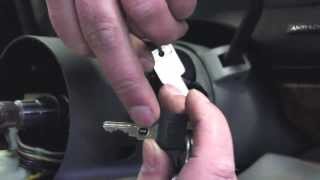
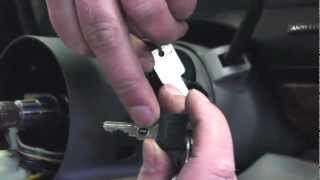
- Faulty Ignition Lock Cylinder / Passlock Sensor (Very Common) — The Hall-effect sensor inside the ignition lock housing fails or its internal wires break from years of key rotations, sending an incorrect high-voltage signal to the BCM. Heavy keychains accelerate this wear. 🎬 See how to replace a faulty GM ignition lock cylinder.
- Chafed or Broken Wiring in Steering Column (Common) — The thin wires running from the ignition lock cylinder down the steering column rub against the tilt mechanism, causing the yellow signal wire to short directly to a 12V power source.
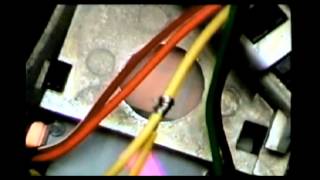
- Aftermarket Remote Starter or Alarm Interference (Common) — Improperly installed remote starters or alarms interfere with the security system's wiring. A faulty bypass module sends incorrect voltage back to the BCM, triggering the circuit high code. 🎬 Learn how to properly install or troubleshoot a bypass module.
- Defective Ignition Switch Electrical Contacts (Less Common) — Separate from the Passlock sensor, the main electrical switch connected to the lock cylinder develops bad internal contacts. This bleeds 12V power into the 5V Passlock sensor circuit.
- Failing Body Control Module (BCM) (Rare) — The BCM fails internally and misreads the sensor voltage. This is frequently misdiagnosed; the BCM is often unnecessarily replaced when the actual problem is a wiring short.
Symptoms

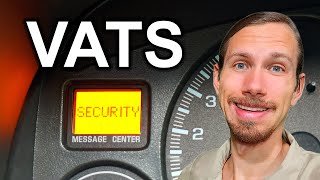
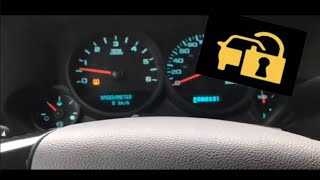
- Security Light is On or Flashing — The 'SECURITY' or padlock icon on the dashboard stays illuminated continuously or flashes rapidly.
- Engine Starts and Immediately Stalls — The engine fires up for one to two seconds and then dies. The BCM allows the initial start but immediately cuts fuel injector pulse due to the security fault.
- Engine Won't Start (No Crank) — Turning the key produces no response from the starter motor. The anti-theft system completely disables the starter circuit.
- Engine Stalls While Driving — The security system faults while the vehicle is in motion, causing the engine to shut off unexpectedly and resulting in a dangerous loss of power steering and brakes.
- Key is Difficult to Turn — The mechanical failure of the ignition lock cylinder that causes the electrical fault also makes the key physically difficult to insert, turn, or remove.
Diagnostic Flowchart

Tap your situation to follow the diagnostic path that matches what you're seeing on this code.
Common Fixes & Costs
- Replace Ignition Lock Cylinder Housing
— Parts: $70-$150, Labor: $150-$250, ~1.5 hr book time
(Intermediate)
Chevrolet Cobalt (2005-2010): OEM GM 15795321 (Alt: ACDelco D1462G, Dorman 924-702)
Chevrolet Malibu (2000-2012): OEM GM 25832354 (Alt: ACDelco D1462G, Dorman 924-713) - Install a Passlock Bypass Module
— Parts: $30-$80, Labor: $100-$150, ~1.0 hr book time
(DIY)
Universal for GM Passlock I/II: OEM N/A (Alt: Directed Electronics 556L, PAC Audio modules) - Repair Damaged Wiring Harness — Parts: $10-$50, Labor: $150-$450, ~2.5 hr book time (Professional)
- Replace Ignition Switch
— Parts: $40-$150, Labor: $100-$250, ~1.2 hr book time
(Intermediate)
Chevrolet Cobalt (2005-2010): OEM GM 84856306 (Alt: ACDelco D1440H, Standard Motor Products US-650) - Replace Body Control Module (BCM)
— Parts: $300-$700, Labor: $150-$300, ~2.0 hr book time
(Professional)
Chevrolet Cobalt (2007): OEM GM 15870601 (Alt: Cardone (Remanufactured))
DIY vs Professional
- Replace Ignition Lock Cylinder Housing — Beginner: No
- Install a Passlock Bypass Module — Beginner: Yes, with caution
- Repair Damaged Wiring Harness — Beginner: No
- Replace Body Control Module (BCM) — Beginner: No
Used vs. New Parts: Buying Guide
When a used part is worth it: For an older, high-mileage vehicle where budget is the primary concern, a used OEM ignition lock cylinder housing from a verified low-mileage donor is a viable option to avoid cheap aftermarket quality issues.
Donor-vehicle mileage cap: roughly under 70000 miles for the part to have meaningful remaining life.
Donor quality checklist:
- Verify the exact OEM part number matches; superseded numbers do not always interchange.
- Source the part from a vehicle scrapped for collision damage, not electrical issues.
- Demand a minimum 30-day functional warranty from the salvage yard.
Decision logic:
- If Vehicle is newer or has low mileage → Buy a new OEM or top-tier aftermarket part (e.g., ACDelco) for maximum reliability.
- If Budget is tight and you are doing the labor yourself → A used OEM part is a reasonable gamble over a poorly-reviewed aftermarket part.
- If You are paying a shop for labor → Buy a new part with a warranty. Paying labor twice for a failed used part negates any initial savings.
Warranty tradeoff: Used parts offer a 30-day warranty at best. New aftermarket parts include a 1-year warranty, while new OEM parts carry a 12-month manufacturer guarantee.
Worst-case if a used part fails: $200-$400
What Happens If You Wait — Timeline
- First Occurrence: Security light illuminates while driving. The BCM enters 'fail enable' mode, logging code B2958 but allowing the engine to run. The car restarts normally. (MPG impact: 0%% · Added cost: $0)
- 1-4 weeks: Intermittent no-start or 'start-and-stall' symptoms appear. The 10-minute relearn procedure temporarily resolves the issue, but it returns frequently. (MPG impact: 0%% · Added cost: $100-$250 (Emergency tow when relearn fails))
- 1-3 months: The fault becomes permanent. The relearn procedure no longer works. The vehicle is unreliable and stalls while driving. (MPG impact: 0%% · Added cost: $250-$600 (Multiple tows, secondary damage to starter/battery))
- 3+ months: The vehicle is completely undrivable. The owner faces expensive professional diagnosis and repair on top of all prior towing costs. (MPG impact: N/A% · Added cost: $500-$1200+ (Cost of correct diagnosis and repair))
Cost of Not Fixing It
- Immediate: High risk of a no-start condition, leaving you stranded. The anti-theft system prevents the engine from cranking or cuts fuel immediately after starting. (Added cost: $100-$250 (Emergency towing))
- 0-1 month: The engine stalls while driving. This is a severe safety hazard, leading to an immediate loss of power steering and power brakes at speed. (Added cost: $250+)
- 1-6 months: Repeated failed starting attempts place severe stress on the battery and starter motor, leading to premature failure of these secondary components. (Added cost: $300-$600 (Starter/Battery replacement))
Diagnosis Steps
- Read and Document All Codes
Use an OBD-II scanner capable of reading Body (B) codes to confirm B2958. Check for related codes (like B2960, P1626, or U-codes). Document them and clear the system to see which codes return immediately.
Tools: OBD-II Scanner (with B-code capability) (Beginner) - Attempt a Security Relearn Procedure
Turn the key to the 'ON' position (without starting) and wait 10 minutes for the security light to turn off. Turn the key off for 10 seconds, then try to start the car. If it starts, you have a hard fault that requires physical repair, but this bypasses it temporarily.
Tools: None (Beginner) - Perform a 'Wiggle Test' with Live Data
With the key 'ON', use a scan tool to monitor 'Passlock Data Voltage'. Gently wiggle the wiring harness running from the ignition cylinder down the steering column. If the voltage spikes above 4.9V, you have located an intermittent short in the harness.
Tools: Advanced Scan Tool (Intermediate) - Visually Inspect the Steering Column Wiring
Remove the plastic covers around the steering column. Inspect the three-wire harness coming from the ignition lock cylinder. Look for chafing, exposed copper, or pinched wires near the tilt steering mechanism.
Tools: Screwdrivers, Flashlight, Trim removal tools (Intermediate) - Test Passlock Sensor Circuit Voltages
Back-probe the Passlock sensor connector. You should find a 12V power wire, a ground wire (0V), and a signal wire (typically yellow). With the key 'ON', the signal wire should read between 0.86V and 4.28V. A reading over 4.9V confirms the 'Circuit High' short.
Tools: Multimeter, Vehicle-specific wiring diagram (Intermediate) - Isolate the Short to Power
Disconnect the battery, the BCM connector, and the ignition lock cylinder connector. Set your multimeter to continuity mode. Check for continuity between the yellow signal wire and any 12V power wire in the harness. A beep indicates a short circuit requiring repair.
Tools: Multimeter (Advanced) - Measure Passlock Sensor Resistance
Disconnect the sensor harness. Measure resistance (Ohms) between the yellow signal wire and the black ground wire on the sensor side with the key in 'RUN'. A stable reading (400Ω - 13,700Ω) is normal. An open circuit (OL) or fluctuating reading means the sensor is dead.
Tools: Multimeter (Advanced) - Confirm Fuel System Status
If the engine cranks but won't start, connect a fuel pressure gauge to the fuel rail. With the key 'ON', pressure should be 50-60 PSI. If pressure is 0 PSI and B2958 is active, the BCM has commanded a fuel cut, isolating the issue to the security system.
Tools: Fuel Pressure Gauge (Advanced) - Test the Body Control Module (BCM)
If the sensor and wiring test perfectly, the BCM is suspect. This requires a specialized scan tool to monitor internal BCM data. Stop DIY diagnosis here and tow the vehicle to a shop equipped with GM Tech 2 or equivalent programming tools.
Tools: Advanced Scan Tool, Multimeter (Advanced)
When This Code Triggers (Freeze-Frame Conditions)
- Ignition Status: ON or CRANK (The fault is detected immediately after the key turns to the 'CRANK' position and returns to 'RUN'.)
- Passlock Sensor Voltage: > 4.9 Volts (The BCM logs the code when the signal voltage from the Passlock sensor exceeds the maximum threshold for at least one second.)
- Engine State: Running or Cranking (If the fault occurs while running, the BCM enters 'fail enable' mode, keeping the engine running but illuminating the security light.)
Related Codes
- B2960 — This is the opposite code, 'Security System Sensor Data Circuit Low'. Seeing both B2958 and B2960 as history codes strongly points to an intermittent wiring break or a failing sensor with erratic output, rather than a bad BCM.
- P1626 — This powertrain code means 'Theft Deterrent System Fuel Enable Circuit'. It sets because the BCM detected the B2958 fault and commanded the PCM to disable fuel. Solve B2958 first, and P1626 will clear.
- U0140 — This indicates 'Lost Communication With Body Control Module'. If present with B2958, the BCM itself is failing or has a bad ground. Address the U-code first to restore communication.
Climate & Environmental Factors
- Extreme Cold: Plastic insulation on thin steering column wires becomes brittle in sub-zero temperatures. The mechanical stress of turning a stiff ignition lock cracks the insulation, causing an intermittent short that triggers the code.
- High Humidity: Moisture accelerates corrosion on connector pins for the BCM, ignition switch, or Passlock sensor. This corrosion creates unwanted resistance, leading the BCM to misinterpret the voltage signal.
How to Talk to a Mechanic About This Code
Say this: "I have a GM vehicle with a security light on and a no-start condition. I scanned it and have a B2958 code, 'Security System Sensor Circuit High'. I'd like to schedule a diagnostic appointment. Based on my research, the issue is likely a wiring short in the steering column or a faulty Passlock sensor, not the BCM."
This language signals you are an informed consumer. It directs the technician to the most probable causes and discourages them from starting with an expensive BCM replacement. It shows you expect a specific circuit diagnosis.
Avoid saying:
- 'My security light is on, can you fix it?' (Too vague, invites expensive guesses).
- 'The car won't start, I think it's the computer.' (Incorrectly suggests the most expensive part first).
- 'Just do whatever it takes to get it running.' (Gives the shop a blank check).
Questions to ask before authorizing the repair:
- Did you perform a 'wiggle test' on the ignition harness while monitoring sensor voltage?
- Can you confirm the Passlock sensor's signal wire showed over 4.9 volts?
- Have you inspected the wiring in the steering column for chafing before recommending a new ignition lock cylinder?
- If you recommend a BCM, can you show me the test results proving the wiring and sensor are good?
- What is the warranty on the recommended parts and your labor?
Where to Take It: Dealer vs Independent vs Chain
- Dealer:
A viable but expensive option. Use if you prefer OEM parts and dealer expertise, but be prepared for a higher bill.
Best for: Vehicles still under warranty., Complex cases where an independent shop failed to find the issue., When a BCM replacement is confirmed, as they have guaranteed access to GM Tech 2 programming tools.
Downsides: Highest labor rates, often 1.5-2x an independent shop., Quicker to replace expensive assemblies rather than perform detailed wiring repairs. (Typical cost: +50% vs. baseline) - Independent Shop:
Best fit for most owners. An experienced independent technician has seen this Passlock issue dozens of times and diagnoses it efficiently.
Best for: Out-of-warranty vehicles where cost is a major factor., This specific B2958 code, which is a very common and well-understood problem on GM vehicles.
Downsides: Quality varies widely. You must find a shop with strong reviews for electrical diagnostics., May lack specialized tools to program a new BCM if that is the root cause. (Typical cost: +0% vs. baseline) - Chain Shop:
AVOID. This code requires specific diagnostic skill to trace a wiring short. A chain shop is likely to guess and replace the wrong parts.
Best for: Simple, routine maintenance like oil changes, tires, and brake pads.
Downsides: Technician skill is highly variable and rarely specialized in electrical diagnostics., High pressure to meet sales quotas leads to misdiagnosis and unnecessary part replacement., Lacks the sophisticated scan tools needed to read B-codes. (Typical cost: -10% vs. baseline)
When to Walk Away From the Repair
If the total estimated repair cost exceeds 50% of the car's current private-party value, seriously consider not fixing it.
- Car worth $3000, fix is $450: Fix it. The repair cost is 15% of the car's value and makes it reliable again.
- Car worth $2000, fix is $1100: Walk away. The repair (a misdiagnosed BCM replacement) costs 55% of the car's value.
- Car worth $4000, fix is $1800: Borderline. At 45% of the vehicle's value, get a second opinion. Consider a cheaper bypass module before authorizing a major repair.
What Scan Tool You Need for This Code
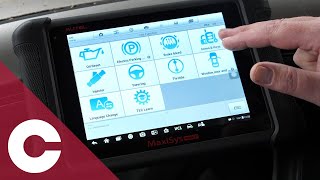
Minimum: Must read manufacturer-specific Body Control Module (BCM) codes (B-codes) for General Motors. A basic P-code scanner shows 'No Codes' even when B2958 is active.
A $20 code reader will not see this code. To diagnose B2958, you must view live data from the BCM to see the Passlock sensor's voltage in real-time during a 'wiggle test'.
Budget: BlueDriver Pro Scan Tool (~$119) — Reads enhanced BCM codes on GM vehicles. It allows you to read and clear B2958 and view live data to aid in diagnosis.
Mid-range: Foxwell NT510 Elite for GM (~$150) — Includes dedicated GM software. It reads B-codes, graphs live Passlock sensor data, and performs bidirectional controls to pinpoint the fault.
Professional: Autel MaxiCOM MK808 (~$450) — Provides dealership-level diagnostics. Full access to all modules, advanced bidirectional control, and the ability to perform programming functions like the security relearn.
Rent vs buy: Free 'loan-a-tool' scanners from auto parts stores are basic P-code readers and will not read B2958. Buying a scanner with B-code capability is a mandatory investment for this repair.
How to Clear the Code After You Fix It
- Reconnect the battery if disconnected for repair.
- Use an OBD-II scan tool to clear the B2958 code from the BCM.
- Perform the mandatory 30-minute security relearn procedure to sync the new components.
- Start the vehicle to confirm the repair and verify the security light turns off.
Drive cycle (~30 minutes): If the battery was disconnected, complete a full drive cycle to reset emissions readiness monitors. This involves a cold start, 5 minutes of idling, and 20 minutes of mixed city/highway driving.
Readiness monitors affected: Catalyst Monitor, Evaporative System Monitor, O2 Sensor Monitor, O2 Heater Monitor
Before emissions retest: drive at least 50 miles to fully set monitors.
Watch out for:
- Forgetting to perform the 30-minute security relearn procedure after replacing a component guarantees a no-start condition.
- Clearing the code without fixing the underlying short causes the code to return immediately upon the next key cycle.
- Taking the vehicle for an emissions test immediately after disconnecting the battery results in an automatic failure due to 'Not Ready' monitors.
Will This Fail Emissions / State Inspection?
No — by itself this code doesn't fail OBD inspection (but it can keep readiness monitors from setting, which causes a separate fail).
- California: Code B2958 does not illuminate the Check Engine Light and won't cause a smog failure directly. However, disconnecting the battery for repair resets OBD-II monitors to 'Not Ready', causing an automatic failure until a drive cycle is completed.
- New York: NYS inspections check for illuminated malfunction lights. While the security light isn't an automatic emissions failure, an inspector fails the vehicle on safety grounds if it stalls. If B2958 triggers powertrain code P1626, the Check Engine Light illuminates, causing an automatic failure.
- Texas: The B2958 code is not scanned during the OBD-II emissions test. However, the repair process (disconnecting the battery) leads to a temporary failure until the vehicle is driven enough to reset the readiness monitors.
Most Commonly Affected Vehicles
- Chevrolet Cobalt (2005-2010) — Extremely common issue. The ignition lock cylinder design is a known weak point, exacerbated by heavy keychains causing inadvertent rotation and electrical faults.
- Chevrolet Malibu / Impala (2000-2012) — The Passlock sensor in the ignition lock cylinder is a frequent failure point. On Impala models, a faulty starter relay causes similar no-crank symptoms and must be ruled out.
- Pontiac G6 / Grand Am (2000-2010) — Shares the GM security system design. The G6 is particularly prone to BCM connection issues that trigger various electrical and security codes.
- Saturn Ion / Vue (2003-2007) — Shares the GM electrical architecture. The Ion frequently suffers from shifter assembly faults that trap the key and trigger related security system issues.
- Chevrolet / GMC Silverado / Sierra (1999-2007) — The Passlock system in these trucks fails frequently. Diagnosis often reveals a short to battery on the Passlock data line inside the steering column.
- Buick Century / Regal / LeSabre (2000-2005) — Uses the Passlock II system. LeSabre models often experience intermittent power loss in the Instrument Panel Cluster (IPC), which triggers security codes.
- Oldsmobile Alero / Intrigue (1999-2004) — Commonly cited for security light and no-start problems. Improperly wired aftermarket stereos frequently interfere with BCM communications on these models.
- Hummer H3 (2006-2010) — Based on the GMT355 platform, the H3 uses Passlock II. The ignition lock housing containing the sensor is a highly documented failure point.
Manufacturer-Specific Notes
- General Motors (Passlock I & II): This code is almost exclusively found on GM vehicles with Passlock I or II. The system relies on a magnet on the ignition cylinder and a fragile Hall-effect sensor in the housing, making it highly prone to mechanical wear.
- General Motors (Passlock II): Passlock II does not disable the starter motor directly for the initial theft attempt. It allows the engine to start and then shuts off the fuel pump, causing a stall after two seconds. This 'start-and-stall' is a definitive diagnostic clue.
- Other (Ford, Toyota, Honda, etc.): Code B2958 is not used by most other manufacturers. They utilize proprietary transponder chip systems (like Ford PATS or Toyota Immobilizer) with completely different diagnostic trouble codes.
Real Owner Stories
2002 Chevrolet Impala at 180K miles with intermittent no-start and stalling.
Security light came on, followed by starting problems temporarily fixed with the 10-minute relearn. The car then shut off while driving on the highway.
What they tried:
- Replaced ignition lock cylinder (no help).
- Cleaned contacts in ignition switch (no help).
- Installed a bypass module (worked temporarily, then failed).
- Replaced the BCM with a new AC Delco unit and had it programmed at a dealer.
Outcome: After replacing the BCM, the car starts, but the security light remains on. The owner is left afraid the car will stall again.
Lesson: Throwing parts at the problem, even a BCM, isn't a guaranteed solution. The persistent security light proves the root cause (a wiring short) was never found, leading to thousands wasted in parts and labor.
2000 Buick Regal LS at 125K miles with a sudden no-crank, no-start condition.
A day after changing the battery, the car would not crank. A scanner pulled history codes B2958 and B2960.
What they tried:
- Replaced the ignition switch (no change).
- Replaced the BCM with a remanufactured unit and performed the relearn procedure.
Outcome: The BCM replacement turned the security light off, but the no-crank condition remained. The owner was advised to replace the Passlock sensor next.
Lesson: The presence of both B2958 (Circuit High) and B2960 (Circuit Low) strongly points to an intermittent wiring issue or a failing sensor. Replacing the BCM was a costly misdiagnosis.
2006 Saturn Vue with a no-start condition after an aftermarket alarm was removed.
A shop removed a faulty aftermarket alarm system, but the car would not stay running and threw code B2958.
What they tried:
- The shop advised getting a new master key made.
- An online expert advised checking for a short to power on the yellow signal wire near the alarm removal site.
Outcome: Diagnosis confirmed a short between the power and signal wires in the Passlock circuit, caused by sloppy alarm removal.
Lesson: If the problem starts after modifying aftermarket electronics, the fault is almost certainly in the tapped wiring. B2958 specifically points to the yellow signal wire shorting to a power source.
How to Prevent This Code From Triggering
- Lighten Your Keychain (Daily habit) — Excessive weight causes premature wear on the ignition lock cylinder tumblers and the internal Passlock sensor. GM issued a TSB specifically warning against heavy keychains.
- Protect Steering Column Wiring (During any under-dash work) — Inspect the thin Passlock sensor wires for chafing. Secure the harness away from sharp metal edges or the tilt-steering mechanism using split-loom tubing.
- Clean BCM and Ignition Connectors (If experiencing any weird electrical issues) — Disconnecting and spraying connectors with electronic contact cleaner prevents corrosion buildup from humidity, which causes high-resistance faults.
- Use a Light Touch with the Key (Daily habit) — Avoid forcing the key or using excessive torque when starting the car. This minimizes mechanical stress on the delicate Passlock sensor wires.
Frequently Asked Questions
What is the '10-minute relearn' and will it fix B2958 permanently?
The 10-minute relearn is a procedure to re-sync the car's computer with the security components. It often gets the car started but is not a permanent fix. If there is a physical problem like a broken wire or a failing sensor, the code and the starting problem will almost certainly return.
My mechanic replaced parts but the security light is still on. What's the most common misdiagnosis?
A very common misdiagnosis is replacing the ignition lock cylinder or even the BCM when the actual fault is a simple wiring short. The B2958 code specifically means the signal wire has high voltage, often from rubbing against a power wire in the steering column. A thorough circuit test must be performed before replacing expensive components.
Can a worn-out key cause code B2958?
Directly, no. The GM Passlock system's sensor reads a magnet inside the ignition cylinder, not a chip in the key. However, an extremely heavy keychain causes the entire lock cylinder to wear and become loose, leading to misalignment and erratic signals.
Can a bad battery cause code B2958?
While a low or failing battery causes a multitude of strange electrical issues, it does not typically cause B2958 directly. However, voltage spikes during jump-starting or a failing alternator trigger security system glitches that require a relearn procedure.
Is it safe to install a Passlock bypass module?
A bypass module is a common and cost-effective repair that tricks the BCM into thinking the security system is always receiving the correct signal. While this effectively solves the starting problem, it disables a layer of your vehicle's anti-theft protection. For an older vehicle, many owners consider this an acceptable trade-off.
Can I fix this myself to save money?
Yes, for an intermediate DIYer, this is often a manageable repair. Replacing the ignition lock cylinder or installing a bypass module requires basic tools and patience. The most critical step is correctly diagnosing the fault with a multimeter before buying parts.
What's the difference between Passlock I, II, and III?
Passlock I and II use a Hall-effect sensor in the ignition housing to read the cylinder's rotation without a chipped key. Passlock III is a true transponder system with a chip embedded in the key. Code B2958 is exclusively associated with the older Passlock I and II systems.
My security light is on and I have code B2958, but my car starts fine. Why?
In some cases, the BCM enters a 'fail enable' mode if the fault occurs while the engine is already running. The BCM logs the code and turns on the security light, but allows the vehicle to continue running. However, the underlying fault remains and causes a no-start at the next key cycle.
Key Takeaways
- Code B2958 specifically targets a high-voltage short in the GM Passlock anti-theft system, which actively cuts fuel or disables the starter.
- Over 80% of B2958 faults stem from a failed Hall-effect sensor inside the ignition lock cylinder or chafed steering column wiring.
- Performing the 30-minute security relearn procedure temporarily bypasses the fault to get you home, but the underlying hardware issue requires a permanent fix.
- Installing a $50 aftermarket Passlock bypass module permanently resolves the starting issue by tricking the BCM, though it disables factory anti-theft protection.
Helpful Videos

The information in this article is provided for general reference and educational purposes only. Vehicle specifications, procedures, and part compatibility can vary by production date, trim level, and region. Always consult your vehicle's factory service manual and verify part numbers before purchasing or performing repairs. Safety-critical components such as airbags, seat belts, and braking systems should be installed by a qualified professional.
- 🎬 Helpful Videos
- What Does B2958 Mean?
- Can I Drive With B2958?
- Common Causes
- Symptoms
- Diagnostic Flowchart
- Common Fixes & Costs
- DIY vs Professional
- Used vs. New Parts: Buying Guide
- What Happens If You Wait — Timeline
- Cost of Not Fixing It
- Diagnosis Steps
- When This Code Triggers (Freeze-Frame Conditions)
- Related Codes
- Climate & Environmental Factors
- How to Talk to a Mechanic About This Code
- Where to Take It: Dealer vs Independent vs Chain
- When to Walk Away From the Repair
- What Scan Tool You Need for This Code
- How to Clear the Code After You Fix It
- Will This Fail Emissions / State Inspection?
- Most Commonly Affected Vehicles
- Manufacturer-Specific Notes
- Real Owner Stories
- 2002 Chevrolet Impala at 180K miles with intermittent no-start and stalling.
- 2000 Buick Regal LS at 125K miles with a sudden no-crank, no-start condition.
- 2006 Saturn Vue with a no-start condition after an aftermarket alarm was removed.
- How to Prevent This Code From Triggering
- Frequently Asked Questions
- What is the '10-minute relearn' and will it fix B2958 permanently?
- My mechanic replaced parts but the security light is still on. What's the most common misdiagnosis?
- Can a worn-out key cause code B2958?
- Can a bad battery cause code B2958?
- Is it safe to install a Passlock bypass module?
- Can I fix this myself to save money?
- What's the difference between Passlock I, II, and III?
- My security light is on and I have code B2958, but my car starts fine. Why?
- Key Takeaways
- 🎟️ Get 5% Off