

OBD-II Code B2897: Electronic Steering Column Lock Circuit Malfunction
The Ultimate 2026 Guide: What B2897 means, why it triggers, and how to fix it for good
- Code B2897 is a 'Steering Column Lock Circuit Malfunction' that disables the starter circuit, leaving you stranded if the system fails to unlock.
- Always test your battery first; a resting voltage below 12.4V causes voltage drops during startup that trigger false B2897 codes.
- For 2013-2016 GM vehicles, the official fix is a 1-hour dealer software update (TSB #PIC6093B), not a $500+ hardware replacement.
- If your steering wheel is locked and the car won't start, jerk the wheel firmly left and right while pressing the start button to release mechanical binding.
What Does B2897 Mean?

B2897 means your car's main computer, the Body Control Module (BCM), detects a fault in the electronic steering column lock (ESCL) circuit. This anti-theft system physically locks the steering wheel with a steel bolt when the car is off. The computer is reporting that it cannot confirm if the lock is engaging or disengaging correctly, preventing the engine from starting as a security precaution.
Technical definition: The official SAE/OBD-II definition for this code, primarily used by General Motors, is 'Steering column lock solenoid/motor circuit malfunction'. The Steering Column Lock Control Module (SCLCM) sends voltage to a small motor to extend or retract a lock pin. It monitors the circuit for faults like an open circuit, short to ground, or short to voltage. If a fault condition is present for more than 300 milliseconds, the SCLCM sets code B2897 and sends a warning message to the instrument cluster.
Can I Drive With B2897?
Yes, But With Caution. You can drive the car, but you risk it not starting the next time you turn it off. This code indicates a critical problem with the anti-theft system that disables the starter circuit. The system will eventually fail to unlock, leaving you stranded. The financial risk of being stranded (towing, emergency repairs) adds $150-$500 to your total cost, making it a significant gamble to continue driving without a diagnosis.
Common Causes

- Low Battery Voltage (Very Common) — A weak battery causes a voltage drop during startup that confuses sensitive electronic modules. A resting voltage below 12.4V is a definitive indicator of a weak battery. The SCLCM fails to receive enough power to fully retract the lock pin, interpreting the mechanical failure as a circuit malfunction.
- Faulty Steering Column Lock Control Module (SCLCM) or Software Glitch (Very Common) — On many GM vehicles, this code triggers due to a software logic error in the SCLCM or BCM, not a physical part failure. GM issues Technical Service Bulletins (TSBs) to reprogram the module to fix these false codes, which trigger from normal actions like opening the door too quickly after shutting the car off.
- Binding Steering Lock Mechanism (Common) — Parking with the steering wheel turned puts physical pressure on the lock bolt. When the module attempts to retract the bolt, the extra mechanical load increases electrical resistance, forcing the module to register a circuit failure.
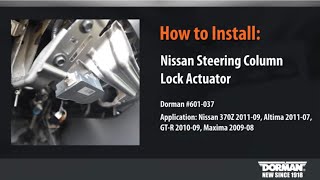
- Faulty Steering Column Lock Motor/Actuator (Common) — The small electric motor or internal plastic gears that drive the lock bolt wear out 🎬 See this walkthrough on how to replace a faulty lock actuator. or fail internally. The module detects that its command to lock or unlock the column was unsuccessful because the motor draws incorrect current, setting the code.
- Faulty or 'Slow' Relay (Less Common) — The relay supplying power to the steering lock module (often the Run/Crank relay) becomes slow to actuate over time. Even if it tests as functional, a delayed closure causes a timing mismatch between the ignition signal and power delivery, triggering the fault code.
- Improperly Installed Aftermarket Accessories (Rare) — Aftermarket remote start or security systems spliced incorrectly into the vehicle's CAN bus or ignition wiring interfere with BCM and anti-theft system communications, leading to a false B2897 code.
- Damaged Wiring or Poor Connection (Rare) — The wiring harness between the BCM, the SCLCM, and the lock motor becomes damaged, corroded, or disconnected. This occurs frequently at the SCLCM connector itself, stressed by repeated tilt/telescope adjustments of the steering column.
Symptoms

- “Service Steering Column Lock” Message — This is the most common symptom, appearing immediately on the driver information center (DIC) on the dashboard. 🎬 Watch: See how this warning message appears on a Chevy Tahoe.
- Engine Will Not Start or Crank — If the computer cannot verify that the steering column is properly unlocked, it disables the starter circuit and prevents the engine from starting.
- Steering Wheel Remains Locked — After entering the car and pressing the start button, the steering wheel remains physically locked and cannot be turned, and the ignition refuses to enter the 'ON' or 'RUN' state.
- Delayed or Multiple Attempts to Start — You must turn the key or press the start button multiple times before the car recognizes the key and allows the engine to crank, indicating an intermittent failure of the lock to disengage.
- Audible Clicking from Steering Column — A rapid clicking sound emits from the steering column area as the SCLCM repeatedly tries and fails to actuate the lock motor.
Diagnostic Flowchart
Tap your situation to follow the diagnostic path that matches what you're seeing on this code.
Common Fixes & Costs
- Replace Vehicle Battery — Parts: $150-$300, Labor: $25-$50 (Labor only), ~0.5 hr book time (DIY)
- Reprogram Steering Column Lock Control Module (SCLCM) — Parts: $0, Labor: $150-$250 (Labor only, at dealer), ~1.5 hr book time (Professional)
- Install Steering Lock Emulator/Bypass
— Parts: $50-$150, Labor: $100-$200 (Labor only), ~1 hr book time
(Intermediate)
Chevrolet Corvette (2005): OEM N/A (Alt: Corvettes of Houston C6 Column Lock Eliminator, Dorman 924-710)
Nissan Altima/Maxima/370Z: OEM 48708-9N00A (Alt: Various plug-in emulators available online) - Replace Steering Column Lock Assembly (Actuator)
— Parts: $400-$800, Labor: $200-$400 (Labor only, requires programming), ~2.5 hr book time
(Professional)
Chevrolet Corvette (2005): OEM 88963402 (Alt: N/A)
Nissan Altima/Maxima (2009-2011): OEM 48700-9N00B (Alt: Various unbranded clones available online) - Replace Steering Column Lock Control Module (SCLCM)
— Parts: $200-$450, Labor: $150-$250 (Labor only, requires programming), ~2 hr book time
(Professional)
Cadillac ATS/CTS, Chevrolet Camaro: OEM 23377962
Used vs. New Parts: Buying Guide
When a used part is worth it: For plug-and-play components like the Nissan ESCL assembly, a used part from a reputable salvage yard is a cost-effective solution. It is not recommended for modules requiring programming (SCLCM) unless you use a specialist to virginize and program it.
Donor-vehicle mileage cap: roughly under 100000 miles for the part to have meaningful remaining life.
Donor quality checklist:
- Match the part number exactly. Superseded part numbers are common and do not interchange.
- For mechanical assemblies, choose a donor with lower mileage.
- Avoid parts from flood-damaged or high-humidity environments to prevent corrosion issues.
Decision logic:
- If The fix is a software update → New/used part is irrelevant; dealer programming is required.
- If An aftermarket emulator is available for your vehicle → Buy the new emulator. It is a permanent, low-cost fix that eliminates the failure-prone mechanical part entirely.
- If The part requires programming (e.g., GM SCLCM) → Buy a new OEM or high-quality aftermarket part and have it professionally installed and programmed. A used module cannot be reprogrammed to a different vehicle.
Warranty tradeoff: Used parts typically have a 30-90 day warranty. New aftermarket parts (like Dorman or emulators) offer a 1-year to limited lifetime warranty. New OEM parts carry a 1-year/12,000-mile warranty.
Worst-case if a used part fails: $300-$600 if a used part fails after installation, requiring repeat labor costs and the purchase of another part.
What Happens If You Wait — Timeline
- 0-2 weeks: Intermittent 'Service Steering Column Lock' message appears, but the car still starts, sometimes after a slight delay. The code is stored as a 'history' code. (MPG impact: 0%% · Added cost: $0)
- 1-4 weeks: The no-start condition becomes more frequent. You must wiggle the steering wheel or cycle the ignition multiple times to get the car to start. The risk of being stranded increases significantly. (MPG impact: 0%% · Added cost: $150-$500 (Potential cost of a tow truck if it fails to start away from home).)
- 1-2 months: The system fails completely. The steering wheel is stuck in the locked position, and the engine will not crank under any circumstances. The vehicle is now immobile. (MPG impact: 0%% · Added cost: $350-$800 (Guaranteed towing cost plus potential for emergency mobile mechanic fees or lost time).)
- 2+ months (if left in a failed state): Repair becomes more difficult and expensive. If the lock fails in the engaged position, a technician spends extra labor hours manually cutting the lock assembly off the steering column before installing a new one. (MPG impact: 0%% · Added cost: $550-$1200 (Original repair cost plus 1-2 hours of additional labor, ~$200-$400, for removing the seized part).)
Cost of Not Fixing It
- Immediate: Intermittent no-start condition. You must try starting the car multiple times, or wiggle the steering wheel to get it to start. (Added cost: Negligible)
- 1-30 Days: Sudden and complete no-start failure, leaving you stranded. This introduces significant secondary costs. (Added cost: $150-$500 (Cost includes towing fees, emergency mobile mechanic call-out, and lost time).)
- 1+ Month: Increased difficulty of repair. If the lock fails in the 'locked' position, the technician must cut the old lock off the steering column. (Added cost: $200-$400 (Additional labor cost due to the difficulty of removing a failed-locked assembly).)
Diagnosis Steps

- Try the 'Steering Wheel Wiggle'
If the car won't start and the wheel is locked, turn the ignition off. Firmly and sharply jerk the steering wheel left and right while attempting to start the car. This relieves mechanical pressure on the lock bolt, allowing it to retract. This is a temporary fix but confirms a binding issue.
Tools: ['None'] - Check Battery Health First
Use a multimeter to check the battery's resting voltage with the engine off; it must be at least 12.4 volts. Anything below 12.2V indicates a significant discharge. Start the car and check the charging voltage; a healthy alternator reads between 13.5 and 14.7 volts. A load test provides the most definitive confirmation.
Tools: ['Digital Multimeter'] - Perform a Hard Reset
Disconnect the negative battery terminal for at least 30 minutes. This forces all vehicle modules to reboot and clears temporary software glitches causing a false code. This is a highly effective fix for one-time occurrences.
Tools: ['10mm Wrench or Socket'] - Scan for Codes and Check for TSBs
Use a professional OBD-II scanner to confirm B2897 is the primary code. Search online for Technical Service Bulletins (TSBs) for your vehicle's make, model, and year related to B2897. A dealer must perform software updates specified in TSBs.
Tools: ['Professional OBD-II Scanner'] - Check Horn, Fuses, and Steering Wheel Buttons
Check if your horn and all steering wheel buttons work. If not, the clock spring is the likely suspect. Check all fuses related to the 'Smart Key', 'BCM', or 'Theft Deterrent' systems. On 2009-2010 Nissan Altimas, check the 10A 'STEERING LOCK' fuse in the under-hood fuse box.
Tools: ['Visual Inspection'] - [ADVANCED] Test the SCLCM Connector Pins for Voltage
Disconnect the SCLCM connector. Check for B+ (battery voltage, >12.4V) on the power wire and good ground (<1 ohm resistance to chassis) on the ground wire. With the ignition off, measure voltage on the command wire; a reading greater than 2.0 volts indicates a short to voltage in the wiring harness or an internal module failure.
Tools: ['Digital Multimeter', 'Vehicle-specific wiring diagram'] (Advanced) - [ADVANCED] Check SCLCM Motor Resistance
At the SCLCM connector, identify the two pins leading directly to the lock motor. Use a multimeter to measure the resistance between these two pins. A reading of infinite resistance (OL) indicates an open circuit in the motor, while a reading near zero ohms indicates a dead short. Either extreme confirms a failed lock assembly.
Tools: ['Digital Multimeter', 'Vehicle-specific wiring diagram'] (Advanced) - Inspect the Lock Assembly for Internal Damage
Physically remove the steering column lock assembly. Manually power the motor with a 12V source to see if it actuates. Open the housing to inspect for stripped plastic gears or a dirty motor commutator, which you can sometimes clean to restore function.
Tools: ['Screwdrivers', 'Torx bit set', '12V power source']
When This Code Triggers (Freeze-Frame Conditions)
- Ignition Status: ON (Run) (The code sets when the ignition is commanded to the 'ON' position and the SCLCM attempts to unlock the steering column.)
- System Voltage: < 12.0V or > 15.0V (Code triggers during engine crank when a weak battery causes a voltage drop, or if there is a charging system fault.)
- Module Command: Unlock/Lock (The fault is detected when the SCLCM sends a command to the lock motor and does not see the expected electrical response.)
- Fault Duration: > 300 ms (The circuit fault (open, short to ground, or short to voltage) must be present for a continuous 300 milliseconds before the DTC logs.)
Related Codes
- U0140 - Lost Communication With Body Control Module (BCM) — B2897 is set by the BCM. If you also have U0140, the scanner cannot talk to the BCM itself, indicating a serious network or module power/ground issue. Fix the U0140 code first.
- B1327 - Device Power Circuit Voltage Below Threshold — This code is direct confirmation of low system voltage. If B1327 is stored alongside B2897, the root cause is a weak battery or failing alternator. Address the low voltage condition before attempting any repairs on the steering lock system.
- A116 (BMW) / ELV Warning - Critical Status of Electronic Steering Lock — This is BMW's equivalent of a severe steering lock fault. A116 indicates the internal 'error counter' reached its limit and locked the system, requiring a software reset even if the hardware is fine.
- B3055 - No Transponder Key/Fob Signal — This code indicates the car does not detect a valid key. If the key isn't detected, the BCM refuses to command the steering column to unlock. The issue lies with the key fob battery or keyless entry receiver, not the lock itself.
Climate & Environmental Factors
- Cold Weather: Low ambient temperatures significantly reduce a battery's Cold Cranking Amps (CCA). This causes system voltage to drop below the threshold required by the SCLCM during startup, triggering a false B2897 code even if the battery functions normally in warmer weather.
- High Humidity: High humidity or water intrusion accelerates corrosion on the SCLCM connector pins or internal circuit board, leading to high resistance and circuit faults.
How to Talk to a Mechanic About This Code
Say this: "I have a 'Service Steering Column Lock' message and a B2897 code. Before quoting a full lock assembly replacement, please first test the battery under load and check for any available TSBs related to a software update for the steering column lock module. I understand these are very common causes."
This immediately signals you've done your research. It directs the technician to check the cheapest and most common fixes (battery and software) before assuming the most expensive hardware failure, saving diagnostic time and preventing an unnecessary upsell.
Avoid saying:
- 'My car won't start, can you fix it?'
- 'The steering wheel is locked.' (Too vague, invites a broad and expensive diagnosis)
- 'Just replace the steering column lock.'
Questions to ask before authorizing the repair:
- Did you confirm the battery is providing at least 12.4 volts at rest and holding a load?
- Did you check for any TSBs for my vehicle's make and model regarding this code?
- If a module replacement is needed, does the new part require programming and is that included in the quote?
- What is the warranty on this specific repair, covering both parts and labor?
Where to Take It: Dealer vs Independent vs Chain
- Dealer:
Best for: Vehicles under warranty, GM vehicles (Cadillac, newer Chevrolet) where a software update (TSB) is the most likely fix, Repairs requiring module programming
Downsides: Highest labor rates, typically 1.5-2x more than independent shops., Defaults to expensive assembly replacement instead of targeted diagnosis. (Typical cost: +50% vs. baseline) - Independent Shop:
Best fit for most out-of-warranty diagnosis and hardware replacement, but a dealer is required if a known GM software update is the fix.
Best for: Out-of-warranty vehicles, Diagnosing battery and electrical issues, Replacing the lock assembly or installing an emulator on common failure models (Nissan, 2005 Corvette)
Downsides: Quality varies; ensure the shop has modern diagnostic tools for B-codes., Cannot perform manufacturer-specific software updates without a J2534 pass-thru device. (Typical cost: +0% vs. baseline) - Chain Shop:
Acceptable for a free battery test, but AVOID for diagnosing the B2897 code itself.
Best for: Battery testing and replacement
Downsides: Technician skill varies widely., Lacks the advanced diagnostic tools to properly diagnose Body Control Module codes., High pressure for upselling leads to misdiagnosis. (Typical cost: -10% vs. baseline)
When to Walk Away From the Repair
If the estimated repair cost exceeds 40-50% of the car's private-party value, pause and consider your options.
- Car worth $8000, fix is $1200: Fix it. The repair cost is well below the threshold.
- Car worth $4000, fix is $1800: Borderline. The repair is 45% of the car's value. Get a second opinion before authorizing, especially if an emulator is a cheaper option.
- Car worth $2500, fix is $2200: Walk away. The repair cost is nearly the entire value of the car.
What Scan Tool You Need for This Code
Minimum: A scanner that reads ALL vehicle systems/modules, including Body (B-codes), Chassis (C-codes), and Network (U-codes). Basic engine-only (P-code) readers will NOT see code B2897.
A cheap $20-30 scanner only reads powertrain codes (P-codes) and reports 'no codes found' even when the B2897 code is active in the Body Control Module. You waste time and money guessing at the problem.
Budget: BlueDriver Pro / Foxwell NT604 Elite (~$120) — Reads and clears codes from all modules (Engine, BCM, ABS, SRS), displays live data (to check battery voltage), and shows freeze-frame data. This is sufficient for DIY diagnosis.
Mid-range: Autel MaxiCheck MX808/MX900 (~$375) — Offers full system diagnostics plus many service functions and some bidirectional controls. It performs the security relearn procedure required after replacing a module on many vehicles.
Professional: Autel MaxiSys MS906BT / Launch X431 Series (~$500-1200) — Provides full bidirectional control to command the lock motor directly for testing. Also has advanced coding and programming functions required for module replacement on newer vehicles.
How to Clear the Code After You Fix It
- Reconnect battery if disconnected for repair.
- Use a professional OBD-II scan tool to clear the B2897 code from the SCLCM and BCM.
- Perform the security relearn procedure if a new module was installed (e.g., GM 30-minute relearn).
- Cycle the ignition from OFF to ON multiple times, ensuring the lock engages and disengages correctly with each cycle.
Drive cycle (~15 minutes): A specific 'drive cycle' is not required for this body code. The system self-tests at every key-on/key-off cycle. After clearing the code, performing 5-10 full ignition cycles verifies the repair. For GM vehicles, the history code self-clears after 50 consecutive ignition cycles without a detected fault.
Readiness monitors affected: None
Watch out for:
- Clearing the code without fixing the root cause (weak battery, binding lock, faulty module) results in the code returning immediately.
- Failing to perform the security relearn procedure after replacing a module prevents the car from starting.
- Using a basic code reader that only clears powertrain (P-codes) fails to clear a body code (B-code) like B2897.
Will This Fail Emissions / State Inspection?
No — by itself this code doesn't fail OBD inspection (but it can keep readiness monitors from setting, which causes a separate fail).
- California: A B-prefix code like B2897 does not cause a smog check failure. California's test focuses on powertrain (P-codes) and emissions system readiness. However, if the vehicle will not start, it cannot be tested.
- New York: A B2897 code does not fail the OBD-II emissions inspection. The NYVIP3 program checks for illuminated MIL (Check Engine Light) and powertrain-related codes.
- Texas: As of 2025, most non-commercial vehicles are exempt from safety inspections. In counties requiring emissions testing, the test scans for powertrain-related issues, so B2897 does not cause a failure.
Most Commonly Affected Vehicles
- Chevrolet Corvette (C6) (2005) — The 2005 model year is notorious for this issue as it was the only C6 to use the problematic mechanical column lock from the C5 generation.
- Cadillac ATS, CTS, XTS (2013-2016) — Subject to GM TSB #PIC6093B. A false B2897 code sets from normal actions like opening the driver door and pressing the ignition switch within 100ms. The fix is a mandatory SCLCM software update.
- Nissan Altima, Maxima, 370Z (2009-2011) — A widespread issue led to a voluntary service campaign (ID: PC516) to replace the Electronic Steering Column Lock (ESCL) unit with a non-locking box.
- BMW 3-Series (E90/E92), 5-Series (E60), X5 (E70) (2004-2014) — Experiences a similar failure with a yellow or red steering wheel lock symbol (ELV warning). The cause is an error counter in the CAS module that requires a reset with diagnostic software.
- Volkswagen Passat (B6), CC (2005-2011) — A common failure displays a "Steering Column Lock Defective" message and prevents the car from starting, requiring module replacement and programming.
- Hyundai / Kia Various with push-button start (e.g., Elantra, Optima) (2010-2024) — These vehicles show a "Check Steering Wheel Lock System" warning. The cause is the Electronic Steering Column Lock (ESCL) motor or a blown fuse for the smart key system.
- Chevrolet Tahoe, Suburban (2021-2024) — Newer GM SUVs use steering column lock modules highly sensitive to low battery voltage, causing this warning message even on nearly new vehicles.
- Holden Commodore (VF), Cruze (2009-2017) — Built on GM platforms, these vehicles share the same software issues. Service bulletins exist for software updates to correct false B2897 codes.
Manufacturer-Specific Notes

- General Motors (Chevrolet, Cadillac, Holden): This code is extremely common and is most often caused by a software glitch. GM released multiple service bulletins (e.g., PIC6093B) advising technicians to reprogram the control module with updated software before replacing any parts.
- Nissan: On affected Altimas and Maximas, Nissan issued a voluntary service campaign (PC516) to replace the ESCL unit with a new part (48708-9N00A) that completely eliminates the steering lock function. Installing an aftermarket emulator achieves the exact same result.
- BMW: BMW uses an 'ELV' system. A common failure is a software counter in the Car Access System (CAS) module that locks the system after a certain number of errors. This is fixed by resetting the counter with diagnostic software, without replacing any parts.
- Hyundai / Kia: A 'Check Steering Wheel Lock System' warning traces back to a single blown fuse in the smart key power supply circuit, which also powers the ESCL module. Check all smart key-related fuses in the interior fuse panel before replacing the lock assembly.
Real Owner Stories
2005 Chevrolet Corvette C5 with ~70k miles
Owner received a 'Service Column Lock' message on the dash but the car still started normally. Voltage seemed slightly low.
What they tried:
- Replaced the vehicle battery, which made the error message disappear temporarily.
- Proactively ordered and installed a column lock bypass module to prevent future failure.
Outcome: Installing the new battery provided a temporary fix, but the owner installed a bypass module for a permanent solution. The bypass completely disables the electronic steering lock, preventing any future no-start issues.
Lesson: On a 2005 Corvette, a low battery is a primary trigger for this code. Even if a new battery clears the code, installing a readily available bypass module (like the LMC5) is a highly recommended and permanent preventative fix.
2014 Cadillac ATS
The 'Service Column Lock' message appeared on the Driver Information Center (DIC). The code was stored as a 'history' DTC (B2897 SYM05).
What they tried:
- The owner took the vehicle to a GM dealer.
- The dealer identified that the code set during normal operation, such as opening the door and pressing the ignition switch too quickly.
Outcome: The dealer reprogrammed the Steering Column Lock Control Module (SCLCM) with updated software as per GM Technical Service Bulletin PIC6093A/B. This was a software fix, not a parts replacement.
Lesson: For many modern GM vehicles (Cadillac, Holden), B2897 is a known software glitch. Before replacing any expensive hardware, check for TSBs. The official fix is a simple, one-hour dealer reprogram.
2009 Nissan Altima with 65k-75k miles
Car intermittently failed to start, leaving the owner stranded multiple times. The issue became progressively worse.
What they tried:
- Took the car to the dealer on multiple occasions, but the problem could not be replicated.
- Eventually, the car was towed to the dealer and the issue was identified as a failed Electronic Steering Column Lock (ESCL) unit.
Outcome: The dealer replaced the faulty ESCL unit. In some cases, owners reported this was covered under an extended warranty or a voluntary service campaign from Nissan, while others paid around $900.
Lesson: On 2009-2011 Nissan models, an intermittent no-start is a classic symptom of a failing ESCL. Nissan acknowledged the problem with a service campaign to replace the lock with a non-locking electronic box.
Holden Cruze (VF Commodore similar)
Car displayed a 'Service Steering Column Lock' message and would not start.
What they tried:
- Owner read online forums suggesting it was a software glitch.
- Disconnected the negative battery terminal for 10-15 minutes to perform a 'hard reset' of the vehicle's computers.
Outcome: After reconnecting the battery, the car started immediately and the code cleared. The issue resolved without any parts or cost.
Lesson: For a first-time, sudden occurrence of this code, the simplest and cheapest first step is a hard reset. Disconnecting the battery for 30 minutes clears temporary logic faults in the control modules.
How to Prevent This Code From Triggering
- Maintain Battery Health (Every 6 months) — A weak battery is a primary cause of false B2897 codes. Regularly check that the resting voltage is above 12.4V and that terminals are clean and tight to prevent voltage drops that confuse the control modules.
- Park with Wheels Straight (Daily habit) — Parking with the steering wheel turned puts mechanical pressure on the lock pin. This strain causes the lock motor to bind and draw excess current, which the SCLCM interprets as a circuit fault, triggering the code.
- Be Gentle with the Ignition Key/Switch (Daily habit) — On key-operated systems, forcing the key or yanking it out puts stress on the entire lock cylinder assembly, accelerating wear on the mechanical and electrical components within the steering column.
- Proactively Install a Bypass/Emulator (on known problem vehicles) (Once, before failure) — For vehicles like the 2005 Corvette or 2009-2011 Nissans, the lock mechanism is a known point of failure. Proactively installing a $50 emulator before you get stranded removes the failure-prone part from the system entirely.
- Lubricate Mechanical Lock Components (Advanced) (Every 5 years / 60,000 miles) — For older vehicles with mechanical lock cylinders, a lack of lubrication causes wear on tumblers and the lock mechanism, leading to jamming. Using a dry graphite lubricant reduces wear and prevents the key from sticking.
Frequently Asked Questions
What is the most common misdiagnosis for B2897?
The most common mistake is immediately replacing the physical steering column lock actuator or module. On many GM vehicles, a simple reprogram is the official fix, and on many other makes, a weak battery is the true culprit. Always investigate software updates and battery health first.
Can I install a steering lock emulator or bypass?
Yes, for many vehicles like BMW, Nissan, and the 2005 Corvette, aftermarket emulators are widely available and cost-effective. These devices plug into the factory harness and send a constant 'unlocked' signal to the computer, bypassing the physical lock entirely. While this disables an anti-theft feature, it permanently solves the no-start problem.
Can I fix a B2897 code by just clearing it?
You can clear the code with a scanner, but it returns immediately if the underlying issue persists. On GM vehicles, a history B2897 code clears itself after 50 consecutive ignition cycles without a fault. If the cause was a one-time temporary voltage drop, it stays off, but this is unlikely for persistent problems.
Why does my car show a 'Service Steering Column Lock' message but still start?
The fault is intermittent, meaning the module detected a problem on a previous drive cycle but is currently working. Consider this a serious warning that it will fail to unlock the next time. Test your battery and check for TSBs immediately to avoid being stranded.
Is there a recall for the B2897 code?
There are no active, universal safety recalls for this specific code. However, manufacturers issue service campaigns and TSBs, like Nissan's expired PC516 campaign for 2009-2010 Altimas. GM has numerous TSBs, like PIC6093B, instructing dealers to fix the problem with a software update.
The dealer wants to reprogram my car for B2897. Is this a real fix?
Yes, for many General Motors vehicles, reprogramming the control module with updated software is the official fix specified in their service bulletins. It corrects logic errors that cause the module to set a false code under normal operating conditions.
How can I prevent the B2897 code from happening?
Ensure your battery maintains a resting voltage of 12.4V to 12.6V to prevent voltage drops during startup. Avoid putting pressure on the steering wheel when you park by keeping the wheels straight. This reduces the mechanical load on the lock pin and extends the life of the actuator.
Key Takeaways
- Code B2897 is a 'Steering Column Lock Circuit Malfunction' that disables the starter circuit, leaving you stranded if the system fails to unlock.
- Always test your battery first; a resting voltage below 12.4V causes voltage drops during startup that trigger false B2897 codes.
- For 2013-2016 GM vehicles, the official fix is a 1-hour dealer software update (TSB #PIC6093B), not a $500+ hardware replacement.
- If your steering wheel is locked and the car won't start, jerk the wheel firmly left and right while pressing the start button to release mechanical binding.
Helpful Videos


The information in this article is provided for general reference and educational purposes only. Vehicle specifications, procedures, and part compatibility can vary by production date, trim level, and region. Always consult your vehicle's factory service manual and verify part numbers before purchasing or performing repairs. Safety-critical components such as airbags, seat belts, and braking systems should be installed by a qualified professional.
- 🎬 Helpful Videos
- What Does B2897 Mean?
- Can I Drive With B2897?
- Common Causes
- Symptoms
- Diagnostic Flowchart
- Common Fixes & Costs
- Used vs. New Parts: Buying Guide
- What Happens If You Wait — Timeline
- Cost of Not Fixing It
- Diagnosis Steps
- When This Code Triggers (Freeze-Frame Conditions)
- Related Codes
- Climate & Environmental Factors
- How to Talk to a Mechanic About This Code
- Where to Take It: Dealer vs Independent vs Chain
- When to Walk Away From the Repair
- What Scan Tool You Need for This Code
- How to Clear the Code After You Fix It
- Will This Fail Emissions / State Inspection?
- Most Commonly Affected Vehicles
- Manufacturer-Specific Notes
- Real Owner Stories
- 2005 Chevrolet Corvette C5 with ~70k miles
- 2014 Cadillac ATS
- 2009 Nissan Altima with 65k-75k miles
- Holden Cruze (VF Commodore similar)
- How to Prevent This Code From Triggering
- Frequently Asked Questions
- What is the most common misdiagnosis for B2897?
- Can I install a steering lock emulator or bypass?
- Can I fix a B2897 code by just clearing it?
- Why does my car show a 'Service Steering Column Lock' message but still start?
- Is there a recall for the B2897 code?
- The dealer wants to reprogram my car for B2897. Is this a real fix?
- How can I prevent the B2897 code from happening?
- Key Takeaways
- 🎟️ Get 5% Off