

OBD-II Code B2806: ECM Abnormal
What B2806 means, why it triggers, and how to fix it
What Does B2806 Mean?

B2806 is a manufacturer-specific code most common on Subaru vehicles, signifying a secondary computer (like EyeSight or VDC) detects a fault in the main Engine Control Module (ECM). This is almost always a secondary 'ghost' code triggered by a primary problem elsewhere that set a Check Engine Light. The B2806 code is the EyeSight system stating it shut down because it cannot trust the engine computer's data.
Technical definition: No universal SAE/ISO definition exists for B2806. For Subaru, it means 'ECM Abnormal'. For General Motors vehicles, it means 'Steering Wheel Controls HVAC Switch Circuit Range/Performance', an entirely separate issue regarding steering wheel climate control buttons.
Can I Drive With B2806?
Yes, But With Caution. You can drive, but with caution. This code universally disables critical safety systems like Subaru's EyeSight, Vehicle Dynamics Control (VDC), ABS, and traction control. Your baseline hydraulic brakes still function, but anti-lock and stability assistance remain unavailable, increasing the risk of losing control in emergencies. If a faulty EGR valve causes the code, prolonged driving increases combustion temperatures, potentially destroying the catalytic converter—a $2,000+ repair.
Common Causes

- Loose or Faulty Gas Cap (Very Common) — A loose or worn gas cap causes a small evaporative emissions (EVAP) leak. This primary fault triggers a Check Engine Light, forcing other modules to report an 'ECM Abnormal' status.
- Faulty EGR Valve (Common) — An Exhaust Gas Recirculation (EGR) valve stuck open or closed triggers a primary engine fault code (like P0400). On Subarus, this engine fault frequently causes B2806 to store in secondary modules.
- Weak or Failing Battery (Common) — Low voltage from a dying battery causes widespread communication errors between modules during startup. This creates a 'Christmas tree' dashboard effect and triggers ghost codes like B2806, disabling EyeSight.
- Faulty Brake Light Switch (Common) — A failing brake light switch sends erratic signals to the ABS and VDC modules. The VDC system faults, disabling related safety systems like EyeSight and storing secondary codes like B2806.
- Blown Fuse (Less Common) — A blown fuse disrupts module communication. On the Subaru Ascent, a blown 7.5A 'PU B/UP' fuse in the engine bay directly causes B2806 and other ADAS codes.
- Faulty Alternator or Charging System Issue (Less Common) — A failing alternator produces inconsistent voltage, causing electrical spikes or drops. This instability disrupts ECM communication, leading to B2806 and primary code P0560 (System Voltage Malfunction).
- Carbon Buildup on Intake Valves (Less Common) — On direct-injection engines, carbon accumulates on intake valves, causing primary engine misfires (P03xx) or EGR flow issues (P0400). These primary faults trigger secondary B2806 codes.
- Faulty Engine Control Module (ECM) (Rare) — Internal circuit failure, connector corrosion, or wiring harness damage leads to a legitimate ECM fault. This is extremely rare and requires diagnosis only as a last resort.
Symptoms

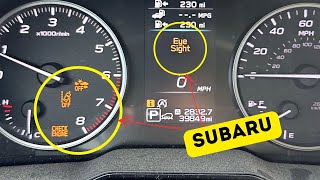
- Multiple Dashboard Warning Lights — A 'Christmas tree' dashboard illuminates the Check Engine light, 'EyeSight Disabled,' 'VDC,' 'Hill Start Assist,' and a flashing 'Brake' light simultaneously. 🎬 Watch: Why your Check Engine and EyeSight lights are both on.
- Driver-Assist Systems Disabled — Adaptive cruise control, pre-collision braking, lane-keeping assist, and reverse automatic braking (RAB) become unavailable.
- Car Won't Start or Stalls — A dead battery, failing alternator, or severe engine problem prevents the vehicle from starting or causes it to stall while driving.
- Fuel Smell — A stuck-open EGR valve or severe EVAP leak produces a noticeable unburned fuel odor.
- Poor Engine Performance (also visible on scanner) — The engine idles roughly, hesitates, stalls, or lacks power. This stems from the primary fault (like a bad EGR valve), not the B2806 code itself.
Common Fixes & Costs

- Tighten or Replace Gas Cap
— Parts: $15-$60, Labor: $0, ~0.1 hr book time
(DIY)
Subaru (General): OEM - Replace Car Battery
— Parts: $150-$350, Labor: $0-$150, ~0.5 hr book time
(DIY)
Subaru Forester/Outback/Crosstrek: OEM - Replace EGR Valve
— Parts: $160-$450, Labor: $95-$225, ~1.5 hr book time
(Intermediate)
Subaru Forester (2017-2018 2.5L): OEM
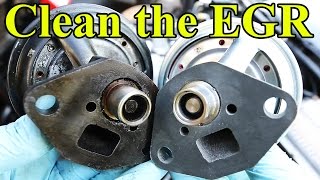
Subaru Outback/Legacy (2015-2019 2.5L): OEM 🎬 See this walkthrough on how to clean or replace the EGR. - Replace Brake Light Switch
— Parts: $15-$70, Labor: $60-$140, ~0.7 hr book time
(DIY)
Subaru Outback/Legacy (2015-2019): OEM - Replace Blown Fuse — Parts: $1-$10, Labor: $0-$130, ~0.2 hr book time (DIY)
- Intake Valve and Port Cleaning (Walnut Blasting) — Parts: $20-$50, Labor: $400-$1200, ~6 hr book time (Professional)
- Replace Engine Control Module (ECM)
— Parts: $800-$1500, Labor: $150-$600, ~2 hr book time
(Professional)
All: OEM
Used vs. New Parts: Buying Guide
When a used part is worth it: Buying a used OEM EGR valve from a reputable salvage yard is cost-effective for older, high-mileage vehicles on a tight budget. It often outlasts cheap aftermarket parts.
Donor-vehicle mileage cap: roughly under 80000 miles for the part to have meaningful remaining life.
Donor quality checklist:
- Match the part number exactly.
- Prefer donors from non-salt-belt regions.
- Demand mileage under 80,000.
- Avoid non-brand-name aftermarket EGR valves due to incorrect calibration.
Decision logic:
- If Vehicle is less than 8 years old or under 100K miles → Buy a new OEM or high-quality aftermarket (e.g., Denso, Bosch) part. The reliability and warranty are worth the extra cost.
- If Vehicle is older than 10 years or over 150K miles and budget is the main concern → A used OEM part is a reasonable choice, but accept the risk of a shorter lifespan.
- If The price of a new high-quality aftermarket part is close to a used OEM part → Favor the new part for its warranty and guaranteed cleanliness.
Warranty tradeoff: Used parts typically offer a 30-90 day warranty for function only. New aftermarket parts usually come with a 1-year to limited lifetime warranty. New OEM parts carry a 1-year/12,000-mile warranty.
Worst-case if a used part fails: $200-$500 if a used or cheap aftermarket EGR valve fails shortly after installation, requiring repeat labor costs plus the price of another part.
Cost of Not Fixing It
- 0-1 month: Disabled safety systems (EyeSight, VDC). A 5-10% drop in fuel economy and rough idling if caused by a faulty EGR valve. (Added cost: Negligible, aside from increased fuel consumption.)
- 1-6 months: A stuck-closed EGR valve increases combustion temperatures, causing engine knock and carbon buildup. A stuck-open valve causes severe stalling and hesitation. (Added cost: $200-$600 if carbon buildup requires manual cleaning.)
- 6+ months: Prolonged high temperatures from a malfunctioning EGR system destroy the catalytic converter. Extreme cases risk cracked cylinder heads. (Added cost: $1,500-$3,200 for catalytic converter replacement.)
Diagnosis Steps
- Scan for All Trouble Codes (The Pro Way)
Use a professional, bi-directional OBD-II scanner to read codes from ALL vehicle modules. B2806 is a secondary code; find the primary 'P' (Powertrain) or 'C' (Chassis) code causing it. Document and prioritize the primary code.
Tools: Professional OBD-II Scanner (Beginner) - Diagnose the Primary Code
Focus all diagnostic effort on the primary trouble code found in Step 1. Fixing the primary fault (e.g., P0400 for EGR, C1424 for VDC) almost always clears the B2806 code.
Tools: OBD-II Scanner, Multimeter, Vehicle-Specific Service Manual (Intermediate) - Check the Gas Cap
Remove the gas cap and inspect the rubber seal for cracks. Reinstall it and turn until you hear three distinct clicks. 🎬 Watch: How a simple gas cap fix clears EyeSight warnings. A loose gas cap frequently triggers EVAP codes that cascade into B2806.
Tools: None (Beginner) - Test the Battery and Charging System
Test battery voltage with the engine off; a healthy battery reads 12.4V-12.7V. A reading below 12.2V indicates a failing battery. Start the engine; voltage must rise to 13.7V-14.7V. Lower readings indicate a faulty alternator.
Tools: Wrench, Wire Brush, Multimeter (Beginner) - Inspect Critical Fuses
Check engine bay and cabin fuse boxes for blown fuses related to the ECU, ADAS, and VDC. On the Subaru Ascent, inspect the 7.5A 'PU B/UP' fuse in the engine compartment.
Tools: Fuse Puller or Pliers (Beginner) - Pro Tip: Test the Brake Light Switch
Use a multimeter in continuity mode on the four-pin brake switch. With the plunger extended, one pair of pins must have continuity. With the plunger pressed, continuity must switch to the other pair. Failure indicates a bad switch.
Tools: Multimeter, Trim Removal Tools (optional) (Intermediate) - Pro Tip: Check EGR Valve Live Data
If P0400 is present, monitor EGR valve position sensor data with a scanner. Command the valve open and closed. The position percentage must change smoothly. Sticking or jumping indicates a faulty valve.
Tools: Bi-Directional Scanner, Multimeter (Advanced) - Advanced: Test EGR Electricals
Unplug the EGR valve and test internal coil resistance between the two power pins (typically 22-23 Ohms on Subarus). With the key on and engine off, verify the wiring harness connector supplies a 4.8V-5.2V reference signal from the ECM.
Tools: Multimeter, Vehicle Wiring Diagram (Advanced) - Advanced: Test CAN Bus Resistance
With the battery disconnected, measure resistance between CAN High and CAN Low pins at the OBD-II port (pins 6 and 14). A healthy CAN bus reads exactly 60 Ohms. 120 Ohms indicates a faulty terminating resistor or broken wire.
Tools: Multimeter, OBD-II Port Pinout Diagram (Advanced) - Inspect ECM and Wiring
Only after ruling out all other causes, inspect the ECM and wiring harness for visible damage, corrosion, or loose connections. Check continuity on CAN bus lines between the ECM, VDC, and EyeSight modules.
Tools: Basic Hand Tools, Multimeter (Advanced)
When This Code Triggers (Freeze-Frame Conditions)
- Engine Coolant Temp: 175-210°F (80-99°C) (The engine must be fully warmed up for the related EGR monitor to run.)
- Vehicle Speed: 50-65 mph (80-105 km/h) (The fault often triggers during steady-state highway driving when the EGR system is active.)
- Engine RPM: 1500-2500 RPM (Typical engine speed during a highway cruise, corresponding with the conditions for the EGR self-test.)
- Engine Load: 20-70% (The code sets under light-to-medium acceleration or steady cruising, but rarely at idle or full throttle.)
How to Talk to a Mechanic About This Code
Say this: "My Subaru has multiple warning lights on, including the Check Engine Light and 'EyeSight Disabled'. My scanner shows a secondary code B2806 ('ECM Abnormal'). I need a diagnostic to find the primary 'P' or 'C' code causing this. Please focus on the root cause, not the B2806 code."
This directs the technician to find the actual problem rather than getting sidetracked by the secondary B2806 code, preventing unnecessary and expensive module replacements.
Avoid saying:
- My 'Check Engine' light is on.
- My EyeSight stopped working.
- Just fix whatever is wrong, I approve the work.
Questions to ask before authorizing the repair:
- What was the primary trouble code you found in the engine or ABS system?
- Can you show me the faulty part and explain why it has failed?
- Will fixing this primary code clear the B2806 and turn off all the dashboard lights?
- Is this repair covered by any warranty or Technical Service Bulletin (TSB)?
- What is the warranty on the parts and labor for this specific repair?
Where to Take It: Dealer vs Independent vs Chain
- Dealer:
Good option if a known TSB applies (like the cold weather EGR logic fix) or if the vehicle is under warranty. Otherwise, a qualified independent shop is more cost-effective.
Best for: Vehicles under warranty, Complex electrical issues or when a Technical Service Bulletin (TSB) software update is required, When you've exhausted other options
Downsides: Highest labor rates, Tendency to replace modules rather than diagnose wiring (Typical cost: +50% vs. baseline) - Independent Shop:
Best fit for most B2806 scenarios. An independent shop specializing in Subaru or strong electrical diagnostics finds the primary fault without dealership costs.
Best for: Out-of-warranty vehicles, Diagnosing common failures like EGR valves or brake light switches
Downsides: Quality varies; ensure they possess advanced diagnostic tools, Cannot perform warranty work or some software-only TSB updates (Typical cost: +0% vs. baseline) - Chain Shop:
AVOID for initial diagnosis. Their basic scanners miss the primary code, leading to misdiagnosis. Only use them for specific needs like a new battery.
Best for: Simple fixes like battery replacements
Downsides: Technicians lack advanced training for complex multi-module communication faults, High pressure to upsell unnecessary services (Typical cost: -10% vs. baseline)
How to Clear the Code After You Fix It
- Fix the primary fault.
- Use an OBD-II scan tool to clear codes from all modules.
- Perform a complete drive cycle to run readiness monitors.
Drive cycle (~30 minutes): Subaru drive cycle: 1) Cold start (engine off 8+ hours). 2) Idle 20 seconds. 3) Drive 15 minutes at a steady speed above 50 mph. 4) Stop and idle. 5) Perform mixed city/highway driving. Keep the fuel tank between 1/4 and 3/4 full.
Readiness monitors affected: EGR System, Evaporative System (EVAP), Catalyst, Oxygen (O2) Sensor
Before emissions retest: drive at least 100 miles to fully set monitors.
Watch out for:
- Clearing the code without fixing the underlying problem causes immediate return.
- Disconnecting the battery resets all readiness monitors to 'Not Ready', failing emissions tests.
- Fuel tanks outside the 1/4 to 3/4 range prevent the EVAP monitor from running.
Will This Fail Emissions / State Inspection?
Yes — this code typically fails an OBD-II emissions inspection.
- California: Automatic failure. The Check Engine Light causes an immediate fail. All readiness monitors must be 'Ready'.
- New York: Automatic failure. The NYVIP3 inspection fails any vehicle with a commanded-on Malfunction Indicator Lamp (MIL).
- Texas: Automatic failure in the 17 emissions-testing counties. The OBD-II scan detects the fault code, failing the inspection.
Helpful Videos

The information in this article is provided for general reference and educational purposes only. Vehicle specifications, procedures, and part compatibility can vary by production date, trim level, and region. Always consult your vehicle's factory service manual and verify part numbers before purchasing or performing repairs. Safety-critical components such as airbags, seat belts, and braking systems should be installed by a qualified professional.
- 🎬 Helpful Videos
- What Does B2806 Mean?
- Can I Drive With B2806?
- Common Causes
- Symptoms
- Common Fixes & Costs
- Used vs. New Parts: Buying Guide
- Cost of Not Fixing It
- Diagnosis Steps
- When This Code Triggers (Freeze-Frame Conditions)
- How to Talk to a Mechanic About This Code
- Where to Take It: Dealer vs Independent vs Chain
- How to Clear the Code After You Fix It
- Will This Fail Emissions / State Inspection?
- 🎟️ Get 5% Off