

OBD-II Code B2720: Parking Sensor / Speed Signal Fault
What B2720 means, why it triggers, and how to fix it
- Check your dashboard symptoms first: a 'Service Park Assist' message means a bad rear-left parking sensor, while harsh shifting and a Check Engine Light mean a bad transmission speed sensor.
- Clean the rear-left parking sensor with soap and water before buying parts, as mud or ice causes 40% of these false alarms.
- Inspect the wiring harness behind the rear bumper for green corrosion, as road salt destroys these connectors faster than the sensors themselves.
- Search for manufacturer Technical Service Bulletins (TSBs) before replacing modules; 2013-2014 Pathfinders and 2022+ Outlanders have known software fixes for this exact code.
What Does B2720 Mean?

B2720 is a manufacturer-specific Body Control Module (BCM) code with two distinct meanings. On many Nissan and Mitsubishi vehicles, it indicates a faulty rear-left corner parking sensor (sonar). On specific Nissan and Infiniti models (like the G37), it indicates a transmission output speed sensor signal malfunction.
Technical definition: For Nissan and Mitsubishi, B2720 is defined as 'CORNER SENSOR [RL]', indicating a fault with the rear-left sonar parking sensor. For some Nissan and Infiniti vehicles, it is defined as 'Vehicle Speed Signal Malfunction—Input Circuit Range/Performance', indicating an erratic or missing signal from the transmission output speed sensor to the BCM.
Can I Drive With B2720?
Yes, But With Caution. You can drive, but with significant caveats. If the fault is a parking sensor, the vehicle is mechanically safe, but the lack of parking aids increases the risk of a low-speed collision. If the fault is a transmission speed sensor, stop driving as soon as safely possible. Continued driving causes harsh shifting, an inaccurate speedometer, and disables safety systems like ABS. Prolonged driving destroys internal transmission components, leading to expensive rebuilds.
Common Causes

- Obstructed Parking Sensor (Very Common) — The most common cause for the sonar version of this code is mud, ice, snow, or a poorly-fitted license plate frame covering the rear-left parking sensor. Heavy rain or a high-pressure car wash also causes temporary obstruction faults on Mitsubishi models.
- Faulty Parking Sensor (Sonar) (Common) — The rear-left corner parking sensor fails internally due to age, weather exposure, or minor bumper impacts that break the internal electronics without leaving visible external damage.
- Faulty Transmission Output Speed Sensor (Common) — For the speed signal variation, the transmission output speed sensor fails electrically or becomes coated in metallic debris from the transmission fluid, blinding the magnetic reader. 🎬 Watch: How to fix the transmission output speed sensor signal.
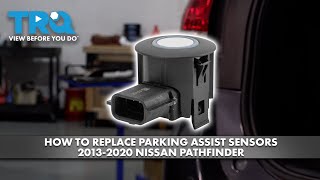
- Damaged Wiring or Connectors (Common) — Road salt and moisture corrode the wiring harness and connectors leading to the parking or speed sensors. This creates high resistance or open circuits. Wires also break internally from chassis vibration or chafing, particularly inside the rear bumper harness. 🎬 Watch: How to replace the rear parking sensors on a Nissan.
- Faulty Sonar or Body Control Module (BCM) (Rare) — The control unit managing the parking sensors or body electronics fails internally. On 2013-2014 Nissan Pathfinders, extreme cold (below 5°F) causes the Sonar Control Unit to crash, requiring a manufacturer software update or module replacement.
Symptoms

- Parking Sensor System Error Message — The dashboard displays a warning such as 'Parking Sensor System Fault', 'Service Park Assist', or 'Sonar System Error'.
- Parking Assist System Does Not Work — The vehicle stops beeping or providing visual alerts when backing up. A single faulty sensor disables the entire parking assist system.
- Harsh or Erratic Automatic Shifting — If the code points to the speed sensor, the transmission shifts violently, delays shifts, or hunts for the right gear because the computer lacks accurate speed data.
- Inaccurate Speedometer Reading — The speedometer behaves erratically, jumps to zero while driving, or shows a speed that is clearly incorrect.
- Cruise Control Does Not Work — Cruise control requires a steady vehicle speed signal. If the signal drops out, the system disables itself as a safety measure.
- Check Engine Light is On — The Check Engine Light illuminates for the transmission speed sensor fault. The ABS or Traction Control lights also illuminate if the speed signal is completely lost.
Diagnostic Flowchart
Tap your situation to follow the diagnostic path that matches what you're seeing on this code.
Common Fixes & Costs
- Clean the Parking Sensor — Parts: $0, Labor: $0, ~0.1 hr book time (DIY)
- Replace the Rear-Left Parking Sensor — Parts: $30-$150, Labor: $150-$300, ~2.0 hr book time (Intermediate)
- Replace the Transmission Output Speed Sensor — Parts: $40-$150, Labor: $100-$250, ~1.2 hr book time (Intermediate)
- Repair Damaged Wiring or Connector — Parts: $15-$50, Labor: $150-$400, ~2.0 hr book time (Professional)
- Sonar/BCM Software Update — Parts: $0, Labor: $125-$200, ~1.0 hr book time (Professional)
DIY vs Professional
- Clean the Parking Sensor — Beginner:
Tools: Soap, water, soft cloth. - Replace the Rear-Left Parking Sensor — Beginner:
Tools: Trim removal tools, socket set, screwdrivers. - Replace the Transmission Output Speed Sensor — Beginner:
Tools: Jack and jack stands, socket set, drain pan, flashlight. - Repair Damaged Wiring or Connector — Beginner:
Tools: Multimeter, soldering iron, heat shrink tubing, wire strippers.
Used vs. New Parts: Buying Guide
When a used part is worth it: A used OEM parking sensor is a great value if it is already paint-matched to your vehicle. Always buy a new transmission speed sensor due to the labor involved in replacing it.
Donor-vehicle mileage cap: roughly under 60000 miles for the part to have meaningful remaining life.
Donor quality checklist:
- Verify the exact part number matches your original sensor.
- Ensure there are no cracks, deep scratches, or signs of impact on the parking sensor face.
- Check that the electrical connector pins are straight, clean, and free of green corrosion.
Decision logic:
- If Part is a transmission speed sensor → Buy new. The labor to replace it is significant enough that you don't want to risk an early failure from a used part.
- If Part is a parking sensor AND your vehicle is over 100k miles → Buy a used, paint-matched OEM sensor to save on costs.
- If Part is a parking sensor AND it requires painting → Buy a new sensor and have it painted professionally. The cost savings of a used part are negated by the paint job.
Warranty tradeoff: Used parts typically have a 30-day warranty. New aftermarket parts offer 1-year to lifetime warranties. New OEM parts carry a 1-year warranty.
Worst-case if a used part fails: $300 if a used speed sensor fails shortly after installation, forcing you to pay for the labor a second time.
What Happens If You Wait — Timeline
- Immediate: Parking Sensor Fault: System is disabled. Speed Sensor Fault: Check Engine Light on, cruise control disabled, harsh shifts begin. (MPG impact: 0-5%% · Added cost: $0)
- 1-3 months: Parking Sensor Fault: Increased risk of a parking collision. Speed Sensor Fault: Shifting becomes consistently erratic. Noticeable drop in fuel economy. (MPG impact: 5-10%% · Added cost: $50-$150 in wasted fuel.)
- 3-6 months: Speed Sensor Fault: Sustained harsh shifting causes excessive wear on transmission clutch packs and internal solenoids. (MPG impact: 10-15%% · Added cost: $800-$2500 for valve body or solenoid replacement.)
- 6+ months: Speed Sensor Fault: Catastrophic internal transmission damage occurs. Worn clutches slip, leading to complete loss of drive. (MPG impact: 15-25%% · Added cost: $2,500-$5,000 for a transmission rebuild.)
Cost of Not Fixing It
- Immediate: A parking sensor fault increases low-speed collision risk. A speed sensor fault disables cruise control and causes inaccurate speedometer readings. (Added cost: $0-$500 (Cost of minor bumper repair if a collision occurs))
- 1-6 months: Driving with a speed sensor fault forces harsh, poorly-timed shifts that stress internal transmission components and reduce fuel economy. (Added cost: $50-$200 (Increased fuel consumption))
- 6+ months: Prolonged erratic shifting destroys transmission clutch packs and valve bodies, turning a simple sensor replacement into a catastrophic failure. (Added cost: $2,500-$5,000 (Cost of transmission rebuild or replacement))
Diagnosis Steps
- Identify the Fault Type
Check your symptoms. A parking sensor warning points to the sonar system. Harsh shifting and a Check Engine Light point to the speed sensor. Use an OBD-II scanner to read the specific module (BCM, Sonar, or TCM) setting the code.
Tools: OBD-II Scanner (Beginner) - Check for Technical Service Bulletins (TSBs)
Search for TSBs related to your specific year, make, and model. Manufacturers frequently release software updates to fix overly sensitive parking sensors (like on Mitsubishi Outlanders) or cold-weather module crashes (Nissan Pathfinders).
Tools: Smartphone or computer (Beginner) - Inspect and Clean the Parking Sensor
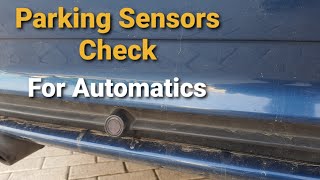
Locate the circular sensor on the rear-left corner of the bumper. Thoroughly clean it with soap and water to remove dirt, ice, or wax buildup. Check for cracks or a sunken sensor face.
Tools: Soap, water, soft cloth (Beginner) - Listen for Sensor Activity
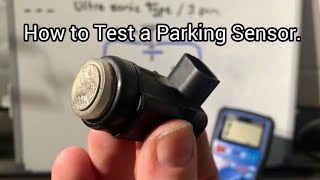
Turn the ignition on (engine off) and shift into reverse. Place your ear very close to the rear-left sensor. You should hear a faint, rapid clicking. If it is silent while the other sensors click, it is faulty or disconnected.
Tools: None (Beginner) - Inspect the Wiring and Connector
Visually inspect the wiring harness connected to the suspect sensor. Unplug the connector and look for green corrosion, bent pins, or frayed wires. Reconnect it securely.
Tools: Flashlight, jack and jack stands (for speed sensor) (Intermediate) - Test the Vehicle Speed Sensor Signal
Using an OBD-II scanner with live data, monitor the 'Vehicle Speed' PID. Drive the car and compare the scanner's reading to your speedometer. If the scanner reading drops to zero or spikes erratically, the sensor or circuit is failing.
Tools: OBD-II scanner with live data (Intermediate) - Test Sensor Circuit Voltage
For a 3-wire sensor, use a multimeter to check for voltage at the connector with the ignition on. You should find a 5V or 12V reference wire, a ground wire, and a signal wire. A missing reference voltage points to a broken wire or bad control module.
Tools: Multimeter, wiring diagram, back-probe kit (Advanced) - Test Sensor Circuit Continuity
Disconnect the sensor and the control unit. Use a multimeter and a long jumper wire to test continuity between the signal pin at the module and the corresponding pin at the sensor connector. No beep confirms a broken wire inside the harness.
Tools: Multimeter, wiring diagram, long jumper wire (Advanced) - Analyze VSS Waveform
Connect an oscilloscope to the speed sensor's signal wire. A healthy sensor produces a clean square or sine wave that increases in frequency with speed. Dropouts or distortion confirm internal sensor failure.
Tools: Oscilloscope, wiring diagram (Advanced)
When This Code Triggers (Freeze-Frame Conditions)
- Engine Coolant Temp: 170-210°F (77-99°C) (The speed sensor fault often triggers after the vehicle reaches full operating temperature and the transmission fluid thins out.)
- Engine RPM: 1500-3000 RPM (The fault logs during steady-state cruising, not typically at idle.)
- Vehicle Speed: 30-60 mph (48-97 kph) (The code sets at city or highway speeds when the PCM actively compares input and output speed sensor data to verify gear ratios.)
- Fuel System Status: Closed Loop (The fault occurs when the engine is warmed up and operating under normal computer control.)
Related Codes
- P0720 — This is the generic OBD-II code for 'Output Speed Sensor Circuit Malfunction.' If you have shifting problems and see B2720, P0720 will also be stored in the Powertrain Control Module. Seeing both confirms the transmission speed sensor is the culprit.
- B2721, B2722, B2723 — These codes represent the other parking sensors in the system. If multiple codes appear simultaneously, it strongly suggests a damaged main wiring harness or a failed control module, rather than multiple sensors breaking at the exact same time.
- P0500 — This indicates a general 'Vehicle Speed Sensor Malfunction.' If you have B2720, P0720, and P0500, the fault is definitely the transmission sensor. If you only have P0500, the issue is likely an ABS wheel speed sensor.
Climate & Environmental Factors
- Road Salt (Winter Climates): Road salt penetrates wiring harnesses and connectors, acting as an electrolyte that accelerates copper corrosion. This causes high resistance and open circuits in low-mounted parking and speed sensors.
- Extreme Cold: Temperatures below 5°F (-15°C) cause the Sonar Control Unit on 2013-2014 Nissan Pathfinders to malfunction. The system recovers when the cabin warms up, but requires an updated module (TSB NTB14-078a) for a permanent fix.
- High Humidity / Heavy Rain: Moisture penetrates failing sensor seals, causing intermittent short circuits. Heavy rain triggers a temporary obstruction code (B2720-97) on Mitsubishi Outlanders, fixable via software update TSB-23-54-006.
How to Talk to a Mechanic About This Code
Say this: "I have a B2720 code and my symptoms are [CHOOSE: 'a parking sensor error' OR 'harsh shifting and no cruise control']. I'd like to schedule a diagnostic based on those symptoms. Can you please also check for any relevant TSBs for my vehicle?"
This immediately tells the shop you know the code has two meanings and directs them to the correct system. Asking for a TSB check leads to a quicker, cheaper fix if a software update is available.
Avoid saying:
- 'My check engine light is on, can you look at it?'
- 'The car is acting weird, just fix it.'
- 'A guy on the internet said I need a new transmission.'
Questions to ask before authorizing the repair:
- Did you confirm the diagnosis by swapping the parking sensor with another to see if the code moved?
- Did you inspect the wiring harness and connector for corrosion?
- Is this part an OEM or aftermarket replacement?
- What is the warranty on the parts and labor for this repair?
Where to Take It: Dealer vs Independent vs Chain
- Dealer:
Go here first if you suspect a known TSB/software issue or if your car is under warranty. Otherwise, it's an expensive second opinion.
Best for: Vehicles under warranty., Known TSB fixes requiring a software update (e.g., Mitsubishi rain sensitivity, Nissan cold soak)., Complex electrical diagnostics if an independent shop fails.
Downsides: Highest labor rates., May recommend expensive module replacements when a wiring repair would suffice. (Typical cost: +50% vs. baseline) - Independent Shop:
Best choice for most B2720 scenarios. A good independent shop handles either the parking or speed sensor version cost-effectively.
Best for: Out-of-warranty vehicles., Straightforward part replacements (parking sensor, speed sensor)., Diagnosing and repairing common wiring issues.
Downsides: Quality varies; check for ASE certifications and reviews., May not have access to the latest TSBs or manufacturer-specific software. (Typical cost: +0% vs. baseline) - Chain Shop:
AVOID. This code's dual nature and potential for wiring faults require more diagnostic skill than is typically found at a chain shop.
Best for: Selling you tires or an oil change while they have your car.
Downsides: Technician skill varies dramatically., High pressure to upsell unnecessary services., Lack the advanced diagnostic tools for non-engine codes or wiring problems. (Typical cost: -10% vs. baseline)
When to Walk Away From the Repair
If the estimated repair cost exceeds 40-50% of the car's private-party value, seriously consider selling or trading it in.
- Car worth $15000, fix is $400: Fix it. A parking sensor replacement is a minor cost relative to the car's value.
- Car worth $5000, fix is $2700: Walk away. If the B2720 code on your Infiniti G37 requires a full valve body replacement, the repair cost is over 50% of the car's value.
- Car worth $3000, fix is $1200: Borderline. A complex wiring repair is approaching 40% of the vehicle's value. Get a second opinion before proceeding.
What Scan Tool You Need for This Code
Minimum: A scanner that reads manufacturer-specific 'B' (Body) codes and displays live data.
A cheap, engine-only code reader will not see the B2720 code. You need to see the specific code definition and view the live 'Vehicle Speed' data stream to diagnose the speed sensor variant.
Budget: BlueDriver Pro Scan Tool (~$100) — Reads and clears B-codes, provides manufacturer-specific definitions, and streams live data to your smartphone. Sufficient for a DIYer to confirm which version of the B2720 fault they have.
Mid-range: Innova 5610 (~$350) — Offers full system diagnostics to read codes from the Sonar and Body Control Modules directly. Provides detailed OEM-level information and reset procedures.
Professional: Autel MaxiCOM MK808 (~$500) — Provides full bidirectional control to activate and test individual sensors and modules. Essential for diagnosing complex wiring issues or performing software updates.
Rent vs buy: For a one-time diagnosis, auto parts stores scan codes for free to confirm B2720 exists. However, buying a budget pick like the BlueDriver is required to see live data and properly diagnose the issue at home.
How to Clear the Code After You Fix It
- Use an OBD-II scan tool to clear the Diagnostic Trouble Codes (DTCs).
- Perform a complete drive cycle to allow the vehicle's readiness monitors to run and reset.
- Rescan the vehicle to ensure the B2720 code and any related codes have not returned.
Drive cycle (~20 minutes): Cold start and idle for 3 minutes with the A/C on. Drive at a steady 55 mph for 10 minutes. Perform 10 minutes of stop-and-go city driving. Let the vehicle idle for 2 minutes before shutting it off.
Readiness monitors affected: Catalyst (CAT) Monitor, Evaporative System (EVAP) Monitor, Oxygen (O2) Sensor Monitor
Before emissions retest: drive at least 50 miles to fully set monitors.
Watch out for:
- Disconnecting the battery clears the code but resets all readiness monitors to 'Not Ready', causing an automatic emissions test failure.
- The code returns immediately if a broken wire inside the bumper harness was missed during inspection.
- Having less than 15% or more than 85% fuel in the tank prevents the EVAP monitor from running.
Will This Fail Emissions / State Inspection?
Yes — this code typically fails an OBD-II emissions inspection.
- California: An illuminated Check Engine Light (from the speed sensor variant) results in an automatic smog test failure. All required readiness monitors must be 'Ready'.
- New York: An illuminated Check Engine Light is an automatic failure. For 2001 and newer vehicles, only one readiness monitor is allowed to be 'Not Ready'.
- Texas: In emissions-testing counties, an illuminated Check Engine Light is an automatic failure. You are allowed one 'Not Ready' monitor to pass.
Most Commonly Affected Vehicles
- Infiniti G37 (2009-2013) — Prone to the transmission speed sensor malfunction, causing erratic shifting and cruise control failure. The OEM sensor is made by Hitachi.
- Nissan Pathfinder (2013-2020) — Commonly logs B2720 for a faulty rear corner sonar sensor. 2013-2014 models are subject to TSB NTB14-078a for sensor errors in extreme cold.
- Nissan Leaf (2018-2022) — Frequently logs this code for the sonar system. The rear wiring harness is fragile and prone to breaking from hatch vibration, requiring harness repair rather than sensor replacement.
- Mitsubishi Outlander (2014-2024) — Logs B2720-97 when the rear-left sonar sensor is obstructed. TSB-23-54-006 provides a software update to reduce false triggers from rain on 2022+ models.
- Kia Sorento (2015-2023) — Known for parking sensor failures caused by a corroded main bumper wiring harness, leading to multiple sensor codes at once.
- Hyundai Elantra (2017-2023) — Experiences parking sensor system faults due to sensor failure and wiring issues behind the rear bumper cover.
Manufacturer-Specific Notes
- Nissan/Infiniti: This manufacturer uses B2720 for two completely different systems. On the G37, it points to the transmission speed sensor. On the Pathfinder and Leaf, it points to the rear-left parking sensor. You must use vehicle symptoms to determine which system is failing.
- Mitsubishi: Mitsubishi appends suffixes to provide exact diagnostics. B2720-97 means the sensor is obstructed by ice or mud. B2720-88 indicates a wiring communication error. B2720-61 points to an internal failure of the sonar control unit.
- Hyundai/Kia: These brands suffer from severe moisture intrusion in the main rear bumper wiring harness. Pins in the main connector corrode and break off, requiring a replacement of the entire bumper harness sub-assembly.
Real Owner Stories
2011 Infiniti G37 with harsh shifting.
After a transmission fluid change, the car began shifting erratically. Codes P0720 and B2720 appeared.
Outcome: A transmission shop diagnosed a failed valve body, a common problem when P0720/B2720 is present on this 7-speed automatic. The entire valve body was replaced.
Lesson: On high-mileage G37s, a speed sensor code often points to a failing valve body/TCM assembly, not just the sensor itself. Expect repair quotes over $2,000.
2021 Nissan Leaf with parking sensor error after bumper damage.
After replacing a damaged front bumper, a 'Parking sensors not working' error appeared. The entire system was inoperative.
Outcome: The owner found a broken signal wire inside the main wiring loom. Running a new bypass wire from the control unit to the sensor resolved the fault.
Lesson: If replacing a sensor doesn't fix a sonar code, a broken wire is the culprit. Swapping sensors between positions confirms if the fault is the sensor or the wiring.
2013 Nissan Pathfinder with 'Parking Sensor Error' in cold weather.
The error message appeared only when the vehicle was left outside in temperatures below 5°F (-15°C). It worked normally once warmed up.
Outcome: The dealer applied Nissan TSB NTB14-078a, replacing the Sonar Control Unit with an updated part immune to extreme cold.
Lesson: If a problem is highly specific to weather, search for a Technical Service Bulletin (TSB). The fix is often a known design flaw with an established solution.
2022 Mitsubishi Outlander with intermittent 'Parking Sensor System Fault'.
The warning illuminated while driving at low speeds during heavy rain. The scan tool showed code B2720-97 (obstruction).
Outcome: The dealer applied TSB-23-54-006, updating the Sonar Control Unit software to make it less sensitive to false triggers from rain.
Lesson: Intermittent electronic issues on newer vehicles are often resolved with software updates. Check for TSBs before replacing hardware.
How to Prevent This Code From Triggering
- Regularly clean parking sensors. (Monthly or after car washes.) — Prevents buildup of dirt, road salt, and wax that obstructs the sensor's ultrasonic waves, causing false alerts.
- Apply dielectric grease to sensor connectors. (Whenever the bumper is removed for service.) — Seals electrical connectors from moisture, preventing the corrosion that leads to high resistance and open circuits.
- Perform regular transmission fluid changes. (Every 30,000-60,000 miles.) — Clean fluid prevents the buildup of metallic debris that contaminates the magnetic transmission speed sensor.
- Avoid high-pressure car washes aimed directly at sensors. (Every car wash.) — High-pressure water forces moisture past aging sensor seals, causing internal short circuits.
Frequently Asked Questions
Can I fix code B2720 myself?
Yes, if it requires cleaning or replacing a parking sensor. Diagnosing wiring issues or replacing a transmission speed sensor requires intermediate skills. Stop DIY and go to a shop if you lack a multimeter or transmission jack.
Will clearing the code fix the problem?
Only if the code triggered from a temporary obstruction like ice or heavy rain. Otherwise, the code returns immediately until you replace the faulty part or repair the wiring.
I replaced the parking sensor but the code is still there. What now?
The problem lies in the wiring harness or control module. Inspect the wiring for visible damage and check connector pins for corrosion. A broken wire inside the main bumper harness is the most likely culprit.
My mechanic swapped the left and right sensors and the code stayed. Does that mean the sensor is good?
Yes. If the B2720 code remains after moving the suspect sensor to the right side, the sensor works perfectly. The fault is isolated to the wiring on the left side or the control module.
Why did my parking sensors stop working after I got hit from behind?
Even a minor impact damages the sensor, breaks its mounting clips, or dislodges the electrical connector. This instantly disables the entire parking assist system.
Is the B2720 speed sensor the same as an ABS wheel speed sensor?
No. B2720 refers to the transmission output speed sensor. An ABS wheel speed sensor lives at the wheel hub and triggers a 'C' (Chassis) code like C0035, not a 'B' (Body) code.
My shop quoted me $450 to replace one parking sensor. Is that a fair price?
Yes. While an aftermarket sensor costs under $100, shops charge 2-3 hours of labor to remove and reinstall the rear bumper cover. Paint-matching an OEM sensor adds another $50-$100 to the bill.
Do new parking sensors need to be painted?
Yes, OEM replacement sensors typically arrive unpainted. They require professional painting to match your bumper. Applying too thick a layer of paint interferes with the sensor's ultrasonic waves.
Key Takeaways
- Check your dashboard symptoms first: a 'Service Park Assist' message means a bad rear-left parking sensor, while harsh shifting and a Check Engine Light mean a bad transmission speed sensor.
- Clean the rear-left parking sensor with soap and water before buying parts, as mud or ice causes 40% of these false alarms.
- Inspect the wiring harness behind the rear bumper for green corrosion, as road salt destroys these connectors faster than the sensors themselves.
- Search for manufacturer Technical Service Bulletins (TSBs) before replacing modules; 2013-2014 Pathfinders and 2022+ Outlanders have known software fixes for this exact code.
Helpful Videos

The information in this article is provided for general reference and educational purposes only. Vehicle specifications, procedures, and part compatibility can vary by production date, trim level, and region. Always consult your vehicle's factory service manual and verify part numbers before purchasing or performing repairs. Safety-critical components such as airbags, seat belts, and braking systems should be installed by a qualified professional.
- 🎬 Helpful Videos
- What Does B2720 Mean?
- Can I Drive With B2720?
- Common Causes
- Symptoms
- Diagnostic Flowchart
- Common Fixes & Costs
- DIY vs Professional
- Used vs. New Parts: Buying Guide
- What Happens If You Wait — Timeline
- Cost of Not Fixing It
- Diagnosis Steps
- When This Code Triggers (Freeze-Frame Conditions)
- Related Codes
- Climate & Environmental Factors
- How to Talk to a Mechanic About This Code
- Where to Take It: Dealer vs Independent vs Chain
- When to Walk Away From the Repair
- What Scan Tool You Need for This Code
- How to Clear the Code After You Fix It
- Will This Fail Emissions / State Inspection?
- Most Commonly Affected Vehicles
- Manufacturer-Specific Notes
- Real Owner Stories
- 2011 Infiniti G37 with harsh shifting.
- 2021 Nissan Leaf with parking sensor error after bumper damage.
- 2013 Nissan Pathfinder with 'Parking Sensor Error' in cold weather.
- 2022 Mitsubishi Outlander with intermittent 'Parking Sensor System Fault'.
- How to Prevent This Code From Triggering
- Frequently Asked Questions
- Can I fix code B2720 myself?
- Will clearing the code fix the problem?
- I replaced the parking sensor but the code is still there. What now?
- My mechanic swapped the left and right sensors and the code stayed. Does that mean the sensor is good?
- Why did my parking sensors stop working after I got hit from behind?
- Is the B2720 speed sensor the same as an ABS wheel speed sensor?
- My shop quoted me $450 to replace one parking sensor. Is that a fair price?
- Do new parking sensors need to be painted?
- Key Takeaways
- 🎟️ Get 5% Off