

OBD-II Code B2587: Lighting or Security Circuit Malfunction
What B2587 means, why it triggers, and how to fix it
- Code B2587 points to 1 of 3 specific failures: a backup light short, a parking light circuit fault, or a GM steering column lock malfunction.
- Inspect trunk and tailgate wiring harnesses first, as chafed insulation shorting against the metal chassis causes over 50% of B2587 lighting faults.
- Test your battery before replacing any parts; a resting voltage below 12.4V frequently triggers false B2587 codes, especially on GM vehicles.
- If you own a 1997-2004 C5 Corvette with this code, install a $50 LMC5 bypass module to permanently fix the notorious 'Service Column Lock' stalling issue.
- Never replace a blown backup light fuse with a higher-amperage one; if a replacement fuse blows instantly, you have a confirmed dead short to ground requiring multimeter diagnosis.
What Does B2587 Mean?
B2587 is a Body Control Module (BCM) code that varies by manufacturer. It typically indicates a short circuit in the backup lamp system. On General Motors (GM) vehicles, it points to a parking lamp circuit fault or a steering column lock anti-theft system failure.
Technical definition: Generic: 'Back Up Lamp Short to Ground.' GM-specific: 'Park Lamp Control Circuit Low' or 'Column Lock/Unlock Drive (A)'.
Can I Drive With B2587?
Yes, But With Caution. You can drive, but exercise caution. Reverse lights, parking lights, or anti-theft systems fail depending on the fault, creating safety hazards. For GM column lock issues, the car stalls under 2 MPH or fails to start, leaving you stranded. Ignoring the issue risks expensive BCM damage.
Common Causes
- Weak or failing battery. (Very Common) — Low system voltage from a dying battery causes electronic modules, especially the BCM, to malfunction and set false codes. A battery below 12.4 volts is insufficient for sensitive electronics. For the GM column lock system, low voltage prevents the lock motor from operating, directly triggering B2587 and B2592.
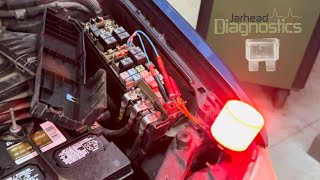
- Damaged or shorted wiring. (Very Common) — Wiring insulation rubs through from chassis contact, causing a short to ground. This is the most frequent cause for all variations of this code. 🎬 Watch: How to find and repair electrical shorts in your wiring Common chafe points are trunk lid or tailgate harnesses, especially on Volkswagen models.
- Failed park lamp or lighting relay. (Common) — Relays control higher current circuits. A relay fails internally, causing the circuit to remain open or closed incorrectly, or shorts to ground. This is a primary failure point for the GM park lamp variant.
- Corrosion or water intrusion in a lamp socket. (Common) — Moisture enters tail light assemblies or trailer hitch connectors, causing corrosion that creates an unintended path for electricity. This is a known issue on Ford F-150s with LED tail lamps containing radar modules.
- Faulty ignition switch. (Common) — A worn ignition switch causes intermittent voltage drops to critical modules like the BCM. This leads to electrical codes, including B2587, as the module loses stable power.
- Poor Body Control Module (BCM) ground. (Less Common) — The BCM relies on a solid ground connection to the vehicle's chassis. A loose or corroded ground point causes bizarre electrical issues, including setting false circuit codes.
- Faulty or internally shorted bulb. (Less Common) — The filament inside an incandescent bulb breaks and shorts against the internal structure, or an LED driver fails. A standard incandescent backup bulb has a resistance of 10-20 ohms; a reading near zero indicates a short.
- Improperly installed aftermarket accessories. (Less Common) — Accessories like trailer hitches or remote starters tapped into existing lighting circuits cause issues. Poor connections or pinched wires lead to shorts and trigger this code.
- Failed Body Control Module (BCM). (Rare) — The BCM controls body functions. An internal failure of the BCM's driver circuit triggers a B2587 code. Consider this only after exhausting all other possibilities.
Symptoms
- Backup/reverse lights do not work. — When you put the car in reverse, the white lights at the rear do not turn on. This is the primary symptom for the 'Back Up Lamp Short to Ground' definition.
- Parking lights do not work or stay on. — The amber or white parking lights at the front and rear of the car either won't turn on or stay on even after turning the car off. This is common for the 'Park Lamp Control Circuit Low' definition.
- Car won't start or stalls immediately. — For the 'Column Lock/Unlock Drive' definition, the engine fails to crank, or starts and immediately shuts off. A 'Service Column Lock' or 'Pull Key, Wait 10 Seconds' message appears on the dash.
- Repeatedly blown fuses. — A short circuit causes excessive electricity flow, blowing the fuse to protect the wiring. You find yourself replacing the same fuse repeatedly.
- Multiple, seemingly unrelated electrical issues. — Since these circuits are managed by the BCM, a short, low voltage condition, or bad ground causes strange behavior in interior lights, radios, or warning messages.
Diagnostic Flowchart
Tap your situation to follow the diagnostic path that matches what you're seeing on this code.
Common Fixes & Costs
- Replacing a faulty lighting relay
— Parts: $20-$60, Labor: $0-$50, ~0.2 hr book time
(DIY)
Chevrolet Impala / Monte Carlo (2000-2005): OEM GM 15224204, 10377973 (Alt: Standard Motor Products RY-604, Duralast 16166, ACDelco D1780C) - Repairing a shorted wire — Parts: $5-$20, Labor: $150-$600, ~2.5 hr book time (Intermediate)
- Installing a steering column lock bypass (LMC5)
— Parts: $45-$60, Labor: $0-$150, ~1.0 hr book time
(DIY)
Chevrolet Corvette (1997-2004): OEM N/A (Alt: Compliance Parts LMC5 (Bypass Module, P/N: 5001)) - Replacing a corroded tail light assembly or socket
— Parts: $50-$1400, Labor: $45-$150, ~0.8 hr book time
(DIY)
Ford F-150 with BLIS (2018-2020): OEM Ford KL3Z-13404-B (Right), JL3Z-13404-F (Alt: Various aftermarket assemblies available, ensure BLIS compatibility.) - Replacing a Body Control Module (BCM)
— Parts: $350-$800, Labor: $150-$300, ~1.5 hr book time
(Professional)
Chevrolet Corvette (2001-2004): OEM GM 10312535, 10304931 (Alt: N/A (Remanufactured OEM units are common))
Used vs. New Parts: Buying Guide
When a used part is worth it: For expensive, complex parts like a Body Control Module (BCM) or a tail light assembly with integrated radar, a used part from a reputable auto recycler offers significant savings. This is most viable for older, high-mileage vehicles where a new part's cost is a large fraction of the car's value.
Donor-vehicle mileage cap: roughly under 100000 miles for the part to have meaningful remaining life.
Donor quality checklist:
- For BCMs, ensure the part number is an exact match. Some sellers offer units with the VIN from the donor car, which is needed for reprogramming.
- Avoid parts from flood-damaged or fire-damaged vehicles.
- For electronic modules, ask about the return policy, as many have compatibility issues.
- For tail light assemblies, inspect carefully for hairline cracks, moisture inside the lens, and corrosion on the connectors.
Decision logic:
- If The part is a simple relay or a low-cost lighting assembly (<$100). → Buy new. The savings from a used part are minimal and not worth the risk of premature failure.
- If The part is a BCM for a modern vehicle (2010+). → Favor new or professionally remanufactured. Used BCMs often cannot be reprogrammed to a new vehicle's VIN, making them useless.
- If The part is an expensive tail light with sensors (e.g., Ford BLIS). → A used assembly is a good value, but you may need to swap your original sensor module into the used housing.
Warranty tradeoff: Used parts typically have a 30-90 day warranty, covering only the part itself, not labor. New aftermarket parts often carry a 1-year to limited lifetime warranty. New OEM parts have a 1-2 year warranty.
Worst-case if a used part fails: $500-$1500. If a used BCM is incompatible or fails after installation, you pay for diagnostic and programming labor twice, in addition to the cost of another module.
What Happens If You Wait — Timeline
- 0-1 week: Code is set. An immediate symptom appears: reverse lights don't work, parking lights stay on, or a 'Service Column Lock' message appears. The fuse for the circuit blows. (MPG impact: 0%% · Added cost: $0-$150 (Potential traffic ticket for inoperative lights or a tow if the car won't start))
- 1 week - 2 months: If the fault is a 'dead short', repeated fuse replacement or ignoring the issue causes the BCM's internal driver for that circuit to be repeatedly overloaded with high current. This generates excess heat inside the module. (MPG impact: 0%% · Added cost: $50 (Cost of multiple replacement fuses and potential battery drain if the short causes a parasitic draw))
- 2-6 months: The BCM's output driver circuit fails permanently from thermal stress. The circuit is now dead. What was once a wiring or relay problem now requires replacing the entire BCM, as the internal driver is not serviceable. (MPG impact: 0%% · Added cost: $600-$1200 (Cost of a new or remanufactured BCM plus dealer programming, which is often required).)
- 6+ months: Worst-case scenario: The shorted wire's insulation melts completely from the high current flow, potentially shorting against other wires in the same harness. This causes multiple, bizarre electrical failures and creates a fire hazard. (MPG impact: 0%% · Added cost: $1500-$2500+ (Cost of BCM replacement plus extensive labor to diagnose and repair a damaged wiring harness).)
Cost of Not Fixing It
- Immediate: For lighting faults: Inoperative reverse or parking lights, leading to a safety hazard and potential traffic tickets. For GM column lock faults: Vehicle fails to start or stalls at low speed, leaving you stranded. (Added cost: $150+ (Towing and/or traffic citation))
- Weeks to Months: Repeated electrical shorts cause the driver circuit inside the Body Control Module (BCM) to overheat and fail permanently. What started as a wiring issue becomes a much more expensive module replacement. (Added cost: $600-$1200+ (BCM replacement and programming))
- Long-Term: A persistent short circuit leads to overheating of the wiring harness, melting insulation and creating a fire risk. Water intrusion that caused the short spreads, corroding other modules and connectors. (Added cost: $2000+ (Harness repair/replacement, multiple module failures))
Diagnosis Steps
- Check and Test the Battery
Ensure the foundation is solid. A healthy battery measures approximately 12.6 volts with the engine off. If voltage is below 12.4V, charge and re-test it. A weak battery is a primary cause of this code.
Tools: Multimeter or battery tester (Beginner) - Check for Blown Fuses
Locate the fuse box and find the fuse related to the backup lights, parking lights, or BCM/security system. If blown, replace it with a new one of the exact same amperage. If the new fuse blows immediately, you have a confirmed short circuit.
Tools: Fuse puller, replacement fuses (Beginner) - Visually Inspect Wiring and Connectors
Examine wiring going to the affected components. Check for chafed insulation, melted plastic, or corrosion in connectors. Pay close attention to areas where the harness passes through the body or flexes, such as trunk lid harnesses.
Tools: Flashlight (Beginner) - Check for Related DTCs and Freeze Frame Data
Use a scan tool to read all codes. Pay attention to other BCM codes, especially B2592 (paired with B2587 for column lock issues) or U-codes (communication errors). Freeze frame data shows the vehicle's state when the code set.
Tools: Professional OBD-II Scan Tool (Beginner) - Perform a Short-to-Ground Test
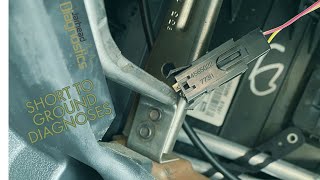
Disconnect the battery. Set a multimeter to continuity or Ohms. Disconnect the connector at the load (e.g., tail light). Connect one probe to the power wire at the fuse box and the other to a clean chassis ground. A beep or near 0 ohms indicates a direct short to ground.
Tools: Multimeter (Intermediate) - Isolate the Short
If a short is found, disconnect connectors along the circuit path and re-test. If disconnecting the main tail light harness removes the short, the problem is in the tail light assembly. If the short remains, the problem is upstream in the main harness.
Tools: Multimeter, vehicle-specific wiring diagram (Advanced) - Pro Tip: Test the BCM Control Signal (GM Park Lamp)
Backprobe the park lamp relay control circuit at the BCM connector. With lights commanded OFF, voltage is near zero. When ON, the BCM grounds this circuit. If voltage is present when OFF, or the BCM doesn't ground the circuit when ON, the BCM driver is faulty.
Tools: Multimeter or 12V test light, wiring diagram, backprobe pins (Advanced) - Pro Tip: Perform a Voltage Drop Test on the BCM Ground
Set your multimeter to a low DC voltage scale. Connect the black probe to the negative battery terminal and the red probe to the BCM's main ground pin. With the key on, the reading must be less than 0.1 volts (100mV). Higher readings indicate high resistance.
Tools: Multimeter, vehicle-specific wiring diagram (Advanced) - Advanced: Check Scan Tool Live Data PIDs
Observe live data PIDs related to the affected circuit (e.g., 'Reverse Lamp Command'). If the scan tool shows the BCM commanding the circuit on, but the component isn't working, the problem is in the output circuit. If the command status doesn't change, the problem is on the input side.
Tools: Professional OBD-II Scan Tool (Advanced)
When This Code Triggers (Freeze-Frame Conditions)
- Battery Voltage: 11.5-12.2V (During key-on or cranking, especially for column lock faults.)
- Ignition Status: On/Run (Code often sets when the BCM first commands the circuit on after the key is turned.)
- Commanded State: On/Active (The BCM commanded the reverse lights, park lights, or column lock to activate, and detected a short circuit on the output.)
- Time Since Start: 0-5 seconds (The fault is typically detected almost immediately during the BCM's power-up sequence or self-test.)
Related Codes
- B2592 — On GM vehicles, this code for 'Column Lock/Unlock Drive (B)' almost always appears with B2587 'Column Lock/Unlock Drive (A)'. They are two parts of the same steering lock system. Seeing both together confirms the fault is in the column lock mechanism; they are diagnosed as a single issue.
- B2585 — This code for 'Left Park Lamps Control Circuit' is a related GM code. If you have B2587 ('Park Lamp Control Circuit') and B2585, the diagnostic process focuses specifically on the wiring and components for the left-side parking lights.
- U1064 — This code indicates a 'Loss of Communications with BCM'. If it appears with B2587, it strongly suggests the root cause is not a simple shorted bulb. The diagnosis shifts to checking the BCM's main power, ground connections, and the possibility of a failing BCM or major data line short.
- B1578 — This is a generic code for 'Lamp Park Input Circuit Short To Ground'. To differentiate, B1578 points to a problem on the 'input' side of the BCM (e.g., the headlight switch or its wiring). B2587 typically points to a problem on the 'output' side (e.g., the wiring from the BCM to the lights).
Climate & Environmental Factors
- Cold Weather: Cold temperatures reduce a battery's chemical efficiency, lowering its output voltage. This causes modules like the BCM to malfunction and set false codes. It also makes wire insulation more brittle and prone to cracking, leading to shorts. Engine fluids thicken, requiring more power from the starter and battery, further straining the electrical system.
- High Humidity / Road Salt: Moisture from humidity or road salt spray acts as an electrolyte, dramatically accelerating corrosion on wiring, connectors, and ground points. This corrosion increases resistance or creates unintended electrical paths (shorts), triggering B2587. This is especially problematic for undercarriage wiring, trailer connectors, and components exposed to wheel spray.
- Extreme Heat: High ambient temperatures, especially in the engine bay, cause wire insulation to soften and degrade over time, increasing the risk of shorts. Heat also accelerates the chemical reactions that cause battery degradation and leads to overheating of electronic modules like the BCM.
How to Talk to a Mechanic About This Code
Say this: "I have an OBD-II code B2587 on my [Year, Make, Model] and the symptom is [e.g., 'the reverse lights don't work' or 'the parking lights are stuck on' or 'I'm getting a Service Column Lock message']. I'd like to schedule a diagnostic appointment to pinpoint the cause. I suspect it might be a wiring short, a bad relay, or a ground issue, so I'd like to start with diagnosing the circuit before we consider replacing expensive modules like the BCM."
This signals to the shop that you've done your research and understand the common causes. It directs them towards a logical diagnostic path (checking cheap and common failures first) and discourages them from immediately quoting the most expensive repair (like a BCM replacement).
Avoid saying:
- 'My lights are acting funny, can you fix it?'
- 'Just do whatever it takes to fix the code.'
- 'I think I need a new BCM.'
Questions to ask before authorizing the repair:
- What was the specific point of failure you found? Can you show me the damaged wire or the failed component?
- If you are recommending a BCM replacement, what specific tests did you perform to rule out a bad ground, a faulty relay, and a short in the wiring harness first?
- For a wiring repair, how much of the cost is the diagnostic labor versus the actual repair labor?
- What is the warranty on the diagnostic work and the repair itself?
- For a GM column lock issue, have you considered a bypass module as an alternative to a full component replacement, and why is the recommended repair the better option?
Where to Take It: Dealer vs Independent vs Chain
- Dealer:
Recommended only for warranty/recall work or confirmed BCM replacement. For initial diagnosis, an independent shop is often more cost-effective.
Best for: Vehicles under warranty., Repairs related to a specific safety recall (like the GM column lock)., If the final diagnosis is a failed BCM that requires manufacturer-specific programming.
Downsides: Highest labor rates., May be quicker to replace an entire wiring harness or module rather than spend time locating and repairing a single wire. (Typical cost: +50% vs. baseline) - Independent Shop:
Best fit. A good independent auto electric specialist is the ideal choice for diagnosing and repairing the most common causes of B2587, such as wiring shorts and bad grounds.
Best for: Out-of-warranty vehicles., Diagnosing complex electrical faults like intermittent shorts., Vehicles with well-known issues (like VW trunk harness failure or GM park lamp relays).
Downsides: Shop quality and electrical expertise vary greatly. Look for ASE certifications and positive reviews specifically mentioning electrical diagnostics. (Typical cost: +0% vs. baseline) - Chain Shop:
AVOID for diagnosis. Use them only for a free battery test. Do not let them diagnose a B2587 code, as the risk of an expensive misdiagnosis is high.
Best for: Free battery testing, which should be a first step in your diagnosis.
Downsides: Technicians lack the specialized training for in-depth electrical diagnostics., High pressure to sell parts leads to misdiagnosis (e.g., selling a new BCM when the problem is a $30 relay). (Typical cost: -10% vs. baseline)
When to Walk Away From the Repair
If the estimated repair cost for the worst-case scenario (e.g., BCM and wiring harness repair) exceeds 50% of your car's private-party value, it's time to pause and evaluate your options.
- Car worth $4000, fix is $2200: Walk away. A repair costing over half the car's value is a poor investment, especially since other age-related issues are likely.
- Car worth $15000, fix is $1200: Fix it. This repair is well below the threshold and restores critical safety and security functions.
- Car worth $3000, fix is $500: Fix it, but only if the diagnosis is certain. Ensure this isn't the first of many electrical problems.
What Scan Tool You Need for This Code
Minimum: A scanner that can read manufacturer-specific Body (B-codes) from the Body Control Module (BCM).
A basic $20 engine code reader will likely not see 'B' codes at all. You cannot diagnose B2587 without a tool that can communicate with the BCM to retrieve the specific fault and view related live data from switches and sensors.
Budget: BlueDriver Pro Scan Tool (~$119) — Reads and clears BCM codes, shows freeze frame data, and displays live data from BCM inputs (like switch status) on your smartphone. This is sufficient to confirm the code and monitor basic inputs.
Mid-range: Foxwell NT510 Elite / Autel MaxiCOM MK808S (~$150-380) — Adds bidirectional control. This is a game-changer for B2587, as it allows you to command the BCM to activate specific circuits (e.g., 'turn on reverse lights') from the tool. If the lights turn on with the tool but not the switch, it isolates the problem to the input side. If they don't, the problem is on the output side (BCM, wiring, or bulb).
Professional: Launch X431 Series / Autel MS906 Pro (~$450-1200) — Offers full dealer-level diagnostics, including advanced functions like BCM programming and coding. This is necessary if you need to replace and configure a new Body Control Module.
Rent vs buy: AutoZone's free loaner tool service may not be sufficient, as their basic readers often don't access BCM codes. For this code, buying a budget pick like BlueDriver is a good investment for any DIYer. If you suspect a bad BCM, it's better to pay for a professional diagnosis than to buy a pro-level scanner for one-time use.
How to Clear the Code After You Fix It
- Fix the underlying short or replace the faulty component.
- Reconnect the battery if it was disconnected for the repair.
- Use an OBD-II scan tool to clear the B2587 code from the Body Control Module.
- For some vehicles like Ford, a BCM reset or specific relearn procedure is required to re-enable a circuit that was disabled due to a short.
Drive cycle (~15 minutes): A specific drive cycle is not typically required for a B-code. The primary step is to fix the fault and clear the code. After clearing, operate the affected system (e.g., shift into reverse, turn on parking lights, start the car) to verify the code does not return immediately.
Readiness monitors affected: Not applicable. B-codes do not directly affect emissions readiness monitors.
Watch out for:
- Simply disconnecting the battery does not clear the code from the BCM's memory.
- If the physical short circuit is not repaired, the code returns instantly when the circuit is next commanded on.
- On some Ford models, the BCM disables a shorted circuit to protect itself; the circuit remains dead even after the short is fixed until the code is cleared with a proper scan tool.
Will This Fail Emissions / State Inspection?
No — by itself this code doesn't fail OBD inspection (but it can keep readiness monitors from setting, which causes a separate fail).
- California: A B-code like B2587 will not, by itself, cause a failure of the OBD-II emissions test. However, if the fault results in inoperative required lighting (like parking lights), it fails the visual/functional safety inspection that is part of the overall process.
- New York: New York's annual inspection includes both safety and emissions components. While B2587 is not an emissions code, a failure of required safety equipment like reverse or parking lights results in an inspection failure.
- Texas: The annual Texas Vehicle Inspection includes a check for all required exterior lights. Inoperative backup or parking lights constitute a safety inspection failure, preventing you from getting a sticker.
Most Commonly Affected Vehicles
- Chevrolet Corvette (1997-2004) — Extremely common for the 'Column Lock/Unlock Drive' definition, causing a no-start or stall condition. This was the subject of GM Safety Recall 04006. Many owners still experience issues post-recall and opt for an LMC5 bypass module.
- Chevrolet Impala / Monte Carlo (2000-2005) — Prone to the 'Park Lamp Control Circuit Low' definition, causing parking lights to stay on or not work at all, often due to a bad park lamp relay or a faulty BCM driver.
- GMC Sierra (1999-2007) — Often experiences issues with parking light circuits due to faulty relays, switches, or grounds. Diagnosis is similar to the Impala/Monte Carlo.
- Ford F-150 (2010-2021) — Susceptible to the 'Back Up Lamp Short to Ground' code, often caused by damaged wiring near the rear bumper or a short in the 7-pin trailer connector. Water intrusion into LED tail lamps with BLIS radar modules is also a known, and very expensive, cause.
- Dodge Ram (1994-2010) — These trucks frequently have issues with the backup light circuit, pointing to corroded sockets, a faulty neutral safety switch on the transmission, or wiring shorts along the frame rail.
- Nissan Titan (2004-2015) — Experiences the 'Back Up Lamp Short to Ground' code due to issues with the backup light relay, fuse, or wiring harness in the rear of the truck.
- Toyota Tundra (2007-2021) — The 'Back Up Lamp Short to Ground' variant is triggered by faults in the trailer wiring harness, either at the 7-pin connector or from damaged wiring running to it.
- Volkswagen Jetta / Golf (2005-2017) — Often suffer from broken wires inside the rubber conduit between the trunk lid and the car body. This flexing harness causes shorts for the reverse lights, license plate lights, and trunk latch, triggering B2587. Repair kits for this specific harness are available.
Manufacturer-Specific Notes
- General Motors (Chevrolet, GMC): The definition of B2587 is most varied on GM vehicles. The column lock issue on C5 Corvettes is so common that GM issued Product Safety Recall 04006 to address the failure, which prevents steering or causes a no-start.
- Ford: On F-150 trucks, the Body Control Module (BCM) disables the backup light circuit if it detects a short to protect its internal drivers. Even after fixing the physical short, the code must be cleared with a capable scan tool before the lights function again. Simply replacing the fuse or fixing the wire is not enough to restore operation.
- Volkswagen: On Jetta, Golf, and Passat models, the most common cause for lighting circuit shorts in the rear is the wiring harness that runs from the body to the trunk lid. The constant flexing from opening and closing the trunk causes the wires to fatigue and break their insulation. Aftermarket harness repair kits are widely available.
- Chrysler/Dodge: While less common, on some Chrysler/Dodge/Jeep products, a B-series code in this range relates to window calibration. For example, a code like B2577 signifies the passenger window lost its calibration, often after the battery was disconnected. This highlights the importance of using a scan tool with manufacturer-specific definitions.
Real Owner Stories
2002 Chevrolet Corvette with 'Service Column Lock' message
Owner experienced the classic C5 Corvette issue: 'Pull Key, Wait 10 Seconds' message on the dash, followed by 'Service Column Lock', and the car shut off at 2 MPH. Codes B2587 and B2592 were present.
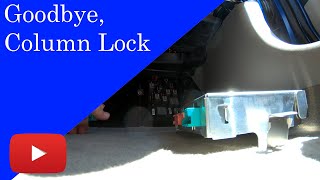
Outcome: The owner installed an LMC5 Column Lock Bypass module, costing about $50. The module plugs into the BCM in the passenger footwell and simulates a perfectly working column lock system, preventing the BCM from triggering the fuel cut-off.
Lesson: For the C5 Corvette column lock issue (B2587/B2592), don't assume the BCM is bad. The most reliable and cost-effective fix is an aftermarket bypass module like the LMC5, even if the dealer recall has been performed.
2004 Chevrolet Impala with parking lights staying on
The owner found that the parking lights would not turn off, draining the battery. Code B2587, 'Park Lamp Control Circuit Low', was stored in the Body Control Module.
Outcome: The problem was a faulty park lamp relay. The owner swapped the relay with an identical one from the horn circuit to test, and the lights functioned correctly. A new relay cost under $30 and was a simple plug-and-play fix.
Lesson: When dealing with a 'Circuit Low' code, always diagnose the simplest and cheapest parts first. A faulty relay is a very common cause for this specific GM issue and is much cheaper to replace than a BCM.
2011 Volkswagen Jetta with no reverse lights
The reverse lights stopped working, and the car set a B2587 'Back Up Lamp Short to Ground' code. The fuse was intact.
Outcome: Multiple wires inside the flexible rubber conduit had broken or their insulation chafed through from the repeated motion of opening and closing the trunk. The owner repaired the broken wires using a butt connector and heat shrink, restoring the reverse lights.
Lesson: On many sedans, especially VW models, always inspect the wiring harness that flexes between the body and the trunk lid or tailgate. This is a very common point of failure for trunk-mounted lighting.
How to Prevent This Code From Triggering
- Periodically inspect and protect wiring harnesses. (Every 2 years or during other maintenance) — Visually check harnesses in high-movement areas (trunk lid, doors) or high-heat areas (engine bay) for chafing. Apply high-temperature cloth harness tape or split-loom tubing to protect vulnerable spots before the insulation wears through.
- Apply dielectric grease to electrical connectors. (Whenever a connector is disconnected for service) — Applying a thin layer of dielectric grease to the connector's seal prevents moisture and oxygen from causing corrosion, which creates high resistance or shorts. This is especially important for connectors exposed to the elements, like tail lights and trailer plugs.
- Maintain battery health and terminals. (Twice a year (e.g., before winter and summer)) — A weak battery is a primary cause of false BCM codes. Regularly test the battery voltage (should be ~12.6V when off) and clean any corrosion from the terminals with a wire brush and baking soda solution to ensure the BCM receives stable power.
- Ensure aftermarket accessories are wired correctly. (During installation) — When adding accessories like trailer lighting or remote starters, use proper soldering and heat-shrink connections instead of less reliable T-taps or scotch-locks. Route new wiring carefully to avoid pinching it against sharp metal edges, which causes a short circuit later.
Frequently Asked Questions
What is the most common misdiagnosis for code B2587?
The most common mistake, especially on GM vehicles, is replacing the Body Control Module (BCM) prematurely. Many B2587 codes, particularly the column lock variant, are caused by a weak battery or a faulty ignition switch that creates a voltage drop. Always test the battery and charging system thoroughly before condemning an expensive module.
I keep clearing the code and it comes back. What am I doing wrong?
Clearing the code only erases the fault from the module's memory; it does not fix the underlying physical problem. If a short circuit exists, the code sets again as soon as the module attempts to activate that circuit. You must perform the diagnostic steps to find and repair the short, low voltage condition, or faulty component.
Can a bad ground cause code B2587?
Absolutely. A loose or corroded ground connection for the Body Control Module (BCM) causes erratic behavior and the setting of false trouble codes. The module interprets the unstable voltage as a circuit fault, making ground checks a critical diagnostic step.
I replaced the fuse and it blew again. What do I do now?
A fuse that blows immediately is a clear sign of a dead short to ground. Do not install a higher-amperage fuse, as this creates a serious fire hazard. Perform a short-to-ground test with a multimeter to find and repair the shorted wire or component.
My car has the column lock version of B2587. Can I fix it myself?
Fixing the GM column lock issue is generally considered a job for an intermediate to advanced DIYer. While replacing the actuator itself is complex, many owners opt to install an aftermarket column lock bypass module like the LMC5. This simpler, cheaper repair involves plugging a small electronic device into the BCM harness to bypass the faulty factory system.
Why did my mechanic quote me so much to fix a wiring issue?
Diagnosing an electrical short is highly time-consuming. The cost primarily covers the diagnostic labor required to trace the wiring through the vehicle, identify the exact location of the short, and access it for repair. This often involves removing interior panels, carpets, or other components.
What does 'Pull Key, Wait 10 Seconds' mean on my Corvette?
This message on the Driver Information Center (DIC) is a direct symptom of the electronic column lock system failing its self-test. It is often accompanied by codes B2587 and B2592, causing the car to stall if put into gear. It indicates an urgent need for diagnosis of the column lock system.
Key Takeaways
- Code B2587 points to 1 of 3 specific failures: a backup light short, a parking light circuit fault, or a GM steering column lock malfunction.
- Inspect trunk and tailgate wiring harnesses first, as chafed insulation shorting against the metal chassis causes over 50% of B2587 lighting faults.
- Test your battery before replacing any parts; a resting voltage below 12.4V frequently triggers false B2587 codes, especially on GM vehicles.
- If you own a 1997-2004 C5 Corvette with this code, install a $50 LMC5 bypass module to permanently fix the notorious 'Service Column Lock' stalling issue.
- Never replace a blown backup light fuse with a higher-amperage one; if a replacement fuse blows instantly, you have a confirmed dead short to ground requiring multimeter diagnosis.
Helpful Videos


The information in this article is provided for general reference and educational purposes only. Vehicle specifications, procedures, and part compatibility can vary by production date, trim level, and region. Always consult your vehicle's factory service manual and verify part numbers before purchasing or performing repairs. Safety-critical components such as airbags, seat belts, and braking systems should be installed by a qualified professional.
- 🎬 Helpful Videos
- What Does B2587 Mean?
- Can I Drive With B2587?
- Common Causes
- Symptoms
- Diagnostic Flowchart
- Common Fixes & Costs
- Used vs. New Parts: Buying Guide
- What Happens If You Wait — Timeline
- Cost of Not Fixing It
- Diagnosis Steps
- When This Code Triggers (Freeze-Frame Conditions)
- Related Codes
- Climate & Environmental Factors
- How to Talk to a Mechanic About This Code
- Where to Take It: Dealer vs Independent vs Chain
- When to Walk Away From the Repair
- What Scan Tool You Need for This Code
- How to Clear the Code After You Fix It
- Will This Fail Emissions / State Inspection?
- Most Commonly Affected Vehicles
- Manufacturer-Specific Notes
- Real Owner Stories
- 2002 Chevrolet Corvette with 'Service Column Lock' message
- 2004 Chevrolet Impala with parking lights staying on
- 2011 Volkswagen Jetta with no reverse lights
- How to Prevent This Code From Triggering
- Frequently Asked Questions
- What is the most common misdiagnosis for code B2587?
- I keep clearing the code and it comes back. What am I doing wrong?
- Can a bad ground cause code B2587?
- I replaced the fuse and it blew again. What do I do now?
- My car has the column lock version of B2587. Can I fix it myself?
- Why did my mechanic quote me so much to fix a wiring issue?
- What does 'Pull Key, Wait 10 Seconds' mean on my Corvette?
- Key Takeaways
- 🎟️ Get 5% Off