

OBD-II Code B2512: A Comprehensive Guide to Lighting, Latch, and Module Faults
The Ultimate Resource for Diagnosing and Fixing B2512
- Verify the exact B2512 definition for your vehicle before diagnosing, as it means 'Right Power Sliding Door Latch' on Chrysler minivans but 'Right Headlamp Short' on Hyundai/Kia.
- On 2010-2016 Chrysler and Dodge minivans, inspect the flexible wiring track under the sliding door for broken wires before spending $300 on a new latch assembly.
- If B2512 appears immediately after installing aftermarket LED headlights, install CANbus-ready bulbs or 50W load resistors to correct the electrical resistance mismatch.
- Never replace a $500 Smart Junction Box (SJB) or Body Control Module (BCM) without first using a multimeter to rule out a simple short-to-ground in the wiring harness.
- On Mitsubishi vehicles, a dead battery corrupts the headlamp leveling ECU memory; fix this by performing an ECU re-initialization with a bi-directional scanner rather than replacing the module.
What Does B2512 Mean?

B2512 is a manufacturer-specific Body Control Module (BCM) code indicating an electrical circuit malfunction. Its meaning varies significantly by brand. For Chrysler and Dodge minivans, it specifically points to a failure in the right power sliding door latch mechanism. For many Hyundai, Kia, and Ford vehicles, it signals a short circuit in the headlight or fog light system. On some Mitsubishi models, it indicates an internal ECU memory error, while on certain GM vehicles, it relates to the steering wheel controls. Always verify the code's definition for your exact vehicle.
Technical definition: The Society of Automotive Engineers (SAE) does not have a single, standardized definition for B2512. Manufacturer-specific definitions include 'Right Power Sliding Door Latch Cinch Pawl Switch Performance' (Chrysler/Dodge), 'Right Headlamp Low Circuit Short to Ground' (Hyundai/Kia), 'Front Fog Lamp Relay Circuit Short to Battery' (Ford/Subaru), 'ECU internal error (EEPROM)' (Mitsubishi), and 'Steering Wheel Controls Illegal A/D Values' (GM).
Can I Drive With B2512?
Yes, But With Caution. Driving is possible, but risks depend on the vehicle. If the code relates to headlights, driving at night is unsafe and risks a traffic ticket. For Chrysler/Dodge minivans, the power sliding door fails to latch securely, creating a safety hazard and causing a parasitic battery drain that kills the battery overnight. Address the issue promptly.
Common Causes

- Faulty Latch Assembly (Chrysler/Dodge) (Very Common) — The internal motor or position switch within the power sliding door latch assembly is a highly frequent failure point on Town & Country and Grand Caravan models, directly causing this code.
- Broken Wires in a Flexible Harness (Chrysler/Dodge) (Very Common) — The wires traveling with the sliding door in a flexible track are under constant stress. Repeated bending fatigues and breaks the copper wires, leading to an open circuit.
- Shorted or Damaged Wiring (Very Common) — Wiring for exterior lights is exposed to moisture, heat, and vibration. Insulation wears away, causing a short to ground. Connectors also fail frequently due to corrosion or loose pins.
- Aftermarket LED/HID Conversion Issues (Common) — The BCM monitors circuit resistance. Installing aftermarket LED bulbs with a different electrical load causes the BCM to interpret it as a fault. 'CANbus-ready' bulbs with built-in resistors are required.
- Faulty Relay (Common) — The relay controlling the headlight or fog light circuit fails internally, getting stuck open or closed. This is the primary suspect on Ford and Subaru vehicles.
- Poor Ground Connection (Common) — A corroded, loose, or broken ground strap increases circuit resistance, leading to dim/flickering lights or intermittent operation that sets the code.
- Faulty Light Bulb (Common) — A bulb's internal filament breaks and creates a short circuit, causing an overcurrent condition that the Body Control Module detects as a fault.
- Failing Body Control Module (BCM) or Smart Junction Box (SJB) (Rare) — The control module itself fails internally. This occurs on some Hyundai/Kia models where the SJB is the source of the fault, but only check this after exhaustively ruling out wiring issues. 🎬 Watch: A mechanic's deep dive into Kia Smart Junction Box issues.
Symptoms

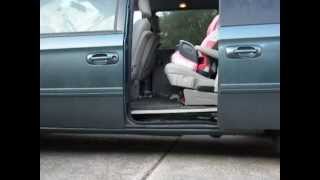
- Power Sliding Door Malfunction (Chrysler/Dodge) — The door fails to open or close with power, does not latch securely, or makes clicking/grinding noises.
- Headlight or Fog Light Not Working — A specific light (e.g., the right low beam) fails to illuminate.
- Light Stays On and Won't Turn Off — A short to power or a stuck relay causes a light to remain on, draining the battery.
- Warning Light on Dashboard — The Check Engine Light, a specific lighting system warning, or a 'Service Power Sliding Door' message appears.
- Flickering or Dim Light — Indicates a poor connection, failing ground, or high resistance in the circuit.
- Parasitic Battery Drain (Chrysler/Dodge) (also visible on scanner) — A faulty door latch prevents vehicle modules from entering 'sleep' mode, killing the battery overnight.
Diagnostic Flowchart
Tap your situation to follow the diagnostic path that matches what you're seeing on this code.
Common Fixes & Costs

- Replace Power Sliding Door Latch Assembly (Chrysler/Dodge) — Parts: $150-$300, Labor: $150-$250, ~1.5 hr book time (Intermediate)
- Repair Damaged Wiring or Connector — Parts: $10-$50, Labor: $150-$300, ~2.0 hr book time (Intermediate)
- Replace Headlight/Fog Light Relay — Parts: $15-$35, Labor: $50-$80, ~0.5 hr book time (DIY)
- Replace Smart Junction Box (SJB) (Hyundai/Kia) — Parts: $350-$700, Labor: $150-$250, ~1.5 hr book time (Professional)
- Replace Headlamp Leveling ECU (Mitsubishi) — Parts: $200-$500, Labor: $100-$200, ~1.0 hr book time (Professional)
Used vs. New Parts: Buying Guide
When a used part is worth it: For electronic modules like a Smart Junction Box (SJB) or Headlamp ECU, a used part from a reputable seller offering a warranty provides significant savings on older vehicles.
Donor-vehicle mileage cap: roughly under 100000 miles for the part to have meaningful remaining life.
Donor quality checklist:
- Verify the exact part number matches; superseded numbers require programming.
- Purchase from a seller that tests the electronics and offers a warranty.
- Avoid mechanical parts like door latches from high-mileage vehicles or rust-belt states.
Decision logic:
- If The part is a high-wear item like a Chrysler door latch assembly → Buy new (OEM or quality aftermarket). The labor to replace it is significant, making a new part with a warranty a better value.
- If The part is an expensive electronic module (SJB, ECU) and the vehicle is over 10 years old → A tested, warrantied used or remanufactured part is a reasonable choice to manage repair costs.
- If The part requires programming or initialization (SJB, ECU) → Factor in the cost of programming a used part versus a new one. Some shops only program new OEM parts.
Warranty tradeoff: Used parts typically have a 30-90 day warranty. New aftermarket parts offer a 1-year to limited lifetime warranty. New OEM parts carry a 1-2 year warranty.
Worst-case if a used part fails: $300-$600 if a used part fails after the warranty period, requiring a second labor charge and another part.
What Happens If You Wait — Timeline
- Immediate: A specific component fails. For Chrysler, the door stops latching securely. For Hyundai/Kia, the right headlight goes out. A warning light appears on the dashboard. (MPG impact: 0%% · Added cost: $0-$250 in potential traffic fines for an inoperative headlight.)
- 1 week - 1 month: For Chrysler/Dodge, the faulty door latch prevents the BCM from going to sleep, causing a parasitic battery drain. The battery dies overnight. (MPG impact: 0%% · Added cost: $150-$300 for a new battery if the drain damages the current battery via repeated deep cycling.)
- 1 - 6 months: For lighting faults (Hyundai/Kia), continued driving with an unresolved short circuit causes the wiring to overheat, melting the connector or damaging adjacent wires. (MPG impact: 0%% · Added cost: $100-$300 to repair a melted connector pigtail or a larger section of the wiring harness.)
- 6+ months: A persistent short circuit overloads and destroys the driver circuit inside the control module (SJB/BCM), turning a wiring problem into a module problem. (MPG impact: 0%% · Added cost: $700-$1500 to replace and program the Smart Junction Box or Body Control Module.)
Cost of Not Fixing It
- Immediate: For lighting faults, this reduces nighttime visibility and results in a 'fix-it' ticket. For Chrysler door faults, the door is not secure, posing a risk of opening while driving. (Added cost: $25-$250 in fines.)
- 0-1 month: For Chrysler/Dodge door faults, a malfunctioning latch causes a parasitic battery drain, leading to a dead battery and the need for a replacement. (Added cost: $150-$300 for a new battery.)
- 1-6+ months: Ignoring a short circuit in a lighting system leads to overheating wiring or destroys the driver circuit within the Body Control Module (BCM), turning a simple wiring fix into an expensive module replacement. (Added cost: $700-$1500 for module replacement and programming.)
Diagnosis Steps
- Confirm the Code's Meaning
Use a factory service manual or professional database to confirm what B2512 means for your specific vehicle's make, model, and year. Do not assume it is a lighting problem.
Tools: OBD-II Scanner, Factory Service Manual (Beginner) - Inspect Wiring and Connectors
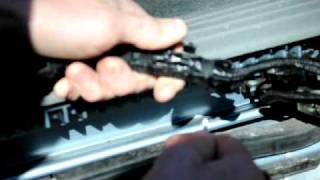
Visually inspect the entire wiring harness leading to the affected component. Look for melted plastic, chafed insulation, or green/white corrosion. On Chrysler minivans, inspect the flexible wire track under the sliding door for broken wires.
Tools: Flashlight, Inspection Mirror (Intermediate) - Perform Basic Component Checks (Bulb, Fuse, Relay)
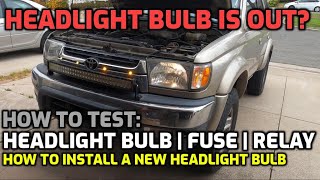
For lighting faults, visually inspect the bulb and connector. Swap the bulb with the working one from the other side. Check all related fuses. Swap the circuit's relay with an identical one from a non-essential system (e.g., horn).
Tools: Fuse puller, Trim tool (Beginner) - [PRO TIP] Perform a Wiggle Test
With the circuit activated, gently wiggle the connector at the component and at the control module (BCM/SJB). Manipulate the wiring harness along its length. If the light flickers or the door motor actuates, you found the poor connection.
Tools: Hands (No tools required) (Intermediate) - Test for Power and Ground with a Multimeter
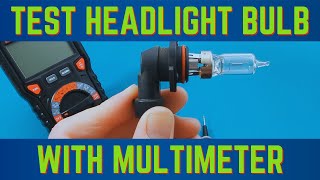
With the circuit activated, unplug the component. Use a multimeter to check for ~12V at the power pin. Switch to Ohms and check for continuity (less than 5 ohms) between the ground pin and a clean chassis ground. A lack of voltage or bad ground points upstream.
Tools: Digital Multimeter (Intermediate) - [PRO TIP] Conduct Parasitic Draw Test (Chrysler/Dodge)
If the vehicle has a dead battery, perform a parasitic draw test. A draw over 50-85mA after the modules go to sleep (30-45 mins) is excessive. Disconnect the power sliding door latch; if the draw drops, the latch is the culprit.
Tools: Multimeter with 10A setting (Advanced) - [PRO TIP] Test for Short to Ground (Hyundai/Kia)
Disconnect the battery, SJB connector, and headlamp connector. Set the multimeter to Ohms. Place one probe on the Right Headlamp Low signal pin at the SJB harness and the other on a clean chassis ground. A low resistance reading confirms a short to ground in that wire.
Tools: Digital Multimeter (Advanced) - [ADVANCED] Quantitative Voltage Drop Testing
Measure specific values. At the headlamp connector with lights on, expect close to battery voltage (13.5-14.5V engine on). Perform a voltage drop test on the ground side with the circuit active; a reading over 0.2V indicates a poor ground.
Tools: Digital Multimeter (Advanced) - Diagnose the Control Module
If all wiring, components, power, and grounds test good, the fault is in the control module (BCM, SJB, or Headlamp Leveling ECU). Use an advanced scan tool to check for internal module faults and view live data.
Tools: Advanced Bi-Directional Scanner (Professional)
When This Code Triggers (Freeze-Frame Conditions)
- System State (Chrysler/Dodge): Active (Code sets when the power sliding door is in the cinching phase and the pawl switch signal is lost.)
- System State (Hyundai/Kia): Active (Code sets when the BCM commands the right headlamp ON and detects a short to ground for >150ms.)
- System State (Mitsubishi): Ignition ON (Code sets if the headlamp leveling ECU detects an internal memory (EEPROM) data error during self-test.)
- Battery Voltage: 9V-16V (The BCM must operate within its normal voltage range to accurately detect faults; low voltage causes erroneous codes.)
Related Codes
- B2511 — On Mitsubishi vehicles, this code for a headlamp leveling sensor fault appears with B2512. Diagnose B2511 first, as a faulty sensor causes the ECU to log the B2512 internal error.
- B2510 — On Mitsubishi, B2510 indicates 'Auto-levelling not initialized'. Performing the initialization procedure clears both codes. On Hyundai/Kia, B2510 is for the 'Right Headlamp High Circuit Short to Ground'.
- U0140 — Means 'Lost Communication With Body Control Module.' Diagnose U0140 first, as fixing the BCM communication resolves the B2512.
- B1662 / B1666 — General lighting circuit fault codes. If present alongside B2512, it confirms the issue is in the lighting system. Diagnose the more specific B2512 first.
- P2512 — A Powertrain code for 'Event Data Recorder Request Circuit/Open'. Completely unrelated to B2512; do not confuse the diagnostic paths.
Climate & Environmental Factors
- Cold Weather: On Chrysler/Dodge minivans, cold temperatures thicken door latch lubricants and freeze door seals, straining the latch motor. It also makes the plastic insulation on the flexible wiring harness brittle and prone to breaking.
- Humidity and Moisture: High humidity and rain introduce moisture into headlight assemblies or damaged wiring harnesses. This accelerates corrosion on connector pins and creates conductive pathways, leading directly to short circuits.
How to Talk to a Mechanic About This Code
Say this: "I have a B2512 code on my [Vehicle Make/Model]. Based on the vehicle, I believe the issue is [select one: 'the right power sliding door circuit', 'a short in the right headlight circuit', 'an internal memory error in the headlamp leveling ECU']. I'd like to schedule a diagnostic appointment. Can you please instruct the technician to [select one: 'inspect the wiring in the flexible door track before quoting a new latch', 'perform a short-to-ground test on the headlight harness before condemning the SJB', 'attempt an ECU re-initialization before quoting a new module']?"
This specific language directs the technician to diagnose the most common and least expensive failure points first (broken wires, software glitches) and prevents them from immediately quoting an expensive module replacement.
Avoid saying:
- 'My check engine light is on, can you look at it?'
- 'Just fix whatever is wrong.'
- 'I think I need a new BCM.'
- 'My car is acting weird.'
Questions to ask before authorizing the repair:
- What were the specific results of the diagnostic test you performed (e.g., 'What was the resistance reading on the short-to-ground test?')?
- If you are recommending a module replacement, can you show me the test results that prove the wiring, connectors, and component are all good?
- Is programming or initialization required for this new part, and is that included in the labor estimate?
- What is the warranty on the recommended part and the labor?
Where to Take It: Dealer vs Independent vs Chain
- Dealer:
Recommended for module programming or if you have a Mitsubishi. Otherwise, a qualified independent shop is more cost-effective.
Best for: Vehicles under warranty., Complex module (BCM, SJB, ECU) replacement requiring brand-specific programming., Performing the 're-initialization' procedure on a Mitsubishi ECU.
Downsides: Highest labor rates., Quicker to replace a whole assembly rather than perform a detailed wiring repair. (Typical cost: +50% vs. baseline) - Independent Shop:
Best overall fit, provided you choose a shop with strong electrical diagnostic skills. They are more willing to perform a detailed wiring repair.
Best for: Out-of-warranty vehicles where cost is a factor., Diagnosing and repairing wiring issues, which is a common cause of B2512., Owners who want a direct line of communication with the technician.
Downsides: Diagnostic capabilities vary; ensure the shop specializes in electrical diagnostics., May not have the specific tools to program a new module. (Typical cost: +0% vs. baseline) - Chain Shop:
AVOID. B2512 is a complex diagnostic code requiring specialized knowledge beyond the scope of most chain repair shops.
Best for: Simple, unrelated maintenance like oil changes or tires.
Downsides: Technicians are generally not equipped for complex electrical diagnosis., High likelihood of misdiagnosis or recommending an unnecessary, expensive repair. (Typical cost: -10% vs. baseline)
When to Walk Away From the Repair
If the estimated repair cost exceeds 40-50% of the car's current private-party value, seriously consider selling or trading in the vehicle instead of repairing it.
- Car worth $4000, fix is $350: Fix it. A wiring or latch repair is well below the threshold and restores key functionality.
- Car worth $4000, fix is $1800: Borderline. This likely involves a module replacement. Get a second opinion to confirm the diagnosis before authorizing.
- Car worth $2500, fix is $1500: Walk away. The repair cost is 60% of the vehicle's value. It is not a sound financial decision.
What Scan Tool You Need for This Code
Minimum: A scanner that reads manufacturer-specific Body Control Module ('B') codes. Basic sub-$50 code readers that only read generic powertrain ('P') codes will NOT see code B2512.
A standard code reader from a parts store reports 'No Codes Found' because it cannot communicate with the Body Control Module where B2512 is stored.
Budget: BlueDriver Pro or Autel AP200 (~$100) — Reads and clears BCM codes, displays live data from body modules. This is the minimum to correctly identify the code and see related data streams.
Mid-range: Foxwell NT510 Elite or Innova 5610 (~$180-350) — Adds crucial bidirectional control. This allows you to command components directly (e.g., 'cycle door latch') and perform special functions like ECU re-initialization.
Professional: Autel MaxiCOM MK808 / XTOOL D7 (~$450-700) — Offers full bidirectional controls, all OEM-level special functions, and performs programming/coding on replacement modules.
Rent vs buy: AutoZone's free loaner tool service is insufficient, as their basic readers cannot access BCM codes. Buying at least a budget-level scanner that reads 'B' codes is necessary for DIY diagnosis.
How to Clear the Code After You Fix It
- Fix the underlying mechanical or electrical fault.
- Reconnect the battery if it was disconnected.
- Use an OBD-II scan tool to select the Body Control Module (BCM) and erase the fault codes.
Drive cycle (~10 minutes): A specific drive cycle is not required. Verify the repair by repeatedly operating the system. Turn the lights on and off several times, or cycle the Chrysler power sliding door open and closed 5-10 times to confirm the code does not return.
Readiness monitors affected: None
Watch out for:
- Clearing the code without fixing the root cause results in the code returning immediately upon the next system use.
- Disconnecting the battery clears the code from active memory but does not erase it from permanent fault history.
- For Hyundai/Kia, the code clears itself as soon as the short circuit is no longer present.
Will This Fail Emissions / State Inspection?
Yes — this code typically fails an OBD-II emissions inspection.
- California: An illuminated Check Engine Light causes an automatic failure. Inoperative required lighting (headlights) fails the visual/functional inspection.
- New York: The NYS inspection includes checking all required lighting. A non-working headlight or illuminated malfunction light is a direct failure.
- Texas: In emissions counties, an illuminated Check Engine Light results in automatic failure. The safety inspection checks for proper headlight operation, and a failure prevents passing.
Most Commonly Affected Vehicles
- Chrysler / Dodge Town & Country, Grand Caravan (2010-2016) — B2512 almost exclusively means 'Right Power Sliding Door Latch Cinch Pawl Switch Performance'. Inspect the latch assembly and the wires in the flexible track under the door.
- Hyundai Tucson, Elantra, i30, Sonata (2011-2017) — Logs B2512 for 'Right Headlamp Low Circuit Short to Ground'. The issue is commonly a wiring short between the Smart Junction Box (SJB) and the headlamp, or a fault within the SJB.
- Kia Optima, Sorento, Sportage (2011-2016) — B2512 means 'Right Headlamp Low Circuit Short to Ground'. Diagnosis focuses on checking for a short in the harness before suspecting the Smart Junction Box (SJB).
- Mitsubishi Outlander, Lancer (2007-2014) — Reports B2512 as an 'ECU internal error (EEPROM)' for the headlamp leveling system, often triggered by a dead battery. Attempt re-initialization with a scan tool before replacing the ECU.
- Ford Focus, Fusion, Escape (2008-2018) — Points to a 'Front Fog Lamp Relay Circuit Short to Battery', making the relay and its associated wiring the primary suspects.
- GMC / Chevrolet Suburban, Silverado, Various (2007-2014) — Indicates 'Steering Wheel Controls Illegal A/D Values'. This is a fault with the steering wheel buttons, clock spring, or column wiring, unrelated to lighting.
- Subaru Outback, Forester (2010-2019) — Defined as 'Front Fog Lamp Relay Circuit Short to Battery'. The diagnostic path starts with testing the fog lamp relay and circuit integrity.
- Jeep Grand Cherokee, Wrangler (2011-2018) — Stored in the TIPM or BCM and relates to lighting circuit faults, often due to internal TIPM relay failures.
Manufacturer-Specific Notes
- Chrysler / Dodge: Ignore the lights, check the door. For minivans, B2512 is almost guaranteed to be the right power sliding door latch or its wiring. A known issue is wire breakage inside the flexible track running along the bottom of the door.
- Mitsubishi: Points to an internal memory (EEPROM) error in the headlamp leveling ECU, triggered by a dead or disconnected battery. Always check the ECU's power and ground and attempt a re-initialization before ordering a replacement ECU.
- Hyundai / Kia: The Smart Junction Box (SJB) is a common culprit. Technicians often find an internal failure of the SJB's driver for the right headlamp circuit, but only after confirming the wiring harness is not shorted to ground.
- GM (GMC / Chevrolet): Means 'Steering Wheel Controls Illegal A/D Values'. This is a completely different diagnostic path focusing on the clock spring, steering wheel buttons, and column wiring.
Real Owner Stories
2012 Dodge Grand Caravan at 110K miles
The right power sliding door stopped working, the 'Service Power Sliding Door' light came on, and the door would not fully latch, causing an overnight battery drain.
What they tried:
- Checked all fuses, which were good.
- Inspected the wiring harness in the flexible track under the door.
Outcome: Found two wires completely broken inside the plastic track. Spliced the broken wires using butt connectors and heat shrink tubing for $10. The door function was fully restored, and the B2512 code cleared.
Lesson: On Chrysler/Dodge minivans, always inspect the flexible wiring harness under the sliding door before replacing the expensive latch assembly. Broken wires are an extremely common and cheap-to-fix cause.
2013 Hyundai Elantra at 85K miles
The right low-beam headlight stopped working. The Check Engine Light came on with code B2512, 'Right Headlamp Low Circuit Short to Ground'.
What they tried:
- Replaced the headlight bulb and swapped the relay, but the light still did not work.
- A mechanic suspected a faulty Smart Junction Box (SJB) and quoted $800.
Outcome: An independent shop performed a short-to-ground test and traced the wiring harness from the SJB to the headlight. They found a section where the wire's insulation rubbed through on a sharp metal bracket. The wire was repaired for $150 in labor. The SJB was not faulty.
Lesson: Never replace an expensive control module like an SJB without first proving the wiring is good. A short circuit is far more common, and a proper test saves hundreds of dollars.
2010 Mitsubishi Outlander at 125K miles
After replacing a dead battery, a 'Service Headlamp Leveling System' warning appeared with code B2512, 'ECU internal error (EEPROM)'.
What they tried:
- Tried clearing the code with a basic scanner, but it returned immediately.
- Checked fuses and visually inspected the leveling sensor links.
Outcome: A technician used an advanced scan tool to access the Headlamp Leveling ECU and perform a 're-initialization' procedure. This rewrote the corrupted memory, cleared the code, and restored the auto-leveling function for a $120 diagnostic fee.
Lesson: On Mitsubishi vehicles, if B2512 appears after a battery replacement, do not immediately replace the ECU. Insist on a re-initialization procedure with a professional scan tool first.
How to Prevent This Code From Triggering
- Apply Dielectric Grease to Connectors (Whenever a bulb is replaced or wiring is exposed) — Applying dielectric grease to bulb sockets and harness connectors seals out moisture, preventing the corrosion and short circuits that cause B2512 on Hyundai, Kia, and Ford vehicles.
- Inspect and Lubricate Sliding Door Mechanisms (Once per year (before winter)) — On Chrysler/Dodge minivans, cleaning the door tracks and lubricating the latch mechanisms reduces strain on the motors and cables, prolonging the life of the latch assembly.
- Secure Wiring Harnesses (During any under-hood or under-body maintenance) — Checking that wiring harnesses are properly secured prevents chafing and rubbing that wears away insulation, leading to shorts to ground.
- Use a Battery Tender for Long-Term Storage (If vehicle is stored for more than 3-4 weeks) — For Mitsubishi vehicles, this prevents the deep battery discharge that corrupts the headlamp leveling ECU's memory and triggers a B2512 internal error code.
Frequently Asked Questions
Can a bad battery cause code B2512?
Generally, no. However, on Mitsubishi vehicles, a severe voltage drop from a failing battery corrupts the headlamp leveling ECU's memory (EEPROM), triggering the B2512 internal error code. For other makes, a stable battery is simply required for accurate diagnosis.
I installed LED headlights and now I have a B2512 code. What happened?
This is a very common issue because the BCM monitors the resistance of a standard halogen bulb. New LED bulbs have a different electrical signature, which the BCM interprets as a fault. Install 'CANbus-ready' error-free LED bulbs with built-in resistors to mimic the halogen load.
My code is for a Chrysler sliding door. Can I fix it myself?
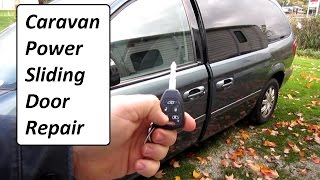
Yes, this is a popular DIY repair. Replacing the latch assembly or repairing the wires in the lower door track are common fixes with many online video tutorials available. The latch does not typically require special tools to replace.
What are the most common misdiagnosis mistakes for B2512?
The biggest mistake is replacing an expensive control module (BCM, SJB, TIPM) without exhaustively testing the wiring and components first. A simple short to ground or a broken wire is a much more common and cheaper-to-fix cause.
Why does the definition of B2512 change so much between car brands?
OBD-II codes starting with 'P' (Powertrain) are highly standardized. However, codes starting with 'B' (Body), 'C' (Chassis), and 'U' (Network) are not. Manufacturers have significant freedom to assign these codes to specific faults on their unique systems.
Can I pass a state inspection with code B2512?
It is highly unlikely. In most jurisdictions, an active 'B' code that illuminates a warning light or affects safety equipment like headlights results in an inspection failure. The vehicle's computer reports the fault to the inspection station's equipment.
What is a Smart Junction Box (SJB)?
An SJB, used by Hyundai and Kia, is an integrated module combining a traditional interior fuse panel with the logic of a body control module. It directly controls components like lighting and communicates with other modules on the vehicle's network.
Key Takeaways
- Verify the exact B2512 definition for your vehicle before diagnosing, as it means 'Right Power Sliding Door Latch' on Chrysler minivans but 'Right Headlamp Short' on Hyundai/Kia.
- On 2010-2016 Chrysler and Dodge minivans, inspect the flexible wiring track under the sliding door for broken wires before spending $300 on a new latch assembly.
- If B2512 appears immediately after installing aftermarket LED headlights, install CANbus-ready bulbs or 50W load resistors to correct the electrical resistance mismatch.
- Never replace a $500 Smart Junction Box (SJB) or Body Control Module (BCM) without first using a multimeter to rule out a simple short-to-ground in the wiring harness.
- On Mitsubishi vehicles, a dead battery corrupts the headlamp leveling ECU memory; fix this by performing an ECU re-initialization with a bi-directional scanner rather than replacing the module.
Helpful Videos

The information in this article is provided for general reference and educational purposes only. Vehicle specifications, procedures, and part compatibility can vary by production date, trim level, and region. Always consult your vehicle's factory service manual and verify part numbers before purchasing or performing repairs. Safety-critical components such as airbags, seat belts, and braking systems should be installed by a qualified professional.
- 🎬 Helpful Videos
- What Does B2512 Mean?
- Can I Drive With B2512?
- Common Causes
- Symptoms
- Diagnostic Flowchart
- Common Fixes & Costs
- Used vs. New Parts: Buying Guide
- What Happens If You Wait — Timeline
- Cost of Not Fixing It
- Diagnosis Steps
- When This Code Triggers (Freeze-Frame Conditions)
- Related Codes
- Climate & Environmental Factors
- How to Talk to a Mechanic About This Code
- Where to Take It: Dealer vs Independent vs Chain
- When to Walk Away From the Repair
- What Scan Tool You Need for This Code
- How to Clear the Code After You Fix It
- Will This Fail Emissions / State Inspection?
- Most Commonly Affected Vehicles
- Manufacturer-Specific Notes
- Real Owner Stories
- 2012 Dodge Grand Caravan at 110K miles
- 2013 Hyundai Elantra at 85K miles
- 2010 Mitsubishi Outlander at 125K miles
- How to Prevent This Code From Triggering
- Frequently Asked Questions
- Can a bad battery cause code B2512?
- I installed LED headlights and now I have a B2512 code. What happened?
- My code is for a Chrysler sliding door. Can I fix it myself?
- What are the most common misdiagnosis mistakes for B2512?
- Why does the definition of B2512 change so much between car brands?
- Can I pass a state inspection with code B2512?
- What is a Smart Junction Box (SJB)?
- Key Takeaways
- 🎟️ Get 5% Off