

OBD-II Code B2500: Warning Lamp or Lighting Circuit Malfunction
What B2500 means, why it triggers, and how to fix it
- Identify your vehicle's specific B2500 definition first, as it means 'Warning Lamp Failure' on Hyundai/Kia but points to power seats on Chevrolets.
- Assume your entire airbag system is disabled and will not deploy in a crash if the airbag warning light remains illuminated.
- Check for a 15-year unlimited mileage clock spring warranty extension on 2011-2016 Hyundai and Kia models before paying for repairs.
- Count the airbag light flashes on 1998-2011 Ford and Mazda trucks to diagnose the exact circuit fault without needing an OBD-II scanner.
What Does B2500 Mean?

B2500 is a body control code that signals an electrical circuit problem. Its meaning varies heavily by car brand. Most often, it indicates a failure in the airbag warning light circuit, but it also flags faults with interior lights or power seats. The control module (e.g., SRSCM, BCM) sends a command to a component and monitors the circuit's voltage. If the module detects unexpected voltage, it stores the B2500 code.
Technical definition: The SAE/ISO definition for B2500 varies by manufacturer. Common definitions include 'Warning Lamp Failure,' 'Courtesy Lamp Output Circuit Short to Battery,' and 'High Speed Radiator Fan Relay Circuit Malfunction.' On Hyundai and Kia vehicles, it specifically indicates the Supplemental Restraint System Control Module (SRSCM) detected a fault in the airbag warning light circuit. On some Chevrolets, it points to a power seat Hall effect sensor fault.
Can I Drive With B2500?
Yes, But With Caution. You can drive with this code, but if the airbag warning light is on, assume the entire airbag system is disabled and will not deploy in a crash. This is a major safety risk. Get the vehicle diagnosed and repaired immediately. Continued driving poses no mechanical risk, but the lack of a critical safety system makes it unsafe for occupants.
Common Causes

- Burnt-out or incorrect warning light bulb (Very Common) — On vehicles where B2500 relates to a warning lamp, the simplest cause is a burnt-out instrument cluster bulb. The control module expects specific electrical resistance from the bulb; when it burns out, the circuit opens, triggering the code.
- Damaged wiring or poor connection under seat (Common) — Wires fray, break, or corrode over time. The wiring harness under the front seats is a frequent failure point, often disturbed by stored items or seat movement. This creates an open or short circuit in the airbag or seatbelt pretensioner system.
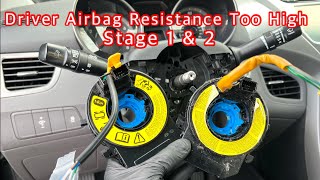
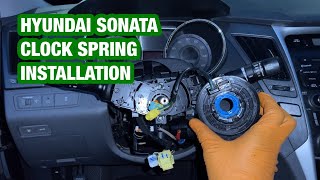
- Faulty clock spring (Common) — The clock spring is a rotary electrical connector in the steering column that maintains the connection for the driver's airbag and steering wheel controls. A worn or broken internal ribbon cable creates an open circuit, triggering airbag-related codes.
- Blown fuse (Common) — A blown fuse cuts power to the associated circuit (e.g., airbag system, courtesy lights). If the fuse blows due to a short circuit or overload, it triggers the B2500 code.
- Faulty control module (BCM or SRSCM) (Less Common) — The Body Control Module (BCM) or Supplemental Restraint System Control Module (SRSCM) monitors these circuits. An internal failure, such as a bad relay or cracked solder joint, causes the module to set this code incorrectly.
- Bad ground connection (Less Common) — All electrical circuits require a solid ground connection to the vehicle's chassis. A loose or corroded ground strap for the BCM, SRSCM, or the component itself causes intermittent electrical faults and triggers the B2500 code.
- Low battery voltage (Uncommon) — A weak battery causes lower than normal system voltage, triggering a B2500 code in sensitive modules like the Airbag Control Module. Kia and Hyundai vehicles frequently interpret this voltage drop as a circuit fault.
- Moisture or corrosion in connectors (Uncommon) — Water intrusion leads to corrosion within electrical connectors or the fuse block. This corrosion creates unwanted resistance or short circuits, triggering a B2500 code for interior lighting or under-seat connectors.
Symptoms

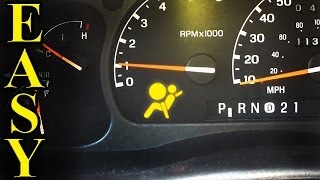
- Airbag warning light is on, off, or flashing — This is the most common symptom for Hyundai and Kia vehicles. The light stays on constantly, fails to illuminate during the initial self-test, or flashes a specific pattern.
- Interior lights (courtesy lamps) fail — If the code relates to the courtesy lamp circuit, the interior lights fail to turn on when you open the doors.
- Power seats fail — On some GM vehicles, this code ties to the power seat system. You experience a complete loss of power to the seat, or it moves opposite to the switch input.
- Steering wheel controls fail — You lose functionality of the horn, cruise control, or radio buttons on the steering wheel, indicating a broken clock spring.
- Check Engine Light illuminates — A fault in a body module triggers the main Check Engine Light to inform the driver that a code is stored.
Diagnostic Flowchart
Tap your situation to follow the diagnostic path that matches what you're seeing on this code.
Common Fixes & Costs
- Replace burnt-out instrument cluster bulb — Parts: $5-$20, Labor: $100-$250, ~1.2 hr book time (Intermediate)
- Repair wiring under seat — Parts: $5-$25, Labor: $150-$300, ~1.5 hr book time (Intermediate)
- Replace clock spring — Parts: $50-$300, Labor: $150-$300, ~1.5 hr book time (Intermediate)
- Replace blown fuse — Parts: $1-$5, Labor: $0, ~0.1 hr book time (DIY)
- Replace Airbag Control Module (SRSCM) — Parts: $200-$800, Labor: $200-$400, ~1.8 hr book time (Professional)
Used vs. New Parts: Buying Guide
When a used part is worth it: For a clock spring, a used part from a low-mileage, non-accident vehicle is a budget-friendly option if the part number matches exactly. Buying a used Airbag Control Module (SRSCM) is highly discouraged unless you use a professional service to reset crash data and reprogram it to your VIN.
Donor-vehicle mileage cap: roughly under 50000 miles for the part to have meaningful remaining life.
Donor quality checklist:
- Verify the donor vehicle was not in a flood or accident.
- For SRSCMs, ensure the part number is an exact match. It still requires professional reprogramming.
- Obtain a vehicle history report for the donor car to check for accident history.
Decision logic:
- If The part is a clock spring and the vehicle is over 100K miles → Buy new. The labor to replace it is significant, and a used part has limited remaining life.
- If The part is an Airbag Control Module (SRSCM) → Favor having your original module reset by a specialist service or buying a new OEM part. A used module from a junkyard is not plug-and-play.
- If The part is a simple component like a fuse or bulb → New is the only sensible option due to the low cost.
Warranty tradeoff: Used parts from recyclers typically have a 30-90 day warranty. New aftermarket parts carry a 1-year to limited lifetime warranty. New OEM parts have a 1-year/12,000-mile warranty.
Worst-case if a used part fails: $300-$600 if a used clock spring or improperly reset SRSCM fails after installation, requiring repeat labor costs plus the price of another part.
What Happens If You Wait — Timeline
- Immediate (0 seconds): The SRSCM detects a fault during the initial key-on self-test, illuminates the airbag warning light, and disables the entire Supplemental Restraint System. (MPG impact: 0%% · Added cost: $0 (Safety system is now inactive))
- 0 days to next inspection: The vehicle is driven with a non-functional airbag system. The risk of severe injury or death in a collision is significantly increased. (MPG impact: 0%% · Added cost: N/A (Constant safety risk))
- At next state safety inspection: In jurisdictions with safety inspections, an illuminated airbag light is an automatic failure, preventing vehicle registration renewal until repaired. (MPG impact: 0%% · Added cost: $50-$200 (Failed inspection fee + diagnostic charge from a repair shop))
- In the event of an accident: Airbags and seatbelt pretensioners fail to deploy, leading to a much higher probability of serious occupant injury or fatality. Insurance companies deny claims due to the pre-existing safety fault. (MPG impact: 0%% · Added cost: $10,000 - $1,000,000+ (Medical bills, vehicle value loss, legal liability))
Cost of Not Fixing It
- Immediate: The entire Supplemental Restraint System (airbags, pretensioners) is disabled and will not deploy in a collision. This represents a critical failure of the vehicle's primary safety system. (Added cost: N/A (Safety risk))
- At next vehicle inspection: The vehicle fails its annual state safety inspection, preventing registration renewal. (Added cost: $20-$50 (Failed inspection fee) + cost of eventual repair)
- In case of an accident: Increased risk of severe injury or fatality for all occupants due to non-deployment of airbags. Insurance claims face denial due to the pre-existing safety system fault. (Added cost: Potentially infinite (medical bills, loss of vehicle value, legal liability))
Diagnosis Steps

- Identify the Specific Definition & Module
Use an advanced OBD-II scanner to read the B2500 code and identify which module set it (e.g., BCM, SRSCM). Search for the specific definition of B2500 for your vehicle's make and model, as it varies widely.
Tools: OBD-II Scanner (capable of reading Body/Chassis codes) (Beginner) - Check Fuses and Battery
Inspect the fuses related to the system in question (e.g., 'SRS', 'Airbag', 'BCM', 'Room Lamp'). Ensure the vehicle battery is fully charged and the terminals are clean. Voltage below 12V with the engine off causes spurious electrical codes.
Tools: Fuse puller, Multimeter, Owner's manual (Beginner) - Inspect the Bulb and Connectors
If the code relates to a warning light, access the instrument cluster to inspect the bulb. Visually inspect all accessible connectors related to the circuit (especially under the front seats) for damage, corrosion, or looseness.
Tools: Trim removal tools, Flashlight (Intermediate) - Decode Flashing Airbag Light (Ford/Mazda)
On older Ford and Mazda trucks, turn the key to 'ON' and count the flashes of the airbag light. It flashes a two-digit code (e.g., 4 flashes, pause, 6 flashes = code 46). Common codes include 27 (Passenger Airbag Deactivation lamp inoperative) and 46 (Driver seatbelt pretensioner fault).
Tools: Pen and paper (Intermediate) - [PRO TIP] Test Warning Lamp Circuit Voltage
For a 'Warning Lamp Failure' on a Hyundai/Kia, disconnect the SRSCM connector (after disconnecting the battery for 3+ minutes). Reconnect the battery. Turn ignition 'ON'. Measure the voltage between the airbag warning lamp terminal on the harness-side connector and a good chassis ground. You should see battery voltage (approx. 12V).
Tools: Multimeter, Vehicle-specific wiring diagram (Advanced) - [PRO TIP] Test Circuit for Shorts to Ground
With the ignition OFF and battery disconnected, measure the resistance between the warning lamp's control wire terminal (at the SRSCM connector) and chassis ground. The resistance should be infinite ('OL'). Low resistance indicates a short to ground in the wiring.
Tools: Multimeter, Vehicle-specific wiring diagram (Advanced) - [PRO TIP] Test Clock Spring Continuity
With the battery disconnected and airbag module safely removed, disconnect the clock spring connectors. Test each wire through the clock spring by placing probes on corresponding pins on both sides. A healthy wire shows under 1.0 Ohm. Slowly rotate the clock spring to check for intermittent breaks.
Tools: Multimeter, Vehicle-specific wiring diagram, Trim removal tools (Advanced) - [PRO TIP] Use a Resistor to Test the SRSCM
Disconnect the suspect component (e.g., seatbelt pretensioner) and place a 2.2-3.0 ohm resistor across the terminals of the vehicle-side connector. Clear the codes. If the 'open circuit' code disappears, the wiring and module are good, and the component itself is faulty.
Tools: 2.2-3.0 Ohm Resistor, Advanced diagnostic scanner (Professional) - Diagnose CAN Bus / ETACS Error
If the definition is 'ETACS Data Error' or U-codes are present, measure the resistance between Pin 6 (CAN-H) and Pin 14 (CAN-L) at the OBD-II port with the battery disconnected. A healthy network reads 60 Ohms. 120 Ohms indicates a break; 0 Ohms indicates a short.
Tools: Multimeter, Oscilloscope (recommended) (Professional)
When This Code Triggers (Freeze-Frame Conditions)
- System Voltage: 11.5V - 14.5V (The SRSCM continuously monitors system voltage. The code triggers during ignition-on self-test or while driving if voltage drops too low or spikes.)
- Ignition Status: ON (The fault is most often detected during the 6-second warning lamp self-check immediately after turning the ignition key to the 'ON' position.)
- Component Status: Open, Short to Ground, or Short to Battery (Unlike engine codes, BCM/SRSCM freeze frames note the electrical state of the specific circuit rather than vehicle speed or RPM.)
- Fault Type: Present or Historical (The module records whether the fault is actively occurring ('Present') or if it was an intermittent issue that occurred in the past ('Historical').)
Related Codes
- B1346 — On Hyundai/Kia vehicles, this code for 'Driver Airbag Resistance Too High' often appears alongside B2500. If you see both, the problem is a faulty clock spring, as it is the common component for both the airbag circuit and the warning light's functionality check.
- B1000 — Indicates an internal failure of a control module (SDM/SRSCM or BCM). It appears alongside B2500 if the module itself is the root cause of the circuit fault. If only B2500 is present, the fault is in the external circuit (wiring, bulb, fuse).
- B2501 / B2502 — These relate to specific lighting circuits. B2502 means 'Airbag Telltale Lamp Failure.' Having both B2500 and B2502 confirms the problem is in the airbag warning light circuit itself, rather than a power or ground issue affecting the whole module.
- U-codes (e.g., U0140, U0155) — U-codes indicate a communication problem on the CAN bus network. If the BCM or SRSCM cannot communicate with the instrument cluster, it sets a B2500 code as a symptom. Diagnose the network communication problem first, as fixing it clears the B2500 code.
Climate & Environmental Factors
- High Humidity / Moisture: Moisture and high humidity lead to corrosion on electrical connectors, fuse blocks, and module circuit boards. This corrosion increases resistance or causes short circuits, triggering codes like B2500. Under-seat connectors are particularly vulnerable.
- Extreme Cold: Very cold temperatures cause electrical connectors to contract, leading to intermittent open circuits and triggering airbag lights. Cold weather also reduces battery effectiveness, and the resulting low system voltage is misinterpreted as a circuit fault by the SRSCM.
How to Talk to a Mechanic About This Code
Say this: "I have an airbag light on and my scanner is showing a B2500 code. I'd like to schedule a diagnostic appointment. Based on my research for my car's make and model, this points to the warning lamp circuit, the clock spring, or wiring under the seat. Please start by checking these common, simpler causes before quoting a full control module replacement."
This signals you are an informed customer. It directs the technician to perform a logical, cost-effective diagnostic process, starting with the most likely and cheapest fixes, rather than immediately assuming a worst-case scenario like a failed SRS module.
Avoid saying:
- 'My airbag light is on, can you just reset it?'
- 'Just fix whatever is wrong with the airbag.'
- 'I have a B2500 code, replace the airbag computer.'
Questions to ask before authorizing the repair:
- What specific fault did the diagnostic scan identify (e.g., 'open circuit,' 'short to ground') and in which circuit?
- If you are recommending a clock spring replacement, have you checked if there is an extended warranty for this part on my vehicle?
- If you are recommending a module replacement, can you confirm that you tested the wiring and connectors to rule them out as the cause?
- Does your quoted price for a module replacement include the cost of programming and calibration?
- What is your warranty on this specific SRS repair?
Where to Take It: Dealer vs Independent vs Chain
- Dealer:
Recommended if the vehicle is a Hyundai/Kia covered by the clock spring warranty, or if an SRSCM replacement and programming is necessary.
Best for: Vehicles under warranty or with a potential warranty extension (e.g., Hyundai/Kia clock spring)., Complex cases involving module replacement that requires manufacturer-specific programming., When you want the highest likelihood of a correct diagnosis on the first try, regardless of cost.
Downsides: Highest labor rates, often 1.5-2x more than independent shops., Quicker to replace an entire assembly rather than repair a smaller component (e.g., replace seat track instead of repairing a wire). (Typical cost: +50% vs. baseline) - Independent Shop:
Best fit for most common B2500 repairs, provided you choose a reputable shop with ASE-certified technicians experienced in SRS diagnostics.
Best for: Out-of-warranty vehicles where the cause is a common issue like a clock spring, under-seat wiring, or a bad sensor., Getting a second opinion on an expensive dealer quote.
Downsides: Not all independent shops are comfortable or properly equipped to work on SRS systems due to liability and specialized tools. You must vet the shop's experience with airbag systems. (Typical cost: +0% vs. baseline) - Chain Shop:
AVOID. The risk of misdiagnosis or improper repair on a critical safety system is too high.
Best for: Not recommended for SRS system diagnostics or repairs.
Downsides: Technicians lack the specialized training for safety-critical SRS systems. Diagnostic tools are not advanced enough to read specific manufacturer codes. High pressure to upsell leads to incorrect and expensive recommendations. (Typical cost: -10% vs. baseline)
When to Walk Away From the Repair
If the estimated repair cost for the airbag system exceeds 40-50% of your car's private-party value, and the car has other pending issues, consider selling it as-is or trading it in.
- Car worth $3500, fix is $1800: Walk away. A repair costing over half the car's value for a single safety system is not economical.
- Car worth $10000, fix is $450: Fix it. This is a reasonable cost to restore a critical safety feature on a more valuable vehicle.
- Car worth $5000, fix is $2200: Borderline. Get a second opinion from a trusted independent shop before proceeding. If the cost is firm, consider walking away.
What Scan Tool You Need for This Code
Minimum: A scanner that reads and clears 'B' (Body) and 'U' (Network) codes, specifically for the SRS (Airbag) module.
A standard $20-$50 code reader only checks for 'P' (Powertrain) codes and will not see the B2500 code in the SRS or BCM. You cannot diagnose or clear the airbag light with basic tools.
Budget: BlueDriver Pro Scan Tool (~$100) — Connects to a smartphone app and reads/clears SRS codes for most major brands, providing the specific B2500 definition. It offers live data to help diagnose intermittent connection issues.
Mid-range: Foxwell NT510 Elite (~$180) — A powerful handheld scanner providing dealership-level diagnostics for a single chosen car brand. It reads SRS codes, views live sensor data, and performs bi-directional controls to test components.
Professional: Autel MaxiCOM MK808 / MK808S (~$500) — A professional-grade tablet scanner offering full system diagnostics, deep SRS analysis, live data graphing, and service functions. It performs module resets and calibrations needed after a repair.
Rent vs buy: AutoZone's Loan-A-Tool program offers scanners, but you must verify the specific loaner model reads SRS/airbag codes. Given the safety-critical nature of the SRS system, buying a capable scanner like the BlueDriver is a worthwhile investment.
How to Clear the Code After You Fix It
- Reconnect any disconnected components (e.g., clock spring, cluster).
- Reconnect the vehicle battery.
- Use an SRS-capable OBD-II scan tool to erase the B2500 code.
- Cycle the ignition off, then on, and confirm the airbag light performs its self-test (on for ~6 seconds, then off) and stays off.
Drive cycle (~10 minutes): After clearing the code, a short 5-10 minute test drive confirms the fault does not return. This allows the SRS module to complete its continuous self-diagnostics.
Readiness monitors affected: Not applicable. Readiness monitors are part of the emissions system ('P' codes) and are not affected by 'B' codes.
Watch out for:
- Using a basic code reader that cannot access the SRS or BCM modules will not clear the code.
- Disconnecting the battery rarely clears airbag codes; they are stored in non-volatile memory.
- If the root cause is not fixed, the code returns instantly upon the next ignition cycle self-test.
Will This Fail Emissions / State Inspection?
No — by itself this code doesn't fail OBD inspection (but it can keep readiness monitors from setting, which causes a separate fail).
- California: Will NOT fail a smog check. The airbag system is not part of the emissions inspection, and only an illuminated Check Engine Light causes an automatic failure.
- New York: An illuminated airbag warning light is a failure item for the annual safety inspection, which is separate from the emissions inspection.
- Texas: Will NOT fail the safety inspection. The airbag system is not a required inspection item in Texas.
Most Commonly Affected Vehicles

- Hyundai Accent, Elantra, Sonata, Tucson, Tiburon (1998-2016) — Very common for this code to indicate a fault in the airbag warning lamp circuit. For 2011-2016 Elantras, this code is often accompanied by B1346 (Driver Airbag Resistance Too High) and is frequently caused by a faulty clock spring.
- Kia Sorento, Ceed, Rio, Sportage, Sedona (2002-2016) — Frequently points to a 'Warning Lamp Failure' in the airbag system. On 2011-2015 Sorento models, Kia extended the warranty for the clock spring to 15 years/unlimited miles. Can also be defined as an 'ETACS Data Error' on some models.
- Ford Ranger, Explorer, F-150 (1998-2011) — Airbag faults are indicated by a flashing light code. Code 27 is a burnt-out passenger airbag deactivation (PAD) lamp, and Code 46 points to the driver's seatbelt pretensioner circuit, often due to a bad connector under the seat.
- Mazda B-Series Truck (B2300, B2500, B3000, B4000) (1998-2009) — These trucks are rebadged Ford Rangers and share the same airbag diagnostic system. A common issue is a flashing code 25, indicating a fault with the Passenger Airbag Deactivation (PAD) switch.
- Chevrolet Silverado, Cavalier (2000-2007) — Indicates a fault with the power seat's Hall effect sensor. On 2003-2007 Silverados, power seat problems are common, sometimes caused by a poor connection in the main harness connector under the seat, requiring a bypass of the power wire.
- Dodge B2500 Van / Ram Van (1995-2003) — Electrical issues related to the Body Control Module trigger various 'B' codes, including B2500, often related to lighting or internal module faults.
- Nissan Frontier, Patrol, Xterra (1998-2009) — A B2500 code relates to body electrical issues, sometimes involving the lighting or airbag systems. Diagnosis requires a scanner that reads Nissan-specific body codes.
- Volkswagen Golf, Jetta, Passat (2000-2010) — A B2500 code points to a 'Courtesy Lamp Output Circuit Short to Battery,' indicating a fault in the interior lighting system.
Manufacturer-Specific Notes
- Hyundai / Kia: B2500 almost always means 'Warning Lamp Failure' and points directly to the airbag warning light circuit. Both Kia and Hyundai issued 15-year/unlimited-mileage warranty extensions for the clock spring on many popular models, including the 2011-15 Sorento and Elantra.
- Ford / Mazda: On older Ranger and B-Series trucks, airbag faults are diagnosed without a scanner by counting the flashes of the airbag light itself. This allows for DIY diagnosis of common issues like a bad passenger airbag deactivation switch bulb (Code 27) or a loose seatbelt pretensioner connector (Code 46).
- Chevrolet / GM: GM uses B2500 for several different issues. It indicates a short in the power seat backrest sensor or an internal BCM failure. On Silverado trucks, a loss of power to the driver's seat is due to a faulty pin in the main connector under the seat.
- Generic / Volkswagen: A common generic definition is 'Courtesy Lamp Output Circuit Short to Battery,' pointing to a problem with the interior lighting system. This is caused by a faulty door jamb switch or damaged wiring in the door hinge area.
Real Owner Stories
2013 Hyundai Elantra - Airbag light on, horn and steering wheel buttons dead.
The airbag light had been on for about six months. Then the owner discovered the horn and the steering wheel buttons for cruise control and trip computer stopped working.
Outcome: The owner learned that Hyundai had extended the warranty on the clock spring to 15 years/unlimited mileage. The dealership performed a diagnosis and completed the repair for free.
Lesson: If you have a Hyundai/Kia with an airbag light and other steering wheel electrical issues, always check for the 15-year clock spring warranty extension before paying for a repair.
2000 Ford Ranger - Flashing airbag light code 27.
After installing a new radio, the airbag light began to flash a code 27 (2 flashes, pause, 7 flashes). This indicates a fault in the Passenger Airbag Deactivation (PAD) lamp circuit.
Outcome: The owner removed the PAD switch, opened the module, and desoldered the burnt-out bulb from the circuit board. They soldered in a new 12-volt bulb (Sylvania 74LL) and reassembled everything. The total cost was under $5.
Lesson: On older Ford trucks, a flashing airbag light is a diagnostic tool. Code 27 is almost always just a burnt-out bulb in the PAD switch, which is a very cheap part to replace if you have basic soldering skills.
2015 Nissan Altima - SRS light on, dealer quoted $3,000.
The SRS/airbag light came on with no accident or other symptoms. The owner took it to a Nissan dealership, who quoted $3,000 for the repair without a clear explanation of the cause.
Outcome: The independent shop's technician found the problem was a dirty electrical connector under the passenger seat. They cleaned the connector, cleared the code, and the total bill was only for two hours of diagnostic labor, saving the owner thousands of dollars.
Lesson: Always get a second opinion for an expensive SRS repair. A high quote is often for a worst-case scenario. The actual fault is frequently a simple, inexpensive issue like a bad connection.
How to Prevent This Code From Triggering
- Apply dielectric grease to vulnerable connectors. (During any related repair, or once every few years.) — Applying dielectric grease to connector pins seals them from moisture and oxygen, preventing the corrosion that causes high resistance and intermittent signals.
- Secure and protect under-seat wiring. (Once, or after any under-seat work.) — Use zip ties or automotive cloth tape to secure loose wiring harnesses under the seats to the seat frame. This prevents them from getting snagged or kicked by rear passengers.
- Be careful when turning the steering wheel to full lock. (Daily habit.) — Frequently turning the steering wheel to its absolute limit puts maximum stress on the clock spring's internal ribbon cable. Smoother steering inputs prolong its mechanical life.
- Avoid storing loose items under the front seats. (Daily habit.) — Objects rolling under the seat impact and damage the sensitive airbag and seatbelt pretensioner connectors, leading to faults. Keeping the area clear prevents physical damage to the wiring.
Frequently Asked Questions
Can I just replace the airbag light bulb to fix the B2500 code?
Yes, replacing a burnt-out warning bulb often fixes the problem and allows code clearing. However, if a previous owner removed the bulb to hide a faulty sensor or clock spring, the code remains until you fix the underlying issue.
Is it safe to drive with the B2500 code and the airbag light on?
The vehicle will drive normally, but the airbag system is disabled and will not deploy in a crash. This is a severe safety risk. Address it immediately to ensure occupant protection.
How much does it cost to fix code B2500?
Costs range from $5 for a simple fuse to $150-$300 for under-seat wiring repairs. Replacing a clock spring costs $200-$600, while a new airbag control module (SRSCM) with programming runs $400-$1,200.
Can a low battery cause a B2500 code?
Yes, a weak battery causes voltage fluctuations that trigger electrical codes like B2500. This happens frequently in Kia and Hyundai vehicles, especially in extreme cold. Always verify battery health before diagnosing complex electrical faults.
Do I need a special scanner to read this code?
Yes, basic $20 OBD-II readers only scan powertrain (P) codes and cannot see body (B) codes. You need an advanced scanner capable of communicating with the Body Control Module or Airbag Control Module.
What are common misdiagnosis mistakes for B2500?
The most common mistake is replacing the expensive Airbag Control Module before testing the circuit. The actual fault is usually a burnt-out bulb, a broken clock spring, or damaged under-seat wiring. Always test the cheapest and simplest components first.
My airbag light isn't on, but I have a B2500 code. What's wrong?
On your specific vehicle, B2500 might relate to interior lights or power seats instead of airbags. Alternatively, a previous owner may have removed the airbag bulb to hide a persistent fault. The control module detects the missing bulb as an open circuit, triggering the code.
What is a clock spring and why does it fail?
A clock spring is a coiled wire ribbon inside the steering column that maintains electrical contact for the airbag and steering wheel buttons. It fails from normal wear and tear after millions of rotations. When the internal wires break, it creates an open circuit and triggers an airbag code.
Key Takeaways
- Identify your vehicle's specific B2500 definition first, as it means 'Warning Lamp Failure' on Hyundai/Kia but points to power seats on Chevrolets.
- Assume your entire airbag system is disabled and will not deploy in a crash if the airbag warning light remains illuminated.
- Check for a 15-year unlimited mileage clock spring warranty extension on 2011-2016 Hyundai and Kia models before paying for repairs.
- Count the airbag light flashes on 1998-2011 Ford and Mazda trucks to diagnose the exact circuit fault without needing an OBD-II scanner.
Helpful Videos

The information in this article is provided for general reference and educational purposes only. Vehicle specifications, procedures, and part compatibility can vary by production date, trim level, and region. Always consult your vehicle's factory service manual and verify part numbers before purchasing or performing repairs. Safety-critical components such as airbags, seat belts, and braking systems should be installed by a qualified professional.
- 🎬 Helpful Videos
- What Does B2500 Mean?
- Can I Drive With B2500?
- Common Causes
- Symptoms
- Diagnostic Flowchart
- Common Fixes & Costs
- Used vs. New Parts: Buying Guide
- What Happens If You Wait — Timeline
- Cost of Not Fixing It
- Diagnosis Steps
- When This Code Triggers (Freeze-Frame Conditions)
- Related Codes
- Climate & Environmental Factors
- How to Talk to a Mechanic About This Code
- Where to Take It: Dealer vs Independent vs Chain
- When to Walk Away From the Repair
- What Scan Tool You Need for This Code
- How to Clear the Code After You Fix It
- Will This Fail Emissions / State Inspection?
- Most Commonly Affected Vehicles
- Manufacturer-Specific Notes
- Real Owner Stories
- 2013 Hyundai Elantra - Airbag light on, horn and steering wheel buttons dead.
- 2000 Ford Ranger - Flashing airbag light code 27.
- 2015 Nissan Altima - SRS light on, dealer quoted $3,000.
- How to Prevent This Code From Triggering
- Frequently Asked Questions
- Can I just replace the airbag light bulb to fix the B2500 code?
- Is it safe to drive with the B2500 code and the airbag light on?
- How much does it cost to fix code B2500?
- Can a low battery cause a B2500 code?
- Do I need a special scanner to read this code?
- What are common misdiagnosis mistakes for B2500?
- My airbag light isn't on, but I have a B2500 code. What's wrong?
- What is a clock spring and why does it fail?
- Key Takeaways
- 🎟️ Get 5% Off