

B2470 on 2014-2018 GMC Yukon XL: GPS Antenna Failure, Water Leaks, and Fixes
On a 2014-2018 GMC Yukon XL, code B2470 almost always means the roof-mounted 'shark fin' antenna has failed, usually due to a bad seal causing water intrusion. This disables GPS, OnStar, and satellite radio. The fix is to replace the antenna assembly (approx. $70-$150) and apply a seam sealer as recommended in TSB 17-NA-214. It's a very common issue across all GM K2XX platform trucks and SUVs.
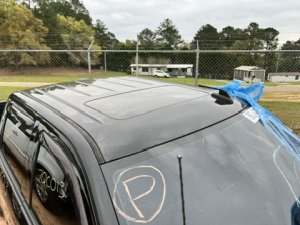
- Code B2470 on these vehicles is almost certainly caused by a failed 'shark fin' antenna due to water intrusion from a faulty gasket.
- Symptoms include a red OnStar light, loss of GPS and satellite radio, and often, water stains on the headliner.
- This is a known design flaw affecting all 2015-2018 GM full-size SUVs and 2014-2018 trucks on the K2XX platform.
- The official GM-recommended fix (TSB 17-NA-214) is to replace the antenna and apply a bead of automotive seam sealer to the new part to prevent future leaks.
- The repair is straightforward for a DIYer, requiring basic tools and careful removal of interior trim to access the 10mm nut holding the antenna.
What's Unique About the 2014-2018 Gmc YUKON XL
The K2XX platform (used for 2015-2020 GM SUVs and 2014-2019 trucks) utilizes a specific high-frequency painted antenna assembly that is highly prone to failure. The problem is so widespread that GM issued multiple Technical Service Bulletins (TSBs). The failure is typically not just electronic; it's caused by the antenna's base gasket failing, allowing water to leak into the vehicle. This water corrodes the antenna's internal circuit board and often stains the headliner.
Diagnostic Flowchart
Tap your situation to follow the diagnostic path that matches what you're seeing on this vehicle.
Generation note: The 2014-2018 year range covers the end of the third generation (GMT900, 2014) and the beginning of the fourth generation (K2XX, 2015-2018). The shark fin antenna design and its associated water leak/failure issue are common to both generations within this range, but are most thoroughly documented on the 2015-2018 K2XX models in TSBs 17-NA-214 and PIT5362B.
Symptoms You May Notice
- Red light on the OnStar buttons on the rearview mirror.
- Inability to connect to OnStar services or OnStar is unable to locate the vehicle.
- GPS navigation showing an incorrect location, a 'No GPS' message, or the compass on the dash reading 'CAL'.
- SiriusXM satellite radio showing 'No Signal' or 'XM reception may be blocked'.
- Visible water stains on the headliner, particularly near the overhead console, sun visors, or A-pillars.
- In severe cases, a dead battery due to water running down wiring to other modules like the instrument panel fuse block (LH I/P BEC).
- Audible water sloshing inside the headliner when driving.
- Intermittent radio function, especially after rain or a car wash.
- Replacing the radio/infotainment unit. The radio is usually not the cause; the problem lies with the signal it's receiving from the failed antenna.
- Replacing the OnStar module (VCIM). While possible, antenna failure is vastly more common and should always be the first suspect.
- Assuming no leak if there are no headliner stains. Some owners report antenna failure codes and symptoms from moisture intrusion that isn't severe enough to stain the headliner.
Most Likely Causes
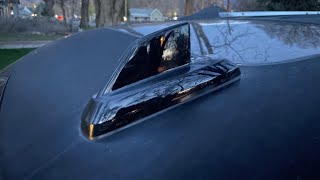
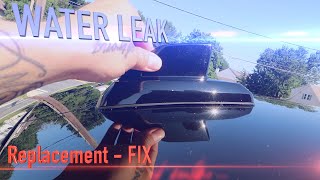
- Failed Roof 'Shark Fin' Antenna 🔴 High Probability The antenna's base gasket is known to degrade or have a design flaw, allowing water to seep in and destroy the internal electronics. This is a well-documented design flaw addressed by multiple TSBs, with a later TSB (17-NA-214) recommending the addition of a seam sealer, a step that was explicitly advised against in an earlier TSB (PIT5362B). 🎬 See how to fix the shark fin antenna water leak.
How to confirm: Confirm symptoms (no GPS/XM, red OnStar light). Visually inspect the headliner for water stains originating from the antenna area. The presence of code B2470 alongside these symptoms is a strong confirmation. In some cases, water can leak and cause issues without visible staining.
Typical fix: Replace the entire roof antenna assembly and apply a bead of Kent Automotive High-Tech Seam Sealer (Clear P/N 10200) or equivalent around the new antenna's gasket before installation, as per TSB 17-NA-214.
Est. part cost: $70-$150 - Damaged Antenna Coaxial Cable or Connector ⚪ Low Probability Corrosion can develop on the connectors if the water leak from the antenna base is severe. Physical damage is rare unless the headliner has been previously removed improperly. The FAKRA-style connectors can also become loose or damaged over time.
How to confirm: After partially dropping the headliner, visually inspect the antenna connectors for green or white corrosion. Test the cable for continuity (less than 1 ohm) and for shorts to ground (infinite resistance) using a multimeter.
Typical fix: Clean the connectors with an electronic contact cleaner. If the cable itself is damaged, it will need to be repaired or replaced.
Est. part cost: $5-$200 - Faulty Vehicle Communication Interface Module (VCIM) ⚪ Low Probability
How to confirm: This should only be considered after the antenna and its wiring have been confirmed to be good. Requires advanced diagnostics with a dealer-level scan tool to test the module's inputs and outputs. If DTC B2470 is still current after replacing the antenna and checking wiring, the VCIM may be at fault.
Typical fix: Replace and program the VCIM.
Est. part cost: $200-$400
Rare But Worth Checking
- Water Stains on Headliner from other sources:
Diagnosis Steps
- Confirm the symptoms: Check for a red OnStar light, test GPS functionality ('No GPS' or 'CAL' on compass), and check for SiriusXM signal.
- Scan the vehicle for codes and confirm B2470 is present, noting any specific subtype like -02 (short) or -04 (open) and any other codes like B2462 or B125C.
- Carefully inspect the headliner around the overhead console, sun visors, and A-pillars for any signs of water staining.
- Using plastic trim tools, remove the A-pillar grab handles (8mm or 10mm bolts) and sun visor clips (often T15 Torx screws).
- Gently pull down the front/rear portion of the headliner to gain access to the underside of the antenna. Be careful not to crease the headliner. It is often held by velcro near the sunroof area.
- Locate the single nut holding the antenna stud. Inspect the area for signs of water, rust, or corrosion. Water may drip out as you loosen the nut.
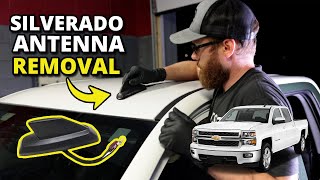
- Disconnect the two or three electrical connectors and remove the nut. Note the orientation of the washer; the flat side faces the wires. Lift the old antenna off the roof from the outside. 🎬 Watch this walkthrough on removing the roof antenna and headliner.
- If water intrusion is evident, replacing the antenna is the most direct course of action. If stains are present on the headliner, they can often be cleaned with automotive upholstery cleaners, applied to a towel and blotted carefully.
Parts You'll Likely Need
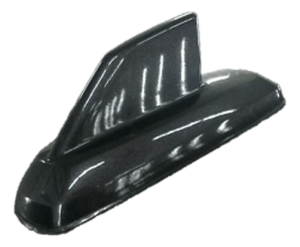
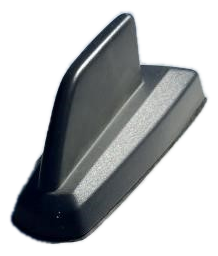
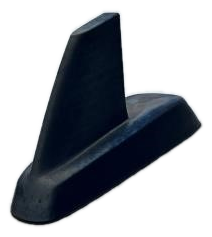
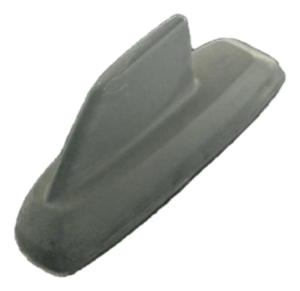
- High Frequency Antenna Assembly
(OEM #Varies by color (e.g., 23447543 for Black))— This is the complete 'shark fin' unit that fails due to water intrusion. It must be replaced as a whole assembly. 🎬 Watch: Step-by-step guide to replacing the high frequency antenna assembly. TSB PIT5362B notes that service parts are color-specific and must be matched to the vehicle's paint code. The replacement part may have an improved gasket design.
Trusted brands: ACDelco, Genuine GM
OEM price range: $70-$150
Aftermarket price range: $50-$100 - Automotive Seam Sealer
(OEM #Kent Automotive High-Tech Seam Sealer P/N 10200)— TSB 17-NA-214 specifically recommends applying a 4-5mm bead of this sealer to the underside of the new antenna's gasket to prevent future leaks.
Trusted brands: Kent Automotive, 3M
OEM price range: $20-$40
Aftermarket price range: $15-$30
Related Codes That Often Appear With This One
- B2462 — This code relates to the GPS antenna circuit. Since the shark fin houses both the cellular and GPS antennas, they often fail together from the same water intrusion.
- B125C — This is another code related to the antenna system that is frequently cited in the same TSBs as B2470, indicating a fault within the same component.
Technical Service Bulletins (TSBs) & Recalls
- 17-NA-214: The most current bulletin, it details the concern of OnStar/GPS/XM malfunction and/or water leaks. It recommends antenna replacement and, crucially, the application of Kent High-Tech Seam Sealer (P/N 10200) to the new part before installation.
- PIT5362B: An earlier bulletin for 2015 models that also identifies water intrusion into the antenna as the cause for B2470. It advised replacing the antenna with new color-matched part numbers but specifically stated NOT to use any form of sealant, advice which was superseded by TSB 17-NA-214.
- PIC6024: Mentions that code B2470-04 (Open Circuit) can be set in the Vehicle Communication Interface Module (VCIM) when OnStar will not connect, confirming the link between this specific code variant and OnStar failure.
Platform-Specific Known Issues
- A widespread, documented issue of water leaking through the base of the roof antenna causes this code. GM issued TSB #17-NA-214 and #PIT5362B to address this.
- The official repair procedure in TSB #17-NA-214 advises cleaning the roof surface with a solvent like Acrysol, then applying a bead of Kent Automotive seam sealer around the new antenna's gasket for added protection against future leaks.
- In severe cases, the water leak can travel down the A-pillar and cause corrosion on the LH I/P BEC (instrument panel fuse block), leading to other electrical issues like a dead battery.
- A user on the Tahoe Yukon Forum shared an extensive repair story, noting that his dealer had to fix the leak twice, with the second successful attempt involving the body shop to ensure the roof sheet metal was perfectly flat under the antenna.
Mechanic-Grade Diagnostic Values
- Cellular antenna coax cable continuity (center pin) — expected: Less than 1 ohm end-to-end. Failure: A value greater than 1 ohm indicates excessive resistance in the cable.
- Cellular antenna coax cable continuity (outer shield) — expected: Less than 5 ohms end-to-end. Failure: A value greater than 5 ohms indicates a poor shield connection.
- Cellular antenna coax cable short to shield — expected: Infinite resistance between the center pin and the outer shield. Failure: Any reading less than infinite indicates an internal short in the cable.
- Cellular antenna coax cable short to ground (center pin) — expected: Infinite resistance between the center pin and chassis ground. Failure: Any reading less than infinite indicates the cable is shorted to the vehicle body.
Hidden / Shadow Codes Worth Checking
- B2470 02: Cellular Phone Antenna Circuit Malfunction - Short to Ground. This specific symptom byte indicates the VCIM has detected that the antenna circuit is shorted to ground. (see via A professional scan tool like the GM GDS2 or a high-end aftermarket scanner that can read manufacturer-specific symptom bytes.)
- B2470 04: Cellular Phone Antenna Circuit Malfunction - Open Circuit. This specific symptom byte indicates the VCIM has detected a break or disconnection in the antenna circuit. This is the most common variant seen with physical antenna failure. (see via A professional scan tool like the GM GDS2 or a high-end aftermarket scanner that can read manufacturer-specific symptom bytes.)
Scan Tool Commands That Help
- GM GDS2 (Global Diagnostic System 2): Module Diagnostics > Vehicle Communication Interface Module (VCIM) > Data Display — Use this function to view the live status of the cellular and GPS antenna circuits as seen by the VCIM. This can help confirm if the module is recognizing the fault in real-time.
- GM GDS2 (Global Diagnostic System 2): Module Diagnostics > Vehicle Communication Interface Module (VCIM) > Configuration/Reset Functions — This function is necessary after replacing the VCIM itself to program the new module to the vehicle's specific configuration and VIN. It is generally not needed for just an antenna replacement.
Wiring & Ground Locations
- Vehicle Communication Interface Module (VCIM) — On K2XX platform vehicles, the VCIM is typically located behind the instrument panel, often accessible after removing the glove box assembly.. The VCIM is the control unit that monitors the cellular antenna circuit. All diagnostic tests for the circuit originate from and report to this module. The coaxial cable from the shark fin antenna plugs directly into it.
- Antenna Coaxial Connectors — There are connectors at the base of the shark fin antenna (under the headliner) and at the back of the VCIM (behind the glove box). They are typically FAKRA-style connectors, color-coded for their function (e.g., blue for GPS).. These are the primary points to check for corrosion or loose connections when diagnosing B2470, especially after a known water leak. A bad connection at either end will cause an open circuit (B2470-04).
- Main Body/Chassis Grounds — Key grounding points for K2XX trucks are located on the A-pillars, under the radiator support, and on the frame rail near the fuel pump.. While not a direct cause of a B2470 antenna circuit fault, poor overall vehicle grounds can cause a host of intermittent electrical issues and communication faults between modules, including the VCIM. Ensuring these grounds are clean and tight is a good practice when resolving any electrical DTC.
Real Owner Repair Stories
- Tahoe Yukon Forum user 'Awfiretto' (2015.5 GMC Yukon XL) — Red OnStar light on the rearview mirror and DTC B2470 reported by an OnStar diagnostic check.
❌ Tried (didn't work) The user considered a DIY fix but was concerned about damaging the headliner.
✅ What actually fixed it The user took the vehicle to a dealership. The dealer replaced the faulty shark fin antenna. The total cost for the repair was $367. The service advisor noted that this is a very common repair. - YouTube channel 'JustWingingIt' (2018 Chevrolet Tahoe) — Inoperative OnStar system, inoperative navigation, and codes for open circuit on both cellular and GPS antennas.
✅ What actually fixed it The video demonstrates a complete replacement of the roof antenna. The fix involved cleaning the roof surface, applying seam sealer to the new antenna's gasket as per the service update, installing the new antenna, and reconnecting it. This resolved the issue, resulting in a green OnStar light.
OEM Part Supersession History
Various paint-to-match black antennas→Color-specific part numbers (e.g., 23447543 for Black)— GM transitioned from supplying a generic black, paint-to-match antenna to providing pre-painted, color-matched antennas for service replacements to ensure better quality and finish.
Heads up: While functionally similar, using the wrong part may result in a mismatched color. TSB PIT5362B advises using the latest color-specific part number found in the catalog for the vehicle's RPO code.
Model Year Variations Within This Range
- 2015: The initial TSB for this issue (PIT5362B) specifically instructed technicians NOT to use any sealant when replacing the antenna.
- 2015-2018: The superseding TSB (17-NA-214) reversed the previous advice and now explicitly requires the application of Kent High-Tech Seam Sealer to the new antenna's gasket to prevent future leaks, indicating a change in the official repair procedure.
Helpful Videos

We Have This Part in Stock

The information in this article is provided for general reference and educational purposes only. Vehicle specifications, procedures, and part compatibility can vary by production date, trim level, and region. Always consult your vehicle's factory service manual and verify part numbers before purchasing or performing repairs. Safety-critical components such as airbags, seat belts, and braking systems should be installed by a qualified professional.
- Gmc YUKON XL:
- 🎬 Helpful Videos
- 🛍️ Shop This Part
- What's Unique About the 2014-2018 Gmc YUKON XL
- Diagnostic Flowchart
- Symptoms You May Notice
- Most Likely Causes
- Rare But Worth Checking
- Diagnosis Steps
- Parts You'll Likely Need
- Related Codes That Often Appear With This One
- Technical Service Bulletins (TSBs) & Recalls
- Platform-Specific Known Issues
- Mechanic-Grade Diagnostic Values
- Hidden / Shadow Codes Worth Checking
- Scan Tool Commands That Help
- Wiring & Ground Locations
- Real Owner Repair Stories
- OEM Part Supersession History
- Model Year Variations Within This Range
- 🎟️ Get 5% Off