

B2462 on 2015-2018 GMC Sierra 2500: GPS Antenna Failure Causes and Fixes
On a 2015-2018 GMC Sierra 2500, code B2462 almost always means the roof-mounted 'shark fin' antenna has failed due to water intrusion. This is a well-documented issue across the GM K2XX platform. The fix involves replacing the entire antenna assembly with an updated part and applying automotive seam sealer to the base to prevent future leaks. The part costs approximately $70-$150.
- DTC B2462 on a 2015-2018 Sierra 2500 is almost certainly caused by a failed roof 'shark fin' antenna.
- The root cause is a faulty seal allowing water to enter and corrode the antenna's internal electronics, a known issue addressed by GM TSBs.
- Symptoms include loss of GPS, a red OnStar light, poor XM radio reception, and often water stains on the headliner.
- The correct, long-term repair is to replace the entire antenna assembly with an updated part and apply clear automotive seam sealer to the base before installation.
What's Unique About the 2015-2018 Gmc SIERRA 2500
This generation of GMC Sierra, along with its K2XX platform siblings (Silverado, Tahoe, Yukon, Suburban, Escalade), is notorious for this specific issue due to a design flaw in the roof-mounted 'shark fin' antenna. The gasket at the base of the antenna is prone to failure, allowing water to leak into the antenna's electronics. An updated antenna design relocates a drain hole from the back/top of the unit to the front/bottom, allowing any moisture that gets inside to escape. The original design trapped water, leading to corrosion and circuit board failure. GM acknowledged this with TSBs 17-NA-214 and PIT5362B.
Diagnostic Flowchart
Tap your situation to follow the diagnostic path that matches what you're seeing on this vehicle.
Symptoms You May Notice
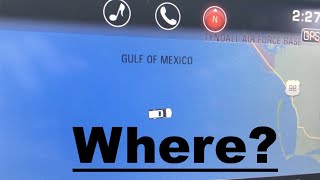
- Inaccurate or non-functional GPS navigation, sometimes showing the vehicle in a completely wrong location like a body of water.
- GPS symbol on the infotainment screen has a red line through it.
- OnStar indicator light is red instead of green.
- Unable to connect to OnStar services or OnStar is unable to locate the vehicle.
- Poor or no signal for XM satellite radio, showing 'No Signal'.
- Visible water stains on the headliner near the sun visors, overhead console, or A-pillars.
- Parasitic battery drain in cases where the water leak migrates down the A-pillar and corrodes the fuse block (LH I/P BEC).
- Replacing the radio or infotainment head unit. The trouble code B2462 specifically points to a fault in the antenna circuit, making the antenna itself the most likely culprit, not the radio.
- Assuming the issue is a software glitch. While infotainment systems can have software issues, the combination of B2462 with loss of GPS, OnStar, and XM signals strongly points to the shared antenna hardware.
Most Likely Causes
- Failed Roof 'Shark Fin' Antenna Assembly 🔴 High Probability The original antenna design is flawed, trapping water that enters past a weak gasket. This water corrodes the internal circuit board, causing an open or short circuit. This is a widely documented failure acknowledged by GM with multiple TSBs.
How to confirm: Confirm the presence of B2462 and related codes (B2470, B125C). Check for symptoms like loss of GPS/XM/OnStar. The definitive confirmation is removing the antenna (partially lowering the headliner is required) and inspecting for visible rust and corrosion on the internal electronics. Replacement of the antenna resolving the issue is the ultimate confirmation.
Typical fix: Replace the entire roof-mounted antenna assembly with the latest OEM part number, which features an improved design with a relocated drain hole. Apply automotive seam sealer around the roof opening before installation as recommended by TSB #17-NA-214.
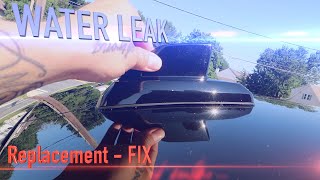
Est. part cost: $70-$150 - Water Intrusion from Antenna Base Seal 🔴 High Probability The gasket that seals the antenna to the roof panel degrades over time, allowing water to seep in. This is the root cause of the antenna failure and can also cause water damage to the headliner and other interior components.
How to confirm: Visually inspect the headliner directly below the antenna for water stains. Perform a water test on the roof around the antenna. Look for corrosion on the mounting stud and connectors when the antenna is removed.
Typical fix: When replacing the antenna, thoroughly clean the roof surface with an alcohol-based solvent. Apply a 4-5mm bead of clear automotive seam sealer (like Kent Automotive P/N 10200 or equivalent) around the opening before installing the new antenna to create a durable, waterproof seal. Do not use silicone RTV.
Est. part cost: $15-$30 for seam sealer - Damaged Coaxial Cable or Connectors ⚪ Low Probability Water leaking from the antenna can run down the cable and corrode the connectors at the antenna base or further down the line.
How to confirm: After partially dropping the headliner, visually inspect the connectors at the base of the antenna for blue or green corrosion. Trace the cable as far as possible to check for pinches or breaks.
Typical fix: Clean corroded connectors with an electrical contact cleaner if possible. If the cable itself is damaged, it may need to be repaired or replaced, though this is rare.
Est. part cost: $0-$50
Diagnosis Steps
- Confirm the presence of DTC B2462 using an OBD-II scanner. A professional scan tool can read suffix codes like -02 (short to ground) or -04 (open circuit) for a more precise diagnosis.
- Check for related codes such as B2470 (Cellular) and B125C (Digital Radio).
- Verify symptoms: Check for a red OnStar light, a 'No GPS' message or incorrect location on the navigation screen, and poor XM radio reception.
- Inspect the interior headliner, especially around the overhead console and A-pillars, for any signs of water staining.
- Partially lower the rear/side of the headliner to gain access. This typically involves removing the passenger side A-pillar trim, sun visor (T15 Torx screws), and grab handles (8mm or 10mm bolts).
- Inspect the electrical connectors at the base of the antenna for any signs of moisture or corrosion. There are typically two or three connectors.
- Unbolt the antenna using a 10mm wrench (a stubby gear wrench is recommended for easier access).
- If water damage is evident or symptoms align, the most effective step is to replace the entire antenna assembly with an updated part.
- Before installing the new antenna, thoroughly clean the roof surface around the mounting hole with a solvent like isopropyl alcohol.
- Apply a continuous 4-5mm bead of clear automotive seam sealer (e.g., Kent Automotive High-Tech Clear Seam Sealer) around the opening on the roof surface. Install the new antenna within 5 minutes of applying the sealer.
- Install the new antenna, tighten the 10mm nut, reconnect the wiring, and reassemble the headliner and trim.
- Clear the DTCs and verify that GPS, OnStar (green light), and XM radio functions have been restored. You may need to drive the vehicle outside for the GPS to acquire a satellite lock.
Parts You'll Likely Need
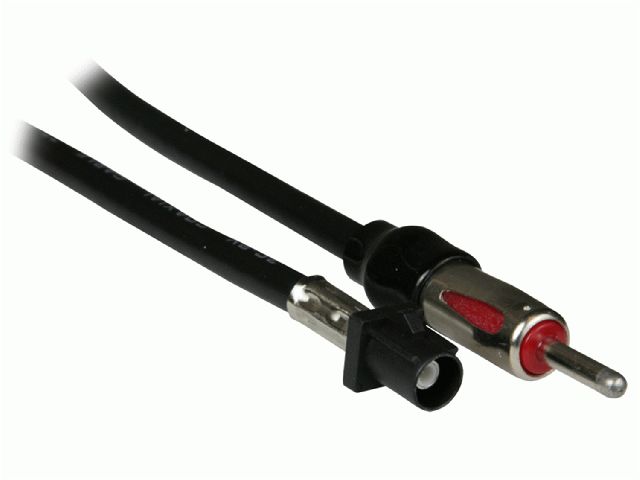
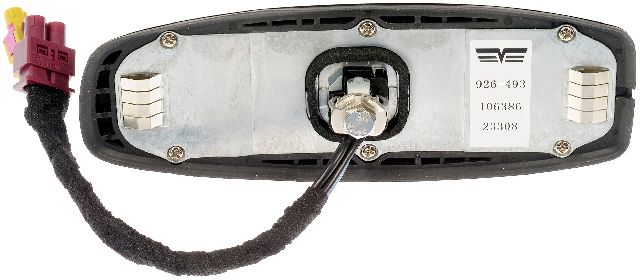
- High Frequency Antenna Assembly
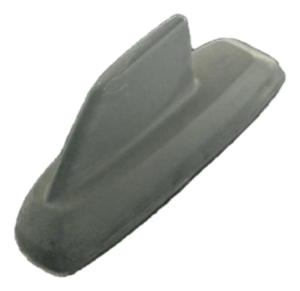
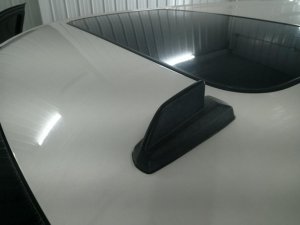
(OEM #84544243)— This is the complete 'shark fin' unit that fails due to internal water damage. It contains the antennas for GPS, OnStar, and XM radio. TSBs instruct technicians to replace it with the latest available part number. The part number is often specific to the vehicle's paint color. Part number 84544243 is a common replacement, but other numbers like 84346802 and 84346803 exist for different colors/options.
Trusted brands: ACDelco, GM Genuine Parts
OEM price range: $70-$150
Aftermarket price range: $50-$100 - Clear Automotive Seam Sealer
(OEM #Kent Automotive P/N 10200)— Explicitly recommended by GM TSB #17-NA-214 to apply around the new antenna's base to prevent repeat failures from water intrusion. This is considered a critical step for a permanent repair.
Trusted brands: Kent Automotive, 3M
OEM price range: $20-$30
Aftermarket price range: $15-$25
Related Codes That Often Appear With This One
- B2470 — This code relates to the Cellular Antenna circuit (OnStar), which is housed in the same 'shark fin' assembly. Water damage often affects all internal antennas simultaneously.
- B125C — This code relates to the Digital Radio (XM/SiriusXM) Antenna circuit, also located in the same assembly and susceptible to the same water intrusion failure.
Technical Service Bulletins (TSBs) & Recalls
- 17-NA-214: The primary TSB for this issue, dated Feb 2018. It addresses OnStar, XM, and GPS malfunctions (including DTC B2462), associated water leaks from the antenna, and potential battery drain. It recommends replacing the antenna and using Kent Automotive seam sealer.
- PIT5362B: A Preliminary Information bulletin from June 2015 for early 2015 models. It cites inaccurate GPS location with DTCs B2462, B2470, and B125C and identifies the cause as water intrusion into the antenna, instructing technicians to replace it with the latest part number.
Platform-Specific Known Issues
- A known design flaw in the original antenna assembly allows water to become trapped inside, leading to corrosion and electronic failure. Updated parts have a relocated drain hole to mitigate this.
- The gasket at the base of the antenna is prone to premature failure, causing water leaks into the cabin that can stain the headliner and damage other electronics like the fuse block, potentially causing a battery drain.
- Owner experiences shared on forums and in videos consistently point to this being a very common, almost inevitable failure on these trucks, with DIY replacement being the most popular solution.
Mechanic-Grade Diagnostic Values
- Voltage from Navigation Radio/Telematics Module to GPS Antenna — expected: 4.0-5.5 volts. Failure: A reading outside this range suggests a fault in the radio or module, not the antenna itself.
- Coaxial Cable Center Conductor to Shield Resistance (Isolation Test) — expected: Infinite resistance or >10k Ω (Open circuit). Failure: Any resistance reading less than infinite indicates a short within the cable.
- Coaxial Cable Center Conductor End-to-End Resistance — expected: Less than 5.0 ohms. Failure: Resistance greater than 5.0 ohms indicates a break or high resistance in the cable.
Hidden / Shadow Codes Worth Checking
- B2462 01: Global Positioning System (GPS) Signal Short to Battery. The module detects the GPS antenna signal circuit is shorted to a power source. (see via GM GDS2 or other professional scan tool capable of reading manufacturer-specific symptom codes.)
- B2462 02: Global Positioning System (GPS) Signal Short to Ground. The module detects the antenna signal circuit is shorted to ground. (see via GM GDS2 or other professional scan tool capable of reading manufacturer-specific symptom codes.)
- B2462 04: Global Positioning System (GPS) Signal Open Circuit. The module detects a break or high resistance in the antenna circuit. This is the most common symptom code due to internal corrosion from water. (see via GM GDS2 or other professional scan tool capable of reading manufacturer-specific symptom codes.)
Scan Tool Commands That Help
- GM GDS2: Module Diagnostics > Radio (or Telematics Communication Interface Control Module) > Data Display — To view the live status of the GPS antenna circuit and confirm if the module is actively seeing the open/short condition that set the B2462 code.
- GM GDS2: Module Diagnostics > Radio (or Telematics Communication Interface Control Module) > DTC Information — To read the specific B2462 fault code along with its two-digit symptom code (e.g., -02, -04), which is critical for directing the diagnostic path.
- GM GDS2: Clear All DTCs — Used after the antenna has been replaced to erase the stored fault codes. The vehicle should then be driven outside to allow the GPS to reacquire a signal and confirm the code does not return.
Wiring & Ground Locations
- G103 — Located at the left rear of the engine compartment on the cowl, often above the brake booster.. This is a major ground point that serves multiple interior electronic modules, including the Radio and Body Control Module (BCM). While not a common cause for an isolated B2462, a poor connection at G103 could cause this and other seemingly unrelated electrical issues.
- GPS Antenna Coaxial Cable — Runs from the roof-mounted antenna, down the passenger-side A-pillar, and connects to the Telematics Communication Interface Control Module (VCIM) or a signal splitter behind the dash/glove box area.. This cable carries the signal and supply voltage. Water intrusion from the antenna can travel down this cable, corroding the connectors at either end. It is the primary circuit path that is tested for the open or short that B2462 indicates.
Real Owner Repair Stories
- TruckNerd on YouTube (2015+ GM SUV (Yukon)) — No GPS, red OnStar light, no XM radio, and a visible water stain on the headliner near the A-pillar.
❌ Tried (didn't work) The owner directly targeted the antenna as the cause based on the common symptoms and water stain.
✅ What actually fixed it The owner replaced the entire roof 'shark fin' antenna assembly. He cut open the old antenna to show extreme internal corrosion and water damage. He compared the old part to the new, updated GM part, clearly showing the original design had a drain hole near the top/rear of the base (which trapped water), while the new design has the drain hole at the bottom/front, allowing moisture to escape. He also applied a bead of clear seam sealer around the roof opening before installing the new antenna to prevent future leaks. After replacement and reassembly, the OnStar light turned green and the GPS location was restored. - DanielJaegerFilms on YouTube (2015 Chevrolet Suburban) — Navigation screen showed the vehicle's location in the middle of nowhere. A code B2462 (he misstated it as B2642) was set for an open in the GPS antenna circuit.
✅ What actually fixed it Following a GM bulletin, the technician removed the antenna and disassembled it. The video clearly shows water droplets and rust on the internal circuit board. The fix was to replace the entire antenna assembly under warranty. The video notes this is a common issue for both GPS and satellite radio failures.
OEM Part Supersession History
23258460 (and others)→84346802, 84544243, 84544674 (and others depending on color/options)— The original antenna design was flawed, with a drain hole location that trapped water. The updated parts have a relocated drain hole at the front/bottom of the assembly to allow water to escape.
Heads up: Part numbers are often specific to the vehicle's paint color and option package (e.g., with/without XM). It is critical to order the part using the vehicle's VIN to ensure a correct match.
Model Year Variations Within This Range
- 2015-2018: The physical antenna part installed at the factory on earlier models (approx. 2015-2016) is more likely to be the original flawed design. Later models may have come from the factory with an improved design, but are still susceptible to gasket failure over time. However, the repair procedure (replace antenna, add seam sealer) is identical for all years in this range.
Helpful Videos
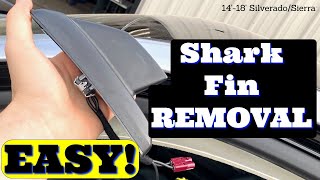
Used OEM Parts in Stock
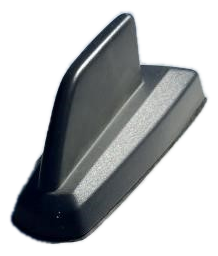
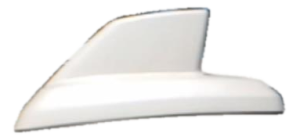
New Aftermarket Parts Available


The information in this article is provided for general reference and educational purposes only. Vehicle specifications, procedures, and part compatibility can vary by production date, trim level, and region. Always consult your vehicle's factory service manual and verify part numbers before purchasing or performing repairs. Safety-critical components such as airbags, seat belts, and braking systems should be installed by a qualified professional.
- Gmc SIERRA 2500:
- 🎬 Helpful Videos
- 🛍️ Shop This Part
- What's Unique About the 2015-2018 Gmc SIERRA 2500
- Diagnostic Flowchart
- Symptoms You May Notice
- Most Likely Causes
- Diagnosis Steps
- Parts You'll Likely Need
- Related Codes That Often Appear With This One
- Technical Service Bulletins (TSBs) & Recalls
- Platform-Specific Known Issues
- Mechanic-Grade Diagnostic Values
- Hidden / Shadow Codes Worth Checking
- Scan Tool Commands That Help
- Wiring & Ground Locations
- Real Owner Repair Stories
- OEM Part Supersession History
- Model Year Variations Within This Range
- 🎟️ Get 5% Off