

B2430 on 2007-2014 GMC Yukon: Heated Seat Malfunction Causes & Fixes
On a 2007-2014 GMC Yukon, code B2430 almost always points to a problem with the passenger-side heated seat. The most common causes are a broken heating element in the seat cushion or a faulty, often melted, wiring connector at the control module under thepassenger seat. The fix is usually replacing the heating element or replacing the connector pigtail and reinforcing the wiring.
- B2430 points to a fault in the passenger-side heated seat, not a critical system.
- The most likely cause is a broken heating element in the seat cushion, which can be tested with a multimeter.
- A very close second cause is the main electrical connector on the heated seat module under the passenger seat melting due to an undersized wire design.
- Before replacing any parts, always visually inspect the module connector for melting and test the heating element for correct resistance (3.5-11.5 ohms).
- A permanent fix for a melted connector involves replacing the pigtail and doubling the power and ground wires to better handle the electrical load.
What's Unique About the 2007-2014 Gmc YUKON
The GMT900 platform, which includes the 2007-2014 Yukon, is known for heated seat issues. A key GM Technical Service Bulletin, #10-08-50-008B, addresses this problem across the Yukon and its platform mates. It notes that symptoms like the heated seat turning off after a few minutes can be caused by loose terminal tension in the main connector to the heated seat module, leading to high resistance. While another TSB (#PIT5215A) mentions reversed connectors on accessory kits, the melted factory connector is a far more common failure point.
Diagnostic Flowchart
Tap your situation to follow the diagnostic path that matches what you're seeing on this vehicle.
Symptoms You May Notice
- Passenger heated seat does not work or fails to heat up.
- Heated seat indicator lights on the switch may turn on briefly and then shut off, sometimes within 1-2 minutes.
- Heated seat indicator lights may flash for approximately one minute, then go out.
- Heated seat indicator lights may remain on, but no heat is produced.
- A burning plastic smell may be noticeable under the passenger seat.
- The Check Engine Light will not be illuminated.
- Replacing the heated seat switch on the dash. The switch rarely fails; the problem is almost always in the seat itself 🎬 Watch: How to diagnose heated seat issues in GM vehicles or the module and connector beneath it.
- Replacing the control module before thoroughly inspecting the main connector and testing the heating element. A melted connector or broken element is far more frequent and should be checked first.
Most Likely Causes
- Broken Passenger Seat Heating Element 🔴 High Probability The thin wires in the heating element grid, particularly in the seat cushion, can break, kink, or burn through over time from the stress of passengers getting in and out or kneeling on the seat. Forum users frequently report finding a small, visible burn mark or a severed wire in the element pad upon inspection.
How to confirm: Disconnect the heating element connector under the passenger seat and use a multimeter to test for resistance. An open circuit (infinite resistance) confirms a broken element. A normal resistance is typically between 3.5 and 11.5 ohms when at room temperature. Some owners find the break only by physically inspecting the element pad.
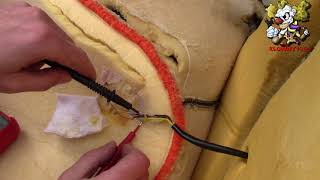
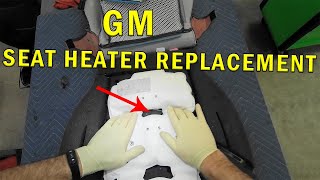
Typical fix: Replace the faulty seat heating element (cushion or back). This requires removing the seat's upholstery. Some owners have successfully repaired the broken wire by soldering 🎬 See this DIY guide for repairing a broken heating element a small jumper wire, which can be a cost-effective DIY repair if the damage is minimal.
Est. part cost: $50-$180 - Overheated or Melted Heated Seat Module Connector 🔴 High Probability The main power and ground wires in the 12-pin connector at the heated seat module (under the passenger seat) are undersized for the current they carry. This leads to overheating, which melts the connector plastic and causes a poor connection, triggering code B2430. TSB 10-08-50-008B directly attributes the fault to a loss of pin tension in this connector.
How to confirm: Visually inspect the largest connector plugged into the heated seat module under the passenger seat. Look for signs of melting, charring, or discoloration, especially around the heavier gauge power (often pink/white) and ground (black) wires.
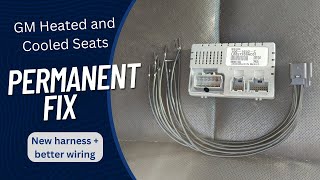
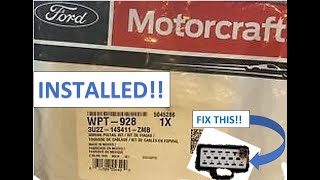
Typical fix: The temporary fix is to clean the module pins and connector terminals. The recommended permanent fix is to replace the connector with a new pigtail (Ford part WPT-928 is a common, identical replacement). When splicing, the single power and ground wires are often doubled up into unused pin locations on the new connector to better distribute the electrical load and prevent future overheating.
Est. part cost: $20-$40 for a pigtail connector - Faulty Heated Seat Control Module ⚪ Low Probability While less common, the control module (located under the passenger seat) can fail internally. More often, it is damaged by a shorted wiring connector that melts the plastic housing and damages the pins on the module itself, necessitating its replacement along with the connector.
How to confirm: This is diagnosed by exclusion. If the heating elements and all wiring/connections (especially the main connector) test good, the module is the likely culprit. If the module's pins are visibly melted or damaged, it must be replaced.
Typical fix: Replace the heated/cooled seat control module.
Est. part cost: $100-$250
Diagnosis Steps
- Verify the code using a scan tool capable of reading Body Control Module (BCM) codes.
- Check the 'SEAT-HTD' fuse in the underhood fuse block to ensure it's not blown. A blown fuse can occur due to the high resistance from a melted connector.
- Move the front passenger seat to its highest and most rearward position for access.
- Visually inspect the large, main electrical connector at the heated seat module under the passenger seat. Look closely for signs of melting, charring, or burnt plastic, as this is a primary failure point.
- If the connector looks good, disconnect the connector for the seat cushion heating element. Use a multimeter to measure the resistance across the element's terminals. An open circuit (infinite resistance) or a reading outside the normal range of 3.5-11.5 ohms indicates a bad element. Wiggle the wiring while testing to expose intermittent breaks.
- Repeat the resistance test for the seat back heating element. Note that on some systems, the back and cushion elements are wired in series, so a failure in one can make the other appear faulty.
- If elements and the main connector are confirmed to be good, check for voltage and ground at the heated seat module connector to rule out a power supply issue.
- If all other components are good, the heated seat control module is the most likely remaining cause.
Parts You'll Likely Need
- Passenger Seat Cushion Heating Element
(OEM #20792748, 23168136)— This is the most common failure point due to wear and tear causing the internal wires to break.
Trusted brands: ACDelco, Dorman
OEM price range: $100-$180
Aftermarket price range: $50-$90 - Heated Seat Module Connector Pigtail
(OEM #WPT-928 (Ford part number, but a widely used, identical connector for this repair))— The main power/ground connector for the heated seat module is prone to overheating and melting, requiring replacement. This pigtail allows for a permanent wiring fix.
Trusted brands: Motorcraft, Dorman, ACDelco
OEM price range: $30-$50
Aftermarket price range: $20-$40 - Heated/Cooled Seat Control Module
(OEM #25917599)— Replaced only after verifying the wiring and heating elements are in good condition, or if the module itself is visibly damaged from a melted connector.
Trusted brands: ACDelco
OEM price range: $150-$250
Aftermarket price range: $100-$180 - Passenger Seat Back Heating Element
(OEM #20792749)— Less common to fail than the cushion element, but can also break and cause an open circuit.
Trusted brands: ACDelco, Dorman
OEM price range: $90-$160
Aftermarket price range: $50-$80
Related Codes That Often Appear With This One
- B2425 — This is the equivalent code for the driver's side heated seat circuit. Seeing both may indicate a common power, ground, or module issue, such as the melted main connector which affects both seats.
- B1935 — This code is also related to the heated seat system and is mentioned alongside B2430 in TSB #PIT5215A.
- B2180 — Another heated seat system code mentioned in TSB #PIT5215A and TSB #10-08-50-008B, indicating a potential system-wide fault.
Technical Service Bulletins (TSBs) & Recalls
- PIT5215A: Notes that after installing a GM Accessory Heated Seat kit, code B2430 can be set if the seat back and bottom element connectors are reversed.
- 10-08-50-008B: A more relevant TSB for factory seats, this bulletin addresses conditions where the heated seat is inoperative or turns off after 1-10 minutes, potentially setting code B2430 0D. It identifies the cause as loose terminal tension in the heated seat module harness connector, leading to high resistance.
Platform-Specific Known Issues
- A widely documented issue on these vehicles is the overheating and melting of the main electrical connector at the heated seat module under the passenger seat. This happens because the full current for the seats is routed through single power and ground pins, which can't handle the load. A popular permanent fix involves replacing the connector pigtail and splicing the power and ground wires to utilize two pins each, distributing the load and preventing a recurrence.
Mechanic-Grade Diagnostic Values
- Passenger Seat Heating Element Resistance — expected: 3.5 - 11.5 ohms. Failure: Infinite resistance (open circuit) or a reading significantly outside the specified range.
- Heated Seat Temperature Sensor Resistance — expected: 850 - 300k ohms. Failure: A reading outside this very wide range indicates a faulty sensor.
- Heated Seat Temperature Sensor Signal Voltage — expected: 4.8 - 5.2 volts. Failure: Voltage outside this range suggests a short or open in the sensor circuit.
- Heated Seat PWM Ground Duty Cycle (on High) — expected: 90%. Failure: A significantly different duty cycle reading indicates a module control problem.
Hidden / Shadow Codes Worth Checking
- B2430 0D: Right Seat Heater Cushion Circuit Resistance Above Threshold. This is the most common variant, indicating an open or high-resistance fault, like a broken element or melted connector. (see via A professional scan tool (like a GM Tech2 or GDS2) that can read Body Control Module (BCM) or Heated Seat Module (HSM) codes.)
- B2430 04: Right Seat Heater Cushion Circuit Open. A more direct indicator of a broken wire or completely disconnected component. (see via Professional scan tool capable of reading body codes.)
- B2430 0B: Right Seat Heater Cushion Circuit Current Above Threshold. Indicates a short to ground or a shorted element. (see via Professional scan tool capable of reading body codes.)
- B2430 0E: Right Seat Heater Cushion Circuit Resistance Below Threshold. Indicates a short circuit within the heating element. (see via Professional scan tool capable of reading body codes.)
- B2430 1F: Right Seat Heater Cushion Circuit Intermittent. Indicates the fault is not currently active but has occurred. (see via Professional scan tool capable of reading body codes.)
Scan Tool Commands That Help
- GM Tech2 / GDS2: Heated Seat Output Control Test — After retrieving code B2430, this command can be used to manually activate the heated seat elements to verify if the module is capable of sending the command. Navigate via Body > Memory Seat Module > Special Functions > Output Control. This helps isolate whether the fault is in the control side or the circuit/element side.
- GM Tech2 / GDS2: View Live Data (HSM) — Monitor the live data stream for the Heated Seat Module (HSM) to see real-time resistance readings, temperature sensor data, and switch status. This can help identify intermittent faults or confirm if a reading is borderline.
Wiring & Ground Locations
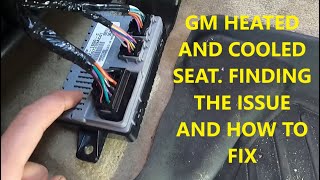
- Heated Seat Module Connector (X305/Main Connector) — Under the front passenger seat, plugged into the silver Heated/Cooled Seat Control Module.. This is the primary failure point. The power (often a pink/white wire) and ground (black wire) pins are known to overheat and melt, causing high resistance and triggering B2430 0D.
- G302 — Under the right side of the passenger seat.. This is a primary body ground point for components under the passenger seat. A loose or corroded connection here could cause various issues, including problems with the heated seat module.
- G304 — In the body harness, under the passenger seat, sometimes specified as being at the base of the right 'B' pillar.. This is the specific ground point for the passenger seat harness. The Heated Seat Module relies on this ground, and if it's compromised, it can cause high resistance in the circuit.
Real Owner Repair Stories
- YouTube video by 'Ideal Garage' (2010 Cadillac Escalade (same GMT900 platform and issue)) — Heated and cooled seats were not working. A temporary fix of cleaning the connector had failed.
❌ Tried (didn't work) A temporary fix of cleaning the melted plastic off the connector pins and plugging it back in.
✅ What actually fixed it The owner performed a permanent fix by cutting off the melted 12-pin connector and splicing in a new pigtail (Ford WPT-928). Crucially, he soldered the single power wire to two power leads on the new pigtail, and the single ground wire to two ground leads, utilizing the empty pin slots on the module to distribute the electrical load and prevent future melting. - YouTube video by 'Last Chance Auto Restore' (2007-2013 GM Truck/SUV (Suburban shown)) — Heated/cooled seats inoperative, burnt terminal on the module connector.
❌ Tried (didn't work) Initial diagnosis only, no failed fixes shown.
✅ What actually fixed it The video demonstrates the same root cause: GM used only one power and one ground pin, while the module (which is also used by Ford) has provisions for two of each. The fix shown is to replace the connector pigtail and splice the power and ground wires to use both available terminals on the module, spreading the load and preventing the connector from burning up again.
OEM Part Supersession History
15232559→20792748— Standard part update/revision.
Heads up: The new part number is a direct replacement for the old one.GM Connector (e.g., 15326110)→Ford / Motorcraft WPT-928— The Ford WPT-928 pigtail is a widely available, identical, and often preferred replacement for the factory GM connector that melts. It includes all 12 wire leads, making it ideal for the 'doubled-up wire' repair.
Heads up: This is a cross-brand equivalent part, not an official supersession. It is functionally identical and confirmed by many DIY repairs to work perfectly.
Model Year Variations Within This Range
- 2007-2010 (with cooled seats): On models with heated and cooled seats (like the Yukon Denali), the 2007-2010 model years may use a Thermo-Electric Device (TED) for both heating and cooling. From 2011-2014, GM switched to using conventional resistance mat heaters for heat and vented air (without a TED) for cooling. This can affect diagnosis and part numbers for high-trim models.
Helpful Videos
We Have This Part in Stock



The information in this article is provided for general reference and educational purposes only. Vehicle specifications, procedures, and part compatibility can vary by production date, trim level, and region. Always consult your vehicle's factory service manual and verify part numbers before purchasing or performing repairs. Safety-critical components such as airbags, seat belts, and braking systems should be installed by a qualified professional.
- Gmc YUKON:
- 🎬 Helpful Videos
- 🛍️ Shop This Part
- What's Unique About the 2007-2014 Gmc YUKON
- Diagnostic Flowchart
- Symptoms You May Notice
- Most Likely Causes
- Diagnosis Steps
- Parts You'll Likely Need
- Related Codes That Often Appear With This One
- Technical Service Bulletins (TSBs) & Recalls
- Platform-Specific Known Issues
- Mechanic-Grade Diagnostic Values
- Hidden / Shadow Codes Worth Checking
- Scan Tool Commands That Help
- Wiring & Ground Locations
- Real Owner Repair Stories
- OEM Part Supersession History
- Model Year Variations Within This Range
- 🎟️ Get 5% Off