

B2425 GMC Yukon: Heated Seat Malfunction Causes and Fixes (2007-2014)
On a 2007-2014 GMC Yukon, code B2425 almost always points to a problem with the driver's side heated seat. The most common cause is a broken or chafed wire in the harness under the seat, followed by a failed heating element. A visual inspection of the under-seat wiring is the first step.
- B2425 on a 2007-2014 Yukon means there's a problem with the driver's heated seat, usually an open circuit.
- Before buying any parts, thoroughly inspect the wiring harness under the driver's seat for visible damage, as this is the most common and cheapest fix.
- If wiring is intact, use a multimeter to test the resistance of the seat heating elements; a bad element is the second most likely cause.
- Do not replace the expensive control module unless you have confirmed the wiring and heating elements are good.
What's Unique About the 2007-2014 Gmc YUKON
The GMT900 platform, which includes the 2007-2014 Yukon, Tahoe, Suburban, and their Cadillac/GMC truck counterparts, is known for heated seat issues. The wiring harness routed under the driver's seat is a common failure point. Over time, the movement of the power seat can cause wires to chafe, stretch, and eventually break, leading to an open circuit and triggering the B2425 code. A technical service bulletin (PIT5215A) was issued specifically addressing this type of failure where the seat may not heat even if the indicator lights are on. Furthermore, the main power/ground connector at the shared heated seat module is a known weak point across the entire platform, prone to overheating and melting.
Diagnostic Flowchart
Tap your situation to follow the diagnostic path that matches what you're seeing on this vehicle.
Symptoms You May Notice
- Driver's side heated seat does not work.
- Heated seat indicator lights turn on for a few seconds, then turn off.
- Heated seat indicator lights may remain on, but no heat is produced.
- In some cases, a fault in the driver's seat can cause the passenger seat heater to also shut down.
- Replacing the heated seat switch when the problem is a broken wire under the seat.
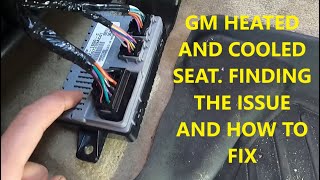
- Replacing the heated seat module before testing the resistance of the heating elements and inspecting the wiring harness and module connector for burns. 🎬 Watch: How to diagnose and fix GM heated seat issues.
Most Likely Causes
- Damaged or Broken Wiring Under the Seat 🔴 High Probability The wiring harness is routed in a way that makes it susceptible to damage from the movement of the power seat frame and lumbar support mechanism over years of use. The constant flexing and pinching eventually breaks the copper conductors inside the insulation.
How to confirm: Visually inspect the wiring harnesses under the driver's seat. Look for pinched, stretched, chafed, or broken wires, particularly where they pass near moving parts of the seat frame. A common area for failure is near the lumbar support mechanism inside the seat back.
Typical fix: Repair the broken wire(s) using a solder and heat shrink, or by splicing in a new section of wire with butt connectors. Ensure the repaired harness is re-routed to avoid future damage, often using zip ties to secure it away from moving components.
Est. part cost: $5-$20 - Failed Seat Heater Element (Pad) 🟡 Medium Probability The heating element is a grid of fine wires inside the seat cushion or backrest. Repeated flexing from getting in and out of the vehicle can cause these wires to break over time, creating an open circuit. In some cases, the element can short and create a significant burn mark on the pad and seat foam.
How to confirm: Disconnect the heater element connector and test its resistance with a multimeter. A normal reading is typically between 1.5 and 5.5 Ohms. A reading of infinity or 'OL' (Open Loop) indicates a broken element. A visual inspection during replacement often reveals a burn mark where the element failed.
Typical fix: Replace the faulty seat heater element. This requires removing the seat upholstery (hog rings) to access and replace the pad. Both bottom and backrest pads are available.
Est. part cost: $60-$150 - Burnt Connector at Heated Seat Module ⚪ Low Probability The main power and ground terminals on the connector for the heated seat module (located under the passenger seat) can overheat due to high current draw and insufficient pin/wire gauge from the factory. This causes the plastic to melt, leading to a poor connection and eventual failure.
How to confirm: Unbolt the heated seat module from under the passenger seat and inspect its main electrical connector for signs of melting, charring, or discoloration on the connector body and the module's pins.
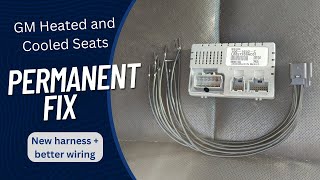
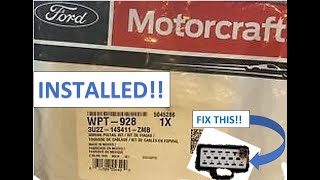
Typical fix: Replace the burnt connector pigtail (Ford part WPT-928 is a common, identical replacement). A popular permanent fix involves soldering jumper wires to utilize the unused power and ground pins on the new connector and module, effectively doubling up the connection to better handle the electrical load. 🎬 See this permanent fix for the melted module connector.
Est. part cost: $25-$50 for a pigtail connector
Rare But Worth Checking
- Faulty Heated Seat Switch: While less common than wiring or element failure, the switch in the door panel can fail internally. A user on a Tahoe/Yukon forum confirmed that re-melting the solder joints on the switch's circuit board fixed their unresponsive switch, saving the cost of a new part.
- Faulty Heated Seat Module: The control module itself can fail, but this should only be considered after ruling out all wiring, heating element, and connector issues, as it is the most expensive and least likely cause.
Diagnosis Steps
- Scan the vehicle for codes to confirm B2425 is present.
- Operate the driver's heated seat and observe the indicator lights. Note if they stay on, or turn off after a few seconds.
- Move the driver's seat fully forward and upward to gain maximum access underneath.
- With a flashlight, perform a thorough visual inspection of all wiring harnesses under the driver's seat. Pay close attention to any wires near the seat tracks or lumbar mechanism.
- If a broken wire is found, repair it, clear the codes, and re-test the system.
- If no wiring damage is visible, locate the connectors for the seat cushion and backrest heating elements. They are often two separate connectors.
- Disconnect the connectors and measure the resistance of each heating element with a multimeter. The resistance should be low, typically under 5.5 Ohms. An open circuit (infinite resistance) confirms a bad element. Refer to 'Specific Diagnostic Values' for trim-specific ranges.
- If elements and wiring test good, move to the passenger side. Unbolt and inspect the main connector at the heated seat control module (under the passenger seat) for any signs of melting or heat damage.
- As a final step, if all other components are verified to be good, the heated seat module may be at fault.
Parts You'll Likely Need
- Seat Heater Element Pad (Bottom or Back)
(OEM #ACDelco 23466733 (Back), ACDelco 15-4751 (Cushion) - Part numbers can vary, confirm with VIN.)— This is the heating grid inside the seat that commonly breaks or burns out, causing an open circuit and triggering code B2425.
Trusted brands: ACDelco, Dorman (e.g., 641-201)
OEM price range: $100-$180
Aftermarket price range: $60-$120 - Heated Seat Module Connector Pigtail
(OEM #3U2Z14S411ZMB (Ford/Motorcraft WPT-928))— If the original connector at the control module has melted from high resistance, this pigtail is needed to repair the harness. The Ford/Motorcraft part is widely confirmed by owners to be a direct cross-fit for this GM application.
Trusted brands: Motorcraft (WPT-928), ACDelco, Dorman
OEM price range: $40-$60
Aftermarket price range: $25-$40
Related Codes That Often Appear With This One
- B2430 — This code is for the Right (Passenger) Seat Heater Circuit. A fault in one seat circuit can sometimes cause the module to disable both seats, or the vehicle may have similar wiring/element failures on both sides.
Technical Service Bulletins (TSBs) & Recalls
- PIT5215A: Addresses an issue where heated seat indicators remain on, but the seat does not heat, potentially setting code B2425. The bulletin advises inspecting the heated seat wiring harness and connectors.
Platform-Specific Known Issues
- A known issue documented in TSB #PIT5215A involves the heated seat wiring harness, where indicators may stay on without the seat heating, often setting code B2425 Sym 0D. The fix is to inspect and repair the accessory heated seat wiring harness and connectors. 🎬 Watch: Troubleshooting common Tahoe and Suburban heated seat problems.
- Owner Repair Story: The Hidden Burn: A user on the Tahoe Yukon Forum shared their experience chasing a B2425 code. After replacing the bottom seat cushion element with no success, they disassembled the seat backrest. They discovered the backrest heating pad had severely burned through, scorching the seat foam but miraculously not damaging the outer leather. Replacing the backrest element finally solved the problem. This highlights the importance of checking both heating elements, not just the more accessible bottom cushion.
Mechanic-Grade Diagnostic Values
- Heated Seat Element Resistance (at room temp) — expected: 2.5-8.5 Ohms (for vehicles with Rear Heated Seat Module - RHSM). Failure: A reading of 'OL' (Open Loop) or infinite resistance indicates a broken element. A reading significantly outside the expected range can also trigger a code.
- Heated Seat Element Resistance (at room temp) — expected: 1.4-2.5 Ohms (for vehicles with Memory Seat Module - K40). Failure: A reading of 'OL' (Open Loop) or infinite resistance indicates a broken element. A reading above the maximum resistance will set B2425 0D.
- Heated Seat Element Resistance (General Guideline) — expected: Approximately 5.0-7.5 Ohms. Failure: GM notes that resistance changes with temperature, so a reading slightly out of spec may not indicate a bad element, especially when cold. However, very high resistance (over 30 Ohms) is a definitive failure.
Hidden / Shadow Codes Worth Checking
- B2425 0D: Left Seat Heater Cushion Circuit Resistance Above Threshold. This is the most common symptom code and directly points to an open circuit, usually a broken wire or failed heating element. (see via GM-specific scan tool like a Tech 2 or GDS2.)
- B2425 04: Left Seat Heater Cushion Circuit Open. The module does not detect a temperature change within a set time (e.g., 210 seconds). (see via GM-specific scan tool like a Tech 2 or GDS2.)
- B2425 0E: Left Seat Heater Cushion Circuit Resistance Below Threshold. This indicates a short or partially shorted heating element. (see via GM-specific scan tool like a Tech 2 or GDS2.)
- B2425 0B: Left Seat Heater Cushion Circuit Current Above Threshold. This also points to a short circuit in the heating element. (see via GM-specific scan tool like a Tech 2 or GDS2.)
Scan Tool Commands That Help
- Tech 2: Heated Seat Test — To command the heated seat on and verify if the control module is sending the signal. This helps isolate a module/switch issue from a wiring/element issue. The path is: Body > Door Module(s) > Left Rear Door Module > Special Functions > Output Control.
- GDS2: Module Diagnostics / Control Functions — GDS2 is the modern replacement for the Tech 2. A technician can navigate to the appropriate module (e.g., Heated Seat Module, Body Control Module) and use bidirectional controls to activate the heated seat elements individually to test their function without relying on the switch.
Wiring & Ground Locations
- Driver Seat Connector (X305/C305) — The main electrical connector under the driver's seat.. This is the central connection point for all driver seat functions. Pin A (thick Red/White wire) is the main 12V power feed, and Pin F (thick Black wire) is the main ground. Verifying power and ground here is a critical first step.
- MBEC 1 Fuse — In the Underhood Fuse Block, located on the driver's side of the engine bay.. This 50 Amp J-Case fuse is the primary power source for the Mid-Bussed Electrical Center, which feeds the seat modules. If there's no power at the seat, this fuse should be checked.
- Heater Element Connectors — Under the seat cushion and inside the seat back, connecting the harness to the heating pads.. TSB #PIT5215A notes these two connectors are identical and can be accidentally swapped. The longer lead (with convoluted tubing) must go to the seat back element, and the shorter lead (taped) must go to the bottom cushion element to prevent malfunction.
Real Owner Repair Stories
- YouTube channel 'Street Riders Customs' (2010 Cadillac Escalade (GMT900 platform-mate)) — Heated and cooled seats were not working.
❌ Tried (didn't work) A temporary fix of cleaning the burnt connector pins worked for a while but the problem returned.
✅ What actually fixed it The permanent fix was to replace the melted 12-pin connector at the heated seat module with a new pigtail (Motorcraft WPT-928). Crucially, the single power wire and single ground wire were each spliced into two wires on the new pigtail to utilize the two power and two ground terminals on the module, distributing the electrical load and preventing future overheating.
Model Year Variations Within This Range
- 2007-2014: The expected resistance of the seat heater elements can vary based on the vehicle's trim and options. Models with the Memory Seat Module (MSM), common on higher trims like Denali, have a specified resistance of 1.4-2.5 Ohms. Models with the standard Rear Heated Seat Module (RHSM) have a different specification of 2.5-8.5 Ohms. Using the wrong specification during diagnosis could lead to incorrect conclusions.
Helpful Videos
We Have This Part in Stock



The information in this article is provided for general reference and educational purposes only. Vehicle specifications, procedures, and part compatibility can vary by production date, trim level, and region. Always consult your vehicle's factory service manual and verify part numbers before purchasing or performing repairs. Safety-critical components such as airbags, seat belts, and braking systems should be installed by a qualified professional.
- Gmc YUKON:
- 🎬 Helpful Videos
- 🛍️ Shop This Part
- What's Unique About the 2007-2014 Gmc YUKON
- Diagnostic Flowchart
- Symptoms You May Notice
- Most Likely Causes
- Rare But Worth Checking
- Diagnosis Steps
- Parts You'll Likely Need
- Related Codes That Often Appear With This One
- Technical Service Bulletins (TSBs) & Recalls
- Platform-Specific Known Issues
- Mechanic-Grade Diagnostic Values
- Hidden / Shadow Codes Worth Checking
- Scan Tool Commands That Help
- Wiring & Ground Locations
- Real Owner Repair Stories
- Model Year Variations Within This Range
- 🎟️ Get 5% Off