

B2425 on 2007-2014 Chevrolet Tahoe: Heated Seat Failure Causes and Fixes
On a 2007-2014 Tahoe, code B2425 almost always means the driver's heated seat isn't working due to a broken heating element in the seat cushion or a melted electrical connector at the control module under the passenger seat. The most common fix is replacing the seat bottom heater element (e.g., ACDelco 15-4751) or repairing the melted connector (pigtail WPT-928) with a popular redundant wiring modification.
- B2425 points directly to an electrical fault in the driver's heated seat circuit.
- Before buying parts, always inspect the large connector on the heated seat module under the passenger seat for melting or burn marks.
- The two most likely causes are a broken heating element inside the driver's seat cushion or a damaged wire/connector under the seat.
- A multimeter is the essential tool for diagnosing this code by testing the resistance of the heating elements.
- Do not replace the expensive control module unless you have definitively ruled out the wiring and the heating elements as the cause.
What's Unique About the 2007-2014 Chevrolet TAHOE
The GMT900 platform, which includes the 2007-2014 Tahoe and its siblings (Suburban, Yukon, Escalade, Silverado, Sierra), has a well-documented issue with its heated seat system. The control module for both front seats is located under the front passenger seat. The main wiring harness was designed to supply power and ground through single pins on the connector, even though the module and connector have provisions for two of each. Over time, this high current concentration causes the single power (red/white wire) and ground pins to overheat, melt the connector, and create a high-resistance fault that triggers code B2425.
Diagnostic Flowchart
Tap your situation to follow the diagnostic path that matches what you're seeing on this vehicle.
Symptoms You May Notice
- Driver's side heated seat does not work at all.
- Heated seat indicator lights turn on, but the seat produces no heat.
- Heated seat turns on for a short period (e.g., 30 seconds to 2 minutes) and then shuts off.
- In some cases, both heated seats may be disabled by the control module when a fault is detected on one side.
- A faint burning plastic smell may be noticeable inside the cabin, especially near the front passenger's footwell where the control module is located.
- Replacing the heated seat switch on the dash. The switch is rarely the problem; the fault is almost always in the wiring or the element itself.
- Replacing the Heated Seat Control Module without first inspecting its connector for melting. The module is often fine, but the connector is the failure point. This is an expensive part that is often replaced unnecessarily.
Most Likely Causes
- Failed Driver's Seat Bottom Heater Element 🔴 High Probability The heating element wires are thin and embedded in the seat cushion. Years of getting in and out of the vehicle can cause the wires to flex and eventually break, creating an open circuit. The break often occurs near the rear of the cushion where the wires are stressed.
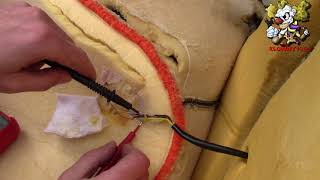
How to confirm: Disconnect the heater element connector under the driver's seat and measure the resistance across its two pins with a multimeter. A reading of 'OL' (Open Loop) or infinite resistance confirms a broken element. A normal reading is typically between 1.4 and 2.5 ohms 🎬 See this walkthrough on diagnosing and repairing a bad element. for the cushion element.
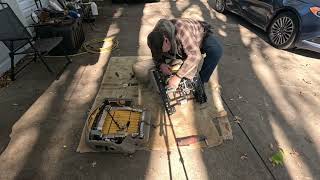
Typical fix: Replace the driver's seat bottom heater element pad. This requires removing the seat's upholstery, but often the entire seat does not need to be removed from the vehicle.
Est. part cost: $70-$150 - Melted Connector at Heated Seat Module 🟡 Medium Probability As noted, the module's main connector under the passenger seat has single power and ground pins that can overheat from the high current draw, causing the plastic connector to melt and lose connection. This is a widely documented design flaw on GMT900 vehicles.
How to confirm: Visually inspect the large electrical connector (often black, labeled X305) at the heated seat control module, located under the front passenger seat. Look for signs of melting, charring, or discoloration on the connector body and pins, specifically at the larger gauge red/white (power) and black (ground) wires.
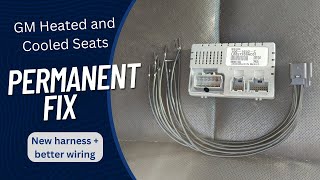
Typical fix: Replace the melted connector with a new pigtail (Motorcraft WPT-928 is a commonly cited cross-fit part). A more robust, permanent repair involves wiring in redundant power and ground wires to spread the electrical load across the available spare terminals in the new connector, effectively doubling the current-carrying capacity. 🎬 Watch: How to permanently fix and upgrade the melted connector.
Est. part cost: $20-$50 - Damaged or Chafed Wiring Under Seat 🟡 Medium Probability The wiring harness under the power driver's seat is susceptible to damage from the seat's movement back and forth. Wires can get stretched, pinched, or chafed by the seat tracks or lumbar mechanism, leading to a short or open circuit.
How to confirm: Perform a thorough visual inspection of all wiring harnesses under the driver's seat. Look for any signs of damage, pinched wires, or breaks. Gently tug on wires near connectors to check for looseness.
Typical fix: Repair the damaged section of wire using a butt connector or by soldering, and protect the repair with heat shrink tubing. Reroute the harness if necessary to prevent future damage, often using zip ties to secure it away from moving parts.
Est. part cost: $5-$15
Rare But Worth Checking
- Incorrectly Installed Accessory Heated Seat Harness: According to TSB #PIT5215A, if the vehicle has a GM accessory heated seat kit, it's possible the seat back and seat bottom heater element connectors were reversed during installation. The harness has two identical connectors, and swapping them can cause this code.
- Faulty Heated Seat Control Module: While possible, the module itself is rarely the cause of the failure. It should only be considered for replacement after all wiring, connectors, and heating elements have been tested and confirmed to be in good condition. Sometimes, simply disconnecting the module for 10 minutes to reset it can resolve temporary glitches.
Diagnosis Steps
- Read the trouble codes with a scan tool capable of accessing Body Control Module (BCM) codes to confirm B2425 is present. Note any symptom bytes (e.g., 0D, 0E).
- Begin with the most common, easily accessible failure point. Move the front passenger seat fully forward and upward. Visually inspect the large electrical connector on the Heated Seat Control Module. Check for any signs of melting, burning, or corrosion, especially around the large red/white and black wires.
- If the module connector is fine, move to the driver's seat. Move the seat fully up and back. Visually inspect the wiring harness underneath the seat for any chafed, pinched, or broken wires, paying close attention to areas near the seat tracks.
- Disconnect the connector for the seat bottom heating element (often a green connector). Using a multimeter, measure the resistance between the two pins on the element side. An open circuit (infinite resistance) indicates a bad element. A good element should read between 1.4 and 2.5 ohms.
- If the seat bottom element tests good, perform the same resistance test on the seat back heating element. A good back element should read between 0.8 and 2.4 ohms.
- If all wiring and elements test good, the fault may lie within the Heated Seat Control Module, but this is uncommon. Consider a module reset by disconnecting it for 10 minutes before considering replacement.
Parts You'll Likely Need
- Driver's Seat Bottom Heater Element
(OEM #ACDelco 15-4751)— This is the most common failure point. The internal wires break from repeated use, causing an open circuit and triggering the B2425 code.
Trusted brands: ACDelco, Dorman (e.g., 641-105)
OEM price range: $90-$150
Aftermarket price range: $60-$100 - Heated Seat Module Connector Pigtail
(OEM #Motorcraft WPT-928 (confirmed cross-fit))— The factory connector is prone to melting at the power and ground pins due to high current draw, requiring the connector to be cut out and replaced. The Ford/Motorcraft part is widely confirmed by owners to be a direct, identical replacement for this GM application.
Trusted brands: Motorcraft, ACDelco, Dorman
OEM price range: $30-$50
Aftermarket price range: $20-$40
Related Codes That Often Appear With This One
- B2430 — B2430 is the equivalent code for the Passenger Seat Heater Circuit. It can appear alongside B2425 if there are issues with both seats or if the shared control module disables both due to a fault in one.
- B1935 — This code is also related to the heated seat system and is mentioned in TSB #PIT5215A as a possible accompanying code.
Technical Service Bulletins (TSBs) & Recalls
- Bulletin #PIT5215A: Addresses inoperative accessory heated seats and DTC B2425, B2430, B1935, B2180 due to reversed heater element connectors or wiring harness issues.
Platform-Specific Known Issues
- A known design weakness exists where the heated seat module connector under the passenger seat overheats and melts due to the high current draw being routed through single power and ground pins. A popular permanent fix involves replacing the connector pigtail and soldering jumper wires to utilize the unused power and ground pins, effectively doubling the current handling capacity.
- TSB #PIT5215A addresses issues with accessory heated seat kits where reversed connectors for the seat back and bottom elements can cause this code.
Mechanic-Grade Diagnostic Values
- Driver Seat Cushion Heater Element Resistance — expected: 1.4 - 2.5 Ohms (Ω). Failure: A reading greater than 2.5 Ω (high resistance/open) or less than 1.4 Ω (low resistance/short).
- Driver Seat Back Heater Element Resistance — expected: 0.8 - 2.4 Ohms (Ω). Failure: A reading outside this specified range.
- Heated Seat Module System Voltage — expected: 9.0 - 16.0 Volts. Failure: The module will not perform self-tests or activate if the voltage is outside this range.
Hidden / Shadow Codes Worth Checking
- B2425 0D: Driver Seat Cushion Heater Circuit High Resistance. This is the most common variant, indicating an open circuit or poor connection. (see via GM-specific scan tool like a Tech 2 or GDS2.)
- B2425 0E: Driver Seat Cushion Heater Circuit Low Resistance. This indicates a short circuit in the element or wiring. (see via GM-specific scan tool like a Tech 2 or GDS2.)
- B2425 0B: Driver Seat Cushion Heater Circuit High Current. This also points towards a short circuit. (see via GM-specific scan tool like a Tech 2 or GDS2.)
- B2425 04: Left Seat Heater Cushion Circuit Open. This can be set if the module does not detect a temperature change within a set time (e.g., 210 seconds). (see via GM-specific scan tool like a Tech 2 or GDS2.)
Scan Tool Commands That Help
- Tech 2 / GDS2: Read DTC Information — To read the specific symptom byte (e.g., 0D, 0E) associated with B2425, which is critical for narrowing down the diagnosis between an open circuit and a short circuit.
- Tech 2 / GDS2: Heated Seat Output Control — To command the heated seat on/off directly, bypassing the switch, to test the integrity of the module, wiring, and heating elements. This helps isolate a faulty switch from the rest of the circuit.
- Tech 2 / GDS2: Clear DTCs — After a repair is completed, the history DTC must be cleared. The code may clear on its own after 40 consecutive fault-free ignition cycles.
Wiring & Ground Locations
- X305 (or C305) — The large, 12-pin main connector at the Heated/Cooled Seat Control Module, located under the front passenger seat.. This is the connector that is prone to melting. The heavy gauge Red/White wire (Pin A7) is the main power feed, and the heavy gauge Black wire (Pin B8) is the main ground. These are the specific pins that overheat.
- G304 — On the floor near the base of the right-hand (passenger) 'B' pillar.. This is the primary ground point for the heated seat control module. A loose or corroded G304 can cause high resistance and intermittent issues for the entire heated seat system.
- SEAT CB — A 20A or 30A silver metal can circuit breaker located in the left Instrument Panel Fuse Block (inside the driver's door jamb).. This is the main circuit protection for the heated seats. If it's tripping (getting hot) or has failed, it will cut power to the module, preventing operation.
Real Owner Repair Stories
- Go-Parts.com forum user compilation (2007-2014 Tahoe/Yukon) — B2425 code, driver's heated seat inoperative.
❌ Tried (didn't work) Cleaning the burnt connector pins, which provided only a temporary fix.
✅ What actually fixed it The permanent fix was replacing the melted 12-pin connector (X305) at the heated seat module with a new pigtail (Motorcraft WPT-928). Crucially, the single power wire and single ground wire from the vehicle harness were each spliced into TWO wires on the new pigtail to utilize the redundant power (A7/A9) and ground (B7/B8) terminals on the module, distributing the load and preventing future overheating. - Tahoe Yukon Forum user (GMT900 platform vehicle) — B2425 code, driver's heated seat inoperative.
❌ Tried (didn't work) Replacing the driver's seat BOTTOM cushion heating element.
✅ What actually fixed it After the bottom element replacement didn't work, the owner disassembled the seat backrest and found the backrest heating pad had severely burned through the foam. Replacing the backrest heating element finally resolved the code. This highlights the importance of testing both elements.
OEM Part Supersession History
GM Pigtail for X305 (Varies)→Motorcraft WPT-928 (also sold as 3U2Z14S411ZMB)— The Ford/Motorcraft WPT-928 is widely confirmed by the DIY community to be an identical, often more robust, and more readily available cross-fit part for the GM heated seat module connector.
Heads up: While a direct physical fit, it's critical to perform the 'redundant wiring' modification during installation to prevent the same melting failure from recurring. The pigtail comes with all 12 wire slots populated, making this modification straightforward.
Helpful Videos
We Have This Part in Stock



The information in this article is provided for general reference and educational purposes only. Vehicle specifications, procedures, and part compatibility can vary by production date, trim level, and region. Always consult your vehicle's factory service manual and verify part numbers before purchasing or performing repairs. Safety-critical components such as airbags, seat belts, and braking systems should be installed by a qualified professional.
- Chevrolet TAHOE:
- 🎬 Helpful Videos
- 🛍️ Shop This Part
- What's Unique About the 2007-2014 Chevrolet TAHOE
- Diagnostic Flowchart
- Symptoms You May Notice
- Most Likely Causes
- Rare But Worth Checking
- Diagnosis Steps
- Parts You'll Likely Need
- Related Codes That Often Appear With This One
- Technical Service Bulletins (TSBs) & Recalls
- Platform-Specific Known Issues
- Mechanic-Grade Diagnostic Values
- Hidden / Shadow Codes Worth Checking
- Scan Tool Commands That Help
- Wiring & Ground Locations
- Real Owner Repair Stories
- OEM Part Supersession History
- 🎟️ Get 5% Off