

OBD-II Code B2327: Manufacturer-Specific Fault Guide
The Ultimate Guide to B2327: What it means, why it triggers, and how to fix it on your vehicle.
- Code B2327 is manufacturer-specific: it flags a failed blind-spot radar on a Subaru, a drowned sensor module on a Ford F-150, or a broken rear window motor on a Toyota 4Runner.
- On Subaru models (Forester, Crosstrek, WRX), B2327 almost always requires replacing the rear radar sensors and performing a mandatory $400+ ADAS calibration.
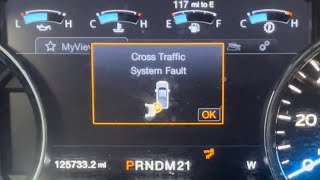
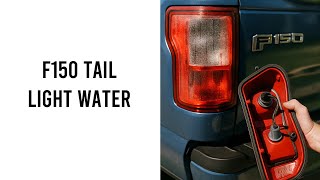
- Ford F-150 owners typically trigger this code when water leaks into a cracked tail light assembly, permanently shorting the Side Obstacle Detection (SOD) module inside.
- Do not attempt to DIY a Subaru radar or Ford SOD module replacement unless you possess dealer-level software (like FORScan or SSM4) to program and calibrate the new units.
What Does B2327 Mean?
B2327 is a manufacturer-specific Body Control Module (BCM) code. On Subaru models, it signals an internal failure in a rear radar sensor for the blind-spot detection system. On Ford vehicles, it indicates a blind spot system fault, often caused by water shorting the sensor module inside the tail light. On Toyota vehicles, it points to a communication loss with the rear power window control unit, and on Land Rover models, it indicates a failed power mirror position sensor.
Technical definition: B2327 lacks a universal SAE definition and varies entirely by manufacturer. Common definitions include: 'Rear Radar Internal Failure' (Subaru), 'Lost Communication with Back Door Power Window ECU' (Toyota), and 'Local mirror unit, above / below out of low range' (Land Rover). The Toyota definition specifies that LIN communication between the multiplex network door ECU and the back door power window motor has stopped for 10 seconds or more.
Can I Drive With B2327?
Yes, But With Caution. Yes, but driving with disabled safety systems like Blind Spot Detection (BSD) and Rear Cross-Traffic Alert (RCTA) significantly increases your collision risk. The potential cost of an accident caused by relying on a disabled system far exceeds the repair cost for the code itself. If the code affects power windows or mirrors, it is a convenience issue but still warrants prompt attention.
Common Causes
- Internal Radar Sensor Failure (Subaru) (Very Common) — The blind spot monitoring sensor (Subaru Rear Vehicle Detection, or SRVD) located in the rear bumper has failed internally. This is the definitive cause for this code on applicable Subaru vehicles.
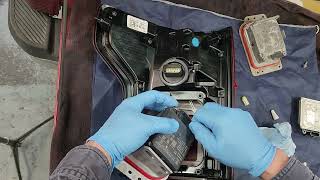
- Water Intrusion in Tail Light Assembly (Ford) (Very Common) — On Ford trucks and SUVs, the blind spot module (SOD) lives inside the tail light assembly. 🎬 Watch: How to fix water leaks in Ford tail lights. A cracked housing or failed gasket allows water to enter and permanently short-circuit the module.
- Corroded or Damaged Wiring Harness (Common) — Water, road salt, or physical chafing damages the wiring leading to the component. Corroded connector pins disrupt the communication network, triggering the fault.
- Physical Damage to Sensor Bracket (Subaru) (Common) — A minor rear bumper impact cracks the plastic bracket holding the radar sensor. The sensor itself survives, but its incorrect alignment triggers a permanent fault code.
- Faulty Back Door Power Window Motor (Toyota) (Less Common) — The entire rear power window motor assembly, which includes its own integrated computer (ECU), fails and stops communicating on the vehicle's LIN bus.
- Faulty Power Mirror Assembly (Land Rover) (Less Common) — The position sensor inside the side-view mirror fails, preventing the control module from tracking the mirror's vertical position.
- System Voltage or BCM Fault (Rare) — A failing battery causing low system voltage, or a parasitic draw from a short circuit elsewhere in the vehicle, cascades into communication failures that trick the BCM into setting a false B2327 code.
Symptoms
- Blind Spot Detection (BSD) / RCTA Disabled Warning Light — An illuminated warning light on the dashboard or a message on the multi-function display indicates the blind spot and rear cross-traffic alert systems are offline.
- Blind Spot Monitors Not Working — The amber warning lights in your side mirrors fail to illuminate when a vehicle enters your blind spot.
- Rear Power Window or Liftgate Inoperative (Toyota, Nissan) — The power window on the rear door or tailgate refuses to roll up or down. 🎬 See this walkthrough for replacing a Toyota rear window regulator.
- Power Mirror Malfunction (Land Rover, Lincoln) — The affected side-view mirror will not adjust vertically, and memory position functions fail.
- Internal Electronic Failure Code Stored (scan-tool only — no driver-felt sign) — A professional scan tool reveals B2327 or a related code like U3000:49 stored in the BCM or SODL/SODR module.
Diagnostic Flowchart
Tap your situation to follow the diagnostic path that matches what you're seeing on this code.
Common Fixes & Costs
- Replace Rear Radar Sensor(s) and Calibrate (Subaru) — Parts: $700-$1000 (for both sensors), Labor: $400-$800 (includes bumper removal and calibration), ~3.5 hr book time (Professional)
- Replace Side Obstacle Detection (SOD) Module and Program (Ford) — Parts: $400-$650, Labor: $200-$400 (includes programming), ~1.5 hr book time (Professional)
- Replace Back Door Power Window Regulator/Motor (Toyota) — Parts: $150-$350, Labor: $150-$300, ~1.5 hr book time (DIY)
- Repair Damaged Wiring or Connector — Parts: $10-$50, Labor: $150-$400, ~2 hr book time (Intermediate)
- Replace Power Mirror Assembly (Land Rover) — Parts: $300-$700, Labor: $75-$150, ~0.8 hr book time (Intermediate)
Used vs. New Parts: Buying Guide
When a used part is worth it: A used electronic module is cost-effective if sourced from a reputable seller verifying the donor vehicle lacked flood or electrical damage. It is most sensible for older vehicles where new OEM parts are cost-prohibitive.
Donor-vehicle mileage cap: roughly under 100000 miles for the part to have meaningful remaining life.
Donor quality checklist:
- Verify the part number matches EXACTLY, including any suffix letters.
- Inspect connector pins for any signs of green/white corrosion or discoloration.
- Ensure the seller offers a minimum 30-day warranty.
Decision logic:
- If The part requires mandatory ADAS calibration (e.g., Subaru Radar) → Favor a new OEM part. The high cost of calibration makes it risky to use a used part of unknown history.
- If The part is for a Ford and you have access to FORScan for programming → A used SOD module is a highly viable option to save significant cost.
- If The part is a simple mechanical assembly (e.g., Toyota window motor) → Used parts are generally reliable and offer excellent value.
Warranty tradeoff: Used parts typically carry a 30-90 day warranty. New aftermarket parts offer 1-year to limited lifetime warranties. New OEM parts carry a 1-year warranty.
Worst-case if a used part fails: $300-800 if a used part fails after installation, primarily due to repeated labor and mandatory recalibration costs.
What Happens If You Wait — Timeline
- 0-1 month: Code sets and 'BSD/RCTA Disabled' warning appears. The safety system goes offline. For Ford, this may be intermittent after heavy rain. (MPG impact: 0%% · Added cost: $0)
- 1-6 months: For Ford, continued water intrusion permanently destroys the SOD module. Corrosion begins forming on the module's connector pins. (MPG impact: 0%% · Added cost: $500 - $1,000 (Cost of the destroyed electronic module).)
- 6-12 months: Corrosion on the Ford's SOD connector migrates into the vehicle's wiring harness pigtail, requiring a complex wiring repair. (MPG impact: 0%% · Added cost: $700 - $1,400 (Cost of module plus wiring repair).)
- Long-term: The driver becomes accustomed to operating without the blind spot monitor, developing unsafe habits. The risk of an at-fault collision remains constant. (MPG impact: 0%% · Added cost: $500 - $2,500+ (Potential insurance deductible from an accident).)
Cost of Not Fixing It
- Immediate: Loss of Blind Spot Detection (BSD) and Rear Cross-Traffic Alert (RCTA) safety features, increasing collision risk. (Added cost: Potential insurance deductible and increased premiums after an at-fault accident ($500 - $2,500+).)
- 0-6 months: For Ford F-150s, continued water intrusion corrodes the wiring connector and harness, requiring an expensive wiring pigtail repair. (Added cost: $150 - $400)
- Long-term: Driver becomes overly reliant on disabled safety systems, leading to unsafe habits like failing to check blind spots manually. (Added cost: Negligible direct financial cost, but significant safety degradation.)
Diagnosis Steps
- Identify Your Vehicle's System
Determine what B2327 means for your specific vehicle. Search '[Your Car's Make and Model] B2327 code' to confirm which system is affected (e.g., radar, window, mirror).
Tools: Internet access (Beginner) - Scan All Vehicle Modules
Use a professional-grade OBD-II scanner capable of reading Body (B) and Undefined (U) codes. Note all codes present across all modules to rule out a broader network communication issue.
Tools: Professional OBD-II Scanner (Beginner) - Visual Inspection of the Affected Area
For Subaru, inspect the rear bumper corners for impact damage or misalignment. For Ford, check the tail light housings for condensation or pooled water. For Toyota, inspect the rear door area.
Tools: Flashlight (Beginner) - Check Fuses and Battery Voltage
Verify the battery is fully charged (12.4V+ resting), as low voltage triggers random communication faults. Locate and test the fuses for the Body Control Module, Blind Spot Monitoring, or Power Windows.
Tools: Owner's manual, fuse puller, multimeter (Beginner) - Access and Inspect the Component Connector
Remove the necessary trim (Subaru bumper cover, Ford tail light, Toyota door panel) to access the component. Unplug the electrical connector and inspect for green/white corrosion, bent pins, or moisture.
Tools: Trim removal tools, socket set, screwdriver (Intermediate) - Test for Power, Ground, and Network Voltage
Using a multimeter on the harness-side connector, verify the component receives 12V power and has a solid ground (less than 1 Ω resistance). For Toyota LIN bus systems, probe the communication wire to ensure voltage toggles rapidly between 1V and 11V.
Tools: Multimeter, vehicle-specific wiring diagram (Advanced) - Test/Replace the Component
If wiring, power, and ground tests pass, replace the component. Subaru requires replacing the radar sensor; Toyota requires the window motor assembly; Ford requires the tail-light-mounted SOD module. Subaru and Ford systems require mandatory calibration or programming with a specialized scan tool after installation.
Tools: OBD-II scanner, new part, basic hand tools (Professional)
When This Code Triggers (Freeze-Frame Conditions)
- System Voltage: 11.5-14.5V (Normal operating voltage; code sets if voltage drops too low during module initialization.)
- Vehicle Speed: >15 mph (Blind spot systems typically activate above a specific speed threshold to perform self-checks.)
- Component Status: No Communication (The code sets when the master module fails to receive a signal from the slave module (window ECU, SOD) for a set period, often 5-10 seconds.)
Related Codes
- B2328 — On Toyota 4Runners, B2328 indicates a LIN bus malfunction detected 3 consecutive times. On Subarus, it indicates an 'improper signal calculation' by the radar system.
- B2350 — For Subaru, this points to a communication error between the master and slave radar sensors. TSB 07-174-20 notes that B2350 often points to the OPPOSITE sensor from the one that actually failed.
- U0232 — A generic 'Lost Communication With Side Obstacle Detection Control Module' code. On Fords, it appears alongside a B-series fault when the SOD module fails from water intrusion.
- U3000:49 — A Ford-specific code translating to 'Control Module: Internal Electronic Failure'. Stored in the SODR or SODL module, it definitively confirms the module is destroyed.
Climate & Environmental Factors
- High Humidity and Rain: A primary trigger for Ford F-150s. Water penetrates poorly sealed tail light assemblies, directly shorting the Side Obstacle Detection (SOD) module housed inside.
- Road Salt (Winter Climates): Salt spray accumulates in the rear bumper area and corrodes the electrical connectors and internal components of Subaru radar sensors, leading to internal failures.
How to Talk to a Mechanic About This Code
Say this: "My [Vehicle Make/Model] has the 'Blind Spot System Disabled' warning light on, and I've pulled a B2327 code. I'd like to schedule a diagnostic. I know it will likely need module programming or ADAS calibration after the repair."
This signals you are an informed consumer. It directs the technician to the specific system and acknowledges the complex, high-cost part of the repair (calibration), preventing them from starting with broad, time-consuming diagnostics.
Avoid saying:
- 'My blind spot light is on, can you fix it?' (Too vague, invites a long diagnostic process).
- 'Just do whatever it takes to fix it.' (Gives a blank check for unnecessary part replacements).
- 'I think the main computer is broken.' (Incorrectly suggests the most expensive part first).
Questions to ask before authorizing the repair:
- Is the failure in the module itself, or is it a wiring/connector problem?
- For my Ford F-150, did you find evidence of water intrusion in the tail light assembly?
- For my Subaru, does your quote include replacing both rear radar sensors as recommended by the TSB?
- Does the final price include the mandatory ADAS calibration or programming required for the new part?
Where to Take It: Dealer vs Independent vs Chain
- Dealer:
Recommended. The mandatory ADAS calibration for Subaru and programming for Ford makes the dealer the most reliable choice.
Best for: Vehicles under warranty., Complex ADAS repairs requiring manufacturer-specific tools and software (Subaru SSM4, Ford FDRS).
Downsides: Highest labor rates, typically 1.5-2x more than independent shops., May default to replacing parts in pairs per TSBs, increasing cost. (Typical cost: +50% vs. baseline) - Independent Shop:
Use with caution. Only viable if you verify the shop has its own ADAS calibration equipment and experience with your vehicle's brand.
Best for: Out-of-warranty vehicles where the shop has invested in ADAS calibration equipment., Toyota power window repairs.
Downsides: Most general independent shops lack expensive ADAS calibration rigs., They may sublet the calibration to a dealer, adding markup. (Typical cost: +0% vs. baseline) - Chain Shop:
AVOID. These shops are not equipped to handle ADAS system repairs.
Best for: Oil changes, tires, and brakes.
Downsides: Completely lack the specialized diagnostic and calibration tools required for this repair., High potential for misdiagnosis. (Typical cost: -10% vs. baseline)
When to Walk Away From the Repair
If the estimated repair cost exceeds 40-50% of the car's current private-party value, evaluate whether to fix it, sell it as-is, or trade it in.
- Car worth $15000, fix is $1900: Fix it. The repair cost is ~13% of the vehicle's value, and it restores a critical safety feature, preserving the car's worth.
- Car worth $4000, fix is $1900: Borderline. The repair is nearly 50% of the car's value. Get a second opinion and consider selling it 'as-is' with full disclosure.
- Car worth $2500, fix is $1900: Walk away. The repair cost is over 75% of the car's value. It is not economically viable to perform this repair.
What Scan Tool You Need for This Code
Minimum: A scanner that can read manufacturer-specific Body (B) codes. A basic OBD-II engine code reader will NOT see B2327.
Standard $20 code readers only access Powertrain (P) codes. B2327 is stored in the Body Control Module (BCM) or a Side Obstacle Detection (SOD) module, which basic readers cannot access.
Budget: BlueDriver Pro (~$100) — Confirms the presence of B2327 and other body/network codes. Reads and clears codes from modules like ABS, Airbag, and BCM for many makes.
Mid-range: Foxwell NT510 Elite / FORScan with Adapter (~$180) — For Ford, a $60 OBD adapter combined with FORScan software allows you to read codes and perform the module programming required after replacing a SOD module, saving hundreds in dealer labor.
Professional: Autel MaxiCOM MK808 / MK906BT (~$500-1200) — Provides full-system diagnostics to read/clear codes from every module. Higher-end models support bidirectional controls and can perform static ADAS calibration routines when paired with Autel's calibration frame.
How to Clear the Code After You Fix It
- Use a professional OBD-II scan tool to clear the code from the BCM or relevant module.
- For Subaru/Ford, perform mandatory sensor calibration or module programming.
- Perform a system re-initialization drive cycle.
Drive cycle (~15 minutes): Start the engine and idle for 2-3 minutes. Drive for 5-10 minutes at speeds above 25 mph to allow the blind spot monitoring system to initialize and confirm the repair.
Readiness monitors affected: Not applicable for emissions
Watch out for:
- Using a basic engine code reader that cannot access or clear Body (B-series) codes.
- Failing to perform the required calibration or programming after replacing a Subaru or Ford module.
- Clearing the code without fixing the underlying water leak, causing immediate failure of the new module.
Will This Fail Emissions / State Inspection?
No — by itself this code doesn't fail OBD inspection (but it can keep readiness monitors from setting, which causes a separate fail).
- California: This code will NOT cause a smog check failure. California focuses on powertrain (P-series) codes and emissions monitors.
- New York: Will pass emissions, but an illuminated safety system warning light could potentially be grounds for a safety inspection failure at the inspector's discretion.
- Texas: Will pass. The Texas inspection program checks for Check Engine Lights but does not fail based on B-series codes.
- North Carolina: Will pass emissions. It will also pass the safety inspection as long as primary safety items (brakes, lights) are functional.
Most Commonly Affected Vehicles
- Subaru Forester (2014-2018) — Prone to rear radar sensor failure (B2327). TSB 07-118-17R applies.
- Subaru Crosstrek (2016-2017) — Shares the same SRVD system and failures. TSB 07-118-17R applies.
- Subaru WRX (2016-2017) — Affected by the same SRVD internal radar failure. TSB 07-118-17R applies.
- Ford F-150 (2015-2020) — Prone to 'Blind Spot System Fault' messages caused by water leaking into the tail light assemblies and shorting the Side Obstacle Detection (SOD) module.
- Toyota 4Runner (2010-2024) — B2327 indicates a LIN communication failure with the back door power window ECU. The fix is replacing the power window motor/ECU assembly.
- Nissan Murano (2015-2024) — Experiences an inoperative power liftgate due to communication issues with the Automatic Back Door Control Unit, functionally similar to the Toyota issue.
- Chevrolet Equinox (2018-2024) — Susceptible to BCM software corruption from low voltage events, triggering various communication codes.
- Land Rover Various (2010-2019) — Indicates a fault with the vertical position sensor in a power-folding side mirror.
Manufacturer-Specific Notes
- Subaru: TSB 07-118-17R mandates replacing BOTH rear radar units with an updated part (P/N 87611VA020), even if only one has failed, to prevent a repeat failure.
- Ford: The blind spot sensor module (SOD) is physically located inside the tail light housing. A replacement module MUST be programmed to the vehicle using dealer-level software (FDRS or FORScan) to function.
- Toyota: A temporary fix for the rear window communication loss can sometimes be achieved by pulling the 'ECU-B' fuse for 15 seconds to reset the module.
- Subaru: A class-action lawsuit settlement provides a limited warranty extension for covered ADAS repairs on many 2013-2024 models. Owners may be eligible for free repairs or reimbursement.
Real Owner Stories
2018 Subaru Forester with intermittent 'BSD/RCTA Disabled' message.
The warning light flashed intermittently for two months before staying on permanently.
Outcome: The dealer quoted $1,900 to replace both rear radar sensors and perform a calibration, following Subaru's TSB.
Lesson: An intermittent warning is the first sign of failure. For Subarus, this is a common and expensive repair due to sensor costs and mandatory calibration.
2016 Ford F-150 Platinum with multiple system failures after noticing moisture in tail light.
Owner ignored condensation in the tail light. Three months later, the BLIS, power windows, A/C, and navigation all stopped working.
Outcome: The water shorted the SOD module, crashing the shared network bus. The fix required replacing and reprogramming the module.
Lesson: Water in an F-150 tail light is a critical issue that must be addressed immediately to prevent destroying the expensive SOD module.
2018 Subaru WRX with every warning light on the dashboard.
The owner experienced a 'Christmas tree' effect on the dash. A dealer quoted a $4,000 engine repair based on random codes.
Outcome: The mechanic identified a swollen, leaking battery. Replacing the battery for under $200 fixed the issue completely. Low voltage caused false codes across all modules.
Lesson: Always check the battery first when multiple unrelated electronic faults appear suddenly. Low voltage mimics catastrophic component failure.
How to Prevent This Code From Triggering
- Seal Ford F-150 Tail Light Housings (Once, or after bulb replacement) — Applying a thin bead of clear RTV silicone sealant around the lens seam prevents water intrusion that destroys the internal SOD module.
- Apply Dielectric Grease to Connectors (During any related service) — Applying dielectric grease to the connector's rubber seal (not the metal pins) blocks moisture and prevents corrosion.
- Regularly Wash Rear Bumper and Fenders (Monthly, especially in winter) — Washing away corrosive road salt prevents it from penetrating Subaru radar sensor housings and connectors.
- Use a Battery Tender for Stored Vehicles (When vehicle is parked for over 2 weeks) — Maintains stable battery voltage, preventing low-voltage events during startup that corrupt BCM software and trigger false codes.
Frequently Asked Questions
Can a dead battery cause code B2327?
Yes, a weak battery causes low voltage issues that trigger seemingly unrelated communication codes across multiple modules. This is a known trigger on Chevrolet and Subaru vehicles. Always test your battery before replacing expensive computers.
I had a minor fender bender and now I have this code. Are they related?
Almost certainly. Subaru radar sensors and their plastic mounting brackets sit in the rear bumper corners and easily misalign during low-speed impacts. Even a slight shift will trigger a fault code.
Why did my Subaru dealer say both radar sensors need to be replaced?
Subaru's official service bulletin (07-118-17R) mandates replacing both the left and right rear radar sensors with an updated part number. This ensures the system communicates correctly and prevents the older, failure-prone opposite sensor from breaking shortly after.
Can I fix a B2327 myself?
Replacing a Toyota window motor is a manageable DIY job, but replacing a Subaru radar sensor or Ford SOD module is not. These safety systems require mandatory aiming, calibration, or programming with dealer-level scan tools to function.
The dealer quoted me $1,900 to fix this on my Subaru. Is that normal?
Yes, this is a standard dealership rate for this specific repair. The quote includes two expensive radar sensors (~$450 each), bumper removal labor, and a mandatory ADAS calibration procedure that costs $300-$800 alone.
Do I have to program a new Ford blind spot module?
Yes, Side Obstacle Detection (SOD) modules are not plug-and-play. You must program a new or used module with your truck's specific 'As-Built' data using software like FORScan or Ford FDRS. The part will not function without this step.
Why doesn't my cheap OBD-II scanner show code B2327?
B2327 is a Body (B-series) code, not a standard Powertrain (P-series) check engine code. Basic $20 code readers only scan the engine computer for emissions faults. You need an advanced scanner capable of reading the Body Control Module (BCM).
My mechanic replaced the BCM but the code came back. What could be wrong?
The BCM is rarely the root cause of a B2327 code. This code is usually a symptom of a failed end-component (like a radar sensor), corroded wiring, or a low-voltage battery issue. A thorough electrical diagnostic is required before condemning the main computer.
Key Takeaways
- Code B2327 is manufacturer-specific: it flags a failed blind-spot radar on a Subaru, a drowned sensor module on a Ford F-150, or a broken rear window motor on a Toyota 4Runner.
- On Subaru models (Forester, Crosstrek, WRX), B2327 almost always requires replacing the rear radar sensors and performing a mandatory $400+ ADAS calibration.
- Ford F-150 owners typically trigger this code when water leaks into a cracked tail light assembly, permanently shorting the Side Obstacle Detection (SOD) module inside.
- Do not attempt to DIY a Subaru radar or Ford SOD module replacement unless you possess dealer-level software (like FORScan or SSM4) to program and calibrate the new units.
Helpful Videos

The information in this article is provided for general reference and educational purposes only. Vehicle specifications, procedures, and part compatibility can vary by production date, trim level, and region. Always consult your vehicle's factory service manual and verify part numbers before purchasing or performing repairs. Safety-critical components such as airbags, seat belts, and braking systems should be installed by a qualified professional.
- 🎬 Helpful Videos
- What Does B2327 Mean?
- Can I Drive With B2327?
- Common Causes
- Symptoms
- Diagnostic Flowchart
- Common Fixes & Costs
- Used vs. New Parts: Buying Guide
- What Happens If You Wait — Timeline
- Cost of Not Fixing It
- Diagnosis Steps
- When This Code Triggers (Freeze-Frame Conditions)
- Related Codes
- Climate & Environmental Factors
- How to Talk to a Mechanic About This Code
- Where to Take It: Dealer vs Independent vs Chain
- When to Walk Away From the Repair
- What Scan Tool You Need for This Code
- How to Clear the Code After You Fix It
- Will This Fail Emissions / State Inspection?
- Most Commonly Affected Vehicles
- Manufacturer-Specific Notes
- Real Owner Stories
- 2018 Subaru Forester with intermittent 'BSD/RCTA Disabled' message.
- 2016 Ford F-150 Platinum with multiple system failures after noticing moisture in tail light.
- 2018 Subaru WRX with every warning light on the dashboard.
- How to Prevent This Code From Triggering
- Frequently Asked Questions
- Can a dead battery cause code B2327?
- I had a minor fender bender and now I have this code. Are they related?
- Why did my Subaru dealer say both radar sensors need to be replaced?
- Can I fix a B2327 myself?
- The dealer quoted me $1,900 to fix this on my Subaru. Is that normal?
- Do I have to program a new Ford blind spot module?
- Why doesn't my cheap OBD-II scanner show code B2327?
- My mechanic replaced the BCM but the code came back. What could be wrong?
- Key Takeaways
- 🎟️ Get 5% Off