

OBD-II Code B2299: Airbag System Fault
What B2299 means, why it triggers, and how to fix it
- Code B2299 disables your vehicle's entire airbag system, meaning 0 airbags will deploy in the event of a crash.
- The most common cause is a failed Occupant Classification System (OCS) sensor mat in the passenger seat, which costs between $500 and $2,500 to replace.
- Before paying for repairs, check your VIN for open recalls, as Toyota, Lexus, and Hyundai recalled over 1 million vehicles for this exact defect.
- Do not attempt to replace the OCS sensor yourself; the system requires a mandatory 'Zero Point Calibration' using a $400+ bidirectional scanner to function.
What Does B2299 Mean?
B2299 is a body trouble code indicating a fault within the Supplemental Restraint System (SRS), or airbag system. The vehicle's computer detected a problem with a sensor that dictates when and how to deploy the airbags. While the exact definition is manufacturer-specific, it almost always points to a failed passenger seat weight sensor (OCS) or a side impact sensor.
Technical definition: The SAE/ISO does not universally standardize B2299. Common manufacturer definitions include 'Occupant Classification System Fault' (Ford, Toyota, Nissan) and 'Right/Left Front Side Sensor Internal Fault' (Jaguar, Land Rover). On some Ford and Ram vehicles, it indicates a 'Power Supply Sensor Circuit Short to Ground' for parking aid systems, though this guide focuses on the primary SRS definition.
Can I Drive With B2299?
No — Do Not Drive. The vehicle drives normally, but the entire airbag system (SRS) is disabled. In an accident, the airbags and seatbelt pretensioners will not deploy, significantly increasing the risk of serious injury or death. Driving with the light on is a major safety risk and causes an automatic failure of vehicle safety inspections in states like New York and Texas.
Common Causes
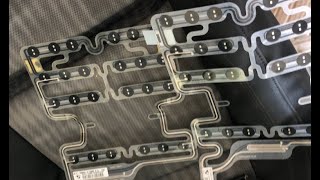
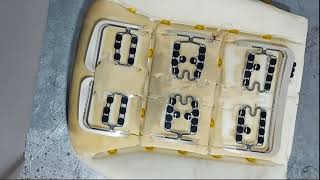
- Faulty Occupant Classification System (OCS) Sensor Mat (Very Common) — A pressure-sensitive mat inside the front passenger seat cushion detects occupant weight. It fails from wear, liquid spills, or internal short circuits, sending incorrect data to the airbag module. Toyota recalled roughly 1 million vehicles specifically for this sensor failing.
- Wiring or Connector Issues (Common) — Wiring and connectors under the passenger seat or leading to impact sensors suffer damage easily. Items shoved under the seat, moisture corrosion, or vibrations cause loose connections and interrupt the sensor's signal.
- Failed Side Impact Sensor (Common) — Sensors located in doors, B-pillars, or under seats detect side collisions. Their exposed locations make them susceptible to internal failure, moisture, and corrosion.
- Low System Voltage / Weak Battery (Uncommon) — A weak battery causes low voltage conditions during startup, triggering spurious communication errors in sensitive electronic modules. The system flags a sensor fault when the real issue is insufficient power.
- Faulty Airbag Control Module (SRS/RCM) (Less Common) — The main SRS computer fails due to internal hardware problems, software corruption, or water damage. This prevents the system from reading sensors correctly.
- Damaged Airbag Clockspring (Rare) — The clockspring is a rotary electrical connector in the steering column. It wears out over time, sometimes triggering a general SRS fault code like B2299.
- Software Glitch in Control Module (Rare) — The fault sometimes lies in the control module's software logic rather than physical hardware. Manufacturers release Technical Service Bulletins (TSBs) to patch these false error codes.
Symptoms
- Airbag Warning Light is On — The dashboard airbag icon or 'SRS' light stays illuminated continuously.
- 'Passenger Airbag OFF' Indicator Stays Lit — The 'Passenger Airbag OFF' light remains lit even when an adult sits in the passenger seat, confirming the system misreads the occupant.
- Warning Message on Information Display — The information display shows a text warning like 'SRS Airbag System Malfunction'.
- Failed State Vehicle Inspection — An illuminated airbag warning light causes an automatic failure during state safety inspections, preventing legal vehicle registration.
Diagnostic Flowchart
Tap your situation to follow the diagnostic path that matches what you're seeing on this code.
Common Fixes & Costs
- Replace Occupant Classification System (OCS) Sensor Mat — Parts: $300-$2100, Labor: $200-$400, ~2.5 hr book time (Professional)
- Repair Under-Seat Wiring or Connector — Parts: $5-$20, Labor: $100-$200, ~1.5 hr book time (DIY)
- Replace Side Impact Sensor — Parts: $40-$250, Labor: $100-$200, ~1.5 hr book time (Intermediate)
- Reprogram or 'Flash' the Airbag Control Module — Parts: $0, Labor: $100-$250, ~1 hr book time (Professional)
- Replace Airbag Control Module (RCM/SRS) — Parts: $200-$800, Labor: $150-$300, ~2 hr book time (Professional)
Used vs. New Parts: Buying Guide
When a used part is worth it: Buying used safety-critical SRS components is NOT recommended. The risk of acquiring a part exposed to moisture, stored improperly, or damaged in a prior accident is too high. Consider a used part only for older, low-value vehicles where a new part is prohibitively expensive and the part comes from a reputable recycler.
Donor-vehicle mileage cap: roughly under 50000 miles for the part to have meaningful remaining life.
Donor quality checklist:
- Verify the donor vehicle did not have airbags deployed.
- Ensure the part was not exposed to water, as moisture destroys the electronics.
- Match the part number exactly, as SRS components are highly VIN-specific.
- Avoid parts from vehicles in regions with high humidity or heavy road salt usage.
Decision logic:
- If The part is for a safety system (Airbag, OCS, Impact Sensor) → Buy a new OEM part to ensure reliability and safety.
- If Vehicle is covered by a recall for this specific part → Accept the new OEM part installed by the dealer for free.
- If Budget is the absolute primary concern on an old vehicle → Acknowledge you are accepting the risk of the used part failing to perform in a collision.
Warranty tradeoff: Used parts typically carry a 30-90 day warranty covering only the part itself. New OEM parts carry a 1-year or longer warranty. Aftermarket new parts vary from 1 year to a limited lifetime warranty.
Worst-case if a used part fails: $300 - $600. If the used part fails, you pay for the diagnostic and installation labor a second time, plus the cost of the new part you should have bought initially.
What Happens If You Wait — Timeline
- Immediately: Code is set, airbag light is on, and the entire SRS system is disabled. Airbags will not deploy in a crash. (MPG impact: 0%% · Added cost: $0)
- At next state inspection (0-12 months): Vehicle automatically fails the mandatory safety inspection in most jurisdictions, preventing legal registration renewal. (MPG impact: 0%% · Added cost: $50-$200 in failed inspection fees and potential fines, plus the eventual repair cost.)
- Ongoing / At time of sale: The vehicle's resale value is significantly reduced. A known, active safety fault lowers the trade-in or private sale value by 20-40%. (MPG impact: 0%% · Added cost: $1000-$4000+ in lost vehicle value.)
- In the event of an accident: Catastrophic failure of the passive safety system. Airbags and seatbelt pretensioners will not activate, dramatically increasing the risk of serious injury or death. (MPG impact: 0%% · Added cost: N/A - This represents a non-monetary cost of potential life-altering injury or death.)
Cost of Not Fixing It
- Immediately: The entire Supplemental Restraint System (SRS) is disabled. In the event of a collision, NO airbags will deploy and seatbelt pretensioners will not activate. (Added cost: N/A - This represents a catastrophic failure of the vehicle's primary passive safety system.)
- 0 - 12 months: The vehicle automatically fails the safety inspection portion of any state-mandated vehicle inspection, preventing legal registration renewal. (Added cost: $50 - $200 in failed inspection fees and fines.)
- Ongoing: Reduced vehicle resale value. A car with a persistent safety system fault commands a much lower price. (Added cost: $1,000 - $3,000+ reduction in vehicle value.)
- In the event of an accident:
Diagnosis Steps
- Read the Specific Fault Code
Use an OBD-II scanner capable of reading SRS/Body codes (B-codes). A basic $20 engine code reader cannot see it. Read the full code definition to confirm you are diagnosing an airbag issue.
Tools: Advanced OBD-II Scanner (Beginner) - Check for Recalls and TSBs
Check your vehicle's VIN for open recalls or Technical Service Bulletins (TSBs). Toyota recalled roughly 1 million vehicles (NHTSA ID: 23V-865) for this exact issue, meaning the dealer fixes it for free.
Tools: VIN, Internet Access (Beginner) - Inspect Under the Passenger Seat
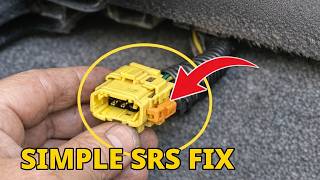
With the vehicle off, inspect under the front passenger seat for loose or disconnected electrical connectors. Look for objects shoved under the seat that damaged the wiring harness, and re-seat any loose yellow SRS connectors.
Tools: Flashlight (Beginner) - Observe Live Sensor Data (OCS)
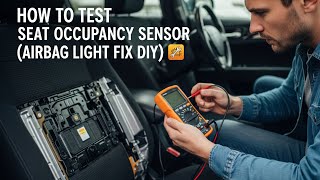
Using an advanced scanner, view the live data PIDs for the Occupant Classification System. The status should read 'Empty' at 0 lbs, and change to 'Occupied' with a corresponding weight when an adult sits down. A stuck or nonsensical reading confirms a faulty sensor mat.
Tools: Advanced OBD-II Scanner (Intermediate) - Test Side Impact Sensor Resistance
For side impact sensor codes, disconnect the battery and wait 15 minutes. Unplug the sensor and use a multimeter to measure resistance across its two pins. Compare the reading (often 500-1200 ohms) to manufacturer specs; infinite resistance indicates an internal open circuit.
Tools: Multimeter, Trim Removal Tools, Vehicle-Specific Specs (Advanced) - Check OCS Sensor Reference Voltage and Ground
Use a wiring diagram to identify the OCS sensor's power, ground, and signal wires. With the key on and connector unplugged, verify the sensor receives the correct reference voltage (typically 5V) and has near 0 ohms resistance to chassis ground.
Tools: Multimeter, Vehicle-Specific Wiring Diagram (Advanced) - Test Sensor Circuit Integrity
Disconnect the battery, wait 15 minutes, and unplug the sensor and SRS module. Check for continuity (near 0 ohms) on the signal wire between the sensor and module, and verify no shorts to ground or power exist.
Tools: Multimeter, Vehicle-Specific Wiring Diagram (Advanced) - Clear Codes and Test
Use an advanced scanner to clear the fault code from the SRS module after any repair. The airbag light will not turn off on its own, even if the physical problem is fixed.
Tools: Advanced OBD-II Scanner (Intermediate)
When This Code Triggers (Freeze-Frame Conditions)
- SRS Module Self-Test: Active (The SRS module performs a self-test every time the ignition turns to 'ON' or 'RUN'. The B2299 code sets during this initial check if a fault is detected.)
- System Voltage: 11.5V - 14.8V (The code triggers if battery voltage drops too low during the startup self-test, causing a communication error even if the sensor is good.)
- Airbag Warning Lamp Status: Commanded ON (When the fault is detected, the SRS module commands the dashboard airbag warning light to stay illuminated after the initial bulb check.)
- Fault Status: Present / Current (Freeze frame data shows the fault as 'current' or 'present', indicating an active problem rather than a historical one.)
Related Codes
- B00A0 — Specifically means 'Occupant Classification System'. On Nissan and Ford, this is the primary code for a failed OCS, with B2299 stored as a secondary code.
- B1650 — A Toyota-specific code for 'Occupant Classification System Malfunction'. Finding this alongside B2299 confirms the fault lies in the OCS.
- B0020 / B0028 — Indicates a fault in the side airbag deployment circuit. If B2299 points to a side impact sensor, these codes highlight an open or short in the wiring to that sensor.
- B2799 — A Toyota-specific code for 'Engine Immobilizer System Malfunction'. It is frequently confused with B2299 online but causes a crank-no-start condition, completely unrelated to airbags.
Climate & Environmental Factors
- High Humidity / Water Intrusion: Moisture from spilled drinks or open windows seeps into the passenger seat, shorting the OCS mat. It also corrodes under-seat connectors and externally mounted impact sensors.
- Extreme Cold: Freezing temperatures cause materials to contract, creating intermittent connections in wiring or connectors. The airbag light often appears only after the car sits in extreme cold.
- Road Salt (Corrosion): Salt spray in winter regions accelerates corrosion on externally mounted front or side impact sensors and their electrical connectors.
How to Talk to a Mechanic About This Code
Say this: "I have an airbag warning light on and my scanner is showing code B2299. I'd like to schedule a diagnostic to confirm the specific fault. Can you please check for any related recalls or TSBs, and then view the live data from the Occupant Classification Sensor before recommending a part replacement?"
This signals that you are an informed customer. It directs the technician to the most common causes (OCS sensor, recalls) and requests specific, evidence-based diagnostic steps (checking live data) rather than just replacing parts. It helps prevent a shop from immediately quoting an expensive module replacement without proper diagnosis.
Avoid saying:
- 'My airbag light is on, can you just fix it?'
- 'I think I need a new airbag.'
- 'Just do whatever you think is necessary.'
Questions to ask before authorizing the repair:
- What is the specific manufacturer definition for the B2299 code on my vehicle?
- If you are recommending an OCS sensor mat replacement, does the estimate include the mandatory 'Zero Point Calibration' required after installation?
- Did you find any issues with the wiring or connectors under the passenger seat?
- What is the warranty on the recommended parts and labor?
Where to Take It: Dealer vs Independent vs Chain
- Dealer:
Best and safest choice, especially if the fix requires OCS calibration or if the vehicle is a Toyota, Lexus, or Hyundai with a known recall for this issue.
Best for: Vehicles under warranty or covered by a recall (like the 2020-2022 Toyota/Lexus OCS recall)., Repairs requiring mandatory, proprietary software calibrations (e.g., OCS Zero Point Calibration)., Complex electronic issues or manufacturer-specific quirks.
Downsides: Typically the highest labor rates., May default to replacing an entire assembly when a smaller component or wiring repair would suffice. (Typical cost: +50% vs. baseline) - Independent Shop:
A good option, but you MUST verify the shop has the specific SRS diagnostic and calibration capabilities. Ask them directly if they can perform an OCS Zero Point Calibration before you commit.
Best for: Out-of-warranty vehicles where the cause is a simple sensor replacement (e.g., side impact sensor) or wiring repair., Owners looking for a lower-cost alternative to the dealer.
Downsides: Shop must have an advanced, professional-grade scanner capable of reading SRS codes, viewing live data, AND performing special functions like OCS calibration. Quality and equipment vary widely. (Typical cost: +0% vs. baseline) - Chain Shop:
AVOID. This is a safety-critical system that requires specialized tools and knowledge beyond the scope of a typical chain shop.
Best for: Simple maintenance like oil changes and brakes.
Downsides: Technicians are very unlikely to have the specialized training or expensive equipment required for SRS diagnostics and calibration., High pressure to upsell leads to incorrect or unnecessary repair recommendations. (Typical cost: -10% vs. baseline)
When to Walk Away From the Repair
If the total estimated repair cost for the B2299 fault exceeds 40-50% of your car's current private-party market value (e.g., from Kelley Blue Book), it is time to seriously consider alternatives to repair.
- Car worth $3000, fix is $1800: Walk away. The repair cost is over 50% of the car's value. It is not economical to proceed.
- Car worth $15000, fix is $2200: Fix it. The repair cost is well under the threshold and is necessary for the vehicle's primary safety system to function.
- Car worth $8000, fix is $750: Fix it. This is a relatively low-cost repair that restores a critical safety feature and protects the vehicle's value.
What Scan Tool You Need for This Code
Minimum: A scanner that reads and clears codes from the SRS (Airbag) module. It must support more than just basic engine (powertrain) codes.
A standard $20-$50 code reader only checks for engine codes ('P' codes) and will not see the 'B' (Body) code B2299. It reports 'No Codes Found' even though your airbag light is on, causing you to waste money guessing at the problem.
Budget: BlueDriver Pro (~$90) — Reads and clears SRS/airbag codes on a wide range of vehicles. It displays live data from the OCS sensor, which is crucial for confirming if the fault is a loose connector or a bad sensor before going to a shop.
Mid-range: Foxwell NT630 Plus (~$150) — Provides dedicated ABS and SRS diagnostics. Its key feature for this code is the ability to perform some special functions, and it supports OCS reset/calibration on select models.
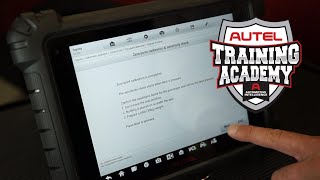
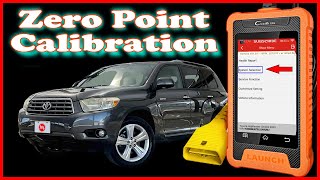
Professional: Autel MaxiCOM MK808S / Foxwell NT809 (~$450-500) — These are full bidirectional scan tools. For code B2299, their most important function is the ability to perform the mandatory 'Occupant Classification System Zero Point Calibration' after replacing a passenger seat sensor mat.
Rent vs buy: Auto parts stores typically only loan out basic engine code readers for free. Since B2299 requires an SRS-capable scanner, you must buy one or rent a professional-grade scanner from a specialized service. Buying a budget pick like the BlueDriver is a worthwhile investment for DIYers.
How to Clear the Code After You Fix It
- Ensure all components are correctly installed and connected.
- Reconnect the vehicle battery.
- Use an SRS-compatible OBD-II scan tool to read and clear the fault code from the Airbag Control Module.
- If an OCS sensor was replaced, perform the mandatory 'Zero Point Calibration' using the scan tool's special functions.
- Turn the ignition off, then on again, and verify the airbag light performs its self-check and turns off permanently.
Drive cycle (~10 minutes): An extensive drive cycle is not required for the SRS system. After clearing the code and performing calibrations, a simple key-off/key-on cycle confirms the fix. A short 10-minute drive verifies the light does not return under normal conditions.
Watch out for:
- Disconnecting the battery will NOT clear a B2299 code; it must be cleared with a scanner.
- Forgetting to perform the mandatory 'Zero Point Calibration' after replacing an OCS sensor mat leaves the light on.
- Using a basic engine code reader that cannot access the SRS (Body) control module.
- Assuming the light turns off automatically after replacing the broken part.
Will This Fail Emissions / State Inspection?
No — by itself this code doesn't fail OBD inspection (but it can keep readiness monitors from setting, which causes a separate fail).
- California: An illuminated airbag light is a mandatory failure for the state's safety inspection. The vehicle cannot be legally operated without a functional safety system.
- New York: An illuminated airbag warning light causes an automatic failure of the annual safety inspection.
- Texas: The Texas Department of Public Safety inspection criteria mandates a failure if the airbag warning light stays illuminated.
Most Commonly Affected Vehicles
- Toyota RAV4, Camry, Highlander, Avalon, Corolla, Sienna (2020-2022) — Subject to a major recall (NHTSA ID: 23V-865) for a faulty OCS sensor where a capacitor on the circuit board shorts out.
- Lexus ES250, ES300h, ES350, RX350, RX450h (2020-2022) — Included in the massive Toyota recall (NHTSA ID: 23V-865) for the defective OCS sensor.
- Jaguar X-Type, S-Type, XF, XE (2002-2024) — B2299 often points to an internal failure of a side impact sensor. Part numbers are highly VIN-specific.
- Ford Escape, Fusion, C-Max (2005-2024) — Uses code B2299 for 'Occupant Classification System Fault'. Distinguish this from the same code used for parking sensor issues on other Ford models.
- Nissan Altima, Pathfinder, Rogue, Sentra, LEAF (2013-2020) — Subject to service bulletins (e.g., NTB16-054a) for OCS issues, which often store the more specific code B00A0 alongside B2299.
- Hyundai Santa Fe, Sonata, Palisade (2008-2024) — Commonly experiences OCS faults. TSB 23-01-074H (Recall 249) was issued for 2024 Palisades for improper OCS calibration.
- BMW X3, X5, 5-Series, Z3 (1999-2023) — Front or side impact sensor failure is a known issue. Testing sensor resistance is a mandatory diagnostic step.
Manufacturer-Specific Notes
- Ford: Uses B2299 for two completely different systems: the Occupant Classification System and the Parking Aid System. An advanced scanner is required to differentiate them.
- Jaguar / Land Rover: Defines B2299 strictly as an 'internal fault' within a side impact sensor. The sensor itself has failed and requires replacement, rather than a wiring repair.
- Toyota / Lexus: A massive manufacturing defect in the OCS sensor triggered a recall of roughly 1 million 2020-2022 vehicles (NHTSA 23V-865). Dealers fix this specific B2299 code for free.
- Hyundai / Kia: Mandates a 'Body Sensor Reset' or 'ODS Calibration' using a dealer-level scan tool after replacing any seat component. Skipping this leaves the airbag light on.
- Dodge / Chrysler / Jeep: Assigns multiple definitions to B2299, including 'Rear Camera Module Internal' (requiring a software update) or a network communication error, completely unrelated to airbags.
Real Owner Stories
2011 Ford Escape - Easy Fix
Airbag light came on intermittently. A scan revealed code B2299 for 'Lost Communication with Restraint Occupant Classification System'.
What they tried:
- Checked under the passenger seat and found a yellow wiring connector that was slightly loose.
Outcome: Owner disconnected the battery for an hour, firmly re-seated the connector under the passenger seat, and reconnected the battery. The code was cleared with a scanner and did not return.
Lesson: Always check for loose connectors under the passenger seat first. It is a common, no-cost fix. Ensure the battery is disconnected for at least 30 minutes before touching any SRS wiring.
2003 Mercedes C230 - Misdiagnosis & High Cost
Owner of a C230 with 140k miles got an 'SRS Visit Workshop!' message. The car's KBB value was only around $2,900.
What they tried:
- Took the car to a shop which quoted $1,800+ just for the passenger airbag part, plus labor, diagnosing it as a faulty airbag itself.
Outcome: Faced with a repair bill nearly equal to the car's value, the owner considered scrapping the car. Forum users suggested the actual fault was more likely a much cheaper sensor issue, not the airbag module itself.
Lesson: Be skeptical of initial high-cost diagnoses on older vehicles. A general 'SRS' fault is often triggered by a simple sensor or wiring issue. Get a second opinion using an advanced scanner to pinpoint the exact component.
2021 Toyota RAV4 - Recall Fix
Owner of a newer RAV4 had the airbag light and an 'SRS Malfunction' message appear. The 'Passenger Airbag OFF' light stayed on with an adult in the seat.
What they tried:
- Took the vehicle to the Toyota dealership.
Outcome: The dealership immediately identified the issue as part of the massive OCS sensor recall (NHTSA ID: 23V-865). They replaced the faulty OCS sensor free of charge.
Lesson: For any 2020-2022 Toyota or Lexus vehicle, check for the OCS recall immediately. Do not pay for any diagnosis or repairs before confirming your VIN is not covered.
How to Prevent This Code From Triggering
- Use waterproof seat covers on the passenger seat (Always) — Prevents liquid spills from seeping into the seat cushion and short-circuiting the sensitive electronic OCS sensor mat.
- Prohibit storing items under the front seats (Daily habit) — Prevents objects from rolling under the seat and snagging, stretching, or disconnecting the critical yellow SRS wiring harness.
- Apply dielectric grease to vulnerable connectors (During any related maintenance) — Applying dielectric grease to the seals of under-seat or impact sensor connectors blocks moisture and prevents corrosion.
- Periodically check under-seat wiring (Every 6 months / during interior cleaning) — Visually inspect that the main yellow connectors are fully seated and that no wires have been snagged or damaged by seat movement.
Frequently Asked Questions
Is it safe to drive with code B2299 and the airbag light on?
No. The illuminated airbag light means the entire Supplemental Restraint System (SRS) is deactivated. No airbags will deploy in an accident, dramatically increasing the risk of injury or death.
Can I fix the B2299 code by just replacing a fuse?
No. A blown fuse causes a code for a total loss of power to the module, not a specific sensor fault like B2299. The cause is almost always a faulty sensor, damaged wiring, or a bad control module.
Will disconnecting the battery reset the airbag light for code B2299?
No. SRS fault codes are stored in the module's non-volatile memory. Disconnecting the battery will not clear the code or turn off the light. You must use a compatible OBD-II scanner to clear it after repairs.
Why is the OCS sensor replacement so expensive?
The repair requires removing the passenger seat and stripping the upholstery to access the sensor mat. The part itself costs $300 to $2,000+, and the system requires a mandatory 'Zero Point Calibration' with a dealer-level tool.
My airbag light came on after my passenger seat got wet. Could that cause code B2299?
Yes. Spilling a drink or leaving a window open in the rain allows moisture to seep into the seat cushion. This shorts out the sensitive OCS sensor mat or corrodes the connectors underneath, triggering the code.
I replaced the sensor but the airbag light is still on. What did I do wrong?
You likely missed the mandatory 'Zero Point Calibration' required after installing a new OCS sensor mat. Without this dealer-level scan tool procedure, the SRS module won't recognize the new part. You also must manually clear the code with a scanner.
Can I use an OCS emulator or bypass module to fix the light?
No. These devices are illegal and extremely dangerous. They trick the SRS module into deploying the passenger airbag in every frontal collision, even if the seat is empty or holds a child.
Key Takeaways
- Code B2299 disables your vehicle's entire airbag system, meaning 0 airbags will deploy in the event of a crash.
- The most common cause is a failed Occupant Classification System (OCS) sensor mat in the passenger seat, which costs between $500 and $2,500 to replace.
- Before paying for repairs, check your VIN for open recalls, as Toyota, Lexus, and Hyundai recalled over 1 million vehicles for this exact defect.
- Do not attempt to replace the OCS sensor yourself; the system requires a mandatory 'Zero Point Calibration' using a $400+ bidirectional scanner to function.
Helpful Videos




The information in this article is provided for general reference and educational purposes only. Vehicle specifications, procedures, and part compatibility can vary by production date, trim level, and region. Always consult your vehicle's factory service manual and verify part numbers before purchasing or performing repairs. Safety-critical components such as airbags, seat belts, and braking systems should be installed by a qualified professional.
- 🎬 Helpful Videos
- What Does B2299 Mean?
- Can I Drive With B2299?
- Common Causes
- Symptoms
- Diagnostic Flowchart
- Common Fixes & Costs
- Used vs. New Parts: Buying Guide
- What Happens If You Wait — Timeline
- Cost of Not Fixing It
- Diagnosis Steps
- When This Code Triggers (Freeze-Frame Conditions)
- Related Codes
- Climate & Environmental Factors
- How to Talk to a Mechanic About This Code
- Where to Take It: Dealer vs Independent vs Chain
- When to Walk Away From the Repair
- What Scan Tool You Need for This Code
- How to Clear the Code After You Fix It
- Will This Fail Emissions / State Inspection?
- Most Commonly Affected Vehicles
- Manufacturer-Specific Notes
- Real Owner Stories
- 2011 Ford Escape - Easy Fix
- 2003 Mercedes C230 - Misdiagnosis & High Cost
- 2021 Toyota RAV4 - Recall Fix
- How to Prevent This Code From Triggering
- Frequently Asked Questions
- Is it safe to drive with code B2299 and the airbag light on?
- Can I fix the B2299 code by just replacing a fuse?
- Will disconnecting the battery reset the airbag light for code B2299?
- Why is the OCS sensor replacement so expensive?
- My airbag light came on after my passenger seat got wet. Could that cause code B2299?
- I replaced the sensor but the airbag light is still on. What did I do wrong?
- Can I use an OCS emulator or bypass module to fix the light?
- Key Takeaways
- 🎟️ Get 5% Off