

OBD-II Code B2286: Module Calibration Error — The Ultimate 2026 Guide
What B2286 means, manufacturer-specific causes, and pro-level fixes
- Code B2286 indicates a control module lost its calibration memory, disabling systems like Ram active suspension or Toyota hybrid push-button start.
- A dead 12V battery or recent jump-start is the primary trigger, erasing volatile memory and requiring a module recalibration.
- Repairing B2286 requires a bidirectional scan tool (like AlfaOBD or Techstream) to perform a $150-$400 software recalibration or PROXI alignment.
- Always check for Technical Service Bulletins (TSBs) first; Ram TSB 18-086-23 fixes this code and engine misfires simultaneously with a single software update.
What Does B2286 Mean?

B2286 is a manufacturer-specific body control module (BCM) code signifying an electronic control module lost its calibration memory or lacks configuration for the installed vehicle. Think of it as a computer that forgot its essential settings. This disables systems like active suspension, push-button start, surround-view cameras, or automatic headlights.
Technical definition: The SAE/OBD-II definition for B2286 varies by manufacturer. Stellantis vehicles (Ram, Dodge, Jeep) define it as 'Calibration Not Learned / Lost Calibration'. Toyota and Lexus define it as 'Runnable Signal Malfunction' or 'READY Signal Malfunction', indicating an information mismatch between the power management ECU and the hybrid control ECU. General Motors defines it as a rear seat position sensor fault.
Can I Drive With B2286?
Yes, But With Caution. Yes, but with significant caution. The specific risks depend on the vehicle. For a Ram truck, the active suspension defaults to a very firm, jarring setting, compromising handling in emergency maneuvers but not causing further mechanical damage. For a Toyota or Lexus hybrid, the vehicle fails to enter 'READY' mode, leaving you stranded and requiring a tow. Continued driving is not recommended, as the disabled system cannot perform its safety or operational function.
Common Causes

- Recent Battery Replacement or Low Voltage (Very Common) — Modern control modules are highly sensitive to power loss. Disconnecting the battery, a dead battery, or a jump-start erases a module's calibration memory, triggering the code upon the next startup.
- Software Glitch or Outdated Module Software (Very Common) — A software bug causes the vehicle's computer module to lose its settings. Manufacturers frequently release Technical Service Bulletins (TSBs) with software updates to permanently patch these memory loss issues.
- Wiring Harness or Unseated Connector (Common) — A loose connection, unseated factory plug, corroded pin, or damaged wire prevents modules from communicating correctly or receiving consistent power. This includes poor ground connections, which cause intermittent memory loss.
- Improper Repair or Calibration Procedure (Common) — Calibration routines require specific prerequisites, such as level ground or a connected high-amperage battery charger. Failing to follow the exact manufacturer procedure causes the calibration to fail and repeatedly sets this code.
- Blown Fuse (Less Common) — A blown fuse supplying power to the affected module triggers this code. On Toyota Prius models, a blown AM2 fuse is a known culprit, often caused by a shorting inverter water pump.
- Faulty Control Module (Less Common) — Despite the code's implication, a failed control module is the least likely cause. Replace the module only after exhausting all software, wiring, and power supply checks.
- Use of Incorrect or Aftermarket Part (Less Common) — Installing a non-OEM sensor or module causes signal inconsistencies. Using an aftermarket crankshaft position sensor on a Jeep, for example, creates data mismatches that trigger configuration faults.
Symptoms

- "Service Suspension" Warning and Stiff Ride — On Ram trucks, the active suspension defaults to a fixed, stiff setting, triggering a dashboard warning and causing an extremely harsh, bouncy ride.
- Vehicle Will Not Start or Enter 'READY' Mode — On Toyota and Lexus hybrids, the power management system detects a fault and prevents the hybrid system from activating, resulting in a no-start condition.
- Blank Camera Views or Missing Gridlines — On Jeeps with surround view cameras, this code causes the top-down camera view to go blank or the backup gridlines to disappear entirely.
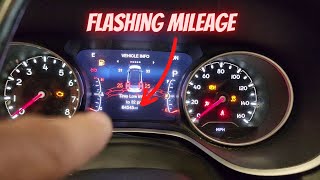
- Flashing Odometer — On Stellantis vehicles, a B2286 code in a peripheral module causes a communication breakdown that results in a continuously flashing odometer, indicating a PROXI configuration mismatch.
- Multiple Unrelated Electronic Systems Fail — On vehicles like the Lexus GS, a B2286 code in a central body ECU causes a cascade of failures, simultaneously disabling the radio, A/C, power windows, and transmission shifting.
Diagnostic Flowchart
Tap your situation to follow the diagnostic path that matches what you're seeing on this code.
Common Fixes & Costs
- Module Recalibration or Software Update — Parts: $0, Labor: $150-$400, ~1.5 hr book time (Professional)
- Perform PROXI Alignment — Parts: $0, Labor: $100-$200, ~0.8 hr book time (Professional)
- Replace Blown Fuse and Address Cause
— Parts: $1-$10, Labor: $0-$200, ~0.5 hr book time
(DIY)
Toyota Prius: OEM Varies by amperage (Alt: Bussmann, Littlefuse) - Repair Damaged Wiring or Clean Connectors — Parts: $10-$50, Labor: $150-$600, ~2.5 hr book time (Intermediate)
- Replace Faulty Control Module
— Parts: $400-$1110, Labor: $150-$300, ~2.5 hr book time
(Professional)
Ram 1500 (TRX): OEM Mopar 05036035AB (Alt: Not available)
Toyota Prius (2004-2009): OEM Toyota 89681-47061 (Alt: Cardone (remanufactured))
DIY vs Professional
- Module Recalibration or Software Update — Beginner:
Tools: High-end bidirectional scan tool (e.g., AlfaOBD), level ground, battery charger. - Replace Blown Fuse — Beginner:
Tools: Fuse puller or needle-nose pliers. - Repair Damaged Wiring — Beginner:
Tools: Multimeter, wire strippers, crimpers, heat shrink. - Replace Faulty Control Module — Beginner:
Tools: Basic hand tools, professional scan tool for mandatory post-installation programming. - Perform PROXI Alignment — Beginner:
Tools: High-end bidirectional scan tool (e.g., AlfaOBD).
Used vs. New Parts: Buying Guide
When a used part is worth it: For an older, out-of-warranty vehicle where a new OEM module costs more than 25% of the vehicle's value. A used module from a reputable salvage yard is a budget-conscious option.
Donor-vehicle mileage cap: roughly under 80000 miles for the part to have meaningful remaining life.
Donor quality checklist:
- Match the part number EXACTLY, including suffix letters.
- Ensure the seller offers at least a 30-day warranty.
- Verify compatibility using the donor vehicle's VIN.
- Avoid modules from flood-damaged vehicles.
Decision logic:
- If The fix requires only a software update or recalibration of your existing module → Do not buy any part; pay for the labor to program the original module.
- If The part requires VIN programming and/or immobilizer sync → Buy new or professionally remanufactured. A used part requires expensive dealer programming and may fail.
- If The part is a simple, non-programmed module on an older vehicle → A used part is a reasonable gamble if the cost savings exceed 50% versus new.
Warranty tradeoff: Used parts typically have a 30-90 day part-only warranty. New aftermarket parts offer 1-year warranties. New OEM parts carry a 12-month/12,000-mile warranty.
Worst-case if a used part fails: $500-$1000
What Happens If You Wait — Timeline
- Immediate: Warning lights illuminate. Toyota hybrids fail to start. Ram trucks experience an extremely stiff ride. Jeep camera views go blank and the odometer flashes. (MPG impact: 0%% · Added cost: $100-$300)
- 1-3 months: Driving with a disabled active suspension causes a harsh, bouncy ride. This constant jarring puts excessive stress on control arm bushings, ball joints, and shock mounts. (MPG impact: 0-1%% · Added cost: $0)
- 3-8 months: Suspension bushings crack and fail prematurely due to unabsorbed impacts. This leads to clunking noises, sloppy handling, and uneven tire wear. (MPG impact: 1-3%% · Added cost: $350-$600)
- 8+ months: A cascade of failures begins. Failed bushings cause metal-on-metal contact, damaging the subframe. Flashing odometers mask critical warnings. No-start conditions leave you stranded repeatedly. (MPG impact: 3-5%% · Added cost: $1500+)
Cost of Not Fixing It
- Immediate: On a Toyota hybrid, the vehicle fails to start, requiring a tow. On a Ram, the suspension becomes extremely stiff, compromising handling. On a Jeep, camera systems disable and the odometer flashes. (Added cost: $100-$300)
- 1-6 months: Driving with a disabled active suspension puts extreme stress on bushings, shocks, and mounts due to a harsh, jarring ride, leading to premature wear. (Added cost: $500-$1500)
- 6+ months: Continued operation with a flashing odometer masks new, critical warnings. A misconfigured module causes intermittent, difficult-to-diagnose issues in unrelated vehicle systems. (Added cost: Negligible direct cost, but high potential for diagnostic frustration.)
Diagnosis Steps
- Check for Technical Service Bulletins (TSBs)
Search for TSBs for your specific vehicle and code B2286. Manufacturers release bulletins with specific software updates for known issues, saving hours of diagnostic time. Key TSBs include 18-086-23 for Ram TRX and 08-167-24 for Jeep Compass.
Tools: Internet access (Beginner) - Check the Battery and Fuses
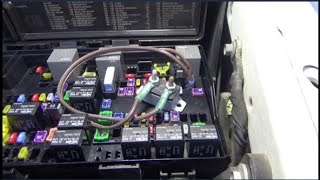
Ensure the battery is fully charged (12.4V+ with engine off) and terminals are tight. A weak battery is the primary cause. Locate and inspect the fuses for the affected system (e.g., ADCM, CVPM). On a Toyota Prius, specifically check the AM2 fuse. 🎬 See how a blown AM2 fuse causes a no-start condition.
Tools: Multimeter, basic hand tools, vehicle fuse diagram (Beginner) - Read Codes with an Advanced Scan Tool
A basic $50 code reader cannot see this body code. Use a bidirectional scan tool (like wiTECH, Techstream, AlfaOBD, or Autel) to read the code, view its active/stored status, and pull data from the specific module.
Tools: Advanced OBD-II Scan Tool (Intermediate) - Attempt Module Recalibration
Using the advanced scan tool, execute the specific recalibration routine. This is often called 'Height Sensor Calibration' or 'Ride Height Sensor Learn'. Ensure the vehicle is on level ground and a battery charger is connected if required by the tool.
Tools: Advanced OBD-II Scan Tool, level ground, battery charger (Advanced) - Inspect Wiring and Connectors
Visually inspect the affected module's connectors and nearby wiring for corrosion, damage, or loose pins. Pay close attention to ground connections hidden behind trim panels. For a Ram, check the ADCM behind the rear seats.
Tools: Flashlight, trim removal tools, basic hand tools (Intermediate) - Pro Tip: Verify Power and Ground at the Module Connector
With the ignition on, use a multimeter to verify the module receives proper power and ground. For a Toyota Power Management ECU, test resistance to body ground at specified pins; it must be below 1 Ω. For a Ram ADCM, verify the Fused B+ circuits illuminate a test light brightly.
Tools: Multimeter, test light, vehicle-specific wiring diagram (Advanced) - Pro Tip: Analyze Live Scan Tool Data
Monitor live data PIDs from the affected module. For a Ram, verify the four 'Ride Height Sensor' values are near 100mm (front) and 68mm (rear). For a Toyota, monitor 'Engine Condition' and 'Engine Speed' to identify logical mismatches.
Tools: Advanced OBD-II Scan Tool (Advanced) - Pro Tip: Test Ride Height Sensor Voltage (Ram)
Check the ride height sensor data. The power supply pin requires a 5V reference. The signal voltage must change smoothly between 0.5V and 4.5V as the suspension compresses. A stuck voltage indicates a failed sensor or wiring issue.
Tools: Advanced OBD-II Scan Tool, Multimeter, floor jack (Advanced) - Pro Tip: Check Signal Integrity and Communication Lines (Toyota)
With the ECUs disconnected, use a multimeter to check the communication wire between the Power Source ECU and Hybrid Vehicle ECU. Resistance must be below 1 Ω. Resistance from that wire to body ground must be 10 kΩ or higher.
Tools: Multimeter, vehicle-specific wiring diagram, pinout chart (Advanced) - Perform PROXI Alignment (Stellantis Vehicles)
If a module was replaced or updated on a Jeep, Ram, or Dodge, execute a 'PROXI Configuration Alignment'. This synchronizes the configuration of all modules on the network. A mismatch causes a flashing odometer and sets code B2286.
Tools: Advanced OBD-II Scan Tool (wiTECH, AlfaOBD) (Professional)
When This Code Triggers (Freeze-Frame Conditions)
- System State: Power-On Self-Test (POST) (Code sets within 2-25 seconds of turning the ignition to the 'ON' or 'START' position as the module performs internal checks.)
- Vehicle Speed: 0 mph (The fault is a logic or configuration error detected while the vehicle is stationary.)
- Battery Voltage: 11.8V - 14.5V (The code sets during a normal voltage state, but the root cause is a prior low voltage event that erased the module's memory.)
- Module-Specific Input: N/A (For Ram suspension, the code triggers after the first suspension movement prompts a sensor reading that doesn't match expected values.)
Related Codes
- U0421 — On Ram trucks, B2286 is the root cause ('Calibration Not Learned'), leading the module to send bad information and log U0421 ('Invalid Data Received'). Fix the B2286 first.
- P0300-P0308 — On Ram TRX models, a single PCM software glitch causes B2286 alongside cylinder misfire codes. TSB 18-086-23 confirms one software update fixes both issues.
- B223B-00 — On the Jeep Compass, this 'Vehicle Configuration Mismatch' code sets alongside B2286. It indicates a PROXI alignment is mandatory to synchronize the network.
- B228A / P0335 — On Toyota vehicles, P0335 indicates a direct crankshaft position sensor failure. B2286 indicates a mismatch between the direct engine speed signal and the CAN bus signal. Diagnose the signal inconsistency before condemning the sensor.
Climate & Environmental Factors
- Cold Weather: Significantly impacts Ram air suspension systems. Dense cold air causes the suspension to sag overnight, forcing the compressor to work harder and fail prematurely. Moisture in the air lines freezes, blocking valves and damaging the compressor.
- High Humidity: Increases moisture drawn into air suspension compressors. This overwhelms the system's dryer, causing internal corrosion, rust, and eventual compressor or valve block failure.
How to Talk to a Mechanic About This Code
Say this: "I have a B2286 code on my vehicle. My research indicates this is a 'lost calibration' or software issue, not a failed part. Please check for any related TSBs and attempt a module recalibration before quoting any replacement parts."
This signals to the service advisor that you are an informed customer. It frames the diagnostic path toward the most cost-effective solution (software/calibration) and prevents them from immediately defaulting to a costly module replacement.
Avoid saying:
- 'My service suspension light is on, can you fix it?'
- 'The car is acting weird, just check it out.'
- 'I think the computer is bad.'
Questions to ask before authorizing the repair:
- Is there an open TSB (Technical Service Bulletin) for this code on my vehicle?
- If you recommend a module replacement, did you already attempt a recalibration and verify good power, ground, and communication?
- Does the quoted price for a module replacement include the necessary post-installation programming, like a PROXI alignment?
- What is the warranty on this specific repair, including both parts and labor?
Where to Take It: Dealer vs Independent vs Chain
- Dealer:
Recommended. The dealer has guaranteed access to the latest TSBs and manufacturer-specific software required for the most common B2286 fixes (recalibration and flashing).
Best for: Vehicles under warranty., Recent model years requiring proprietary software updates (e.g., wiTECH for Ram, Techstream for Toyota)., Complex jobs requiring PROXI alignment or security-related programming.
Downsides: Highest labor rates, typically 1.5x to 2x that of an independent shop., May default to replacing a module assembly rather than diagnosing a simpler wiring issue. (Typical cost: +75% vs. baseline) - Independent Shop:
Acceptable, with caution. Only choose a high-end independent shop that confirms they own manufacturer-level diagnostic tools capable of performing module calibration and PROXI alignments for your specific vehicle.
Best for: Out-of-warranty vehicles where cost is a major factor., Shops specializing in your vehicle's brand.
Downsides: May lack the expensive, subscription-based OEM diagnostic tools needed for this specific code., Success depends entirely on the shop's investment in tooling and training. (Typical cost: +0% vs. baseline) - Chain Shop:
AVOID. These shops are not equipped for the software-intensive nature of a B2286 diagnosis and repair.
Best for: Simple maintenance like oil changes, tires, and brakes.
Downsides: Technicians lack the advanced diagnostic tools or training for module-level programming., High risk of misdiagnosis, leading to unnecessary replacement of expensive parts. (Typical cost: -10% vs. baseline)
When to Walk Away From the Repair
If the total estimated repair cost for the B2286 fault exceeds 40-50% of your car's current private-party market value, sell or trade in the vehicle rather than repairing it.
- Car worth $4500, fix is $1500: Borderline. The repair for a faulty Power Management ECU on an older Prius is a significant portion of the car's value. Get a second opinion, and if the cost is firm, consider selling the car 'as-is'.
- Car worth $65000, fix is $400: Fix it. A $400 software recalibration on a newer Ram TRX is a tiny fraction of the vehicle's value and is a necessary repair.
- Car worth $3000, fix is $1800: Walk away. The repair cost is over half the car's value. Put the money toward a replacement vehicle.
What Scan Tool You Need for This Code

Minimum: A bidirectional scan tool capable of performing manufacturer-specific 'Special Functions' like module calibration and PROXI alignment.
A standard $50 code reader only reads and clears codes. It CANNOT perform the recalibration required to fix B2286. The code returns immediately after being cleared because the configuration problem remains unsolved.
Budget: AlfaOBD / JScan (Software) (~$50-75) — For Stellantis vehicles, these apps on an Android device or laptop are the most affordable way to perform 'Height Sensor Calibration' and 'PROXI Alignment' functions.
Mid-range: Foxwell NT510 Elite (~$180) — When purchased with vehicle-specific software, this handheld tool accesses special functions like module resets and calibrations for a dedicated DIYer.
Professional: Autel MaxiCOM MK808S / MK808BT (~$400-550) — A professional tablet scanner offering broad vehicle coverage. It performs Ram suspension calibrations, Jeep PROXI alignments, and advanced Toyota power management diagnostics.
Rent vs buy: Auto parts store rentals are basic code readers and will NOT work. Buying a capable tool like AlfaOBD or Autel is a good investment for serious DIYers. For a one-time fix, paying a shop $150-$400 for recalibration is more economical.
How to Clear the Code After You Fix It
- Perform required recalibration, software update, or PROXI alignment with a professional scan tool.
- Use the scan tool to clear the B2286 code.
- If the battery was disconnected, perform a full drive cycle to allow vehicle readiness monitors to complete.
Drive cycle (~30 minutes): Start with a cold engine. Idle for 2-3 minutes. Drive for 5-10 minutes in city traffic (25-35 mph) with several complete stops. Drive for 10-15 minutes on the highway at a steady speed (55-60 mph). Let the vehicle idle for 1-2 minutes before shutting it off.
Readiness monitors affected: All emissions readiness monitors reset to 'Not Ready' if the battery was disconnected during repair.
Before emissions retest: drive at least 100 miles to fully set monitors.
Watch out for:
- Clearing the code with a basic scanner fails; the code returns instantly because it is a hard configuration fault.
- Forgetting to perform a full drive cycle leads to a failed emissions test due to 'Not Ready' monitors.
Will This Fail Emissions / State Inspection?
No — by itself this code doesn't fail OBD inspection (but it can keep readiness monitors from setting, which causes a separate fail).
- California: A B-code does not cause a smog check failure. However, disconnecting the battery resets all OBD readiness monitors, causing an automatic failure until a full drive cycle completes.
- New York: NY state inspection checks for illuminated warning lights. A 'Service Suspension' message related to B2286 causes a safety inspection failure at the inspector's discretion.
- Texas: In counties requiring inspections, any illuminated warning lamp on the dashboard causes a failure of the safety portion of the inspection.
Most Commonly Affected Vehicles

- Ram 1500 (especially TRX) (2021-2024) — The Active Damping Control Module (ADCM) frequently loses calibration. TSB 18-086-23 addresses this for the TRX, linking it with misfire codes. The fix is a PCM update followed by a 'TRX Suspension Rebound Reset'.
- Jeep Compass (2021-2023) — TSB 08-167-24 addresses B2286 in the Central Vision Processing Module (CVPM), causing blank camera views and a flashing odometer. Requires a software update and PROXI alignment.
- Toyota Prius (2004-2009) — Relates to a 'Runnable Signal Malfunction' between the Power Source Control ECU and Hybrid Vehicle Control ECU, preventing the car from starting. Often traced to a weak 12V battery or a blown AM2 fuse.
- Dodge Durango (2011-2014) — Points to the Automatic Headlamp Leveling Module (AHLM) losing calibration. Halogen and HID headlight systems on these models are not interchangeable.
- Lexus GS 300 / IS 250 (2006) — Triggered by a fault in the power control ECU, causing a cascading failure of multiple electronic systems like radio, A/C, and shifters.
- Dodge Grand Caravan (2011-2016) — On models equipped with HID headlights, the Headlamp Leveling Module (HIDT) loses calibration and sets this code.
- Chevrolet / GMC Silverado / Sierra / Tahoe (2007-2014) — On GM vehicles, B2286 refers to a 'Rear Seat Position Sensor Circuit' issue related to the occupant detection and seat belt reminder systems.
- Land Rover Discovery 4 / LR4, Range Rover Sport (2010-2016) — The air suspension module loses calibration, setting a similar code. The cause (power loss) and fix (recalibration with a diagnostic tool) are identical.
Manufacturer-Specific Notes
- Stellantis (Ram, Dodge, Jeep): This code is almost always a software or configuration issue, not a broken part. The mandatory first step is a recalibration or software flash with a dealer-level tool. A PROXI alignment is frequently required afterward.
- Toyota / Lexus: The code points to a signal mismatch in the power management system, preventing the car from entering the 'READY' state. Diagnosis relies on the Techstream scan tool to check communication lines between ECUs.
- General Motors (Chevrolet, GMC): The B2286 code definition for GM relates entirely to the 'Rear Seat Position Sensor Circuit' for airbag deployment logic. Diagnosis focuses on the seat sensor and wiring, not module calibration.
- Ford / Lincoln: Issues with similar air suspension faults are often traced to corroded wiring or a faulty module located in the trunk, exposed to moisture from leaks.
Real Owner Stories
2021 Ram 1500 TRX with ~25 miles
A 'Service Active Damping System' message appeared on the very first drive home from the dealership.
What they tried:
- The owner immediately returned to the dealer for diagnosis.
Outcome: The dealer found a suspension sensor wire in the right front wheel well unseated from the factory. Securing the connector and performing a system recalibration permanently cleared the B2286 code.
Lesson: Even on brand new vehicles, a loose factory connector is a common root cause. Physically inspect the wiring harness near the affected component before assuming a module failure.
2016 Ram 1500 Laramie Longhorn at 80k miles
The air suspension system failed and set B2286 whenever the temperature dropped below freezing, resulting in a harsh ride. The issue resolved itself in warmer weather.
What they tried:
- Multiple trips to mechanics resulted in over $5,000 in attempted parts replacements that failed to solve the core issue.
Outcome: The root cause was moisture freezing in the air lines and compressor. The owner never achieved a permanent fix and decided against buying another air suspension vehicle.
Lesson: In cold climates, B2286 is often a symptom of frozen moisture rather than a part failure. Prevention requires servicing the air dryer and minimizing suspension height changes in winter.
2008 Toyota Prius with 150k+ miles
The car refused to enter 'READY' mode, storing the B2286 'Runnable Signal Malfunction' code.
What they tried:
- The owner verified the 12V auxiliary battery was healthy, then checked fuses based on forum advice.
Outcome: The owner discovered a blown AM2 fuse. Replacing it resolved the B2286 code. The underlying cause was a failing inverter water pump shorting the circuit.
Lesson: On a Toyota hybrid with a B2286 no-start, always check the 12V battery and the AM2 fuse first. If the fuse is blown, investigate the inverter pump to prevent a recurrence.
2021 Ram TRX with misfire codes
The 'Service Active Damping System' light illuminated (B2286) simultaneously with the Check Engine Light for multiple cylinder misfires (P0300, P0302).
What they tried:
- The owner searched for Technical Service Bulletins and discovered TSB 18-086-23.
- The dealer performed the TSB, updating the Powertrain Control Module (PCM) software.
Outcome: A single PCM software update fixed both the B2286 suspension code and all engine misfire codes without replacing any parts.
Lesson: Always check for TSBs. Seemingly unrelated codes in different systems are often caused by a single software glitch in a central controller.
How to Prevent This Code From Triggering
- Use a battery tender or maintainer (If the vehicle sits for more than 1-2 weeks) — Prevents battery voltage from dropping to a level where sensitive control modules lose their 'Keep Alive Memory' (KAM), the primary trigger for B2286.
- Use a dedicated memory saver device during battery replacement (Every time the battery is disconnected) — A memory saver provides continuous power to the vehicle's electrical system, preventing modules from losing their calibration during a battery swap.
- Follow proper jump-starting procedures (Whenever jump-starting is necessary) — Improper jump-starting causes voltage spikes that erase module memory. Use a modern jump pack with surge protection and connect the final ground to the chassis, not the battery negative terminal.
- Minimize Ram air suspension height changes (During winter months) — The compressor works harder in the cold and is susceptible to damage from frozen moisture. Limiting system cycles reduces wear and prevents B2286 faults.
- Drain moisture from air suspension tanks (Monthly in humid or cold climates) — Draining the tanks and servicing the air dryer prevents internal corrosion and freezing that damages the compressor and valves.
Frequently Asked Questions
Can I fix code B2286 myself?
Fixing B2286 is difficult for a DIYer because the primary repair—recalibrating a module—requires a professional-grade bidirectional scan tool. Simple fixes like checking fuses are possible, but most cases require a shop visit.
Can I perform the recalibration myself with a DIY tool?
Yes, but only with an advanced bidirectional scan tool like AlfaOBD or JScan. Standard $50 code readers cannot perform calibration routines. This is an advanced DIY repair with a high risk of error if executed incorrectly.
Will clearing the code fix the problem?
No. B2286 is a 'hard fault' indicating missing memory or incorrect configuration. The code returns immediately upon the next startup until the module is properly calibrated.
Why did this code appear right after I changed my car battery?
Control modules are highly sensitive and lose their saved settings (volatile memory) when disconnected from power. A dead battery or replacement erases the memory, requiring a recalibration.
What is a PROXI alignment?
A PROXI alignment is a Stellantis procedure that scans the vehicle's network and ensures all electronic modules are configured to work together. It prevents communication errors and flashing odometers after replacing or updating a module.
What is the most common misdiagnosis for B2286?
The most common mistake is replacing an expensive control module when it only requires a software update or recalibration. Always insist on attempting a recalibration or checking for TSBs first.
How much will it cost to fix B2286 in 2026?
A software recalibration typically costs between $150 and $400 in labor at a dealership. If a module requires replacement, parts like a Ram ADCM cost $400-$1110 plus labor.
Key Takeaways
- Code B2286 indicates a control module lost its calibration memory, disabling systems like Ram active suspension or Toyota hybrid push-button start.
- A dead 12V battery or recent jump-start is the primary trigger, erasing volatile memory and requiring a module recalibration.
- Repairing B2286 requires a bidirectional scan tool (like AlfaOBD or Techstream) to perform a $150-$400 software recalibration or PROXI alignment.
- Always check for Technical Service Bulletins (TSBs) first; Ram TSB 18-086-23 fixes this code and engine misfires simultaneously with a single software update.
Helpful Videos


The information in this article is provided for general reference and educational purposes only. Vehicle specifications, procedures, and part compatibility can vary by production date, trim level, and region. Always consult your vehicle's factory service manual and verify part numbers before purchasing or performing repairs. Safety-critical components such as airbags, seat belts, and braking systems should be installed by a qualified professional.
- 🎬 Helpful Videos
- What Does B2286 Mean?
- Can I Drive With B2286?
- Common Causes
- Symptoms
- Diagnostic Flowchart
- Common Fixes & Costs
- DIY vs Professional
- Used vs. New Parts: Buying Guide
- What Happens If You Wait — Timeline
- Cost of Not Fixing It
- Diagnosis Steps
- When This Code Triggers (Freeze-Frame Conditions)
- Related Codes
- Climate & Environmental Factors
- How to Talk to a Mechanic About This Code
- Where to Take It: Dealer vs Independent vs Chain
- When to Walk Away From the Repair
- What Scan Tool You Need for This Code
- How to Clear the Code After You Fix It
- Will This Fail Emissions / State Inspection?
- Most Commonly Affected Vehicles
- Manufacturer-Specific Notes
- Real Owner Stories
- 2021 Ram 1500 TRX with ~25 miles
- 2016 Ram 1500 Laramie Longhorn at 80k miles
- 2008 Toyota Prius with 150k+ miles
- 2021 Ram TRX with misfire codes
- How to Prevent This Code From Triggering
- Frequently Asked Questions
- Can I fix code B2286 myself?
- Can I perform the recalibration myself with a DIY tool?
- Will clearing the code fix the problem?
- Why did this code appear right after I changed my car battery?
- What is a PROXI alignment?
- What is the most common misdiagnosis for B2286?
- How much will it cost to fix B2286 in 2026?
- Key Takeaways
- 🎟️ Get 5% Off