

OBD-II Code B2281: Park Signal Communication Error
What B2281 means, why it triggers, and how to fix it
- Code B2281 triggers a safety interlock that prevents the engine from cranking because the vehicle cannot confirm it is in Park.
- Always test the 12V battery first; a voltage drop below 12.4V frequently corrupts communication between the Main Body ECU and Shift Lock ECU.
- Do not replace the Main Body ECU without testing the wiring harness; continuity on the 'P' signal wire must measure below 1.0 ohm.
- Diagnosis requires an advanced OBD-II scanner capable of reading Body ('B') codes and displaying live data for the 'Shift P Signal'.
What Does B2281 Mean?

B2281 means your car's main computer, the Body Control Module (BCM), is not receiving the correct signal from the Shift Lock Control ECU. This signal confirms the car is in Park. Without this confirmation, the engine will not start.
Technical definition: For Toyota, Lexus, and similar makes, B2281 is defined as a '"P" Signal Malfunction.' It indicates a mismatch between the hardwired park position signal and the park position status broadcast over the vehicle's communication network (CAN or BEAN). The system logs this fault when communication between the main body ECU and the shift lock control ECU is abnormal or lost.
Can I Drive With B2281?
No — Do Not Drive. The vehicle will not start because its computers cannot confirm the transmission is safely in Park. This critical safety interlock prevents the engine from cranking.
Common Causes

- Damaged or Corroded Wiring Harness (Very Common) — The wires connecting the main body ECU and the shift lock ECU are prone to damage from chafing, corrosion, or rodents. This creates an open or short circuit. Corrosion is highly prevalent in regions with high humidity or winter road salt. Loose connectors at either ECU also interrupt this signal.
- Weak or Failing 12V Battery (Common) — Low system voltage from a weak battery corrupts communication between computer modules, triggering false network codes like B2281.
- Failed Shift Lock Control ECU (Common) — The computer module connected to your gear shifter, responsible for sending the 'P' signal, fails internally.
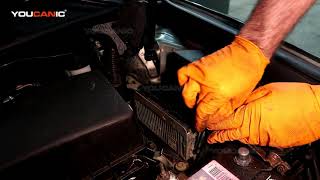
- Failed Main Body ECU (BCM) 🎬 Watch: How to replace the ECU in a Toyota Camry (Common) — The main body computer fails to process the 'P' signal, preventing it from understanding the message from the shifter.
- Shifter Assembly Internal Failure (Common) — The physical switch or position sensor inside the gear shifter assembly wears out or breaks, meaning the initial 'Park' signal is never generated.
- Voltage Spike from Incorrect Jump-Start (Less Common) — This code frequently appears immediately after a battery replacement or an incorrect jump-start procedure. The resulting voltage spike corrupts communication or damages sensitive control modules.
- Aftermarket Electronics Interference (Uncommon) — Tapping into the wrong wires during the installation of aftermarket alarms or remote starters interferes with sensitive communication networks, leading to this code.
Symptoms

- Engine will not crank or start — When you push the start button or turn the key, nothing happens, or you only hear a single click. This is the primary symptom.
- Flashing security or anti-theft light — The car's immobilizer system is not receiving the 'all clear' signal to allow the engine to start, causing the security light to blink as a warning.
- Push-button start is unresponsive — The light on the push-start button remains red when you press the brake pedal, and pressing the button does nothing.
- Gear position indicator is blank or incorrect — The dashboard display showing 'P, R, N, D' fails to light up, shows the wrong gear, or does not update when you move the shifter.
- Intermittent failure to start — The vehicle fails to start randomly but works correctly after moving the shifter back and forth, pointing to a developing wiring or shifter sensor issue.
- Stiff or difficult-to-move gear shifter — The mechanical components of the shifter assembly or cable seize or become unusually hard to move alongside the electronic fault.
Diagnostic Flowchart
Tap your situation to follow the diagnostic path that matches what you're seeing on this code.
Common Fixes & Costs
- Replacing the 12V Battery — Parts: $150-$300, Labor: $25-$75, ~0.3 hr book time (DIY)
- Repairing Damaged Wiring — Parts: $10-$50, Labor: $150-$450, ~2.5 hr book time (Professional)
- Replacing the Shift Lock Control ECU — Parts: $250-$600, Labor: $150-$300, ~1.2 hr book time (Intermediate)
- Replacing the Main Body ECU (BCM) — Parts: $400-$1200, Labor: $200-$400, ~1.5 hr book time (Professional)
- Replacing the Shifter Assembly — Parts: $300-$800, Labor: $200-$400, ~1.5 hr book time (Professional)
DIY vs Professional
- Replacing the 12V Battery — Beginner: Yes
- Repairing Damaged Wiring — Beginner: No
- Replacing the Shift Lock Control ECU — Beginner: Maybe
- Replacing the Main Body ECU (BCM) — Beginner: No
- Replacing the Shifter Assembly — Beginner: No
Used vs. New Parts: Buying Guide
When a used part is worth it: For the Shift Lock Control ECU, a used unit from a reputable dismantler is a cost-effective option. For the Main Body ECU (BCM), a used part only makes sense if you have access to professional programming tools to clone your old module's data.
Donor-vehicle mileage cap: roughly under 100000 miles for the part to have meaningful remaining life.
Donor quality checklist:
- Verify the part number matches exactly.
- Buy from sellers offering a warranty and return policy.
- Ensure the donor vehicle was not scrapped due to flood or fire damage.
- For ECUs, confirm the seller provides programming services or you have a local shop capable of doing it.
Decision logic:
- If The failed part is a complex, programmable module like the Main Body ECU → Favor a new OEM part or a professional remanufacturing service unless you have a confirmed plan for programming a used unit.
- If The failed part is a simpler, non-programmable module like the Shift Lock ECU → A used part from a low-mileage donor is a good way to save money.
- If The vehicle is over 10 years old and budget is the primary concern → A used part is acceptable, but acknowledge the risk of a shorter lifespan.
Warranty tradeoff: Used parts typically come with a 30-90 day warranty. New aftermarket parts often have a 1-year to limited lifetime warranty. New OEM parts carry a 1-year warranty.
Worst-case if a used part fails: $300-$600 if a used ECU fails after the warranty period, requiring repeat labor costs plus the price of another replacement part.
What Happens If You Wait — Timeline
- First Occurrence: An intermittent no-start occurs. The car fails to start once but works after jiggling the shifter. The B2281 code is stored in memory. (MPG impact: 0%% · Added cost: $0)
- Days to Weeks: The no-start events become more frequent. It requires multiple attempts to get the car to recognize it is in Park, indicating a worsening connection. (MPG impact: 0%% · Added cost: $0)
- Weeks to Months: The fault becomes a 'hard fault.' The car will not start at all. The security light flashes, and the start button remains red. (MPG impact: 0%% · Added cost: $0 (vehicle is immobilized))
- Stranded: The hard fault occurs away from home. The vehicle is completely disabled and requires a tow to a repair shop. (MPG impact: 0%% · Added cost: $100-$300 in towing fees.)
Cost of Not Fixing It
- Immediate: Vehicle will not start, leaving you stranded. This is the primary and most immediate consequence. (Added cost: $100-$300 for towing to a repair shop.)
- Short Term: Repeatedly trying to start the vehicle or jiggling the shifter worsens a wiring issue, turning an intermittent fault into a permanent one. (Added cost: Negligible, but increases diagnostic difficulty.)
- Long Term: There is no long-term risk of cascading component failure, as the vehicle is immobilized. The cost is the unavoidable repair bill to make the vehicle operational again. (Added cost: $0)
Diagnosis Steps

- Check the 12V Battery
Confirm your car's battery is healthy before attempting complex diagnostics. Use a multimeter to verify at least 12.4 volts with the car off. A weak battery causes dozens of random communication codes.
Tools: Multimeter or battery tester (Beginner) - Scan for All Trouble Codes
Use an advanced OBD-II scanner capable of reading Body ('B'), Chassis ('C'), and Network ('U') codes. If 'U' codes like U0100 are present, diagnose the wider network communication failure first. Note if B2288 is present, as this points to a related steering lock issue.
Tools: Advanced OBD-II Scanner (Beginner) - Test the 'P' Signal with a Scan Tool (Live Data)
Access the Body Control Module's live data stream on your scan tool. Find the parameter for the 'Shift P Signal'. Watch it as you move the gear shifter in and out of Park. The value must toggle between 'On' and 'Off'. If it does not change, the fault is in the shifter, its wiring, or its ECU.
Tools: Advanced OBD-II Scanner (Intermediate) - Visually Inspect Wiring and Connectors
Locate the main body ECU (behind the glove box or kick panel) and the shift lock ECU (center console). Inspect the wires running between them for damage, chafing, or green/white corrosion. Disconnect and inspect the connector pins for corrosion or damage.
Tools: Flashlight, trim removal tools (Intermediate) - Check Fuses and Relays
Consult your owner's manual to find all fuses related to the Body Control Module, Smart Key system, and Theft Deterrent system. Pull each fuse and visually inspect it for breaks.
Tools: Owner's manual, fuse puller or needle-nose pliers (Beginner) - [PRO TIP] Test Harness Continuity and for Shorts
Disconnect both the Main Body ECU and Shift Lock Control ECU. Using a multimeter and wiring diagram, check the resistance on the harness-side connectors. Continuity on the 'P' signal wire between the two ECU connectors must be below 1.0 Ω. Resistance from the 'P' signal wire to body ground must be 10 kΩ or higher. Any reading outside these ranges indicates a wiring fault.
Tools: Multimeter, vehicle-specific wiring diagram (Advanced) - [PRO TIP] Inspect Shifter Assembly
Disassemble the center console to access the gear shifter mechanism. Inspect the electrical connector going into the shifter. Look for spilled liquids corroding the internal position sensor or broken plastic components preventing the sensor from activating in Park.
Tools: Trim removal tools, flashlight, screwdrivers (Advanced) - [PRO TIP] Perform Oscilloscope Test on Signal Wire
For intermittent issues, connect an oscilloscope to the 'P' signal wire. When the shifter moves into Park, you must see a clean square wave signal as the shifter ECU communicates with the BCM. A noisy or absent signal definitively indicates a circuit problem.
Tools: Automotive Oscilloscope (Scope), wiring diagram (Professional)
When This Code Triggers (Freeze-Frame Conditions)
- Event: Key ON or Start Attempt (The code is set when the ignition is turned on and the BCM attempts to verify the 'P' signal before allowing the engine to crank.)
- Battery Voltage: 11.5V - 12.5V (The fault is logged during the initial power-up sequence of the vehicle's modules. Low voltage contributes to the fault.)
- Vehicle Speed: 0 mph (This fault occurs when the vehicle is stationary and a start-up is requested.)
- Ignition Status: ON / RUN (The BCM and other modules are powered on and attempting to communicate.)
Related Codes
- B2288 — This code for 'Steering Lock Signal Circuit Malfunction' often appears with B2281 on Toyota/Lexus vehicles. If the 'P' signal in live data works correctly but the car won't start, the problem is the steering lock ECU.
- U0100 — 'Lost Communication With ECM/PCM.' If B2281 appears with U0100, it suggests a wider network failure. Diagnosis must start with the CAN bus itself.
- U0101 — 'Lost Communication with TCM' (Transmission Control Module). Since the 'P' signal relates to the transmission's state, a general communication failure with the TCM accompanies B2281. Focus on the shared network.
- B2284 — 'Brake Pedal Position Sensor Malfunction.' On push-to-start vehicles, a valid brake pedal signal is required to authorize starting. A fault in the brake switch is sometimes confused with a B2281 issue.
Climate & Environmental Factors
- Road Salt: In regions using salt to de-ice roads, saline mist coats the undercarriage and wiring harnesses. This accelerates the corrosion of copper wires and connector pins, leading to open circuits and B2281.
- High Humidity: Sustained high humidity allows moisture to penetrate connectors and brittle wiring insulation. This moisture causes corrosion and electrical shorts over time.
How to Talk to a Mechanic About This Code
Say this: "My car won't start and I have a B2281 code. I need a diagnostic that starts by testing the wiring harness between the Main Body ECU and the Shift Lock ECU for continuity and shorts before recommending any module replacement."
This signals you understand the most common cause is wiring, not a failed computer. It directs the shop to perform a logical, cost-effective diagnosis instead of immediately quoting an expensive ECU replacement.
Avoid saying:
- 'Just fix whatever's wrong'
- 'My car won't start, can you look at it?'
- 'Whatever you recommend'
Questions to ask before authorizing the repair:
- Did you check the 'Shift P Signal' in the scan tool's live data? Does it change when the shifter is moved?
- Can you confirm the wiring harness passed a continuity test with a resistance below 1.0 ohm?
- If you are recommending an ECU, what specific test from the service manual did the old part fail?
- Does the replacement Body Control Module (BCM) require programming, and is that included in the quote?
Where to Take It: Dealer vs Independent vs Chain
- Dealer:
Recommended. This code requires dealer-level diagnostic tools (like Toyota Techstream) and access to specific wiring diagrams that independent shops lack.
Best for: Vehicles under warranty, Complex electrical issues involving proprietary networks (like Toyota's BEAN bus), When a Body Control Module (BCM) replacement is confirmed, as they have the tools to program it
Downsides: Highest labor rates, May default to expensive module replacement without exhaustively checking wiring first (Typical cost: +50% vs. baseline) - Independent Shop:
Use with caution. Only choose an independent shop if you verify they have advanced diagnostic capabilities and experience with modern vehicle electronics.
Best for: Out-of-warranty vehicles where the owner has a trusted relationship with the shop, Shops specializing in your vehicle's brand (e.g., a Toyota/Lexus specialist)
Downsides: May lack the specific software or experience for this communication code, High risk of misdiagnosis if they are not equipped for advanced electrical troubleshooting (Typical cost: +0% vs. baseline) - Chain Shop:
AVOID. This is an advanced electrical diagnostic issue, not a simple parts-replacement job. Chain shops are not suited for this repair.
Best for: Simple jobs like battery replacement
Downsides: Technicians are generally not trained or equipped for complex electrical diagnosis, Very high likelihood of incorrect diagnosis, leading to unnecessary and expensive parts replacement (Typical cost: -10% vs. baseline)
When to Walk Away From the Repair
If the estimated repair cost exceeds 40-50% of the car's Kelley Blue Book (KBB) private-party value, seriously consider selling the car as-is or trading it in.
- Car worth $5000, fix is $2200: Walk away. The repair cost is nearly half the car's value. The vehicle is not drivable, making a 'mechanic's special' sale difficult, but still better than paying for the repair.
- Car worth $15000, fix is $800: Fix it. The repair cost is a small fraction of the vehicle's value.
- Car worth $3000, fix is $1600: Walk away. A repair of this magnitude on a low-value car is not economically sound.
What Scan Tool You Need for This Code

Minimum: A scanner that reads Body ('B') trouble codes and displays live data from the Body Control Module (BCM).
A basic $20 code reader only checks for engine ('P') codes and will not see the B2281 code. To diagnose this issue, you MUST see live data for the 'Shift P Signal' to determine if the signal reaches the BCM.
Budget: BlueDriver Pro (~$100) — Reads and clears enhanced codes (including 'B' codes) and displays live data from the BCM, allowing you to see the 'Shift P Signal' status.
Mid-range: Foxwell NT510 Elite (with Toyota/Lexus software) (~$180) — Provides OE-level diagnostics. It reads all codes, views live data with graphing, and offers bi-directional controls to test specific components.
Professional: Autel MaxiCOM MK808 / MK808BT (~$450-550) — Offers full system diagnostics, extensive live data graphing, and bi-directional controls. This is the level of tool a professional independent shop uses.
Rent vs buy: Rent a tool from an auto parts store to confirm the B2281 code exists. Most rental tools are basic readers and lack live data. If you plan to diagnose the issue yourself, you must buy a tool with live data capability.
How to Clear the Code After You Fix It
- Perform the physical repair (e.g., fix wiring, replace ECU).
- Reconnect the 12V battery if it was disconnected.
- Use an OBD-II scan tool to clear the Diagnostic Trouble Code (DTC) from the Body Control Module.
- Perform a complete drive cycle to allow all vehicle readiness monitors to run.
Drive cycle (~20 minutes): Start the engine from cold and let it idle for 2-3 minutes. Drive for 15-20 minutes with mixed city and highway speeds (40-60 mph). Allow the vehicle to cool down completely. This process helps the car's computers confirm the repair and reset readiness monitors for emissions testing.
Readiness monitors affected: Catalyst monitor, O2 sensor monitor, EVAP system monitor
Before emissions retest: drive at least 50 miles to fully set monitors.
Watch out for:
- Disconnecting the battery will not clear this 'hard' fault code from the BCM's memory; a scan tool is required.
- The code returns immediately if the root electrical or communication problem is not fixed.
- Clearing the code resets all emissions readiness monitors, causing a failed smog test if the vehicle is not driven sufficiently afterward.
Will This Fail Emissions / State Inspection?
Yes — this code typically fails an OBD-II emissions inspection.
- California: A vehicle that will not start cannot be tested and will fail. Active 'B' codes prevent the smog check machine from communicating with the ECU. After repair, a full drive cycle is needed to set readiness monitors.
- New York: A no-start condition is an automatic safety failure. The underlying no-start condition makes the emissions test impossible to perform.
- Texas: A vehicle that cannot start cannot be tested and will fail. After repairs, you must complete a drive cycle before the vehicle can be re-inspected.
Most Commonly Affected Vehicles
- Lexus IS250 / IS300 / IS350 (2006-2013) — Extremely common on this platform, often appearing with code B2288. The no-start condition is frequently caused by a wiring fault or failure of the Shift Lock ECU.
- Toyota Prius (2004-2009) — Service manuals for this generation specifically detail B2281 as a mismatch between the hardwired 'P' signal and the BEAN network information.
- Toyota Camry (2007-2011) — Owners of the XV40 generation, particularly models with push-to-start, frequently report this code leading to a no-start condition.
- Toyota Avalon (2012-2018) — Forum reports indicate this code appears due to a mismatch between cable and BEAN information on these models.
- Lexus ES350 (2007-2012) — Owners report this code appearing intermittently without immediate symptoms, pointing to an underlying communication issue that eventually leads to a no-start.
- Toyota RAV4 (2006-2012) — Service manuals for the 2012 RAV4 define this code as an abnormal circuit between the main body ECU and shift lock control ECU.
- Toyota Highlander (2008-2013) — Particularly noted on Hybrid models, this code appears with other electrical faults, sometimes accompanied by a stiff shifter feel.
- Toyota Land Cruiser (2008-2015) — The service manual for the 2010 model lists B2281 as a key system fault related to the 'P' signal circuit.
Manufacturer-Specific Notes
- Toyota / Lexus: This code is specifically defined as a '"P" Signal Malfunction' resulting from a communication breakdown between the main body ECU and the shift lock control ECU over the proprietary 'BEAN' bus.
- Mazda: On some Mazda vehicles, B2281 means 'Bypass Line Monitor Circuit Malfunction.' This relates to the ignition control module and the powertrain computer (PCM), not the gear shifter.
- Ford: For some Ford models, B2281 is defined as 'Right Turn Signal Switch Short to Ground,' a fault related to the lighting system and completely unrelated to the park signal.
- Chevrolet: On certain Chevrolet vehicles, B2281 means 'Right Rear (RR) Seat Forward Switch Circuit Low/Out of Range,' related to power seat controls.
Real Owner Stories
2008 Lexus IS300 with No-Crank, No-Start
The car would not crank, and the security light was blinking. Pressing the brake pedal turned the start button green, but pushing the button did nothing. The issue occurred after charging the battery.
Outcome: The technician tested the resistance between pins 8 (ground) and 11 (P signal) on the Shift Lock Control ECU. The test showed no continuity when the shifter was in Park, proving an internal failure. Replacing the Shift Lock Control ECU resolved the no-start.
Lesson: Always follow the service manual to test components directly. A multimeter test on the ECU's pins confirmed the failure point, preventing the unnecessary replacement of the more expensive Main Body ECU.
2007 Toyota Camry with Intermittent No-Start
A 2007 Camry intermittently failed to start. All electronics worked, but there was no power to the ignition.
Outcome: The technician diagnosed a faulty Main Body ECU (BCM) based on the cluster of communication codes and the lack of ignition power. The repair required replacing and reprogramming the Main Body ECU.
Lesson: A cluster of communication codes ('B' codes) points to a failure in a central computer like the BCM rather than a single sensor. Replacing a BCM requires professional programming to sync with the car's immobilizer system.
2006 Lexus IS250 No-Start After Battery Died
After sitting all winter, the battery died completely. The owner replaced it, but the car would not crank. The start button turned green, the security light remained on, and the steering wheel was locked.
Outcome: This is a classic voltage drop causing the security system to lose initialization. The owner performed the manufacturer's ECU initialization procedure: turning the ignition off, opening the driver's door, shifting to Park, and pressing the brake and start button to re-sync the ECUs.
Lesson: If a no-start issue appears immediately after a dead battery or jump-start, perform the manufacturer's specific 'ECU initialization' procedure before replacing parts. This simple sequence resolves communication lock-ups.
How to Prevent This Code From Triggering
- Apply Dielectric Grease to Connectors (When performing repairs in the area) — Applying dielectric grease to the pins of the Shift Lock ECU and Main Body ECU connectors seals out moisture, preventing corrosion that causes open circuits.
- Perform Correct Jump-Starting Procedure (Every time a jump-start is needed) — Incorrectly connecting jumper cables creates a voltage spike that damages sensitive ECUs. Always connect the final black cable to an unpainted metal surface on the engine block of the dead car.
- Maintain Battery Health and Terminals (Annually) — A weak battery causes low system voltage, a primary trigger for communication codes. Regularly test your battery and clean corrosion from the terminals.
- Clean Interior Spills Immediately (As needed) — Spilling drinks into the center console allows liquid to seep into the shifter assembly, corroding the circuit boards and internal position switches.
- Install Aftermarket Electronics Professionally (During installation) — Improperly tapping into CAN bus wires for alarms or remote starters disrupts communication between modules.
Frequently Asked Questions
What are the most common misdiagnosis mistakes for B2281?
A frequent mistake is replacing expensive components like the Main Body ECU without testing the wiring harness first. A simple continuity test often finds a broken wire, saving hundreds of dollars. Another pitfall on Lexus/Toyota models is confusing B2281 with B2288 and replacing the steering lock assembly unnecessarily.
Why won't my car start with a B2281 code?
Your car has a safety feature preventing the engine from starting unless it is in Park or Neutral. Code B2281 means the computer cannot confirm the car is in Park. It blocks the engine from cranking as a safety measure.
Can B2281 be intermittent or appear without symptoms?
Yes. On vehicles like the Lexus ES350, owners report scanning the code while the car runs fine, indicating an intermittent wiring connection. This must be investigated, as it will eventually become a hard fault and leave you stranded.
My shifter feels stiff. Is this related to B2281?
Yes, while B2281 is an electrical fault, it often accompanies mechanical issues in the shifter assembly. A binding shifter damages the internal position sensor over time. A physical inspection of the shifter mechanism is required.
My car showed a B2281 code right after a jump-start. Are these related?
Yes. Sensitive electronic modules are easily damaged or corrupted by voltage surges from improper jump-starts. This disrupts communication and triggers the B2281 code. Always follow the manufacturer's exact procedure for jump-starting.
Can I just clear the code and start the car?
You can clear the code with a scanner, but if the underlying problem exists, it returns immediately. The vehicle will not start until the communication issue is resolved.
Why is my security light flashing with this code?
The security light is part of the immobilizer system and flashes because the system is not authorized to start the car. The missing 'P' signal is a required input before the security system allows the engine to crank.
Is B2281 an engine or transmission code?
It is a 'B' (Body) code. It relates to the Body Control Module (BCM), which manages general electronics like gear shifter signals, the security system, and keyless entry.
Can a weak battery really cause this code?
Yes. When the main battery voltage drops below 12.4 volts, communication signals between network modules become corrupted. This leads to false error codes like B2281, making the battery the first component to test.
Key Takeaways
- Code B2281 triggers a safety interlock that prevents the engine from cranking because the vehicle cannot confirm it is in Park.
- Always test the 12V battery first; a voltage drop below 12.4V frequently corrupts communication between the Main Body ECU and Shift Lock ECU.
- Do not replace the Main Body ECU without testing the wiring harness; continuity on the 'P' signal wire must measure below 1.0 ohm.
- Diagnosis requires an advanced OBD-II scanner capable of reading Body ('B') codes and displaying live data for the 'Shift P Signal'.
Helpful Videos

The information in this article is provided for general reference and educational purposes only. Vehicle specifications, procedures, and part compatibility can vary by production date, trim level, and region. Always consult your vehicle's factory service manual and verify part numbers before purchasing or performing repairs. Safety-critical components such as airbags, seat belts, and braking systems should be installed by a qualified professional.
- 🎬 Helpful Videos
- What Does B2281 Mean?
- Can I Drive With B2281?
- Common Causes
- Symptoms
- Diagnostic Flowchart
- Common Fixes & Costs
- DIY vs Professional
- Used vs. New Parts: Buying Guide
- What Happens If You Wait — Timeline
- Cost of Not Fixing It
- Diagnosis Steps
- When This Code Triggers (Freeze-Frame Conditions)
- Related Codes
- Climate & Environmental Factors
- How to Talk to a Mechanic About This Code
- Where to Take It: Dealer vs Independent vs Chain
- When to Walk Away From the Repair
- What Scan Tool You Need for This Code
- How to Clear the Code After You Fix It
- Will This Fail Emissions / State Inspection?
- Most Commonly Affected Vehicles
- Manufacturer-Specific Notes
- Real Owner Stories
- 2008 Lexus IS300 with No-Crank, No-Start
- 2007 Toyota Camry with Intermittent No-Start
- 2006 Lexus IS250 No-Start After Battery Died
- How to Prevent This Code From Triggering
- Frequently Asked Questions
- What are the most common misdiagnosis mistakes for B2281?
- Why won't my car start with a B2281 code?
- Can B2281 be intermittent or appear without symptoms?
- My shifter feels stiff. Is this related to B2281?
- My car showed a B2281 code right after a jump-start. Are these related?
- Can I just clear the code and start the car?
- Why is my security light flashing with this code?
- Is B2281 an engine or transmission code?
- Can a weak battery really cause this code?
- Key Takeaways
- 🎟️ Get 5% Off