

OBD-II Code B2199: System Voltage Malfunction
What B2199 means, why it triggers, and how to fix it
- Code B2199 indicates your vehicle's electrical system voltage is outside the safe operating range, logging as either too low (-16) or too high (-17).
- The most frequent cause is a failing battery, specifically the small auxiliary battery in Jeep and Chrysler vehicles equipped with Auto Start-Stop systems.
- Always test the alternator output with a multimeter before replacing parts to confirm it is not overcharging above 15.0V or undercharging below 13.5V.
- Check for Technical Service Bulletins (TSBs), as this code is frequently caused by known software glitches (like Jeep TSB 08-013-15) or specific ground faults (like GM TSB PIT5405C).
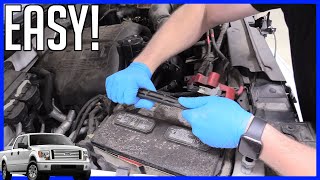
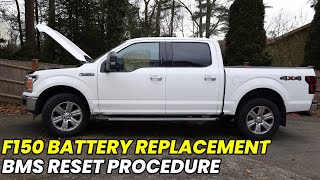
- After replacing a battery on modern vehicles, particularly Fords, you must perform a Battery Management System (BMS) reset to prevent undercharging and premature failure.
What Does B2199 Mean?

Code B2199 means a vehicle computer, typically the Body Control Module (BCM), detects electrical system voltage outside its normal operating range. This is a specific fault logged when a module's power supply drops below or exceeds a predefined threshold for a specific duration (e.g., below 9.0 volts for over one second).
Technical definition: The formal OBD-II definition for B2199 is manufacturer-specific but generally translates to "Battery Voltage - Circuit Voltage Below Threshold" (B2199-16) or "Circuit Voltage Above Threshold" (B2199-17). The suffix code is critical for diagnosis, differentiating between low and high voltage faults.
Can I Drive With B2199?
Yes, But With Caution. You can drive the vehicle, but risk a no-start condition or stalling in traffic. For vehicles with known auxiliary battery issues, this risk is high. Driving with a high voltage condition (>15V) damages sensitive electronics like the PCM, BCM, or audio system, leading to repairs exceeding $1000. Low voltage disables safety systems like ABS and stability control. Diagnose the issue immediately to avoid stranding and expensive component damage.
Common Causes

- Failing Main or Auxiliary Battery (Very Common) — The most frequent cause is a weak or failing battery. In modern vehicles with start-stop systems, a small secondary (auxiliary) battery frequently fails and subsequently drains the main battery.
- Failing Alternator (Common) — The alternator recharges the battery. A faulty alternator undercharges the battery (low voltage) or overcharges it (>15V) due to a failed internal voltage regulator.
- Loose or Corroded Battery Terminals and Grounds (Common) — Corrosion or loose connections at battery terminals or main chassis grounds (like G218 on GM trucks) create high resistance. This prevents proper charging and causes erratic voltage readings.
- Faulty Intelligent Battery Sensor (IBS) or Wiring (Less Common) — The IBS monitors battery state of charge, health, and temperature. A failed sensor, loose connector, or compromised LIN bus wire reports incorrect data to the BCM, causing improper charging.
- Control Module Software Glitch (Less Common) — On certain vehicles (like 2014 Jeep Cherokees), a BCM software error incorrectly reports a voltage problem. This requires a dealer software update.
- Parasitic Electrical Draw (Less Common) — A component fails to shut down when the car is off, draining the battery overnight. This requires an ammeter test to isolate the draining circuit.
- Blown Fuse for a Control Module (Uncommon) — A blown fuse supplying power to the module setting the code mimics a low voltage condition. Check all related fuses before replacing modules.
- Internal HVAC Control Module Fault (Uncommon) — On some Dodge Ram trucks, a burnt trace on the HVAC module's circuit board sets B2199-16 and disables the A/C compressor. Repairing the trace fixes the issue.
Symptoms

- Multiple Warning Lights — The check engine light, battery light, ABS, or traction control warnings illuminate. Messages like "Stop/Start Not Available" or "Service Stabilitrak" appear.
- No-Start or Hard Starting — The engine cranks slowly, clicks rapidly, or fails to start entirely. Remote start functions are disabled.
- Auto Start/Stop System Inoperative — The start/stop system disables itself as a protective measure when voltage is unstable. This is a primary symptom on affected Jeep and Ford models.
- Malfunctioning Electronics — Dashboard lights flicker, the radio reboots randomly, power windows operate slowly, or the HVAC display goes blank.
- A/C System Not Cooling — On certain Dodge/Ram vehicles, an internal HVAC module fault sets this code and disables the A/C compressor, resulting in warm air.
Diagnostic Flowchart
Tap your situation to follow the diagnostic path that matches what you're seeing on this code.
Common Fixes & Costs
- Replace Main and/or Auxiliary Battery — Parts: $180-$550, Labor: $50-$250, ~1.0 hr book time (DIY)
- Replace Alternator — Parts: $250-$600, Labor: $150-$350, ~1.5 hr book time (Intermediate)
- Clean or Replace Battery Terminals/Cables/Grounds — Parts: $10-$50, Labor: $50-$150, ~0.5 hr book time (DIY)
- Reset Battery Management System (BMS) — Parts: $0, Labor: $0-$100, ~0.3 hr book time (DIY)
- Update Body Control Module (BCM) Software — Parts: $0, Labor: $100-$200, ~0.8 hr book time (Professional)
DIY vs Professional
- Replace Battery / Auxiliary Battery — Beginner: Yes
Tools: Basic socket set (8mm, 10mm), battery terminal cleaner, gloves, safety glasses. - Replace Alternator — Beginner: No (Intermediate skill required)
Tools: Socket set, serpentine belt tool, torque wrench, multimeter. - Update BCM Software — Beginner: No
Tools: OEM-specific diagnostic tool (e.g., wiTECH for Jeep) and software subscription. - Clean Grounds / Terminals — Beginner: Yes
Tools: Wire brush, socket set, dielectric grease. - BMS Reset — Beginner: Yes
Tools: Varies by vehicle. Scan tool (like FORScan) or manual sequence.
Used vs. New Parts: Buying Guide
When a used part is worth it: For an alternator, a high-quality remanufactured unit from a reputable supplier makes sense for older vehicles where a new OEM part is cost-prohibitive. 'Rebuilt' parts are riskier. Used batteries are never recommended.
Donor-vehicle mileage cap: roughly under 75000 miles for the part to have meaningful remaining life.
Donor quality checklist:
- Favor remanufactured over used/rebuilt for better reliability.
- Check the warranty; good remanufactured parts offer a limited lifetime warranty.
- Ensure the part number and amperage rating match your vehicle's original alternator exactly.
Decision logic:
- If Vehicle is newer or you plan to keep it long-term → Buy a new OEM or premium aftermarket alternator for maximum lifespan.
- If Vehicle is older (>10 years) and budget is a primary concern → A remanufactured alternator from a trusted brand is a good compromise.
- If The part is a battery → Always buy new. The lifespan of a used battery is unknown and likely very short.
Warranty tradeoff: Used/rebuilt parts offer a 30-90 day warranty. Quality remanufactured alternators offer a 1-year to limited lifetime warranty. New OEM parts carry a 1-year warranty.
Worst-case if a used part fails: $300-$600 if a used/rebuilt alternator fails prematurely, requiring duplicate labor and parts costs.
What Happens If You Wait — Timeline
- 0-2 weeks: Code B2199 sets, and the battery or check engine light illuminates. For low voltage, engine cranking slows slightly. For high voltage, symptoms are imperceptible. (MPG impact: 0-2%% · Added cost: $0)
- 2 weeks - 3 months (Low Voltage): Engine cranking becomes noticeably slow. The Auto Start/Stop system disables consistently. The alternator works overtime to compensate, increasing strain on its components. (MPG impact: 2-5%% · Added cost: $50-$150 in wasted fuel and increased wear on the alternator.)
- 2 weeks - 3 months (High Voltage): Headlights appear unusually bright or flicker, and bulbs burn out prematurely. The battery overheats, causing electrolyte to boil and permanently damaging the battery. (MPG impact: 0%% · Added cost: $200-$400 for a new battery destroyed by overcharging.)
- 3+ months: Low Voltage: The alternator or starter motor fails from excessive strain. High Voltage: Sensitive electronic modules (BCM, PCM, radio) are destroyed by sustained excess voltage. (MPG impact: 5-10%% · Added cost: $700-$2500+ for replacing the original failed part, a tow, and damaged control modules.)
Cost of Not Fixing It
- Immediate: Vehicle fails to start, leaving you stranded. Malfunctioning electronics and safety systems (ABS, stability control) create a severe safety risk. (Added cost: $100-$300 for a tow and emergency diagnosis.)
- Weeks to Months (High Voltage): An overcharging alternator destroys the battery and permanently damages sensitive electronic modules like the PCM, BCM, or audio system. (Added cost: $800-$2500+ for a new battery and replacement of control modules.)
- Weeks to Months (Low Voltage): Operating with low voltage puts excessive strain on the alternator and starter motor, leading to premature failure. (Added cost: $500-$1000 to replace the alternator in addition to the original battery problem.)
Diagnosis Steps

- Check for Other Codes & Note the Suffix
Use an OBD-II scanner to read all stored trouble codes. Note the two-digit suffix on the B2199 code (-16 for low voltage, -17 for high voltage). B2199 often appears with other voltage-related codes (B21DD, C2129, U3006) that isolate the fault.
Tools: OBD-II Scanner (Beginner) - Test Battery Voltage (Static)
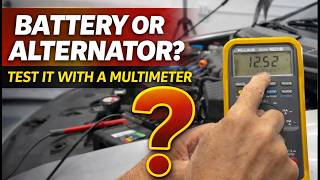
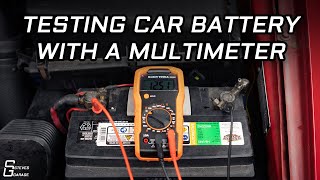
With the engine off, use a multimeter to measure voltage across the battery terminals. A healthy AGM battery reads 12.6-12.8 volts. A reading below 12.2 volts confirms a discharged or failing battery. A reading of 0V on an auxiliary battery is a definitive failure.
Tools: Digital Multimeter (Beginner) - Test the Charging System (Dynamic)
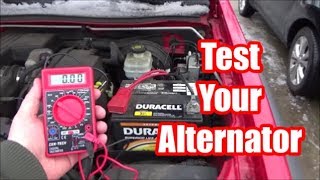
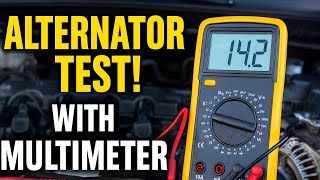
Start the engine and measure voltage across the battery terminals. A healthy alternator produces 13.5 to 14.5 volts. Readings above 15.0 volts confirm an overcharging alternator. Readings near static battery voltage indicate the alternator is not charging.
Tools: Digital Multimeter (Intermediate) - Visually Inspect Battery and Connections
Look for white or greenish corrosion on battery terminals. Ensure terminal clamps are tight. Follow the negative cable to the chassis and engine block, verifying those ground connections are clean and secure.
Tools: Gloves, Safety Glasses, Basic Hand Tools (Beginner) - Check for Technical Service Bulletins (TSBs)
Search online for TSBs related to code B2199 for your specific vehicle. Manufacturers release bulletins for known software issues (Jeep TSB 08-013-15) or battery issues (Jeep TSB 08-106-21) that cause this code.
Tools: Internet Access (Intermediate) - Pro Tip: Perform a Voltage Drop Test
Set your multimeter to DC Volts. Place one lead on the negative battery post and the other on a clean metal part of the engine block while the engine runs. A reading above 0.2V (200mV) confirms a poor ground connection requiring repair. For the positive side (alternator to battery), a reading above 0.5V is excessive.
Tools: Digital Multimeter (Intermediate) - Pro Tip: Check for AC Ripple Voltage
Set your multimeter to AC Volts. With the engine running, measure across the battery terminals. A healthy alternator produces less than 0.5V (500mV) of AC ripple. Readings above this threshold confirm failing alternator diodes, requiring replacement.
Tools: Digital Multimeter with AC Volts setting (Advanced) - Perform a Parasitic Draw Test
If the battery and alternator test good but the battery dies overnight, connect a multimeter in series with the battery to measure current draw while the vehicle is off. A modern vehicle must draw below 50-85 milliamps after all modules sleep (up to 40 minutes).
Tools: Digital Multimeter with Amperage Setting (Advanced) - Advanced: Scan Tool Live Data Analysis
Monitor live data PIDs from the BCM or PCM. Watch 'Battery Voltage', 'Alternator Commanded Output', and 'IBS Reported State-of-Charge (%)'. Compare the BCM's reported voltage to a manual multimeter reading; a significant discrepancy confirms a module or wiring fault.
Tools: Advanced Bi-Directional Scan Tool (Advanced)
When This Code Triggers (Freeze-Frame Conditions)
- System Voltage: <11.5V or >15.0V (The exact voltage reading that triggered the fault.)
- Engine RPM: 650-800 RPM or 1500-2500 RPM (Low voltage triggers at idle with high accessory load; high voltage triggers at cruise RPM.)
- Engine Coolant Temp: 180-210°F (Occurs when the engine is at full operating temperature.)
- Vehicle Speed: 0 mph or 45-65 mph (Occurs when stopped (low voltage) or at highway speeds (high voltage).)
Related Codes
- B21DD-84 — Another low voltage code ('System Voltage-Signal Below Allowable Range'). It is functionally identical to B2199-16 but set by a different module (like the Radio Frequency Hub) for the same root cause.
- C2129-00 — A chassis code for 'Battery Voltage Low'. Seeing this alongside B2199 confirms the low voltage condition is system-wide and affecting safety-critical systems like ABS.
- U3006-00 — A network code indicating a module completely lost its primary power feed. It appears with B2199 when a battery fails completely or a main fuse blows.
- P00FD — A powertrain code pointing specifically to a problem with the auxiliary battery ('Battery B'). If you have B2199 and P00FD together, the auxiliary battery is the definitive culprit.
Climate & Environmental Factors
- High Heat: Heat is the primary cause of reduced battery lifespan. High ambient temperatures accelerate internal chemical reactions, leading to fluid evaporation and plate degradation. Batteries in hot climates average 30 months of life, compared to 50-60 months in cooler climates.
- Cold Weather: Cold weather reduces a battery's available power and thickens engine oil, increasing starting effort. At 32°F (0°C), capacity drops by 20%. Cold weather frequently reveals the internal damage done to the battery during the previous hot summer.
How to Talk to a Mechanic About This Code
Say this: "I have a B2199 code, indicating a system voltage problem. The specific suffix code is (-16 for low voltage / -17 for high voltage). I need a diagnostic to test the battery, alternator, and check for related TSBs before replacing parts."
This directs the mechanic to perform specific tests (battery load test, charging system output) rather than replacing the most obvious part. Mentioning TSBs is crucial, as software updates are a known fix on some models.
Avoid saying:
- 'My battery light is on.' (This leads to a simple battery replacement without proper diagnosis.)
- 'Just fix whatever is wrong with the electrical system.' (This invites unnecessary exploratory labor.)
- 'I think I need a new alternator.' (Never suggest a specific repair; ask for a diagnosis to confirm the failure.)
Questions to ask before authorizing the repair:
- What were the results of the battery load test and the alternator output test (both voltage and AC ripple)?
- Did you check for any Technical Service Bulletins related to a B2199 code for my specific vehicle?
- If the battery needs replacement, does my vehicle require a Battery Management System (BMS) reset?
- Will you provide a written estimate with a clear breakdown of parts and labor costs?
- What is the warranty on the recommended parts and the labor?
Where to Take It: Dealer vs Independent vs Chain
- Dealer:
Recommended if you suspect a software issue or your vehicle is under warranty. For straightforward battery or alternator replacements, it is unnecessarily expensive.
Best for: Vehicles under warranty., Known manufacturer-specific issues requiring a software update (like the 2014 Jeep Cherokee TSB)., Complex electrical issues requiring proprietary diagnostic tools.
Downsides: Higher labor rates, often 1.5x to 2x that of an independent shop., Inclined to replace entire modules rather than perform component-level repairs. (Typical cost: +40% vs. baseline) - Independent Shop:
Best fit for most out-of-warranty B2199 repairs. A reputable independent shop handles the majority of causes (battery, alternator, grounds) effectively and at a lower cost.
Best for: Out-of-warranty vehicles with common causes like a bad battery or alternator., Owners seeking better value on parts and labor., Finding a technician who takes a flexible approach to diagnosing intermittent electrical problems.
Downsides: Quality varies; look for shops with ASE-certified technicians specializing in electrical systems., May lack the latest manufacturer-specific software for module updates. (Typical cost: +0% vs. baseline) - Chain Shop:
Acceptable for a simple battery test and replacement. If the problem is anything else, use a specialized independent shop or dealer to avoid misdiagnosis.
Best for: Simple, clear-cut battery replacements.
Downsides: Technician skill and diagnostic equipment are inconsistent., Lacks expertise for complex electrical diagnostics like parasitic draws or module-specific faults., High pressure to upsell services. (Typical cost: -10% vs. baseline)
When to Walk Away From the Repair
If the estimated repair cost exceeds 50% of your car's private-party value, seriously consider selling or trading it in rather than repairing it.
- Car worth $4000, fix is $2200: Walk away. The repair cost is over 50% of the car's value.
- Car worth $12000, fix is $700: Fix it. This repair is well below the 50% threshold and is a necessary cost of ownership.
- Car worth $2500, fix is $1500: Walk away. The repair cost is 60% of the vehicle's value. Put that money towards a more reliable vehicle.
What Scan Tool You Need for This Code
Minimum: An OBD-II reader that displays live data, specifically the 'Control Module Voltage' PID.
A basic $20 code reader only gives the B2199 code. It cannot display real-time system voltage while the engine runs, which is critical to determine if the alternator is undercharging or overcharging.
Budget: BlueDriver Pro (~$99) — Connects to your smartphone via Bluetooth to display live data, including system voltage. This is sufficient to perform the dynamic charging system test and read freeze-frame data.
Mid-range: Foxwell NT510 Elite (~$180) — Provides live data graphing for detailed analysis of voltage fluctuations. Offers manufacturer-specific diagnostics and bidirectional controls necessary to perform a BMS reset after a battery replacement.
Professional: Autel MaxiCOM MK808 / MK906BT (~$500-1200) — Offers full bidirectional control to command modules and perform advanced functions like BCM software updates. Provides comprehensive access to all vehicle modules for tracking down complex parasitic draws.
Rent vs buy: Auto parts stores read codes for free but use basic readers lacking live data. Renting live-data scanners is uncommon, making a budget-friendly scanner like the BlueDriver a necessary purchase to properly diagnose B2199.
How to Clear the Code After You Fix It
- Reconnect battery if disconnected.
- Use an OBD-II scan tool to clear all diagnostic trouble codes.
- Perform a complete drive cycle to allow readiness monitors to run.
Drive cycle (~30 minutes): Start the vehicle from a cold start. Idle for 2-3 minutes with electrical loads on (A/C, defroster). Drive for 15-20 minutes with mixed stop-and-go city driving, followed by 5-10 minutes of steady highway speed (55-60 mph). Allow the vehicle to cool down.
Readiness monitors affected: Catalyst Monitor, Evaporative System Monitor, Oxygen Sensor Monitor
Before emissions retest: drive at least 50 miles to fully set monitors.
Watch out for:
- Disconnecting the battery clears the code but resets all readiness monitors, causing an automatic emissions test failure.
- The code returns immediately if the underlying electrical fault (bad battery, failing alternator) is not repaired.
Will This Fail Emissions / State Inspection?
Yes — this code typically fails an OBD-II emissions inspection.
- California: An illuminated Check Engine Light results in an automatic smog check failure. A drive cycle must be completed to set readiness monitors before a re-test.
- New York: An illuminated 'Check Engine' light is an automatic failure. For vehicles 2001 and newer, having more than one readiness monitor 'not ready' causes a failure.
- Texas: In the 17 counties requiring emissions testing, an active B2199 code illuminating the check engine light causes an automatic failure.
Most Commonly Affected Vehicles

- Jeep Wrangler (JL) (2018-2024) — Extremely prone to B2199-16 caused by a high failure rate of the auxiliary battery for the start-stop system. Replacing both the main and auxiliary batteries is the recommended fix. TSB 08-106-21 directly addresses this for 2021 models.
- Jeep Gladiator (JT) (2020-2024) — Shares the dual-battery system with the Wrangler and suffers from frequent auxiliary battery failures leading to low voltage codes. Owners report the aux battery testing at 0V.
- Jeep Cherokee (KL) (2014-2015) — Sets B2199-17 (voltage above threshold) due to a BCM software glitch. The fix is a dealer software update per TSB 08-013-15 for vehicles built on or before July 11, 2014, not a new alternator.
- Dodge Ram 1500/2500 (2013-2018) — Code B2199-16 triggers from a fault within the HVAC control module, causing A/C issues. This requires soldering a burnt trace on the module's circuit board or replacing the module.
- Chevrolet / GMC Silverado, Sierra, Tahoe, Yukon (2014-2018) — Experiences voltage codes due to a poor BCM ground at location G218 (left of the steering column). TSB PIT5405C instructs technicians to remove the trapped dash insulator mat from under the ground eyelet.
- Ford F-150, Explorer, Edge (2015-2024) — Uses a Battery Management System (BMS). If the BMS is not reset after a battery replacement, the system undercharges the new battery, leading to voltage codes like B2199.
- Honda / Acura Accord, Civic, CR-V (2013-2024) — Uses a battery current sensor on the negative terminal. Damage to this sensor during battery replacement disrupts charging logic and triggers voltage faults and 'Check Battery Sensor' messages.
- Chrysler / Dodge Pacifica, Voyager (2017-2024) — Utilizes a dual-battery system for Engine Start-Stop (ESS) and is highly susceptible to auxiliary battery failures causing B2199.
Manufacturer-Specific Notes
- Jeep / Dodge / Chrysler (Stellantis): Models with start-stop systems (Wrangler, Gladiator) are highly susceptible to B2199-16 caused by a failed auxiliary battery. TSB 08-106-21 provides diagnostic guidance. Conversely, 2014 Cherokees log B2199-17 (high voltage) due to a software bug fixed by TSB 08-013-15.
- Ford: After replacing the battery, the Battery Management System (BMS) must be reset. Failure to do so causes the system to undercharge the new battery, triggering B2199. Reset via scan tool or manual sequence (e.g., flash high beams 5 times, press brake 3 times).
- Honda: Honda vehicles use a battery current sensor on the negative terminal. If damaged or bypassed during accessory installation, it causes incorrect charging behavior and triggers voltage codes.
- GM (Chevrolet / GMC): On 2014-2018 trucks, poor ground connections are a known issue. Ground G218 behind the driver's side kick panel becomes compromised by an insulation mat, leading to voltage codes. TSB PIT5405C addresses this exact repair.
Real Owner Stories
2019 Jeep Wrangler (JL) with 45K miles
Vehicle wouldn't start, multiple warning lights on the dash including 'Stop/Start Not Available'. Code B2199-16 was present.
Outcome: The owner tested the auxiliary battery and found it had 0 volts. They replaced both the main and auxiliary batteries simultaneously for $450. The codes cleared and symptoms disappeared.
Lesson: On Jeep models with dual-battery systems, a B2199-16 code is almost always caused by the smaller auxiliary battery failing. Replace both batteries together to prevent the bad auxiliary battery from draining the new main battery.
2014 Jeep Cherokee with 80K miles
Check engine light came on with a 'Start/Stop Not Available' message. Scan showed code B2199-17 (voltage above threshold).
Outcome: Research led the owner to Jeep TSB 08-013-15, describing a BCM software glitch falsely reporting high voltage. The dealership performed the software update for $150, permanently fixing the code.
Lesson: Always check for TSBs before replacing expensive parts. A multimeter test showing normal voltage (13.5-14.5V) proves the alternator is good, pointing to the software bug instead of a hardware failure.
2016 Dodge Ram 1500 with 110K miles
A/C system blew warm air. A scan of the HVAC module revealed a B2199-16 code, even though battery voltage was a healthy 14.2V while running.
Outcome: The owner disassembled the HVAC control module and found a visibly burnt trace on the internal circuit board. Soldering a jumper wire across the burnt section repaired the board. The B2199 code cleared and the A/C blew cold.
Lesson: If a voltage code is isolated to a single module (like HVAC) and system-wide voltage tests are normal, the fault is internal to that specific module.
How to Prevent This Code From Triggering
- Clean Battery Terminals and Ground Connections Annually (Once per year) — Corrosion creates resistance, impeding current flow. This prevents proper charging and tricks modules into detecting low voltage. Regular cleaning ensures a solid electrical path.
- Test Battery Health Before Extreme Seasons (Twice per year (before summer and winter)) — Heat accelerates internal degradation, while cold weather reduces available power. A professional load test identifies a weakening battery before it fails.
- Inspect Serpentine Belt at Every Oil Change (Every 5,000-7,500 miles) — A loose or glazed belt slips on the alternator pulley, causing it to undercharge the battery. Proper tension prevents this failure.
- Avoid Short Trips and Extended Idling (Daily habit) — Frequent short drives prevent the alternator from fully recharging the battery. Combining errands into longer trips maintains a full charge.
- Park in the Shade or a Garage During Hot Weather (Daily during summer) — High ambient heat accelerates chemical reactions inside a battery, causing fluid evaporation. Parking in a cooler spot significantly extends battery lifespan.
- Minimize Electrical Load When Engine is Off (Daily habit) — Running electronics with the engine off drains the battery without the alternator to replenish it, leading to a low voltage state.
Frequently Asked Questions
Can I just replace the battery to fix code B2199?
Replacing the battery is often the correct fix, especially on dual-battery systems. However, test the charging system first to ensure the alternator is not the root cause. Installing a new battery with a bad alternator will quickly ruin the new battery.
What is an auxiliary battery and why does it fail so often?
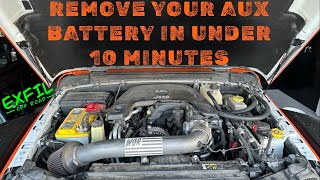
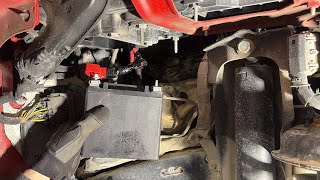
An auxiliary battery is a smaller, secondary battery used in Auto Start-Stop vehicles to power electronics when the engine shuts off. These batteries endure frequent charge/discharge cycles in hot engine bays, leading to a shorter lifespan than the main battery.
My battery and alternator are good. Why do I still have this code?
If the battery and alternator test fine, check for a software glitch via TSBs or a parasitic electrical draw draining the battery overnight. Poor ground connections (like GM's G218) or a faulty Intelligent Battery Sensor (IBS) also trigger this code.
What's the most common misdiagnosis for B2199?
For B2199-17 (high voltage) on 2014 Jeep Cherokees, mechanics mistakenly replace the alternator when a BCM software update (TSB 08-013-15) is the actual fix. For B2199-16 (low voltage) on Jeeps, owners mistakenly replace only the main battery when a failed auxiliary battery is the true culprit.
The code came back after I replaced my battery. What now?
If the code returns, the alternator is likely failing to charge the new battery, or a parasitic draw is draining it. Alternatively, your vehicle requires a Battery Management System (BMS) reset that was skipped. On dual-battery cars, replacing only one of two failing batteries also causes immediate recurrence.
Why did my A/C stop working with a B2199 code?
On certain Dodge Ram models, the B2199 code is set by the HVAC module due to an internal circuit board failure. This fault prevents the module from controlling the A/C compressor's variable solenoid. The result is no cold air, even if the vehicle's main charging system is perfectly healthy.
What is a BMS reset and do I need to do it?
A Battery Management System (BMS) reset tells the vehicle's computer that a new battery is installed, resetting its charging strategy. Failing to reset the BMS causes the system to undercharge the new battery. This shortens battery life and triggers recurring voltage codes.
Key Takeaways
- Code B2199 indicates your vehicle's electrical system voltage is outside the safe operating range, logging as either too low (-16) or too high (-17).
- The most frequent cause is a failing battery, specifically the small auxiliary battery in Jeep and Chrysler vehicles equipped with Auto Start-Stop systems.
- Always test the alternator output with a multimeter before replacing parts to confirm it is not overcharging above 15.0V or undercharging below 13.5V.
- Check for Technical Service Bulletins (TSBs), as this code is frequently caused by known software glitches (like Jeep TSB 08-013-15) or specific ground faults (like GM TSB PIT5405C).
- After replacing a battery on modern vehicles, particularly Fords, you must perform a Battery Management System (BMS) reset to prevent undercharging and premature failure.
Helpful Videos

![Avoid Expensive Shop Repairs: DIY Reset the Ford Vehicle Battery Monitoring System [BMS]](https://img.youtube.com/vi/QTtb7rKaZTE/mqdefault.jpg)

The information in this article is provided for general reference and educational purposes only. Vehicle specifications, procedures, and part compatibility can vary by production date, trim level, and region. Always consult your vehicle's factory service manual and verify part numbers before purchasing or performing repairs. Safety-critical components such as airbags, seat belts, and braking systems should be installed by a qualified professional.
- 🎬 Helpful Videos
- What Does B2199 Mean?
- Can I Drive With B2199?
- Common Causes
- Symptoms
- Diagnostic Flowchart
- Common Fixes & Costs
- DIY vs Professional
- Used vs. New Parts: Buying Guide
- What Happens If You Wait — Timeline
- Cost of Not Fixing It
- Diagnosis Steps
- When This Code Triggers (Freeze-Frame Conditions)
- Related Codes
- Climate & Environmental Factors
- How to Talk to a Mechanic About This Code
- Where to Take It: Dealer vs Independent vs Chain
- When to Walk Away From the Repair
- What Scan Tool You Need for This Code
- How to Clear the Code After You Fix It
- Will This Fail Emissions / State Inspection?
- Most Commonly Affected Vehicles
- Manufacturer-Specific Notes
- Real Owner Stories
- 2019 Jeep Wrangler (JL) with 45K miles
- 2014 Jeep Cherokee with 80K miles
- 2016 Dodge Ram 1500 with 110K miles
- How to Prevent This Code From Triggering
- Frequently Asked Questions
- Can I just replace the battery to fix code B2199?
- What is an auxiliary battery and why does it fail so often?
- My battery and alternator are good. Why do I still have this code?
- What's the most common misdiagnosis for B2199?
- The code came back after I replaced my battery. What now?
- Why did my A/C stop working with a B2199 code?
- What is a BMS reset and do I need to do it?
- Key Takeaways
- 🎟️ Get 5% Off