

B2180 on 2007-2014 Chevrolet Suburban: Heated Seat Inoperative Causes and Fixes
This code almost always means the heated seat element in the seat cushion or backrest has failed, or the main power connector to the heated seat module has melted. Expect to pay $100-$150 for an OEM replacement element or $30-$50 for a new connector pigtail. The DIY repair involves either removing seat upholstery or soldering a new connector under the passenger seat.
- B2180 on a 2007-2014 Suburban means there's a problem with the passenger heated seat, usually a broken heating element in the seat cushion.
- Before buying parts, test the heating element with a multimeter. An open circuit (infinite resistance) confirms it's bad.
- Also, inspect the large connector on the silver module under the passenger seat for a burnt or melted power pin, as this is another very common failure point.
- The repair is DIY-friendly for those comfortable with removing seat upholstery, but it can be time-consuming.
- Driving with this code is perfectly safe; it only affects a comfort feature.
What's Unique About the 2007-2014 Chevrolet SUBURBAN
The GMT900 platform, which includes the 2007-2014 Suburban, Tahoe, and Silverado, is known for heated seat failures. The primary issue, as documented in GM's own service bulletins, is the failure of the heating element grid itself, which is embedded in the seat foam. Repeated flexing from entering and exiting the vehicle eventually breaks the fine wires in the element, creating an open circuit. A second, extremely common failure point is the main power and ground terminal on the connector for the heated/cooled seat module under the passenger seat. GM's design routed the entire high-current load through a single power pin and a single ground pin, despite the module having provisions for two of each. This design flaw causes the pin to overheat, melt the plastic connector, and create a poor connection, disabling both heated seats.
Diagnostic Flowchart
Tap your situation to follow the diagnostic path that matches what you're seeing on this vehicle.
Symptoms You May Notice
- Heated seat does not get warm.
- Heated seat indicator light on the door switch turns on for a few seconds, then turns off by itself.
- Heated seat indicator light stays on, but no heat is produced.
- In some cases, the switch may not light up at all, particularly if the main module connector has failed or a fuse has blown.
- Both driver and passenger heated seats stop working at the same time (a strong indicator of the module connector failure).
- Replacing the Heated Seat Module without first testing the heating element's resistance and inspecting the main power connector for melting.
- Replacing the door switch when the issue is a broken element (the switch turning off is a designed safety feature).
- Assuming only one component has failed. It's possible to have both a burnt connector and a failed heating element.
Most Likely Causes
- Broken Seat Heater Element 🔴 High Probability The heating element wires are thin and embedded in the seat cushion. Over time, the repeated stress of a person sitting down and getting up causes the wires to fatigue and break, creating an open circuit.
How to confirm: Disconnect the heater element connector under the seat and measure its resistance with a multimeter. A reading of 'OL' (Open Loop) or infinite resistance indicates a broken element. A good element should have a low resistance; TSB PIT5434C suggests a range of 5-7.5 ohms, while forum users report success with readings between 2-5 ohms. For intermittent issues, have someone sit and move in the seat while you measure resistance to see if the reading changes.
Typical fix: The faulty heater element must be replaced. This requires removing the seat from the vehicle and taking off the leather or cloth upholstery to access the element, which is often glued to the foam cushion. 🎬 See this walkthrough on replacing the lower seat heater element
Est. part cost: $80-$150 - Burnt Connector at Heated Seat Module 🟡 Medium Probability GM routed the high current for the heated seats through a single power and ground pin on the main connector to the module under the passenger seat. This can cause the pin to overheat, melt the plastic connector, and create a poor connection.
How to confirm: Visually inspect the large electrical connector (often black or gray) going into the silver Heated Seat Module located under the front passenger seat. Unplug it and look for a burnt, discolored, or melted pin, typically the large red/white power wire on one of the corners.
Typical fix: The connector pigtail must be replaced. Many owners perform a more robust repair by soldering in a new pigtail (Ford's WPT-928 is a popular choice) and splitting the single power and ground wires to feed both terminals on the new connector, mimicking Ford's more reliable factory wiring for the same module. This distributes the electrical load and prevents a repeat failure.
Est. part cost: $20-$40 - Damaged Wiring Under Seat ⚪ Low Probability Items stored under the seat or movement of the power seat mechanism can sometimes snag, chafe, or sever the wiring for the heating elements.
How to confirm: Perform a thorough visual inspection of all wiring harnesses under the affected seat. Check for continuity on the power and ground wires from the module to the element connector using a multimeter.
Typical fix: Repair the damaged section of wire using solder and heat shrink tubing or by replacing the appropriate harness section.
Est. part cost: $5-$20
Rare But Worth Checking
- Faulty Heated Seat Switch: While less common than element or wiring failure, the switch in the door panel can fail internally due to broken solder joints or contamination on the circuit board. If the switch lights behave erratically or don't light up at all, and fuses/wiring are good, the switch could be the culprit. Sometimes cleaning the contacts with electronic cleaner 🎬 Watch: Step-by-step guide to replacing the door panel switch can resolve the issue.
- Faulty Heated Seat Module (HSM): The control module itself can fail, but this should only be considered after definitively ruling out the element, wiring, and connector, as it is an expensive part and less likely to be the root cause. Sometimes, temporarily removing power by pulling the associated fuses can reset a glitching module, restoring function and pointing towards a connection or module issue.
Diagnosis Steps
- Verify the symptom: Turn on the heated seat and observe the indicator light on the door switch. Note if it stays on or turns off after a few seconds.
- Check for related fuses in the underhood and interior fuse panels. A blown fuse can indicate a short circuit. Check fuses labeled 'DSM', 'HVAC/ECAS', or 'DRIVER SEAT'.
- Scan the Body Control Module (BCM) and Memory Seat Module (MSM) for codes. B2180 points towards the passenger seat circuit.
- Visually inspect the wiring and the main connector at the Heated Seat Module under the front passenger seat. Look for obvious signs of burnt pins or damaged wires. This is a very common point of failure.
- Disconnect the connector for the seat cushion or seat back heating element under the affected seat.
- Using a multimeter set to Ohms (Ω), measure the resistance across the two pins of the heating element. A reading of infinite resistance (OL) confirms a broken element. A good element should read between 2 and 7.5 Ohms.
- If the element's resistance is good, test for power and ground at the harness side of the connector with the heated seat switch turned on. Lack of power or ground points to a wiring, module, or fuse issue.
- For advanced diagnosis, use a scan tool (like a GM Tech 2) to access the Driver Seat Module data and perform a functional test, which can command the heaters on and bypass some safety checks to help pinpoint the fault.
Parts You'll Likely Need
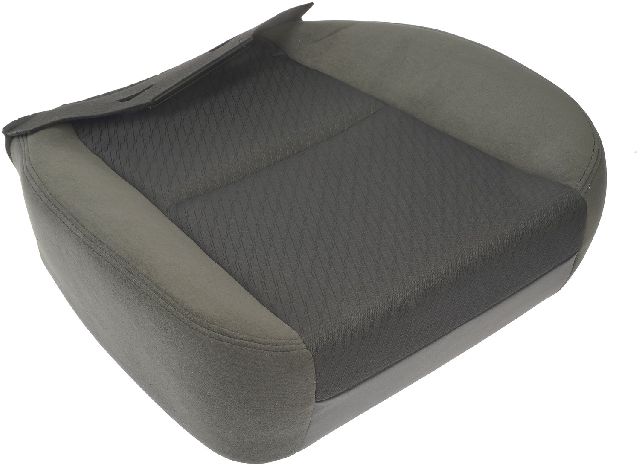
- Seat Cushion Heater Element
(OEM #23168136)— This is the most common failure point. The wires inside the pad break from normal use, causing an open circuit and triggering the code. This part fits the lower cushion for seats without the cooling/ventilation option.
Trusted brands: ACDelco, Dorman, The Seat Shop
OEM price range: $100-$150
Aftermarket price range: $50-$90 - Heated Seat Module Connector Pigtail
(OEM #WPT-928 (Ford/Motorcraft), PT2386 (ACDelco))— The original connector pin for the main power supply is prone to overheating and melting, causing a loss of connection to the module. The Ford WPT-928 is widely used for a more robust repair where the power/ground wires are doubled up.
Trusted brands: Motorcraft, ACDelco, Dorman
OEM price range: $30-$50
Aftermarket price range: $20-$40
Related Codes That Often Appear With This One
- B1935 — This code is for the Left (Driver's) Seat Back Heater Circuit, and often appears for the same reasons as B2180, which is for the Right (Passenger's) seat.
- B2425 — This is a general code for 'Seat Heater,' often set alongside more specific codes like B2180, as noted in TSB PIT5215A.
- B2430 — This code is for the 'Seat Back Heater,' also mentioned in TSB PIT5215A as being related to inoperative heated seats.
Technical Service Bulletins (TSBs) & Recalls
- PIT5215A: Heated seat is inoperative and Diagnostic Trouble Codes may be set.
- PIT5434C: Diagnostic Tips - Front Heated Seats (RPO KB6)
Platform-Specific Known Issues
- Technical Service Bulletin PIT5215A was issued for multiple GM vehicles, including the 2007-2014 Suburban, addressing inoperative heated seats with codes B2180, B1935, B2425, and/or B2430. The bulletin directs technicians to inspect the heated seat wiring harness and heater element.
- Technical Service Bulletin PIT5434C provides diagnostic tips for front heated seats (RPO KB6), noting that the element resistance should be approximately 5 - 7.5 ohms and can change with temperature.
Mechanic-Grade Diagnostic Values
- Heated Seat Element Resistance — expected: 5 - 7.5 Ohms (per TSB PIT5434C). Failure: Infinite resistance or 'OL' on a multimeter indicates a broken element.
- Heated Seat Module Main Power — expected: 12V+ at the thick Red/White wire on Pin A of the main module connector (X305).. Failure: 0V or low voltage indicates a problem with the fuse (MBEC 1) or wiring from the underhood fuse block.
- Heated Seat Module Main Ground — expected: Near 0 Ohms resistance to chassis ground at the thick Black wire on Pin F (or B8 on some years) of the main module connector (X305).. Failure: High resistance indicates a poor ground connection.
Hidden / Shadow Codes Worth Checking
- B2180 Sym 0E: The '0E' is a symptom byte that may accompany the main DTC. While a specific public definition for '0E' is not available, TSB PIT5215A lists it alongside B2180, indicating it's directly related to the inoperative heated seat fault condition. (see via A professional-grade scanner like the GM Tech 2 or GDS2.)
Scan Tool Commands That Help
- GM Tech 2: Output Control > Heated Seat Test — To command the heated seat LEDs on and off to verify the switch and communication path to the door module. The path is: Body > Door Module(s) > Driver Door Module > Special Functions > Output Control > Heated Seat Test.
- GM Tech 2: Output Control (in Driver Seat Module) — To directly command the heated seat elements on, bypassing the switch. This helps isolate whether the fault is in the control side (switch) or the load side (module, wiring, element). The path is: Body > Driver Seat Module > Special Functions > Output Control.
Wiring & Ground Locations
- Heated Seat Module — Under the front passenger seat, mounted to the seat frame. It's a silver metal box held by two 10mm nuts.. This module controls both front heated seats. The main power connector on this module is the most common point of failure besides the elements themselves.
- Connector X305 (Driver) / X320 (Passenger) — The main electrical connector under each respective front seat that connects the body harness to the seat harness.. This is the primary connector for all seat functions. The power (Pin A, Red/White) and ground (Pin F/B8, Black) for the heated seat module pass through here.
- MBEC 1 Fuse — In the Underhood Fuse Block, located on the driver's side of the engine bay. It is a large, 50-Amp square J-Case fuse.. This 'Mega Fuse' supplies the main power to the Mid-Bussed Electrical Center, which in turn feeds the circuit for the heated seats. If both seats and other power functions are dead, this fuse should be checked.
Real Owner Repair Stories
- YouTube user in video 'How to PERMANENTLY fix heated seats in Chevy GMC...' (2010 Cadillac Escalade Platinum (GMT900 platform, same module/issue)) — Heated and cooled seats were not working.
❌ Tried (didn't work) A temporary fix was previously attempted.
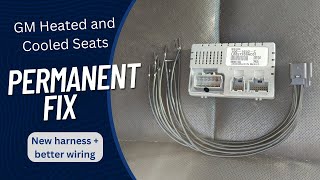
✅ What actually fixed it The owner identified the burnt power and ground pins on the main connector to the heated seat module. The permanent fix involved replacing the connector pigtail with a Ford WPT-928, cutting the single power and single ground wires from the vehicle harness, and soldering them to BOTH power and BOTH ground wires on the new pigtail. This distributes the current across all four available pins on the module, preventing overheating and repeat failure.
OEM Part Supersession History
15877131, 15909439, 25886612→23168136— Standard part updates and consolidation by GM over the years for the seat cushion heater element (without ventilation).
Heads up: Part number 23168136 is specified for seats WITHOUT the ventilation/cooling feature. Seats with cooling use a different part number for the internal thermoelectric (Peltier) assembly.GM Connector (part of harness)→Ford WPT-928 / ACDelco PT2386— The original GM connector only utilized a single pin for power and ground, leading to overheating. The Ford WPT-928 pigtail is a widely accepted superior replacement because it is wired to use two power and two ground pins, distributing the load.
Model Year Variations Within This Range
- 2007-2014: Higher trim levels (LTZ, Denali) feature heated AND cooled seats (RPO KB6), which use a different heating technology (thermoelectric/Peltier devices) compared to the resistive wire elements found in lower trims with heat-only seats. While the B2180 code can still occur, the specific component that fails internally is different.
Helpful Videos
We Have This Part in Stock



The information in this article is provided for general reference and educational purposes only. Vehicle specifications, procedures, and part compatibility can vary by production date, trim level, and region. Always consult your vehicle's factory service manual and verify part numbers before purchasing or performing repairs. Safety-critical components such as airbags, seat belts, and braking systems should be installed by a qualified professional.
- Chevrolet SUBURBAN:
- 🎬 Helpful Videos
- 🛍️ Shop This Part
- What's Unique About the 2007-2014 Chevrolet SUBURBAN
- Diagnostic Flowchart
- Symptoms You May Notice
- Most Likely Causes
- Rare But Worth Checking
- Diagnosis Steps
- Parts You'll Likely Need
- Related Codes That Often Appear With This One
- Technical Service Bulletins (TSBs) & Recalls
- Platform-Specific Known Issues
- Mechanic-Grade Diagnostic Values
- Hidden / Shadow Codes Worth Checking
- Scan Tool Commands That Help
- Wiring & Ground Locations
- Real Owner Repair Stories
- OEM Part Supersession History
- Model Year Variations Within This Range
- 🎟️ Get 5% Off