

OBD-II Code B2060: ABS System Malfunction Signal
What B2060 means, why it triggers, and how to fix it
- Code B2060 is a 'shadow' code indicating a primary fault exists in the ABS system, not the module where the code was found.
- Over 80% of B2060 codes on Toyota and Lexus vehicles stem from a failed ABS wheel speed sensor, damaged wiring, or a worn wheel hub assembly.
- You must use an advanced OBD-II scanner capable of reading 'C' (Chassis) codes from the ABS module to identify the actual failing component.
- On non-Toyota/Lexus vehicles like Nissan or Kia, 'B2060' is often a part number for unrelated components (like a knock sensor), not a diagnostic trouble code.
- Driving is possible but disables critical safety features like ABS and traction control, significantly increasing the risk of skidding in emergencies.
What Does B2060 Mean?

Code B2060 is an informational 'shadow' code primarily used by Toyota and Lexus. It indicates that a body-related safety module, such as the Pre-Collision System (PCS) or Blind Spot Monitor, received a fault signal from the Anti-lock Brake System (ABS). This code does not pinpoint the problem; it is an alert that the ABS/VSC module detected an issue and disabled shared safety features. To find the actual cause, you must use an advanced scanner to read the specific 'C' (Chassis) codes stored directly in the ABS module.
Technical definition: The body control ECU (e.g., Pre-Crash Safety ECU) detects a malfunction in the brake control system via the Controller Area Network (CAN). The body ECU stores code B2060 to indicate it received a fault flag from the Skid Control ECU.
Can I Drive With B2060?
Yes, But With Caution. Yes, but drive with extreme caution for a limited distance to a repair shop. Your regular hydraulic brakes function normally, allowing you to stop. However, critical safety systems like the Anti-lock Braking System (ABS), traction control (TRAC), Vehicle Stability Control (VSC), and pre-collision braking are disabled. This significantly increases the risk of wheel lock-up or skidding in an emergency or on slippery surfaces. Driving with these systems offline increases your liability in an accident. There is no direct risk of further component damage, but the safety risk is high.
Common Causes

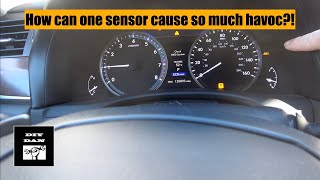
- Faulty ABS Wheel Speed Sensor (Very Common) — This is the primary cause. 🎬 Watch: Step-by-step wheel speed sensor replacement on a Lexus. A sensor located at one of the wheels, which measures rotational speed, fails or sends erratic data. Because this is the primary data source for ABS and VSC, a fault here disables the entire system.
- Damaged Wheel Speed Sensor Wiring or Connector (Common) — Exposed to harsh conditions, the wiring harness corrodes, frays, or breaks from road debris, ice buildup, or suspension movement, causing an immediate loss of the speed signal.
- Failing Wheel Bearing or Integrated Tone Ring (Common) — Modern wheel bearings integrate the ABS tone ring. A worn bearing creates excessive wobble, altering the gap between the tone ring and the sensor. Alternatively, the tone ring itself cracks or clogs with metallic debris, causing erratic sensor readings.
- Low Battery Voltage (Less Common) — A weak 12V battery causes a cascade of unrelated error codes. Sensitive electronics, including the ABS control unit, fail to receive stable power, triggering communication faults and logging the B2060 code.
- Failing ABS Control Module / Actuator (Less Common) — The main computer and hydraulic unit for the anti-lock brake system develops an internal fault or pressure leak. This is a complex repair requiring module replacement or rebuilding.
- Faulty Yaw Rate / G-Sensor (Less Common) — The Vehicle Stability Control (VSC) system relies on a yaw rate and G-force sensor to detect sliding. A failure here disables the VSC system and prompts the Skid Control ECU to broadcast a fault signal.
- Low Brake Fluid Level (Rare) — Low brake fluid triggers a primary brake warning light and causes the ABS/VSC system to set codes. This indicates a leak or severely worn brake pads requiring immediate inspection.
- Needs Steering Angle Sensor Calibration (Rare) — Following a wheel alignment or suspension replacement, the steering angle sensor requires recalibration. Unmatched steering angle and wheel speed data forces the ABS/VSC module to disable the system.
- Faulty Brake Light Switch (Rare) — A malfunctioning brake light switch sends conflicting signals to the vehicle's computers. The ABS module requires accurate braking data, and an incorrect signal triggers stability control faults.
Symptoms
- ABS Light On — The Anti-lock Braking System warning light illuminates on the dashboard.
- Traction Control (VSC/TRAC) Light On — The Vehicle Stability Control or Traction Control System light illuminates, indicating the system is disabled.
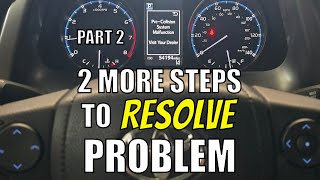
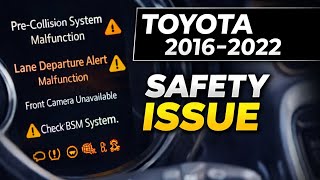
- Pre-Collision System (PCS) or Safety Warnings — Messages like "Pre-Collision System Malfunction," "Check VSC System," or "BSM Not Available" appear on the instrument cluster. 🎬 Watch: How to troubleshoot and solve Pre-Collision System malfunctions.
- Brake Warning Light On — The main red or amber brake system warning light illuminates, often alongside the ABS light.
- Pulsating Brake Pedal at Low Speeds — An erratic wheel speed sensor signal tricks the ABS module into falsely detecting wheel lock-up during slow braking, causing the ABS pump to activate unnecessarily.
Diagnostic Flowchart
Tap your situation to follow the diagnostic path that matches what you're seeing on this code.
Common Fixes & Costs
- Replace ABS Wheel Speed Sensor
— Parts: $50-$200, Labor: $100-$250, ~1.5 hr book time
(DIY)
2013 Lexus GS 350 (Front Left): OEM 89543-30340 (Alt: Aisin 89543-48050, Standard Motor Products ALS2540)
2010 Lexus RX 350 (Front Left): OEM 89543-48050 (Alt: Aisin 2ABS2703, Holstein 2ABS2703) - Replace Wheel Hub Assembly
— Parts: $150-$500, Labor: $200-$400, ~2.5 hr book time
(Intermediate)
2013 Lexus GS 350 (AWD, Front Left): OEM 43560-30030 (Alt: MOOG 513365, DriveBolt NT590140)
2010 Lexus RX 350 (AWD, Rear): OEM 42410-48061 (Alt: A-Premium APHB0181, MasterPro) - Repair or Replace Damaged Wiring — Parts: $10-$50, Labor: $150-$350, ~2.0 hr book time (Intermediate)
- Replace ABS Control Module
— Parts: $800-$2500, Labor: $150-$300, ~2.0 hr book time
(Professional)
2013 Lexus GS 350 (Non F-Sport): OEM 44050-30540 (Alt: N/A (Used OEM is common)) - Remanufacture/Repair ABS Control Module — Parts: $0, Labor: $300-$800, ~2.0 hr book time (Professional)
Used vs. New Parts: Buying Guide
When a used part is worth it: Buying used is not recommended for electronic wheel speed sensors. A used OEM hub assembly from a low-mileage, accident-free donor vehicle is a cost-effective alternative to a new aftermarket part.
Donor-vehicle mileage cap: roughly under 60000 miles for the part to have meaningful remaining life.
Donor quality checklist:
- Verify the donor vehicle was not scrapped due to a collision involving the wheel/suspension.
- Avoid parts from regions with heavy road salt use, as corrosion compromises the bearing and sensor.
- Match the OEM part number exactly.
Decision logic:
- If The part is an electronic sensor (wheel speed sensor). → Buy new OEM or high-quality aftermarket (e.g., Denso, Aisin). The risk of a used sensor failing is too high.
- If The part is a wheel hub assembly and budget is the primary concern. → A used OEM assembly with verified low mileage is often better than a cheap, new aftermarket assembly.
- If The vehicle is a high-performance model (e.g., Lexus IS F) or you prioritize longevity. → Buy new OEM parts. The quality, fit, and durability are superior to aftermarket options.
Warranty tradeoff: Used parts typically have a 30-90 day warranty covering only the part. New aftermarket parts offer 1-year to limited lifetime warranties. New OEM parts carry a 1-year/12,000-mile warranty.
Worst-case if a used part fails: $300-600 if a used hub or sensor fails prematurely, requiring repeat labor costs.
What Happens If You Wait — Timeline
- Immediate: Warning lights (ABS, VSC, PCS) illuminate. Critical safety systems are disabled. The primary hydraulic brakes remain functional. (MPG impact: 0%% · Added cost: $0 (Safety risk is the primary cost))
- 0-3 Months: Continued driving with disabled safety systems increases the risk of skidding or loss of control in an emergency. No direct mechanical damage occurs. (MPG impact: 0%% · Added cost: $0 - $15,000+ (Potential cost of an at-fault accident))
- 3-9 Months (if cause is a bad wheel bearing): Bearing wear accelerates significantly. A humming noise progresses to a louder grinding, and the wheel feels loose. (MPG impact: 0%% · Added cost: $200 - $500 (Cost of mandatory hub replacement))
- 9+ Months (if cause is a bad wheel bearing): Catastrophic failure of the worn wheel bearing causes the hub to seize or allows the wheel to separate from the vehicle. (MPG impact: 0%% · Added cost: $1500 - $5000+ (Cost to repair hub, knuckle, axle, and body damage))
Cost of Not Fixing It
- Immediate: Critical safety systems (ABS, VSC, Traction Control) are disabled. Increased risk of wheel lock-up, skidding, and loss of control in emergency braking or on slippery surfaces. (Added cost: $0 (Safety Risk))
- 0-6 Months: Continued driving with disabled safety systems increases the probability of an accident, leading to significant repair costs, insurance premium hikes, and legal liability. (Added cost: $500 - $15,000+ (Potential cost of an at-fault accident))
- 6+ Months: If caused by a failing wheel bearing, it eventually leads to catastrophic hub failure, potentially causing the wheel to separate from the vehicle. (Added cost: $1500 - $4000+)
Diagnosis Steps

- Scan for ABS-Specific 'C' Codes
Use an OBD-II scanner capable of reading manufacturer-specific ABS/VSC codes. Code B2060 is merely a general alert; the ABS module stores the root cause 'C' codes (e.g., C1235, C1A45) that pinpoint the exact failing component.
Tools: OBD-II Scanner with ABS/VSC capability (Beginner) - Visually Inspect Wheel Speed Sensors and Wiring
Based on the ABS 'C' code, locate the indicated wheel speed sensor. Inspect for obvious damage, corrosion in the connector, or stretched/chafed wires. Ensure the sensor is securely mounted.
Tools: Flashlight, Jack, Jack Stands (Intermediate) - Check Battery Voltage and Brake Fluid
Verify the brake fluid is above the 'MIN' line. Use a multimeter to check the 12V battery. A reading below 12.4V (engine off) or 13.2V (running) indicates a power issue causing spurious electronic faults.
Tools: Multimeter (Beginner) - Inspect the Wheel Bearing and Tone Ring
Check the tone ring on the axle or wheel hub for cracks, heavy rust, or metallic debris. Lift the wheel and check for excessive play (wobble) indicating a failing wheel bearing, which disrupts the sensor signal.
Tools: Flashlight, Jack, Jack Stands (Intermediate) - Analyze Live Sensor Data
Use an advanced scan tool to view live data. While driving straight slowly, all four wheel speed sensors must read identically. A sensor that drops out or reads erratically is faulty. The Steering Angle Sensor must read 0° (±5°) when driving straight.
Tools: Advanced Scan Tool (Advanced) - Test Sensor Power Supply and Circuit
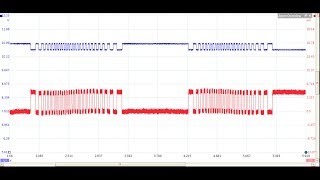
Disconnect the sensor, turn the ignition 'ON', and probe the harness connector with a multimeter. It must show 11-12V. For active sensors, back-probe the connected wires; voltage should toggle (e.g., ~0.7V to ~1.4V) as you spin the wheel. No voltage indicates a wiring break.
Tools: Multimeter, Back-probe kit, Wiring diagram (Advanced) - Diagnose the ABS Module
If all sensors, wiring, tone rings, and battery voltage test good, the ABS module itself is failing. This requires a professional-grade scan tool to check for internal module faults and communication errors. Take the vehicle to a professional shop if you lack a bidirectional scanner.
Tools: Advanced Scan Tool, Multimeter (Professional)
When This Code Triggers (Freeze-Frame Conditions)
- System State: Self-Test Active (The fault logs during the initial ABS self-test at startup or once the vehicle reaches 6-10 mph.)
- Vehicle Speed: Any (Logs at low speed during the self-test or at highway speeds if a wheel speed sensor provides an erratic signal.)
- Brake Pedal Status: Not Applied (The fault sets during steady-state driving when the system monitors sensor data, not necessarily during braking.)
Related Codes
- C12xx (e.g., C1235, C1236) — These are the specific ABS codes that trigger the B2060 code. A C-code for a wheel speed sensor is the root cause, while B2060 is the symptom in another module.
- C1A45 — This vehicle speed sensor fault appears simultaneously with B2060. The Blind Spot Monitor stores C1A45 while the Pre-Collision System stores B2060, both pointing to a shared wheel speed signal failure.
- U0122 — Indicates 'Lost Communication With Vehicle Dynamics Control Module.' If present with B2060, the issue is a network failure (wiring, CAN bus, power). If B2060 appears alone, communication is working, and the ABS module is reporting an internal fault.
- P2060 — A completely different powertrain code for a 'Reductant Injector Air Pump Control Circuit Low' issue on diesel vehicles. It is entirely unrelated to the body code B2060.
Climate & Environmental Factors
- Cold Climates / Snow Belt Regions: Road salt causes aggressive corrosion that seizes the wheel speed sensor in the steering knuckle, making removal difficult. It corrodes wiring and connectors, leading to signal loss. Tone rings pack with rust, causing inaccurate readings.
- High Heat Climates: Prolonged high ambient temperatures accelerate the degradation of plastic wiring insulation and connectors. The plastic becomes brittle and cracks, exposing wires to the elements and causing short circuits.
How to Talk to a Mechanic About This Code
Say this: "I have an ABS and Pre-Collision System light on, and my scanner shows a B2060 code. I understand this means there's a primary fault in the ABS system. I'd like to schedule a diagnostic to pull the specific 'C' codes from the ABS control module to find the root cause."
This signals you understand B2060 is a secondary code. It directs the technician to perform the correct diagnostic procedure and prevents them from wasting time on the Pre-Collision system.
Avoid saying:
- 'My Pre-Collision System is broken.'
- 'My dashboard is lit up like a Christmas tree, can you just fix it?'
- 'I have a B2060 code, please fix it.' (This leads them to investigate the wrong module).
Questions to ask before authorizing the repair:
- What specific 'C' code did you find in the ABS module?
- Can you show me the faulty part (e.g., the damaged wire or corroded sensor)?
- Does the recommended repair match the fault code found?
- What is the warranty on the parts and labor for this repair?
Where to Take It: Dealer vs Independent vs Chain
- Dealer:
Best for: Vehicles under warranty, Complex ABS module failures requiring programming (e.g., Toyota Techstream software), Customers prioritizing OEM parts and manufacturer-specific expertise
Downsides: Highest labor rates, typically 1.5-2x more than independent shops., May recommend replacing an entire assembly when a repair or rebuild is possible. (Typical cost: +50% vs. baseline) - Independent Shop:
Best fit for most common repairs. A reputable independent shop offers the best balance of expertise and value for diagnosing and fixing the root cause.
Best for: Out-of-warranty vehicles where cost is a factor., Common fixes like wheel speed sensors, wiring, or hub assemblies., Shops specializing in Toyota/Lexus with necessary diagnostic tools.
Downsides: Quality varies; look for ASE certification and good reviews., A general shop may lack the advanced scanner needed to read specific ABS codes. (Typical cost: +0% vs. baseline) - Chain Shop:
Use with caution. Acceptable if you have self-diagnosed the specific failing sensor. AVOID for initial diagnosis of a B2060 code.
Best for: Simple, clear-cut repairs like a single, easily accessible wheel speed sensor replacement.
Downsides: Technician skill varies widely., May lack advanced diagnostic tools to read specific 'C' codes., High pressure to upsell leads to misdiagnosis. (Typical cost: -10% vs. baseline)
When to Walk Away From the Repair
If the estimated repair cost for the ABS system exceeds 50% of your car's private-party value, seriously consider selling the car as-is or trading it in.
- Car worth $5000, fix is $2500: Walk away. A $2500 repair for a failed ABS module on a $5000 car is not a good investment.
- Car worth $15000, fix is $400: Fix it. A $400 repair for a wheel speed sensor is well below the threshold and restores critical safety features.
- Car worth $8000, fix is $3500: Borderline. Get a second opinion. If the diagnosis is a failed ABS actuator, consider the car's overall condition before proceeding.
What Scan Tool You Need for This Code

Minimum: An OBD-II scanner that reads manufacturer-enhanced codes for the ABS and SRS systems. For Toyota/Lexus, it must pull 'C' (Chassis) codes.
A basic $20 code reader only sees generic engine codes ('P' codes). It cannot access the ABS module to find the underlying 'C' code that is the actual cause of the problem.
Budget: BlueDriver Pro (~$100) — Connects to a smartphone app and reads enhanced codes from all modules, including ABS, for most major brands. It allows you to read the specific 'C' code and clear codes from all modules.
Mid-range: Autel MaxiCOM MK808 / Foxwell NT716 (~$250-400) — Handheld, tablet-style scanners offering full-system diagnostics, live data graphing for wheel speed sensors, and service functions like ABS brake bleeding.
Professional: Launch X431 series / Autel MS906 series (~$800-1500) — Provides full bidirectional control to command the ABS module, pump, and solenoids. Necessary for complex diagnostics and programming a new ABS module.
Rent vs buy: Auto parts stores offer free loaner tools, but they are typically basic code readers that CANNOT read ABS codes. You must buy a capable scanner or pay for a professional diagnosis.
How to Clear the Code After You Fix It
- Fix the root cause indicated by the 'C' code in the ABS module.
- Use a bi-directional scan tool to clear fault codes from BOTH the ABS/VSC module AND the module that stored B2060 (e.g., Pre-Collision System).
- If suspension, steering, or sensors were replaced, perform a 'Zero Point Calibration' using a scan tool to reset the steering angle and yaw rate sensors.
- Perform a verification drive cycle to confirm the lights do not return.
Drive cycle (~15 minutes): Start the vehicle and idle for 2-3 minutes. Drive in a mix of city and highway conditions, reaching speeds above 40 mph. Include several turns and stops to allow the ABS/VSC system to confirm all sensors provide plausible data.
Readiness monitors affected: This code does not affect emissions-related readiness monitors.
Watch out for:
- Clearing the B2060 code without fixing the underlying ABS 'C' code causes the light to return immediately.
- Using a basic scanner that cannot access the ABS or PCS modules to clear specific codes.
- Forgetting to perform Zero Point Calibration after a wheel alignment, causing the VSC light to stay on.
Will This Fail Emissions / State Inspection?
No — by itself this code doesn't fail OBD inspection (but it can keep readiness monitors from setting, which causes a separate fail).
- California: An illuminated ABS light will NOT cause a failure of the standard biennial smog check. However, a 'Brake and Lamp Inspection' required for salvage vehicles fails due to a non-operational ABS system.
- New York: An illuminated ABS warning light IS grounds for failing the annual safety inspection.
- Texas: An illuminated ABS warning light is NOT a cause for rejection in the annual safety inspection, which focuses on the primary braking system.
Most Commonly Affected Vehicles
- Lexus GS 350 (2013-2015) — Frequently reported alongside ABS/VSC/PCS warning lights, often related to wheel speed sensor or hub issues. Commonly appears with C1A45 (Vehicle Speed Sensor) from the Blind Spot Monitor modules.
- Lexus IS F (2008-2014) — Official service manuals list B2060 as an 'ABS Malfunction' code for the Pre-Collision system. It is critical to use IS F-specific hub assemblies, as IS250/350 parts are dimensionally different.
- Lexus RX 350 / RX 450h (2010-2015) — Documented as a communication fault between the Skid Control ECU and safety modules. Often resolved by replacing a weak 12V battery or a faulty wheel speed sensor.
- Toyota Land Cruiser (2008-2016) — Appears when underlying issues exist with ABS sensors. Diagnostic procedure requires checking the VSC system for 'C' codes.
- Toyota Highlander (2008-2019) — The VSC, ABS, and brake systems are tightly integrated; a fault in one triggers warnings for all, logging B2060 in related modules like the PCS.
- Nissan Frontier, Xterra, Quest (1999-2004) — CRITICAL NOTE: On older Nissan models with the 3.3L V6, B2060-7B000 is the part number for the Ignition Knock Sensor. This is an unrelated powertrain component, not an ABS fault code.
- Kia Soul (2014-2019) — CRITICAL NOTE: Part numbers containing B2060 (e.g., 91940-B2060) refer to unrelated components like the ICM Relay Box. This is not a diagnostic trouble code for an ABS fault.
Manufacturer-Specific Notes
- Toyota/Lexus: This code is almost exclusively used by Toyota and Lexus. It sets in the Pre-Collision System or Seat Belt Control ECU when receiving a fault message from the Skid Control ECU. Ignore B2060 and diagnose the 'C' codes in the ABS system.
- Nissan: For older 3.3L V6 models, 'B2060' is part of the part number for the engine's Knock Sensor (B2060-7B000). This is completely unrelated to the brake system.
- Kia/Hyundai: Part numbers like 91940-B2060 refer to unrelated body electrical components such as relay boxes. B2060 is not a standard diagnostic trouble code for ABS faults on these vehicles.
Real Owner Stories
2013 Lexus GS350 at 200K miles
ABS, VSC, Brake, BSM, and a "Pre-Collision System Malfunction" message appeared. No noticeable change in driving behavior.
What they tried:
- Cleared codes, but they returned immediately.
- Scanned again, revealing B2060 (PCS), and C1A45 (Vehicle Speed Sensor) in both Blind Spot Monitor modules.
Outcome: The owner suspected failing front wheel hubs due to high mileage. The combination of B2060 and C1A45 pointed strongly to a fault in the wheel speed signal originating from the hub/sensor assembly.
Lesson: Multiple, seemingly unrelated system warnings (PCS, BSM, ABS) appearing at once point to a single, shared data source failure, like a wheel speed sensor.
2006 Lexus IS250 AWD with intermittent lights
Check VSC, ABS, and Brake warning lights came on intermittently at startup. Turning the car off and on cleared them, but they eventually stayed on permanently.
What they tried:
- Scanned codes, showing C1249 (open circuit in stop light switch) and C1223 (ABS control fault).
Outcome: The owner replaced the brake light switch located behind the brake pedal. This fixed the issue permanently. The part cost $83 from the dealer.
Lesson: Don't assume a dashboard full of brake warnings is an expensive ABS module. A simple, inexpensive switch providing input to the system is sometimes the root cause.
2007 Lexus LS460 with 86K miles
ABS, VSC, and Brake warning lights appeared intermittently when hot. The ABS pump cycled on and off every 5 seconds.
What they tried:
- A shop scanned the codes and found C1391 (accumulator pressure leak).
- The dealer quoted $2300 to replace the ABS actuator assembly.
Outcome: The frequent pump cycling indicated an internal pressure leak within the ABS actuator. The owner planned to replace the actuator themselves to save money.
Lesson: Audible cues are valuable. Hearing the ABS pump run frequently when brakes aren't used is a strong indicator of a failing ABS actuator, an expensive repair.
Lexus GX470 after suspension work
After suspension work, the ABS and VSC lights came on.
What they tried:
- A second shop diagnosed a code for the left rear wheel speed sensor (open circuit) and a deceleration sensor out of calibration.
Outcome: The shop quoted $375 to replace the sensor and recalibrate the system. The cause was a chafed wiring harness damaged by the technician during the initial suspension work.
Lesson: If warning lights appear immediately after a repair, the fault was likely caused during the service. Insist the original shop diagnose and fix the issue.
How to Prevent This Code From Triggering
- Flush brake fluid every 2-3 years or 20,000-30,000 miles. (Every 2-3 years) — Brake fluid absorbs moisture over time. This moisture corrodes the sensitive internal components of the ABS control module and actuator, leading to expensive failures.
- Periodically clean wheel speed sensors and tone rings. (During every tire rotation or brake service) — Brake dust and metallic debris accumulate on the magnetic sensor tip and tone ring, obstructing the signal. Brake cleaner restores a clear signal.
- Apply dielectric grease to wheel speed sensor connectors. (When replacing a sensor or inspecting a connector) — Dielectric grease blocks moisture and prevents corrosion of the electrical pins, a common failure point in wet climates.
- Address humming/noisy wheel bearings promptly. (As soon as noise is detected) — A noisy bearing has excessive play. Driving on it risks catastrophic hub failure and destroys the integrated ABS sensor/tone ring.
Frequently Asked Questions
Can I just clear the B2060 code?
You can clear the code, but it will return immediately upon driving. B2060 is an alert about a problem elsewhere; until the root cause in the ABS system is fixed, the code persists.
Is it safe to drive with the ABS light on?
Your primary hydraulic brakes still work, allowing you to stop. However, you lack anti-lock functionality, meaning wheels can lock up and skid during hard braking. Drive with extra caution and increase your following distance.
Why are my traction control and pre-collision lights on too?
Traction control, stability control, and pre-collision braking rely on wheel speed sensor data. When the ABS system detects a fault, it stops providing reliable data, forcing these secondary systems to shut down as a precaution.
My scanner doesn't show any ABS codes, just B2060. What's wrong?
You are using a basic OBD-II scanner that only reads generic powertrain and body codes. You need an advanced scanner capable of accessing individual control modules (ABS, VSC) to find the necessary 'C' codes.
Can a bad wheel bearing cause code B2060?
Yes. Modern wheel bearings integrate the ABS tone ring. If the bearing fails, the resulting wobble creates an incorrect signal from the ABS sensor, triggering the entire chain of faults.
Can a wheel alignment cause the ABS light and B2060 code?
Yes. A technician may inadvertently damage a wheel speed sensor or its wiring during the alignment. Alternatively, if the steering angle sensor wasn't recalibrated afterward, the VSC system sets a fault.
Can a low battery cause a B2060 code?
Yes. A weak battery provides unstable voltage to electronic modules, including the ABS controller. This leads to communication errors and fault codes like B2060, even without a mechanical brake problem.
My mechanic replaced the ABS sensor, but the B2060 code won't go away. Why?
After fixing the root cause, you must clear the specific 'C' code from the ABS module. You must also separately clear the 'B' code from the other modules that stored it (like the PCS). Use a scanner capable of a full-system code clear to reset all modules simultaneously.
Key Takeaways
- Code B2060 is a 'shadow' code indicating a primary fault exists in the ABS system, not the module where the code was found.
- Over 80% of B2060 codes on Toyota and Lexus vehicles stem from a failed ABS wheel speed sensor, damaged wiring, or a worn wheel hub assembly.
- You must use an advanced OBD-II scanner capable of reading 'C' (Chassis) codes from the ABS module to identify the actual failing component.
- On non-Toyota/Lexus vehicles like Nissan or Kia, 'B2060' is often a part number for unrelated components (like a knock sensor), not a diagnostic trouble code.
- Driving is possible but disables critical safety features like ABS and traction control, significantly increasing the risk of skidding in emergencies.
Helpful Videos

![Lexus PRE-Collision system malfunction [ Solved ]](https://img.youtube.com/vi/GlZuwnvykXk/mqdefault.jpg)

The information in this article is provided for general reference and educational purposes only. Vehicle specifications, procedures, and part compatibility can vary by production date, trim level, and region. Always consult your vehicle's factory service manual and verify part numbers before purchasing or performing repairs. Safety-critical components such as airbags, seat belts, and braking systems should be installed by a qualified professional.
- 🎬 Helpful Videos
- What Does B2060 Mean?
- Can I Drive With B2060?
- Common Causes
- Symptoms
- Diagnostic Flowchart
- Common Fixes & Costs
- Used vs. New Parts: Buying Guide
- What Happens If You Wait — Timeline
- Cost of Not Fixing It
- Diagnosis Steps
- When This Code Triggers (Freeze-Frame Conditions)
- Related Codes
- Climate & Environmental Factors
- How to Talk to a Mechanic About This Code
- Where to Take It: Dealer vs Independent vs Chain
- When to Walk Away From the Repair
- What Scan Tool You Need for This Code
- How to Clear the Code After You Fix It
- Will This Fail Emissions / State Inspection?
- Most Commonly Affected Vehicles
- Manufacturer-Specific Notes
- Real Owner Stories
- 2013 Lexus GS350 at 200K miles
- 2006 Lexus IS250 AWD with intermittent lights
- 2007 Lexus LS460 with 86K miles
- Lexus GX470 after suspension work
- How to Prevent This Code From Triggering
- Frequently Asked Questions
- Can I just clear the B2060 code?
- Is it safe to drive with the ABS light on?
- Why are my traction control and pre-collision lights on too?
- My scanner doesn't show any ABS codes, just B2060. What's wrong?
- Can a bad wheel bearing cause code B2060?
- Can a wheel alignment cause the ABS light and B2060 code?
- Can a low battery cause a B2060 code?
- My mechanic replaced the ABS sensor, but the B2060 code won't go away. Why?
- Key Takeaways
- 🎟️ Get 5% Off